Sebastián Uchitel is a Professor at the Department of Computing, Imperial College London, UK. His research focuses on foundational aspects of Software Engineering, particularly in modeling and analysis for automated reasoning, verification of probabilistic systems, controller synthesis, and adaptive systems. He has led major research projects, including the ERC-funded IDEAS StG project on Partial Behaviour Modelling and the European FP6 SENSORIA project. Research Interests: Model-Based Software Engineering, Controller Synthesis, Probabilistic Systems, Adaptive Systems, Requirements Engineering External Roles: General Chair, International Conference on Software Engineering (2017); Associate Editor, Elsevier Science of Computer Programming; Steering Committee, International Conference on Software Engineering His recent work explores intersections between Software Engineering and AI, including assured adaptive systems and logic-based learning. A Senior Member of IEEE and Distinguished Scientist of ACM , he has received awards like the Houssay Prize (2015) and Philip Leverhulme Prize (2005). Collaborators include institutions in Argentina, Canada, and the UK. Selected Publications: 150+ peer-reviewed works spanning controller synthesis, requirements engineering, and formal methods Students: Supervised 12 PhD students since 2003 Grants: Principal Investigator for 3 major grants (2005-2016) totaling over $3.7M USD, including: 2013-2016: Technology Platform in Software Engineering (ANPCYT, $1.6M) 2009-2014: ERC IDEAS StG on Partial Behaviour Modelling (€1.4M) 2005-2008: FP6 SENSORIA Project (€0.7M)
Dr. Xiong Yi is an Assistant Professor at the School of System Design and Intelligent Manufacturing (SDIM) at Southern University of Science and Technology (SUSTech) in Shenzhen, China. He leads the Computational Design and Fabrication (CoDeFab) research group, focusing on the integration of computational design methods with advanced manufacturing technologies, particularly in the field of additive manufacturing. Dr. Xiong has established himself as a leading researcher in computational design for additive manufacturing, with a strong international research background spanning Europe and Asia. Dr. Xiong's educational journey includes: Doctor of Science (DSc) in Engineering Design and Production from Aalto University, Finland (2012-2016) Master of Science (MSc) in Machine Automation from Tampere University of Technology, Finland (2010-2012) Bachelor of Engineering (BEng) in Mechanical Engineering from Hubei University of Technology, China (2006-2010) Dr. Xiong's research primarily focuses on computational design and fabrication methodologies, with particular emphasis on design for additive manufacturing (DfAM), intelligent manufacturing systems, and smart materials. His work bridges the gap between theoretical design principles and practical manufacturing constraints, developing novel approaches for the production of complex engineered products. He has pioneered research in continuous fiber-reinforced composite additive manufacturing, developing innovative process planning and optimization techniques that enable the production of high-performance structural components. His research in electrothermally controlled origami and 4D printing of smart materials represents cutting-edge work at the intersection of materials science, mechanical engineering, and computational design. Dr. Xiong's recent publications reveal a strong focus on continuous fiber-reinforced composites, with significant contributions to 4D printing, metamaterials, and intelligent process planning. His work integrates computational design with manufacturing constraints, creating novel approaches for topology optimization, toolpath planning, and structural design that consider both performance requirements and manufacturability limitations. The research demonstrates increasing sophistication in materials science applications, particularly in programmable materials and multi-functional structures. Dr. Xiong has received multiple prestigious awards for his research contributions, including: Best Presentation Award at the 24th Chinese Conference on Mechanisms and Machine Science (IFToMM CCMMS2024) Best Presentation Award at the International Conference on Frontiers of Additive Manufacturing Research (RAAM 2024) Best Paper Award at the International Conference on Design for 3D Printing (ICD3DP 2023) PhD Scholarship from Aalto University (2016) Research Travel Grant from the International Association for Vehicle System Dynamics (IAVSD) (2013) National Scholarship from the Ministry of Education (2008) As a dedicated educator and mentor, Dr. Xiong serves as a PhD supervisor at SUSTech and has successfully guided students who have gone on to pursue advanced studies and careers at prestigious institutions including Hong Kong Polytechnic University, Beihang University, DJI Innovations, and Singapore's A*STAR research institute. His research is supported by multiple competitive grants, including key projects from the National Key R&D Program of China, the National Natural Science Foundation of China, and provincial and municipal funding agencies. Dr. Xiong also serves on the editorial board of the Journal of Engineering Design and as a guest editor for Composites Communications, contributing to the advancement of his field through scholarly service. Dr. Xiong leads the CoDeFab research group, which maintains a strong collaborative culture focused on 'design leading manufacturing, manufacturing driving design, and digital-intelligent integration.' The group has developed several advanced manufacturing platforms, including multi-axis continuous fiber-reinforced composite additive manufacturing systems, smart composite additive manufacturing platforms, and multifunctional soft matter open manufacturing platforms. With a focus on practical applications and innovation, the CoDeFab group actively collaborates with industry partners and has established a joint laboratory to bridge academic research with industrial implementation.
Vlahogianni Eleni is a Professor and Dean of the Department of Transportation Planning and Engineering at the National Technical University of Athens (NTUA). Her research focuses on integrating machine learning , quantum computing , and reinforcement learning with urban mobility and traffic engineering , addressing challenges in eco-routing , congestion pricing , and autonomous vehicle interactions . Her work emphasizes data-driven approaches to traffic forecasting, including quantum neural networks and theory-aware unsupervised learning . Recent publications explore mixed traffic environments , shared space modeling , and parking occupancy prediction , highlighting her commitment to advancing intelligent transportation systems . Professor Vlahogianni leads the Traffic Engineering Laboratory at NTUA and contributes to policy frameworks for connected and automated transport , wildfire resilience , and dynamic mobility solutions . She is actively involved in the LEVITATE project and advocates for explainable AI in transportation applications.
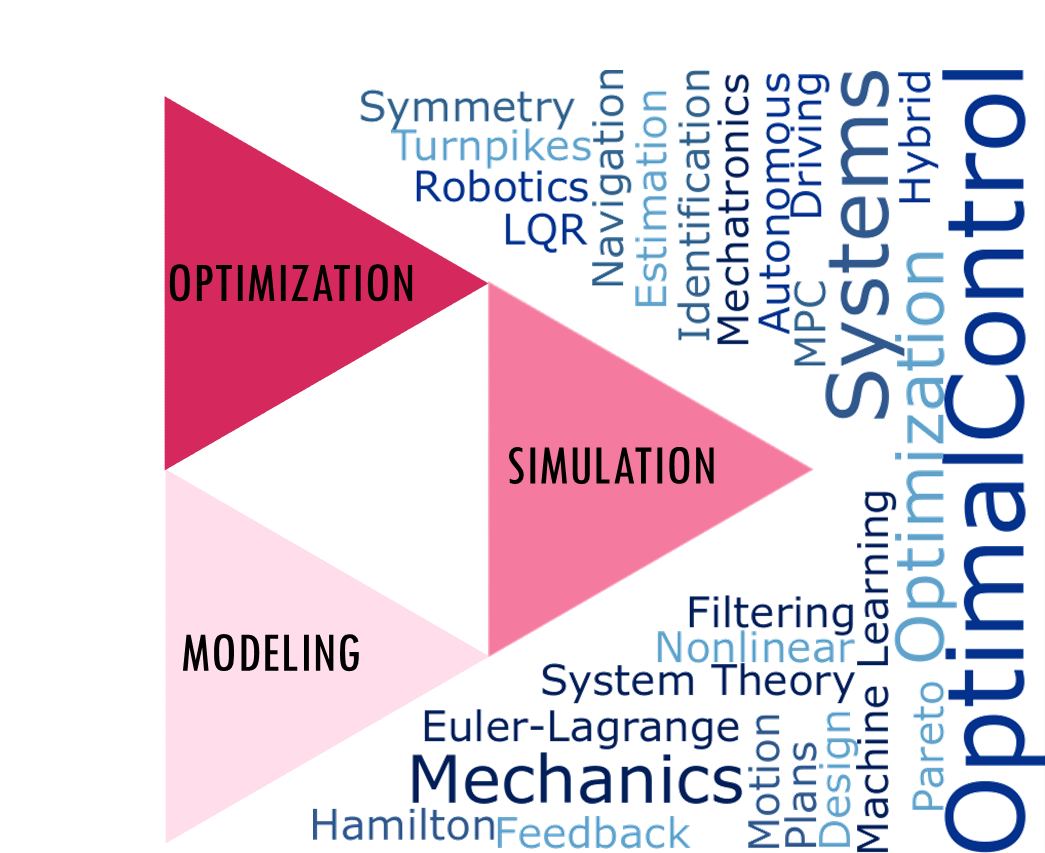
Kathrin Flaßkamp is a Professor at Saarland University, specializing in the Department of Systems Engineering. Her work focuses on modeling and simulation of technical systems, with applications spanning robotics, optimal control, and biomedical engineering. She is based at Campus A5 1, Room 1.04, Saarbrücken. Her research integrates control theory, artificial intelligence, and optimization to address challenges in mobile robotics, autonomous vehicles, and medical devices. A key trend in her recent articles involves leveraging model predictive control, neural networks, and Koopman operators for energy-efficient and cooperative trajectory planning. She also explores applications in stereotactic neurosurgery using continuum robots, emphasizing precision and adaptability. Her work frequently bridges theoretical advancements with real-world engineering problems, including systems with symmetries, multi-agent coordination, and data-driven methods for dynamical systems. Despite no explicit awards listed, her contributions to optimal control and robotics are evident in her extensive publication record.
Dr. Christine Drew serves as Assistant Professor in Auburn University's College of Education within the Department of Special Education, Rehabilitation, and Counseling. She coordinates the Graduate Transition Certificate Program and advises the EAGLES Program, leveraging her expertise in behavior analysis for intellectual and developmental disabilities. Her academic foundation includes a Ph.D. from the University of Oregon, M.Ed. in Special Education from Texas State University, and B.A. in Economics from the University of Texas. Educational background: Ph.D. in Special Education from University of Oregon M.Ed. in Special Education with Applied Behavior Analysis concentration from Texas State University B.A. in Economics with minor in secondary social studies education from University of Texas Dr. Drew's research pioneers intersections of behavior analysis, sexuality education, and IDD support through parent collaboration. Her work advances telehealth interventions for challenging behavior and inclusive practices for neurodiverse populations, with growing emphasis on social justice dimensions like LGBTQIA+ inclusion and racial equity in autism services. Methodologically, she integrates single-case designs with community-based participatory approaches to address systemic barriers. Analysis of her 2021-2025 publications reveals three dominant trajectories: (1) Practical skill-building interventions for daily living and menstrual health, (2) Telehealth adaptations for family-implemented behavior support across generations, and (3) Critical examinations of equity gaps in disability research and incarceration systems. Her scholarly impact extends through editorial contributions to the Journal of Positive Behavior Interventions . Professional recognition includes Board Certified Behavior Analyst-Doctoral (BCBA-D) status achieved in 2019, though no formal scientific awards are documented. Her editorial board service demonstrates peer acknowledgment of expertise. As EAGLES Program Faculty Research Advisor, Dr. Drew mentors transition-focused projects while coordinating graduate certificate training. Her telehealth research during the pandemic suggests NIH or IES grant involvement, though specific funding isn't detailed. Current work emphasizes sustainable activism models for behavior analysts. Dr. Drew leads Auburn's EAGLES Program research initiatives, developing inclusive higher education frameworks for students with IDD. Her telehealth case studies involve multi-stakeholder teams including grandparents, parents, and school personnel, reflecting her commitment to ecological intervention approaches.
Michael Hyland is an Associate Professor in the Department of Civil and Environmental Engineering at the Samueli School of Engineering, University of California, Irvine. His research focuses on the modeling, analysis, and optimization of smart urban transportation systems, with particular emphasis on shared autonomous vehicles, microtransit integration with fixed-route transit, and sustainable mobility solutions. He employs methodologies from operations research (optimization, Markov decision processes), statistical modeling (discrete choice, regression), and economic analysis to address challenges in urban mobility. Education: Ph.D., Civil and Environmental Engineering (Transportation), Northwestern University, 2018 M.Eng., Civil and Environmental Engineering (Transportation), Cornell University, 2013 B.S. Civil and Environmental Engineering, Cornell University, Magna Cum Laude, 2013 His recent research explores emerging mobility paradigms through topics such as dynamic fleet management, vehicle miles traveled (VMT) impacts, equity in job accessibility, electricity demand implications of e-bikes, and human-machine collaborative planning frameworks. The work often combines large-scale simulation with interpretable modeling techniques. Hyland leads the Hyland Lab , which develops computational tools for evaluating integrated transportation systems. The lab's work spans theoretical modeling (e.g., state-space representations, decomposition heuristics) and applied policy analysis (e.g., assessing Senate Bill 1 infrastructure projects, AV-era parking reforms, and micromobility deployment strategies).
Danijel Skočaj is Full Professor at the University of Ljubljana, Faculty of Computer and Information Science , and serves as Head of the Visual Cognitive Systems Laboratory . He is an internationally recognized researcher in computer vision, machine learning, and cognitive robotics , with a strong focus on deep-learning solutions for real-world visual perception tasks and their ethical implications. Education: While specific degrees are not listed in the text, Professor Skočaj’s 2002 “Best PhD paper award” confirms he holds a PhD in the relevant field. Research Interests: His work spans Computer Vision & Pattern Recognition Deep Learning & Neural Networks Cognitive Robotics & Autonomous Navigation Visual Anomaly & Surface-Defect Detection AI Ethics & Societal Impact of AI These interests manifest in both theoretical advances and practical systems deployed in industry and public infrastructure. Publication Trends: Recent papers (2020-2024) emphasize deep-learning architectures for defect detection, robotic grasping, autonomous navigation, traffic-sign recognition, and 3-D anomaly detection , demonstrating a clear trajectory toward robust, real-time, and data-efficient visual intelligence. Awards & Honors: Prometheus of Science Award 2021 (Slovenian Science Foundation) Golden Plaque, University of Ljubljana 2020 ARRS National Award for Exceptional Scientific Achievement 2011 & 2022 Multiple Best-Paper awards at ERK conferences (2013, 2017, 2019) Top-downloaded paper recognition, Journal of Intelligent Manufacturing 2020 Grants & Projects: He currently leads or co-leads five major 2025-2028 national and EU projects (RTFM, SMASH, COMET, RoDEO, MUXAD) totaling several million Euros, focusing on advanced computer vision, machine learning for science & humanities, autonomous systems, and explainable AI. Past leadership includes EU FP7 CogX, GOSTOP, ViLLarD, and many ARRS programmes. Laboratory & Team: The Visual Cognitive Systems Laboratory hosts a dynamic group of doctoral and master’s students working on cutting-edge perception systems. The lab’s open-source low-cost robotic platform and datasets are widely adopted for education and research.
Jamal Atif is a Professor at Paris-Dauphine University and holds multiple significant leadership positions including Project Manager for 'Data Science and Artificial Intelligence' at the Institute of Information Sciences and their Interactions (INS2I) of the CNRS, Deputy Scientific Director of 3IA PRAIRIE, Head of the MILES team/project at LAMSADE (UMR CNRS-Université Paris-Dauphine), Co-leader of the Transverse Artificial Intelligence Program at PSL University, and Director of the Dauphine Numérique program. Professor Atif's primary research focuses on the foundations of responsible artificial intelligence, with specific expertise in privacy preservation in machine learning, robustness of deep learning algorithms to malicious attacks, causality, and explainability. His work bridges theoretical foundations with practical applications in security and reliability of AI systems. He has developed innovative approaches to address adversarial vulnerabilities in machine learning models and has made significant contributions to privacy-preserving techniques in data analysis. His publication record demonstrates a consistent focus on robust and trustworthy AI systems, with recent work exploring differential privacy in clustering, adversarial robustness, and explainable AI. The research spans theoretical foundations in logic and knowledge representation to practical applications in finance, healthcare, and computer vision. His publications appear in top-tier venues including Machine Learning journal, Neural Information Processing Systems, and International Joint Conferences on Artificial Intelligence. Scientific Awards: Recipient of two awards from the North American Society of Radiology for his thesis work Professor Atif has co-supervised or is currently supervising around fifteen doctoral students, demonstrating his commitment to mentoring the next generation of AI researchers. His leadership extends to directing major institutional programs including Dauphine Numérique and the Transverse Artificial Intelligence Program at PSL University, where he shapes strategic research directions in AI. He leads the MILES team/project at LAMSADE, which focuses on foundational aspects of machine learning and artificial intelligence. The team's research spans theoretical aspects of learning algorithms to practical applications requiring robust and reliable AI systems, with particular emphasis on security and privacy considerations in modern machine learning deployments.
Professor Sebastian Stein is a faculty member in the Electronics and Computer Science department at the University of Southampton, specializing in artificial intelligence and multi-agent systems. He holds a PhD from the University of Southampton (2008) and an MEng in Computer Science from the University of Warwick. His research focuses on citizen-centric AI, mechanism design, and applications in smart energy, transportation, and disaster response. He leads or collaborates on projects such as the EPSRC-funded 'Citizen-Centric Artificial Intelligence Systems' and 'Future Electric Vehicle Energy networks supporting Renewables (FEVER)'. Education: PhD in Multi-Agent Systems (University of Southampton, 2008), MEng Computer Science (University of Warwick) Research Groups: Agents, Interaction and Complexity research group His work emphasizes incentive engineering in dynamic systems, sequential decision-making under uncertainty, and societal challenges like smart mobility and electric vehicle infrastructure. Key awards include the Blue Sky Ideas Award (AAMAS-2021) and Best Demonstration Award (AAMAS 2025). He currently supervises multiple PhD students in computer science and engineering.
Noah Glaser is an Assistant Professor at the University of Missouri’s School of Information Science & Learning Technologies, where he directs the Information Experience Lab. He holds a PhD in Instructional Design and Technology from the University of Cincinnati. His research focuses on leveraging cutting-edge technologies like virtual reality (VR), video games, artificial intelligence (AI), and mobile devices to design inclusive educational interventions, particularly for neurodiverse populations and individuals with disabilities. Key projects include NSF-funded initiatives such as uSucceed (VR/AI-driven cybersecurity curriculum for neurodiverse learners) and Gaming4Good (computational thinking education via Nintendo’s Game Builder Garage). He also develops The Things Left Behind , a video game celebrating neurodivergent experiences, and leads Mizzou Cloud DevOps , advancing cloud computing training for scientific communities. Glaser’s expertise spans mixed-reality learning environments, formal/informal STEAM education, and AI applications in education. His work emphasizes participatory design involving neurodivergent users, resulting in over 30 peer-reviewed publications and frequent conference presentations. He actively mentors students interested in game development, extended reality (XR), and AI. His interdisciplinary collaborations bridge instructional design, neuroscience, and technology, with a focus on promoting equity in STEM education. Notable grants include multiple NSF awards supporting his research into inclusive technologies. His lab develops tools like the Museum of Instructional Design (3D virtual learning environment) and Maria Martinez VR training program for autistic adults. Glaser advocates for universal design principles in online education and has explored emerging technologies such as ChatGPT’s educational potential and VR’s impact on environmental attitudes.
Rafał Weron is a Full Professor at Wrocław University of Science and Technology, where he has held leadership roles since 2015, including Head of the Department of Operations Research and Business Intelligence and Chairman of the Scientific Discipline Council for Management and Quality Sciences. His expertise spans electricity price forecasting, computational economics, and risk management, with significant contributions to probabilistic forecasting methods. As a globally recognized scholar, he has received prestigious awards such as the Hugo Steinhaus Prize (2018) and the Tao Hong Award (2017). Key Affiliations : Wrocław University of Science and Technology; Polish Academy of Sciences (Statistics and Econometrics Committee); Polish Mathematical Society. Research Trends: Weron's work focuses on electricity price forecasting, leveraging machine learning and statistical models to enhance accuracy and reliability. His publications emphasize probabilistic forecasting frameworks, quantile regression, and hybrid modeling techniques, reflecting a commitment to methodological rigor and practical applications in energy markets. Scientific Awards: Top 1% globally ranked economist (IDEAS/RePEc, 2013-2022) World's Top 2% Most Widely Cited Scientist (2019-2021) 'Hugo Steinhaus' Prize (2018) Tao Hong Award (2017) Emerald Citation of Excellence (2017) Minister of Science & Higher Education Prize (2016) Commission of National Education Medal (2016)
Cindy Grimm is a Professor and Graduate Program Director in the School of Mechanical, Industrial, and Manufacturing Engineering at Oregon State University (OSU), part of the College of Engineering. She is affiliated with the Robotics group, Human-Centered Computing, and Graphics and Visualization. Her research focuses on robotic grasping and manipulation for agricultural applications, ethics in robotics, and interdisciplinary projects such as 3D modeling, medical imaging segmentation, and bio-inspired sensor design. Education: Ph.D. in Computer Science, Brown University, 1996 M.S. in Computer Science, Brown University, 1992 B.A. in Computer Science and Art, University of California, Berkeley, 1990 Research Interests: Dr. Grimm’s work bridges computer science and robotics, emphasizing practical applications in agriculture and ethics. Key areas include robotic fruit harvesting systems, human-robot interaction, and the development of perception-driven algorithms for complex tasks like tree pruning and object manipulation. Her earlier projects explored surface modeling, bat sonar patterns, and 3D sketching interfaces. Publications: Her recent work addresses challenges in autonomous orchard management, robotic gripper design, and public understanding of service robots. Themes include precision agriculture, grasp planning, and sociotechnical aspects of robotics adoption. Awards: Recipient of the NSF CAREER Award, recognizing her contributions to robotics and interdisciplinary research. Service: Leads the Robotics graduate program at OSU, emphasizing ethical and technical training. Collaborates with the Collaborative Robotics and Intelligent Systems Institute (CoRIS) to advance robotics applications. Labs/Teams: Active in the CoRIS Institute, focusing on collaborative robotics and real-world robotic systems. Her lab develops hardware-software solutions for agricultural robotics and human-centered robotic interfaces.
Diego Klabjan is a Professor at Northwestern University within the Department of Industrial Engineering and Management Sciences. He serves as the Founding Director of the Master of Science in Machine Learning and Data Science Program and Director of the Center for Deep Learning. Ph.D. in Algorithms, Combinatorics, and Optimization from Georgia Institute of Technology (1999) B.S. in Applied Mathematics from University of Ljubljana (1994) His research focuses on machine learning, deep learning, and analytics with applications in finance, transportation, sports, and bioinformatics. Key contributions include federated learning algorithms, reinforcement learning for cryptocurrency trading, and neural network applications in impact mechanics. Recent publications highlight advancements in blockchain-based federated learning, second-order policy gradient convergence, and ensemble deep reinforcement learning. His work bridges theoretical foundations with industrial applications across diverse sectors. Preseren’s Award for the Best Undergraduate Thesis (1994) Transportation Science Section Dissertation Prize (2000) Intel's Outstanding Researcher Award (2019) Jack Meredith Best Paper Honorable Mention (2022) Klabjan has advised notable students including Luis Guimarães (2015 APDIO/IO Award winner) and Young Woong Park (2015 INFORMS Computing Society Best Student Paper recipient). His collaborations span Fortune 500 companies and startups in analytics-driven domains.
Michael Sangid is the Reilly Professor of Aeronautics and Astronautics and Professor of Materials Engineering at Purdue University. His academic roles include being a University Faculty Scholar (2022–2027) and Executive Director of the Hypersonics Advanced Manufacturing Technology Center. He holds dual appointments as a Professor in the School of Aeronautics and Astronautics and a courtesy Professor in the School of Materials Engineering. Dr. Sangid earned his B.S., M.S., and Ph.D. in Mechanical Engineering from the University of Illinois, Urbana-Champaign (2002–2010). His research integrates materials science, solid mechanics, and advanced manufacturing to develop physics-based models for structural materials, including high-temperature alloys, composites, and additive manufacturing processes. His ACME Laboratory focuses on microstructure-sensitive modeling, defect analysis, and experimental validation using advanced techniques like synchrotron X-ray diffraction and in-situ imaging. Key research interests include fatigue crack propagation, microstructural defect characterization, and computational tools for material lifing. He leads projects on rotating detonation rocket engines, ceramic matrix composites, and damage tolerance in aerospace materials. Notable awards include the NSF CAREER Award (2017) and DARPA Director’s Award (2016). Education: B.S. Mechanical Engineering, UIUC, 2002 M.S. Mechanical Engineering, UIUC, 2005 Ph.D. Mechanical Engineering, UIUC, 2010 Lab & Teams: Advanced Computational Materials and Experimental Evaluation (ACME) Lab, focusing on integrated computational and experimental approaches. Awards: NSF CAREER, DARPA Director’s Award, TMS Early Career Fellow, ASME Orr Award, and Purdue University Faculty Scholar.
Peng Hu is an Adjunct Professor at the University of Waterloo, focusing on cutting-edge research in satellite networks, 5G/6G non-terrestrial networks, and AI-driven solutions for space sustainability. His work emphasizes autonomous network management, edge computing in space, and IoT applications for industrial and healthcare systems. Research interests span satellite mega-constellations, space object detection via deep learning, and optimizing free-space optical (FSO) communication. He explores challenges in latency management, energy efficiency, and fault tolerance across heterogeneous networks, including UAV-assisted systems and industrial IoT. Key contributions include the SatAIOps framework for autonomous satellite operations and the SatNetOps multi-layer networking scheme. He has pioneered datasets like Satellite Object Detection (SOD) and developed anomaly detection methods using genetic algorithms and Monte Carlo dropout. Peng Hu’s recent work addresses global connectivity gaps via non-terrestrial networks and reviews reinforcement learning algorithms for space-air-ground integration. His technical leadership is reflected in workshops like the 5th IEEE ICC 2025 Satellite Mega-Constellations workshop.