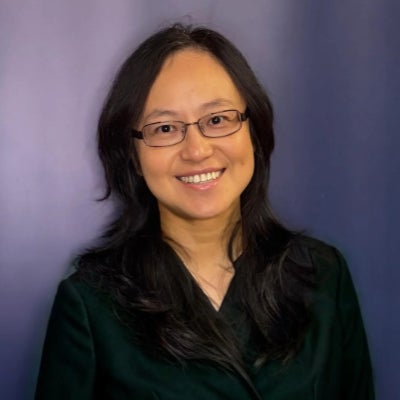
Professor Ruth Cameron FREng is affiliated with the University of Cambridge, serving as a Professor of Materials Science in the Department of Materials Science & Metallurgy. She co-directs the Cambridge Centre for Medical Materials alongside Professor Serena Best, focusing on therapeutic materials that interact with the body. Her research spans medical materials and biomaterials , emphasizing ice templating for creating 3D environments to control tissue growth. These environments are applied in cardiac, dental, and orthopedic repair, cancer research, and blood cell production. She also investigates biodegradable polymers , composites , and drug delivery systems , exploring relationships between material processing, morphology, and degradation. Collaborators: Cedric Ghevaert, Sanjay Sinha, Andrew McCaskie Core Research Disciplines: Materials for Tissue Repair, Composite and Nanocomposite Materials, Polymers and Macromolecular Materials
Associate Professor Jiwon Kim is a leading researcher in Transport Engineering at the University of Queensland's School of Civil Engineering. She serves as Director of Higher Degree by Research and was a DECRA Fellow from 2019-2022. Holding degrees from Korea University and Northwestern University, she specializes in AI/ML applications for transportation systems. PhD, Northwestern University BS & MS, Korea University Her research focuses on Artificial Intelligence and Machine Learning applications in transportation, including: Deep learning for traffic management Reinforcement learning in mixed traffic environments Multi-agent systems for urban mobility optimization Spatiotemporal trajectory analysis Recent publications demonstrate expertise in: Eco-driving strategies Traffic incident prediction Queue length estimation Crash risk modeling Scientific recognition includes: ARC DECRA Fellowship (2019-2022) She supervises doctoral students in: Transportation data analytics Autonomous vehicle systems Intelligent traffic management Current projects explore real-time traffic monitoring, synthetic mobility data generation, and connected vehicle technologies.
Christopher S. Tang is a UCLA Distinguished Professor and Edward W. Carter Chair in Business Administration at the Anderson School of Management , where he researches global supply chain management with a focus on social innovation in developing countries . He also serves as Senior Associate Dean for Global Initiatives and Faculty Director of the Center for Global Management . Education: Ph.D. in Management Science (1985, Yale University) M.Phil. in Administrative Science (1983, Yale University) M.A. in Statistics (1983, Yale University) B.Sc. in Mathematics (First Class Honors, 1981, King’s College, University of London) His research explores the intersection of corporate responsibility and supply chain innovation , addressing topics like microfinancing , mobile platforms for developing economies , direct agricultural procurement , and disaster response logistics . He emphasizes visibility, integrity, and agility in uncertain environments. Recent work highlights AI adoption benefits for supply chains , strategies to reduce forced labor risks , and policy impacts on ride-sharing platforms . His research bridges operations management and social justice , advocating for environmental stewardship alongside business growth. Scientific Awards: Salzberg Medallion (2017) Lifetime Fellow, INFORMS (2011) Responsible Research in Management Award (2017) Teaching Excellence Award (multiple years, UCLA-NUS) Dean’s Excellent Service Award (2014) As an influential adviser and consultant , Tang has worked with Amazon, HP, IBM, Nestlé, GKN , and Accenture . He has taught at Stanford University, UC Berkeley, Hong Kong University of Science and Technology , and served as visiting professor at Cambridge University and the Institute of Advanced Study at HKUST .
Anil Madhavapeddy serves as Professor of Planetary Computing at the University of Cambridge's Department of Computer Science and Technology and directs the Cambridge Centre for Carbon Credits (4C). A Fellow of Pembroke College, he integrates systems research with environmental conservation through the Computer Laboratory's Environment and Energy Group. His career spans industry leadership (NetApp, Citrix, Intel), academic appointments (Cambridge, Imperial, UCLA), and entrepreneurial ventures (XenSource, Unikernel Systems, Docker). Madhavapeddy earned his PhD at Cambridge's Computer Laboratory in 2006. His research bridges computational systems and planetary-scale environmental challenges, with deep expertise in open-source development (OCaml, Xen, Docker, OpenBSD) and technology strategy advising for organizations including Zededa, Tezos Foundation, and Tarides. His work centers on environmental computing and climate informatics, leveraging distributed systems and functional programming to develop sensing infrastructure for conservation. Recent projects focus on carbon credit systems, AI-driven biodiversity monitoring, and sustainable computing architectures that minimize ecological footprints while maximizing analytical capability. Analysis of his 2025 publications reveals a concentrated effort on AI-integrated conservation tools, privacy-preserving carbon accounting, and energy-efficient computing. Key themes include spatial networking for ecological data, LLM-enhanced evidence retrieval in conservation science, and novel metrics for extinction risk assessment—demonstrating computational innovation applied to urgent planetary boundaries. No scientific awards were documented in the source material. Madhavapeddy advises multiple technology firms on strategic development while leading the Cambridge Centre for Carbon Credits, though specific grant funding details remain unreported. He actively contributes to the Environment and Energy Group at Cambridge's Computer Laboratory and directs the interdisciplinary Cambridge Centre for Carbon Credits (4C). His open-source leadership spans critical infrastructure projects including OCaml, Xen, and Docker, fostering collaborative development communities that underpin modern cloud and container technologies.
Nick Koudas is a Professor in the Department of Computer Science at the University of Toronto, specializing in large-scale data management, data systems, and applied machine learning. His research integrates machine learning techniques into scalable data platforms to enhance the analysis of massive datasets. He holds a PhD from the University of Toronto, an MSc from the University of Maryland, and a Bachelor's degree from the University of Patras. Education: PhD, University of Toronto MSc, University of Maryland at College Park Bachelor's degree, University of Patras, Greece Research Interests: Relational Deep Dive (ReDD): Natural language query execution over unstructured documents Streaming Video Queries (SVQ): Interactive query processing for video streams Reliable Text-to-SQL: Generating accurate SQL queries with human-in-the-loop assistance Machine Learning Integration in Data Systems Publications: Focus on video analytics, query processing, and reliable natural language interfaces. Notable works include optimizing video queries, declarative frameworks for temporal constraints, and abstention-based SQL generation. Awards: Inventor of the Year (1st Prize), University of Toronto (2011) Best Paper Awards at international conferences Entrepreneurship & Advising: Co-founder of Sysomos (Meltwater Group), Aislelabs (Constellation Software), and Workorb Advisor to mapintent and ktau Labs & Teams: Leads research groups developing systems like ReDD and SVQ, emphasizing collaboration between academia and industry.
George J. Mailath is the Walter H. Annenberg Professor in the Social Sciences and Professor of Economics at the University of Pennsylvania, and an Honorary Professor at the Research School of Economics, Australian National University. He specializes in microeconomics, noncooperative game theory, repeated games, and the theory of reputations. His research explores pricing strategies, evolutionary game theory, and social norms. Mailath is a Fellow of prestigious institutions including the American Academy of Arts & Sciences and the Econometric Society. He served on the Econometric Society Council (2013-2015, 2020-2023), Game Theory Society Council (2005-2011), and co-founded Theoretical Economics . His editorial roles include editorships at Econometrica , Review of Economic Studies , and others. His 2019 book Modeling Strategic Behavior provides graduate-level insights into game theory and mechanism design. Mailath’s articles focus on strategic interactions, reputation effects, and dynamic game theory. Notable works include analyses of trust in risk-sharing mechanisms and coalition-proof strategies under frictions. His research emphasizes long-term strategic behavior and institutional design.
Mizuko (Mimi) Ito is a cultural anthropologist and learning scientist at the University of California, Irvine, serving as Director of the Connected Learning Lab and holder of the John D. and Catherine T. MacArthur Foundation Chair in Digital Media and Learning. She previously held research appointments at Keio University and the University of Southern California. Ito earned dual PhDs in Education and Anthropology from Stanford University and a BA in East Asian Studies from Harvard University. Education: PhD in Education, Stanford University PhD in Anthropology, Stanford University Bachelor's Degree in East Asian Studies, Harvard University Research Interests: Ito's work focuses on leveraging youth interests and digital media to foster equitable, socially connected learning. Her research spans mobile media culture in Japan, youth social media engagement in the US, and global adoption of children's media. She developed the connected learning framework, emphasizing youth-centered, equity-oriented approaches to education in the digital age. Grants & Partnerships: Ito has secured funding from major organizations including the MacArthur Foundation, Bill and Melinda Gates Foundation, National Science Foundation, and Microsoft Research. She co-founded the Connected Learning Alliance to advance research and impact in technology and learning. Awards: Recipient of the Jan Hawkins Award for Early Career Contributions (AERA) Labs & Initiatives: Directs the Connected Learning Lab at UC Irvine, which explores opportunities and risks of digital media in education. The Lab collaborates with global networks to design inclusive learning ecosystems.
Jampel Dell'Angelo is an Associate Professor with ius promovendi in Water Governance and Politics at the Department of Environmental Policy Analysis, Institute for Environmental Studies (IVM), Vrije Universiteit Amsterdam. He holds concurrent roles as a Visiting Scholar at the University of California, Berkeley's Ecohydrology Lab, and an Environmental Governance Affiliate Scholar at SESYNC, Maryland. His research focuses on multilevel dimensions of water governance, climate adaptation in African irrigation systems, and transnational land investments' impacts. He leads the EU-funded NEWAVE project, coordinating 15 Early Stage Researchers across 10 institutions. Educated with a dual PhD in Environmental Science (Autonomous University of Barcelona) and International Cooperation (Sapienza University), he also holds advanced degrees from the LSE, Sapienza, Curtin, and the University of Siena. As Editor-in-Chief of World Development , he promotes interdisciplinary research on socio-environmental systems. His work contributes to UN SDGs related to clean water, sustainable cities, and responsible production. Research interests span water grabbing dynamics, socio-ecological resilience, and policy frameworks for equitable resource management. Recent projects address Mediterranean water scarcity solutions and the socio-political implications of global land rushes. He supervises PhD candidates exploring themes like water democracy, agrifood transitions, and environmental justice. Key contributions include pioneering analysis of 'water commons grabbing' and documenting the Global Water Grab Syndrome. His documentary work complements field research, such as Working Together: Research and Water Governance on Mount Kenya . Current projects emphasize innovative governance models and climate-resilient water management in transboundary contexts.
Emily M. Bender is the Thomas L. and Margo G. Wyckoff Endowed Professor in the Department of Linguistics at the University of Washington. She also holds adjunct appointments in the School of Computer Science and Engineering and the Information School. Her research spans multilingual grammar engineering, computational linguistics, societal impacts of language technology, and sociolinguistic variation. She directs the Computational Linguistics Laboratory (The Treehouse) and leads the CLMS program. Bender is a Fellow of the AAAS (2022) and previously served as Howard and Frances Nostrand Endowed Professor (2019–2022). She has authored influential textbooks on NLP fundamentals and pioneered work on data statements to mitigate bias in NLP systems. Her work integrates linguistic theory with computational methods, emphasizing ethical AI and language documentation. Education: PhD in Linguistics from Stanford University (advisor: Ivan A. Sag), AB in Linguistics from UC Berkeley, with studies at Tohoku University. Past roles include NAACL Executive Board Chair (2016–2017) and current roles in the Association for Computational Linguistics leadership. Her Erdős number is 4. Research focuses on the LinGO Grammar Matrix, automatic grammar inference from interlinear glossed text (AGGREGATION project), and societal implications of NLP technologies like large language models. She co-leads the RAISE initiative and contributes to labs like the Tech Policy Lab and Value Sensitive Design Lab. Over 30 advisees have completed PhD and MS degrees under her mentorship. Teaching includes courses on syntax for NLP, societal impacts of language tech, and computational linguistics. Her 2020 ACL paper on form-meaning distinctions in NLP has been influential in ethical discussions. Current projects include The AI CON (2025) on combating tech hype.
Ioannis Gkioulekas is an Assistant Professor at the Robotics Institute within Carnegie Mellon University's School of Computer Science, with a courtesy appointment in Electrical and Computer Engineering. He leads the Computational Imaging Lab at CMU, focusing on joint hardware-software approaches to develop advanced imaging systems. His research spans computational imaging, computer vision, and graphics, addressing challenges like non-line-of-sight imaging, 3D sensing, and adaptive optics. Research interests include: Computational imaging systems design Non-line-of-sight and single-photon imaging LiDAR, SONAR, and interferometry applications Physics-based and differentiable rendering Probabilistic modeling and Monte Carlo methods Recent publications (2019-2021) demonstrate strong focus on waveguides, light transport simulation, 3D sonar reconstruction, and computational tomography. Common themes include inverse problems, wave-based imaging, and differentiable simulation techniques bridging graphics and sensing. Current advising includes Master's student Neham Jain and affiliates Bakari Hassan, John Liu, Bailey Miller, Sreekar Ranganathan, and Arjun Teh. Past students include PhD graduates Arpit Agarwal and Shumian Xin, and Master's student Shirsendu Halder.
Nancy Pollard is a Professor at Carnegie Mellon University, affiliated with both the Robotics Institute and the Computer Science Department. Her research focuses on understanding physical interaction with the environment through robotics and computer graphics, particularly in areas like dexterous manipulation, human motion analysis, and soft robotics. She explores how human examples can inform robot control policies and create natural-looking animations. Her work bridges robotics and graphics to solve challenges such as optimizing motion for humanoid robots and improving the realism of animated hands. Key projects include developing fast physically plausible motion techniques, studying hand motion complexity, and creating intuitive tools for modeling hand-object interactions. She also investigates the physical correctness thresholds in graphics and the design of affordable soft robotic hands for real-world applications like agriculture. Recent publications highlight advancements in motion retargeting for anthropomorphic manipulations, co-optimization of soft robotic hand design and control, and frameworks for sensor placement in soft hands. Her research emphasizes human-inspired approaches to robotics and the application of biomechanical insights to improve robotic dexterity. Pollard advises students such as Arjun Lakshmipathy and collaborates on projects involving both academic and industrial applications. Her work has been supported by grants focused on robotics design and simulation-based manipulation capture.
Prof. Dennis Komm is an Associate Professor at ETH Zurich's Department of Computer Science, leading the group for Algorithms and Didactics. He chairs the Center for Computer Science Education (ABZ) and serves on committees such as the Swiss Maturity Board (Schweizerische Maturitätskommission) and the STEM Commission of the Swiss Academies. Previously, he held roles at RWTH Aachen University (Master's, 2008), ETH Zurich (PhD, 2012), University of Zurich (external lecturer, 2014–2020), and PH Graubünden (including department head and professor of 'Fachdidaktik Informatik'). Education: He completed a Master's in Computer Science at RWTH Aachen (2008), a PhD at ETH Zurich (2012), and studies in Information Technology at Queensland University of Technology (2006). His academic journey includes visiting roles at King's College, Stanford, and Comenius University. He has taught extensively across institutions, emphasizing Python and LOGO-based approaches for beginners. Research focuses on algorithm design, approximation algorithms, reoptimization, and advice complexity in theoretical CS. His work in education explores computational thinking, programming pedagogy (especially for K–12), and interdisciplinary approaches (e.g., robotics in math). Recent trends in his articles highlight advancements in online algorithms, optimization under dynamic conditions, and initiatives to integrate CS into Swiss school curricula sustainably. He actively promotes CS education through platforms like WebTigerPython and collaborates on projects such as CyberQuest and MINTerlink. His outreach includes organizing conferences (e.g., STIU 2025) and workshops on programming and cybersecurity for teachers and students. Despite no listed scientific awards, his contributions to education and theoretical CS are recognized through editorial roles in journals like Informatics in Education and contributions to the TigerJython Group. Grant-related advising includes co-supervising doctoral theses on robotics, USOs, and programming didactics. He advocates for equitable educational opportunities via the Passerelle exam and the Swiss Beaver Competition. His team's work spans teacher training, didactic certifications, and bridging university-school collaborations through initiatives like MINTerlink. Labs and teams: Head of ABZ (ETH's CS education center), collaborator with the Computational Robotics Lab, and part of the TigerJython Group. He also co-organizes the Colloquium on Mathematics, Computer Science, and Education with ETH's Mathematics Department.
Craig Jin is an Associate Professor at the University of Sydney, leading the CARlab (Computing and Audio Research Laboratory) and Spatial Audio Research initiatives within the School of Electrical and Computer Engineering. He holds a BS from Stanford University, an MS from Caltech, and a PhD from the University of Sydney. His work focuses on immersive audio technologies, biomedical signal processing, and assistive technologies for sensory augmentation. Research interests include spatial audio reproduction, binaural processing, acoustic sensing for accessibility, and machine learning applications in signal processing. Key contributions span HRTF interpolation, noise reduction algorithms, and acoustic touch systems for the visually impaired. Recent projects include real-time MRI analysis of vocal tract dynamics and sparse recovery techniques for sound field reconstruction. His publications span over 150 peer-reviewed articles in journals like IEEE Transactions on Audio, Speech, and Language Processing, and conferences such as ICASSP. He advises four current PhD/Master’s students on projects like predictive gesture tracking, voice disorder classification, and magnetic resonance imaging techniques.
Professor Yan (Lindsay) Sun is a faculty member at the University of Rhode Island in the College of Engineering under the Department of Electrical, Computer and Biomedical Engineering . She is the founding director of the Center for Cyber-Physical Intelligence and Security (CYPHER) and an IEEE Fellow . Her research focuses on cyber-physical systems security , power grid security , network security , and trustworthy social computing , with a particular emphasis on trust modeling and management in complex systems. Her publications span smart grid security , microgrid control , machine learning applications in power systems, and blockchain-based security mechanisms . The work often explores adversarial threats , resilient control strategies , and data augmentation techniques for improved grid monitoring. NSF CAREER Award (2007) IET Wireless Sensor Systems Premium Award (2018) EURASIP Best Paper Award (2015) IEEE Fellow (2019) URI College of Engineering Outstanding Research Award (2022) She actively leads interdisciplinary CYPHER Lab initiatives involving cyber-physical system resilience , network security , and smart grid analysis , collaborating with government and industry partners.
Robert Dick is a Professor in the Department of Electrical Engineering and Computer Science at the University of Michigan, part of the College of Engineering. He previously held roles as Associate Professor at Northwestern University and Visiting Professor at Tsinghua University. He earned his Ph.D. from Princeton University and a Bachelor's degree from Clarkson University. His research focuses on Embedded Systems, Learning Dynamics, Efficient Machine Learning, Privacy, and Censorship Resistance. Key themes include defining problems with correct costs/constraints, broadening access to information technology, mitigating negative tech impacts, and solving inference problems with limited resources. He leads the Embedded Systems Graduate Program and is a member of the Michigan Integrated Circuits Laboratory (MICL). His work spans thermal management, energy-efficient computing, and low-power wireless networks. Notable contributions include innovations in embedded system design, machine vision frameworks, and sensor networks. Courses taught include EECS 507 (Embedded Systems Research), EECS 373 (Embedded System Design), and ENGR 100 (Autonomous Systems). His recent publications emphasize AI model analysis, energy-efficient networks, and environmental sensing. Projects include MemX (attention-aware wearable tech) and LoRa-based LPWAN protocols. Dick co-founded Stryd, a company commercializing embedded systems innovations.