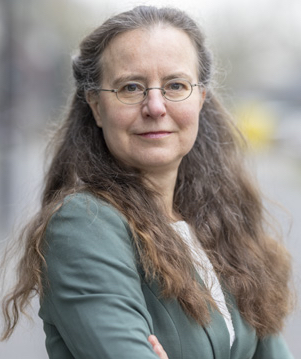
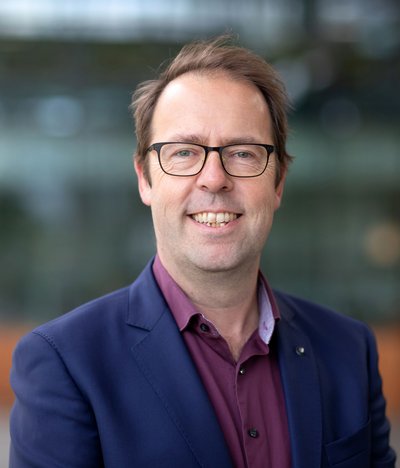
Anja Volk is Professor of Music Information Computing at Utrecht University's Faculty of Science , bridging computer science, mathematics, and musicology. With a dual background in mathematics and musicology, she has worked in Germany (1999-2003), the USA (2003-2005), and the Netherlands (2006-present). Her research focuses on music as a fundamental human trait , with applications in music technology for health and wellbeing, particularly through music-driven serious games and inclusivity research . Recipient of NWO-VIDI grant (2010) Awarded Westerdijk Award (2018) and Utrecht University Diversity and Inclusion Award (2020) Co-founder of Transactions of the International Society for Music Information Retrieval (2018) , Women in MIR (WIMIR) mentoring program (2016) , and Society for Mathematics and Computation in Music (2007) Her recent publications cover topics like computational music analysis for therapy, AI-driven education tracks, and music's role in healthcare applications. She actively contributes to interdisciplinary education through workshops and the master's course Sound and Music Technology , leading to collaborations like the AI Song Contest entries and diverse holiday playlist projects featured in NPO Radio 1 .
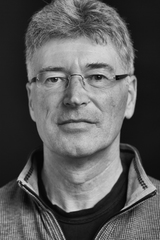
Frank de Boer is a researcher at Centrum Wiskunde & Informatica (CWI), Amsterdam , focusing on formal methods , concurrency theory , and software verification . His work bridges theoretical foundations with practical applications in object-oriented programming and parallel systems. Key research areas: Separation logic for heap reasoning Behavioral subtyping and history-based verification Active objects and actor models Concurrency and deadlock analysis Selected scientific recognition: Best Paper (ESSOC 2017) Bronzen Achievement Award (Trust4All 2008) Forum-Architectuurprijs (Archimate 2008) Recent publications (2025–2021) emphasize footprint logic, history-based reasoning, and formal verification of concurrent systems. Collaborations span institutions in The Netherlands, Germany, and China, with applications to Java collections, multicore memory systems, and transition system models.
Jiri Kosinka is an Associate Professor at the University of Groningen , affiliated with both the Faculty of Science and Engineering and the Faculty of Medical Sciences/UMCG . His work bridges Scientific Visualization and Computer Graphics with Robotics and Image-Guided Surgery . Research spans computational geometry, medical visualization, and fluid dynamics Key contributions in subdivision surfaces, distance transforms, and point cloud processing Recent publications focus on 3D surgical planning , turbulent flow simulations , and medical image analysis . His work integrates deep learning techniques for geometry processing and virtual reality applications in medical education. Notable collaborations include interdisciplinary projects with UMCG and Siemens . Awards and grants are not explicitly listed in the provided data.
Dr. Amirhoushang Mahmoudi is an Associate Professor in Thermal Engineering with a robust research portfolio spanning renewable energy systems, thermochemical storage, and heat transfer optimization. His work, cited 2123 times with an h-index of 25, focuses on advanced cooling technologies, phase change materials, and computational modeling of thermal processes. Recent studies highlight applications in photovoltaic efficiency, multi-reactor systems, and microstructural analysis of salt hydrates. Research Trends: His 2024 publications emphasize thermochemical energy storage, leveraging micro-CT imaging and computational methods to enhance material performance and system design. Collaborations: Active collaborations include work with researchers like B. Kieskamp, M. Shahi, and G. Brem, focusing on energy storage innovations and thermal material characterization.
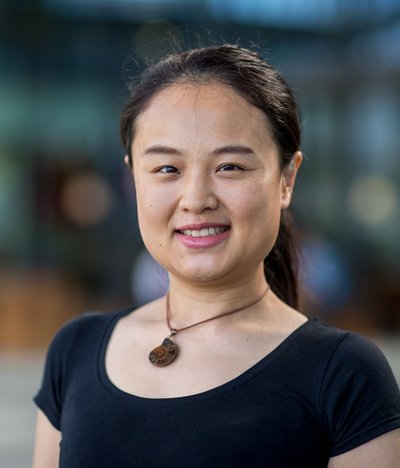
Lijia Tan serves as an Assistant Professor at Eindhoven University of Technology (TU/e) within the Department of Industrial Engineering & Innovation Sciences (IE&IS), specifically in the Operations, Planning, Accounting & Control (OPAC) capacity group. She maintains dual affiliations with the Eindhoven Artificial Intelligence Systems Institute (EAISI), contributing to both EAISI High Tech Systems and EAISI Foundational research groups. Dr. Tan earned her Ph.D. in Economics from Xiamen University in 2015, followed by a two-year postdoctoral position at the University of Cologne funded by Fritz Thyssen Stiftung. She then joined TU/e as a postdoctoral researcher in the OPAC group until 2019, with an interim position at Tianjin University before returning to TU/e as a faculty member in 2020. Her research centers on Behavioral Operations Management, where she employs laboratory experiments to investigate human decision-making in operational contexts. Key focus areas include auction mechanisms, supply chain contracts, decision-making under uncertainty, and the interaction between human planners and production planning systems. Her work bridges economics, operations research, and cognitive psychology to develop more realistic behavioral models for operational settings. Analysis of Dr. Tan's recent publications reveals a consistent methodological approach combining theoretical modeling with experimental validation across diverse operational contexts. Her research shows increasing attention to human-AI collaboration in Industry 5.0 settings, particularly examining how production planning systems can better accommodate human cognitive limitations while providing effective decision support. Dr. Tan teaches courses including Fundamentals of Financial and Management Accounting, International & Strategic Risk Management, and Integrated Financial and Operations Management. Her teaching reflects her interdisciplinary expertise spanning operations management, economics, and decision science. Based at Atlas 4.319, Dr. Tan actively contributes to multiple research initiatives at TU/e, particularly within the EAISI High Tech Systems and EAISI Foundational groups, where she applies her expertise in behavioral modeling and experimental methods to advance operations management research.
Winifred A Gebhardt is Associate Professor of Health Psychology at Leiden University's Institute of Psychology, Faculty of Social and Behavioural Sciences. She holds ancillary roles including chair of the Psychology Master’s Programme Committee and Senior Researcher at the National Institute for Social Research (4 days/week since 2021). Her work focuses on identity processes , self-regulation , and goal conflict dynamics in health behavior change. Education: Clinical & Health Psychology (Major), Social & Organizational Psychology (Minor) from Utrecht University (1989); Post-Master Research Internship at Harvard Medical School (1989); PhD cum laude at Leiden University (1997) Her research examines how health goals interact with personal identity and other life goals, particularly in contexts like smoking cessation , physical activity promotion , alcohol use , and self-management for intellectual disabilities . She pioneered the Health Behaviour Goal Model and transitional identities framework. Recent publications focus on digital future-self interventions for smoking/PA, organizational humanness, and cardiovascular teachable moments. She received the European Health Psychology Society Fellowship (2018) for lifetime contributions. Key Supervisees: Janice Sandjojo, Eline Meijer, Kristell Penfornis, Michelle Brust
Suzanne van.de.Groep is a Researcher at Leiden University 's Institute of Psychology , specializing in Developmental and Educational Psychology . Her work focuses on adolescent prosocial behavior , integrating neuroimaging , hormonal data , and social context analysis . She leads the Brainlinks Project , a longitudinal study tracking 150 participants to explore neural and contextual drivers of prosocial development. Research Themes : Adolescence, Cognition, Emotion, Neuroimaging, Prosocial Behavior Grants : 2019 Research Grant for UCLA collaboration Education : Master's in Developmental Psychology (cum laude, 2016) Scientific Contributions include peer-reviewed publications on trust development, target-specific generosity, and neural correlates of prosociality. Her Brainlinks Project employs MRI, daily diaries, and parent reports to map behavioral and brain changes over time. She actively participates in international conferences like Flux and SRA , and engages in public outreach through initiatives like the Hoe?Zo!Show and Museumnight lectures . Academic Leadership involves supervising BSc/MSc theses , co-organizing workshops, and mentoring junior researchers. Her collaborations span institutions including UCLA and Erasmus University Rotterdam , where she transitioned in 2020.
Huiqing Wang is a researcher at Eindhoven University of Technology, specializing in room acoustics and computational methods. She holds a Ph.D. in Aerospace Engineering from TU/e (2021), a Master's from Delft University of Technology, and a Bachelor's in Aircraft Design from Nanjing University of Aeronautics and Astronautics. Education: Bachelor of Engineering (2012), Nanjing University of Aeronautics and Astronautics Master of Science (2015), Delft University of Technology Ph.D. (2021), Eindhoven University of Technology Her research focuses on room acoustics simulation, time-domain discontinuous Galerkin methods, and open-source software development. She has contributed to Python-based wave propagation models and hybrid acoustic modeling approaches integrating image source, diffusion equation, and Galerkin methods. Recent publications highlight trends in open-source acoustic software, reproducibility challenges, and collaborative platforms for room acoustics. She actively promotes open research practices in computational acoustics. Key Research Areas: Room Acoustics Simulation Discontinuous Galerkin Methods Acoustic Diffusion Equations Open-Source Software Development Wave-Based Modeling Reproducibility in Acoustic Research
Dr. Jacqueline Evers-Vermeul is an Associate Professor at the Department of Languages, Literature and Communication at Utrecht University, specializing in Language and Communication within the Humanities Institute for Language Sciences. Her academic career spans over two decades since her promotion at Utrecht University in 2005, with a consistent focus on text structure, comprehension, and language education. Her research interests center on the comprehensibility of texts, reading and writing skills development, subject didactics, methods for document design and evaluation, and testing and assessment. She investigates how textual features affect comprehension across different educational contexts, with particular emphasis on discourse structure, connective use, and the relationship between text structure and content knowledge acquisition. Her work bridges theoretical linguistics with practical educational applications, particularly in primary and secondary education settings. Analysis of her recent publications reveals a strong trajectory toward integrating text structure instruction across disciplines, especially in science education. Her research shows increasing focus on practical applications for teachers, with numerous publications in both academic and professional journals. She has developed a significant body of work examining how explicit instruction in text structure enhances reading comprehension, writing skills, and content knowledge acquisition, with particular attention to vulnerable student populations. Dr. Evers-Vermeul serves in several important educational roles, including as Chair of the committee for the final examinations of Dutch for havo and vwo since 2020, Member of the Dutch Masters Team since 2019, and Member of the Advisory Board for the Recalibration of the Knowledge Base Teachers' College for Primary Education since 2024. Her current research projects include 'Bewust geletterd in het VO: lezen en schrijven met genres' (2024-2029), a large-scale NWO-funded study examining how genre-based approaches can improve reading and writing instruction in secondary education. Chair of the final examination committee for Dutch pre-university education (havo and vwo) since August 2020 Member of the Dutch Masters Team since January 2019 Member of the Advisory Circle for the Recalibration of Knowledge Bases for Primary Education since July 2024 Member of the Steering Committee for the Research Agenda for Primary Education Testing since January 2025 Former Chair of the Association Interuniversity Consultation on Language Proficiency (VIOT; 2018-2022) Her collaborative approach is evident in her numerous research partnerships across Dutch universities and educational institutions. She frequently works with colleagues from Groningen, Amsterdam, Nijmegen, and various teacher training colleges, demonstrating her commitment to bridging research and practice in language education.
Jacoliene van Wijk is a PhD Candidate at the Freudenthal Institute within the Faculty of Science at Utrecht University , focusing on Mathematics Education . Her research, funded by the Dudoc grant (2022), explores the integration of computational origami into secondary mathematics education under the supervision of Michiel Doorman, Anna Shvarts, and Rogier Bos. Research Interests: Mathematics Education Computational Origami Secondary Education Pedagogy STEM Education Educational Technology Research Trends: Her work emphasizes hands-on learning, transitioning informal origami techniques into formal mathematical concepts such as fractions, geometry, and spatial reasoning. Publications span academic journals, professional magazines, and public-facing resources like the website 'Wiskundig Vouwen' (2021). Scientific Awards: Dudoc grant for teachers (2022) Labs/Teams: Affiliated with the Freudenthal Institute, a leader in mathematics and science education research.
Serge Hoogendoorn is a Professor in Traffic Systems Engineering within the Faculty of Civil Engineering & Geosciences at Delft University of Technology. With over 1,000 research outputs to his name, including 360 articles and 541 conference contributions, he stands as a leading figure in transportation research. His work spans theoretical foundations and practical applications in traffic engineering, with a particular focus on innovative modeling approaches. His educational background, though not explicitly detailed in the provided text, reflects the 'dr.ir.' designation in his title, indicating both a doctorate and engineering degree from the Dutch academic system. His research interests center around traffic flow theory , pedestrian dynamics , intelligent transportation systems , and mobility as a service , with recent work increasingly incorporating artificial intelligence and machine learning techniques. Analysis of his recent publications (2023-2025) reveals a strong trend toward applying advanced computational methods to transportation challenges. His work bridges theoretical traffic flow models with practical applications, particularly in pedestrian flow prediction, driving behavior analysis, and active transportation mode forecasting. The research demonstrates increasing integration of spatiotemporal modeling , graph neural networks , and synthetic data generation techniques to address complex mobility challenges. ERC Advanced Grant 2015 D. Grant Mickle Award 2016 Greenshields Prize 2016 Recognition for Dynamic speed limit control to resolve shock waves on freeways Professor Hoogendoorn has supervised 59 students throughout his career and has been actively involved in numerous research projects, most notably the CriticalMaaS project (2019-2023) focused on Mobility as a Service. His research group appears to collaborate extensively with colleagues like S. Hoogendoorn-Lanser, O. Cats, and N. van Oort. Beyond traditional academic work, he maintains strong engagement with public discourse on mobility topics, as evidenced by 27 press/media appearances discussing AI in mobility, intelligent bike paths, and post-pandemic traffic patterns. His work has practical applications in traffic management systems, pedestrian infrastructure design, and future mobility planning.
Michel Reniers is an Associate Professor at the Department of Mechanical Engineering at Eindhoven University of Technology (TU/e). His research focuses on model-based engineering of supervisory controllers, synthesis of supervisory controllers for modal logics, cyber-physical systems, and development of modeling languages like CIF. MSc in Computer Science (TU/e, 1994) PhD in Computer Science (TU/e, 1999) His work emphasizes formal methods in supervisory control for high-tech and embedded systems, with applications in manufacturing, automotive systems, waterway locks, tunnel installations, robotics, and autonomous systems. The research aims to ensure safety and performance guarantees for cyber-physical systems through automated synthesis tools. Key publications highlight advancements in controller synthesis for non-deterministic systems, Hennessy-Milner logic, and embeddings between state-based and event-based systems. These contributions bridge concurrency theory and practical supervisory control implementations. Scientific Awards IEEE Senior Member
Andy D. Pimentel is a Full Professor at the University of Amsterdam, where he chairs the Parallel Computing Systems (PCS) group within the Systems and Networking Lab at the Informatics Institute. His research focuses on multi-core and multi-processor computer systems, with emphasis on design, programming, and run-time management. Dr. Pimentel earned his PhD in Computer Science in 1998 and MSc in Computer Science in 1993, both from the University of Amsterdam. His educational background laid the foundation for his extensive work in computer architecture and embedded systems. His research interests span a wide range of topics including multi-core embedded systems, system-level design and simulation, design space exploration, performance and power analysis, system dependability, hardware/software co-design, run-time resource management, and Edge AI. His work consistently addresses the extra-functional aspects of computing systems such as performance, energy consumption, and system dependability, while also considering the productivity of designing and programming these complex systems. Analyzing his recent publications reveals a clear trajectory toward sustainable and efficient computing systems. His work has evolved from foundational research in embedded systems design space exploration to cutting-edge research in Edge AI, distributed deep learning, and energy-efficient computing. His publications demonstrate strong interdisciplinary connections between computer architecture, artificial intelligence, and sustainable computing. IEEE CEDA Outstanding Service Recognition Award DATE Fellow Award Professor Pimentel has held significant leadership roles in the academic community, serving as Chair of the Board for the Advanced School for Computing and Imaging (ASCI) since 2021, and as a Board member of ICT Research Platform Nederland (IPN) since 2020. He has organized major conferences including serving as General Chair for Design Automation and Test in Europe (DATE) 2024 and IEEE/ACM Embedded Systems Week 2026. His extensive service to the community demonstrates his leadership in the field of computer architecture and embedded systems. At the University of Amsterdam, Professor Pimentel leads the Parallel Computing Systems group, which investigates the design, programming, and run-time management of multi-core and multi-processor systems. The group's research emphasizes modeling, analysis, and optimization of performance, power/energy consumption, and system dependability, while also focusing on improving the productivity of designing and programming these complex systems.
Anika Poppe is a postdoctoral researcher at the University of Groningen's Clinical & Developmental Neuropsychology department within the Faculty of Behavioural and Social Sciences. Her work focuses on cognitive remediation and non-invasive brain stimulation for severe mental illness, particularly in long-term psychiatric care. Primary research area: Cognitive remediation in severe mental illness Key methodology: Transcranial Direct Current Stimulation (tDCS) Collaborations with Lentis, RGOc, and Cognitive Neuroscience Center Her research investigates whether combining cognitive training with mild brain stimulation improves treatment efficacy for patients with severe psychiatric disorders. The HEADDSET pilot study explores this dual-intervention approach to enhance neuroplasticity and accelerate skill acquisition. Recent publications highlight her expertise in transdiagnostic meta-analysis, functional recovery frameworks, and science-to-practice gaps in psychiatric interventions. She also contributes to validating clinical assessment tools like the Dutch Self-Evaluation of Negative Symptoms Scale. Notable research outputs include: 2025 : Feasibility of combined interventions in clinical care 2024 : Meta-analytic evidence for cognitive training + brain stimulation 2023 : Client acceptability studies 2021 : HEADDSET trial protocol
E. Congeduti serves as a Lecturer in the Department of Computer Science & Engineering at Delft University of Technology's Faculty of Electrical Engineering, Mathematics and Computer Science, actively contributing to the Computer Science & Engineering Teaching Team with research in artificial intelligence and machine learning. Research concentrates on Deep Reinforcement Learning and Markov Decision Processes , with specific expertise in state abstraction, influence learning, and complex systems modeling. Current work develops memory architectures for partially observable environments and addresses real-world challenges like traffic sensor malfunctions through deep learning solutions, bridging theoretical frameworks with practical applications. Recent publications (2021-2025) demonstrate consistent advancement in reinforcement learning theory, particularly in influence-based abstraction methods and multi-agent system modeling. The research trajectory shows strong collaboration within TU Delft's Multi-agent Systems group, with increasing focus on real-world implementation of theoretical concepts. Affiliated with the Teaching Team, Congeduti participates in departmental educational initiatives while maintaining active research output through conference contributions, journal articles, and collaborative projects within the university's artificial intelligence ecosystem.