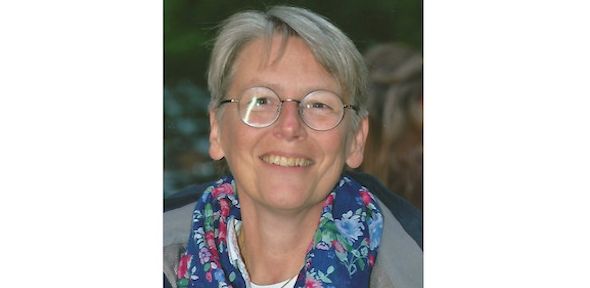
Ben Eischens is an Assistant Professor in the Department of Linguistics at UCLA. His work focuses on the intersection of phonology and phonetics, particularly in San Martín Peras Mixtec, an Otomanguean language spoken in Oaxaca, Mexico and diaspora communities. He holds a Ph.D. from UC Santa Cruz (2022) and collaborates extensively with Indigenous communities on language documentation and description. His research explores tone systems, laryngeal features, speech rate effects, and negative nominal structures, emphasizing empirical fieldwork and community partnerships. Recent work includes studies on vowel reduction, polar question formation, and the phonetic grounding of phonological theories. Eischens has presented at major conferences such as the International Congress of Phonetic Sciences (ICPhS), Annual Meeting on Phonology (AMP), and workshops on Languages of the Americas. His publications appear in journals like the International Journal of American Linguistics and Phonological Data & Analysis. He teaches courses in linguistic theory and field methods at UCLA, maintaining active research partnerships with San Martín Peras Mixtec community members. His work bridges theoretical linguistics with applied documentation, prioritizing Indigenous language revitalization efforts.
Baharan Mirzasoleiman is an Assistant Professor in the Department of Computer Science at the University of California, Los Angeles (UCLA), where she leads the BigML research group. Prior to joining UCLA, she was a postdoctoral research fellow in Computer Science at Stanford University working with Jure Leskovec. She received her Ph.D. in Computer Science from ETH Zurich advised by Andreas Krause. Her research focuses on addressing sustainability, reliability, and efficiency of machine learning, with particular emphasis on improving big data quality by developing theoretically rigorous methods to select the most beneficial data for efficient and robust learning. Her work spans several critical areas including data efficiency, robustness against label noise and data poisoning, and addressing spurious correlations in machine learning models. She has made significant contributions to understanding how neural networks exploit spurious features that correlate with certain categories during training but fail to generalize to minority groups. Professor Mirzasoleiman's research demonstrates how theoretically grounded approaches can lead to practical improvements in model robustness and efficiency across various applications including medical diagnosis and environmental sensing. Her work has resulted in the development of the SpuCo package, a Python library that provides modular implementations of state-of-the-art methods to address spurious correlations, along with controllable synthetic datasets like SpuCoMNIST and large-scale vision datasets like SpuCoAnimals. She has received numerous prestigious awards including the ETH medal for Outstanding Doctoral Thesis, being selected as a Rising Star in EECS by MIT, an NSF Career Award, a UCLA Hellman Fellows Award, and an Okawa Research Award. Her students have also received multiple fellowships and awards including Amazon Doctoral Student Fellowships and an OpenAI Superalignment Fast Grant. Professor Mirzasoleiman actively contributes to the academic community through invited talks at major conferences including ICML, ICLR, NeurIPS, and KDD, as well as co-organizing workshops on new frontiers in adversarial machine learning and sparsity in neural networks. She has developed educational resources including tutorials on Foundations of Data-efficient Learning presented at ICML 2024.
Angel Xuan Chang is an Associate Professor at Simon Fraser University's School of Computing Science, affiliated with labs including 3DLG, GrUVi, SFU NatLang, SFU AI/ML, and VINCI. He holds a Canada CIFAR AI Chair and was a TUM-IAS Hans Fischer Fellow (2018-2022). His research bridges natural language processing (NLP), 3D scene understanding, and embodied AI, focusing on language-grounded 3D generation and biodiversity monitoring via DNA barcodes. Recent work includes NuiScene (unbounded outdoor scene generation), ViGiL3D (3D visual grounding dataset), and CLIBD (vision-genomics biodiversity analysis). He advises students in projects like BIOSCAN-5M insect dataset and embodied AI navigation. His 2025 highlights include multiple ICCV and ICLR papers, workshops at ICML and CVPR, and a CRV invited talk. Education: Ph.D. in Computer Science from Stanford University (2014), advised by Chris Manning. Previous roles include visiting research scientist at Facebook AI Research and researcher at Eloquent Labs.
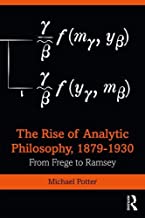
Michael Potter is Professor of Logic at the Faculty of Philosophy , University of Cambridge, and a Life Fellow at Fitzwilliam College. Previously at Balliol College, Oxford (D.Phil. in pure mathematics), he has held research fellowships at St Andrews, Harvard, and Stirling University (AHRC-funded). His work bridges historical and systematic philosophy, focusing on History of analytic philosophy (Frege, Russell, Wittgenstein, Ramsey) Philosophy of mathematics and logic Philosophy of religion Potter's research has produced major works like Set Theory and its Philosophy (OUP 2004) and The Rise of Analytic Philosophy (Routledge 2019), with significant contributions to understanding the Metaphysical underpinn't> of the Tractatus Neo-Fregean logicism Paradoxes in mathematical foundations He has supervised research on topics spanning dialetheism, predicative mathematics, and modal ontological arguments. Scientific awards include the AHRC Senior Research Fellowship (2004-2005). His recent publications analyze Transcendental arguments in Wittgenstein Sortition-based democratic theory Philosophical implications of Ramsey's infinite proofs via peer-reviewed chapters and journal articles.
Yi Fang is an Associate Professor of Computer Engineering and an affiliated Associate Professor of Computer Science at New York University Abu Dhabi (NYUAD), and a Global Network Associate Professor at NYU Tandon. He is a core faculty member in the Division of Engineering, specializing in Electrical and Computer Engineering. His research is centered at the intersection of Embodied AI, Robotics, and AI-driven assistive technologies, with strong support from agencies such as the US NSF, UAE ADEK, and ASPIRE. PhD, Purdue University Yi Fang's research interests span 3D Computer Vision, Multimedia Processing, Machine Learning, Deep Learning, and Embodied AI . He focuses on AI-driven perception, learning, and real-world applications, particularly in engineering, medicine, and accessibility. His lab, the Embodied AI and Robotics (AIR) Lab, develops intelligent robotic systems that integrate perception, learning, and decision-making to solve complex societal challenges. His work emphasizes large-scale visual computing, deep visual learning, and cross-domain/multimodal foundation models , with recent innovations in assistive AI for the Deaf and Hard-of-Hearing community. The 15 most recent publications reflect a consistent focus on 3D vision, sketch-based 3D retrieval, point cloud learning, and assistive computer vision . His work leverages deep learning, adversarial training, metric learning, and generative models to bridge modalities such as sketches, depth images, and 3D models. There is a clear trend toward cross-modal understanding, unsupervised representation learning, and real-world assistive applications , especially for visually impaired individuals. Yi Fang actively contributes to the academic community as an Area Chair for top-tier conferences including CVPR, ECCV, ICCV, IJCAI, and IROS. He also serves in peer review and mentoring roles, shaping the future of AI and robotics research. As a dedicated educator, he teaches foundational and advanced courses such as Computer Vision, Applied Machine Learning, Data Structures, and Capstone Design . He mentors students through research seminars and honors projects, fostering innovation and technical excellence. His research is supported by major grants from US NSF, UAE ADEK, and ASPIRE, enabling high-impact interdisciplinary collaborations. He founded and directs the Embodied AI and Robotics (AIR) Lab at NYU Abu Dhabi, a dedicated research space for developing intelligent systems that seamlessly integrate perception, learning, and decision-making. The lab promotes interdisciplinary collaboration across engineering, medicine, and social sciences, advancing the frontiers of Embodied AI.
Ekaterina Shutova is an Associate Professor at the Institute for Logic, Language and Computation (ILLC) within the Faculty of Science at the University of Amsterdam. She concurrently holds a Visiting Associate Professor position in the Computer Science Department at Stanford University. She leads the Amsterdam Natural Language Understanding Lab and heads the NLP & Digital Humanities research unit at ILLC. An ELLIS Scholar, she earned her PhD from the University of Cambridge Computer Laboratory and Pembroke College. Her research has been funded by ERC, Innovate UK, British Academy, Leverhulme Trust, Google, Meta, and Deloitte. Her research spans natural language processing and machine learning, with core interests in: Few-shot learning for NLP Multilingual and cross-lingual systems Joint modeling of language and vision Cognitive processing and semantic representation Figurative language interpretation Computational social science applications Her recent publications (2024-2025) predominantly focus on multimodal learning, cultural alignment in AI, metaphor processing, and evaluation methodologies for language models. These works reflect a trend toward integrating cognitive science with multilingual systems and ethical considerations. Awards & Fellowships: ERC Consolidator Grant (2025) ELLIS Scholar Outstanding Paper Award at ACL 2023 Finalist for Outstanding Certification by TMLR Runner-up Best Paper Award at NAACL-HLT 2016 Research Leadership: She directs the Amsterdam Natural Language Understanding Lab, supervising 8 PhD students, 1 MSc student, and 34 alumni. Her projects include an ERC-funded initiative on globally accessible language technology and an AI Democratization grant for hate speech detection.
Marc Pollefeys is a Full Professor at the Department of Computer Science, ETH Zurich, and Director of the Microsoft Mixed Reality and AI Lab. His work focuses on advanced perception systems for HoloLens, 3D computer vision, robotics, and machine learning. Key contributions include automated 3D modeling from video, real-time reconstruction pipelines, and vision-based autonomous systems. Education: PhD from KU Leuven (1999) Previous Affiliation: Professor at UNC Chapel Hill Research interests span 3D reconstruction , computer vision , robotics , SLAM , augmented reality , and privacy-preserving mapping . His work often integrates geometric modeling , feature matching , and deep learning . Recent projects emphasize implicit 3D representations , open-vocabulary scene understanding , and robust estimation using neural-guided algorithms. Recent publications highlight advancements in neural implicit fields , line-based correspondence , and vision-language integration . Trends include hybrid point-line methods, differentiable RANSAC, and privacy-aware localization frameworks. Scientific recognition includes: IEEE Fellow (2012) David Marr Prize (ICCV 1998) DAGM Best Paper Award (1999) Advisees include current and alumni PhD students such as Yagız Aksoy, Federico Camposeco, and Sudipta Sinha. Collaborations span institutions like UNC Chapel Hill, ETH Zurich, and Microsoft Zurich. Research sponsors include Microsoft, Google, and European research initiatives.
Mark Yatskar is an Assistant Professor in the Department of Computer and Information Science at the University of Pennsylvania. His research focuses on the intersection of natural language processing, computer vision, and fairness in machine learning. He earned his PhD from the University of Washington under advisors Luke Zettlemoyer and Ali Farhadi, and previously worked as a Young Investigator at the Allen Institute for Artificial Intelligence. Education: PhD in Computer Science, University of Washington (Advisor: Luke Zettlemoyer & Ali Farhadi) Research Interests: Yatskar's work explores how language can structure visual perception and mitigate human biases in machine learning systems. Key themes include: Natural language as a scaffold for visual intelligence Bias characterization and control in machine learning systems His lab currently investigates projects like language-guided bottlenecks, annotator cognitive heuristics, and gender bias amplification. Teaching: CIS 5300: Computational Linguistics (2021-2024) CIS 7000: Language and Vision (2020) CIS 6300: Efficient NLP (2023, 2025) Awards: Best Paper Award at EMNLP (Gender Bias Amplification Research) Advising & Grants: Yatskar advises a team of PhD/Master's students and actively seeks motivated researchers. His group has explored funding in areas like interpretable AI, multimodal reasoning, and dataset bias mitigation. Labs/Teams: Leads the Penn NLP & Vision Lab, focusing on projects like MolMo/PixMo open models, ViUniT visual unit tests, and bias mitigation frameworks.
Sanjay Purushotham is an Assistant Professor in the Department of Information Systems at the University of Maryland Baltimore County (UMBC), with a PhD in Electrical Engineering from the University of Southern California (USC) and a postdoctoral background in Computer Science at USC's Integrated Media Systems Center (IMSC). His research focuses on machine learning, data mining, and their applications in biomedical informatics, social network analysis, and multimedia data mining. Key contributions include survival analysis models using pseudo values and federated learning frameworks for healthcare data. He has received awards including the Best Paper Award at SIGSPATIAL 2014 and a Best Poster Runnerup at SCMLS 2016. Education: PhD in Electrical Engineering (USC), Postdoc in Computer Science (USC) His work spans interdisciplinary areas such as domain adaptation for remote sensing, thermal face translation, and interpretable neural networks for medical applications. Recent projects include federated survival analysis models and climate-informatics frameworks for cloud property retrieval. He teaches courses in artificial intelligence, healthcare informatics, and statistical learning at UMBC. Research highlights include developing MedFuseNet for multimodal medical question answering and VDAM for multi-sensor cloud data analysis. His work on fair survival analysis models addresses algorithmic bias in healthcare predictions. Current grants include a NSF CAREER award for trustworthy federated learning in computational healthcare.
John MacFarlane is a Professor of Philosophy at the University of California, Berkeley , with affiliations to the Group in Logic and the Methodology of Science and co-organizer roles in the Meaning Sciences Club and Townsend Center Working Group . His research spans philosophy of language, philosophical logic, metaphysics, epistemology, philosophy of mathematics, history of logic , and ancient philosophy , particularly Aristotle . He has held visiting positions at institutions like École des Hautes Études en Sciences Sociales (EHESS), Paris . Education : Ph.D. in Philosophy (2000, University of Pittsburgh), M.A. in Classics (1997) and Philosophy (1994), A.B. summa cum laude in Philosophy (1991, Harvard). Research Interests focus on semantic relativism , particularly assessment sensitivity as explored in his book Assessment Sensitivity: Relative Truth and Its Applications (Oxford, 2014). He investigates how epistemic modals and vagueness interact with truth evaluation. His work in philosophical logic includes a textbook Philosophical Logic: A Contemporary Introduction (Routledge, 2021). Secondary interests include ancient philosophy (Aristotle, Plato), formal logic , and fiddlosophy . Article Trends reveal contributions to relativism , epistemic modals , vagueness , and logicism . His recent work (2025) examines Plato’s Protagoras and belief utility , while 2022–2020 articles address semantic indecision and probabilistic knowledge . Earlier works (2008–2000) include foundational studies on Frege, Kant, and Aristotle . Scientific Awards include a 2023 Residential Fellowship at Wissenschaftskolleg, Berlin (declined), 2016–17 Fellow at IEA Paris , and 2015 American Academy of Arts and Sciences membership . He has received multiple Humanities Research Fellowships at Berkeley (2016, 2008, 2003) and Research Enabling Grants (2000–2009). Advising includes supervising 15+ PhD students in areas like logic, epistemology, and philosophy of language . Notable advisees include Richard Lawrence (2017) and Sophie Dandelet (2021). He also guided honors theses at Berkeley, such as Benjamin Logan’s work on epistemic modals (2018). Labs and Teams involve co-organizing the Townsend Center Working Group in History and Philosophy of Logic, Mathematics, and Science and contributing to the Group in Logic and Methodology of Science . His interdisciplinary approach integrates philosophy, logic, and computational tools , including creating Pandoc for document conversion.
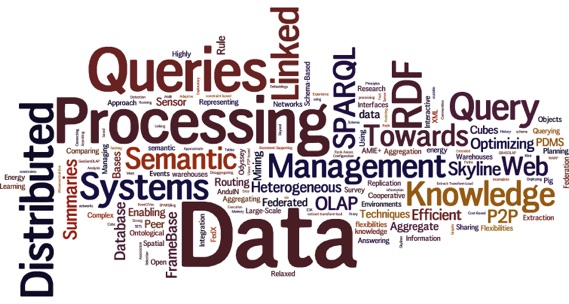
Katja Hose is a Full Professor of Data Management at TU Wien's DBAI research unit, heading the Data Management and Knowledge-Driven AI Lab. She previously held a Poul Due Jensen Foundation Professorship at Aalborg University. Her research focuses on data and knowledge engineering, including graph databases, knowledge graphs, querying, analytics, and machine learning, with interdisciplinary applications in bioscience, healthcare, and environmental assessment. Education: PhD in Computer Science (Ilmenau University of Technology, 2009), Postdoc at Max Planck Institute for Informatics (2009–2012). Academic roles include Program Co-Chair for ISWC 2024 and EDBT 2023, and editorial board membership at VLDBJ and TGDK. She leads projects like TARGET (health virtual twins) and ARMADA (data management). Research Interests: Knowledge Graphs, Semantic Web, Big Data, Machine Learning, Data Integration, and Provenance Systems. Key contributions include SHACL shape extraction, conversational data analytics, and environmental knowledge graphs. Awards include the 2025 Distinguished Meta-Reviewer Award and 2024 Manfred Paul Award. Advising and Grants: Supervised students including E. Pürmayr (Diploma Thesis 2025). Active in EU projects (TARGET, ARMADA) and grant coordination. Labs/Teams: DMKI Lab at TU Wien, collaborating with interdisciplinary teams in healthcare and environmental science.
Nima Mesgarani is an Associate Professor of Electrical Engineering at Columbia Engineering, Columbia University, affiliated with the Sense, Collect and Move Data Committee. His research bridges engineering and neuroscience through reverse-engineering neural signal processing mechanisms, leading to advancements in brain-machine interfaces, neural prosthetics, and speech processing algorithms. He received his PhD in Electrical Engineering from the University of Maryland and completed postdoctoral training at Johns Hopkins University's Center for Language and Speech Processing and UC San Francisco's Neurosurgery Department. Research Focus Professor Mesgarani's lab integrates computational neuroscience and engineering to study acoustic signal processing. Key areas include: Neural decoding of speech and auditory attention in multi-talker environments Development of brain-controlled hearing technologies Novel speech separation and synthesis algorithms inspired by cortical processing Cross-modal learning between auditory and visual systems Applications of large language models in neural signal interpretation Publication Trends Analysis of his 15 most recent articles (2025) reveals dominant themes: neural decoding techniques using intracranial EEG, brain-inspired speech separation models (e.g., Mamba architectures), applications of large language models in auditory neuroscience, cross-modal distillation methods, and clinical translation of audio processing algorithms. A strong emphasis emerges on real-time brain-computer interfaces and noise-robust speech processing. Laboratory and Collaborations Mesgarani directs an interdisciplinary lab developing neurotechnology for hearing restoration. His team collaborates with neurosurgery departments and speech processing centers, focusing on translating theoretical models into clinical brain-machine interfaces. The lab's work has yielded patents for brain-informed speech separation systems and attention-decoding frameworks.
Henriëtte Hendriks is a Professor in Language Acquisition and Cognition at the University of Cambridge, affiliated with the Faculty of Modern and Medieval Languages and Linguistics and the Theoretical and Applied Linguistics (TAL) department. She leads the Cambridge Processing and Acquisition of Language lab (CAMPAL) and serves as Deputy Director of the Centre for Lifelong Learning and Individualised Cognition (CLIC). Education: Sinology at Leiden University Early Career: Coordinator at Max-Planck Institute for Psycholinguistics (DFG/ESF projects) Her research explores how languages encode concepts (person, time, space, causality) and their impact on language acquisition. Key themes include: Cognitive Linguistics and Language-Cognition Interfaces First and Second Language Acquisition Mechanisms Multilingualism and Cognitive Flexibility Typological Variation in Semantic Structures Deictic Terms and Dynamic Space Representation Recent publications focus on motion event typology across English, German, French, and Uyghur, examining cross-linguistic influences in acquisition processes. Her work combines experimental methods with syntactic analysis to study semantic mapping and grammaticalization in multilingual contexts. Current projects include: Centre for Lifelong Learning and Individualised Cognition (CLIC) - Principal Investigator MEITS Project (Strand 5) - Co-Investigator Cambridge Language Sciences Incubator projects on cognitive pacing and parental linguistic contributions International DeicTeS project on deictic meaning processes Labs & Teams: Cambridge Processing and Acquisition of Language lab (CAMPAL) Collaborations with Zoe Kourtzi, Vicky Leong, and Clare Hughes
Professor Dorit Abusch is a faculty member in the Department of Linguistics and Philosophy at Cornell University's College of Arts & Sciences. Her research focuses on semantics, pragmatics, and their applications to visual narratives. She explores topics like tense semantics, presupposition triggering, modal logic, and the interplay between language and visual media. Current work extends linguistic methodologies to analyze art forms such as comics, cave paintings, and temple sculptures. Her research interests include formal semantics applied to visual narratives, dynamic semantics, possible world theory, and multimodal discourse representation. She investigates how visual elements like sequential art and pictorial sequences convey temporal progression, aspectual distinctions, and free perception constructions through semiotic frameworks. Recent presentations include talks on applying semantics to film and picturebooks at institutions like MIT and the University of Padua. Her publications emphasize cross-media analysis, with key works published in Linguistics & Philosophy and Sinn und Bedeutung . Abusch has received grants for projects studying visual narratives in Indian art and wall paintings of Rajasthan. These include a 2012-2013 Humanities Research Grant and a Cornell Institute for Social Sciences award. Her work bridges linguistics with philosophy and visual studies, offering innovative frameworks for understanding non-linguistic communication through formal semantic tools.
Professor Gabriel Brostow is a faculty member in the Department of Computer Science at University College London (UCL), where he leads research in Computer Vision and Human-Computer Interaction. He also serves as Chief Research Scientist and Senior Director of the R&D Team at Niantic, the company behind Pokémon GO. His work bridges academic research and industry applications, focusing on developing AI systems that enhance human capabilities through what he terms 'Human in the Loop AI'—now commonly referred to as Human-Centered AI. Brostow completed his BS in Electrical Engineering at UT Austin, followed by a PhD with Irfan Essa at Georgia Tech. He then pursued postdoctoral research with Roberto Cipolla's Computer Vision & Robotics Group at Cambridge University as a Marshall Sherfield Fellow, and with Marc Pollefeys in ETH Zurich's CVG Group. His research explores how AI, particularly Computer Vision, can serve as 'super-tools' for professionals across various domains including filmmaking, architecture, robotics, and scientific research. Specific interests include assistive technology for everyday life, authoring systems that maximize user effort, 3D reconstruction, depth estimation, and vision-language models. His work often involves creating systems that are validated through real-world human interaction to ensure practical utility. Analysis of his recent publications reveals a strong focus on practical applications of Computer Vision that directly interact with humans. His research spans 3D scene understanding, depth estimation, sketch-based interfaces, and multimodal AI systems. There's a clear emphasis on creating benchmarks and tools that facilitate human-AI collaboration, with applications in assistive technology, urban planning, filmmaking, and biodiversity monitoring. His work frequently appears at top conferences including CVPR, NeurIPS, ECCV, and CHI. Marshall Sherfield Fellowship Brostow actively mentors PhD students, with current advisees including Ross Murphy, Skanda Koppula, Gizem Unlu, Omiros Pantazis, and Jamie Watson. His alumni include numerous PhD graduates and MSc students who have gone on to successful careers in academia and industry. He emphasizes selecting students based on passion and potential rather than just academic credentials, valuing traits like helpfulness, drive, and hunger to learn. His research is supported through collaborations with major institutions and companies including DeepMind, MIT, and the University of Edinburgh. He leads a research group at UCL that collaborates closely with Niantic's R&D team, creating a unique bridge between academic research and industry application. His team's work frequently involves developing novel Computer Vision techniques that are validated through real-world human interaction, ensuring practical utility alongside technical innovation. The group explores blue-sky research problems with applications ranging from assistive technology to professional tools for filmmakers, architects, and scientists studying diverse environments.