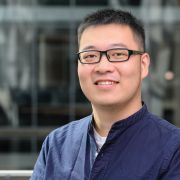
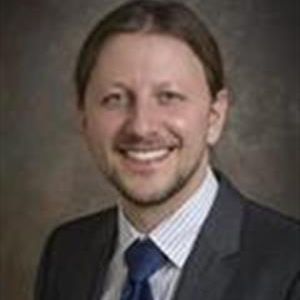
Dr. Shuo Zhou is a Lecturer in Machine Learning at the University of Sheffield's School of Computer Science, holding dual roles as Deputy Head of AI Research Engineering. He specializes in interpretable machine learning for medical imaging and neuroimaging analysis, with contributions to open-source tools like PyKale. Education: MSc Advanced Computer Science (2017), University of Sheffield PhD in Machine Learning (2022), University of Sheffield Research Interests: Interpretable ML methods for clinical decision-making Medical image analysis (cardiac MRI, fMRI) Statistical learning theory with domain adaptation Grants & Leadership: Co-PI: EPSRC grant (£445k) for neuroimaging biomarkers in chronic pain (2023-2025) PI: Turing 2.0 project (£20k) for machine learning infrastructure (2022-2023) Labs & Teams: Core developer of PyKale open-source library Member of Machine Learning research group
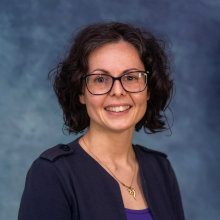
Pierre-Yves Modicom is a University Professor of Germanic Linguistics at the Faculty of Languages, Jean Moulin University Lyon 3. He serves as Director of the Department of German Studies, Head of the LLCER and LEA German degrees, and Vice-President for Internationalization, Europe, and Support for Component Areas. He is also co-facilitator of the 'Description and Modeling' research axis at the Center for Linguistic Studies – Corpus, Discourse and Societies (CELESTES). Research Interests: His primary research areas include Germanic and contrastive linguistics, with a focus on syntax, semantics, pragmatics, discourse markers, modal particles, information structure, and historical development of Germanic languages. He investigates the interplay between grammatical structure and discourse function, especially in older Germanic varieties and heritage language contexts. Recent Publications: His recent scholarly output reflects a strong trend in theoretical and descriptive linguistics, particularly on adverbial categorization, subject properties in Germanic, construction grammar, and discourse particles. He frequently collaborates with scholars such as Olivier Duplâtre and Camille Noûs, and his work appears in leading linguistics series from De Gruyter, John Benjamins, and Peter Lang. Scientific Contributions: He has contributed to interdisciplinary debates, including the impact of neoliberalism on science and the epistemology of linguistic knowledge. His publications span monographs, edited volumes, peer-reviewed journal articles, and book chapters in French, English, and German. Advising and Leadership: While no specific advisees are listed, he holds significant academic leadership roles, including training management for international degrees and research coordination. He is actively involved in professional associations like the Association of Germanists in Higher Education, where he served as national treasurer from 2018 to 2021. Laboratories and Teams: He is affiliated with CELESTES (Centre d'Études Linguistiques - Corpus, Discours et Sociétés) and the Cogitamus Laboratory, contributing to research on linguistic modeling, corpus-based analysis, and cognitive approaches to language.
Y. Chen is a researcher active in urban planning, landscape architecture, and transportation systems. Their work spans urban wilderness perception, ecological park design, and traffic management technologies. Affiliations include collaborative projects between China and the Netherlands. Key Research Areas: Urban ecology, cross-cultural landscape design, traffic network optimization, and microfluidic systems. Recent research (2022-2024) focuses on urban wilderness perception in Hangzhou and design strategies from Dutch practices. Earlier work explores traffic data fusion, 3D cell culture fabrication, and cell migration stress measurement. Articles from 2002-2020 highlight expertise in photonic crystals, transport systems, and environmental monitoring. Participated in a 2025 workshop on residential garden design. No explicit awards or affiliations listed beyond peer-reviewed publications.
Professor Amarjit S. Virdi leads the Laboratory of Amarjit S. Virdi, PhD at Rush University Medical Center. As Director of the Graduate Program in Anatomy & Cell Biology and a member of the Faculty Profile , his research focuses on bone tissue regeneration and stem cell biology within orthopedic contexts. PhD from University of Oxford, England NIH COMMONS name: AVIRDI Scopus number: 6701742334 His translational work bridges biomechanics , biomaterials , and regenerative medicine . Publications demonstrate expertise in implant fixation , bone-implant interface , and cellular responses to mechanical stimuli . Over 25 years, his lab has developed preclinical models for osteoporotic bone healing , particle-induced inflammation , and ultrasound-enhanced bone formation . Recent studies highlight novel investigations into gut microbiota's role in implant loosening and seasonal birth effects on bone properties . The lab employs advanced methodologies including micro-computed tomography , gene expression profiling , and biomechanical testing . Current affiliations include the Department of Anatomy & Cell Biology and Rush's Research Enterprise .
Simon Cotter is a Professor of Applied Mathematics at The University of Manchester. His research focuses on Bayesian inference, stochastic modeling, and computational methods, with applications in biological systems (e.g., tendon mechanics, placental development) and financial modeling. He contributes to the university’s Digital Futures research beacon and collaborates across disciplines including biomechanics, computational biology, and data science. Research Interests: Bayesian data assimilation and parameter estimation Monte Carlo methods (e.g., multi-index, adaptive importance sampling) Multiscale stochastic systems and reaction networks Inverse problems in material science and biological systems Recent work highlights include developing NuZZ (a numerical Zig-Zag algorithm for general models) and advancing hierarchical Bayesian methods for data selection. His projects address challenges in debt recovery forecasting, placental development modeling, and cell cycle heterogeneity analysis. He co-leads a multi-modal pregnancy research project aimed at understanding stillbirth mechanisms and is actively involved in initiatives promoting gender equity in academia.
Dagmar Haumann is a Professor of English Linguistics at the Department of Foreign Languages at the University of Bergen. Her research focuses on historical linguistics, syntax, morphology, and language acquisition, with a particular emphasis on diachronic processes such as reanalysis, grammaticalization, and syntactic change in English. She has extensively studied adverbial structures, tough-constructions, and corpus-based methodologies. Haumann’s academic contributions include over 30 publications, including monographs, edited volumes, and peer-reviewed articles. Notable works include The Development of Speaker-Oriented Adverbs in English (2025) and Digitally-assisted Historical English Linguistics (2023). Her research often combines theoretical frameworks with empirical corpus data, addressing topics like argument structure changes, modal particles, and multilingualism. She has supervised numerous master’s theses and doctoral dissertations on topics ranging from Norwegian L2 learners’ challenges to historical syntactic phenomena. Her work frequently collaborates with scholars like Kristin Killie and Matthias Eitelmann, exploring reanalysis mechanisms and diachronic variation in English. Haumann’s teaching and supervision emphasize cognitive linguistic principles and practical applications of corpus linguistics in language education. She is an active participant in international conferences, contributing to discussions on language change methodologies and digital humanities approaches in linguistics.
Marta Moscati works at the Institute of Computational Perception at Johannes Kepler University Linz , focusing on advanced recommendation systems and multimodal learning. Her research spans emotion-based music recommendation, privacy-preserving machine learning, and graph neural networks. Recent work includes: Developing multimodal single-branch architectures for cold-start scenarios Creating preference obfuscation techniques in implicit feedback systems Advancing music emotion recognition with semi-supervised graph networks Contributing to the FAME Challenge for multilingual face-voice association She has published extensively in top AI venues while maintaining technical expertise in both deep learning and theoretical physics , with early work on lepton universality violation. At JKU, she contributes to: Recommendation algorithms development Multimodal representation learning research Musical affective computing applications Privacy-preserving AI frameworks
Federica Cognola is an Associate Professor at the Department of Comparative Linguistic and Cultural Studies , Ca' Foscari University of Venice. Her research focuses on syntax of Germanic varieties , particularly Mòcheno (a German dialect in Northern Italy), with emphasis on V2 phenomena , null-subject parameters , and modal particles . She leads the RUM Project (PRIN 2022) on German modal particles and has coordinated Sòtzlear 1/2 projects for Mòcheno language didactics. Her scientific contributions include comparative studies on German-Romance language contact , diachronic syntax, and bilingual acquisition processes. She has received research grants totaling over €170,000 from institutions like Provincia Autonoma di Trento and Caritro Foundation. As an invited speaker, she has presented at institutions including University of Cambridge, Oslo, and Potsdam. Scientific Awards: Premio di prima fascia (2011) - Trento Province 'Contessa Bellati' First Prize (2009) - G. Unfer Cultural Circle Istituto Mòcheno Award (2008) Her teaching portfolio includes German Language courses at both undergraduate and master's levels since 2017, with focus on contrastive linguistics and language didactics . She collaborates with international researchers like Jan Casalicchio and Theresa Biberauer, serving as reviewer for institutions including Flanders Research Foundation and Oxford University Press.
Ioana Slabu, Professor at the Institute for Applied Medical Engineering (RWTH Aachen University), leads advancements in medical nanotechnology. Her work focuses on magnetic nanoparticles for diagnostics and therapy, particularly in MRI visualization of implants, magnetic hyperthermia for cancer treatment, and magnetic particle imaging (MPI) applications. Her research integrates multimodal imaging techniques mathematical modeling of magnetic fields biocompatible material design functionalized nanoparticle surfaces for applications in cardiovascular, pancreatic, and gastrointestinal diseases. Key publication trends include iron oxide nanoparticles for mesh implant tracking , 3D-printed tumor models for magnetic targeting, and millifluidic manufacturing of standardized nanoparticles. She also explores machine learning for nanoparticle synthesis optimization. As thesis advisor, she mentors doctoral candidates in biomedical engineering while collaborating with multidisciplinary teams at RWTH Aachen University's AMET institute, including partnerships with clinicians, physicists, and material scientists. Her leadership extends to developing hybrid stents with magnetic properties for tumor ablation and biodegradable polymer fibers with embedded nanoparticles for controlled drug delivery systems.
Thomas J. Meade is the Eileen M. Foell Professor of Cancer Research and Charles Deering McCormick Professor of Teaching Excellence at Northwestern University. He holds appointments across multiple departments including Chemistry, Molecular Biosciences, Neurobiology, and Radiology, and serves as faculty director of The Center for Advanced Molecular Imaging (CAMI). His research program bridges chemistry, molecular imaging, and translational medicine, focusing on developing innovative imaging technologies for biomedical applications. Meade's research interests center on bioinorganic coordination chemistry with applications in biological molecular imaging, theranostics, and electronic biosensors. His laboratory is organized into three sub-groups working on molecular imaging probes, electronic biosensors for proteins, and inhibitors of transcription factors. The lab specializes in using coordination chemistry to create contrast agents that respond to enzymatic activity, redox status, gene expression, and other cellular signals, enabling dynamic, noninvasive readouts of molecular events in vivo. This work has significant implications for early disease detection, real-time monitoring, and precise disease characterization, particularly in cancer and neuroscience applications. Analysis of Professor Meade's recent publications reveals a strong focus on gadolinium-based contrast agents for magnetic resonance imaging, with significant work on parashift probes, self-immolative bioresponsive agents, and nanoparticle-based imaging systems. His research increasingly integrates multiple imaging modalities and focuses on translating basic discoveries into clinically relevant applications, particularly for cancer detection and monitoring cellular senescence. The work demonstrates a consistent trajectory toward more sophisticated, responsive imaging agents that provide functional and molecular information beyond traditional anatomical imaging. Eileen M. Foell Professor of Cancer Research Charles Deering McCormick Professor of Teaching Excellence Professor Meade maintains close collaborations with clinical and basic science investigators to translate new imaging strategies into meaningful diagnostic and therapeutic applications. His research group provides comprehensive training opportunities for students, covering organic synthesis, inorganic synthesis, X-ray crystallography, HPLC techniques, cell culture, fluorescence imaging, magnetic resonance imaging, and animal studies. The lab actively participates in multiple graduate programs including Chemistry, Interdepartmental Biological Sciences (IBiS), Medical Scientist Training Program, and Biomedical Engineering. The Meade Group operates within Northwestern University's Chemistry of Life Processes Institute, with facilities in Silverman Hall. The research program maintains three specialized sub-groups focusing on molecular imaging probes, electronic biosensors, and transcription factor inhibitors, with strong connections to clinical applications through collaborations with the Feinberg School of Medicine. Current work emphasizes the development of next-generation imaging agents that respond to specific biological conditions, enabling earlier disease detection and more precise therapeutic monitoring.
Shalini Sharma, PhD, serves as a Research Fellow in the Department of Diagnostic Radiology and Nuclear Medicine, specializing in molecular imaging probe development and radiopharmaceutical applications. Her work bridges nuclear medicine, nanotechnology, and therapeutic monitoring with emphasis on translational research. Her primary research domains include Molecular Imaging, Radiopharmaceuticals, Nanomedicine, Theranostics, Nuclear Medicine, Neuroimaging, and Infection Imaging. She pioneers novel PET tracers for tracking viral vectors, differentiating bacterial infections from sterile inflammation, and monitoring cell-based therapies. Her methodology integrates radiochemistry, nanomaterial engineering, and in vivo validation to address challenges in blood-brain barrier penetration, neuroinflammation imaging, and infection diagnostics. Analysis of her 2019-2025 publications reveals consistent innovation in zirconium-89 radiometal applications for tracking AAV vectors, white blood cells, and stem cells. Key thematic threads include: (1) blood-brain barrier modulation strategies for neurotherapeutics, (2) dual-modality nanoparticle systems for combined imaging and antibacterial action, and (3) platform technologies for real-time monitoring of alpha radionuclide therapy. Her work demonstrates exceptional technical breadth across radiochemistry, nanomaterial design, and preclinical validation.
David Westerly serves as Associate Professor in the Department of Radiation Oncology at the University of Colorado Anschutz Medical Campus School of Medicine. His expertise bridges medical physics and clinical radiation oncology with emphasis on treatment accuracy and safety. His educational foundation includes: PhD in Medical Physics, University of Wisconsin-Madison (2009) BA in Physics, University of Montana–Missoula (2004) Dr. Westerly's research spans electron therapy dosimetry , proton accelerator development , and multi-platform cancer imaging . He pioneers x-ray-induced acoustic imaging for dosimetry verification and investigates normal tissue regeneration post-radiotherapy. His group develops safety protocols for gland-sparing in head/neck cancers and implements incident learning systems across healthcare networks. Recent work focuses on physics plan review standardization and quality assurance in medical physics training. His publication record reveals consistent innovation in radiation therapy physics, particularly in dosimetric accuracy enhancement and imaging integration. Key trends include advancing electron beam collimation standards, optimizing pulse line ion accelerators for isotope production, and validating VMAT quality assurance methodologies. Board-certified by the American Board of Radiology in Therapeutic Medical Physics, Dr. Westerly collaborates extensively with clinicians and physicists including Miften, Kavanagh, and Schefter. His departmental work drives clinical implementation of high-dose imaging for stereotactic body radiotherapy and develops protocols for proton therapy applications.
Gregory Dobler is an Associate Professor in the Department of Physics & Astronomy at the University of Delaware, part of the College of Arts & Sciences. He joined UD in 2019. His research bridges astrophysics and urban science, leveraging machine learning and data science to explore topics such as interstellar medium physics, particle dark matter, strong gravitational lensing, and urban energy dynamics. Dobler holds a B.S. from Haverford College and a Ph.D. from the University of Pennsylvania. His work spans innovative applications of AI in astronomy, including automated detection of light echoes and transient phenomena, while also advancing urban studies through hyperspectral imaging of vegetation health, air quality monitoring, and magnetic field analysis of cities. Notable contributions include the development of the Urban Observatory platform for multiscale urban systems analysis and the Multi-city Urban Observatory Network. Recent research trends emphasize interdisciplinary approaches, integrating deep learning with environmental sensing to address urban challenges like energy consumption and public health. His publications highlight collaborations across fields such as remote sensing, climate science, and smart city technologies. Dobler’s lab focuses on creating novel imaging systems and algorithmic frameworks to study complex systems, from galactic structures to urban infrastructure dynamics.
Michele Pasquali is an Associate Professor at the Department of Mechanical and Aerospace Engineering of Sapienza University of Rome. His research focuses on advanced materials for aerospace and high-energy physics applications, structural health monitoring, Industry 4.0 integration in aerospace manufacturing, and preliminary design methodologies for satellite systems and collimation systems in particle accelerators. His work often intersects with experimental facilities at CERN, particularly the HiRadMat facility for material testing under extreme conditions. Key research themes include: Development of advanced composite materials for aerospace and accelerator components Integration of AI and immersive technologies (AR/VR) in manufacturing and assembly processes Optimization of beam collimation systems for high-luminosity particle accelerators like the HL-LHC and FCC Economic analysis of space infrastructure concepts such as lunar propellant mining Systems engineering approaches for Earth observation satellite constellations His recent projects include: Design of a Cyber-Physical System for AR-assisted assembly of aerospace components Material characterization studies for vacuum beam windows at CERN facilities Preliminary analysis of moon-mined propellant viability for on-orbit refueling Collaborations involve major scientific institutions such as CERN and contributions to Future Circular Collider (FCC) conceptual design reports. His work bridges theoretical modeling with practical implementation in cutting-edge engineering systems.
Bo Tian serves as an Associate Lecturer in Motorsport Engineering within the College of Science and Engineering, where he leads experimental research on combustion processes for sustainable transportation applications. His work bridges fundamental flame dynamics with practical motorsport engineering challenges through advanced diagnostic methodologies. Dr. Tian's research program centers on three interconnected domains: Combustion characteristics of alternative fuels (biodiesel, waste cooking oil derivatives, and dual-fuel systems) Advanced laser diagnostics development (LII-PIV, multi-pass extinction, time-resolved thermometry) Soot formation mechanisms and emission reduction strategies in engine-relevant configurations His recent publications demonstrate a consistent focus on experimental combustion studies, with 75% of his work involving biodiesel and waste cooking oil fuels. Key methodological approaches include simultaneous velocity-flame imaging, soot quantification in pool and diffusion flames, and chemical kinetic analysis of emission formation pathways. This research directly addresses emissions challenges in high-performance combustion systems. No scientific awards or honors are documented in the available sources. Information regarding student advising, research grants, laboratory facilities, or collaborative teams is not provided in the source material, though his extensive co-authorship network suggests active research group participation.