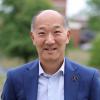
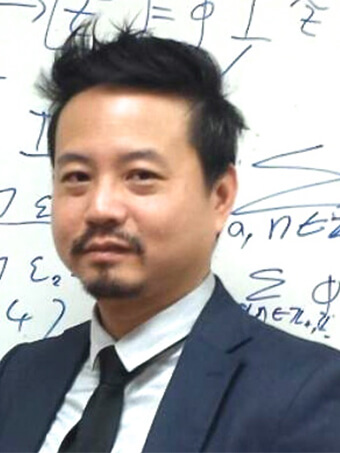
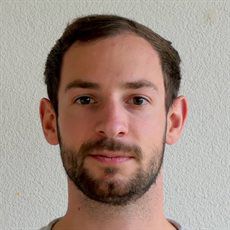
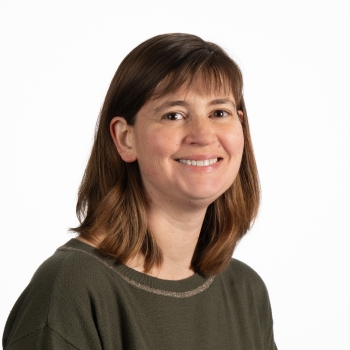
Chan Song Heng is an Associate Professor in the Division of Mathematical Sciences at the School of Physical and Mathematical Sciences, Nanyang Technological University (NTU), Singapore. He has been affiliated with NTU since 2007. His academic journey includes a B.Sc. (Hons) in Mathematics from the National University of Singapore (2001) and a Ph.D. in Mathematics from the University of Illinois at Urbana-Champaign (2005). His research focuses on advanced mathematical topics such as partition theory, q-series, mock theta functions, and number theory. Recent work includes studies on identities analogous to Jacobi, Fermat-Wilson theorems, and applications of Rogers-Fine identities. His publications explore combinatorial, analytic, and algebraic aspects of these fields, with notable contributions to modular forms, theta functions, and partition congruences. Dr. Chan’s articles often intersect with classical problems in mathematics, blending historical insights with modern analytical techniques. Notable themes include exploring identities through modular forms, analyzing partition statistics (ranks/cranks), and studying mock theta functions. Despite his prolific output, no specific scientific awards or student advisees are listed in the provided materials.
Frank Calegari is a Professor of Mathematics at the University of Chicago. His primary research interests include algebraic number theory, the Langlands program, Galois representations, and arithmetic geometry. He has made significant contributions to understanding reciprocity laws linking Galois representations to automorphic forms. His work often intersects with cohomology of arithmetic groups, motives, and the arithmetic of periods. Prof. Calegari has advised numerous PhD students, including Maria Stadnik, Shiva Chidambaram, and Eric Stubley. He serves on editorial boards for prestigious journals such as Algebra & Number Theory, Essential Number Theory, and the Annals of Mathematics. He actively participates in academic conferences and programs, including organizing the 2020 Arithmetic of the Langlands Program in Bonn. His research spans modularity theorems for abelian varieties, cohomology of arithmetic groups, and the study of L-functions. Key recent work includes resolving the unbounded denominators conjecture and advancing potential automorphy results over CM fields. Calegari frequently collaborates with leading mathematicians, including George Boxer, Vincent Pilloni, and Yilin Yang. He teaches advanced courses such as Honors Calculus (Math 16100) at the University of Chicago. His expository work includes lecture notes on motives and L-functions, as well as a blog compiling mathematical insights (Persiflage). Calegari’s contributions to number theory have been recognized through his editorial roles and invited lectures at institutions like the ICM and Clay Mathematics Institute.
Leo Goldmakher is an Associate Professor of Mathematics at Williams College, where he teaches courses in cryptography, topology, Fourier analysis, measure theory, and analytic number theory. He holds a B.A. in Mathematics from Princeton University (2004) and a Ph.D. in Mathematics from the University of Michigan (2009). Research interests Teaching areas Publications His research focuses on number theory, including topics such as Gauss sums, character sums, multiplicative functions, and analytic methods. He has contributed to refinements of classical theorems like Lagrange’s four-square theorem and Artin’s primitive root conjecture. His recent publications explore bounds on character sums, spectral properties of random graphs, and algebraic structures in number theory. The work demonstrates a strong emphasis on analytic and algebraic techniques. Leo has been affiliated with Williams College’s Department of Mathematics and Statistics, which received the 2014 Exemplary Department Award from the American Mathematical Society. He has taught advanced courses such as Cryptography, Topology, and Analytic Number Theory, though these were not offered in the 2025/26 academic year.
Ken Ono is the STEM Advisor to the Provost and the Marvin Rosenblum Professor of Mathematics at the University of Virginia. He also holds courtesy appointments as Professor of Electrical and Computer Engineering, Professor of Data Science, and Professor of Statistics. Additionally, he is a Fellow of the Shannon Center for Advanced Studies and serves on the Institute for Advanced Study board of trustees and the National Security Agency Advisory Board. His educational background includes a Ph.D. in Mathematics from UCLA (1993) and a B.A. in Mathematics from the University of Chicago (1989). Throughout his distinguished career, Ono has held leadership roles including Vice President of the American Mathematical Society, Chair of the Mathematics Section of the American Association for the Advancement of Science, and Chairman of the Department of Mathematics at UVa. Ken Ono specializes in Number Theory, Combinatorics, Algebra, and Arithmetic Geometry, with recent work expanding into sports analytics and swimming optimization. His research has produced numerous publications on partition theory, modular forms, and related areas, continuing the mathematical legacy of Srinivasa Ramanujan. His recent publications demonstrate a continued focus on partition theory, modular forms, and their connections to prime numbers and combinatorial structures. The work shows sophisticated connections between classical number theory and modern mathematical physics, with applications in cryptography and data science. Guggenheim Fellowship David and Lucile Packard Fellowship Alfred P. Sloan Foundation Fellowship NSF CAREER Award Presidential Early Career Award (2000) National Science Foundation Director's Distinguished Teaching Scholar (2005) University of Chicago Alumni Medal for Professional Achievement (2023) Fellow of the American Mathematical Society Ono has advised 34 PhD students and 17 postdocs, mentoring numerous award winners including 2 Breakthrough Mirzakhani Prize winners, 9 Morgan Prize winners, and 9 Schafer Prize winners. He founded and directs the Spirit of Ramanujan Global STEM Talent Search, which has awarded 125 budding scientists from 23 countries. His research grants have supported extensive REU programs, with continuous undergraduate research opportunities for 25 years. Beyond academia, Ono serves as a technical consultant for elite swimmers, has worked as an Associate Producer on the film The Man Who Knew Infinity , and is actively involved with the Infinity Arts Foundation. His interdisciplinary work spans from pure mathematics to practical applications in sports science, where he has developed data-driven approaches to optimize swimming performance and served as a consultant for Olympic medalists. He co-founded the Velocity Swim Camp with Olympic coach Todd DeSorbo, combining mathematical analytics with elite swimming training.
Samit Dasgupta is the James B. Duke Distinguished Professor of Mathematics at Duke University's Trinity College of Arts & Sciences since 2018. His research focuses on algebraic number theory , particularly the explicit construction of units in number fields, points on abelian varieties, and connections to special values of L-functions including Stark's conjectures , Birch-Swinnerton-Dyer , and Beilinson's conjectures . He has made significant progress on the Brumer-Stark conjecture and its refinements, as well as the Gross-Stark conjecture for p-adic L-functions. Education : Ph.D. from University of California, Berkeley (2004), A.B. from Harvard University (1999) Research Highlights : His recent work includes proving the p-part of the integral Gross–Stark conjecture (2024), analyzing Brumer-Stark units (2023), and extending Eisenstein cocycle theory to GL_n. His publications span topics from factorization of p-adic L-series to mock Heegner points and Shintani zeta functions , demonstrating deep connections between number theory and modular forms. Grants & Awards : NSF RTG Grant: "Linked via L-functions: training versatile researchers across number theory" (2023–2028) NSF Grant: "The Brumer-Stark Conjecture and its Refinements" (2022–2027) NSF Grant: "Beyond L-functions: the Eisenstein Cocycle and Hilbert's 12th Problem" (2019–2022) NSF CAREER Award (2010) Sloan Fellowship (2009) Advising & Teaching : He has advised graduate students including Michael Daub, Mitchell Owen, and Shawn Tsosie. Recent courses include Number Theory , Mathematical Cryptography , and advanced topics in linear algebra.
Scott Ahlgren is a Professor in the Department of Mathematics at the University of Illinois at Urbana-Champaign, affiliated with the College of Liberal Arts & Sciences. His research focuses on Number Theory, particularly modular forms, partition functions, and congruences. He has advised numerous PhD students and contributed significantly to algebraic and analytic number theory through over 50 publications. Education details are not explicitly stated, but his academic career includes extensive research at top-tier institutions. Research interests emphasize modular forms, congruences, and connections between number theory and combinatorics. His recent work explores congruences for the partition function, modular forms modulo primes, and applications of mock theta functions. Earlier contributions include studies on elliptic curves, modular curves, and hypergeometric series. He teaches advanced courses in abstract algebra, number theory, and proof techniques, mentoring students at both undergraduate and graduate levels. Advising includes over 10 PhD graduates, many now in academic or research roles.
Salim Tayou is an Assistant Professor in the Department of Mathematics at Dartmouth College. His research focuses on number theory, algebraic geometry, and their intersections, particularly in arithmetic geometry, complex geometry, and non-abelian Hodge theory. He explores topics like the Hodge locus, Tate locus, Shimura varieties, K3 surfaces, and abelian varieties, with applications to geometric problems and modularity properties. His work is supported by NSF grants (DMS-2503815, DMS-2302388) and the Burke Research Initiation Award. He has organized Harvard number theorists seminars on themes like non-abelian Hodge theory and o-minimality. Recent research includes studies on the Zilber-Pink conjecture, Shafarevich’s conjecture for hypersurfaces, and equidistribution of Hodge loci. Teaching: Recent courses include Current Problems in Algebra (Spring 2025), Number Theory (Fall 2024), and Algebraic Number Theory (Spring 2024). Earlier roles included teaching at École Normale Supérieure Ulm and Université Paris-Sud. Awards: Burke Research Initiation Award. Labs/Teams: Active in Dartmouth Algebra and Number Theory Seminar, Quebec-Vermont NT seminar, and Harvard NT seminar. Collaborates with researchers like Bruno Klingler, Philip Engel, and Matt Kerr.
TAN Meng Chwan is an Associate Professor at the National University of Singapore (NUS), specializing in theoretical physics and mathematical physics. He serves as Assistant Dean (Outreach and Admissions) and Head of the NUS String Theory Group. His research focuses on M-theory, string theory, quantum field theory, and their implications for contemporary mathematics, particularly in understanding emergent spacetime in quantum gravity. Education: PhD in Physics from NUS (2007). His work bridges high-energy physics with advanced mathematical structures, including Floer homologies, categorification, and geometric Langlands duality. He has contributed to topological gauge theories, dualities in quantum field theories, and connections between string theory and algebraic geometry. Editorial Roles: Editor of International Journal of Modern Physics A, Modern Physics Letters A, and Scientific Reports. He also reviews for Communications in Mathematical Physics, Journal of High Energy Physics, and Advances in Theoretical and Mathematical Physics. Research Themes: His publications emphasize topological and holomorphic aspects of gauge theories, integrable systems, and their categorifications. Recent work explores higher-dimensional gauge theories, Floer homologies, and their applications to manifold topology and quantum gravity. Key Contributions: He pioneered studies on u-plane integrals in Donaldson theory, Vafa-Witten invariants, and matrix regularization of Nambu brackets. His interdisciplinary approach unites string theory with algebraic geometry, number theory, and enumerative geometry.
Yingkun Li is an Assistant Professor in the Department of Mathematics at the University of Wisconsin-Madison. He is also a visiting researcher at the Max Planck Institute for Mathematics (MPIM Bonn) and the University of Bonn, supported by the Heisenberg program (DFG). His research focuses on number theory, particularly automorphic forms and their applications in arithmetic geometry and mathematical physics. Research Interests: Dr. Li works at the intersection of number theory and modular forms, with emphasis on harmonic Maass forms, quantum modular forms, and their connections to combinatorics, analytic number theory, and algebraic structures. His work explores CM-values, asymptotic expansions, and renormalization techniques. Recent Publications: His research spans real-dihedral harmonic Maass forms, quantum modular forms, Hilbert modular functions, Fishburn matrices, and half-integral weight modular forms. Themes include renormalization, q-series, and automorphic representations. Teaching: He has taught courses ranging from Analysis I to seminars on partitions and asymptotic expansions, and has extensive experience mentoring high school and university students through programs like the UCLA Math Circle and Mathematics courses.
Prof. Dr. Claudia Alfes is a faculty member at the Faculty of Mathematics, University of Bielefeld , holding a W2 Professorship since 2021. Formerly, she occupied a W1 Professorship at the University of Paderborn (2017-2021) and postdoctoral positions at the Universities of Cologne, Heidelberg, and TU Darmstadt. PhD in Mathematics (summa cum laude) at TU Darmstadt (2010-2015) MA in Mathematics at University of Wisconsin-Madison (2008-2009) via Fulbright Diploma in Mathematics at RWTH Aachen (2005-2010) Her research lies at the intersection of modular forms , number theory , and representation theory , focusing on real-analytic generalizations and higher-rank groups. Recent work includes polyharmonic Maaß forms, Shintani theta lifts, and cycle integrals of meromorphic modular forms. Key trends in her 15 most recent articles (2010-2025) include: Advances in harmonic weak Maass forms and their classifications Applications to CM points, singular moduli, and rationality questions Connections between quiver representations, Ehrhart polynomials, and symplectic Hecke eigenbases Development of summation formulas and automorphic periods Scientific distinctions include Admission to the Junge Kolleg (2020) Summa cum laude doctorate (2015) She leads Subprojects A01 and B01 in the SFB TRR 358/1 (2023-2026) and received grants from the Klaus Tschira Boost Fund (2021-2022) and Daimler & Benz Foundation (2021).
Dr. Elias Furrer is a Research Fellow in Mathematical Physics at the School of Mathematics, University of Birmingham, where he is a member of the Geometry and Mathematical Physics research group. His work focuses on the mathematical foundations of quantum field theory, gravity, and string theory, with particular emphasis on supersymmetry, dualities, and topological structures. Education: PhD in Theoretical Physics, Trinity College Dublin, 2022 MSc in Physics, ETH Zürich, 2018 BSc in Physics, ETH Zürich, 2016 Dr. Furrer's research explores the deep mathematical structures underlying fundamental physical theories. His work connects advanced mathematical concepts like modular forms, algebraic geometry, and automorphic forms with physical phenomena in quantum field theory. He has made significant contributions to understanding Seiberg-Witten theory, supersymmetric gauge theories, and the mathematical aspects of dualities. His approach combines rigorous mathematical techniques with physical intuition to uncover new insights about quantum field theories. Analysis of Dr. Furrer's publication record reveals a consistent trajectory of research focused on the mathematical structures of quantum field theories. His work demonstrates increasing sophistication in handling complex mathematical structures while maintaining physical relevance. Recent papers explore generalized symmetries, Coulomb branch structures, and topological aspects of quantum field theories, showing how deep mathematical concepts like modular forms and automorphic forms naturally emerge in physical contexts. His research often bridges different areas of theoretical physics, revealing unexpected connections between seemingly distinct phenomena. Dr. Furrer has established productive collaborations with researchers including Johannes Aspman, Jan Manschot, Cyril Closset, and others. His work contributes to our understanding of fundamental aspects of quantum field theories and their mathematical formulations, with potential implications for both theoretical physics and pure mathematics.
Ram Murty is the A. V. Douglas Distinguished University Professor and Queen's Research Chair at Queen's University , cross-appointed to the Departments of Mathematics and Philosophy . His research spans number theory , mathematical logic , and Indian philosophy . He earned his Ph.D. from MIT in 1980 under the supervision of Harold Stark. His research focuses on zeta and L-functions , prime number distribution , modular forms , elliptic curves , and cryptography . He has made significant contributions to Artin's conjecture , the Langlands program , and Selberg's conjectures . Prof. Murty has authored over 20 books and 200 research papers . His notable works include Introduction to the Circle Method (2023), Indian Philosophy: An Introduction (2013), and The Mathematical Legacy of Srinivasa Ramanujan (2012). His publications span a wide range of topics in pure and applied mathematics. He has received numerous accolades, including: CRM-Fields-PIMS Prize (2024) Fellow of the Royal Society of Canada (1990) Fellow of the American Mathematical Society (2012) Simons Fellowship (2013–2014) Queen's Research Chair (2002) Killam Research Fellowship (1998–2000) Jeffery-Williams Prize (2003) He has supervised over 40 Ph.D. and M.Sc. students , including notable alumni like David Clark , Francesco Pappalardi , Chantal David , and Kaneenika Sinha . He currently mentors Nicolo Fellini and Becca Carter as doctoral students. Prof. Murty is also actively involved in graduate education and mentorship , having received the Award for Excellence in Graduate Student Supervision (2018) . He holds adjunct professorships at institutions such as McGill University, TIFR Mumbai, and IIT Mumbai.
Professor Mehmet Açıkgöz is a distinguished mathematician at Gaziantep University, Faculty of Arts and Sciences, Department of Mathematics. His research spans various areas of mathematical analysis, special functions, and number theory, with a particular focus on q-calculus, p-adic analysis, and special polynomials. His educational background includes: Doctorate in Mathematics from Çukurova University (1991-1997) Master's degree in Mathematics from Çukurova University (1988-1991) Bachelor's degree in Mathematics from Çukurova University (1985-1988) Professor Açıkgöz's research primarily focuses on special polynomials, q-calculus, and p-adic analysis. He has made significant contributions to the study of Bernoulli, Euler, Genocchi, and Frobenius polynomials, often extending these classical concepts through q-analogs and degenerate versions. His work bridges pure mathematical theory with applications in probability, combinatorics, and approximation theory. He frequently collaborates with other prominent mathematicians in the field, particularly Serkan Araci and Ugur Duran. His publication record demonstrates a consistent output of high-quality research, with numerous articles in reputable international journals. His work shows increasing sophistication over time, moving from classical special functions to more complex degenerate and q-analog versions with probabilistic interpretations and applications to other areas of mathematics. Professor Açıkgöz has also contributed to educational materials, including course outlines for Calculus I and II, formula sheets for engineering students, and homework exercises, demonstrating his commitment to teaching alongside his research activities.
Stavros Garoufalidis is a Professor at the Southern University of Science and Technology (SUSTech) in Shenzhen, China, and an External Scientific Member at the Max-Planck-Institute for Mathematics (MPIM) in Bonn, Germany. He holds a Hirzebruch Research Chair (2018-19) and has been a Professor at Georgia Institute of Technology (2003-2019). He earned his Ph.D. in Mathematics from the University of Chicago (1992) and has held postdoctoral positions including CLE Moore Instructor at MIT (1993-95) and Tamarkin Instructor at Brown University (1995-96). His research focuses on low-dimensional topology, quantum topology, and mathematical physics, with emphasis on knot theory, hyperbolic geometry, Chern-Simons theory, and resurgence phenomena. Key areas include colored Jones polynomials, Volume Conjecture, and connections between quantum invariants and geometric structures. Garoufalidis has collaborated with over 70 researchers and advised multiple Ph.D. students. His awards include the Bronze medal at the 1998 IMO, American Mathematical Society Centennial Fellowship (1998-2000), Simons Foundation Fellowship (2013), and Simons Guggenheim Fellowship (2012). He is affiliated with the International Center for Mathematics at SUSTech and leads research groups exploring topics like 3D-index, quantum modular forms, and topological recursion. His work bridges topology, geometry, and mathematical physics through interdisciplinary approaches.
Sharon Garthwaite serves as Associate Professor of Mathematics at Bucknell University, where she conducts research at the intersection of analytic number theory and combinatorics with emphasis on modular forms and partition functions. Educational Background: Ph.D., University of Wisconsin M.A., University of Wisconsin B.S., Pennsylvania State University Her scholarly work centers on properties of modular forms including their zeros, incongruences, and quantum mock modular variants, with direct applications to partition theory. She investigates deep connections between analytic methods and combinatorial structures through rigorous mathematical frameworks. Publication trends reveal sustained focus on modular form theory across multiple subfields, with consistent collaboration patterns involving institutions like University of Tennessee, Amherst College, and Oregon State University. Her research demonstrates evolution from foundational modular form properties toward specialized applications in partition theory. Information regarding academic advising, research grants, laboratory facilities, or team structures was not provided in available source materials.