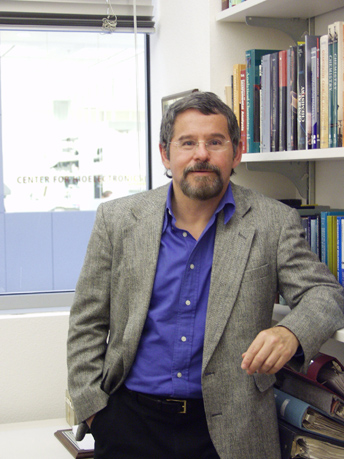
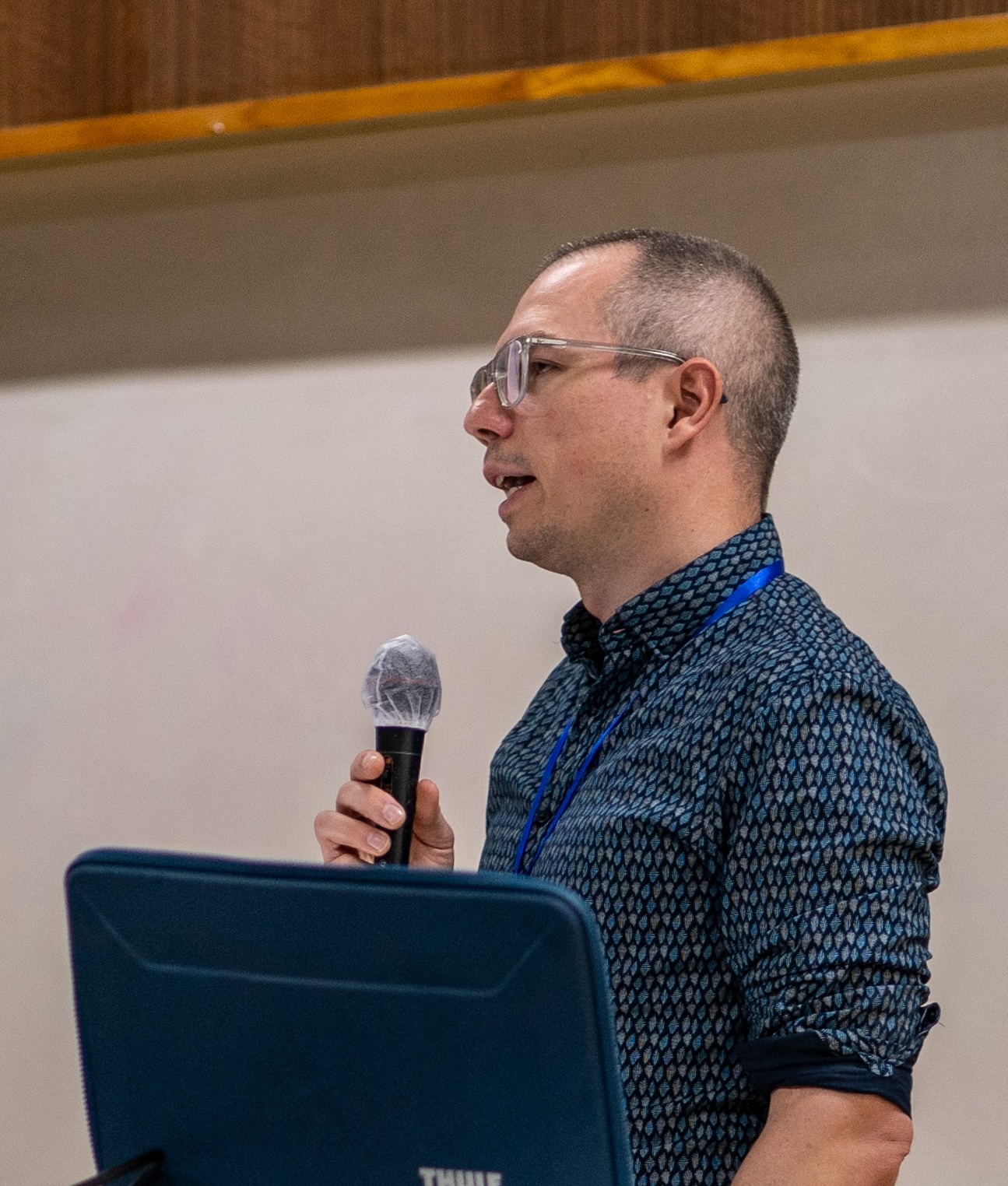
Lars-Olof Johansson is a Senior Lecturer at Halmstad University's School of Information Technology, specializing in Informatics. His research focuses on digital service innovation from a learning perspective, emphasizing collaboration between diverse stakeholders and knowledge exchange in innovation processes. He is actively involved in the LeaDS research program (Learning in a Digitalized Society) and teaches in the bachelor's program 'Digital Business Development' and the master's program 'Digital Learning'. His work bridges educational methodologies and technological innovation, particularly in fostering environments where interdisciplinary learning drives successful digital service creation. Notably recognized as an 'Excellent Teacher in Informatics,' he integrates practical experience with academic rigor, contributing to both scholarly discourse and pedagogical advancements. Key projects include SESMA (2019-2021), exploring sustainable mobility solutions, and ongoing collaborations in boundary practices for ICT innovation. His publications span topics like knowledgeability in digital service innovation, ethics in autonomous systems, and collaborative learning frameworks. His awards highlight his pedagogical impact, while his research addresses systemic challenges in innovation through interdisciplinary approaches.
Michael O'Dea is a Senior Lecturer in the Department of Computer Science at the University of York, United Kingdom. He has held previous academic positions at York St John University, Beijing University of Technology, University of Hull, and Waikato Institute of Technology, bringing extensive international experience in computer science education. He is actively engaged in pedagogical scholarship and leadership in higher education innovation. Senior Lecturer, Department of Computer Science, University of York Senior Lecturer in Computer Science, York St John University Lecturer in Software Engineering, Beijing University of Technology, China Lecturer in Computer Science, University of Hull Lecturer in Information Technology, Waikato Institute of Technology, NZ Dr. O'Dea earned his Ed.D. in Computer Based Learning from the University of Leeds. His research centers on the integration of artificial intelligence into educational practices, with a strong emphasis on AI literacy, the effectiveness of generative AI in teaching and learning, and the evolving landscape of technology acceptance in higher education. He investigates how AI tools can enhance student learning, faculty development, and institutional policy. His recent publications span topics such as AI literacy assessment, the future of online and blended learning, the application of machine learning in earthquake prediction, and international study abroad effectiveness. These works reflect a broad interdisciplinary approach, combining computer science, educational theory, and policy analysis. His scholarship is increasingly focused on the transformative potential of generative AI in academic settings, as evidenced by his leadership in special journal issues and funded research projects. Dr. O'Dea holds significant editorial responsibilities as Associate Editor and Lead Guest Editor for the Journal of University Teaching and Learning Practice and as Guest Editor for a special issue in Education Sciences on generative-AI-enhanced learning. He is also an Invited External Academic Affiliate at the King's Institute for Artificial Intelligence, King's College London. Associate Editor - Special Issues, Journal of University Teaching and Learning Practice Lead Guest Editor, Special Issue on Technology Acceptance Models, JUTLP (2024) Guest Editor, Special Issue on Generative-AI-Enhanced Learning, Education Sciences Principal Investigator, QAA Collaborative Enhancement Project on Graduate Attributes in the Era of GenAI (2025) He has delivered numerous invited talks and workshops at institutions such as the University of York, Queen Mary University of London, and international conferences including the Academy of Management and the International Conference on Artificial Intelligence in Education. His work bridges research, practice, and policy in higher education, with a strong commitment to inclusive and innovative teaching methodologies.
Jeff Offutt is a Professor and Chair of the Department of Computer Science at the University at Albany, College of Nanotechnology, Software, & Engineering. Previously, he was a Full Professor with Tenure in Software Engineering at George Mason University since 2005. He received his PhD in Information & Computer Science from the Georgia Institute of Technology in 1988. His research spans software testing, mutation testing, model-based testing, automatic test data generation, web application testing, and software engineering education. He has led significant projects such as the NSF-funded integration of CS into K-5 classrooms and the Google-funded SPARC project for scalable CS1/CS2 instruction. The 15 most recent articles reflect a continued focus on mutation testing cost reduction, model-based testing oracles, educational innovations, and security aspects of web applications. Trends include empirical validation, industrial applicability, and bridging theory with practice in software testing and engineering education. John Toups Presidential Medal for Excellence in Teaching (2020) George Mason University’s Alumni Association Faculty Member of the Year (2020) Outstanding Faculty Award from the State Council of Higher Education for Virginia (2019) Best Paper Award at ICST 2021 10-Year Most Influential Paper Award at MODELS 2020 George Mason University Teaching Excellence Award (2013) ACM Notable Article Award (2013) Jeff Offutt has mentored numerous graduate students including Upsorn Praphamontripong, Nan Li, and Yu-Seung Ma, and has led major grant-funded projects such as the SPARC educational model and NSF initiatives on K-5 CS integration. His textbook Introduction to Software Testing (with Paul Ammann) is widely adopted globally. He led the MS in Software Engineering program at GMU and developed several new courses in software testing, web engineering, and usability. He pioneered innovative teaching methods using web technologies and asynchronous learning models. He also co-founded the IEEE International Conference on Software Testing, Verification and Validation (ICST) and served as Editor-in-Chief of Software Testing, Verification and Reliability from 2007 to 2019.
Esa Rahtu is a Professor in the Department of Computer Science at Aalto University, Finland. His research focuses on computer vision, machine learning, and deep learning applications. He leads projects in image coding, neural networks, 3D reconstruction, object pose estimation, and anomaly detection. Rahtu has contributed to over 98 research outputs since 2017, with recent work emphasizing Gaussian splatting for SLAM, neural radiance fields, and hybrid video codecs for human-machine compatibility. His expertise spans visual-inertial odometry (e.g., ADVIO dataset), LiDAR-based place recognition, and manufacturing quality control systems. Key areas include: 3D scene reconstruction using Gaussian splatting techniques Deep learning models for anomaly detection in industrial processes Hybrid video codecs optimizing human perception and machine processing Multi-sensor fusion for robotic navigation and indoor mapping Notable datasets include ADVIO for visual-inertial odometry and FIORD for 3D reconstruction benchmarking. His research aligns with UN SDG 9 (Industry, Innovation & Infrastructure) and SDG 4 (Quality Education) through advancements in smart manufacturing and educational technology. Rahtu has received continuous research funding, including a grant period from April to June 2018. His work emphasizes practical applications, collaborating on real-world challenges like paper manufacturing quality control and smartphone-based 3D reconstruction.
Dr. Joseph Wang is the Distinguished Professor of Nanoengineering and the SAIC Endowed Chair at UC San Diego. He leads the NBE Lab and directs the Center of Wearable Sensors and the Center for Mobile-health Systems. With over 50 researchers in his team, his work focuses on nanomachines, wearable sensors, electrochemistry, and analytical chemistry. His global citation ranking places him #13 in Chemistry and #31 in Materials Science, with an H-index of 217 and over 180,000 citations. He has been a Highly Cited Researcher since 2014 and ranks #4 in Nanoscience & Nanotechnology in the 2025 World Top 100 Scientists list. His research has led to groundbreaking innovations, including microrobots for lung cancer treatment, multiplexed microneedle sensors, and wearable devices for real-time health monitoring. He has been honored with prestigious awards such as the 2024 ACS Award in Analytical Chemistry, IEEE Sensors Council Award, and IUPAC Medal. He holds honorary doctorates from Comenius University and Charles University, and Woxsen University named its Chemistry Department after him. Key contributions include pioneering work in biohybrid microrobots, self-healing wearable devices, and sweat-based health monitoring systems. His lab’s work has been featured in Nature, Science, and The Economist. He co-authored influential books like Analytical Electrochemistry (4th ed.) and Nanomachines , and his research spans clinical applications, environmental sensing, and personalized medicine.
Steven Farber is an Associate Professor in the Department of Human Geography at the University of Toronto . His research focuses on transport geography , spatial analysis , accessibility , and public transportation equity , with a strong emphasis on Geographic Information Science (GIS) and social sustainability . Current research: Distributional aspects of transit accessibility, personal mobility, activity participation Teaching: Undergraduate courses on multivariate analysis and transportation geography, graduate seminars on transportation and urban form Key research trends include: Transport equity and social inclusion Time-geography in urban mobility Spatiotemporal accessibility modeling Behavioral impacts of transport infrastructure GIS-based spatial econometric methods Grants include multiple SSHRC Insight awards, Ontario Ministry of Research funding, and municipal partnerships for transport equity studies.
Filippo Maria Bianchi is an Associate Professor in the Department of Mathematics and Statistics at UiT The Arctic University of Norway, where he conducts research at the intersection of machine learning, dynamical systems, and complex networks. He is also a Senior Researcher at NORCE Norwegian Research Centre and actively contributes to the IEEE Task Force on Learning for Structured Data and the ELLIS Society. Department: Department of Mathematics and Statistics School: Faculty of Science and Technology University: UiT The Arctic University of Norway Adjunct Position: Senior Researcher, NORCE Education: Bachelor’s in Computer Engineering, Sapienza University of Rome Master’s in Artificial Intelligence & Robotics, Sapienza University of Rome (cum laude, 2012) PhD in Machine Learning, Sapienza University of Rome His research focuses on graph machine learning, time series analysis, reservoir computing, and probabilistic forecasting , with applications in energy analytics and remote sensing. He has led and contributed to numerous projects involving Arctic power grids, satellite-based environmental monitoring, and deep learning for sustainability. The recent publications reflect a strong trend in graph neural networks —particularly pooling mechanisms, spatiotemporal modeling, and explainability—alongside applications in energy forecasting, avalanche detection, and remote sensing . His work combines theoretical innovation with real-world impact, especially in Arctic and remote environments. Scientific Affiliations and Leadership: Vice-Chair, IEEE Task Force on Learning for Structured Data Member, ELLIS Society Co-founder, Northernmost Graph Machine Learning group Member, IEEE Task Force on Reservoir Computing Visiting Professor, Politecnico di Milano (2024–2025) He actively mentors students and collaborates on interdisciplinary research. He has led projects in power grid reliability, solar fault detection, and unsupervised change detection in satellite imagery . His work is supported by open-source implementations and reproducible research practices. Laboratories and Research Groups: Northernmost Graph Machine Learning group (co-founder) ARC Research Group, UiT Graph Machine Learning Group, Lugano
Alexander Müller-Rakow is a Researcher and PhD Candidate at the Design Research Lab at Berlin University of the Arts. His work explores the interplay between embodied interfaces , digital sovereignty , and social design , focusing on bodily movements as a medium for musical and interactive technologies. Education: Industrial and Interaction Design (University of Applied Science Magdeburg, University of Bergen) Current Roles: Research Scientist (Design Research Lab), Lecturer (Hochschule für Kunste Bremen, others) His research spans haptic technology , textile-integrated sensors , and experimental interfaces , often intersecting with digital justice and material interactions . Early-career publications include collaborations on capacitive sensing and urban design interventions , reflecting his interdisciplinary approach. As part of the Design Research Lab, he contributes to projects addressing inclusive digital futures , smart urban mobility , and collaborative tools , aligning with the lab's mission for ecologically sustainable design .
Rachee Singh is an Assistant Professor of Computer Science at Cornell University, leading the sysphotonics research group. She concurrently serves as an Amazon Scholar within the SageMaker Hyperpod teams, specializing in large-scale machine learning infrastructure development for cloud environments. Her research focuses on photonic interconnect systems for server-scale, rack-scale, and long-haul communication networks, targeting performance optimization for distributed machine learning and planet-scale cloud workloads. Key specialties include optical network design, fault-tolerant WAN architectures, and energy-efficient datacenter interconnects, with strong emphasis on practical deployment in real-world systems. Her group bridges theoretical networking principles with applied AI infrastructure challenges. Recent publications demonstrate concentrated innovation in photonic network optimization for ML workloads, particularly in wavelength management, collective communication algorithms, and chip-to-chip photonic fabrics. This work spans optical physics, distributed systems, and machine learning, revealing a trajectory toward sustainable, high-performance AI infrastructure. Scientific recognition includes: Amazon Research Award (2023) Cisco Research Award Dr. Singh actively mentors graduate researchers including Jonathan Aimuyo, Byungsoo Oh, and Arjun Devraj, whose co-authored publications form the core of her group's output. Research funding is secured through competitive grants from the NSF (including a $1M award for chip-to-chip photonic fabrics), SRC/DARPA JUMP 2.0 program, Cisco, and Cornell's Atkinson Center for Sustainability. The sysphotonics group operates as Cornell's hub for photonic network systems research, developing programmable integrated photonics solutions and collaborating with Amazon on SageMaker Hyperpod for next-generation ML infrastructure.
Professor John Muellbauer is a Senior Research Fellow at Nuffield College and Professor of Economics at the University of Oxford. He co-directs the Macroeconomics and Finance Programme at the Institute for New Economic Thinking (INET) Oxford Martin School. His work bridges household economics, housing markets, and finance-real economy interactions, with a focus on credit channels and monetary transmission mechanisms. Education: B.A. from Cambridge University, Ph.D. from UC Berkeley Former roles: Professor at Birkbeck College (London), Lecturer at Warwick University His research emphasizes systems approaches to consumption, house prices, and debt, critiquing conventional central bank models. Recent work includes international house price cycles (Journal of Economic Literature, 2021) and ECB policy model critiques (2022). He collaborates with central banks globally and contributes to macroprudential policy frameworks. Scientific awards include the 2014 Kendrick Prize for his work on credit and housing markets. He is a Fellow of the British Academy, Econometric Society, and European Economic Association, and a CEPR Research Fellow. Policy engagement spans HM Treasury, OECD, Swedish Prudential Authority, and the Resolution Foundation. He advocates for a Green Land Value Tax to address UK housing challenges and frequently contributes to VoxEU debates.
Stuart Reeves is an Associate Professor at the School of Computer Science, University of Nottingham, UK. He is a member of the Mixed Reality Lab, Horizon research institute, Centre for Doctoral Training (CDT), and Social Interaction and Technology (SIT) Special Interest Group. Reeves serves as an elected member of the University of Nottingham Senate with his term extending until 2026. His academic career spans over two decades with significant contributions to human-computer interaction, particularly focusing on social and collaborative technologies in real-world contexts. Reeves' research interests primarily focus on human-computer interaction, collaborative computing, design research, and the application of ethnomethodology and conversation analysis (EMCA) to technology studies. His work examines how people interact with diverse interactive devices and systems in real-world situations and places, with particular attention to public spaces, video gaming contexts, and collaborative work environments. Reeves has developed significant expertise in understanding spectatorship within interactive spaces and the 'work' involved in technological engagements. His publication record demonstrates consistent high-impact contributions to the field, with recent research focusing on robots and AI technologies in action, particularly examining how autonomous robots interact with humans in public streets. Reeves has received multiple prestigious awards including the HRI 2024 Best Paper Award for his work on public robot encounters and previous Best Paper Awards at CHI 2005 and CHI 2008. HRI 2024 Best Paper Award for 'Encountering autonomous robots on public streets' CHI 2015 Honourable Mention Award CHI 2008 Best Paper Award CHI 2005 Best Paper Award CHI 2012 Honourable Mention Award CHI 2020 Best Paper Award Reeves has secured substantial research funding including an EPSRC Early Career Fellowship, multiple EPSRC grants, and international collaborations. His teaching responsibilities include undergraduate and postgraduate supervision across various computer science modules, with a focus on sensor-based systems and software design principles. He maintains an active presence in the research community through publications, conference participation, and his Medium page where he shares insights on research methodology and practice.
Dr. Johnson Xuesong Shen is an Associate Professor at the School of Civil and Environmental Engineering , University of New South Wales . His work integrates Digital Twins , Building Information Modeling (BIM) , and Construction Automation with a focus on robotics, AI, and LiDAR/UAS technologies. Research Interests: Digital Twins, BIM, Construction Robotics, Emissions Modeling, LiDAR/UAS, Structural Health Monitoring Education: Ph.D. in Construction Engineering and Management, The Hong Kong Polytechnic University His publications span 2025–2005, emphasizing construction automation , environmental impact reduction , and innovative tunneling solutions . Recent work includes IoT-Bayes fusion for real-time safety monitoring and life cycle analysis of construction waste. Scientific Awards: Vice Chancellor's Award for Teaching Excellence, UNSW, 2014 Best PhD Student Paper Award, CONVR, UK, 2013 Postdoctoral Fellowship, University of Alberta, 2011-2013 Best Paper Award, ASCE Construction Research Congress, 2010 Dr. Shen mentors 9 PhD candidates in areas like 3D object detection , fuel consumption modeling , and UAV-based LiDAR . His grants include $5.98M from the Australian Research Council (2022–2027) for resilient infrastructure systems and projects on modular construction and intelligent tunneling .
Chao Liu is a Research Scientist at CNRS (French National Center for Scientific Research) since 2008, affiliated with the DEXTER team and the Department of Robotics, LIRMM at University of Montpellier, France. He earned his Ph.D. in Electrical & Electronic Engineering from Nanyang Technological University, Singapore (2006). Current research focuses on surgical robotics , haptics , teleoperation , and nonlinear control theory with applications in computer vision. His work addresses challenges in robotic-assisted telesurgery, including: Stable and transparent human-robot interaction through wave variable compensators and passivity filters Physiological motion compensation using spatio-temporal LSTM and dual Kalman filters EMG-based motion recognition for surgical skill assessment 3D soft-tissue reconstruction with stereo-endoscopes and deep learning Dr. Liu leads European and French projects like: TS2RT (CNRS-funded): Safer teleoperation with motion compensation ROBACUS (ANR-funded): Needle positioning with MPC control HaTUMoCo (CNRS-funded): Haptic teleoperation with uncertainty handling ARAKNES (EU-funded): Microrobotic systems for endoluminal surgery Scientific honors include Senior Member of IEEE and Member of Sigma Xi . He supervises Ph.D. and Master's students working on topics such as concentric tube robot optimization, haptic teleoperation, and EMG-based force estimation. Dr. Liu serves on IEEE Technical Committees for Telerobotics and Haptics , and as Technical Editor of IEEE/ASME Transactions on Mechatronics.
Adam J. Aviv is an Associate Professor of Computer Science at The George Washington University, leading the George Washington University Usable Security and Privacy Lab (gwusec) . His work focuses on computer security, privacy, and usable security , with a particular emphasis on user behavior, authentication systems, and mobile/web security. University: The George Washington University Academic Rank: Associate Professor Email: aaviv@gwu.edu Research Interests: His research investigates how users interact with security and privacy systems, including studies on: Biometric and mobile authentication Password manager usability Generative AI risk perception Online proctoring and institutional decisions Data breach responses Privacy labels and user trust Recent Publications (2024–2025) span venues like USENIX Security, IEEE S&P, ACM CHI, and PoPETs, covering topics such as: Wearable-based contact tracing in low-resource settings WhatsApp mod security perceptions Password manager issues Privacy label accuracy Grants & Awards: Recipient of the OVPR Research Mentorship Award for his work with students. Currently holds NSF grants for collaborative cybersecurity research and travel funding for Privacy Enhancing Technology Symposium. Teaching: Offers Intro to Usable Security and Privacy (CSCI 4533/6533) in Fall 2025, with students engaging in: Secure messaging studies Interview and survey methodology Full research projects with ethics reports Laboratory: The gwusec lab focuses on user-centered security and privacy research , collaborating with institutions like Tel Aviv University and University of Haifa.
Professor Marios C. Angelides is a full-time faculty member at Brunel University London , serving as Professor of Computing and Divisional Lead within the College of Engineering, Design and Physical Sciences . He leads the Creative Computing Research Group under the Institute of Digital Futures and contributes to the Digital Media department at Brunel Design School. BSc (First Class Honours) and PhD in Computing from the London School of Economics (LSE) Chartered Engineer (CEng) and Chartered Fellow of the British Computer Society (FBCS CITP) His research focuses on Creative Computing , specifically applying Machine Learning , Serious Gaming , and Cognitive Modeling to develop Smart IoT Applications . His work spans autonomous drone fleets for environmental monitoring, cybersecurity middleware for Android systems, wearable technology for lifestyle recommendations, and historical analysis of Alan Turing’s legacy in modern AI. Recent publications highlight trends in deploying Machine Learning for: IoT systems optimization Autonomous aerial/underwater vehicle coordination Deepfake detection using Turing’s Imitation Game Energy allocation in CubeSats via gaming mechanics Scientific recognition includes being Deputy Editor of The Computer Journal and runner-up for the 2016 Oxford University Press Wilkes Award . He has supervised PhD students in topics like Smart Android Middleware for Cybersecurity and Wearable Recommendation Systems , with active involvement in editorial boards and international conferences.