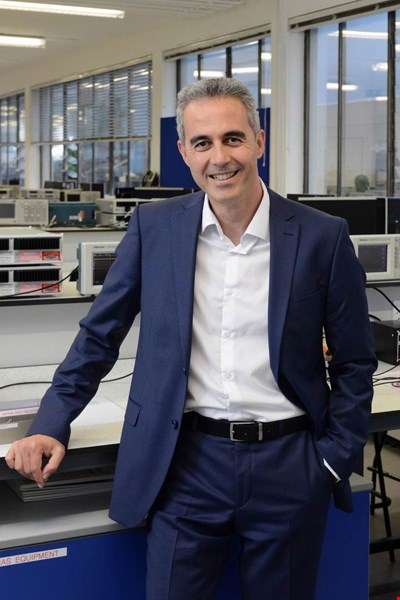
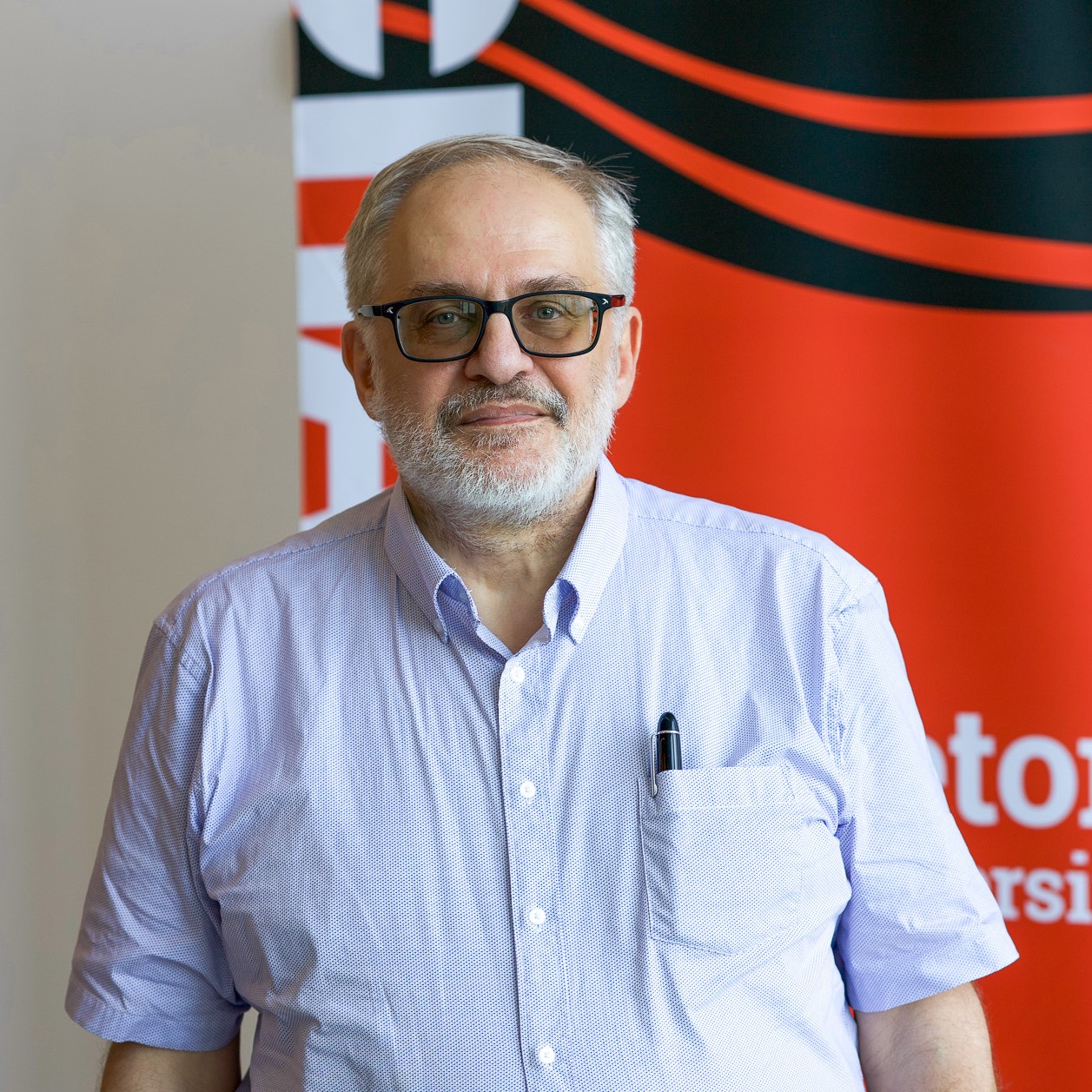
Konstantinos Banitsas is a Senior Lecturer at the Department of Electronic and Computer Engineering , Brunel University London, affiliated with the College of Engineering, Design and Physical Sciences and the Wireless Networks and Communications Centre . Holding a PhD in Telemedicine (2004), an MSc in Electronic Engineering (1997), and a BSc in Computer Science (1995), he has taught computer networking, mobile communications, and internet engineering while supervising undergraduate and postgraduate projects. His research spans telemedicine , wireless sensors , and medical imaging , with recent publications focusing on spinal cord injury treatments , myoelectric sensors for movement classification , and low-cost EMG sensor validation . Earlier work explored Microsoft Kinect applications in gait analysis, wireless medical image security , and 3G network utilization in emergency telemedicine . Dr. Banitsas supervises 4 PhD students in telemedicine and medical imaging, contributes to projects like DoctorEye (a tumor annotation platform), and participates in the IEHS research group . His work emphasizes practical implementations of wireless technologies in healthcare, including ambulance teleconsultation systems and wearable devices.
Mohammad Swash is a Lecturer in Digital Media at the Brunel Design School within the College of Engineering, Design and Physical Sciences at Brunel University London. He joined the university in 2013 after completing his Ph.D. in Holoscopic 3D Imaging Systems at the same institution, establishing himself as a leading researcher in advanced imaging technologies. Dr Swash's extensive research portfolio spans multiple disciplines with a primary focus on 3D imaging and display systems. His work encompasses holoscopic and multiview 3D technologies, including cameras, processing techniques, and display systems. He has made significant contributions to 3D virtual reality, augmented reality, computer vision, and medical image processing. His research in human-computer interaction design and serious gaming demonstrates practical applications of theoretical concepts across various industries. Analysis of his recent publications (2021-2024) reveals a clear trend toward applying 3D imaging technologies to solve real-world problems in autonomous vehicles, medical applications, and construction. His work increasingly integrates AI and machine learning techniques with 3D imaging systems, particularly in gesture recognition and depth estimation. This interdisciplinary approach bridges theoretical computer vision research with practical implementations across multiple sectors. Dr Swash has earned significant recognition for his scholarly contributions: Prestigious Vice-Chancellor's Doctoral Research Prize, Brunel University London IEEE Broadcast Technology Society 2013 Best Paper Award First BEST poster presentation prize, Brunel Research Students Conference, ReSCon09, 2009 Chancellor prize and the Medal for excellence achievement, Brunel University London, 2008 Graham Hawkes prize for the best final year project, Brunel University London, 2008 Best UG Project Award in Electronic and Computer Engineering, Brunel University London, 2009 His research funding includes major projects such as the Internet of Radio-Light (funded by the European Commission, 2017-2020), CEPROQHA (funded by Qatar National Research Funds, 2016-2019), and initiatives focused on cultural heritage preservation through 3D imaging. These projects demonstrate the practical impact of his work across healthcare, transportation, and construction industries. Dr Swash actively collaborates with researchers globally and is a member of the IMM research group at Brunel University, contributing to cutting-edge advancements in digital media and 3D technologies.
Ioannis Lambadaris is a Full Professor and Chancellor’s Professor at Carleton University's Department of Systems and Computer Engineering, Faculty of Engineering and Design. Holding a Ph.D. from the University of Maryland, he has contributed extensively to network performance analysis over 25+ years. Specializes in stochastic processes, cloud computing, and wireless edge systems Led Ericsson 5G Chair initiatives Supervised over 70 graduate students His research spans QoS control , VNF placement optimization , and IoT indoor localization , with over 170 publications. Recent work focuses on reinforcement learning and deep learning in network resource allocation. Scientific Recognition: Chancellor’s Professor Ericsson 5G Chair Contact: ioannis@sce.carleton.ca | Office: Mackenzie 4448, Ottawa, ON
Royal Holloway, University of LondonUnited Kingdom
Xu Feng is a Teaching Fellow at the Department of Computer Science , Royal Holloway, University of London. His work focuses on WiFi-based indoor positioning systems. His research interests include: WiFi fingerprinting and signal processing Data augmentation for indoor localization Machine learning algorithms for positioning accuracy Dynamic model switching in wireless networks Open access dataset analysis The recent publications highlight advancements in WiFi RSS-RTT and round-trip time systems, with a focus on dynamic algorithms and data augmentation. His collaborations span interdisciplinary work in wireless communication and machine learning.
Francisco Javier Falcone Lanas is a Professor in the Department of Electrical, Electronic and Communication Engineering at the Public University of Navarre. He is affiliated with the Institute of Smart Cities and leads research in the Communication, Signals and Microwaves research group. He also participates in the Doctoral Program in Communications Technologies, Bioengineering, and Renewable Energy. His research focuses on applied and computational electromagnetics, with specializations in: Analysis and design of complex electromagnetic media and metamaterials Design of communication devices (filters, diplexers, couplers, antennas) Implementation of devices on flexible/paper substrates Wireless power transfer systems Computational electromagnetic code development (FDTD, 3D Ray Launching, Radar RCS) Implementation of devices for PLMN, WSN, LPWAN and Radar systems Radioelectric analysis at physical layer and system level His recent publications demonstrate a strong focus on millimeter-wave technology, MIMO antenna systems, 5G/6G communications, and wireless sensor networks. His work often addresses optimization challenges related to energy consumption, interference handling, and capacity/coverage in communication systems. He has made significant contributions to the fields of metamaterials and their application in antenna design and performance enhancement. With an H-index of 58 in Scopus, Professor Falcone Lanas has established himself as a leading researcher in his field. His research has practical applications in various domains including: 5G/6G mobile communication systems Wireless body area networks Vehicle-to-everything (V2X) communications Wireless sensor networks for industrial applications Digital twin modeling for UAV communications Earthquake disaster management systems
Higher Institute of Education and SciencesPortugal
Ana Maria Neves de Almeida Baptista Figueiredo is a Coordinator Professor and academic leader at the Institute of Engineering of Polytechnic of Porto (ISEP/IPP). She currently serves as President of the ISEP Scientific Council (since 2018), Sub-Director of post-graduation programmes in Big Data & Decision Making and Industry 4.0, and holds numerous leadership roles in accreditation processes including A3ES, EUR-ACE, and ABET. She is a Senior Researcher at GECAD (Research Group on Intelligent Engineering and Computing for Advanced Innovation and Development) and member of LASI (Associated Laboratory of Intelligent Systems). Education: PhD in Industrial and Systems Engineering (2003) from University of Minho MSc in Electronic and Computer Engineering - Specialization in Industrial Informatics (1996) from University of Porto BSc in Industrial Informatics (1993) from Polytechnic Institute of Oporto - Institute of Engineering BSc in Electronic Engineering (1990) from Polytechnic Institute of Oporto - Institute of Engineering Professor Figueiredo specializes in Ambient Intelligence, Decision Support Systems, and Intelligent Systems with applications spanning multiple domains. Her research combines artificial intelligence, big data analytics, and user-centered design to develop innovative solutions. She has particular expertise in creating personalized systems that adapt to user needs and contexts, with strong emphasis on practical applications in real-world settings. Her publication record reveals consistent research activity across three main application domains: tourism technology (personalized recommendation systems, smart travel planning), Industry 4.0 (intelligent manufacturing, production scheduling), and healthcare (respiratory monitoring, medical diagnostics). The research demonstrates a clear trajectory from foundational work in scheduling algorithms to increasingly sophisticated intelligent systems incorporating machine learning, sensor networks, and emotional computing. Awards and Recognition: 2017 Award of merit for scientific publication in TELEMATICA AND INFORMATICS journal 2017 Prémio SPAIC – AstraZeneca for FRASIS respiratory monitoring project 2013 PIPED honorable mention for Android e-learning platform 2012 1st place in POLIEMPREENDE entrepreneurship competition with NearTour project 1995 Best student award in Industrial Informatics Engineering Professor Figueiredo has supervised 3 completed PhD theses with 1 ongoing, and more than thirty MSc dissertations. She has participated as Principal or Co-Principal Investigator in 6 projects and as Researcher in more than 20 projects, securing funding from FCT and other agencies. Her work has been supported by significant grants including TheRoute, GROUPLANNER, Smartravel, ATT, InVALUE, INVALUE_PT, NIS, PIANISM, Cyberfactory, SECOIIA, and produtech_R3. She leads research activities within GECAD and LASI, collaborating with international teams from Spain, Canada, USA, Czech Republic, Turkey, and Italy. Her work bridges academic research with practical applications through partnerships with business organizations, public entities, and professional associations across multiple sectors.
Oliver Jensen serves as an Adjunct Assistant Professor in the Department of Computer Science at the University of Texas, College of Natural Sciences. He teaches courses remotely while maintaining his primary position as a Senior Security Engineer at Workiva. His academic appointments include teaching CS 361S: Network Security and Privacy from Fall 2014 through Spring 2017, as well as CS 314H: Algorithms and Data Structures (Honors) in Fall 2020. Dr. Jensen's research program centers on Security and Privacy, with particular expertise in Protocol Design for NFC and Mobile Payments systems, as well as Offensive and Defensive Technologies. His scholarly work demonstrates a strong focus on practical security issues in payment systems and wireless communications. His teaching portfolio reveals a consistent commitment to network security education, with multiple offerings of the Network Security and Privacy course over several academic years. His recent publications show a concentration on NFC security protocols, with three significant papers published in 2016-2017 focusing on secure credit card transactions over NFC technology. His research trajectory indicates a specialization in payment system security, particularly addressing vulnerabilities in contactless payment technologies that have become increasingly prevalent in modern commerce. Dr. Jensen maintains regular office hours for his students, holding sessions on Mondays and Wednesdays from 12:15-13:00 in BUR 220. His course syllabi demonstrate comprehensive coverage of network security topics, including cryptography fundamentals, authentication systems, web security, wireless security, and defenses against various network threats.
Nicholas Bambos is the R. Weiland Professor in the School of Engineering at Stanford University, holding a joint appointment in the Department of Electrical Engineering and the Department of Management Science & Engineering. He served as the Fortinet Founders Department Chair of the Management Science & Engineering Department from 2016 to 2020. His academic career spans over three decades, with previous positions as an assistant professor (1989-1995) and tenured associate professor (1995-1996) at UCLA before joining Stanford in 1996. Prof. Bambos's primary research interests focus on the architecture and high-performance engineering of computer systems and networks, along with data analytics emphasizing medical and health-care applications. His work spans multiple domains including networking and the Internet, cloud computing, multimedia streaming, computer security, and digital health. Methodologically, his contributions extend to network control, online task scheduling, routing and distributed processing, and machine learning and artificial intelligence. His research has resulted in over 300 peer-reviewed publications that demonstrate a strong interdisciplinary approach, bridging theoretical computer science with practical healthcare applications. The trajectory of Prof. Bambos's recent publications reveals a strategic expansion from traditional networking and systems research into healthcare analytics, particularly opioid use prediction and digital health monitoring. His work increasingly integrates machine learning techniques with domain-specific medical knowledge, showing a clear evolution toward solving complex societal challenges through technological innovation. Many publications demonstrate collaborative work across engineering, medical, and data science disciplines, reflecting the growing importance of interdisciplinary research in addressing modern healthcare challenges. His significant scientific achievements have been recognized through numerous prestigious awards: R. Weiland Professorship in Engineering (2016-present) Eugene L. Grant Teaching Award (2014) IBM Faculty Award (2002) Cisco Systems Faculty Scholar (1999-2003) National Young Investigator Award from NSF (1992-1997) Prof. Bambos has graduated over 40 doctoral students who have gone on to leadership positions in academia, Silicon Valley industries, technology startups, finance, and venture capital. His research has been supported by significant funding, including a $30 million Stanford Networking Research Center which he directed from 1999 to 2005. Beyond traditional academic roles, he has served on various editorial boards, scientific committees, and as a consultant and co-founder of technology startups, demonstrating his commitment to translating academic research into real-world impact. He leads the Computer Systems Performance Engineering Lab (Perf-Lab) at Stanford, which comprises doctoral students and industry visitors engaged in various research projects. His lab serves as an interdisciplinary hub connecting theoretical computer science with practical applications in healthcare, energy, and networking domains. The lab's collaborative environment fosters innovation across traditional academic boundaries, reflecting Prof. Bambos's broader research philosophy of addressing complex problems through integrated, multi-disciplinary approaches.
Khandakar Ahmed is an Associate Professor of Information Technology at Victoria University's College of Arts, Business, Law, Education & IT (CoABLEIT) and Discipline Leader for Emerging Trends in Science, IT & Engineering at the Institute for Sustainable Industries and Liveable Cities (ISILC). His career spans roles at Victoria University (2017–present), RMIT University (2015–2017), and Shahjalal University of Science and Technology (2007–2015). Education: PhD in Electrical and Computer Engineering (RMIT University, 2014), MSc in Networking and e-Business Centered Computing (University of Reading, 2009), BSc in Computer Science and Engineering (Shahjalal University of Science and Technology, 2007) His research expertise includes Artificial Intelligence, Cyber Security, Digital Health, Federated Learning, Quantum Computing, and the Internet of Things . He has published over 100 refereed papers with 4,200+ citations (h-index 32) and secured $3.4 million+ in funding since 2018 from partners like Australia's Economic Accelerator and Western Health. His recent work focuses on AI-driven mental health analysis , blockchain security frameworks , and edge computing optimizations . He serves as lead supervisor for 6 PhD and 1 Master of Research student and has mentored over 100 students through industry-linked projects. Dr Ahmed actively contributes to editorial roles for leading journals such as Scientific Reports , IEEE Transactions , and ACM Computing Surveys . His research aligns with UN Sustainable Development Goals 3 (Good Health), 9 (Industry Innovation), and 11 (Sustainable Cities).
Gianluigi Ferrari is a Full Professor of Telecommunications at the Department of Engineering and Architecture, University of Parma, Italy. He has been at the University of Parma since 2002, following his Laurea and PhD degrees from the same institution in 1998 and 2002 respectively. Professor Ferrari serves as the coordinator of the Internet of Things (IoT) Lab since 2006, Vice-director of the Future Technology Lab (2020-), and President of the Degree Course in Computer, Electronics and Telecommunications Engineering (2021-). He has held visiting researcher positions at USC, CMU, KMITL, NATO in Brussels, and NCTU. Professor Ferrari's research focuses on complex networked communication systems with emphasis on signal processing and network communication. His work spans Internet of Things architectures, wireless sensor networks, vehicular communications, and edge computing systems. He has made significant contributions to IoT protocols, sensor network optimization, and vehicular communication systems, with applications in smart cities, healthcare monitoring, and intelligent transportation systems. His interdisciplinary approach bridges theoretical foundations with practical implementations in real-world scenarios. His recent publications demonstrate a strong trend toward privacy-preserving techniques in IoT systems, edge intelligence for real-time analytics, and optimization of communication protocols for emerging applications. The research spans healthcare monitoring with wearable devices, vehicular communications with federated learning approaches, and novel routing protocols for BLE mesh networks. His work consistently addresses the challenges of energy efficiency, security, and reliability in networked systems. best paper/technical awards at various international conferences Senior Member of the IEEE Editor-in-Chief of Future Internet (MDPI, 2023-) Editor of ICT Express (Elsevier, 2021-) Professor Ferrari participates in numerous research projects funded by public and private institutions with research grants exceeding €5 million. He has served on the editorial boards of multiple international journals and organized several workshops and special sessions at major conferences. His professional activities include serving as Technical Team Member in NATO Research Task Group HFM-260 (2015-2018) and member of the Scientific Council of ARTEMIS association (2019-) and CNIT (2020-). As director of the IoT Lab at the University of Parma, Professor Ferrari leads a research team focused on developing innovative solutions for Internet of Things applications. The lab investigates communication protocols, network architectures, and data processing techniques for various IoT domains including smart cities, healthcare, and intelligent transportation systems. The lab maintains strong collaborations with international research institutions and industry partners, facilitating technology transfer and practical implementation of research outcomes.
Prof. Dr. Raif Bayır is a Turkish academic at Karabük University's College of Engineering, Department of Mechatronics Engineering. With a career spanning 2000-2024, he has held continuous full-time faculty positions from Assistant Professor to Professor. His research focuses on Robotics, Hybrid/Electric Vehicles, and Artificial Intelligence. Doctorate: Gazi University (2005) - Electronics & Computer Education Postgraduate: Gazi University (1998) - Electronics & Computer Education Undergraduate: Gazi University (1995) - Electronics & Computer Education His work integrates Artificial Intelligence techniques into Electric Vehicle systems, Robotics, and Agricultural Engineering applications. Recent publications emphasize Deep Learning for Mask Detection, Real-Time Battery Monitoring, and Autonomous Navigation Systems. Scientific awards include: 2017 METU Line-Following Robot 1st Prize 2016 TÜBİTAK Domestic Product Award 2015 TÜBİTAK Electromobil Best Design Prize He has advised over 20 graduate theses on topics spanning Electric Vehicle Components, Beehive Monitoring Systems, and Intelligent Control Applications. His research teams have developed multiple TÜBİTAK-supported projects including Automotive Test Stands and Battery Management Systems.
Ramakrishnan Durairajan is an Associate Professor in the School of Computer and Data Sciences at the University of Oregon, where he co-directs the Oregon Networking Research Group (ONRG). He holds a Ph.D. and M.S. in Computer Sciences from the University of Wisconsin-Madison and a B.Tech in Information Technology from Anna University. His research employs data-driven approaches to enhance internet robustness, focusing on: Network infrastructure measurement using AI/ML and statistical methods Mitigation of intrinsic threats (e.g., terabit-scale DDoS attacks) Resilience against extrinsic threats (e.g., climate disasters) Innovations in programmable optics and multi-cloud systems Recent publications explore satellite-based internet resilience, optical topology programming, and dynamic telemetry systems, reflecting a strong emphasis on cybersecurity and network efficiency in high-stakes environments. Notable scientific honors include: NSF CAREER Award and CRII Award Best Paper Awards at ACM CoNEXT/SIGCOMM Popular Science's 'Best of What's New in Security' Ripple Faculty Fellowship He leads federally and industry-funded research projects totaling over $5M, advises graduate/undergraduate researchers, and consults for startups on network security and cloud architecture challenges.
Dongyi Wang is an Assistant Professor in the Department of Biological and Agricultural Engineering at the University of Arkansas, where he directs the Smart Agriculture and Food Engineering (SAFE) Lab. His work bridges advanced technologies like artificial intelligence, robotics, and machine vision with agrifood manufacturing to enhance product quality, safety, and worker welfare. Ph.D. in Bioengineering from the University of Maryland, College Park B.S. in Electrical and Computer Engineering from Fudan University Visiting experience at The Chinese University of Hong Kong Research interests span smart agrifood manufacturing , robotics , machine vision , and artificial intelligence , with applications in crop monitoring, food safety, and healthcare. His lab develops solutions like automated defect detection, pathogen sensing, and sustainable processing systems. Article analysis reveals a focus on AI-driven agricultural automation , hyperspectral imaging , robotic manipulation of bio-products , and food safety innovations . Recent works include YOLO-based tomato defect segmentation, E. coli biosensing, and UAV-based blackberry monitoring. Awards & Memberships College of Engineering Dean’s Award of Excellence Rising Star Research Award (UARK) Outstanding Mentor Award (UARK) Professional memberships in ASABE and IEEE As an educator, he teaches instrumentation and artificial intelligence in agrifood manufacturing . The SAFE Lab, funded by USDA NIFA, NSF, and federal/local agencies (> $7M), prioritizes workforce development in AI/robotics for agrifood industries.
Vasos Vassiliou is an Associate Professor in the Department of Computer Science at the University of Cyprus and Founding Academic Member & Research Group Leader at the Smart Networked Systems (SNS) Multidisciplinary Research Group within the CYENS Research Center. His work focuses on systems and protocols for improving network performance, reliability, and security in next-generation communication systems (5G/6G), with a strong emphasis on distributed AI/ML techniques, device-to-device (D2D) networking, IoT security, programmable metasurfaces, and intelligent network resource management. Department of Computer Science, University of Cyprus CYENS Research Center, Cyprus His research spans multiple subfields including D2D communication (interference management, device discovery), IoT security (blockchain solutions, intrusion detection), network optimization (traffic prediction, power management), and programmable metasurfaces for advanced beam steering. Recent projects like ERMIS (3D Indoor Positioning), ADROIT-6G (DAI-driven architecture), and METACITIES (digital twins/metaverse) demonstrate his leadership in cutting-edge research. His publications reveal a strong focus on distributed intelligence , machine learning applications , and security protocols across wireless systems. He has supervised multiple PhD students to completion and actively contributes to IEEE/ACM as Senior Member. IEEE Senior Member ACM Senior Member Teaching responsibilities include core courses like Computer Networks and specialized postgraduate modules on IoT Networks .
David Naranjo Hernández is a Permanent Professor in the Signal Theory and Communications department at the University of Seville. His work focuses on biomedical engineering with emphasis on bioimpedance analysis, wireless body sensor networks, and e-health systems. Principal Investigator: Development and Clinical Validation of a Non-Invasive Glucometer for e-Health (P18-TPJ-3074) Researcher: e-EPOC (PI15/00306), e-Nefro (PI11/00111), Id3am (P10-TIC-6214), Pimetrans (P08-TIC-04069) Research interests span wearable technology for chronic disease management, including COPD and chronic kidney disease. He has developed smart sensors for respiratory rate monitoring, muscle function assessment, and glucose level estimation. His methodological contributions include distributed processing architectures and antenna design optimization. Patents include non-invasive glucose monitoring (2019), real-time body composition analysis (2017), and wireless sensor platforms (2013). Key publications address: Wireless body networks for frailty patient monitoring (2021) Smart bioimpedance devices (2020) Intrabody communication protocols (2018) Portable fall detection systems (2009)