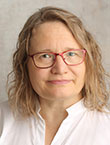
Cicek Cavdar is an Associate Professor at the School of Electrical Engineering and Computer Science (EECS) at KTH Royal Institute of Technology , Sweden. She leads the Intelligent Network Systems research group and specializes in Telecommunication Networks , with a focus on Beyond 5G/6G Mobile Networks , Energy Efficiency , and AI-Assisted Network Management . PhD in Computer Science (2009) from University of California, Davis and Istanbul Technical University Her research spans Cell-Free Massive MIMO , Reconfigurable Intelligent Surfaces (RIS) , UAV Communication Systems , and Green Network Technologies . She actively contributes to 6G Network Architecture and Non-Terrestrial Networks , including satellite and aerial systems. Recent publications highlight AI-driven network optimization for handover management, energy-aware resource allocation , and multi-agent reinforcement learning in complex communication environments. She teaches advanced courses in Communication Systems , Machine Learning , and Software Engineering at KTH.
Kåre Synnes is a Professor in Pervasive and Mobile Computing at Luleå University of Technology, where he is affiliated with the Department of Computer Science, Electrical and Space Engineering. He is an active researcher and educator, recognized as an "Excellent lärare" (Excellent Teacher) and maintains his office in Luleå at location A3305a. Professor Synnes conducts research in pervasive computing and multimedia communication, with significant applications in eHealth. His work bridges theoretical computer science with practical implementations in distributed systems. He is also an affiliated researcher at the Centre for Distance-spanning Technology (CDT), focusing on technologies that enable communication across geographical boundaries. His recent publications demonstrate a clear trajectory toward sustainable computing solutions, with emphasis on circular economy applications, supply chain management, and environmental impact assessment. His research integrates computer science with economic and sustainability principles, showing how digital technologies can address contemporary environmental challenges through innovative auction systems, behavior analytics, and resource management frameworks. IST Prize winner as co-founder of Marratech AB Synnes has been deeply involved in European research projects since 1995, including multiple Framework Programme projects (FP4 through FP7). His work as an expert/reviewer for European projects since 2009 demonstrates his standing in the research community. His entrepreneurial success with Marratech AB, which was acquired by Google to form the basis for Google+ Hangouts, shows his ability to translate research into impactful commercial applications. Professor Synnes maintains strong connections with industry through his European project work and his entrepreneurial experience. His research group likely focuses on pervasive computing applications with real-world implementations, particularly in eHealth contexts, though specific lab details aren't provided in the available information.
John Folkesson is an Associate Professor at the Department of Robotics, Perception and Learning at KTH Royal Institute of Technology. His research focuses on mobile robotics, underwater autonomous vehicles (AUVs), and Simultaneous Localization and Mapping (SLAM), particularly addressing challenges in dynamic underwater environments. He leads the AUV group within the Swedish Maritime Robotics Centre (SMaRC2.0) and supervises multiple PhD projects, including those funded by Ocean Infinity and Vinnova. Folkesson has pioneered work on sonar-based SLAM, bathymetric mapping, and autonomous underwater navigation without human intervention. He teaches courses such as Probabilistic Graphical Models (DD2420) and Applied Estimation (EL2320). Recent projects include developing neural rendering techniques for sidescan SLAM and automatic launch systems for AUVs in collaboration with Purdue University and SAAB. His research emphasizes long-term autonomy, environmental ambiguity, and sensor data interpretation in unstructured underwater scenarios. Education: PhD in Robotics (2005, KTH Royal Institute of Technology) Recent Funding: 2024 projects include ALARS (Vinnova), WASP WARA-PS, and industrial collaborations. Research Interests Folkesson's work spans underwater robotics, SLAM algorithms, and sensor fusion. Key areas include: Underwater SLAM and sonar modeling Bathymetric reconstruction using neural networks Autonomous decision-making in AUV missions Real-time terrain modeling and localization Articles Trends Recent publications emphasize neural networks for SLAM optimization, sonar data processing, and autonomous underwater systems. Themes include real-time bathymetric mapping, sensor fusion in dynamic environments, and neural rendering techniques for improving navigation accuracy. Folkesson's work bridges theory and practice, with applications in marine robotics and industrial surveys. Advising & Grants PhD supervision: AUV perception (2024), SLAM with Ocean Infinity, event-response AUV systems. Collaborations: Purdue University, SAAB, Ocean Infinity. Course responsibilities: Over 10 advanced robotics and engineering courses at KTH. Labs & Teams Lead of SMaRC2.0, KTH's official research center for maritime robotics. Active in developing AUV systems for long-duration missions, including ice-covered and deep-sea exploration.
Mario Romero is an Associate Professor in Visualization at the Department of Computational Science and Technology (CST), KTH Royal Institute of Technology. He leads the InfraVis national research infrastructure for data visualization and is a Digital Futures Faculty member. His roles include national technical manager of InfraVis, member of the Executive Committee of Digital Futures, and Associate Director for Seminars & Workshops. Education: PhD in Computer Science (Georgia Tech, 2009), MSc in Computer Science (UIUC, 2001), and dual BSc degrees in Industrial Engineering and Construction Engineering (Universidad San Francisco de Quito, 1996). He is a Fulbright Scholar from Ecuador and holds postdoctoral experience at Uppsala University. Research focuses on Human-Computer Interaction, Visualization, and Ubiquitous Computing. Key projects include: TENT: Technology-Enhanced Neurosurgical Training VisBac: Visualizing airborne bacteria in ORs PSP: Platform for Smart People (autism support) SMART: Predictive maintenance in pharmaceuticals Homo Colossus: Energy footprint visualization Awards: Selected for IVA's 100 research2business projects (2021). Co-founded BrailleTouch (blind-friendly keyboard) and Anymaker (3D sketching app). Supervised students in C-Awards-winning projects (e.g., Yue Liu's thesis defense in 2024). Teaching: Responsible for courses like Information Visualization (DH2321) and Advanced Graphics & Interaction (DH2413). Active in organizing conferences (e.g., Eurographics 2020 Education Track Chair).
Mikael Johansson is a Professor at Kungliga Tekniska Högskolan (KTH), specializing in Control Technology . He teaches and coordinates courses such as Distributed Optimization (FEL3311) and various advanced-level degree projects in computer science, electrical engineering, and systems engineering. His research spans Control Systems , Machine Learning , and Optimization , with a focus on asynchronous algorithms, federated learning, and applications in energy systems and construction. His work includes 15 recent publications on topics like neural networks, distributed optimization, and battery technology. Notable areas of contribution are in asynchronous learning, federated learning with privacy constraints, and quasi-Newton methods for optimization. His research bridges theoretical advancements with practical applications in urban design, healthcare, and autonomous systems.
Nikolce Murgovski is an Assistant Professor at Chalmers University of Technology, specializing in Mechatronics . He focuses on electric and hybrid vehicle energy management , autonomous driving systems , and optimization algorithms for powertrain design. His work bridges control theory , battery technology , and transport electrification . Current projects include CHARGE (2023–2026) for charging and trip planning , and EcoPilot (2022–2026) for energy-efficient autopilot development. Collaborates with institutions like Volvo Cars , Swedish Electromobility Centre , and VINNOVA on autonomous vehicle control and thermal energy systems . His recent publications emphasize convex optimization , eco-driving strategies , and collision avoidance in complex environments. He has contributed to tools like CONES for electromobility studies and has led research on hybrid powertrains and predictive energy management .
Jimmy Jaldemark is a Professor at the Department of Education, Mid Sweden University, Sundsvall, Sweden. He serves as Research Leader of HEEL (Higher Education and E-Learning) and Head of Subject for the Discipline of Education. His roles include membership in the Faculty Board of Humanities and representation in the university-wide Education Council. He co-founded GRADE, a national graduate school in digital education, and leads the EARLI Centre for Excellence in AI in Learning and Instruction (AILI). His research focuses on AI, digitalization, lifelong learning, and networked learning. He co-edited *Networked Professional Learning* (2019) and guest-edited special issues in the *British Journal of Educational Technology*. He is an editor for that journal and serves on editorial boards for *Educational Research Review*, *Postdigital Science and Education*, and others. He supervises doctoral students and teaches in Behavioral Science and Education programs. Current projects include HEaD (Higher Education and Digitization) and BLAD (Need-based Learning through Adapted Participation). He collaborates internationally, notably in the AILI network exploring AI's educational impacts. His work spans educational development, organizational learning, and policy frameworks for lifelong learning in the digital era.
Franziska Klügl is a Professor in Computer Science at Örebro University's Faculty of Business, Science and Engineering, affiliated with the Center for Applied Autonomous Sensor Systems (AASS). She currently leads the KKS-funded TeamRob project on Human-Robot Teamwork and serves as Deputy Dean of the faculty since January 2023, chairing the academic appointment committee. Previously, she headed the Computer Science department (2020-2022) and served on the faculty board (2019-2022). Her research focuses on: Multi-agent systems : Development of languages, processes, and tools for agent-based simulation Interdisciplinary applications : Transportation, economics, epidemics, production, and mining simulations Simulation engineering : Integrating AI, machine learning, and formal methods to create accessible modeling tools for domain experts She created SeSAm , a visual programming tool for agent-based simulation that enables rapid prototyping of complex models. Analysis of her recent publications reveals three dominant themes: Human-robot collaboration frameworks and intention recognition systems Economic impacts of automation on labor markets and engineering services Advanced simulation methodologies using affordance theory and reinforcement learning She teaches software engineering, multi-agent systems, and agent-based modeling across multiple programs, including the WASP AI&ML PhD course. She leads research groups at the Machine Perception and Interaction Lab and oversees the TeamRob human-robot teamwork project.
Edith C. H. Ngai is an Associate Professor in the Department of Information Technology at Uppsala University, Sweden. She leads the Smart City Arena initiative and serves as project leader for the national GreenIoT project on energy-efficient IoT for sustainable city development funded by Vinnova. Her academic career spans multiple prestigious institutions including Chinese University of Hong Kong, Imperial College London, Simon Fraser University, UCLA, and Tsinghua University. Dr. Ngai's research focuses on Internet-of-Things, mobile crowdsensing, network security and privacy, cloud computing, and data analytics, with particular applications in smart cities and healthcare. Her work bridges theoretical foundations with practical implementations for sustainable development. She has pioneered research in energy-efficient IoT systems, data privacy in participatory sensing, and mobile health monitoring applications. Her recent publications demonstrate strong trends in IoT for smart cities, privacy-preserving techniques in social sensing, and energy-efficient data collection systems. The research spans both theoretical contributions and practical implementations, with applications ranging from urban environmental monitoring to healthcare solutions. Her work consistently addresses the tension between functionality and privacy in connected systems. Professional recognition includes: ACM Senior Member (2016) IEEE Senior Member (2015) ACM/IEEE IPSN Best Paper Runner-Up (2013) IEEE IWQoS Best Paper Runner-Up (2010) VINNMER Fellow from Swedish government agency (2009) Dr. Ngai actively mentors PhD and Master's students, with numerous graduates working at leading technology companies including Google. She serves as Associate Editor for IEEE Access, IEEE Transactions on Industrial Informatics, and IEEE Internet-of-Things Journal. Her current research projects include EU SimpliCITY, EU CRUNCH, and the GreenIoT platform for sustainable development, with funding from European Commission, Swedish Research Council, and Vinnova. She leads the Uppsala Urban Computing Lab, which focuses on IoT and mobile crowdsensing for smart cities, network security and data privacy, and smart sensing for healthcare applications. The lab develops integrated decision support tools for smart cities and citizen engagement platforms.
Anders Björn is a Professor at the Department of Mathematics (MAI) at Linköping University (LIU), affiliated with the Analysis and Mathematics Education (ANDI) division. His research focuses on Nonlinear Potential Theory , particularly p-harmonic functions , quasiminimizers , and Newtonian Sobolev spaces in metric spaces. He co-leads the research group in this area and contributes to Analysis on Metric Spaces . He teaches undergraduate and graduate courses, including Real Analysis and Functional Analysis . Organizational Roles: Organizer of the Mathematical Colloquium, Local Representative for Svenska Matematikersamfundet (Swedish Mathematical Society). Editorial Work: Former Technical Editor for Acta Mathematica (2004–2015) and Arkiv för Matematik (1993–2015), both published by Institut Mittag-Leffler. His research explores foundational questions in mathematical analysis, blending pure mathematics with interdisciplinary applications. He emphasizes understanding properties of solutions to differential equations in general settings, akin to constructing an 'identikit' of mathematical phenomena. His work is published in collaboration with the ANDI group, and he actively engages in promoting mathematics through outreach and academic service.
Martin Salzmann-Erikson is an Associate Professor in Nursing Science at the University of Gävle, specializing in Caring Science. With extensive clinical experience in psychiatric intensive care, he has developed innovative models for staff-patient interactions and advanced courses like "Integrative Nursing in Psychiatric Care" and "Concept Analysis." His work bridges clinical practice, education, and research, focusing on the complexities of human interaction through chaos theory and digital transformation. Current research in the "Digital Shapeshifting" program addresses critical challenges in healthcare digitization, including reducing digital exclusion, ensuring inclusive care environments, and safeguarding nursing quality. Projects span interprofessional communication, digital inclusion for homeless women, and the ethical implications of AI in mental health. His methodological expertise includes netnography, autoethnography, and complexity science. Key article trends highlight intersections of technology and empathy, with recurring themes in psychiatric care, technostress, and digital equity. His 2023–2025 publications emphasize ethical AI integration, footwear symbolism in healthcare teams, and socio-technical approaches to continuous learning. Supervision roles include doctoral projects on intellectual disabilities, cyber nursing, and violence in intensive care. Supervised: Ingela Rudberg (Interprofessional Communication), Oskar Andersson (Staff Participation Promotion), Fredric Sjöberg (Violence Management, KI) Education: Courses on Integrative Nursing & Concept Analysis Affiliations: Strategic Research Area Health-Promoting Work, University of Gävle
Artem Vilenskiy is a researcher in the Antenna Systems group at Chalmers University of Technology since 2019. His work focuses on developing active integrated array antenna concepts, 100+ GHz beam-steerable antennas and circuits, MMIC design, computational electromagnetics methods for radiation and scattering problems, and collaboration with Chalmers industrial partners. His educational background includes: MSc Degree (Specialist) in Electrical Engineering from Bauman Moscow State Technical University (BMSTU) in 2011 PhD Degree (Eng.) in "Antennas, Microwave Devices and Its Technology" from BMSTU in 2014 Dr. Vilenskiy's research spans multiple cutting-edge areas in microwave and antenna engineering, with particular emphasis on millimeter-wave and sub-THz frequency ranges. He specializes in reconfigurable intelligent surfaces (RIS), beam-steering technologies, and integrated antenna solutions for next-generation wireless communication systems. His work bridges theoretical electromagnetics with practical implementation challenges, often involving close collaboration with industry to address real-world telecommunications and radar applications. His expertise encompasses both novel antenna architecture design and associated microwave integrated circuits, with significant contributions to mmWave phased arrays and wireless power transfer systems. Analysis of his recent publications reveals a strong and consistent focus on millimeter-wave antenna systems, particularly in developing reconfigurable intelligent surfaces for 5G/6G applications, advanced beamforming techniques, and innovative antenna array architectures. His research spans frequencies from W-band (75-110 GHz) into the sub-THz range, addressing critical challenges in high-frequency wireless communication systems. The publications demonstrate a consistent emphasis on practical implementation, with many papers detailing circuit models, measurement techniques, and experimental validation of theoretical concepts across multiple application domains including satellite communications, wireless backhaul, and quantum computing interfaces. Dr. Vilenskiy has been actively involved in multiple significant research projects: Low-Thermal-Conductance and High-Density Microwave Interconnects for Cryogenic Quantum Computers (2024-2025) Energy Efficient, Beamforming Antenna-IC Integration Solutions for Future 100+GHz Telecommunication Systems (2021-2023) Antenna technologies for beyond 5G Wireless Communication (2020-2025) MyWave - Efficient Millimetre-Wave Communications for mobile users (2019-2023) Integrated Antenna Arrays (2016-2023) Prior to joining Chalmers, Dr. Vilenskiy worked at Samsung Research Institute Russia from 2011-2019 in various engineering roles including research engineer, expert engineer, and project leader. During 2015-2019, he also held a part-time Associate Professor position at BMSTU where he coordinated the MSc course "Applied Electrodynamics of Composite Media". His industry experience in mobile communication, automotive radar, robotics, and wireless power transfer provides valuable practical insights that complement his academic research in antenna systems.
Yiannis Karayiannidis is a Senior Researcher (equivalent to Associate Professor/Research) with the Division of Systems and Control (SYSCON), Department of Electrical Engineering at Chalmers University of Technology. He maintains a significant affiliation with the Department of Robotics, Perception and Learning at KTH Royal Institute of Technology, demonstrating his cross-institutional impact in the Swedish robotics community. Dr. Karayiannidis earned his Diploma in Engineering in 2004, followed by a Ph.D. in Engineering in 2009, and achieved Docent status in 2017. His academic journey has focused on robotics and control systems, establishing him as a leading researcher in these fields. His primary research interests span robot control, robotic manipulation in human-centered environments, dual arm manipulation, force control, robotic assembly, control of physical human-robot interaction, multi-agent robotic systems, adaptive control and nonlinear control systems. Dr. Karayiannidis has made significant contributions to the understanding of deformable object manipulation, contact-rich robotic tasks, and human-robot collaboration. His work bridges theoretical control systems with practical robotic applications, particularly in scenarios requiring precise physical interaction. Analysis of his recent publications reveals a strong focus on advanced manipulation techniques, particularly for deformable linear objects, and human-robot collaborative tasks. His research increasingly incorporates machine learning approaches, especially reinforcement learning, to address complex manipulation challenges. There is also a clear emphasis on practical applications in industrial settings, with several projects related to robotic assembly and cable routing. Dr. Karayiannidis serves as Associate Editor for the IEEE Robotics and Automation Letters, IEEE/RSJ International Conference on Intelligent Robots and Systems (IROS), and the European Control Conference. He is also the treasurer of the IEEE Robotics Chapter in Sweden and a WASP-affiliated researcher. He has served as Principal Investigator for multiple research projects including DARMA and DARMA_bridge (funded by WASP), CHROMA (funded by VR), and the H2020 SARAFun project. His current projects include "Learning & Understanding Human-Centered Robotic Manipulation Strategies" (2020-2025), "Computer Vision and Machine Learning for Robot Systems" (2019-2021), and "ViMCoR" (2019-2021) in collaboration with Volvo Group. Dr. Karayiannidis is actively involved in the robotics research community through his editorial roles and project leadership. His work connects theoretical control systems with practical robotic applications, particularly in industrial and human-robot collaborative settings.
Meng Yuan is a Marie Skłodowska-Curie Fellow at Chalmers University of Technology , affiliated with the Control Engineering department. Previously, he was a Research Fellow at the Rehabilitation Research Institute of Singapore, Nanyang Technological University, and earned his PhD in Electrical and Electronic Engineering from the University of Melbourne. Research Focus: Control theory, energy systems, rehabilitation engineering, robotics, and industrial automation. Notable Projects: Integration of reinforcement learning and predictive control for energy management in smart homes (SmartHOME), funded by the European Commission (EU). His recent publications explore machine learning for industrial load forecasting, deep reinforcement learning in manufacturing optimization, and safety-critical control systems for assistive robots. A 2024 Advanced Engineering Informatics paper highlights his work on steel logistics, while a 2023 IEEE Transactions on Cybernetics article details wheelchair speed control using robust MPC. Awards: Marie Skłodowska-Curie Fellowship Collaborative Networks: Active in smart home energy projects and industrial robotics teams at Chalmers. Supervises research in control algorithm development but no specific students are listed in the provided data.
Lars Oestreicher is a Senior Lecturer at the Department of Information Technology at Uppsala University. He holds a Dr. Tech. degree and has been recognized as an Excellent teacher. His work focuses on Human-Computer Interaction with particular emphasis on accessibility and inclusive design. His research interests include disability research, non-excluding design, universal design, usability, user interface programming, and the relationship between AI and art. Notably, he led the MUMIn project (Maximal Expression - Minimal Interaction) at Årsta special needs school in Uppsala, which created conditions for children to actively play music through the use of IT. This project exemplifies his commitment to using technology to empower individuals with special needs. Oestreicher teaches Interface Programming 1 and 2, as well as the course Non-Exclusive Design which focuses on disabilities. His recent publications show a strong trend toward AI ethics, cultural competence in digital systems, cognitive aspects of human-computer interaction, and assistive technologies. His work often bridges the gap between technical systems and human needs, particularly for vulnerable populations. His scholarly output demonstrates consistent quality and relevance over several decades. His most impactful recent works address critical questions about AI ethics in human contexts, cultural competence in image analysis, and the future of assistive technologies. Oestreicher's research methodology consistently emphasizes user participation and co-learning, reflecting his commitment to designing technology that genuinely serves user needs rather than imposing technological solutions on users. What is the problem to which AI chatbots are the solution? (2024) explores AI ethics through philosophical frameworks From Visual Forms to Metaphors (2022) targets cultural competence in image analysis Cognitive Chunks as Neural Activity (2019) investigates the relationship between thought and neural activity Future assistive devices (2019) examines implications of emerging assistive technologies Oestreicher maintains an active presence in the academic community with publications spanning several decades. His work shows consistent focus on human-centered computing with particular attention to inclusive design principles. He also maintains a blog on Medium under the handle @Moomindad where he discusses various topics that interest him and has garnered attention across multiple platforms including news outlets, blog posts, patents, and Wikipedia pages.