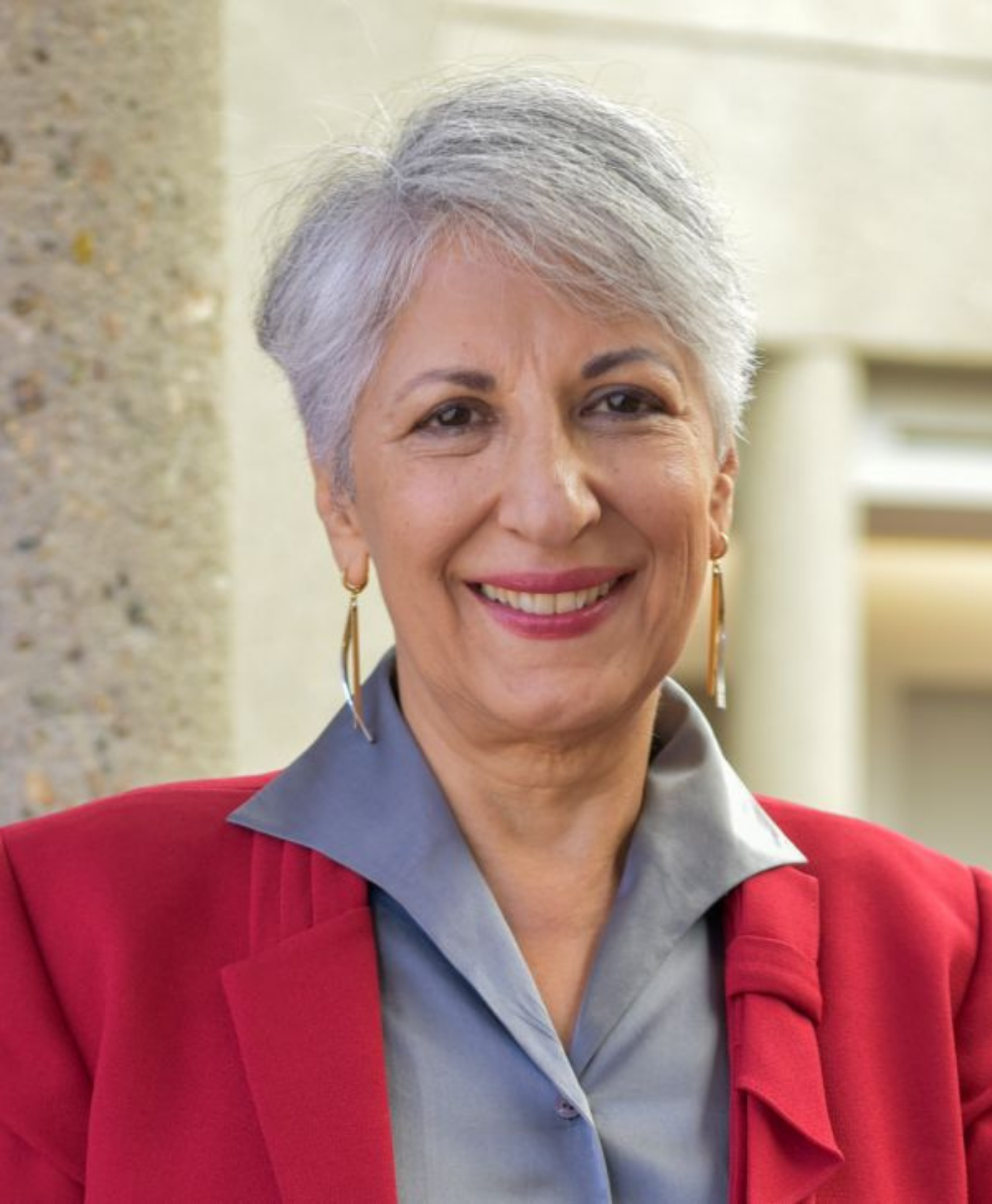
Lili Liu is the Dean of the Faculty of Health and a Professor at the University of Waterloo. Her research focuses on leveraging technologies to support older adults and family caregivers, particularly those living with dementia. She leads projects funded by Age-Well NCE, including apps for dementia risk management, usability scales for locating missing persons, and national data strategies. Collaborating with Ryerson University, she develops drone algorithms for locating cognitively impaired individuals. Education: PhD, MSc, and BSc in Rehabilitation Science and Occupational Therapy from McGill University. Research interests emphasize assistive technologies, caregiver support, smart home systems, and mixed-methods approaches. She explores ethical challenges in tech adoption, such as privacy concerns in alert systems and guardianship implications. Recent work includes digital storytelling interventions and frameworks for autonomy and independence in aging populations. Publications span dementia-related wandering, technology acceptance, and fall detection, with a focus on translational research. She advocates for policy changes through initiatives like Alberta’s Bill 210 (Silver Alert system). Current lab activities include the Aging and Innovation Research Program (AIRP), focusing on tech solutions for aging challenges.
Kok Sheik Wong is a Professor and Deputy Head (Research) at the School of Information Technology, Monash University Malaysia. He holds a Doctor of Engineering from Shinshu University, Japan, and Master’s and Bachelor’s degrees in Computer Science and Mathematics from Utah State University, USA. His academic leadership and research excellence are central to his role at Monash. B.S. Computational Mathematics, Utah State University (2002) M.S. Computer Science, Utah State University (2006) M.S. Mathematics, Utah State University (2004) Doctor of Engineering, Shinshu University, Japan (2009) His research focuses on multimedia signal processing and cybersecurity , particularly in data hiding , reversible data hiding , coverless steganography , and multimedia encryption . He is also expanding into digital health , applying AI to mental health in workplace environments. His work aligns with UN SDGs, particularly in health and education. The recent publication trends show a strong emphasis on reversible data hiding , image watermarking , and AI-driven health applications . His interdisciplinary work spans computer science, engineering, and public health, with increasing focus on real-world impact through EU and national grants. He has received several honors, including: Academic of Science Malaysia - Young Scientist Network (2020) Best Paper Award, IWDW 2019 ITEX 2021 Gold Medal for BAITRADAR School of IT Excellence in Research Award (2022) Dr. Wong actively supervises PhD students and leads major research projects, including the EU-funded WAge project. He has served as an associate editor for IEEE Signal Processing Letters and the Journal of Information Security and Applications, and is a member of IEEE IFS and APSIPA technical committees. His grants reflect strong external collaboration and funding in cybersecurity and digital health. He is involved in key research labs and teams through Monash University and international consortia, particularly in the areas of multimedia security and digital health innovation. His leadership in the WAge project connects him with European and Asia-Pacific research networks, enhancing global impact.
Manju Ahuja is a Scientia Professor of Information Systems and Technology Management at the UNSW Business School, University of New South Wales, and holds the Frazier Family Professor of Information Systems at the College of Business, University of Louisville (on leave). Recognized globally as a top-tier researcher in Information Systems, she has held faculty roles at Indiana University, Florida State University, and Penn State University. Education & Affiliations: PhD-level training and research assistantships at University of Pittsburgh (1990–1994) Research assistantship at Pace University (1982–1984) Graduated with high honors from Indore University, India (1980) Research Focus: Professor Ahuja's scholarship centers on the intersection of information technology and human behavior, with particular emphasis on IT workforce dynamics, AI ethics, digital transformation, work-life balance, innovation, and entrepreneurship . Her work explores how emerging technologies reshape organizational practices, employee well-being, and societal norms. Editorial Leadership: She currently serves as Senior Editor for Information Systems Research , and previously held senior editorships at MIS Quarterly (2014–2017) and Journal of AIS (2017–2019). She has also served as Associate Editor for MIS Quarterly , Information Systems Research , and Management Science . Scientific Recognition: Fellow, Association of Information Systems (2021) Lifetime Achievement Award, Academy of Management OCIS Division (2020) Stanford University’s Top 2% Scientists List (2020) Presidential Distinguished Faculty Award, University of Louisville (2022) Enterprising Women Award, Louisville Business First (2023) Multiple Best Paper Awards and Faculty Research Awards Grants & Funding: Professor Ahuja has secured over $2 million in National Science Foundation funding across four major grants focused on IT workforce issues, highlighting her sustained impact on policy and practice. Teaching & Mentorship: She teaches courses in Research Methods, Information Systems Theory, and Behavioral IS , and actively mentors doctoral students and early-career researchers. While specific student names are not listed, her editorial roles and conference leadership indicate extensive supervision and collaboration. Global Engagement: Her visiting scholar appointments span premier institutions including HEC Paris, Bocconi University, National University of Singapore, UC Irvine, and University of Hawaii at Manoa, underscoring her role in shaping global IS research agendas.
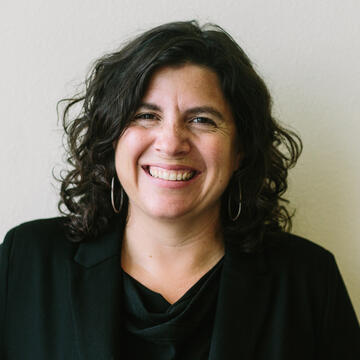
Rachel Brahinsky is an Associate Professor at the University of San Francisco, affiliated with the Politics Department and the Urban & Public Affairs program. Her work bridges urban geography, race studies, and social justice, focusing on urban inequality and spatial politics in the San Francisco Bay Area. She served as director of the Urban & Public Affairs program from 2013 to 2020. Education: PhD in Geography from UC Berkeley (focusing on human/social geography of cities), BA from Hampshire College Her research examines race, class, and space in rapidly changing cities, with emphasis on gentrification, displacement, and community resistance. Key themes include property theory, urban renewal impacts, and marginalized communities’ resilience in tech-driven urban environments. Recent work includes A People's Guide to the San Francisco Bay Area (2020), critiquing dominant narratives to center grassroots histories. Publications span urban sociology, geography, and policy, analyzing topics like postindustrial Detroit, pandemic-era community organizing, and San Francisco’s redevelopment history. Her writing blends academic rigor with accessible public scholarship, informed by her background in journalism. Grants and awards: None explicitly listed in provided texts. Advising focus includes mentoring students in Urban Studies and Politics programs.
University of California, San FranciscoUnited States
Michelle Guy, MD is a Professor of Medicine at the University of California, San Francisco (UCSF), School of Medicine, and a key figure in medical education and health equity. She is affiliated with the Department of Medicine and the Division of General Internal Medicine, where she serves as Director of Diversity for Graduate Medical Education (GME) and Director for Equity and Anti-Racism Continuing Education in the UCSF Differences Matter initiative. Professor, Department of Medicine, UCSF School of Medicine Director of Diversity, Graduate Medical Education Director for Equity and Anti-Racism Continuing Education, Differences Matter Member, Haile T. Debas Academy of Medical Educators Gold-Headed Cane Faculty Inductee Her educational background includes a B.A. in Comparative Literature from the University of Michigan, an M.D. from the University of Missouri–Columbia, and residency and chief residency training at Cambridge Health Alliance/Harvard Medical School. University of Michigan: B.A., Comparative Literature University of Missouri–Columbia: M.D., 2000 Cambridge Health Alliance/Harvard Medical School: Residency and Chief Residency, 2000–2003 UCSF: Diversity, Equity, and Inclusion Champion Training, 2017 Dr. Guy’s research and professional interests center on creating inclusive learning and clinical environments. She is a national leader in training faculty to recognize and interrupt microaggressions, mitigate bias in virtual interviews, and promote holistic review in residency selection. Her work in medical education emphasizes mentoring across differences, inclusive leadership, and curriculum development for equity. She also specializes clinically in Primary Care and Obesity Medicine, teaching obesity management to medical students and contributing to the American Board of Obesity Medicine (ABOM) as an item writer and board member. Her publications reflect a focus on improving resident training and clinical safety, particularly in substance use disorders. Both of her recent articles involve interventions to enhance resident competence in addiction medicine—one on naloxone co-prescribing and another on SBIRT training assessment—highlighting her commitment to evidence-based, patient-centered care and educational innovation. Dr. Guy has received significant recognition for her contributions: Excellence in Clinical Care, Robert Crede Award (2007) Marin Magazine Top Physician, Primary Care (2015) UCSF Medical Center Exceptional Physician Award (2015) Induction into the Haile T. Debas Academy of Medical Educators (2017) Gold-Headed Cane Faculty Inductee (2021) She actively advises and leads institutional initiatives rather than traditional graduate students, with leadership roles in faculty development, GME diversity strategy, and national lectures on inclusive education. She is deeply involved in the UCSF Differences Matter program and the Academy of Medical Educators’ Diversity Committee. Her work continues to shape equitable practices in medical training and patient care across the country.
Rita Orji is a Full Professor at the Faculty of Computer Science, Dalhousie University, where she holds the Canada Research Chair in Persuasive Technology and is an NSERC Arthur B. McDonald Fellow. She leads the Persuasive Computing Lab and is actively involved in the Human-Computer Interaction (HCI), Visualization and Graphics research cluster. Her research focuses on Human-Computer Interaction, Persuasive Technology, Games for Change, and Digital Health, with an emphasis on designing user-centered interactive systems for behavior change, particularly in health and wellness domains. Her work targets underserved populations through HCI for Development (HCI4D) and applies AI, machine learning, and gamification to promote healthy eating, physical activity, mental health, and smoking cessation. Dr. Orji has received numerous scientific awards and recognitions, including being appointed to the Royal Society of Canada, named among the Top 100 Leading Nigerian Women, and recognized as one of the Top 100 Black Women to Watch in Canada. She is a Vanier Scholar and Banting Postdoctoral Fellow, reflecting her academic excellence. Canada Research Chair in Persuasive Technology NSERC Arthur B. McDonald Fellow Appointed to the Royal Society of Canada (2020) Top 100 Leading Nigerian Women (2021) LinkedIn Top Influencer - Africa Top Voice (2020) Research Excellence Award, Dalhousie University (2019) She has supervised a vast number of students at all levels, including PhD, Master’s, and undergraduate researchers, many of whom have worked on persuasive apps for mental health, AI-driven coaching, gamified interventions, and health equity. Her lab is well-funded, notably by an NSERC Discovery Grant, and she has delivered keynotes at major international conferences such as ISRII and AfriCHI. Dr. Orji directs the Persuasive Computing Lab, a vibrant research group that includes postdoctoral fellows, PhD and Master’s students, and research interns, all working on interdisciplinary projects at the intersection of computing, psychology, and public health.
Dr. Laura J. Balcer is a Professor in the Departments of Neurology, Ophthalmology, and Population Health at NYU Grossman School of Medicine. She specializes in Neuro-Ophthalmology and serves as the Director of DAPC/Faculty Affairs and Vice Chair of the Department of Neurology. Since joining NYU Langone in 2012, she has been dedicated to mentoring trainees and advancing research in neurological disorders, particularly focusing on vision-related issues linked to brain conditions like multiple sclerosis and concussions. Dr. Balcer's educational background includes: MD from Johns Hopkins University (1991) Residency in Neurology at the Hospital of the University of Pennsylvania (1995) Fellowship in Neuro-Ophthalmology at the Hospital of the University of Pennsylvania (1996) Her research interests center on neuro-ophthalmology, concussion assessment, and multiple sclerosis. She is renowned for pioneering the use of vision testing, such as the King-Devick test, to diagnose concussions in athletes and improve patient care through interdisciplinary collaboration. Her work bridges clinical practice and technology, including mobile health applications for cognitive assessment. Her recent research explores innovative diagnostic tools, such as tablet-based assessments for Alzheimer’s and mobile applications for concussion evaluation, reflecting her commitment to advancing early detection and treatment strategies in neurology. In addition to her clinical and research contributions, Dr. Balcer has mentored numerous trainees and secured grants to study neurological disorders. Her work is supported by initiatives such as the DIAGNOSE CTE Research Project and studies on vision-related biomarkers. She collaborates with the NYU Langone Concussion Center and interdisciplinary teams including rehabilitation doctors, sports medicine experts, and therapists to provide comprehensive patient care.
Ivan Franceschini is a Research Fellow at the Department of Asian and North African Studies, Ca' Foscari University of Venice, and a Postdoctoral Fellow at The Australian National University's Coral Bell School of Asia Pacific Affairs. His work focuses on Chinese labor movements, civil society, and political transformations. University: Ca' Foscari University of Venice Department: Department of Asian and North African Studies Email: ivan.franceschini@unive.it Franceschini's research spans labor activism, NGO strategies, and historical narratives in China. His publications in journals like The China Quarterly and Pacific Affairs analyze state-labor relations, digital activism, and garment industry exploitation. He co-edits the Made in China Journal , exploring labor and civil society dynamics. Key article trends include comparative labor studies across China and Cambodia, legal mobilization by workers, and historical reinterpretations such as the Taiping Rebellion. His 2019 work on collective bargaining and 2018 comparative analysis of garment workers highlight systemic labor challenges.
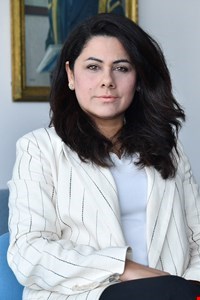
Madison Lore is an incoming Assistant Professor in the Department of City and Regional Planning at Cornell University's College of Architecture, Art, and Planning, beginning her tenure in January 2026. Her interdisciplinary research integrates urban planning, data science, and sustainability, focusing on how large-scale data and information environments shape public behaviors and perceptions around sustainable transitions in housing, transportation, and energy systems. She holds a Ph.D. from the School of Community and Regional Planning at the University of British Columbia, a Master's in Applied Mathematics, and a dual Bachelor's in Mathematics and Physics from Rensselaer Polytechnic Institute. Her academic journey reflects a strong technical foundation applied to pressing urban challenges. Madison’s research interests span urban data science, machine learning, infrastructure and land use planning, social policy, and sustainable transportation. She investigates how algorithmic and data-driven methods can be used responsibly to uncover social norms, institutional influences, and individual support for sustainable policies, particularly in contexts of information overload. Her recent publications demonstrate a strong trajectory in applying hybrid deep learning and natural language processing to urban text data, evaluating equity in public mobility, and modeling transportation preferences through digital footprints. These works reflect a consistent theme: leveraging data analytics to promote equitable and sustainable urban futures. Vanier Canada Graduate Scholarship (2023–2026) Bombardier Sustainable Transportation Fellowship (2022) The Bill and Nancy Siegmann Applied Mathematical Modeling Prize (2018) Leonhard Euler Award for Excellence in Mathematical Modeling (2016) Climate Social Science Network Grant on Big Oil’s Climate Disinformation (2024) Madison has presented her work at major conferences including the Association of Collegiate Schools of Planning, the International Conference on Travel Behavior Research, and the American Planning Association National Conference. While no formal advisees are listed, her role as an incoming assistant professor suggests future mentorship of graduate students in urban planning and data analytics. She is affiliated with the PLACE Lab and brings expertise from prior work in nuclear physics and applied mathematics into her current urban sustainability research.
Dr. Silvana Deilen is a Researcher at the Institute for Translation Studies & Technical Communication within the Faculty of Language and Information Sciences at the University of Hildesheim. She joined the university in 2023 after working as a Research Associate at Johannes Gutenberg University Mainz from 2018-2024. Her primary research focus centers on accessible communication, particularly in the areas of Easy Language and Plain Language translation, with special emphasis on cognitive aspects of translation processes and AI-assisted translation technologies. Dr. Deilen earned her B.A. in Multilingual Communication from Cologne University of Applied Sciences (2012-2015), followed by an M.A. in Specialized Translation from the same institution (2015-2018). She completed her doctoral studies (Dr. phil.) in Translation Studies at Johannes Gutenberg University Mainz (2018-2021) with summa cum laude distinction, supervised by Prof. Dr. Silvia Hansen-Schirra and Prof. Dr. Arne Nagels. Her research interests span multiple interconnected domains within translation and communication accessibility. A significant portion of her work examines the cognitive processing of compound words in Easy Language, utilizing eye-tracking methodologies to investigate how visual segmentation affects reading behavior and cognitive load. She has pioneered research on AI-assisted translation for health communication, particularly focusing on how large language models can support the creation of accessible health information. Her work bridges theoretical translation studies with practical applications in healthcare, government communication, and digital accessibility. Dr. Deilen's publication record reveals a clear trajectory toward increasingly sophisticated integration of technology and accessibility. Her recent work shows strong emphasis on evaluating AI systems like ChatGPT for translation tasks, developing editorial workflows for AI-assisted translation of health information, and investigating cognitive aspects of compound translation. The interdisciplinary nature of her research connects linguistics, cognitive science, health communication, and artificial intelligence, demonstrating how translation studies can address real-world accessibility challenges. 2014 & 2016: PROMOS Scholarships 2018-2021: Doctoral Scholarship from Gutenberg Young Researchers College 2020: Best Student Paper Award at Swiss Conference on Barrier-free Communication 2023: Award for Outstanding Dissertation from Johannes Gutenberg University Mainz 2023: Multiple research grants from University of Hildesheim, Wort & Bild Verlag, and Niedersachsen Zukunftsdiskurse 2025: DAAD Postdoctoral Research Grant Dr. Deilen actively collaborates on significant research projects including the KI-GesKom project (AI-Supported Health Communication in Plain Language), which receives funding from the state of Niedersachsen. She works closely with Prof. Dr. Ekaterina Lapshinova-Koltunski, Prof. Dr. Christiane Maaß, and Sergio Hernández Garrido as part of the Research Center for Easy Language. Her work with the Apotheken Umschau demonstrates practical application of research, translating health information into accessible formats for people with communication limitations. Dr. Deilen also contributes to the academic community as a program chair and scientific committee member for international conferences including UCCTS 2025 and Translation in Transition 2024.
Dr. Asieh Hosseini Tabaghdehi is a Senior Lecturer in Strategy & Business Economy at Brunel Business School, Brunel University of London. She serves as Programme Lead for the BSc International Business Programme and Trade2Grow Executive Education Programme. Additionally, she is Impact Lead at the Brunel Centre for AI: Social and Digital Innovation, where she leads the capability area in the Future of Work. Dr. Tabaghdehi is also an economist and social impact advisor for the independent NGO, Social Innovation Movement. Dr. Tabaghdehi earned her PhD in Economics and Finance (2008) and MSc in International Money, Finance, and Investment (2015), both from Brunel University London. She also holds a BA in Theoretical Economics from University of Mazandaran. She completed the Postgraduate Certificate in Academic Practice and is a Fellow of the Higher Education Academy. Dr. Tabaghdehi is internationally recognized for her research on digital transformation, with particular expertise in the ethical integration of artificial intelligence and digital technologies. Her work focuses on how emerging technologies shape industries, labor markets, and society, with emphasis on enhancing SME growth through technological innovation. She explores applications across critical sectors including social care, supply chain management, and environmental sustainability. A central theme in her research is smart data governance, ensuring ethical, transparent, and responsible use of data in decision-making processes. Her research portfolio demonstrates a consistent focus on the intersection of technology, ethics, and business strategy. She has developed frameworks like the Digital Business Auditing Framework, which has been adopted internationally for smart city initiatives. Her work connects academic research with practical policy applications, as evidenced by her presentations as oral and written evidence to the House of Commons Select Committee. Her publications span AI ethics, digital footprint implications, fertility economics, and healthcare cost analysis, showing interdisciplinary breadth while maintaining thematic coherence around digital transformation's societal impact. Scientific Awards and Recognition Semi-finalist: Research Impact Award at Brunel University London, 2023 Staff Award: Exceptional in Collegiality and Supportive to Colleagues at Brunel University London, 2022 Exceptional Performance at Regents University London, 2018-19 Staff Award in Teaching, Learning and Assessment at Regents University London, 2016 Best Lecturer Award at London Brunel International College, 2014 Best Lecturer Award at London Brunel International College, 2013 Dr. Tabaghdehi actively supervises PhD students researching areas including Smart Data Governance, Ethical AI Governance, Digital Innovation Impact, Responsible AI Adoption Strategies, Sustainability, and Future of Labour Market. She has secured research funding from multiple sources including the Economic & Social Research Council (ESRC), Brunel University London, and Brunel Business School. Her current projects include research on AI Adoption and Governance, Youth digital addiction, Algorithm Reliability Framework, and SMEs digital footprints. She has also co-designed the "Digital Adoption" module for the UK Government's Help to Grow Management program, demonstrating the practical application of her research. As a member of multiple professional organizations, Dr. Tabaghdehi serves as an associate practitioner at Social Value International, associate member of the Big Innovation Centre, and member of the All-Party Parliamentary Group on AI. She is also a member of the ESRC Review College, British Academy of Management Review College, and Energy Institute UK, contributing to the broader academic and policy communities through these roles.
Teemu Malmi is a Professor in the Department of Accounting at the School of Business, Aalto University, Finland. He has been an influential figure in management accounting research, particularly in management control systems and performance measurement. His academic qualifications include a Doctoral degree (1997), Licentiate degree (1994), and Master's degree (1990), all in Business and Economics from the Helsinki School of Economics. His research interests span management control, performance measurement, digitalization in finance, public sector accounting, and organizational behavior. His work often integrates empirical analysis with case studies, including a notable investigation into Nokia’s management control challenges. He has published extensively in top-tier journals and contributed to major handbooks in accounting and information systems. The recent trend in his publications (2020–2025) reflects a growing emphasis on digital transformation, blockchain, data analytics, and the evolving role of finance functions. His research increasingly bridges traditional accounting with technology and public policy, especially in healthcare financing and sustainability. Scientific Awards: “Thirst for knowledge” (“Tiedon Jano”) award by JOKO Executive Education Oy (2001) Teemu Malmi has supervised at least five theses and led externally funded research projects, including the SOTE/Kaks project (2015–2016) on social and healthcare services. He has been actively involved in academic service, such as serving on editorial boards, hosting international scholars, presenting keynote lectures, and participating in funding organization committees. His media appearances demonstrate his engagement in public discourse on welfare policy and regional financing in Finland. There is no indication of part-time status, retirement, or former staff designation; he remains an active academic.
Schloss Dagstuhl - Leibniz Center for InformaticsGermany
Sri Kurniawan is a researcher at the Computational Media Department within Baskin Engineering, University of California Santa Cruz . With a focus on Human-Computer Interaction , their work spans assistive technology , virtual reality applications , and accessibility design for aging populations and people with disabilities. Key research areas: Accessibility , Virtual Reality , Human-Computer Interaction Recent work explores immersive systems for emergency preparedness and Mixed Reality in biomedical visualization Publications from 2000-2025 demonstrate sustained engagement in mobile health and inclusive game design . Collaborations with institutions like University of Manchester and University of California systems highlight cross-continental research impact.
Evita Papazikou serves as a Lecturer in Transport Engineering at the School of Engineering, University of the West of England (UWE Bristol), where she contributes to the Centre for Transport and Society and collaborates with the Bristol Robotics Laboratory's Connected & Autonomous Vehicles Centre. Her academic qualifications include: Civil Engineering (BEng and MEng) from Aristotle University of Thessaloniki MSc in Planning, Organisation, and Management of Transport Systems, Aristotle University of Thessaloniki PhD in Automated Systems and Driver Behaviour (Road Safety) from Loughborough University, sponsored by the Insurance Institute for Highway Safety with access to SHRP2 NDS data Dr. Papazikou's research focuses on road safety, connected and automated vehicles, driver behaviour analysis, and smart infrastructure. She investigates accident causation through statistical modeling, develops driver monitoring systems, and explores human factors in transportation. Her work integrates traffic simulation with mobility data fusion from vehicles, sensors, and infrastructure to enhance safety in future mobility systems, particularly in cooperative, connected, and automated environments. Her recent publications (2023-2025) reveal a concentrated research trajectory examining safety impacts of dedicated lanes for autonomous vehicles, parking policy implications in automated eras, and driver fatigue management. She consistently employs naturalistic driving data and traffic microsimulation to analyze driver-vehicle-environment interactions, with increasing emphasis on real-world intervention effectiveness and environmental sustainability in mobility systems. Scientific Awards: No specific awards were mentioned in the provided information. Dr. Papazikou has secured significant research funding through competitive programs including Horizon 2020, Innovate UK, and the Department for Transport. Her project portfolio demonstrates substantial industry collaboration, particularly with Ford, and includes: LEVITATE: Assessing societal impacts of Connected and Automated Vehicles SafetyCube: Developing an innovative road safety decision support tool i-DREAMS: Creating a smart driver and road environment assessment system DDRST: Building a data-driven road safety tool for hotspot identification TRIP: Developing a driver culpability assignment tool for road injury prevention She actively contributes to interdisciplinary research through her affiliations with the Centre for Transport and Society and the Bristol Robotics Laboratory's Connected & Autonomous Vehicles Centre, where she bridges engineering, human factors, and policy development for next-generation transportation systems.
Stefano Merler is a Research Fellow at the Fondazione Bruno Kessler in Trento, Italy. He leads the Dynamical Systems research unit, focusing on the mathematical modelling of infectious diseases transmission, particularly analyzing the effects of population heterogeneity on disease spread and control.