Amr Youssef is a Professor at the Concordia Institute for Information Systems Engineering, Concordia University. His research focuses on applied cryptography, network security, cyber-physical systems security, blockchain, and privacy. He has contributed extensively to securing smart grids, IoT devices, and web applications through cryptographic protocols and machine learning-driven solutions. His work addresses critical challenges in cybersecurity, including e-voting systems, fault-tolerant differential protection, and privacy-preserving communication protocols. He explores vulnerabilities in modern systems such as SSO permissions, JavaScript exploits, and stalkerware tools, while developing frameworks like MEGR-APT for APT detection and TEE-Receipt for non-repudiation. Youssef’s research integrates interdisciplinary approaches, combining cryptography with AI (e.g., vision transformers for power quality analysis) and leveraging trusted execution environments (TEE) for secure computing. His projects often involve collaboration with industrial standards (e.g., IEC 61850), emphasizing practical implementations in real-world systems.
Hossam Hassanein is a Professor and Director of the School of Computing at Queen's University. He received his B.Sc. in Electrical Engineering from Kuwait University in 1984, M.Sc. in Computer Engineering from the University of Toronto in 1986, and Ph.D. in Computing Science from the University of Alberta in 1990. He joined Queen's University School of Computing in 1999 and has established himself as a leading researcher in telecommunications and networking. Dr. Hassanein's research interests span wireless sensor networks, mobile ad hoc networks, edge computing, Internet of Things (IoT), radio resource management, and data-centric networks. His seminal contributions include pioneering work on WSN planning, load-balanced routing protocols, and energy-efficient network designs. He has championed research in IoT, developing frameworks for smart spaces that use contextual information to enhance IoT applications in healthcare, transportation, and infrastructure. His recent publications (2023-2025) demonstrate a strong focus on cutting-edge areas including extreme edge computing, vehicular networks, and AI/ML integration in networking. Research trends show increasing emphasis on practical applications in telesurgery, digital twins, and industrial IoT, addressing challenges in resource allocation, task offloading, and real-time processing in constrained environments. Dr. Hassanein has received numerous recognitions for his work: Fellow of the IEEE Queen's University School of Graduate Studies Award for Excellence in Graduate Student Supervision (2015) Multiple best paper awards from top international conferences As founder and director of the Telecommunications Research Lab (TRL), Dr. Hassanein has supervised over 75 students who have made substantial contributions in academia and industry. The TRL is one of Queen's largest research groups with extensive international collaborations. Dr. Hassanein has successfully attracted significant research funding from government and industry sources in the competitive telecommunications field. The Telecommunications Research Lab has developed innovative platforms including SPROUTS, a rugged sensor platform used in mining, steel manufacturing, and smart-grid monitoring. TRL's work has had significant impact in WSN planning, data dissemination, and resource reuse in wireless networks, with contributions featured in IEEE Wireless Communications Magazine.
Maher Elshakankiri is an Assistant Professor, Teaching Stream at the University of Toronto's Faculty of Information. He holds a Ph.D. in Computer Engineering from Ain Shams University (Egypt), followed by a postdoctoral fellowship at the University of Regina. His research focuses on IoT, Wireless Sensor Networks (WSN), and pedagogical integration of technology and gaming. He has supervised over 100 student projects and authored a book on WSNs. Education: Ph.D. in Computer Engineering, Ain Shams University, Egypt M.Eng., B.Eng. in Engineering, Ain Shams University, Egypt Postdoctoral Fellowship, University of Regina, Canada Research Interests: IoT in healthcare, agriculture, and sports Active learning classrooms and technology in education Wireless communication protocols (V2V, UAV, RFID) Leadership & Grants: Director, Bachelor of Information (BI) Program (2024–present) Coordinator, Information Systems and Design (ISD) Concentration (2023) SSHRC Grant: 'Gaming in teaching towards a more inclusive class' (2022–2023) Professional Activities: Member, SCC IoT & Digital Twins Standards Committee Reviewer for journals including Wireless Networks , Telematics and Informatics , and Computational Intelligence Technical Program Committee member at multiple conferences Teaching: Courses include INF1340 (Programming for Data Science), INF1005/1006 (IoT Workshops), and INF452 (Information Design Coding).
Michael Feeley is an Associate Professor in the Department of Computer Science at the University of British Columbia (UBC), affiliated with the Institute for Computing, Information and Cognitive Systems (ICICS). His research focuses on operating systems, distributed systems, and their applications in scalable file systems, cloud storage, and mobile computing. He leads projects such as the Unico file system, Parallax storage system, and Remus virtual machine replication framework. His research interests include peer-to-peer file systems, mobile ad hoc networks, interference mitigation in wireless networks, and system software for workstation clusters. He has supervised numerous graduate students, contributing to advancements in distributed systems and networking. His work often addresses challenges in resource management, fault tolerance, and performance optimization. Publications span topics like interference detection in WiFi networks, dynamic program analysis (Tralfamadore), and distributed storage solutions. Feeley teaches courses such as CPSC 213, emphasizing operating systems fundamentals. His office is located in CISR 393, with contact details available via email and phone.
Dr. Lata Narayanan is a Professor in the Department of Computer Science and Software Engineering at Concordia University, Montreal, Canada. Her research spans theoretical and applied aspects of distributed systems, with a focus on algorithms for mobile agents, communication networks, and sensor networks. Department: Computer Science and Software Engineering University: Concordia University Research Interests Lata Narayanan specializes in algorithms for mobile robots and ad hoc networks , with expertise in routing on distributed networks , parallel algorithms , and social network analysis . Her work addresses challenges in sensor network optimization, barrier coverage, and time-energy tradeoffs for evacuation systems. Article Trends Her recent publications (2021-2025) emphasize game theory for network dynamics, cloud resource allocation , and temporal graph exploration . Key themes include strategic diversity, truck-drone delivery logistics, and energy-sharing protocols for mobile agents.
Ikjot Saini is a Professor at the University of Windsor’s Faculty of Engineering, co-leading the SHIELD Automotive Cybersecurity Centre of Excellence, Canada’s first organization addressing threats in connected transportation. Her research focuses on automotive cybersecurity, vehicular networks, and privacy-preserving technologies. She has supervised doctoral students Shiva Nejati and Kunj Dhonde, and contributed to courses in the University’s Continuing Education program, specializing in cybersecurity education for professionals. Her work includes pioneering studies on blockchain-based security for connected autonomous vehicles (CAVs), machine learning-driven intrusion detection systems, and privacy-enhancing mechanisms like pseudonym-changing strategies. She has been recognized with the K.W. Michael Siu Award from the APMA Institute for Automotive Cybersecurity (2020). Saini’s research bridges theoretical advancements with real-world applications, ensuring vehicles and infrastructure remain secure against evolving cyber threats. Her contributions span academic publications, industry partnerships, and policy recommendations, positioning her as a leader in vehicular cybersecurity. Ongoing projects emphasize eco-efficiency in cybersecurity solutions and adversarial modeling for privacy evaluation.
Amiya Nayak is a Professor at the School of Electrical Engineering and Computer Science of the University of Ottawa. His research focuses on Fault-Tolerant Computing , Distributed Systems , and Ad hoc and Sensor Networks . He specializes in cybersecurity, IoT security, blockchain integration, and machine learning applications in healthcare and vehicular networks. His work addresses challenges in secure communication protocols, distributed learning frameworks, and energy-efficient network designs. Notable research areas include: IoT Security : Developing frameworks for threat detection, privacy-preserving systems, and blockchain-empowered IoT defenses. Federated Learning : Enhancing healthcare predictions and IoT management through decentralized, privacy-aware machine learning. Vehicular Networks : Securing Vehicle-to-Everything (V2X) communication and optimizing QoS in cooperative internet of vehicles (IoV). Network Optimization : Leveraging deep reinforcement learning and graph neural networks for WDM network restoration and edge computing. His publications (2020–2025) highlight contributions to: Secure authentication protocols in medical sensor networks. AI-driven metaverse security solutions. Decentralized energy trading using NFTs. Energy-efficient sleep scheduling in wireless body area networks (WBANs). Nayak holds a Ph.D. and is a P.Eng. (Professional Engineer). His work bridges theoretical computer science with practical applications in telecommunications and healthcare systems.
Shahrokh Valaee is a Professor and Associate Chair for Undergraduate Studies in the Edward S. Rogers Sr. Department of Electrical and Computer Engineering at the University of Toronto, part of the Faculty of Applied Science and Engineering. He founded and directs the Wireless and Internet Research Laboratory (WIRLab). Education: BSc and MSc in Electrical Engineering from University of Tehran PhD in Electrical Engineering from McGill University Research Interests: Focuses on wireless networks (vehicular/sensor networks, B5G/6G), signal processing (indoor localization, machine learning for medical imaging), and integrated sensing/communication. His work spans: Localization in GPS-denied environments Machine learning for healthcare with limited/imbalanced data Reconfigurable Intelligent Surfaces (RIS) and drone networks Publications: Recent articles (2014-2016) show strong focus on indoor localization techniques, vehicular network protocols, and network coding, with emerging trends in machine learning applications for wireless systems and healthcare. Awards: Connaught Award (2012, 2013) NSERC Discovery Accelerator Award (2010) MaRS Innovations cPOP Award (2012) IEEE Fellow (FIEEE) Engineering Institute of Canada Fellow (FEIC) Leadership: Advises graduate students at WIRLab, where research combines theory with practical implementation (GPU-based ML, Android localization). Manages projects in integrated sensing/communication, ML for health, and B5G networks. Labs/Teams: Directs WIRLab with focus on wireless signal processing, networking, and ML implementations. Current team includes postdocs and PhD students working on localization, B5G networks, and medical ML applications.
Hina Tabassum is an Associate Professor at the Lassonde School of Engineering , York University, Canada, specializing in 5G/6G wireless communications and sensing applications. She was awarded the York Research Chair in 2023 for her work in 5G/6G-enabled mobility and sensing. Areas of Expertise: THz communications, WiFi sensing, and multi-band wireless systems Editorial Roles: Area Editor for IEEE OJCOMS and Associate Editor for multiple IEEE journals Research Focus : Ultra-reliable low-latency communication Reconfigurable intelligent surfaces (STAR-RIS) Machine-type communications Energy-efficient network design Scientific Recognition : Stanford's Top 2% World Researchers (2021-2024) Lassonde Innovation Early-Career Researcher Award (2023) N2Women Rising Stars (2022) Multiple IEEE Exemplary Editor/Reviewer Awards
Kshirasagar Naik is a Professor in the Department of Electrical and Computer Engineering at the University of Waterloo, Ontario. He is actively involved in graduate research supervision and has been a member of IEEE since 1994. His academic career spans decades, with a focus on wireless communication, energy efficiency, and cybersecurity. 1992, Doctorate in Computer Engineering from Concordia University, Ontario 1988, Master of Mathematics in Computer Science from University of Waterloo, Ontario 1983, MTech in Computer Engineering from Indian Institute of Technology, Kharagpur, India 1981, BScEng in Electronics and Telecommunication from Sambalpur University, India His research interests include Mobile and Ad Hoc Networks , Cybersecurity , Internet of Things (IoT) , and Intelligent Transportation Systems . He has published extensively on energy optimization in wireless devices, delay-tolerant networks, and security protocols for vehicular systems. Recent publications highlight the integration of Machine Learning and IoT in environmental monitoring, particularly forest fire detection and prediction. Other works focus on cybersecurity , vehicular networks , and energy optimization in data centers and handheld devices. Professor Naik is currently accepting graduate students for research in mobile systems, network protocols, and green computing at the University of Waterloo.
Robson E. De Grande is an Associate Professor in the Department of Computer Science at Brock University, Canada. He holds a PhD from the University of Ottawa (2012) and BSc/MSc degrees from the Federal University of São Carlos, Brazil. His research focuses on vehicular networks, intelligent transportation systems, distributed systems, and cloud computing. He serves on program committees for conferences like DS-RT, MobiWac, and MSWiM, and has organized multiple workshops and special sessions. Education: PhD in Computer Science, University of Ottawa, Canada (2012) MSc and BSc in Computer Science, Federal University of São Carlos, Brazil (2006, 2004) Research Interests: Vehicular Networks (5G, Handover Management) Edge Computing and IoT Performance Modeling/Simulation High-Performance Distributed Systems Intelligent Transportation Systems Publications: Over 100 peer-reviewed articles across journals like IEEE Transactions on ITS, Elsevier Internet of Things, and conferences like IEEE ICC and ACM MobiWac. Recent work emphasizes ML-driven vehicular network optimization and distributed simulation frameworks. Teaching: Teaches Advanced Computer Networks (COSC 4P14), Parallel Computing (COSC 3P93), and graduate-level Mobile Cloud Computing courses. Research Team: Supervises PhD/MSc students and undergraduate researchers in topics like vehicular edge computing, traffic prediction, and simulation systems.
Dr. Tony White is an Adjunct Professor in the School of Computer Science at Carleton University. He holds a Ph.D. from Carleton (2000), an M.A. from Cambridge, and a B.A. in Theoretical Physics. His research focuses on complex adaptive systems, including influence measurement in social networks and swarm intelligence applications. He leads the Complex Adaptive Systems Group and has extensive industry experience, previously working at Nortel. Education: Bachelor of Theoretical Physics, Cambridge University (1981) Master of Physics, Cambridge University (1981) Master of Computer Science, Carleton University (1993) Ph.D. in Electrical Engineering, Carleton University (2000) Research Interests: Artificial Intelligence Swarm Intelligence Genetic Algorithms Neural Networks Recommender Systems Search Engines His work explores influence dynamics in social networks, adaptive information systems, and evolutionary computation. Recent publications address neural network topologies, distributed control strategies, and embedded systems administration. He has also contributed to trust models, referral networks, and traffic signal optimization. Dr. White’s research bridges theoretical computer science and practical applications in robotics, network management, and autonomous systems. Labs/Teams: Leads the Complex Adaptive Systems Group, focusing on interdisciplinary approaches to complex systems and swarm intelligence.
Dr. Jie Gao is an Assistant Professor at the School of Information Technology , Carleton University, with cross-appointments at Dalhousie University (Adjunct Faculty, 2024) and Carleton University (2025). He holds a Ph.D. in Electrical and Computer Engineering from the University of Alberta (2014) and has held postdoctoral and research associate positions at Ryerson University (2017-2019), University of Waterloo (2019-2020), and Marquette University (2020-2022). His research focuses on machine learning for communications/networking , 6G wireless networks , cloud/multi-access edge computing , IoT/industrial IoT solutions , and network virtualization/digital twins . Research Leadership: Co-investigator on projects related to AI-assisted network slicing, digital twin-driven resource allocation, and integrated satellite-terrestrial networks Led work on energy-efficient UAV-assisted edge computing (IEEE Best Land Transportation Paper Award 2024) Professional Roles: Senior Member, IEEE Lead Associate Editor, IEEE Access Vehicular Technology Society Section (2020-present) Associate Editor, Springer Peer-to-Peer Networking and Applications (2020-present) IEEE Vehicular Technology Society Young Professional Ambassador (2024) Notable Contributions: Authored/co-authored books on Intelligent Computing and Communication for the Internet of Vehicles (Springer, 2023) and Connectivity and Edge Computing in IoT (Springer, 2021) Holds patents on medium access control methods (US Patents 2022, 2024) Received multiple IEEE service awards (2018-2024)
Diala Naboulsi is a Professor at the École de technologie supérieure (ÉTS) in the Department of Software Engineering and IT. Her research focuses on mobile networks, wireless systems, and cybersecurity, with a strong emphasis on machine learning applications in network optimization. She holds an M.Eng. from the Lebanese University and M.Sc. and Ph.D. degrees from INSA Lyon. Research Units: Summit Tech Research Chair, LASI Lab, Imagin Lab Expertise: Network virtualization, resource allocation, mobility management, UAV-based computing Her work spans resilience in wireless backhaul networks, energy-efficient frameworks in RAN slicing, and federated learning for privacy-aware traffic forecasting. She has advised numerous doctoral students, including Ahmed Abdelmoaty, Hnin Pann Phyu, and Philippe Lavoie. Key contributions include deep reinforcement learning approaches for network topology optimization and UAV-assisted MEC systems for Industry 5.0. Recent publications highlight advancements in 6G networks, network slicing, and edge computing. Her research aligns with strategic initiatives in sustainable and secure communication systems.
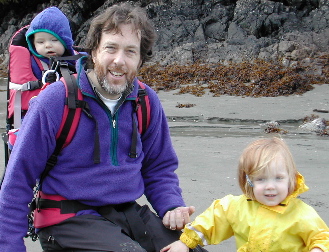
Mike Feeley is an Associate Professor in the Department of Computer Science at the University of British Columbia (UBC), located in Vancouver, Canada. He is a member of the Distributed Systems Group and has held this academic position since at least 2014. His work is centered on operating systems and distributed systems, with a focus on scalable and reliable file systems, cloud storage, mobile computing, and system software for clusters. He has been actively involved in teaching courses such as CPSC_V 416 (Distributed Systems) and CPSC_V 213/313 (Computer Systems and Hardware) across multiple terms from 2014 to 2025. Feeley has received several teaching awards, including the 2014 UBC Computer Science Undergraduate Team Award and multiple CS Department Teaching Awards. His research projects include Elephant (a file system), NetVM (user-mode RDMA), and GMS (global memory for PC clusters), along with work on peer-to-peer file systems and mobile ad hoc networks. He is affiliated with UBC’s Department of Computer Science, located in the ICICS/CS Building. His office is in room 393 (CISR 393), and he maintains a personal webpage and Google Scholar profile. Beyond academia, he shares his family life, including two children and residential addresses in Vancouver.