Associate Professor John Clulow is an Honorary Associate Professor at the School of Environmental and Life Sciences , University of Newcastle. His career spans Conservation Biology and Reproductive Biology, with a focus on amphibian conservation and male reproductive physiology. He has contributed extensively to Amphibian sperm cryopreservation and fluid transport in reproductive ducts , collaborating with Assoc Prof M Mahony and Assoc Prof RC Jones. Education: PhD, University of Newcastle; Bachelor of Arts; Bachelor of Science (Honours) Research expertise includes: Amphibian conservation technologies Cryopreservation of gametes and embryos Chytrid fungal disease mitigation Comparative reproductive physiology Efferent duct fluid reabsorption mechanisms His 2021-2025 publications highlight innovations in: Thermal imaging drones for wildlife monitoring Salinity manipulation against chytrid Wetland design for disease management Cryoprotectant optimization Genetic resource allocation models Scientific Award: European Academy of Andrology Prize (1997) Teaching: Forensic biology, biotechnology commercialization, and zoology Administration: Program convenor for BSc (Forensics); manager of amphibian holding facilities
Dr. Juan Manuel Sáez Martínez is a full professor in the Department of Computer Science and Artificial Intelligence at the University of Alicante's Higher Polytechnic School II. With a PhD in Computer Engineering and over two decades of academic experience since 2000, he specializes in Computer Vision and Mobile Device Applications for accessibility, particularly for the blind and visually impaired. His groundbreaking NaviLens project—a digital signage system patented internationally by the University of Alicante and licensed to Neosistec SL—represents a significant contribution to assistive technology. Teaching experience across 15+ years in programming fundamentals, computer systems, and internships for telecommunications and multimedia engineering Supervised one PhD thesis on structural similarity in object recognition Active in public research projects including airport navigation systems and airborne obstacle detection for the visually impaired His research interests focus on computer vision algorithms , stereo-based wearable devices , and ultra-efficient artificial vision systems for mobile platforms . Recent work includes biomedical informatics applications like 3D obstacle detection and accessibility-oriented UI design. He has participated in 10+ competitive public research projects (2016-2021) while contributing to technology transfer initiatives. Teaching contributions include 4 quinquennials (five-year terms) and 14+ years of instruction in Programming Fundamentals I for Telecommunication Sound and Image Engineering. Notable collaborations include co-authorship with Dr. F. Escolano on entropy-based SLAM algorithms and Gaussian mixture models for image processing. Current research emphasizes practical applications through the Mobile Vision Research Laboratory (MVRLab) .
Nikola Rakonjac is a Researcher at Wageningen University & Research's Soil Physics and Land Management department, focusing on soil-water interactions and contaminant dynamics in agricultural systems. His work spans environmental monitoring, pharmaceutical pollution, and irrigation optimization. Research Areas: Soil contamination, veterinary pharmaceutical emissions, subirrigation systems, and passive sampling techniques. Projects: Co-investigator in the EU-funded FARMWISE project (2024-2026) and completed his PhD in 2023 on the SUSPECt approach for contaminants of emerging concern. Collaborations: Partnerships with Dutch institutions on nutrient management and water quality in agricultural regions.
Adrian Bors is a Senior Lecturer in the Department of Computer Science at the University of York. His research focuses on computer vision, computational intelligence, image processing, and pattern recognition, with expertise in neural networks and digital watermarking. He received his MSc from the Polytechnic University of Bucharest (1992) and a PhD from Aristotle University of Thessaloniki (1999). His career includes research roles at Tampere University of Technology, Aristotle University of Thessaloniki, and the University of York, where he has been a Lecturer since 2000 and Senior Lecturer since 2001. His recent publications emphasize task-free continual learning, generative modeling, and steganalysis. Key trends include dynamic neural architectures, vision transformers, and applications of optimal transport theory in lifelong learning systems. He is an IEEE Senior Member and contributes to editorial roles in IEEE Transactions.
Alba Ester Illera Gigante is a Researcher in the Department of Biotechnology and Food Science at the Faculty of Sciences, University of Burgos, specializing in sustainable food processing technologies and biomass valorization through non-thermal methods. She earned her PhD in 2019 from the University of Burgos with the thesis "Study of non-thermal technologies to preserve the quality of fresh foods," supervised by Dr. Teresa Sanz Díez and Dr. Sagrario Beltrán Calvo. Her research focuses on Food Biotechnology and Sustainable Food Processing , with expertise in Non-thermal Food Preservation using subcritical water, high-pressure carbon dioxide, and cold plasma systems. She pioneers Biomass Valorization techniques for agricultural residues (corn stover, okara) and food industry byproducts (fish waste, brewer's spent grain) to produce furfural, lactic acid, and protein hydrolysates while addressing Food Safety through microbial decontamination. Analysis of her 15 most recent publications (2022-2025) reveals dominant work in subcritical water-CO 2 systems for biomass conversion, with secondary emphasis on cold plasma applications for poultry decontamination. Her studies consistently feature kinetic modeling, process optimization, and sustainability assessments across biorefinery cascades. Dr. Illera Gigante actively supervises graduate theses as indicated by her departmental profile's "Theses" section and secures research funding through the Consolidated Research Unit 128. She has developed multiple experimental protocols for enzyme inactivation and value-added compound extraction. She leads the BIOIND Industrial and Environmental Biotechnology research group, operating advanced laboratories for non-thermal processing, kinetic studies, and product characterization focused on creating scalable eco-friendly food technologies.
Sana Amoozegar is a Research Fellow at the Department of Neurology within the University of Minnesota Medical School . Her work bridges Neuroscience , Biomedical Engineering , and Neurotechnology through deep brain stimulation (DBS) research. Her research focuses on: Therapeutic applications of DBS in Parkinsonian models Neural network modulation in subthalamic pathways Development of closed-loop neuromodulation systems Neuroimaging techniques for seizure localization Recent publications demonstrate expertise in Neuroengineering , including DBS optimization (2025), subthalamic coherence analysis (2024), and LFP-based stimulation systems (2022). She also contributes to Cardiac Risk Prediction (2018) and Neurological Signal Processing (2013).
Dr. Alex White is a Senior Lecturer in Thermofluids at the Department of Engineering, Cambridge University, and a Fellow and Director of Studies at Peterhouse. He earned his undergraduate and PhD degrees from King's College, Cambridge, and conducted postdoctoral research in Cambridge, Lyon, and Toulouse before returning to Cambridge in 2000 as part of the Energy Group. His research focuses on two-phase flow (vapour-droplet flows), thermodynamics of power generation, Computational Fluid Dynamics (CFD), and heat pumps. His work includes theoretical and numerical studies on warm dense matter, electron transport, and energy storage systems like pumped thermal and compressed air storage. Recent publications emphasize warm dense matter physics, inertial confinement fusion, and thermal energy storage innovations. His theoretical analyses and simulations span high-energy-density plasmas, nonlocal electron stopping power, and hybrid energy systems. While no scientific awards are documented, his contributions to thermofluids and extreme condition physics are significant.
Martin Magnusson is a Professor at the Department of Natural Sciences and Technology, Örebro University, leading the Center for Applied Autonomous Sensor Systems (AASS) and the Robot Navigation and Perception Lab . His research focuses on robotics and artificial intelligence , particularly 3D mapping, localization, radar-based navigation, and human-robot interaction . Email: martin.magnusson@oru.se Phone: +46 19 303870 Location: Room T1222 His work addresses fundamental challenges in achieving robust autonomy through innovations like the 3D Normal Distributions Transform (3D-NDT) and methods for scan registration in dynamic environments. Recent research extends to radar-based navigation and heterogeneous map data integration , with ethical implications regarding military applications of autonomous systems. Key research themes include: Autonomous Perception: Radar and lidar sensor fusion for localization Dynamic Mapping: Flow-aware and quality-assessed environmental models Human-Aware Robotics: Predictive modeling for safe shared-space navigation Professor Magnusson teaches Computer Graphics , connecting academic principles (e.g., ray tracing, light scattering) to applied research in radar simulation models and neural rendering . His research projects span DARKO (agile production robots), NiCE (changing environment navigation), and Radarize (underground autonomous vehicles).
Sabrina Pacor is an Associate Professor in Applied Biology (BIO/13) at the University of Trieste , where she teaches Pharmacology in the Pharmacy LM and STB BSc programs. With over 30 years of research experience in experimental oncology and host defense peptides, she has made significant contributions to studying antimicrobial peptides (AMPs) and their interactions with bacterial membranes. Her research focuses on: Direct antimicrobial activity of AMPs against Gram-positive and Gram-negative bacteria Indirect immunomodulatory effects of host defense peptides Development of drug delivery systems using nanomaterials (carbon nanotubes, gold nanoparticles) Mechanistic studies of ruthenium-based antimetastatic drugs She leads extensive cytofluorimetry research using flow cytometry platforms, particularly for evaluating: Cytotoxicity (necrosis/apoptosis, proliferation index) Modulation of host biological responses (chemotaxis, phagocytosis, ROS production) Peptide-bacterial membrane interactions through fluorescent labeling Her recent work demonstrates trends in: Proline-rich antimicrobial peptides against ESKAPE pathogens Hybrid antibiotic design (peptide-aminoglycoside conjugates) Structure-activity relationships in membranolytic peptides Evolutionary insights into defensin and cathelicidin families Prof. Pacor has co-authored over 100 peer-reviewed publications and actively mentors students, having supervised: 70 experimental/thesis reviews for Pharmacy/CTF Master's students 20 Bachelor's degree theses
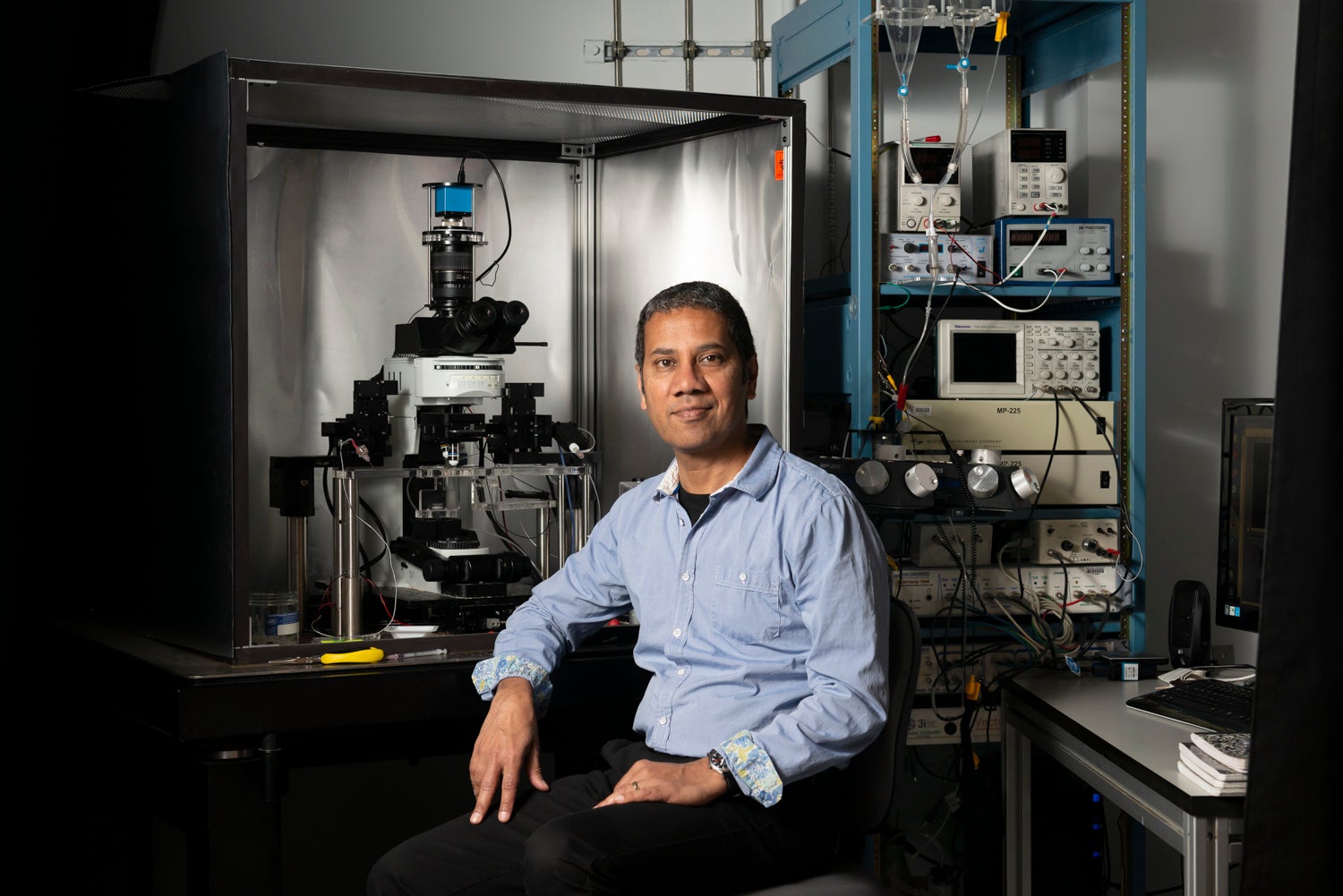
Venkatesh Murthy serves as the Raymond Leo Erikson Life Sciences Professor of Molecular & Cellular Biology at Harvard University and co-directs the Harvard Brain Science Initiative. His laboratory is housed within the Faculty of Arts and Sciences at Harvard's Biological Laboratories in Cambridge, Massachusetts. His research investigates the neural and algorithmic basis of odor-guided behaviors in terrestrial animals, primarily using mouse models. The Murthy Lab develops naturalistic behavioral paradigms that enable simultaneous electrophysiological recordings, high-resolution optical imaging, and optogenetic manipulation. Key research areas include neural circuit dynamics in the olfactory system, modification of circuits through behavioral state and learning, and development of computational models to explain neural observations. The lab maintains strong interdisciplinary collaborations with theoretical neuroscientists. Recent publications (2023-2025) reveal consistent focus on olfactory navigation mechanisms, neural signal processing algorithms, circuit-level analysis of social behaviors, and biomimetic applications for electronic sensing systems. Work spans experimental techniques including multi-animal pose estimation (using DeepLabCut), neural deconvolution methods, and analysis of fluctuating odor environments. The Murthy Lab operates within Harvard's Department of Molecular & Cellular Biology as part of the broader Harvard Brain Science Initiative ecosystem, contributing to research in Cognitive and Behavioral Neuroscience, Theory and Computation, and Sensory and Motor Systems.
Femke Vossepoel is a Professor of Earth System Simulation at the Delft University of Technology 's Faculty of Civil Engineering & Geosciences. She leads a research group focused on data assimilation in geosciences, integrating observations with dynamic Earth-system models to address challenges in urban heat islands, subsidence, and seismic hazard forecasting. Her interdisciplinary background spans oceanography, petroleum engineering, and climate resilience. Research Focus Earthquake occurrence estimation using advanced filtering algorithms Subsidence due to subsurface fluid extraction Climate resilience applications in urban environments AI-enhanced data assimilation for CO2 storage optimization Her work bridges geoscience and computational methods, with key roles in EU's Destination Earth initiative and the UrbanAIR consortium. She received funding from the Dutch Research Council (NWO), Delphi Consortium, and Petrobras for her innovative projects.
Andrew Bragg is an Associate Professor in the Department of Civil and Environmental Engineering at Duke University's Pratt School of Engineering. His research focuses on turbulence and fluid dynamics with applications in environmental systems, including atmospheric and oceanic flows, sediment transport, and climate modeling. Research Interests: His primary research areas include the physics and modeling of turbulence, theoretical and computational fluid dynamics, and applied mathematics. He investigates multiscale turbulent transport phenomena, especially in environmental contexts where unresolved scales challenge large-scale models. His work integrates statistical physics, high-performance computing, and collaboration with experimentalists. The recent publications (2024–2023) reflect a strong trend in understanding turbulence across environmental and engineered systems. Key themes include particle and scalar transport in stratified and wall-bounded flows, bubble-induced turbulence, surfactant effects, Lagrangian modeling, and subgrid-scale parameterizations for climate models. The research spans fundamental fluid mechanics to applied environmental engineering, often using advanced computational and theoretical frameworks. Scientific Awards: National Science Foundation CAREER Award (2021) EUROMECH Young Scientist Award (2017) Advising and Grants: While specific students are not listed, Dr. Bragg has secured competitive funding, notably the NSF CAREER award, indicating active mentorship and research leadership. He teaches graduate-level courses such as ME/CEE 634/688: Turbulence and CEE 690: Advanced Topics in Civil and Environmental Engineering, suggesting involvement in training the next generation of researchers. Labs and Teams: Dr. Bragg collaborates extensively with researchers across institutions and disciplines, including experimentalists and modelers in atmospheric science, mechanical engineering, and environmental engineering. His work is part of a broader effort to improve predictive models for environmental resilience and risk assessment.
Professor David Nicholson is affiliated with the School of Chemical Engineering at the University of Queensland. His research focuses on molecular simulation of adsorption phenomena in porous materials, particularly examining phase transitions, isosteric heat, and pore structure effects for gases like argon, methane, and carbon dioxide on graphitic surfaces. Recent publications highlight his work in understanding wetting transitions, adsorbate restructuring, and thermodynamic properties of fluids in nanoscale environments. Key methodologies include Grand Canonical Monte Carlo (GCMC) and kinetic Monte Carlo simulations, with applications in material characterization and separation processes. His collaborative studies with researchers such as D.D. Do and Quang K. Loi explore the interplay between adsorption isotherms, hysteresis loops, and surface chemistry. No scientific awards are documented in the provided text.
Franco Gianturco is a distinguished Senior Research Professor at the University of Innsbruck's Department of Ion Physics and Applied Physics, with a secondary affiliation at University of Rome "La Sapienza". With a career spanning over five decades since receiving his Laurea in Chemistry from the University of Bologna in 1961 and his D. Phil. in Applied Mathematics from Oxford University in 1967, he has established himself as a leading figure in quantum chemistry and molecular physics. His research interests span an impressive breadth of theoretical and computational chemistry, focusing on elementary processes in molecular gases, both neutral and ionized. He specializes in computational modeling of energy transfers in molecular discharges, nonequilibrium behavior in molecular mixtures, and quantum/classical treatments of molecular inelastic cross sections. His work extends to electronic structure calculations, potential energy surfaces for protonation and ionization, quantum modeling of rare gas clusters, microsolvation in helium droplets, and molecular processes at ultralow energies relevant to astrophysics. His research bridges fundamental quantum mechanics with applications in interstellar chemistry, radiation damage, and ultracold molecular systems. Gianturco's recent publications (2020-2021) reveal a strong focus on rotational and vibrational dynamics of molecular ions in cold environments, particularly examining collisions involving CN-, C2H-, HeH+, and OH- with helium and other buffer gases. His work demonstrates sophisticated quantum dynamical calculations applied to problems in interstellar chemistry, cold ion trap physics, and early universe chemical processes. The consistent theme across these publications is the precise quantum mechanical treatment of state-to-state transitions in molecular systems under extreme conditions. Humboldt Research Prize (1991) Fellow of the American Physical Society (1988) Fellow of the New York Academy of Sciences (1989) Fellow of the Institute of Physics (U.K.) (1994) Fellow of the European Physical Society (2005) Fellow of the Royal Society of Chemistry (U.K.) (2008) Fellow of the Academia Europea (London) (2009) Fellow of the Acadèmie de Stalinslas (France) (2014) Research Prize of the Max-Planck Society for Chemical Physics (1995) P.O. Lowdin Lecture (1996) MOLEC Award (1998) Throughout his career, Gianturco has coordinated numerous European research networks and COST projects, served on editorial boards of major physics and chemistry journals including Editor-in-Chief of Europhysics Letters and European Journal of Physics D, and held leadership positions in international scientific organizations such as Chairman of the Division of Atomic and Molecular Physics of the European Physical Society. His research has been supported by extensive funding from European and Italian research agencies, with over 590 publications to his name. His work is conducted within the Molecular Systems research group at the Department of Ion Physics and Applied Physics at the University of Innsbruck, where he collaborates with an international team of researchers investigating quantum phenomena in molecular systems under extreme conditions. His theoretical approaches provide critical insights for experimental groups working with cold ion traps, helium nanodroplets, and interstellar chemistry simulations.
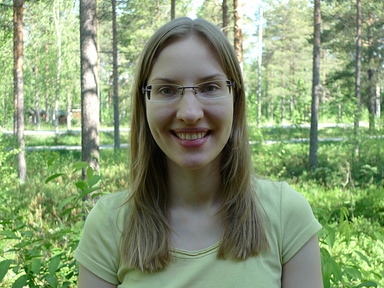
Kaisa Västilä is a part-time Postdoctoral Researcher at Aalto University and Senior Researcher at the Finnish Environment Institute (Syke) . Her work focuses on environmental hydraulics , particularly the interactions between flow, vegetation, and sediment/nutrient transport in rivers, streams, and agricultural systems. Her research explores how nature-based solutions like two-stage channels and riparian vegetation can improve water management, emphasizing Hydrodynamic modeling of vegetated flows Experimental analysis of sediment retention Policy recommendations for sustainable drainage She collaborates internationally with institutions such as Korea Institute of Civil Engineering, University of Sheffield, Deltares, and Institute of Geophysics of the Polish Academy of Sciences, and nationally with University of Helsinki and Syke. Her 15 most recent publications (2020–2025) span topics in hydrology, ecohydraulics, and agricultural water systems , with a focus on Flexible vegetation flow resistance Two-stage channel biodiversity impacts Phosphorus/nutrient retention Turbulent mixing in vegetated flows Her scientific work is published in journals like Journal of Hydrology , Scientific Reports , and Water Resources Research . She actively participates in international projects and field experiments, serving as an advisor for doctoral students and contributing to Aalto University's WAT courses. Her affiliations include Aalto University (Department of Built Environment, School of Engineering) and the Finnish Environment Institute (Syke).