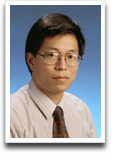
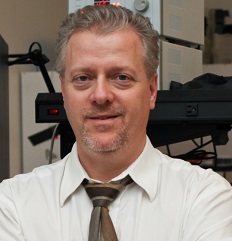
Shiyu Su is an Assistant Professor in the Department of Electrical and Computer Engineering at the University of Waterloo. His research focuses on high-speed data converters, wireless transceivers, digital phase-locked loops (PLL), and AI-assisted analog/mixed-signal design automation. He holds a Ph.D. from the University of Southern California (2019) and teaches courses such as ECE 340 (Electronic Circuits 2) and ECE 432 (Radio Frequency Integrated Devices and Circuits). Education: B.S. from Beijing University of Post and Telecommunication (China) and Queen Mary, University of London (UK), 2011; M.S. and Ph.D. from USC, 2013 and 2019, all in electrical engineering. Research Interests: High-speed ADCs/DACs RF/mm-wave transceivers Time-approximation filters (TAF) Analog/mixed-signal design automation Memristor-based computing Biomedical interfaces Key Awards: IEEE SSCS Predoctoral Achievement Award (2017–2018) Best Student Paper Award at IEEE RFIC (2022) Ming Hsieh Institute Scholar (2019–2020) Lab Focus: The Shiyu Su Lab develops integrated circuits for communications, sensing, and computing, with a focus on AI-driven methodologies and digital-analog co-design. Collaborations include work with Prof. Wei Wu (USC) on memristor-based systems.
J. Stewart Aitchison is a Professor at the University of Toronto's Department of Electrical & Computer Engineering, holding the Nortel Chair in Emerging Technology. He serves as Associate Scientific Director for the Network Centre of Excellence, IC-IMPACTS, fostering Canada-India research collaborations. Aitchison co-founded ChipCare Corporation, developing portable HIV monitoring systems, and previously directed the Emerging Communications Technology Institute. He received a BSc (1984) and PhD (1987) in Physics from Heriot-Watt University, UK, followed by a postdoctoral position at Bellcore. His research focuses on: Nonlinear optics and plasmonics for optical signal processing Micro/nano-scale photonic devices and integrated circuits Optical biosensors for healthcare applications (e.g., HIV monitoring) Algal biofilm photobioreactors for sustainable energy His 250+ publications emphasize semiconductor waveguides, quantum optics, and lab-on-chip systems, with recent work advancing polarization management, entanglement generation, and point-of-care diagnostics. Awards & Fellowships: Fellow of Royal Society of Canada, Royal Society of Edinburgh, AAAS, OSA, and Institute of Physics Professional Engineering Ontario Research Medal (2016) IEEE Photonics Society Distinguished Lecturer (2016-2017) University of Toronto Inventor of the Year (2012) NSERC Synergy Award (2006) He leads the Aitchison Group, supervising over 60 PhD/Master's students in photonics and microfabrication. His team collaborates globally and utilizes the Toronto Nanofabrication Centre. ChipCare, his spin-off, secured $7M+ funding for blood-testing platforms enhancing healthcare in remote communities.
Safieddin Safavi-Naeini was a Professor in the Department of Electrical and Computer Engineering and Director of the Centre for Intelligent Antenna and Radio Systems (CIARS) at his university. He specialized in advanced antenna systems, microwave engineering, radar technologies, and biomedical sensor design. His work emphasized high-frequency systems, phased array antennas, and mm-wave applications. Research Focus: His research spanned antenna design (e.g., defected ground structures, SIW-integrated arrays), mm-wave radar systems (including FMCW and SAR imaging), non-invasive biomedical sensors (e.g., glucose monitoring via microwave sensors), and satellite communication systems. He contributed to RFIC design, power amplifier technologies, and novel metamaterial-based components. Technological Contributions: Key innovations included tunable phase shifters, low-cost phased arrays for 5G/SATCOM, and compact high-gain antenna arrays. His work in graphene-based nonlinear optics and THz sources expanded into emerging applications like terahertz integrated circuits. Awards & Recognition: While no specific awards are listed, his prolific publication record and leadership in CIARS highlight his impactful contributions to the field. Advising & Labs: As director of CIARS, he oversaw research in intelligent antenna systems and radar imaging. His team developed cutting-edge systems like the 3D-printed scanning lens antenna and mm-wave FMCW target simulators.
James Barby is an Associate Professor in the Department of Electrical and Computer Engineering at the University of Waterloo. His research focuses on mixed-mode modeling, analog/mixed-signal circuits, and VLSI systems simulation. He holds a PhD from the University of Waterloo (1986) and has extensive academic credentials including a Master's (1981) and Bachelor's (1979) from Ontario institutions. PhD: University of Waterloo, 1986 MASc: University of Waterloo, 1981 BTech: Ryerson Polytechnical Institute, 1979 Dr. Barby's research interests include switched network simulation for communications/power electronics, transistor model approximations, and analysis methods for digital/analog VLSI systems. His work bridges theoretical modeling with practical circuit design applications. Selected publications span IEEE journals and conferences from 1990–1995, emphasizing mixed-mode simulation methodologies and ASIC design challenges. He has contributed to benchmarking frameworks for circuit simulators and functional analog simulators for multilevel systems. Teaching includes MTE 220 (Sensors and Instrumentation) in recent years. Currently not accepting graduate students.
Fei Yuan is a Full Professor in the Department of Electrical and Computer Engineering at Toronto Metropolitan University (formerly Ryerson University). He holds a B.Eng. from Shandong University, an M.A.Sc. in Chemical Engineering, and a Ph.D. in Electrical Engineering from the University of Waterloo. His career includes roles as Lecturer at Changzhou Institute of Technology, Visiting Professor at Humber College and Lambton College, and Controls Engineer at Paton Controls Limited. At Toronto Metropolitan University, he served as Associate Chair for Undergraduate Studies, Department Chair (2010–2015), and Director of Quality Assurance in the Faculty of Engineering and Architectural Science (2015–2021). He is a Fellow of the IET, Senior IEEE Member, and registered Professional Engineer in Ontario. Research focuses on all-digital circuits, time-mode signal processing, mixed-signal converters (TDCs, ADCs), and low-power VLSI systems. Notable contributions include books on CMOS circuits, time-mode systems, and mixed-mode signal processing. Awards include the Dean’s Teaching Award (2017), Ryerson Research Chair (2005), and IET Fellowship (2016). Teaching includes courses on VLSI systems, CMOS mixed-signal circuits, and capstone design projects. Over 250 journal/conference papers and multiple book chapters highlight his expertise in circuits for communications, sensing, and biomedical applications. Active in professional service, grants, and academic governance at the university level.
Dr. Ajoy Opal is a Professor in the Department of Electrical and Computer Engineering at the University of Waterloo, Canada. He serves as a Faculty Advisor and has held academic roles since completing his doctoral studies at the same institution. His research focuses on circuit theory, numerical algorithms for analog and switched circuits, and mixed analog-digital systems. He has co-authored a book and published extensively in VLSI, CMOS technology, and ESD protection circuits. Education: Doctorate in Electrical Engineering, University of Waterloo, 1987 Master's in Electrical Engineering, University of Waterloo, 1984 Bachelor's in Electrical Engineering, Indian Institute of Technology Delhi, 1981 Research Interests: Dr. Opal's work spans circuit simulation, analog filter design, VLSI systems, and low-leakage ESD protection circuits. His recent publications emphasize CMOS-based solutions for ESD clamps and power supply noise mitigation. He employs numerical algorithms to optimize circuit performance and reliability. Teaching: Recent courses include ECE 106 (Electricity and Magnetism) and ECE 140 (Linear Circuits), taught in 2020–2024. His academic contributions blend theoretical circuit analysis with practical VLSI applications. Labs/Teams: While no specific lab names are provided, his research aligns with advanced circuit design and VLSI systems, likely conducted through collaborative projects at the University of Waterloo's engineering facilities.
Zhenyu Zhang is an Industrial Professor in the Department of Electrical and Computer Engineering at the University of Alberta, Faculty of Engineering. He specializes in RF front-end module design, analog and digital circuit design, and electromagnetic simulation. With prior experience as a hardware/RF engineer in SATCOM, automotive electronics, and semiconductor ATE industries, he bridges academic and industrial expertise. B.Sc., Electronics and Information Engineering, Huazhong University of Science and Technology (2002) M.Eng. (by research), Electrical and Computer Engineering, National University of Singapore (2005) Ph.D., Electrical Engineering, École Polytechnique de Montréal, University of Montreal (2011) His research focuses on millimeter-wave systems, substrate integrated waveguide (SIW) devices, and embedded system design. He supervises undergraduate capstone projects, emphasizing hands-on learning for future graduate studies. Zhang's publications from 2004–2011 highlight advancements in microwave components, including SIW-based mixers, phase shifters, baluns, and filters. These works address wireless communication systems, antenna integration, and broadband circuit design. He teaches foundational courses like ECE 202/ECE209 (Electrical Circuits), ECE 303 (Analog Electronics), ECE 312 (Embedded System Design), and ENCMP 100 (Computer Programming for Engineers), alongside mechatronics-specific courses like MCTR 202.
Pierre Berini is Professor of Electrical Engineering and Computer Science at the University of Ottawa's Faculty of Engineering, and Professor of Physics in the Faculty of Science. He serves as Director of the Centre for Research in Photonics (CRPuO) and Director of NanoFab at the University of Ottawa. As a Distinguished University Professor (2018) and University Research Chair in Surface Plasmon Photonics, he leads significant research initiatives in optics and photonics. His educational background includes: Ph.D. in Electrical Engineering from École Polytechnique de Montréal (1995) M.Sc.A. in Electrical Engineering from École Polytechnique de Montréal (1992) B.E.Sc. in Electrical Engineering from University of Western Ontario (1990) B.Sc. in Computer Science from University of Western Ontario (1990) Professor Berini's research program focuses primarily on plasmonics, with particular emphasis on surface plasmon-polariton (SPP) waves and their applications. His work spans waveguides and passive elements, micro/nanofabrication, integrated circuits, telecom devices, nanoantennas, amplification, biosensors, electromagnetic theory, numerical modeling, semiconductor devices, and microwave circuits. He has pioneered developments in long-range surface plasmon polariton structures for biosensing applications, notably creating a plasmonic biosensor for dengue virus detection. His research bridges theoretical modeling with experimental implementation, often involving cleanroom fabrication of plasmonic devices. Analysis of his recent publications reveals a strong trend toward epsilon-near-zero (ENZ) materials, parity-time symmetry in plasmonic structures, advanced biosensing techniques, and integration of plasmonics with silicon photonics. His work demonstrates increasing sophistication in nanofabrication techniques and theoretical modeling, with applications spanning biomedical diagnostics, optical communications, and quantum optics. His scientific recognition includes: NSERC Steacie Fellowship and Discovery Accelerator Premier of Ontario Research Excellence Award (PREA) University of Ottawa Young Researcher of the Year Award URSI Young Scientist Award George S. Glinski Award for Excellence in Research Fellowships in IEEE, OSA, Canadian Academy of Engineering, and Royal Society of Canada Distinguished University Professor title (2018) Professor Berini has supervised over 40 graduate students and postdoctoral fellows, with many completing their theses on plasmonic waveguide devices, biosensors, and related topics. His research is generously supported by major funding agencies including NSERC, CFI, PREA, ORDCF, and OCE, as well as industry partners like Spectalis Corporation which he co-founded as Chief Technology Officer. The Berini Group operates within the Centre for Research in Photonics at the University of Ottawa's Advanced Research Complex (ARC 337), featuring state-of-the-art equipment including tunable lasers, optical spectrum analyzers, near-field scanning optical microscopes, PMD/PDL instrumentation, and thin-film characterization tools. The lab collaborates extensively with the National Research Council, Communications Research Centre Canada, Canadian Photonics Fabrication Center, and international institutions.
William Lubell is a Full Professor in the Department of Chemistry within the Faculty of Arts and Science at the University of Montreal. He leads an active research laboratory focused on peptide-based drug discovery, with affiliations at the GRUM (Groupe de recherche universitaire sur le médicament) and CCVC (Centre en chimie verte et catalyse). His work bridges synthetic organic chemistry and biomedical applications, particularly in inflammation modulation and neurodegenerative disease. His research interests center on bioorganic and medicinal chemistry approaches to peptide mimicry, specializing in constrained amino acids, azapeptides, and heterocyclic scaffolds. Key areas include CD36 receptor modulation for atherosclerosis and macular degeneration, interleukin-1 receptor targeting for preterm birth prevention, and amyloid-beta oligomer detection for early Alzheimer's diagnosis. His lab develops sustainable synthesis methods while exploring peptide conformational control. Analysis of his 15 most recent publications reveals a strong trend toward therapeutic applications of modified peptides in inflammation-related pathologies (73%), neurodegenerative disease diagnostics (13%), and sustainable synthesis methodologies (14%). The work emphasizes receptor-specific modulation through conformational constraint, with significant focus on CD36 and IL-1 pathways. Dr. Lubell has secured major funding from CIHR, NSERC, and FRQNT for projects including 'Peptide-Based Discovery by Strategic Mimicry' (2025-2031), 'Interleukin-1 Receptor Modulating Therapy for Macular Degeneration' (2023-2028), and 'Biodiversity of Peptides for Human Health' (2025-2028). He has supervised over 40 graduate students since 1996, with recent PhD completions in azapeptide synthesis and inflammation modulation. His laboratory operates within the CCVC green chemistry initiative and collaborates extensively with medical researchers at the University of Montreal Health Center. Current projects include developing PET tracers for amyloid detection and peptide modulators for ischemic eye diseases, reflecting his translational research approach from bench to bedside.
Pavel Cheben is an Adjunct Professor in the Department of Engineering Physics at McMaster University , specializing in Silicon Photonics and Metamaterials for integrated optics. His research focuses on advanced photonic devices including Subwavelength Grating Structures Waveguide Sensors Fourier-Transform Spectrometers Optical Beam Steering Quantum Photonics with applications in telecommunications, sensing, and astrophotonics. Recent work demonstrates innovations in machine learning-optimized photonic design and high-efficiency couplers . Contact: chebenp@mcmaster.ca
Yves Audet is an Associate Professor in the Department of Electrical Engineering at Polytechnique Montréal, affiliated with three centers of excellence: Industry of the Future and Digital Society (primary), Energy, Water and Resources , and Transport and Sustainable Infrastructure . He holds a B.Sc. and M.Sc. from Sherbrooke University and a Ph.D. from Simon Fraser University. His research bridges integrated circuit design , energy systems , and microsensor technology , with focus areas including: Ultra-low power CMOS circuits for energy harvesting High-speed isolated data communication (capacitive/inductive) Spectral imaging sensors and Hall-effect isolators Radiation-hardened avionics systems Photovoltaic and RF power conversion Analysis of his 62 publications reveals strong emphasis on: Optimizing power-delay tradeoffs in communication systems (7 recent papers on isolators) Advancing start-up circuits for sub-50mV energy harvesters Developing miniaturized sensor interfaces for IoT/industrial applications Improving fault tolerance in FPGAs and avionics He has supervised 19 graduate students (6 PhD, 13 Master's) working on projects spanning CMOS spectrometers, UAV wireless charging, and radiation-hardened circuits. No awards are documented, but he holds 2 patents in CMOS photodetection technology.
Lavy Khoushinsky serves as Assistant Professor in the Marketing Department at Laval University's Faculty of Administrative Sciences, where he maintains an active research program bridging analytical marketing, artificial intelligence, and consumer behavior. His work addresses critical contemporary challenges including ideological polarization in markets, healthcare access barriers, and ethical AI implementation. His educational foundation includes a Ph.D. from Smith School of Business, Master's in Sustainable Energy Policy from Carleton University, and Bachelor's in Communication from Concordia University. This interdisciplinary background informs his research approach that integrates technical marketing analytics with social impact considerations. Professor Khoushinsky's research program demonstrates remarkable thematic evolution from sustainable transportation (2019) through banking experience innovation (2020-2021) to his current focus on AI-consumer interactions in contested spaces. His 14 publications (2019-2025) reveal three dominant trajectories: AI-Mediated Consumer Interactions (50% of recent work): Examining chatbots, healthcare navigation systems, and accountability frameworks Ideological Market Dynamics (30%): Analyzing niche marketing in polarized environments and consumer discourse patterns Technology Adoption Barriers (20%): Studying privacy paradoxes, e-waste responsibility, and mixed-reality banking experiences His methodological approach combines computational linguistics with experimental design to address complex marketing phenomena. Through his teaching portfolio spanning Marketing Principles to AI applications, Professor Khoushinsky prepares students for evolving marketing landscapes. His course development emphasizes practical analytical skills while addressing contemporary ethical challenges in digital marketing. The collaborative nature of his publication record (80% co-authored) indicates strong team-based research practices and interdisciplinary connections across institutions.