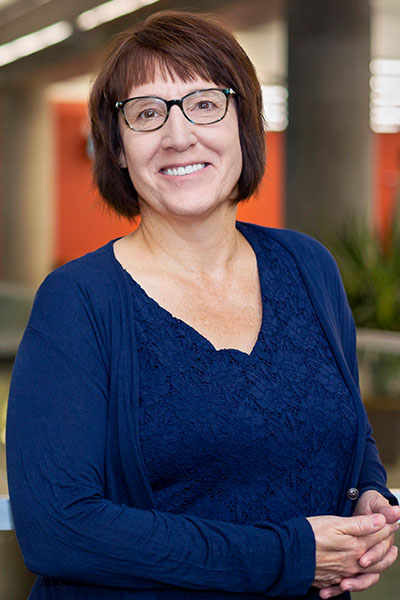
Dr. Anne Moyer is a Professor in the Department of Psychology at Stony Brook University, specializing in Social and Health Psychology. She holds a Ph.D. from Yale University (1995). Her research focuses on psychosocial issues in cancer care, medical decision-making, gender and health disparities, and research methodology, particularly meta-analysis. Research interests include improving cancer patient quality of life through interventions, exploring optimism's role in treatment choices, and analyzing veterinary medical decisions. She also investigates research participation dynamics and the educational value of positive psychology exercises in teaching. Dr. Moyer’s methodological expertise includes systematic reviews and meta-analyses, addressing topics like exercise interventions for cancer patients and post-traumatic growth among survivors. She has co-edited books on modern relationships and friendship psychology, and her work appears in journals like Psycho-Oncology and Health Psychology . She plans to admit a new graduate student pending funding approval. No specific awards are listed, though her contributions to health psychology are notable. Her lab emphasizes interdisciplinary approaches to health-related challenges and methodological rigor.
Dr. Gemma Heath is a Senior Lecturer in Psychology at Aston University, affiliated with the School of Psychology within the College of Health and Life Sciences . She also holds roles as Associate Dean for Education and Student Experience in Psychology. Her research focuses on applied health psychology, particularly children’s and young people’s health, qualitative methods, psychological interventions, and healthcare innovation. She is an HCPC-registered Health Psychologist with expertise in evidence synthesis and implementation science. Education : BA (Hons) Social Philosophy and Applied Ethics (2005), Cardiff University MSc Health Psychology (2008), Aston University PhD Health and Population Sciences (2013), University of Birmingham Stage 2 Qualification in Health Psychology (2013), British Psychological Society Post Graduate Certificate in Academic Practice (2021), University of Wolverhampton Research Interests : Dr. Heath’s work centers on improving health outcomes for children and young people through qualitative research, intervention development, and healthcare innovation. Key areas include parental intuition in child healthcare, treatment adherence in adolescents with IBD, and barriers to sexual health testing in Black Caribbean communities. Her methods emphasize phenomenological and creative qualitative approaches to bridge experiential and clinical perspectives. Recent Trends in Publications : Her recent articles explore interventions for pediatric health conditions (e.g., IBD, asthma), barriers to healthcare access in marginalized communities, and the role of parental anxiety in child health behaviors. She frequently collaborates on feasibility studies and systematic reviews to advance evidence-based practices. Awards and Memberships : Associate Fellow of the British Psychological Society (2024) Fellow of the Higher Education Academy (2021) Chartered Member of the British Psychological Society (2013) Advising and Grants : Dr. Heath supervises PhD students exploring health and wellbeing topics, including psychological interventions and healthcare innovations. She has led projects funded by Aston University and collaborated on grants focused on pediatric care and health disparities. Labs and Teams : She contributes to the Applied Health Research Group and the Aston Institute of Health & Neurodevelopment , fostering interdisciplinary research on child health and healthcare systems.
Lee Shepherd is a Research Fellow at Northumbria University specializing in the psychological impact of emotions on group behavior and health-related decisions. He holds a PhD in Psychology from Cardiff University (2011) and is a Fellow of the Higher Education Academy (FHEA, 2015). His research explores emotional responses to discrimination, prosocial behavior promotion, and health behaviors such as organ donation, cervical screening, and vaccine hesitancy. Research Focus: Dr. Shepherd’s work spans three core areas: (1) Emotions in intergroup processes (e.g., discrimination, collective action), (2) Health decision-making (e.g., organ donation, breastfeeding), and (3) Psychological consequences of experiencing discrimination. He employs mixed-methods approaches, integrating quantitative surveys with qualitative insights. Key Outputs: His recent publications analyze fear’s role in vaccine hesitancy, the impact of sexual objectification on workplace behavior, and methodological improvements in survey design (e.g., National Student Survey analysis). These studies highlight his expertise in both content areas (health/social psychology) and methodological rigor. Supervision & Training: Currently supervising three PhD students across topics like urban biodiversity interventions, medical conspiracy theories, and youth risk-taking behaviors. His mentoring emphasizes translating psychological insights into practical health interventions. Additional Contributions: Active in academic service, including reviewing for journals like Journal of Health Psychology and Psychology & Health . Engages in public-facing research communication through conferences and media collaborations.
Mosfer Alwalah is a researcher affiliated with the School of Medicine, Dentistry and Biomedical Sciences. Their work focuses on developing and evaluating interventions to enhance physical activity levels in preschool children. Alwalah has contributed to peer-reviewed articles on topics such as feasibility trials for preschool-based interventions, barriers to physical activity, and systematic reviews of behavioral change techniques. Research interests include physical activity promotion in early childhood, qualitative methods for intervention evaluation, and the design of evidence-based public health strategies. Their studies often involve collaborations with institutions focusing on pediatric health and behavioral science. Alwalah’s recent publications analyze the acceptability of multi-component interventions, barriers to implementation, and the efficacy of behavior change techniques. These studies utilize mixed methods, including focus groups, thematic analysis, and randomized controlled trials. Currently, they are completing a doctoral thesis titled 'Development and feasibility of a physiotherapist-led intervention to increase physical activity among preschool children', supervised by Prof. Heron and Dr. Donnelly.
Dr. Merel Schuring is an Assistant Professor in Occupational Health at the Department of Public Health, Erasmus University Medical Center. Her research focuses on reducing socioeconomic health inequalities by promoting sustainable employment, particularly among vulnerable populations such as individuals with chronic diseases, mental health challenges, disabilities, and youth at risk of school dropout. Institution: Erasmus University Medical Center Department: Department of Public Health Position: Assistant Professor in Occupational Health Her research interests lie at the intersection of public health, employment, and social inequality. She investigates how health conditions and working environments influence labor market participation across the life course. Key themes include inclusive hiring practices for people with disabilities, supporting employees with health challenges, and preventing youth unemployment through improved education-to-work transitions. Methodologically, she specializes in advanced quantitative techniques—including difference-in-differences, multilevel modeling, and propensity score matching—and integrates these with qualitative methods such as interviews and focus groups. Her work often employs mixed-methods and realist evaluation approaches to assess interventions like Bewegen Werkt and Werk als Beste Zorg . The recent article trends reflect a consistent focus on mental health, employment trajectories, socioeconomic disparities, and policy-relevant outcomes. Her work spans epidemiology, occupational health, psychology, and social policy, with strong emphasis on longitudinal and register-based studies, as well as qualitative insights into barriers and facilitators in real-world contexts. Dr. Schuring collaborates with multidisciplinary teams across public health, psychology, and economics, co-producing knowledge with policymakers and employers to ensure actionable impact. Her research contributes to UN Sustainable Development Goals on good health, reduced inequalities, and decent work. Supervised doctoral students and research projects, including studies on school dropout and mental health Involved in evaluating national and regional public health programs Active in knowledge translation and stakeholder engagement She leads and contributes to research groups focused on sustainable employment and health equity, working closely with institutional and community partners to develop evidence-based strategies for inclusive labor markets.
Johanna Gustavsson is a Lecturer and PhD in Risk Management at Karlstad University, Sweden. Her primary affiliation is within the Department of Risk Management, focusing on injury prevention, elderly care, and public health interventions. She has held this academic position since completing her Master's in Risk Management in 2010, transitioning from a 15-year career as a nurse in elderly care. Her research spans multiple domains including fall injury prevention (e.g., compliant flooring in residential care), disaster risk management, climate vulnerability analysis, and mental health during crises like the COVID-19 pandemic. She has collaborated extensively with colleagues on projects funded by Swedish municipalities and national agencies, focusing on evidence-based interventions such as ice cleat distribution programs and fire safety protocols. Key findings include the efficacy of compliant flooring in reducing fall-related injuries among the elderly, the mental health impacts of pandemic restrictions on older adults, and the socioenvironmental factors influencing vulnerability to climate disasters. Her work bridges clinical practice, community policy, and academic research, often employing mixed-methods approaches. Notably, she has led quasi-experimental evaluations of municipal health programs and contributed to scoping reviews on resilience and vulnerability assessments. Her teaching responsibilities include the Master's program in Risk Management in Society. Recent grants include funding for climate vulnerability studies and disaster risk management frameworks, alongside participatory projects in Nordic collaboration. She has advised over 20 studies and maintains a lab focusing on geriatric injury prevention and public health policy.
Dr. Luke Halvorsen is a Research Fellow in the Department of Linguistics at Macquarie University, affiliated with the Hearing Research Centre. He holds a Doctor of Philosophy degree from the same institution's Faculty of Medicine, Health and Human Sciences. His research focuses on improving hearing and ear health outcomes for Indigenous populations, particularly First Nations and Aboriginal/Torres Strait Islander children. Key areas include culturally safe healthcare practices, policy reform in ear disease management, and achieving UN Sustainable Development Goals through speech-language supports. Recent work includes the INSPIRE study protocol and STORM project addressing systemic racism in hearing healthcare, alongside scoping reviews evaluating existing programs for Indigenous child health. His publications emphasize interdisciplinary collaboration to address healthcare disparities. Current active project: MRFF-funded STORM initiative (2024-2026) co-designing anti-racism frameworks in hearing health sectors.
Angela Minichiello is an Associate Professor in the Department of Engineering Education at Utah State University’s College of Engineering. She holds a PhD in Engineering Education from Utah State University, an MS in Mechanical Engineering from Georgia Institute of Technology, and a BS in Mechanical Engineering (Aerospace) from the United States Military Academy. A licensed Professional Engineer in Utah and Colorado, she is also a U.S. Army veteran with experience as a thermal-mechanical engineer. PhD, Engineering Education, Utah State University, 2016 MS, Mechanical Engineering, Georgia Institute of Technology, 1997 BS, Mechanical Engineering (Aerospace), United States Military Academy, 1987 Her research centers on engineering education, with a focus on educational technology, distance and online learning, mobile learning, and asset-based frameworks to improve inclusivity and access. She employs qualitative, mixed-method, and multi-method research to study student experiences, particularly those of nontraditional and military-connected students. Her teaching includes foundational courses like Engineering Mechanics Dynamics and Thermodynamics, as well as graduate courses on the foundations of engineering education and qualitative research methodologies. Her recent publications span topics such as emergency remote learning during the pandemic, student well-being, identity development, and design-based research in engineering education. The articles reflect strong interdisciplinary engagement across education, psychology, public health, and engineering practice, with a consistent emphasis on student-centered pedagogy and inclusive learning environments. Selected Awards and Honors: Undergraduate Research Mentor of the Year (2025) Outstanding Graduate Mentor of the Year (2024) Researcher of the Year (2023, 2022) JEE Star Reviewer Award (2021) National Science Foundation Graduate Fellowship (1994) Distinguished Graduate, US Military Academy (1987) Dr. Minichiello has mentored numerous graduate students in Engineering Education and has been recognized repeatedly for her mentorship and scholarly contributions. She has also contributed to curriculum development, including K–12 engineering design resources, and serves as an ABET program evaluator. Her work is deeply committed to transforming engineering education through inclusive, research-informed practices. She leads or contributes to initiatives involving mobile learning tools, narrative inquiry, and the integration of user experience design in STEM education. Her lab and research team focus on developing and evaluating innovative teaching methods and digital tools to enhance student learning and professional development in engineering.
Jan Georg Friesinger is an Associate Professor in the Department of Psychosocial Health at the University of Agder, Norway. He is actively engaged in teaching sociology, health geography, and qualitative social research, and serves as the study programme coordinator for the Master's programme in Psychosocial Health. His research focuses on the sociological, spatial, and material dimensions of mental health and illness, particularly in community and supported housing contexts. He explores how place attachment, built environments, and everyday materialities influence recovery, inclusion, and well-being among individuals with mental health challenges. His recent publications demonstrate a strong trend in interdisciplinary research at the intersection of public health, sociology, and environmental psychology. He frequently investigates how social and spatial factors—such as discrimination, financial strain, housing design, and nature access—impact mental health outcomes, using qualitative and mixed-method approaches. His work contributes to both academic discourse and public policy discussions on mental health and housing. Associations between perceived discrimination and health Place attachment and immigrant integration Materiality in supported housing Fire safety regulations and autonomy Human-animal bonds in recovery Therapeutic landscapes Jan Georg Friesinger has received no explicitly mentioned scientific awards in the provided text. However, he is actively involved in knowledge dissemination through public media and policy engagement, contributing to outlets like forskning.no , Agderposten , and Morgenbladet . He has also contributed to educational development, including curriculum design for specialized master’s programs in mental health and substance use. He is a key member of the research group Society, Space, Psychosocial Health (SSPH), which fosters interdisciplinary collaboration on the spatial and social aspects of mental well-being. His work emphasizes participatory and critical perspectives, challenging institutional norms and advocating for more inclusive and human-centered mental health environments.
Dr. Anburaj Vivian Isaac is a Senior Lecturer in Interdisciplinary Health Research at Charles Sturt University, specializing in psychosocial epidemiology and rural health. His work explores the influence of social factors on cognition, behavior, and health, with a focus on chronic disease, mental health, and rural workforce dynamics. His research interests include: Psychosocial epidemiology Healthy ageing Strength-based approaches Mixed-methods research Psychometrics Evaluation of health interventions Recent publications analyze: Psychological capacity in older adults Unmet care needs in rural populations Factors affecting general practitioners' locus of control Photobiomodulation therapy for Parkinson’s disease Pandemic impacts on rural healthcare training Scientific awards include: Welcome Trust Masters Research Fellow As a registered PhD supervisor, he mentors students in rural health research and contributes to journals like Age and Ageing and BMC Medical Education . Current projects highlight interdisciplinary collaborations across Australia.
Dr. Qiping Fan is an Assistant Professor of Epidemiology in the Department of Public Health Sciences at Clemson University's College of Behavioral, Social and Health Sciences. She holds a DrPH from Texas A&M University (2023), an MS in Global Health from Duke University (2019), and a BS in Biotechnology from Wuhan University (2017). Her research focuses on maternal and child health disparities mental health epidemiology digital health solutions for aging populations racial/ethnic health inequities social determinants of health machine learning applications in public health Recent publications examine preterm birth risks in urban environments, HIV testing disparities, cervical cancer screening in the Philippines, and AI-powered dementia caregiving tools. She serves as an Associate Editor of JMIR Aging and collaborates with multiple institutions on health equity research. Scientific awards include: Industry Engagement Seed Grant (2024) Delta Omega Honor Society induction (2023) Awards for Excellence in Research (2023) Shibata International Memorial Scholarship (2022) Rising Star Scholar recognition (2022) Dr. Fan leads NIH-funded SBIR projects totaling $5.2 million for AI-driven dementia care solutions and has served in various professional roles including APHA Student Meeting Co-Chair and Texas Department of State Health Services consultant.
Dr. Coral Hanson is a Senior Research Fellow at the Edinburgh Napier University 's School of Health and Social Care. Her work focuses on cardiovascular health, physical activity referral schemes (PARS), public health policy, and eHealth interventions. Specializations: Physical activity promotion, cardiac rehabilitation, digital health, patient-centered care Affiliations: Centre for Cardiovascular Health, Public Health Scotland collaborators Research Interests: She investigates how physical activity interventions improve outcomes for cardiovascular patients, develops guidelines for activity promotion, and evaluates technology-enabled rehabilitation programs. Her work addresses implementation challenges in healthcare systems and social determinants of program uptake. Recent Projects: Includes AI applications in lifestyle change, remote exercise support for SCAD survivors, and national rehabilitation dataset creation. She pioneered the ASsessing cardiovascular risk, MOtivating change, and SUStaining healthier lifestyles digital training resource for nurses. Scientific Awards: Burdett Trust for Nursing grants Digital Health Institute funding Chest, Heart & Stroke Scotland support Chief Scientists Office awards Advising: Supervises advanced research students in areas like cardiac transitions, SCAD recovery, and AF management. Collaborates with institutions across UK, Australia, and Europe.
Liv Bachmann is a Senior Lecturer and Dean of the Department of Health and Social Sciences at Molde University College, Norway. She is actively engaged in research and education in mental health nursing, with a focus on vulnerability, ethical care, and clinical supervision. Her academic and clinical background supports her leadership and scholarly contributions in nursing science. Senior Lecturer in Nursing, Molde University College (2019–present) Dean, Department of Health and Social Sciences PhD Candidate (2020–2024) Master’s in Clinical Nursing Relations (2009) Bachelor’s in Nursing (1993) Her research centers on the emotional and ethical dimensions of mental healthcare, particularly the use of restraints, vulnerability among healthcare professionals, and challenges in nursing education. She employs qualitative, quantitative, and mixed-methods approaches, often grounded in phenomenological perspectives. Her recent publications show a consistent focus on patient safety, professional vulnerability, and educational integrity in nursing. Themes include mechanical restraints, failure to fail in clinical evaluations, and the lived experiences of both patients and caregivers in mental health settings. Liv Bachmann has not received any publicly listed scientific awards or fellowships. She advises on nursing research and clinical practice but no specific students are named. She leads and contributes to research groups on mental health, substance abuse, and nursing development. Her work is supported by institutional affiliations and active participation in academic publishing.
Prof. Marta Berent-Braun is the Van Lanschot Kempen Professor of Family Businesses and Ownership Dynamics at Nyenrode Business University. She holds a doctoral degree from Nyenrode (2010), an MSc in Entrepreneurship from Erasmus University Rotterdam, and an MSc in Management & Marketing from the University of Lodz. Her research focuses on ownership dynamics, corporate governance, sustainable entrepreneurship, innovation, and business transfer in family firms. She actively contributes to academic discourse through editorial roles and conference organization. Her research explores family firm identity's impact on innovation, governance practices in enterprising families, and pro-environmental strategies in SMEs. Key themes include ownership social capital, environmental management practices, and long-term business strategies. Berent-Braun is also involved in educational leadership, coordinating programs like the BScBA and curricular development. Her work bridges theory and practice, emphasizing how family-owned enterprises balance tradition with innovation. Ancillary activities include membership in the Knowledge Platform for Entrepreneurship and advising the Dutch Ministry of Economic Affairs and Climate Policy.
Associate Professor Jung-Sook Lee is a faculty member in the School of Social Sciences at the University of New South Wales (UNSW). Recognised among Stanford’s Top 2% Researchers in Social Work (2021) and Education (2023), she leads interdisciplinary projects on child well-being, educational equity, and multicultural practice. Education Ph.D. & M.S.W., University of North Carolina at Chapel Hill, USA M.Ed. & B.A., Seoul National University, South Korea Research Interests Her work centres on breaking cycles of intergenerational disadvantage through evidence-based social and educational policies. Using quantitative and mixed-methods designs, she explores how poverty, cultural capital, and institutional structures shape children’s life chances. Key themes include: Educational equity and social justice Home-school partnerships in multicultural contexts Outcomes for vulnerable children and families Policy evaluation and program effectiveness Research Trends Across her 2021–2025 publications, Lee bridges sociology of education, social work, and public policy to interrogate fairness perceptions, Indigenous parent engagement, and the impacts of national assessments such as NAPLAN. Her recent studies increasingly integrate technology and culturally responsive frameworks to foster inclusive school environments. Scientific Awards & Fellowships Stanford Top 2% Researcher (Social Work, 2021; Education, 2023) LSAY Research Innovation and Expansion Fund Fellowship (2008-2009) Spencer Fellowship in Education Policy Research (2005-2007) Fulbright Scholarship (2003-2005) Grants & HDR Supervision Lee has secured over AUD $720,000 in ARC Linkage grants and international funding, leading large teams on projects such as Lost in Transition: Young People with Complex Support Needs and Long-term Outcomes of Forgotten Australians . She currently supervises four PhD candidates researching fetal alcohol spectrum disorders, Indigenous family-school partnerships, disability-inclusive education, and school counsellor self-efficacy. Professional Service & Engagement She serves on editorial boards including Children and Youth Services Review and is an active member of The Australian Sociological Association and the Australian Association for Research in Education. Her media contributions span The Australian , TES Magazine , and Impact: Journal of the Chartered College of Teaching .