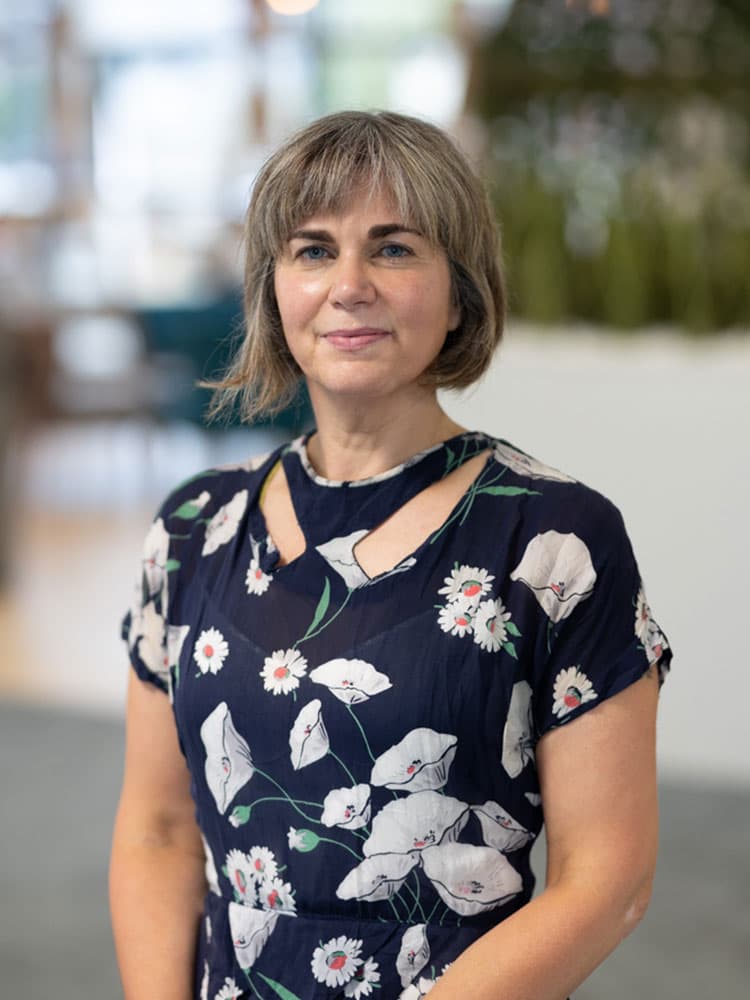
Ina Krammer is a Researcher at Ludwig Boltzmann Gesellschaft, affiliated with the Faculty of Psychology and the Department of Clinical and Health Psychology . Her work focuses on adolescence, peer relationships, and early intervention strategies. Research Areas: Qualitative methods, thematic analysis, coping behavior, and social connectedness during school transitions. Key Contributions: Published 13 works between 2018-2023, emphasizing adolescent mental health and intervention development. Scientific Awards: Fellowship from NÖ Forschungs- und Bildungsges.m.b.H. (NFB), 2018 Her recent publications examine fears related to school transitions, friendship development, and qualitative approaches for early intervention design, utilizing mixed methods and thematic analysis.
Vaibhav Srivastava is an Associate Professor in the Electrical and Computer Engineering Department at Michigan State University (MSU), with affiliations in Mechanical Engineering and the Cognitive Science Program. He holds a Ph.D. and M.A. from the University of California, Santa Barbara, and a BTech from the Indian Institute of Technology Bombay. His research focuses on Cyber-Physical Human Systems, including networked multi-agent systems, mathematical neuroscience, and autonomous robotics. He has held leadership roles in conferences like the American Control Conference and serves as an Associate Editor for the ASME Journal of Dynamical Systems and IEEE Open Journal of Control Systems. Education: Ph.D. in Mechanical Engineering, University of California, Santa Barbara (2012) M.A. in Statistics, University of California, Santa Barbara (2012) M.S. in Mechanical Engineering, University of California, Santa Barbara (2011) BTech in Mechanical Engineering, Indian Institute of Technology Bombay (2007) Research Interests: Prof. Srivastava’s work bridges human decision-making with engineering systems, emphasizing mixed human-robot teams, networked systems, and mathematical models of neural processes. His projects address challenges in autonomous vehicles, surveillance strategies, and collaborative robotics, supported by grants from NSF, ONR, and the Army Research Office. Recent Trends in Articles: His publications explore adaptive control strategies for UAVs, trust-aware autonomy, and multi-fidelity models for human-robot collaboration. Key themes include robust trajectory estimation, impedance tuning, and epidemic modeling in networked environments. Awards: Best Student Paper Award (coauthor), European Control Conference 2014 Grants & Advising: He has secured funding for projects on data-driven control and human-in-the-loop systems. His advising includes contributions to robotics and control theory, with a focus on interdisciplinary approaches combining cognitive science and engineering. Labs/Teams: Engaged in collaborative efforts across MSU’s College of Engineering, focusing on soft robotics, decision-making algorithms, and autonomy in dynamic environments.
Dingjing Shi is an Assistant Professor in Psychology at Georgia Institute of Technology, specializing in quantitative methods. Her research integrates Bayesian statistics with psychological measurement, focusing on longitudinal data analysis, network modeling, and ecological momentary assessment using wearable technology. She employs advanced statistical approaches to address methodological challenges in behavioral research. Her publications demonstrate expertise in developing novel psychometric approaches, including dimensionality reduction techniques for psychological networks and Bayesian generalizability theory for mixed-format assessments. Research addresses practical challenges in mobile health data collection and causal inference with incomplete data.
Olga Solomon, PhD, serves as Associate Professor of Clinical Pediatrics at the University of Southern California, where her work bridges medical anthropology and pediatric healthcare. She focuses on improving healthcare experiences for autistic children and their families, with particular attention to systemic disparities affecting racial and ethnic minority communities through community-engaged research methodologies. Her research centers on Autism Spectrum Disorder healthcare equity, examining how cultural, socioeconomic, and structural factors impact access to early intervention, diagnostic pathways, and treatment outcomes. Solomon employs ethnographic and narrative approaches to investigate parent-provider communication, community-based service navigation, and the social dimensions of conditions like sleep disorders, gastrointestinal issues, and obesity in autistic youth. Her work consistently highlights the intersection of disability studies with health services research. Analysis of Solomon's publication trajectory reveals sustained focus on racial and ethnic disparities in autism care, with increasing emphasis on community-academic partnerships and participatory methodologies. Her research spans clinical domains including pediatric obesity management, behavioral health interventions, and diagnostic processes, always contextualized within broader frameworks of health equity and social justice. Recent work demonstrates methodological innovation through mixed-methods approaches that center community perspectives.
Jennifer Gaudette serves as an Assistant Professor at the School of Public Policy, University of California, Riverside, leveraging her dual expertise in political science and law to examine power dynamics in local governance. Her academic credentials include: Ph.D. in Political Science, UC San Diego (2025) J.D., Columbia Law School (2013) Her research investigates how economic elites and interest groups shape local political institutions and electoral outcomes, employing mixed-method approaches including observational datasets of mayoral election endorsements and conjoint survey experiments. A core focus examines polarization mechanisms within police union politics, revealing how interest group behavior adapts to ideological divides in municipal contexts. Her publication in the American Journal of Political Science establishes foundational insights into interest group strategies amid polarization, highlighting the evolving role of police unions in urban political ecosystems. Teaching excellence defines her academic contributions: UCSD Barbara and Paul Saltman Excellent Teaching Award for Graduate Students (2024) As a first-generation college graduate and former corporate attorney, she provides specialized mentorship for students navigating academic careers and law school transitions, integrating real-world legal experience into public policy pedagogy.
Philip J. Reid serves as Professor and Vice Provost for Academic & Student Affairs at the University of Washington's Department of Chemistry. With a Ph.D. from the University of California at Berkeley (1992), he maintains an active research program while holding significant administrative responsibilities within the university structure. Professor Reid's research focuses on molecular photophysics at the single-molecule level, particularly investigating fluorescence intermittency (blinking) , charge transfer processes , and guest-host interactions in various materials systems. His laboratory employs advanced confocal microscopy and femtosecond spectroscopy techniques to study phenomena in semiconductor nanocrystals, polymer matrices, and molecular crystals. Key research areas include understanding the nature of non-emissive states that serve as gateways to material decomposition, temperature-dependent photophysics around polymer glass transitions, and proton transfer mechanisms in crystalline environments. Analysis of Professor Reid's recent publications reveals consistent focus on single-molecule spectroscopy applied to nanomaterials and polymers. His work demonstrates how molecular-scale photophysical measurements can provide insights not obtainable through bulk techniques, particularly regarding environmental effects on photostability and emission properties. The research bridges fundamental physical chemistry with practical applications in photonic materials. Professor Reid has advised numerous graduate students and postdoctoral researchers who have gone on to diverse careers in academia, government, and industry. His laboratory collaborates extensively with other research groups, notably the Gamelin Lab at UW and the Kahr Group at New York University, reflecting the interdisciplinary nature of his work. The Reid Lab operates custom-built confocal microscopy systems designed for single-molecule investigations. Research focuses on chromophore-polymer systems and mixed-crystal materials where single molecules are isolated in well-defined environments. This approach allows precise investigation of molecular photophysics while minimizing complications from oxygen permeability and nonradiative relaxation.
Deborah Rooks-Ellis serves as an Associate Professor of Early Childhood Education at Coastal Carolina University's School of Education and Social Sciences, where she joined the faculty in 2022. Her academic career spans multiple roles in the early childhood field including educator, teacher of the visually impaired, and professional development provider. Dr. Rooks-Ellis's research focuses on developmentally appropriate experiences for young children and families participating in early childhood services, with particular attention to pre-service preparation, professional development, and teacher well-being. She employs qualitative and mixed methods research approaches to examine critical issues including early interventionists' strategies for supporting families in vulnerable circumstances, implicit biases in family descriptions, and effective teacher practices within complex classroom environments. Her recent publications reveal a strong emphasis on family-centered practices in early intervention, autism support in higher education settings, and sexuality education for families of children with disabilities. These works demonstrate her commitment to bridging research and practice in early childhood education. Professionally, Rooks-Ellis serves as a technical assistant with the federally funded Early Childhood Personnel Center, supporting states in implementing comprehensive personnel development systems. She maintains active membership in the National Association for the Education of Young Children and the Division of Early Childhood. In the classroom, she teaches courses in child development, early childhood curriculum, and educational professionalism and ethics, bringing her extensive field experience to prepare future educators. Outside academia, Dr. Rooks-Ellis enjoys outdoor activities including camping at state and national parks, hiking, and beach outings with her family. A noted Phish fan, she's often recognized by her distinctive donut socks.
António Manuel de Bastos Pereira is a Full Professor at the Department of Mechanical Engineering, University of Aveiro, Portugal. He has held significant leadership roles including Director of the Master's program in Welding Engineering and Director of the Research Unit Centre for Mechanical Technology and Automation (TEMA) from 2015 to 2024. Under his leadership, TEMA was classified with the highest rating by FCT and included in the European network of Key Enabling Technologies institutions. Dr. Pereira's research focuses on materials science, particularly the study of materials from composites to metals. His work spans advanced manufacturing technologies, surface engineering, and mechanical characterization of materials. He has published 97 articles in SCI journals with 2140 citations and an h-index of 29 (Scopus), demonstrating significant impact in his field. His research has led to the development of over 500 industrial projects worth approximately 100 million euros. His recent publications reveal consistent research trends in materials characterization, advanced manufacturing processes, and sustainable engineering solutions. Key themes include laser processing of materials, welding technologies, composite materials, surface treatments, and thermal engineering applications. His work often combines experimental and numerical approaches to solve practical engineering challenges, with growing emphasis on sustainable manufacturing methods and energy efficiency. Dr. Pereira has supervised numerous graduate students across various mechanical engineering topics, particularly in welding, materials processing, and mechanical design. He has been Principal Investigator for 39 scientific research projects and collaborated in 68 projects total, securing significant research funding. His project portfolio includes national and European initiatives focused on sustainable manufacturing, advanced materials, and innovative industrial processes. As Director of TEMA, he coordinated over 100 researchers within the Research Unit Centre for Mechanical Technology and Automation. TEMA is included in the "Portuguese Roadmap of Research Infrastructures of Strategic Relevance" and was selected to be part of the European network of institutions relevant within Key Enabling Technologies (KETs). Dr. Pereira also coordinated the thematic line "Innovative and Sustainable Industries" of LASI, Portugal's largest associated laboratory with around 500 PhD researchers. His leadership has positioned these research units as key players in technology transfer to small and medium enterprises across Portugal.
Donald R. McClure is the Associate Dean for Faculty Development and Student Experience and an Associate Professor of Social Studies Education at The School of Education, St. John's University. He holds a Ph.D. from Michigan State University, an M.Ed. from the University of Notre Dame, and a B.Mus. from Central Michigan University. With eight years of K-12 teaching experience in the U.S. and Ireland, he specializes in social studies methods, international education, and research methodologies. Education: Ph.D., Curriculum, Instruction, & Teacher Education (Michigan State University) M.Ed., Education (University of Notre Dame) B.Mus., (Central Michigan University) Research Focus: McClure explores citizenship education, civic development through sports, and teacher education reform. His work addresses how students conceptualize citizenship and how pedagogical practices can foster inclusive civic engagement. His interdisciplinary approach uses sports (e.g., Olympics, baseball history) and media to teach critical thinking and social justice. Publication Trends: His articles span 2017–2025, emphasizing civic education innovation , sports as pedagogical tools , and transnational student identities . Recent work examines pandemic-era online learning challenges and responses to book censorship in curricula. Awards: 2024 Faculty Mentor of the Year Award (Vincentian Institute for Social Action) Teaching & Leadership: He chairs committees in civic education and global pedagogy. His courses include elementary/secondary social studies methods and global education. He mentors doctoral students and collaborates on initiatives like the Vincentian Social Action Journal. Labs & Teams: Engaged in interdisciplinary research at the University’s School of Education, focusing on equity-driven teacher preparation and global educational partnerships.
Tiago Mendes Ferreira is a Ramón y Cajal Researcher at the University of Santiago de Compostela (USC), affiliated with the Center for Research in Biological Chemistry and Molecular Materials (CIQUS) and the Department of Physical Chemistry. His research focuses on computational chemistry, molecular dynamics simulations, and solid-state NMR spectroscopy to study lipid membranes and their interactions with guest molecules. He previously held a Junior Research Group Leader position at Martin Luther University Halle-Wittenberg (MLU), Germany, and received a DFG grant for his work on combining MD simulations with NMR experiments. Education : Bachelor's in Theoretical Chemistry from the University of Coimbra, Portugal. PhD in Computational Chemistry (Portugal), funded by the Portuguese Foundation for Science and Technology. Postdoctoral research at the University of Paderborn and MLU, Germany. Research Interests : His work bridges computational and experimental methods to elucidate molecular mechanisms in biological membranes. Key themes include lipid membrane structure, cholesterol effects, and the integration of solid-state NMR data with molecular simulations. He develops novel methodologies for characterizing membrane systems, such as long n-alkanes and bacterial membranes. Key Contributions : Advances in ssNMR methodology for lipid systems. Development of the NMRlipids Databank for biomembrane analysis. Studies on lipid phase behavior and protein-membrane interactions. Awards & Grants : Ramón y Cajal Fellowship (2024–present). DFG Temporary Principal Investigator Grant (Germany). Labs & Teams : He leads the QTEC Group (Theoretical and Computational Chemistry) , which focuses on interdisciplinary approaches to membrane science. His group collaborates internationally on NMR-based biomembrane studies.
Dr. Rachel Locke is a Professor and Head of the School of Nursing, Midwifery and Social Care at the University of Winchester within the Faculty of Health and Wellbeing. She leads the MSc Global Health and BA International Development: Global Health programs and chairs the University's Global Health Research Group. Her academic roles include supervising MA and doctoral students, with a teaching excellence recognized by the Fellowship of the Higher Education Academy (FHEA) . Dr. Locke’s research focuses on global health partnerships, sustainable healthcare systems, and health professional education. She collaborates internationally (e.g., Tanzania, Ghana) and domestically (e.g., with Hampshire Hospitals NHS Trust) to address SDG 3 (health) and SDG 17 (global partnerships). Her methodologies emphasize qualitative and mixed-methods approaches to explore practitioner experiences and systemic challenges. Key publications include studies on podiatry career motivations, mental health educator challenges in Ghana, and stress management in healthcare students. Her work is supported by grants from Health Education England, Global Challenges Research Fund, and the University of Winchester. She serves as Senior Associate Editor for The Clinical Teacher and leads education research initiatives for the Association of the Study of Medical Education (ASME). Leadership roles: Head of School, Global Health Hub instigator Key collaborations: Hampshire Collaboration for Health Research and Education Professional memberships: Consortium of Universities for Global Health, British Educational Research Association
Sophie Drennan is a Senior Lecturer in Psychology at the University of Sunderland. She serves as Deputy Programme Leader for the MSc Psychology conversion and as Postgraduate Recruitment Lead for Psychology. Dr. Drennan chairs the Psychology Research Ethics Committee and supports University Research Governance, Integrity and Ethics. Her educational credentials include: BPS Chartered Psychologist within biosocial psychology fields Fellow of the Higher Education Academy (HEA) Dr. Drennan's research focuses on physiological processes involved with individual stress and the impact of adaptive and maladaptive coping mechanisms on emotions, behaviours, and cognition. Her work incorporates neurodiversity, lifespan development, cultural contexts, belief systems, and gender intersections. Current research explores experiences of and attitudes toward middle-aged females. Her methodological approach employs: Quantitative research methods Qualitative techniques including Thematic Analysis and Interpretative Phenomenological Analysis Mixed Methods research design Dr. Drennan teaches across undergraduate and postgraduate programs as Module Leader for: PSY266 'Investigating Complex Issues in Psychology' (Semesters 1 and 2) PSY380 'From Research to Reality' (Semesters 1 and 2) PSY390 'Development and Neurodiversity' (Semester 1) MSc Psychology (online) PSYM96 'Social Psychology Across the Lifespan' She also teaches MSc Psychology conversion modules PSYM65 'From Cradle to Grave' and PSYM61 'Experimental Design and Analysis'. As a SEDA CoP approved PhD Supervisor, she currently supervises doctoral research on autism and queer community intersectionality, with special attention to late and self-diagnosed autistic adults. Her professional recognitions include: BPS Chartered Psychologist designation Fellowship of the Higher Education Academy
Cathrine Jansson-Boyd is a Professor of Consumer Psychology at Anglia Ruskin University (ARU), located in Cambridge, UK. She holds a prominent academic role within the Faculty of Science and Engineering and the Psychology, Sport and Sensory Science school. Her research focuses on tactile perception, sustainable consumption, and aesthetic evaluation of products and environments. She is a leading expert in consumer neuroscience and has authored influential textbooks such as Consumer Psychology and Consumer Neuroscience: Theory and Application . Research Leadership: Director of the MSc in Consumer Psychology program and a member of the ARU Centre for Mind and Behaviour. Teaching: Delivers courses on consumer analysis, consumer psychology, and cyber psychology at both undergraduate and postgraduate levels. Her research has explored tactile influences on product evaluation, sustainable consumption behaviors, and the psychological underpinnings of consumer decisions. Notable grants include projects funded by WRAP (£65,691) on reducing food waste and collaborations with organizations like Unilever and the European Regional Development Fund. Cathrine actively bridges academia and public engagement through media appearances (BBC, World Economic Forum, etc.) and policy consultations. She frequently advises companies and governmental agencies on consumer perception and behavior, emphasizing practical applications of her research findings.
Matthew Adams is an Associate Professor in the Department of Civil & Environmental Engineering at New Jersey Institute of Technology (NJIT). He holds a B.S. in Civil Engineering from the University of New Hampshire (2006) and M.S. (2012) and Ph.D. (2016) degrees in Civil Engineering from Oregon State University. His research focuses on sustainable construction materials, durability of infrastructure, and advanced cementitious systems. He is a Fellow of the American Concrete Institute and a member of ASTM International. Awards include the 2021 Excellence in Upper-Level Undergraduate Teaching Award (NJIT), 2020 Richard P. Nathan Fellowship (Rockefeller Institute), and 2019 ASTM Emerging Professional Award. His work emphasizes recycled materials, low-carbon concrete, and corrosion-resistant systems. Adams leads the NJIT Materials Lab (https://sites.google.com/njit.edu/njitmatslab/home), focusing on experimental and computational studies of material behavior under environmental and mechanical stresses. His research integrates numerical modeling, data-driven approaches, and sustainability principles to address challenges in civil infrastructure longevity.
Wendy Kliewer is a tenured Professor in Virginia Commonwealth University's Department of Psychology (College of Humanities and Sciences), specializing in international health psychology with joint appointments in Clinical, Health, and Social Psychology programs. She coordinates the Humphrey Fellowship Program and leads research on adolescent substance use prevention across low- and middle-income countries. Her educational background includes: Ph.D. in Social Ecology, University of California, Irvine (1989) M.S. in Psychology, Portland State University (1983) B.A. in Psychology, Southern California College (1980) Dr. Kliewer's research centers on substance use prevention and adolescent risk/resilience factors , with emphasis on cultural contexts in Africa and South Asia. She develops capacity-building initiatives for researchers in resource-limited settings and enhances VCU's addiction studies curriculum through community-engaged approaches. Her 2023-2025 publications reveal dominant trends in global health disparities , using systematic/scoping reviews to analyze community violence, child marriage, and substance misuse interventions. Recurring methodological themes include cross-cultural comparisons and mixed-methods designs addressing social determinants of health. Award highlights include: APA Fellow (Division 52, International Psychology) VCU Distinguished Mentoring Award (2017) Presidential Award for Community Multicultural Enrichment (2017) Fulbright Research Fellowship to South Africa (2010-2011) As a dedicated mentor, she guides undergraduate researchers through VCU's URSA program and supervises Humphrey Fellows' research capacity development. Her grant portfolio includes NIH-funded international collaborations and Fulbright grants supporting South African youth studies. Dr. Kliewer co-leads the iCubed initiative and Developmental Psychology Hub, fostering interdisciplinary teams focused on trauma-informed interventions for vulnerable youth across multiple continents.