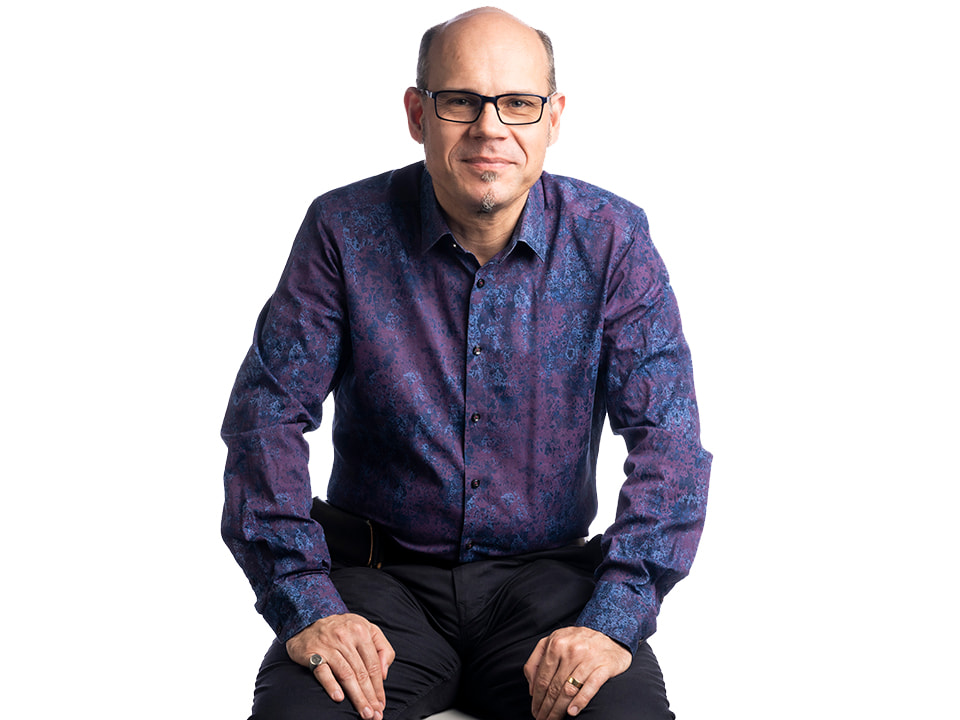
Felicity Meakins is a Professor of Linguistics at the University of Queensland, affiliated with the School of Languages and Cultures. She specializes in documenting First Nations languages in northern Australia, focusing on language contact processes, revitalization, and the impact of English on Indigenous languages. Her work bridges academic research and community engagement, including consulting on Native Title claims and language revitalization programs. Education: She studied at the University of Queensland between 1995–2001, completing her PhD in 2008. Prior to her academic career, she worked as a community linguist with Diwurruwurru-jaru Aboriginal Corporation (2001–2004) and as a PhD researcher with the Aboriginal Child Language Project (2004–2008). Research Interests: Meakins explores language contact, mixed languages, and Indigenous knowledge systems. Her projects include the 'Dingo Lingo' study tracing canine terminology across Australia and co-authored works like Tamarra: A Story of Termites on Gurindji Country (2023) and Understanding Linguistic Fieldwork (2018). She has compiled dictionaries and grammars for languages such as Gurindji, Bilinarra, and Mudburra. Grants & Recognition: Recipient of the Eureka Award (2021), LSA’s Hale Award (2021), and a Fellow of FASSA/FAHA. She led the UQ node of the ARC Centre of Excellence for the Dynamics of Language (2022). Labs/Teams: Collaborates with the Language Data Commons of Australia (LDaCA) and Indigenous communities in Northern Territory projects like the Wave Hill Walk-Off documentation.
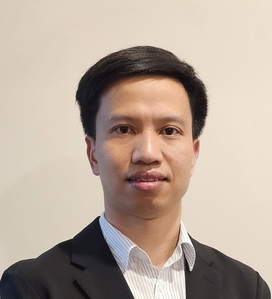
Erniel Bayhon Barrios is a Professor at the Malaysia School of Business, Monash University. Formerly a professor at the University of the Philippines Diliman and a visiting scholar at Karlstad University (Sweden) and the Asian Development Bank Institute (Japan). He holds a PhD in Statistics (1990) from the University of the Philippines Diliman. His research focuses on computational statistics, nonparametric methods, data science, and computational econometrics, with applications in spatiotemporal modeling, time series, and financial markets. He has contributed to high-dimensional data analysis, volatility modeling, and robust statistical techniques. Key projects include the National Mental Health Survey and Well-Being (2019–2021) and building a data-driven organization for the Habib Group (2025–2026). He is an elected member of the International Statistical Institute (2012), associate editor of Communications in Statistical Applications and Methods , and served on the board of the International Association of Statistical Computing (2022–2025). He advises PhD students on topics like stochastic frontier models, data assignment in big data, and high-frequency time series analysis. His work aligns with UN Sustainable Development Goals related to education and economic growth.
Dr. Kanchana Thilakarathna is a Senior Lecturer in Distributed Computing at the University of Sydney's School of Computer Science, and a member of the Centre for Distributed and High Performance Computing. They hold a PhD from the University of New South Wales (UNSW) and a B.Sc. Eng (Hons) from the University of Moratuwa, Sri Lanka. Prior to academia, they worked as a Research Scientist at CSIRO/Data61 and had industry experience as a Mobile Radio Network Engineer. Research Interests : Dr. Thilakarathna focuses on cybersecurity, privacy in mobile and IoT systems, mixed reality privacy, and distributed computing platforms. Their work emphasizes user-centric solutions like the Yalut social media app, which enables decentralized data sharing. Key themes include privacy-preserving techniques, edge computing, and secure federated learning frameworks. Recent Work : Recent articles (2023–2025) explore machine unlearning for large language models, federated learning security, and IoT network slicing using P4 programmability. Their work on synthetic video traffic generation (VideoTrain++) and drone detection (DronePrint) demonstrates cross-disciplinary innovation. Awards : Malcolm Chaikin Prize (2015), Meta Research Awards (2020/2022), and Heidelberg Laureate Fellowship (2019). Grants : ARC Research Hub for Future Digital Manufacturing (2024), NSW Defence Innovation Network Projects (2024/2021), and Facebook Research Awards (2022/2020). Students : Advising 4 current PhD students on topics like wireless trust establishment and machine unlearning. Labs/Teams : Part of the Centre for Distributed and High Performance Computing and Sydney Nano Institute.
Professor Axel Bruns is a Research Professor at Queensland University of Technology’s (QUT) Digital Media Research Centre (DMRC), an institution renowned for its leadership in media and communication studies. His work focuses on the digital transformation of media, the role of social media in public communication, and the dynamics of political polarization in online environments. Bruns is an internationally recognized innovator in computational methods for social media analysis, emphasizing interdisciplinary mixed-methods approaches to study complex societal phenomena. Research Interests: His research addresses critical challenges such as polarization’s threat to democracy, the role of algorithms in shaping public discourse, and the spread of disinformation. Notable areas include filter bubbles, platform governance, and the interplay between social media and political systems. He has pioneered concepts like 'gatewatching' to analyze news curation practices of digital intermediaries. Key Achievements: Bruns leads a prestigious Australian Laureate Fellowship project examining polarization drivers and dynamics. His work combines rigorous methodological innovation with policy relevance, evidenced by submissions to parliamentary committees on social media regulation. He has mentored numerous doctoral students who have become leading methodologists in their fields. Awards and Collaborations: Recipient of the Australian Laureate Fellowship (2023), Bruns collaborates widely with institutions globally, including Algorithm Watch, the Centre for Responsible Technology, and the Alexander von Humboldt Institute for Internet and Society. These partnerships enable cross-border research into digital media’s societal impacts.
Associate Professor Sonny Pham leads research in artificial intelligence at Curtin University's School of EECMS. His work balances theoretical foundations with practical applications in computer vision, data mining, and deep learning. As head of the IAMAI research group, he collaborates with industry partners on security systems, healthcare AI, and sustainable technologies. His research explores: Computationally efficient deep learning architectures Compressed sensing for high-dimensional data Robust statistical methods for real-world problems Applications in computer vision and industrial automation Recent publications demonstrate a focus on medical imaging interpretation and efficient neural networks, with applications spanning radiology report generation, semantic segmentation for autonomous systems, and cybersecurity. His team's work consistently bridges theoretical AI advancements with industrial applications. Honors include: Multiple WANMA Awards (2021-2024) for industry-impactful research INCITE Award for social impact technology (2024) IEEE Young Author Best Paper Award (2010) Over $5M in competitive research funding including MRFF and DFAT grants He leads the IAMAI research group with 12+ graduate students and coordinates Curtin's Master of Artificial Intelligence program. Industry collaborations include Alcoa Australia, iCetana, and HyprFire.
Rosemary Fisher is a Senior Lecturer in Entrepreneurship and Innovation at Swinburne University of Technology's School of Business, Law and Entrepreneurship. She holds a PhD from Swinburne and multiple advanced degrees in business and arts disciplines. Her career spans academic leadership roles including Head of Commerce at Box Hill Institute and Course Director for the Master of Entrepreneurship at Swinburne. Fisher combines teaching with impactful research in entrepreneurship education, higher education pedagogy, and innovative teaching strategies like flipped learning. Education: PhD, Swinburne University of Technology MBA, University of Melbourne Master of Business (Professional Accounting), Victoria University Bachelor of Arts, Canberra College of Advanced Education Research Interests: Focuses on pedagogical innovations such as flipped learning's impact on student outcomes, entrepreneurial resilience, and strategies to enhance teacher status. Active in curriculum design for entrepreneurship programs and digital education solutions. Current projects explore AI's role in business education and EFL teaching methodologies. Awards: 2017 Faculty Teaching Excellence Award Academy of Management Distinguished Reviewer (2012, 2014) 2011 Outstanding PhD Thesis Award Grants & Projects: Lead researcher on initiatives addressing teacher retention, aged care feedback systems, and migrant business training. Recent grants include "$60K for AI in Entrepreneurial Education" and "$45K for EFL Flipped Learning Research". Professional Engagement: Editorial Board member for Active Learning in Higher Education and Journal of Effective Teaching . Serves on international committees for entrepreneurship education and pedagogical innovation. Active in policy development for social entrepreneurship and educational technology adoption.
Professor Timothy Chen is an academic at The University of Sydney , affiliated with the Brain and Mind Centre and the Charles Perkins Centre . He holds qualifications including a PhD, DipHPharm, BPharm, and professional certifications like MPS, MSHP, ARPharmS, FFIP. Research Focus : Medication management and safety, quality use of psychotropic medicines, and interprofessional collaboration in healthcare. Awards & Leadership : President of the Social and Administrative Section of the International Pharmaceutical Federation (FIP), Australian Award for University Teaching (2017), and key roles in global pharmacy policy. Key Contributions : Led the Home Medicines Review (HMR) program, supervised six PhD students to completion, and secured competitive research funding exceeding $2 million. His work spans clinical pharmacology, mental health, and geriatric pharmacy. Scientific Awards : Australian Award for University Teaching (2017) Elsevier Best Paper Award (2013) SUPRA Supervisor of the Year Finalist (2016) Distinguished Expert, Xi’an Jiaotong University (2017-2022) Current Research includes co-designing dementia care tools, validating Arabic medication burden instruments, and developing quality indicators for community pharmacy services. His team explores medication reconciliation, deprescribing, and mental health stigma reduction through pharmacist-led interventions.
Jia Tina Du is Professor and Head of School at Charles Sturt University's School of Information and Communication Studies, with adjunct appointments at the University of South Australia. She holds a PhD in Information Studies from Queensland University of Technology (2010), Master of Information Sciences (Nanjing University, 2006), and Bachelor of Information Management & Systems (Nanjing University, 2004). Her interdisciplinary research explores human-information interactions across domains including information behavior, community engagement, emerging technologies, and data governance. Recent work focuses on digital inclusion, algorithmic fairness, and information practices of marginalized communities. Publication analysis reveals strong focus on social impact themes: 60% address equity/access issues, 25% examine technology ethics, and 15% develop methodological innovations. Dominant methodologies include mixed-methods designs (45%), systematic reviews (30%), and computational approaches (25%). Australian Research Council DECRA Fellowship ASIS&T Distinguished Member (2023) National Field Leader in Library & Information Science (2020) 6 Best Paper Awards Winnovation Award Leads the Information and Innovation Lab supervising 22 PhD completions and 8 current candidates. Research has attracted AUD$1.9M+ in competitive funding. Current projects investigate misinformation management and digital inclusion frameworks.
Dr. Xiaohan Yu is a Lecturer in Artificial Intelligence at Macquarie University's School of Computing, joining in December 2023. Previously, he completed his doctoral studies at Griffith University and served as a Research Fellow at the ARC Research Hub for Driving Farming Productivity. His research focuses on Ultra-Fine-Grained Visual Categorization (Ultra-FGVC), Smart Farming, and Automated Crop Cultivar Identification, with over 70 publications in top-tier venues like ICCV, CVPR, and IEEE Transactions. He holds editorial roles at Pattern Recognition and SN Computer Science , and received the APRS Early Career Award (2022) and ACM MM 2024 Outstanding Area Chair distinction. Education: Completed doctoral studies in Artificial Intelligence at Griffith University, Australia. Research Interests: Ultra-Fine-Grained Visual Categorization (Ultra-FGVC) Smart Farming and Agricultural Robotics Computer Vision Applications in Healthcare (e.g., trachoma detection) Deep Learning, Continual Learning, and Domain Adaptation Key Contributions: Pioneered Ultra-FGVC research, developed frameworks like Mix-ViT and CLE-ViT, and contributed to benchmarking multi-object tracking in farming. His work bridges pattern recognition with real-world applications in agriculture and healthcare. Scientific Awards: Australian Pattern Recognition Society (APRS) Early Career Researcher Award 2022 ACM Multimedia 2024 Outstanding Area Chair Award Advising & Grants: Actively involved in editorial roles (Area Chair for ACM MM, IJCNN) and grant-funded research through ARC hubs. His work is supported by collaborations in agriculture and AI-driven solutions for crop cultivar identification. Labs & Affiliations: Member of Macquarie's Smart Green Cities Research Centre and Frontier AI Research Centre , advancing interdisciplinary AI applications.
Professor Loretta Baldassar is a Vice Chancellor's Professorial Research Fellow in the School of Arts and Humanities at Edith Cowan University (ECU). She holds a Professorship in Anthropology and Sociology and leads the Social Ageing (SAGE) Futures Lab, focusing on social care across the life-course, migration studies, and digital ageing. Her work bridges social science research with creative/caring professions, emphasizing transnational families, ageing, and cultural diversity. She co-founded the Western Australian Migration Research Network and leads the TRACS Migration Research Network, collaborating internationally on projects like the UK Sustainable Care Project and the DEMIKNOW initiative. Education: PhD in Anthropology, The University of Western Australia (1995) Research Interests: Her research spans transnational families, ageing and technology, migration policy, and youth mobilities. Key projects include the ARC Discovery Project on Ageing and New Media, exploring how digital tools foster support networks for older migrants. She also collaborates on the Youth Mobilities Project, studying young people’s transnational transitions. Awards: 2020–2022 Research Field Leader in Migration Studies (Social Sciences) 2021 Research Field Leader in Ethnic and Cultural Studies (Humanities) 2016 OLT Teaching Award for Intercultural Learning Multiple fellowships and recognitions for her global impact in migration research. Grants & Impact: Over AUS$4 million in grants, leading 56 projects (20 as Lead CI). Key initiatives include the Cassamarca Australia Project (AUS$28.5M philanthropic grant for Italian studies). She advises on aged care policy and collaborates with industry/government on projects like the Australian Frailty Network. Labs/Teams: SAGE Futures Lab and TRACS Network drive innovative research in ageing and migration, emphasizing community partnerships and policy influence.
Dr. Ana Garcia Melgar is a Lecturer in Disabilities and Inclusive Education at the School of Education, La Trobe University, Australia. She also holds a Research Fellow position at the Living with Disability Research Centre at the same institution, demonstrating her dual commitment to teaching and research in inclusive education and disability support. Her educational background includes a PhD and a Master of Education from La Trobe University, and a Bachelor of Psychology from the Autonomous University of Madrid, Spain. She is fluent in Spanish and English, enabling broad academic collaboration. Ana's research is centered on inclusive education, with a strong focus on reasonable adjustments for students with disabilities, peer mentoring, and access to mainstream services. She has developed a peer-assisted learning framework grounded in cognitive and social learning theories, which has been applied in programs like the Peer Learning Advisers (PLA) at La Trobe and In2Science mentoring. Her work emphasizes practical interventions to improve teacher capacity and educational equity. Her recent research outputs reveal a consistent trend in evaluating inclusive practices through mixed-methods and experimental designs. She has contributed significantly to the development and validation of the Reasonable Adjustments for Inclusive Education (RAIE) rating scale and has explored online training interventions for educators. Her publications span topics including co-teaching, AAC research in schools, collaborative team approaches, and peer mentoring across school and university contexts. Reliability Testing of the Reasonable Adjustments for Inclusive Education Rating Scale (2024) Toward the Improvement of Inclusive Education via Online Intervention (2023) Collaborative team approaches to supporting inclusion (2022) Peer assisted academic support: mentors’ and mentees’ experiences (2021) Ana has served as a program evaluator for large-scale educational initiatives in Victoria, including school improvement and teacher education programs. She is currently leading a research evaluation of the 'Passions & Pathways' program for Goldfields LLEN and is supported by a grant from the Bertalli Family Foundation (2023–2027), indicating sustained funding for her work. She is affiliated with interdisciplinary teams including the Living with Disability Research Centre and has collaborated extensively with colleagues such as Teresa Iacono, Julie Spong, and Kathy Bagley. Her work aligns with Sustainable Development Goals 4 (Quality Education) and 10 (Reduced Inequalities), underscoring its societal impact.
David McMeekin is a Senior Lecturer at Curtin University's School of Elec Eng, Comp and Math Sci (EECMS), part of the Faculty of Science and Engineering. He holds a PhD in Software Engineering focusing on the human aspects of software development and has extensive experience in both academia and international NGOs. His research emphasizes applying technology to solve societal challenges, including accessibility for vision-impaired individuals, autism support through tech, cultural heritage preservation, and spatial data infrastructure. Education and professional background are not explicitly detailed in this profile, though his career spans over three decades in education and tech sectors. Research interests include semantic web technologies for spatial data, assistive technologies for disabilities, and digital humanities. He has been recognized with the 2014 Western Australian Spatial Educator of the Year award. Teaching spans topics like software engineering, programming languages (C, Java, Python), cross-cultural communication, and spatial data processing. His work bridges technical innovation with social impact, particularly in enhancing accessibility and cultural preservation through digital tools.
Natasha Anne Rappa is an Associate Professor in the School of Education at Murdoch University, within the College of Health and Education. Her research focuses on educational technology, generative AI, virtual/mixed reality learning, and 21st-century skills. She holds a PhD from the University of Sheffield and an MA from the University of Michigan. Education: PhD in Education, University of Sheffield (2011–2015) MA in Educational Studies, University of Michigan–Ann Arbor (2010–2011) Postgraduate Diploma in Education, Nanyang Technological University (1996–1997) Bachelor of Arts with Honours, National University of Singapore (1992–1996) Awards: 2024 Vice Chancellor's Award for Excellence in Postgraduate Supervision 2021 Vice Chancellor’s Award for Excellence in Research and Innovation 2008 Lenovo Innovation Merit Award 2003 Service Excellence Award (Ministry of Education, Singapore) Her work explores AI-driven pedagogy, simulation-based learning, and MOOCs. Recent projects include dialogic approaches to AI integration in secondary education and the validation of work readiness scales. She actively contributes to journals like British Journal of Educational Technology and Asia-Pacific Education Researcher .
Professor Asif Gill is Head of Discipline for Software Engineering at the School of Computer Science, University of Technology Sydney (UTS), where he was promoted to Professor of Computer Science in January 2024. He also serves as Director of the DigiSAS Research and Innovation Lab and is actively involved in the Global Big Data Technologies Centre at UTS. As a founder of both the DigiSAS Lab and the Future Generation Enterprise Architecture Community of Practice (FGEA CoP), he has established integrated teaching-research-engagement frameworks that translate academic research into practical applications while enhancing graduate employment opportunities. Professor Gill's research interests span Adaptive Enterprise Architecture , Agile Software Development , and Design Science Research & Innovation , with a particular focus on architecting large-scale data-intensive enterprise software systems. His work addresses challenges across academia, industry, government, and society, with significant contributions to AI systems architecture, digital identity management, and enterprise knowledge graphs. His applied research has resulted in numerous collaborations with organizations including the Reserve Bank of Australia, Revenue NSW, Capsifi, Data Zoo, and the NSW Department of Planning, Industry and Environment. His publication record includes 3 books and over 190 articles in major academic journals such as IEEE Transactions on Professional Communication, Information and Management, and Information Systems. His recent work demonstrates a consistent focus on cutting-edge topics in enterprise architecture, AI systems, and digital identity, with multiple publications appearing in 2024-2025. His research trajectory shows a clear evolution from foundational work in agile software development toward more sophisticated integration of AI, enterprise architecture, and data governance. Fellow of the Australian Computer Society (ACS) Fellow of DSE (ESCP Center for Design Science in Entrepreneurship) Senior Member IEEE Associate Editor, IEEE Transactions on Technology & Society Associate Editor, Springer Nature Discover Data journals Member, Data Sharing Committee, IFIP Technical Committee 8.1 Member, Standards Australia Software and Systems Engineering Committee IT-015 Professor Gill has successfully secured numerous research grants from 2019-2026, totaling significant funding for projects related to digital identity, enterprise architecture, and AI systems. His approach emphasizes industry-academia collaboration, with many projects involving direct partnerships with government agencies and industry organizations. He has supervised multiple PhD and Master's students through industry-sponsored scholarships and maintains active collaborations with researchers across multiple institutions. Leading the DigiSAS Research and Innovation Lab, Professor Gill has created an environment that bridges theoretical research with practical implementation. The lab focuses on developing frameworks and tools for adaptive enterprise architecture, with particular emphasis on AI-enabled systems, data governance, and digital identity solutions. His work on the Data Satellite Architecture represents a significant contribution to combating data pollution in federated digital ecosystems.
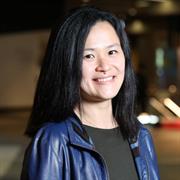
Flora Salim is a Professor in the School of Computing Technologies at RMIT University. She serves as co-Deputy Director of the RMIT Centre for Information Discovery and Data Analytics (CIDDA) and an Associate Investigator of the ARC Centre of Excellence in Automated Decision Making and Society. Her research focuses on human behavior modeling, machine learning with time-series and spatio-temporal data, and edge AI applications in IoT and wearables. Flora has secured over $10M in research funding from ARC, industry partners, and government bodies. Notable awards include the 2021 PACM IMWUT Distinguished Paper Award, 2019 Humboldt-Bayer Fellowship, and RMIT's 2018 Research Impact Award. She leads the CRUISE research group and has held visiting professorships at the University of Kassel and University of Cambridge. Editorial roles: Associate Editor of PACM on IMWUT, Area Editor of Pervasive and Mobile Computing Steering Committee member of ACM UbiComp Her work bridges ubiquitous computing and machine learning, with applications in urban analytics, mobility, and health monitoring. Recent projects include self-supervised learning for multimodal data and forecasting with heterogeneous time-series. Supervision areas: Deep learning for sensor data, explainable AI, and wearable-based emotion sensing Teaching programs: Master of Artificial Intelligence and Master of Data Science