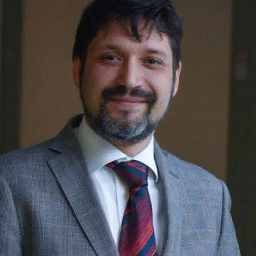
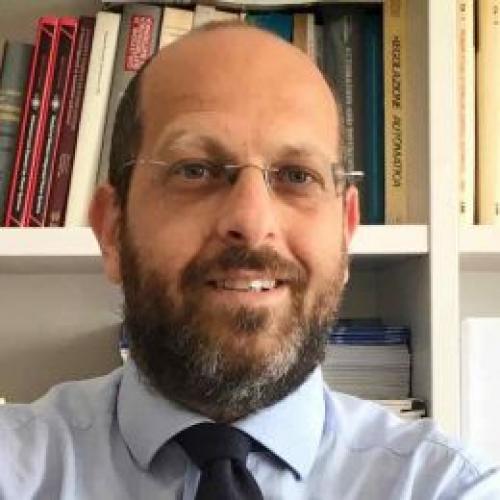
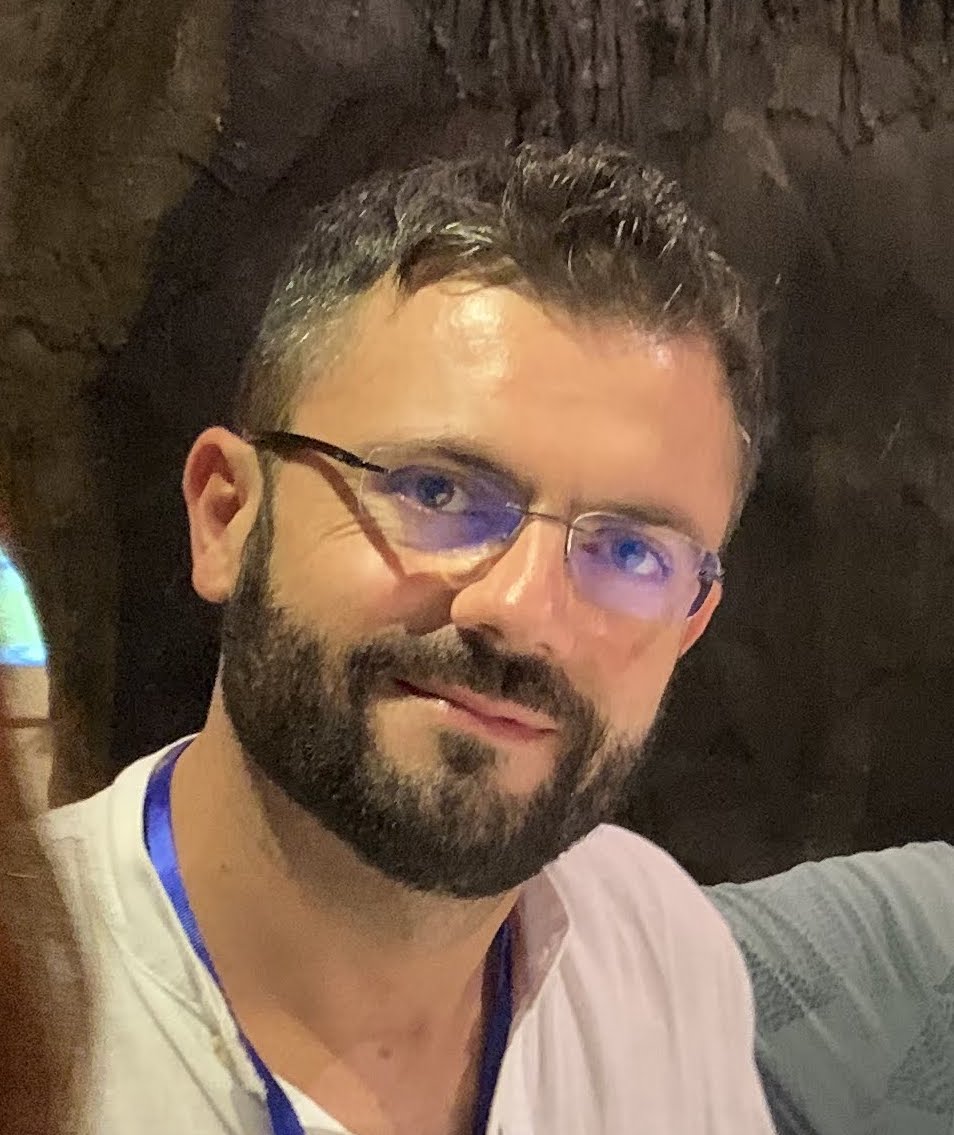
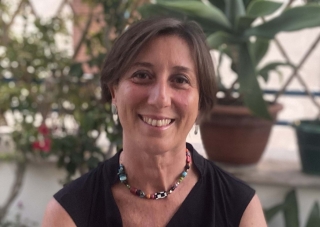
Luciano Lavagno is a Full Professor at the Department of Electronics and Telecommunications, Polytechnic University of Turin, with over two decades of academic and research contributions. His work bridges hardware acceleration, low-power electronics, and intelligent system design. Research Focus: Hardware-accelerated machine learning, high-level synthesis (HLS) for FPGA/ASIC, heterogeneous CPU/GPU/FPGA platforms Key Projects: SPACE (predictable acceleration), REBECCA (secure AI acceleration), HPC-National Center (quantum computing), and oral history preservation via "Ti racconto una storia" initiative His recent publications analyze CNN inference optimization, subgraph isomorphism, and superword-level parallelism exploitation. Lavagno supervises multiple PhD students working on FPGA acceleration, neural network hardware, and embedded systems. As Principal Investigator for national and EU-funded projects (PRIN, JTI-ECSEL, PNRR), he drives advancements in sustainable computing infrastructure. His patented technologies include MIx&Latch timing methodology, capacitive sensing innovations, and 5G acceleration frameworks.
Guido Perboli is a Full Professor in the Department of Management and Production Engineering (DIGEP) at the Polytechnic University of Turin, where he also serves as Logistics Coordinator and Project Coordinator for activities supporting relationships with government bodies. He is a member of the Interdepartmental Center CARS@PoliTO (Center for Automotive Research and Sustainable Mobility) and serves as Director of the ICT for City Logistics and Enterprises (ICElab@Polito) research center, which he founded in 2016. His research interests span a broad range of topics including Operations Research, Logistics, Last-mile Delivery, Sustainable Logistics, Combinatorial Optimization, Stochastic Programming, Business Development, and Lean Business methodologies. His work particularly focuses on City Logistics, Green Logistics, and the application of emerging technologies like Blockchain and AI in supply chain management. He has developed GUEST, a Lean Business methodology for innovation processes from early idea definition to implementation. Professor Perboli's recent publications demonstrate a strong focus on urban logistics, last-mile delivery optimization, blockchain applications in supply chains, and the integration of AI techniques in transportation systems. His work shows an increasing trend toward interdisciplinary research that combines optimization methods with emerging technologies to address sustainable urban mobility challenges. Professional Recognition: CASE Best Paper award from IEEE Conference on Automation Science and Engineering (2011) Effective member of INFORMS (2019-present) Effective member of EURO (1995-present) Effective member of AIRO (1995-present) Associate Editor for Journal of Applied Research and Technology (2020-present) Associate Editor for Sustainability (2018-present) Professor Perboli actively advises PhD students and has supervised numerous research projects, including EU-funded initiatives like SINFONICA, HESTER, and 5G-LOGINNOV. He serves as Scientific Director for multiple commercial research projects focused on blockchain, IoT, and AI applications in logistics. Beyond academia, he is Chief Scientific Officer of Arisk S.p.A., a fintech company specializing in business crisis prediction using AI and machine learning. His research group, ICElab@Polito, focuses on two main areas supporting urban growth: logistics and enterprises. The center collaborates with numerous companies including Amazon, DHL, and FCA, addressing real-world challenges in urban logistics and supply chain management through innovative research approaches.
Federico Silvestro is a Full Professor at the University of Genoa , affiliated with the Naval, Electrical, Electronic and Telecommunications Engineering Department . His academic roles include being a Course Coordinator, Department Council Member, and Deputy Director of DITEN. His research focuses on Power systems stability and control Cybersecurity in energy networks Electric propulsion for marine applications Optimal energy storage and microgrid design Integration of renewable energy in maritime contexts Recent publications highlight trends in data-driven power system analysis , DC microgrid modeling , cybersecurity for virtual power plants , and advanced energy management strategies for maritime and port systems. Email: federico.silvestro@unige.it He leads the ENET-RT Lab , focusing on real-time power systems simulation and co-simulation platforms for marine and grid applications.
Ciriaco D'Ambrosio is a Research Fellow at the Department of Mathematics, University of Salerno, specializing in combinatorial optimization and its applications to wireless sensor networks. He teaches courses in operations research and maintains regular reception hours for students on Tuesdays (3:00-5:00 PM) and Wednesdays (4:00-5:00 PM), conducted both in-person and via Microsoft Teams. Education: PhD in Computer Science, University of Salerno (2015) - Thesis: models and algorithms for coverage in Wireless Sensor Network Laurea cum laude in Computer Science, University of Salerno (2011) Research Focus: D'Ambrosio specializes in combinatorial optimization, developing heuristics, metaheuristics, and math-heuristics for mixed integer linear programming problems. His work addresses challenging optimization problems in wireless sensor networks, particularly network lifetime maximization under coverage, connectivity, and interference constraints. His research bridges theoretical computer science with practical applications in sensor network design, seismic monitoring systems, and resource allocation problems. His methodology often combines exact approaches with sophisticated heuristic techniques to solve computationally difficult problems. Publication Trends: Analysis of D'Ambrosio's publications (2017-2025) reveals a progression from foundational work on sensor network lifetime problems toward increasingly sophisticated algorithmic approaches for combinatorial optimization. His recent work shows expansion into seismic monitoring applications while maintaining strong focus on knapsack problem variants and network optimization. His publications appear in high-quality journals including Soft Computing, Computers & Operations Research, and Networks, demonstrating both theoretical rigor and practical relevance of his research. Professional Activities: Member of the Italian Operations Research Society (AIRO) Associate Editor for Soft Computing, A Fusion of Foundations, Methodologies and Applications Active collaborator with researchers including Andrea Raiconi, Raffaele Cerulli, and Francesco Carrabs Research Infrastructure: D'Ambrosio works within the Department of Mathematics at University of Salerno's Fisciano Campus (Building F2, Room 040). His research contributes to the university's growing expertise in computational optimization and has practical applications in environmental monitoring systems like SEISMONOISY.
Stefano Bracco is an Associate Professor in the Department of Naval, Electrical, Electronic, and Telecommunications Engineering (DITEN) at the University of Genoa, Italy, serving on both the Department Board and the School Council of the Polytechnic School. He teaches advanced courses including Energy Transition and Power Systems Management for Master's programs in Energy Engineering, Management for Energy and Environmental Transition (MEET), and Engineering for Natural Risk Management, covering critical topics in sustainable power systems and infrastructure modeling. His research focuses on power systems engineering with emphasis on microgrid optimization, renewable energy integration, and electric vehicle infrastructure. Key contributions include energy management systems (EMS) for active/reactive power control in microgrids, vehicle-to-grid/home technologies, and sustainable energy community design. His work addresses grid stability challenges, economic optimization of distributed energy resources, and resilience enhancement in critical facilities through advanced mathematical modeling and real-world case studies. Analysis of his 15 most recent publications (2024-2025) reveals consistent application of mixed-integer linear programming (MILP) for microgrid optimization across diverse contexts including university campuses, industrial sites, and Italian municipalities. Dominant trends include integration of electric vehicle charging infrastructure with renewables, uncertainty handling in renewable communities, and multi-scale control frameworks for automated transportation. His research bridges theoretical optimization with practical implementation, frequently using the Savona University Campus as a living laboratory for sustainable energy solutions. No scientific awards were mentioned in the provided information. The available text did not specify any advised students or research grants, though his extensive publication record suggests active research supervision and project leadership. While no dedicated laboratories are explicitly attributed to him, his work frequently involves the Savona University Campus infrastructure, including the CN MOST Laboratory and microgrid test facilities, indicating collaboration with existing university energy research platforms.
Francesco Liberati is an Associate Professor in Automatic Control at Sapienza University of Rome, Department of Computer, Control and Management Engineering (DIAG). His research focuses on cyber-physical systems, model predictive control (MPC), and hybrid MPC-deep learning algorithms with applications to power systems, traffic control, and task scheduling. PhD in Systems Engineering from Sapienza University (2015) Assistant Professor (RTD-B) at Sapienza University (2021-2024) Assistant Professor (RTD-A) at eCampus University (2015-2017) Liberati’s work combines theoretical advancements in control theory with real-world implementations in smart grids and transportation systems. He has pioneered approaches integrating MPC with reinforcement learning for large-scale optimization problems, particularly in electric vehicle (EV) charging and grid reconfiguration. His recent publications emphasize: Stochastic and economic MPC for renewable energy storage Decentralized control algorithms for EV charging Cyber-physical security in microgrids and smart infrastructure Hybrid AI-control solutions for traffic and industrial systems Scientific recognition includes: 2021 Best Paper Award, IEEE World AI IoT Congress (AIIoT) 2021 Networked Systems Best Paper Award He serves as Associate Editor for Advanced Control for Applications (Wiley) and on the Editorial Board of Smart Cities (MDPI). His applied research spans European Commission H2020 projects and collaborations with industry partners in energy and transportation sectors.
Stefan Weltge is a Professor of Discrete Mathematics at the Technical University of Munich (TUM). His research focuses on combinatorial optimization, linear and integer programming, and polyhedral combinatorics. He has received multiple teaching awards at TUM, including the Best Lecturer in Electrical and Computer Engineering (2019) and Best Advanced Course awards in Mathematics (2020/21, 2019). He also earned the Best Dissertation Award from the University of Magdeburg (2016). Education: PhD in Mathematics (University of Magdeburg), Postdoc (ETH Zurich) Research Grants: Funded by the German Research Foundation (DFG) via an Individual Grant (NextGen) and the PhD Program AdONE Professional Roles: Program Committee member for IPCO 2023, MIP 2022, ISCO 2022, ISCO 2020, ISCO 2018; Organizer of OR 2024, MIP 2022, and Cargese Workshops on Combinatorial Optimization (2024, 2022)
Giampaolo Liuzzi is an Associate Professor at the Department of Computer, Automation, and Management Engineering 'Antonio Ruberti' (DIAG) at Sapienza University of Rome since July 2023. Previously, he was a fixed-term researcher at the same department (July 2020-June 2023) and a Senior Researcher at the Institute of Systems Analysis and Computer Science 'A. Ruberti' of the CNR until July 2020. He teaches Mathematical Programming, Complements of Mathematics, and Mathematical Analysis 2 for various engineering programs at Sapienza University. Dr. Liuzzi's research focuses on Nonlinear Optimization , particularly derivative-free methods for constrained and unconstrained optimization, global optimization, mixed integer nonlinear programming, and applications in operations research and machine learning. His work spans theoretical developments in optimization algorithms as well as practical applications in engineering design, simulation-based optimization, and biomedical systems. He has made significant contributions to derivative-free optimization techniques that don't require gradient information, which is particularly valuable for black-box optimization problems where derivatives are unavailable or expensive to compute. His recent publications (2022-2025) demonstrate a strong focus on advancing derivative-free optimization methods, with particular attention to complexity analysis, convergence properties, and practical implementations for challenging problem classes including nonsmooth, constrained, multi-objective, and mixed-integer optimization problems. His work bridges theoretical computer science with practical engineering applications, with publications appearing in top optimization journals like Optimization Methods & Software, Computational Optimization and Applications, and Journal of Optimization Theory and Applications. Dr. Liuzzi has received significant professional recognition through National Scientific Habilitations for both Associate Professor (2014) and Full Professor (2018) positions in Italy. He is actively involved in the academic community as an administrator of the Derivative-Free Library (DFL), a collection of algorithms and methods for derivative-free optimization developed through collaboration among several prestigious Italian research institutions. As an educator, Dr. Liuzzi has developed comprehensive teaching materials for courses in Mathematical Programming, Complements of Mathematics, and Mathematical Analysis. He is also engaged in academic entrepreneurship as a co-founder of DEIX s.r.l., a Sapienza startup focused on algorithms and industrial software for planning and control of complex systems. Additionally, he organized the 2nd Derivative-Free Optimization Symposium (DFOS'24) in June 2024 in Padua, highlighting his leadership role in this specialized optimization community.
Francesca Vocaturo serves as Associate Professor of Operations Research at the University of Calabria's Department of Economics, Statistics and Finance (DESF), where she has maintained continuous academic affiliation since 2003. Her teaching portfolio includes Operations Research for Master's programs in Business Administration and Management, and Mathematical Methods for Economics for undergraduate Economics students, with documented teaching loads of 63+ hours annually through the 2024/25 academic year. Her research expertise centers on Logistics Optimization with specialized focus on stochastic vehicle routing, urban transportation systems, and crowdshipping applications. Key methodological contributions span combinatorial optimization, dynamic programming, and simulation-based approaches to solve complex logistics challenges under uncertainty. Current projects integrate machine learning with optimization frameworks for sustainable mobility solutions. Recent publication trends (2021-2025) reveal concentrated advancement in dynamic logistics systems , particularly crowdshipping models, real-time inventory routing, and risk-aware transportation planning. Her work bridges theoretical algorithm development with practical applications in postal services, hazardous material transport, and public transit optimization. Notable recognition includes: Editors' Choice Article selection by the European Journal of Operational Research (2020) She has supervised 26 Master's theses in Business Administration covering topics from inventory management to green logistics, plus the PhD dissertation of Sara Stoia on crowdshipping. As Local Coordinator for the national PRIN2020 project ULTRA OPTYMAL , she leads research on optimization under uncertainty for urban logistics, while previously contributing to projects like SOLIDO (industrial logistics) and GREENPLAN (workforce optimization). Vocaturo actively collaborates with the TESEO laboratory (Tecnologie di Simulazione e Ottimizzazione) and the Quantitative Methods for Economics, Finance and Management research group within DESF, maintaining international partnerships through research stays at the University of Montreal, University of Valencia, and teaching engagements in Portugal.
Manuel Iori is a Full Professor at the Department of Engineering Sciences and Methods, University of Modena and Reggio Emilia (UNIMORE), Italy. His primary research focuses on operational research, optimization methods, and logistics systems. He specializes in vehicle routing problems, scheduling algorithms, and decision support systems with applications in industrial automation, healthcare, and service industries. Iori is actively involved in teaching advanced optimization courses for engineering students, emphasizing practical applications in data-driven decision-making and simulation. Research Interests: His work addresses complex optimization challenges such as multi-trip vehicle routing with time windows, scheduling under resource constraints, and tool switching in manufacturing systems. He integrates machine learning and metaheuristics to develop innovative solutions for logistics, production planning, and healthcare operations. Collaborations with industry partners (e.g., pharmaceutical distributors, printing companies) ensure practical relevance of his research. Teaching: Iori teaches courses like Optimization Methods for Data-Driven Engineering Processes , Models for Logistics and Production Optimization , and Methods and Algorithms for Optimization in Digital Industries . These courses combine theoretical foundations with hands-on labs using tools like Python, Xpress, and Anylogic. Key Contributions: He developed decision support systems for multi-trip routing in pharmaceutical distribution and supplier selection in facility management. His research on satellite scheduling and attended home delivery systems advances both theoretical and applied domains. As a member of CIRRELT (Canada), he collaborates on logistics optimization projects. Professional Activities: Iori’s work is reflected in over 80 peer-reviewed publications and contributions to conferences. He advises graduate students on optimization challenges and serves as a reviewer for top journals in operations research.
Paolo Scarabaggio is an Assistant Professor (RTDA) at the Decision and Control Laboratory of Polytechnic University of Bari, Italy. He received his Ph.D. in Electrical and Information Engineering from the same institution and completed a research visit at the Delft Center for Systems and Control, Technical University of Delft in 2019. His academic work spans multiple high-impact publications across IEEE journals and conferences, with a focus on interdisciplinary applications of control theory. His research interests center around modeling, optimization, game theory, and control of complex multi-agent systems , with practical applications in energy distribution systems, social networks, warehouse automation, and collaborative robotics. His work demonstrates strong interdisciplinary connections between theoretical control concepts and real-world industrial applications, particularly in Industry 4.0 contexts. Dr. Scarabaggio's publications reveal a consistent trajectory of increasingly sophisticated applications of game theory and optimization techniques to emerging challenges in energy systems, logistics automation, and human-robot interaction. His research shows particular strength in developing mathematically rigorous frameworks that address practical constraints in real-world systems. 2022 IEEE CSS Italy Best Young Author Journal Paper Award As an educator, Dr. Scarabaggio teaches courses including Analisi e Simulazione dei Sistemi, Fondamenti di Automatica, and Game Theory for Controlling Autonomous Systems. His research collaborations span multiple institutions and industries, with frequent co-authorship with researchers from Polytechnic University of Bari and international partners. His work often addresses practical implementation challenges while maintaining theoretical rigor, making significant contributions to both academic knowledge and industrial applications.
Fabio D'agostino is a Researcher at the University of Genoa , affiliated with the Department of Naval, Electrical, Electronic and Telecommunications Engineering (DITEN). He teaches courses such as Shipboard Power System Control , Naval Electric Propulsion , and Elements of Electrical Protection and Safety for undergraduate and graduate programs in Electrical and Naval Engineering. Research Interests : Shipboard Power Systems DC Microgrids Hybrid Energy Storage Smart Grids Optimization Algorithms Maritime Decarbonization Publications focus on real-time co-simulation, power quality analysis, and optimal control strategies for naval and port energy systems. His work addresses stability, efficiency, and sustainability in electrical grids for marine applications. Labs : Involved in the ENET-RT lab and ShIL Project infrastructure for multi-domain marine co-simulation.
Emilio Incerto is an Assistant Professor at the IMT School for Advanced Studies Lucca, Italy. His research focuses on performance engineering, cloud computing, and formal methods applied to systems optimization. He specializes in developing frameworks for performance prediction, autoscaling solutions for microservices, and integrating machine learning techniques into performance modeling. Key research areas include: Performance modeling and optimization of distributed systems Autoscaling algorithms for dynamic cloud workloads Formal verification of real-time software systems AI-driven performance control mechanisms He has organized international workshops such as AIPerf (Artificial Intelligence for Performance Modeling), showcasing leadership in bridging AI and performance engineering. His work frequently explores reproducibility in performance studies and quantitative evaluation of complex systems like flocking behaviors in biological simulations. Notable contributions include μOpt (an efficient autoscaler for microservices) and μP (a performance prediction framework). His research emphasizes practical implementation of theoretical models through frameworks like SystemC-based environments for HW/SW co-design.
Dr. Mirco Tribastone is Full Professor of Computer Science at IMT School for Advanced Studies in Lucca, Italy, where he leads the SySMA research unit and serves as Deputy Rector. His research focuses on quantitative modeling of concurrent and distributed systems using stochastic processes and differential equations. Primary research streams: Algorithms for aggregation of dynamical systems Performance self-adaption of software systems Inference methods for probabilistic programs Formal methods for biological systems Professor Tribastone has supervised numerous PhD students and leads research projects on cyber-physical systems and adaptive software. His tool development includes ERODE for differential equation analysis and DiffLQN for layered queuing networks. Recent publications demonstrate advanced work in model reduction techniques for chemical reaction networks, optimal autoscaling for microservices, and novel approaches to quantum circuit verification.
Veronica Piccialli is a Full Professor at the Department of Computer, Control and Management Engineering "Antonio Ruberti" (DIAG) at Sapienza University of Rome. She teaches Geometry I for Management Engineering and Optimization Methods for Machine Learning for Data Science. Previously, she was Associate Professor at the University of Rome Tor Vergata (2020-2021) and Researcher there from 2008 to 2020. She serves as Associate Editor for INFORMS Journal on Computing (since 2019) and EURO Journal on Computational Optimization (since 2021). Dr. Piccialli earned her degree in Computer Engineering (summa cum laude) and PhD in Operations Research from Sapienza University of Rome in 2000 and 2004 respectively. In 2006, she completed a postdoc at the Combinatorics & Optimization department of the University of Waterloo, Canada. She obtained Italian national scientific qualifications as Associate Professor in 2013 and as Full Professor in 2017. Her research focuses on the intersection of optimization and machine learning, with particular expertise in nonlinear optimization, semidefinite programming, and mixed integer nonlinear programming. She applies these methods to diverse areas including Brain Computer Interfaces, electric consumption disaggregation, and process engineering for membrane systems. Her work demonstrates how advanced optimization techniques can enhance machine learning algorithms and solve complex engineering problems. Her recent publications show a strong trend toward integrating optimization with machine learning, particularly in clustering algorithms, support vector machines, and neural networks. She has developed exact algorithms for semi-supervised learning problems and applied optimization techniques to real-world challenges in logistics, energy systems, and process engineering. Her interdisciplinary approach bridges theoretical advances in optimization with practical applications across multiple domains. Dr. Piccialli has authored or co-authored over 40 articles in prestigious journals including Mathematical Programming, SIAM Journal on Optimization, IEEE Transactions on Neural Networks and Learning Systems, and Computational Optimization and Applications. She has also contributed 3 refereed book chapters to international publications. As an educator, she supervises student research and teaches advanced courses in optimization methods and geometry. Her teaching materials demonstrate a commitment to connecting theoretical concepts with practical applications, particularly in data science and machine learning contexts. Her current research involves collaborations with Université de Lorraine on membrane systems for gas filtration and with RFI (Rete Ferroviaria Italiana) on optimizing last-mile facilities for freight trains, demonstrating the real-world impact of her optimization expertise.