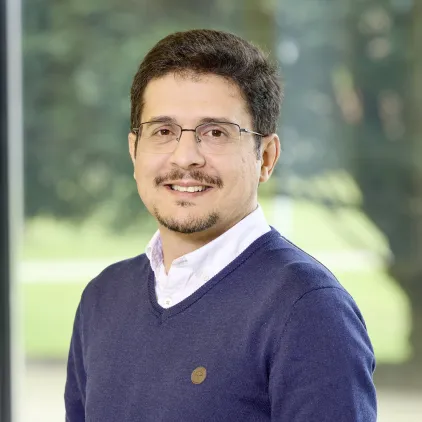
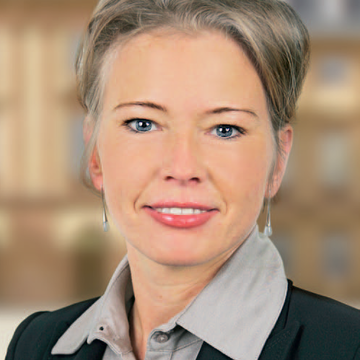
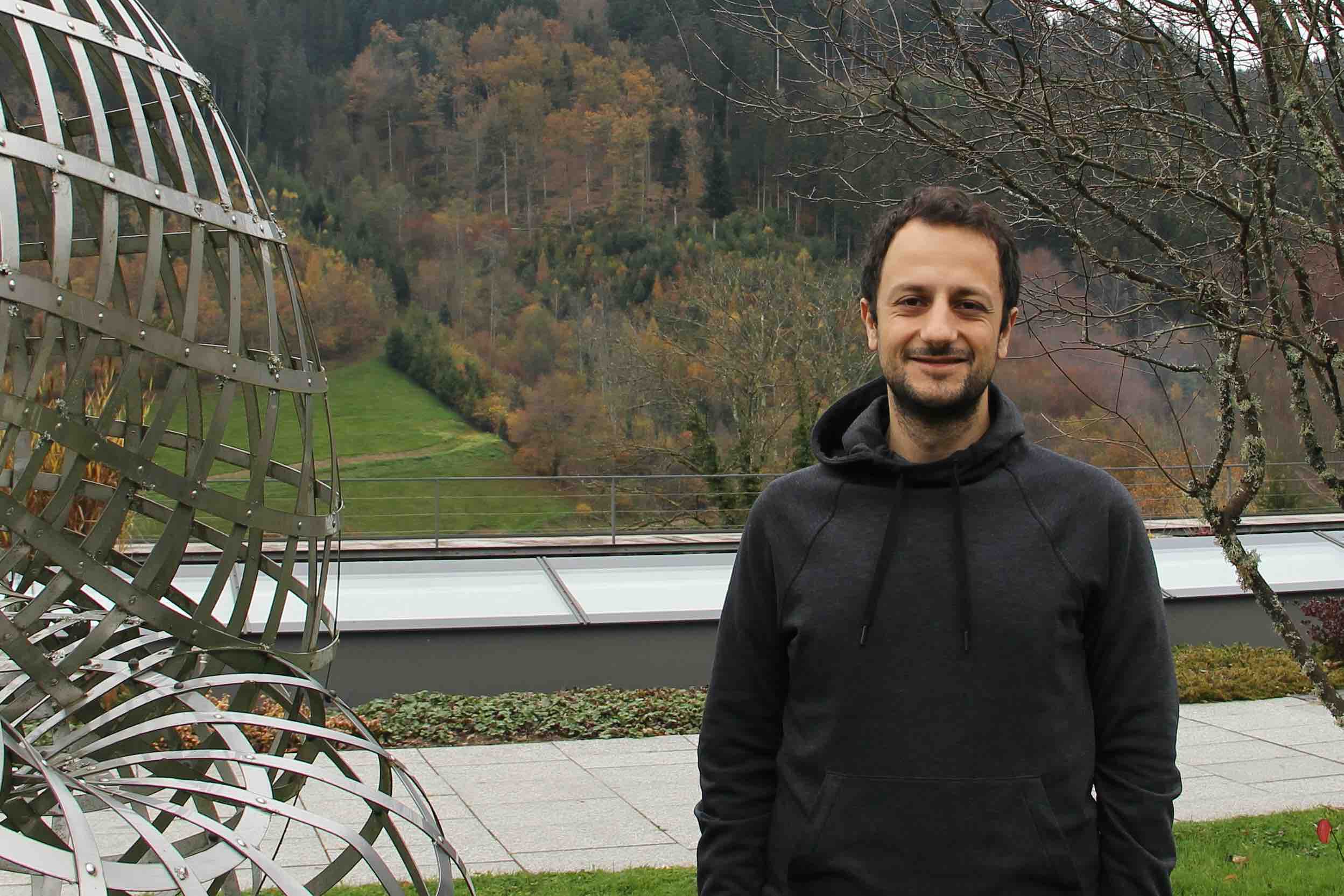
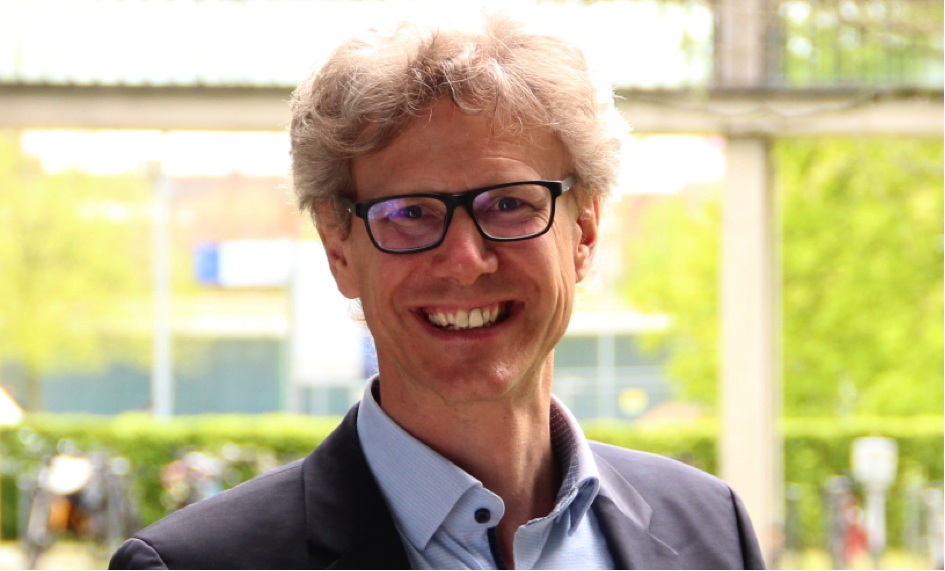
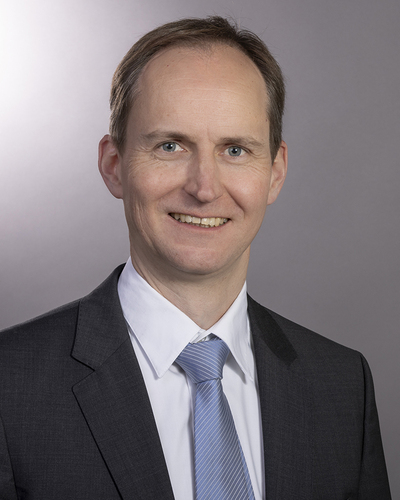
Dr. Florian Rösel is a researcher affiliated with the Department of Data Science at Friedrich-Alexander-Universität Erlangen-Nürnberg (FAU). He works under the Professorship of Optimization under Uncertainty & Data Analysis led by Prof. Dr. Frauke Liers, focusing on data-driven optimization techniques and their applications in aviation logistics and complex system modeling.
Larissa Breuning is a Researcher at the Chair of Renewable and Sustainable Energy Systems within the TUM School of Engineering at Technical University of Munich. She works under Professor Thomas Hamacher and maintains an active research profile in energy systems modeling with particular expertise in nuclear fusion integration and hydrogen systems. Her research interests focus on energy systems modeling and optimization , sector coupling in energy systems , and system security in renewable-dominant energy systems . Breuning's work bridges theoretical modeling with practical applications, particularly evident in her case studies on Egyptian hydrogen systems and German energy transition analysis. Recent publications show a strong trend toward nuclear fusion energy integration and green hydrogen systems , with significant contributions to understanding how these emerging technologies can be incorporated into future energy frameworks. Her work spans both technical optimization and policy-relevant analysis of energy transitions. As an educator, Breuning teaches Renewable Energy Technology II and Mathematical methods for expansion and deployment planning in modern energy systems , sharing her expertise in energy modeling with TUM students. She is actively involved in several research projects including the H2 real-world laboratory , Copernicus Project P2X , and collaborative fusion energy research with the Max Planck Institute for Plasma Physics .
Marco Lübbecke is a Professor at the Faculty of Business and Economics of RWTH Aachen University , Germany. He serves as the chairholder of the Lehrstuhl für Operations Research and holds the position of Studiendekan (Dean of Studies) for his faculty. His professional contact is marco.luebbecke@rwth-aachen.de, with additional administrative contact at luebbecke@or.rwth-aachen.de. Current academic rank: Professor Faculty: Business and Economics Department: Operations Research Marco Lübbecke's research focuses on Operations Research and Mixed Integer Programming . He develops and analyzes algorithms like Branch-and-Price , Dantzig-Wolfe Reformulation , and Decomposition Methods to solve complex optimization problems in industrial, transportation, and political science applications. Core research areas: Combinatorial Optimization, Mathematical Programming Application domains: Logistics, Rail Transport, Redistricting, Manufacturing Systems Methodological interests: Column Generation, Cutting Planes, Algorithm Engineering His recent publications highlight advancements in optimization software frameworks like the SCIP Optimization Suite and algorithmic techniques for solving large-scale linear and integer programs. Key research trends include automated decomposition methods, structural analysis of MIPs, and hybrid approaches combining classical optimization techniques with machine learning insights. Marco Lübbecke actively participates in academic conferences and serves as a co-author in numerous technical reports and journal publications, contributing to the development of efficient optimization algorithms and their practical implementation.
Torsten Koch is a Professor at the Max Planck Institute for Software Systems (MPI-SWS) in Kaiserslautern, Germany, where he conducts foundational research in computational mathematics and software systems. His work focuses on Mathematical Optimization and Algorithm Design , particularly in Mixed-Integer Programming and Operations Research . He develops advanced computational methods for solving complex optimization problems with applications in logistics, energy systems, and industrial engineering. His research bridges theoretical computer science and practical software implementation. As a scientific member of the Max Planck Society, he contributes to the institute's core mission of advancing software systems research through rigorous mathematical frameworks and algorithmic innovation.
Dr. Frank Schwartz serves as a Lecturer at the Institute of Information Systems within the University of Hamburg Business School. His office is located at Von-Melle-Park 5, Room 6491, 20146 Hamburg, and he can be contacted via email at frank.schwartz@uni-hamburg.de or telephone at +49 40 42838-3143. His research expertise spans critical areas of modern supply chain management: Operations Research with emphasis on Linear Programming (LP), Mixed-Integer Linear Programming (MLP), and Stochastic Optimization Production Networks and their structural dynamics Strategic Supply Chain Design methodologies Proactive Supply Chain Risk Management frameworks Dr. Schwartz's scholarly output from 2004-2014 reveals an evolutionary trajectory from foundational disruption management in production systems to sophisticated stochastic modeling of global distribution networks. His work consistently addresses optimization challenges under uncertainty, with increasing focus on catastrophic risk scenarios and postponement strategies that enhance supply chain resilience in volatile environments. No scientific awards are documented in the available records. Teaching responsibilities include delivering 'Introduction to common IT Office Applications' during both summer and winter terms, along with specialized 'Seminar on Information Management' courses. No information regarding graduate student supervision or externally funded research grants is provided.
Ulrike Grömping is a Professor of Applied Statistics and Business Mathematics at Beuth University of Applied Sciences Berlin, Department of Mathematics, Physics, and Chemistry. She specializes in Design of Experiments (DoE), statistical computing with R, and variable importance in regression models. Her academic career includes roles at Dortmund University and Ford Motor Company. She is a Book Review Editor for the Journal of Statistical Software and contributes to R packages such as DoE.base , FrF2 , and relaimpo . She holds a PhD in Statistics from Dortmund University (1996) and has published extensively on factorial designs, algorithmic methods, and statistical methodology. Education: 1991: Diploma in Statistics, Dortmund University 1996: PhD in Statistics, Dortmund University Research Interests: Design of Experiments, statistical software development, regression analysis, biostatistics, and combinatorial optimization. Professional Roles: Book Review Editor, Journal of Statistical Software Editor of Departmental Report Series Freelance Statistical Consultant Software Contributions: Maintainer of R packages for DoE and statistical inference, including DoE.base , FrF2 , and ic.infer . Her work bridges theoretical statistics with practical applications, emphasizing reproducible research and open-source tools. She collaborates across disciplines, including biotechnology and transportation safety, and has advised on EU-funded projects like TRACE.
Regina Pohle-Fröhlich is a Professor of Computer Science and Graphical Data Processing at the Department of Electrical Engineering and Computer Science, Niederrhein University of Applied Sciences. Her research focuses on image processing, pattern recognition, computer vision, and medical imaging applications. Education: Diplom-Ingenieurin in Materials Engineering (1989), PhD in Image Analysis of Welding Defects (1995), Habilitation in Medical Image Analysis (2004) Her work spans applications in neuromorphic event cameras for outdoor monitoring, 3D city modeling, and biomedical image analysis. She collaborates extensively with institutions like the University of Cologne, German Aerospace Center, and Charité Berlin. Recent research trends include deep learning for event stream segmentation, semantic scene filtering, and advanced 3D reconstruction techniques. She actively participates in the iPattern Institute for Pattern Recognition and the Promotionskolleg NRW graduate institute. Key Projects: MLPCO (Machine Learning for Crop Output), KIRaPol.5G (AI for Radar Surveillance), BeeVision (Bee Population Monitoring), and EU/DFG-funded agricultural sustainability initiatives.
Mahdi Homayouni is a Senior Lecturer in Industrial Engineering and Management at the School of Business, Social & Decision Sciences, Constructor University. His expertise lies in scheduling optimization, logistics, and operations research. He holds a PhD in Industrial and Systems Engineering from Universiti Putra Malaysia (2012), an MSc in the same field (2008), and a B.Eng. in Industrial Engineering (2003). His research focuses on advanced scheduling methodologies for manufacturing systems, maritime operations, and container terminals. He has developed algorithms such as hybrid genetic algorithms, particle swarm optimization, and biased random key genetic algorithms (BRKGA) to address complex problems like energy-efficient job shop scheduling, integrated production-transport systems, and port automation. His work emphasizes sustainability, resource optimization, and the application of metaheuristics to real-world logistical challenges. Dr. Homayouni has held academic positions at institutions including the University of Porto (FEP), Islamic Azad University, and served as a research assistant at INESC Technology and Science. His contributions span theoretical advancements in scheduling models and practical applications in supply chain management, with a strong emphasis on interdisciplinary solutions. His recent publications highlight innovations in digital twin technology for seaport sustainability, energy-efficient manufacturing systems, and multi-objective optimization in transportation logistics. He continues to explore cutting-edge applications of AI-driven algorithms to enhance operational efficiency in industrial and maritime sectors.
Prof. Cornelia Schön serves as Professor and Chair of Service Operations Management at the University of Mannheim Business School, where she also directs the Mannheim Executive MBA Program. Her expertise bridges operations research with practical business applications, focusing on data-driven decision support for complex service environments. Her academic foundation includes: Ph.D. and Habilitation from Karlsruhe Institute of Technology (KIT) Diploma in Industrial Engineering MBA from UMass Boston Schön's research centers on quantitative methods for service operations management, with emphasis on revenue management (dynamic pricing, assortment optimization), service design (simultaneous product-process development), and sustainable operations (green product design, servicizing). She integrates operations research with cross-functional value creation, addressing real-world challenges in retail, transportation, and financial services through data-driven modeling. Recent publications reveal consistent focus on machine learning-enhanced assortment optimization, airline/railway scheduling under uncertainty, and sustainability integration in product design. Her work demonstrates strong industry applicability, particularly in transportation logistics and consumer-facing service sectors, with growing emphasis on ESG factors in operational decision-making. No scientific awards for Prof. Schön were documented in the source materials. Schön actively supervises doctoral researchers including Fabian Strohm (service process design), Marius Krömer (airline crew scheduling), Niloufar Sadeghi (assortment optimization), and Oliver Vetter (product pricing), while mentoring master's students like award-winning Jan-Hendrik Büscher (ESG in bank risk management). Her research receives industry collaboration funding and addresses practical implementation through application-driven projects. The Chair maintains an active research ecosystem with dedicated research assistants and administrative support, facilitating collaborative projects that translate theoretical models into operational solutions for partner organizations.
Ahmad Abdi is an Associate Professor in the Department of Mathematics at the London School of Economics and Political Science (LSE). He joined LSE as a tenure-track Assistant Professor in 2018 and was promoted to Associate Professor in 2023. He holds a PhD in Mathematics from the University of Waterloo, supervised by Bertrand Guenin, and completed a postdoctoral fellowship at Carnegie Mellon University under Gérard Cornuéjols. His research focuses on Combinatorial Optimization, Integer and Linear Programming, Matroid Theory, and Graph Theory, particularly the study of Ideal Clutters and their applications to open conjectures like Woodall’s and the Generalized Berge-Fulkerson conjecture. Education: PhD in Mathematics, University of Waterloo (2018) Postdoctoral Fellow, Carnegie Mellon University (2018–2019) Research Interests: Combinatorial Optimization and its applications to conjectures in Graph Theory (e.g., Woodall’s conjecture) Ideal Clutters and their connections to Linear Programming Matroid Theory and structural graph properties Grants: EPSRC New Investigator Award (2023–2026) for research on Woodall’s conjecture and the Generalized Berge-Fulkerson conjecture Students and Postdocs: PhD Students: Ruilan Wang (since 2019), Mahsa Dalirrooyfard (since 2022) Postdoctoral Fellows: Meike Neuwohner (since 2024), Tamás Schwarz (since 2025) Teaching: MA431 Spectral Graph Theory (2021/22) Combinatorial Optimization: Packing, Partitioning, and Covering (2023) Workshops: Co-organized the Cargese Workshop on Combinatorial Optimization (2022, 2024) and ACO@CMU Workshop (2020).
Ruth Misener is a Professor in the Department of Computing at Imperial College London, where she leads the Computational Optimization Group and holds the BASF/RAEng Research Chair in Data-Driven Optimization (2022–2027). She is affiliated with the Faculty of Engineering and contributes to interdisciplinary research institutes including the Data Science Institute, the Institute for Molecular Science and Engineering, and the Sargent Centre for Process Systems Engineering. Her research lies at the intersection of numerical optimization, operations research, and machine learning, with applications in chemical engineering, bioprocess optimization, energy systems, and industrial scheduling. She develops global optimization algorithms for mixed-integer nonlinear programs (MINLP), focusing on real-world challenges such as heat recovery network design, petrochemical process optimization, and robust bioreactor operation. A key innovation is her work on optimizing over machine learning surrogates, including tree ensembles and neural networks, enabling data-driven decision-making under uncertainty. Her recent publications demonstrate a strong trend toward integrating Bayesian optimization with active learning, explainable AI, and industrial applications, particularly in collaboration with BASF, Royal Mail, and Eli Lilly. She develops and maintains open-source optimization tools such as ROmodel, OMLT, and ENTMOOT, which are publicly available on GitHub. STEM for Britain acceptance Runner-Up Presentation Award at PSE@ResearchDayUK Best Quality Poster to Simon Olofsson 1st Poster Prize at UK/Ireland Annual Meeting of the Society for Industrial & Applied Mathematics (2018) 2nd Poster Prize at Centre for Process Systems Engineering Industrial Consortium Meeting (2017) 1st Poster Prize at 2nd PSE@ResearchDayUK (2017) 2nd Presentation Prize at Department of Computing Research Associate Symposium (2017) Runner-Up for May Hicks Award (via student Natasha Page) Ruth supervises a dynamic research team and has examined and mentored numerous PhD students, including Jean Kossaifi, Robert Walecki, Alexander Thebelt, and Toby Boyne. She leads major research grants, including the BASF/RAEng Research Chair and the IConIC Prosperity Partnership, and collaborates with industry partners to advance continuous manufacturing and data-driven process optimization. Her team actively disseminates work through open-access publications, video presentations, and social media.
Prof. Dr. Kevin Tierney is a Full Professor for Decision and Operation Technologies at Bielefeld University's Faculty of Business Administration and Economics. He also serves at the Department of Management Science & Business Analytics and is affiliated with the Bielefeld Center for Data Science (BiCDaS) and Center for Uncertainty Studies (CeUS). Chair of Business Administration, Decision and Operation Technologies Member of BIGSEM Graduate School PhD (2013) - IT University of Copenhagen Sc.M. (2010) & BS (2008) - Brown & RIT Research Interests His work focuses on: Learning to Optimize: Using deep reinforcement learning to automate solution heuristics for complex problems like routing and scheduling. Optimization under Uncertainty: Developing models that incorporate probabilistic elements for decision-making in unpredictable environments. Efficient Maritime Logistics: Specializing in container shipping, terminal operations, and fleet routing with real-world constraints. Recent publications demonstrate expertise in algorithm configuration, constraint programming, and machine learning applications to logistics challenges. Scientific Recognition Distinguished Paper Award - European Conference on Artificial Intelligence (2020) Projects & Grants Principal Investigator in projects: Self-learning methods with Deep Reinforcement Learning (DFG 2026) itsowl-MOVE (Land NRW 2024) AIPlan4EU Meta-planning engine (EU H2020 2023) Academic Leadership Module responsible for: Quantitative Business Administration Data Science Production and Operations Management
Prof. Moritz Diehl is a Professor at the University of Freiburg, leading the Systems Control and Optimization Laboratory within the Department of Microsystems Engineering (IMTEK) and affiliated with the Department of Mathematics. Born in Hamburg, Germany, he holds a Ph.D. from Heidelberg University (2001) and previously served as a professor at KU Leuven (2006–2013), where he directed the Optimization in Engineering Center (OPTEC). His research focuses on optimization and control, emphasizing numerical methods for engineering applications, particularly embedded systems and renewable energy. Key areas include model predictive control (MPC), nonlinear optimization, and real-time control systems. Education: He studied physics and mathematics at Heidelberg University and the University of Cambridge (1993–1999), culminating in a Ph.D. in Scientific Computing. His academic journey includes roles at KU Leuven and Freiburg, where he has developed influential tools like the AWEbox framework for airborne wind energy systems and the acados optimization library. Research Interests: His work spans numerical optimal control, MPC algorithms, and their applications in robotics, energy systems, and automotive engineering. Recent advancements include collision-free motion planning, real-time NMPC with convex-concave constraints, and stochastic control methods for mobile robots. He also explores optimization for hybrid systems, leveraging finite elements and switch detection for nonsmooth dynamics. Publications: His 2023–2025 work highlights contributions to MPC stability, energy-efficient control systems, and software tools like LCQPow for quadratic programming. His research bridges theory and practice, addressing challenges in industrial processes, renewable energy integration, and autonomous systems. Labs & Teams: He leads the Systems Control and Optimization Lab, fostering interdisciplinary projects in optimal control, robotics, and sustainable energy. His group collaborates on tools like acados, emphasizing real-time feasibility and scalability for complex systems.
Achim Koberstein is a Professor of Business Administration with a focus on Business Informatics and Operations Research at the Faculty of Economics and Business Administration (Wiwi) , European University Viadrina Frankfurt (Oder). His academic career spans multiple institutions, including Goethe-University Frankfurt and the University of Hamburg. Education: Doctorate in Business Informatics (Dr. rer. pol.) at the University of Paderborn (2005) Diploma in Computer Science (Minor: Business Administration) at the University of Paderborn (2002) His research centers on decision support systems , stochastic and deterministic optimization models , and applications in supply chain and automotive production planning . Recent work explores drug shortages, drone logistics, and hybrid electric vehicle routing. His publications highlight a focus on stochastic programming , MILP modeling , and real-world logistics challenges across healthcare, automotive, and maritime domains. Current affiliations include leadership roles in the Faculty of Economics and Business Administration's Dean's team. Contact: Email: koberstein@europa-uni.de Office: Main Building (HG) 043, Große Scharrnstraße 59, 15230 Frankfurt (Oder)
Cédric Elloumi is a Professor at the CEDRIC Laboratory within Conservatoire National des Arts et Métiers (CNAM), specializing in combinatorial optimization and mathematical programming. With a continuous publication record since 1992, he has established himself as a leading researcher in quadratic programming, binary optimization, and facility location problems. His research interests focus on developing exact and approximate methods for discrete optimization problems, particularly through convex reformulation techniques. Elloumi has made significant contributions to the p-center and p-median problems, quadratic assignment problems, and more recently, quantum-inspired optimization methods. His work bridges theoretical advancements with practical applications in network design, energy systems, and telecommunications. Analysis of his recent publications (2022-2025) reveals a continued focus on facility location problems, with increasing attention to robust optimization under uncertainty and emerging applications in quantum computing. His research demonstrates consistent methodological innovation, particularly in reformulation techniques that transform difficult non-convex problems into tractable forms. Throughout his career, Elloumi has maintained extensive collaborations with researchers including Billionnet, Lambert, Alès, and Plateau, resulting in numerous publications in top-tier optimization journals such as Journal of Global Optimization, Computers and Operations Research, and Mathematical Programming.