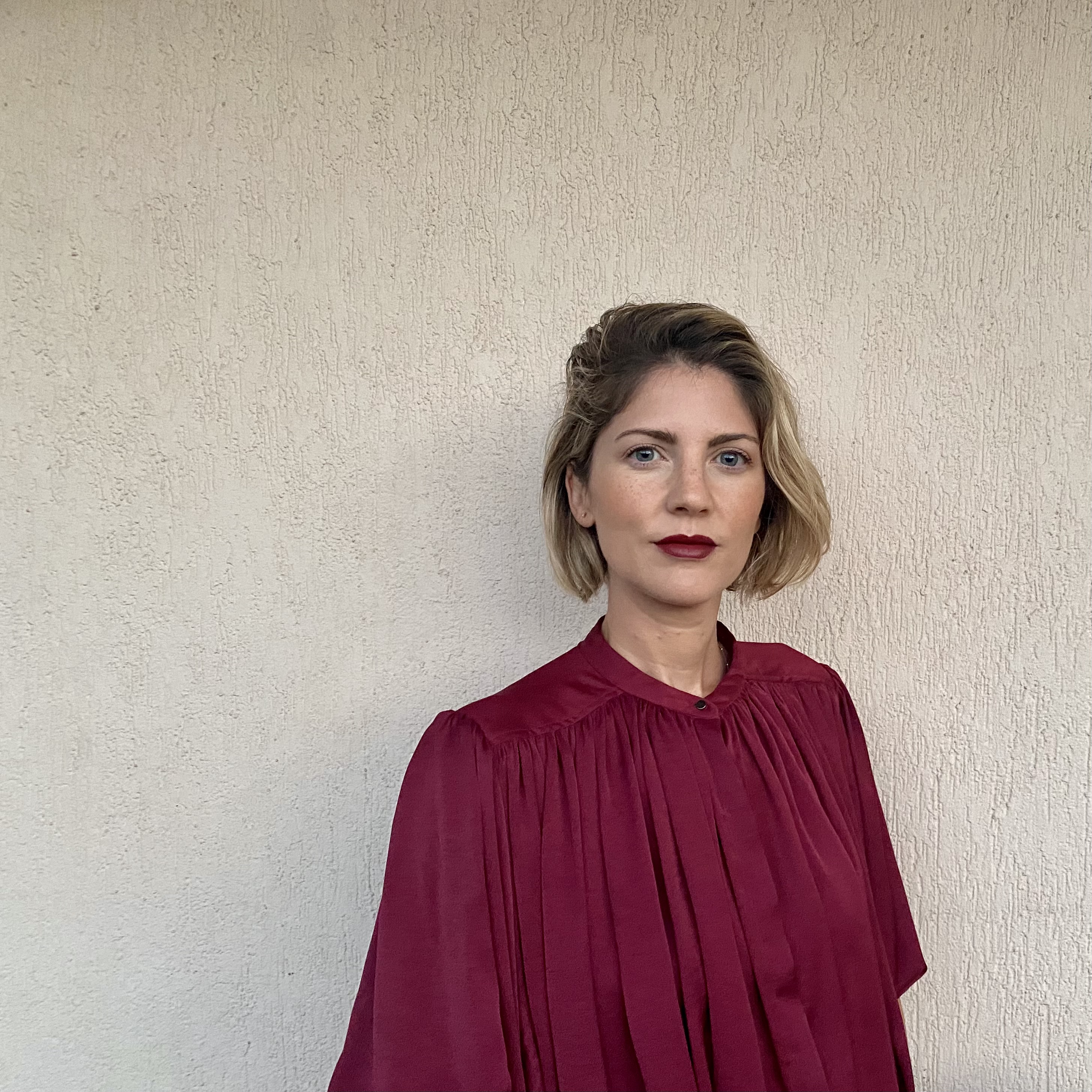
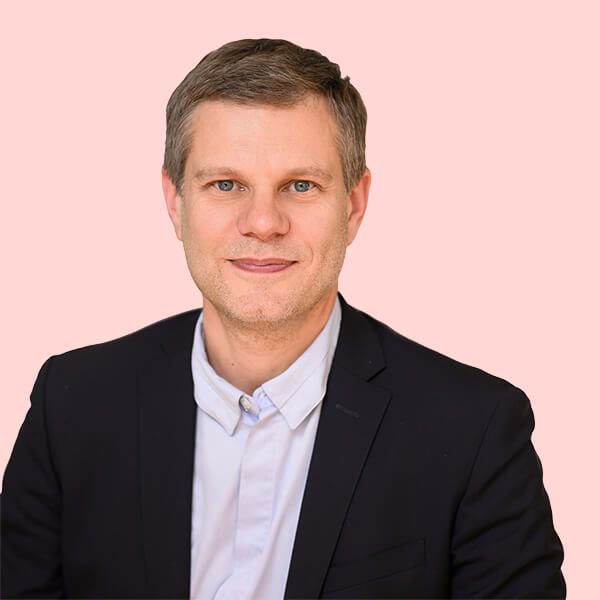
Romain Raveaux is an Assistant Professor at the University of Tours' Computer Science Laboratory (LIFAT). His research intersects machine learning, operations research, and graph theory for environmental monitoring and document analysis. Applications include insect counting for biodiversity assessment and document image quality evaluation. Raveaux holds a PhD from the University of La Rochelle and has authored over 40 publications. His methodologies combine combinatorial optimization with structural pattern recognition, addressing problems like graph matching and edit distance computation. Research Highlights Graph-based representations for pattern recognition Mixed-integer programming for graph matching Machine learning models for insect classification Document image analysis frameworks
Ali Skaf is an Associate Professor at CESI LINEACT, affiliated with the Engineering and Numerical Tools Research team. His research focuses on scheduling problems, supply chain resilience, multi-objective optimization, and port logistics. He holds a PhD in Automatics from Belfort Montbéliard University of Technology (2020) and a Master's in Computer Science from the Lebanese-French University (2012). His educational activities span Computer Science, Operational Research, and Mathematics across engineering cycles and preparatory courses. Skaf's work emphasizes port terminal operations, including quay crane scheduling, yard truck coordination, and mixed-integer programming models for container handling. His recent publications (2018–2022) highlight contributions to NP-completeness analysis of scheduling problems and optimization algorithms for maritime logistics. His research integrates exact methods, heuristics, and computational complexity analysis to enhance supply chain efficiency. No scientific awards are explicitly mentioned, though his active publication record reflects ongoing scholarly engagement. His advising and grants details are not documented here, but his team's focus on numerical tools and engineering applications suggests collaborative projects in industrial automation and logistics systems. Labs/Teams: Member of the Engineering and Numerical Tools Research team at CESI LINEACT, focusing on applied operational research and port logistics solutions.
Mohammed Hichame BENBITOUR is an Assistant Professor in Logistics at EM Normandie Business School since 2021, serving as DA M2 IA for Marketing Strategy. He holds a PhD in Industrial Engineering from CentraleSupélec (2018), focusing on supplier operations in the automotive industry. His research explores supply chain management, operations optimization, and sustainability. He teaches courses like Supply Chain 4.0 Issues , Purchasing and Logistics Fundamentals , and Strategic Logistics Management . Professional experience includes a visiting researcher role at London Business School (2020). His work spans academic publications in top-tier journals like International Journal of Production Research and Journal of Environmental Management , addressing topics such as production planning, inventory control, and sustainable practices. He actively participates in international conferences, presenting at INFORMS, MSOM, and IEEE events. Research interests emphasize cross-disciplinary approaches to logistics challenges, combining data analytics with real-world industry applications. His recent studies include fair scheduling in delivery companies, renewable energy policy impacts, and personalized retail strategies. He maintains strong ties with automotive and manufacturing sectors through applied research.
Amaya Nogales Gómez is an Associate Professor at the Interdisciplinary Institute for Artificial Intelligence (3IA) at Université Côte d’Azur and a member of the Wimmics Research Team. Her research focuses on combinatorial optimization, machine learning, and their applications in telecommunications and operations research. She holds a Ph.D. in Mathematics from the University of Seville (2015) and has held roles including Postdoctoral researcher at I3S and researcher at Huawei France (2014–2019). Education: PhD in Mathematics, University of Seville (2015); Postdoctoral studies at I3S, Sophia Antipolis. Her research interests include: Optimization algorithms for resource allocation and network design Machine learning techniques for pattern recognition and classification Applications in mobile video streaming and radio resource management Key research areas span telecommunications optimization, data-driven decision making, and mathematical modeling. She has contributed to patents and publications in top-tier conferences/journals. Current openings: See internship on Fairness-aware NLP here .
Sonia Cafieri is a Professor at the École Nationale de l'Aviation Civile (ENAC) in Toulouse, part of the Université de Toulouse. She leads the Mathematics of Optimization and Operations Research (MORO) group within the OPTIM research team. Her roles include membership in the Managing Board of EUROPT and the Nonlinear Mathematical Programming group of GdR-ROD. She chairs the Program Committee of EUROPT 2021 and serves on ENAC's Research and Doctoral Councils. Education: HDR in Applied Mathematics (2012, Université Paul Sabatier), PhD (2006, University of Naples), and Laurea in Mathematics (2001, Second University of Naples). Research focuses on Nonlinear Optimization, Global Optimization, Combinatorial Optimization (network clustering), and Operations Research applications in air transportation and engineering. Recent work addresses air traffic management, trajectory optimization, and stochastic programming for robust scheduling. Publications span optimization methodologies and applications, with a focus on aircraft conflict resolution, drone trajectory planning, and robust cyclic scheduling. Software contributions include ROSE (reformulation engine) and COUENNE (MINLP solver). Teaching includes courses on Numerical Analysis, Combinatorial Optimization, and Operations Research for Air Transportation at ENAC and other institutions.
Pascal LAFON is a Full Professor at the University of Technology of Troyes (UTT), affiliated with the Laboratory of Mechanical & Material Engineering (LASMIS) and the Department of Physics, Mechanics, Materials and Nanotechnology . He serves as the Director of Corporate Relations at UTT since 2023 and previously led LASMIS lab from 2012-2016. His academic duties include coordinating the 'Mechanics, Material and Advanced Manufacturing' master’s program (2018-2023) and the UTT doctoral program's 'Material, Mechanics, Optics and Nanotechnology' training (2012-2023). Director of Corporate Relations, UTT (2023-present) Head, LASMIS Lab (2012-2016) Master’s Program Coordinator (2018-2023) Doctoral Training Supervisor (2012-2023) His research focuses on Mechanical Optimization (mixed/random variables, nonlinear objectives), Additive Manufacturing (design, material behavior), and Smart Material Applications . Current projects integrate metamodeling (RBF, Kriging) with multi-objective optimization for manufacturing processes and structural systems. Publications and projects demonstrate expertise in: metal forming , composite materials , springback analysis , and breakwater design . He has supervised 13 PhD students since 1996, including international collaborations with Lebanese University and Northwestern Polytechnical University .
David Rivreau is a Professor and currently Dean of the Faculty of Sciences at the University of Angers (UCO). He previously served as General Delegate for Digital and Information Systems at UCO (2014–2019) and Director of the Institute of Applied Mathematics (2009–2014). He holds an HDR in Systems Control (2013) and a PhD in Systems Control from the University of Technology of Compiègne (1999). Research Interests : His work focuses on combinatorial optimization, scheduling theory, and exact methods for complex resource allocation problems. Key areas include surgical scheduling in healthcare systems, multi-skill project scheduling, and energy-constrained scheduling. He emphasizes practical applications of optimization in production logistics and healthcare operations. Publications : Over 30 peer-reviewed articles and conference papers since 2004, including work on robust surgical scheduling, multi-skill project scheduling, and energy-aware scheduling. Recent contributions address dynamic operating room scheduling with sterilization constraints and hybrid optimization approaches for resource allocation. Grants & Advising : Supervised 4 PhD students (e.g., Hasan Al Hasan on surgical scheduling, Clément Jamet-Glemin on gas network maintenance). Active in grant-funded research projects combining operations research with real-world applications. Labs & Teams : Associated with LARIS (Laboratory of Applied Mathematics and Informatics) and IDHAL (Digital Humanities and Artificial Intelligence Lab) at UCO.
Sylvain BOURJADE is a Professor in the Department of Economics and Finance at Toulouse Business School (TBS Education) . His research focuses on economics and finance with particular emphasis on hydrogen supply chains, auction mechanisms, corporate governance, and IPO market dynamics. Research Themes: Hydrogen supply chain optimization, auction theory, corporate governance, IPOs, and collusion mechanisms Methodologies: Bilevel programming, stochastic frontier analysis, game theory Industries: Airline sector, energy markets, financial conglomeration His recent work on hydrogen supply chains combines energy economics with computational optimization , while earlier publications explored strategic behaviors in uniform price auctions and boardroom collusion . Publications span topics including aircraft leasing efficiency, IPO pricing anomalies, and microfinance group lending structures. Scientific contributions include methodological advancements in Bilevel programming for supply chain optimization Dynamic modeling of auction mechanisms Behavioral analysis of corporate governance failures Contact: s.bourjade@tbs-education.fr
Zacharie ALES is an Associate Professor at ENSTA ParisTech, affiliated with the UMA laboratory and the OC team of the CEDRIC laboratory. Previously, he served as an Associate Professor at the University of Avignon (2015–2017). He earned his PhD in 2014 from INSA de Rouen under the supervision of Christian Gout, Laurent Vercouter, Arnaud Knippel, and Alexandre Pauchet. His research focuses on combinatorial optimization, mathematical programming, data science, and robust optimization. Key achievements include winning the 2014 Young Researcher Prize from ROADEF. His doctoral work developed a methodology for extracting regularities in two-dimensional annotated arrays, implemented in the VIESA software. This work combined bioinformatics-based pattern extraction with clustering and mixed-integer programming. He has held grants from the PRIMO project and contributed to interdisciplinary applications, such as analyzing sensor data through annotated arrays. His teaching activities include monitoring and curriculum development. Research collaborations span institutions like LMI and LITIS laboratories, and his current affiliations emphasize applied mathematics and operational research.
David Rey is a Professor at SKEMA Business School in Sophia Antipolis, France. His research focuses on optimization, game theory, and artificial intelligence applied to transportation and logistics. He holds a PhD in Operations Research from Université Grenoble Alpes (2012) and a Habilitation à Diriger des Recherches (2023) from Université de Toulouse. Previously, he was a Senior Lecturer at UNSW Sydney (2016–2021) and has held postdoctoral positions at rCITI UNSW. He leads the URBANE project, exploring green last-mile delivery solutions, and serves on editorial boards like Transportation Letters . Awards include multiple ARC grants and the INFORMS TSL Best Paper Award Committee role (2025). Education: Habilitation à Diriger des Recherches (2023), Operations Research, Université de Toulouse PhD (2012), Operations Research, Université Grenoble Alpes Master (2008), Sciences/Mathematics, Pontifical Catholic University of Rio de Janeiro Engineering Degrees (2004–2005), Electrical Engineering, University of Montpellier Research Interests: David’s work emphasizes optimization techniques (bilevel, stochastic, mixed-integer programming), game theory, and AI applications in transport systems. Key areas include drone delivery, autonomous vehicle integration, congestion pricing, and resilient logistics networks. His methods address real-world challenges like pandemic response, electric vehicle charging infrastructure, and fair resource allocation. Grant Highlights: URBANE (EU Horizon-funded), 2022–present 4 ARC grants as Lead Chief Investigator, including projects on concrete mixes, ethics in transport systems, and workforce logistics optimization Advising & Grants: Directed/co-directed 15+ PhD theses across SKEMA and UNSW Sydney Active in grant writing and editorial roles, including Transportation Science and Logistics Society Workshop (2024–2025) Labs/Teams: Leads the SKEMA Centre for Analytics and Management Science, focusing on analytics-driven solutions for business and urban systems.
Ivana Ljubic is a Full Professor in Operations Research at ESSEC Business School, specializing in combinatorial optimization, bilevel optimization, and network design with applications in telecommunications, logistics, and bioinformatics. She holds a PhD in Computer Science from TU Wien (2004) and a Habilitation from the University of Vienna (2013). Editorial roles: Associate Editor for Operations Research , Transportation Science , and Networks Professional leadership: Chair of INFORMS Telecommunication & Network Analytics Section Her research focuses on mixed-integer programming, metaheuristics, and exact algorithms for problems like Steiner trees, regenerator location, and capacitated vertex separators. Recent work includes applications in community energy storage, social media influence maximization, and sustainable last-mile delivery. She has received multiple awards, including the Glover-Klingman Prize (2021) and Marguerite Frank Award (2022). Her publications span leading journals like Management Science , Operations Research , and Mathematical Programming , with over 70 articles to date.
Samuel LAGRANGE is Lecturer at IAE Clermont Auvergne – School of Management, Université Clermont Auvergne, where he conducts research within the Strategy, Territory and Actor Networks (STeRA) axis of the CRCGM laboratory (Centre de Recherche Clermontois en Gestion et Management). Education : No explicit educational background is provided in the supplied text. Research interests revolve around the governance and optimization of franchise networks, supply-chain modelling, New Public Management, and the management of commercial relationships in banking networks. He employs decision-modelling techniques, simulation, and mixed-integer linear programming to assess and enhance logistic and financial flows across diverse franchise systems, including bakery, restaurant, and fast-food networks. His work also explores how statutory diversity and proximity theory can illuminate managerial challenges within these networks. Publications (2010–2018) demonstrate a consistent focus on developing quantitative and conceptual frameworks for franchise and supply-chain management, with empirical applications to prominent French networks such as Paul, La Mie Caline, Flunch, Buffalo Grill, McDonald’s, and KFC. The studies collectively advance methodologies for optimizing mix rates, evaluating financial flows, and reinventing retail formats, particularly bank branches. Scientific awards : None are mentioned in the provided materials. Advising & grants : No specific doctoral or master’s students, research grants, or funded projects are listed. Laboratory & teams : He is an active member of the CRCGM – Centre de Recherche Clermontois en Gestion et Management (EA 3849), located at 28 Place Henri Dunant, 63000 Clermont-Ferrand, France.
Emmanuel Grolleau is a Full Professor at ISAE-ENSMA (Institut Supérieur de l'Aéronautique et de l'Espace - École Nationale Supérieure de Mécanique et d'Aérotechique) specializing in real-time systems. He is affiliated with the LIAS laboratory (Laboratoire d'Ingénierie des Applications de la Sensorique) where he leads the Real Time Team. His work bridges theoretical scheduling principles with practical embedded system implementations across multiple domains. Professor Grolleau's primary research interests include: Real-Time Scheduling: uniprocessor, multiprocessor, and distributed scheduling with practical considerations like transactions and precedence constraints Model-Based Systems Engineering (MBSE): developing bridges between UML-MARTE and AADL to real-time scheduling tools Unmanned Aerial Vehicles (UAVs): autopilot architecture design and optimization Energy Systems: co-heading the LabCom ANR Laboratoire d'Insertion des Énergies Nouvelles et d'Optimisation des Réseaux (LIENOR) His publication record demonstrates a clear progression from fundamental scheduling theory to applied work spanning avionics, drone technology, and power systems. Recent work shows strong focus on UAV autopilot architectures, model-based frameworks for real-time systems, and energy management in power distribution networks. Professor Grolleau serves on multiple prestigious program committees including Real-Time Networks & Systems (RTNS) since 2012, ACM/SIGAPP Symposium On Applied Computing (SAC) since 2015, DETECT since 2018, and DroneSE in 2023. He has led significant research projects such as PIA CORAC Panda and FUI WARUNA, which developed the Time4Sys pivot meta-model to connect theoretical scheduling with practical implementation. His collaborative work extends across multiple institutions and industries, with publications spanning real-time scheduling theory, UAV systems, energy management, and avionic architectures. The consistent thread through his work is the practical application of real-time scheduling principles to solve complex engineering problems in safety-critical systems.