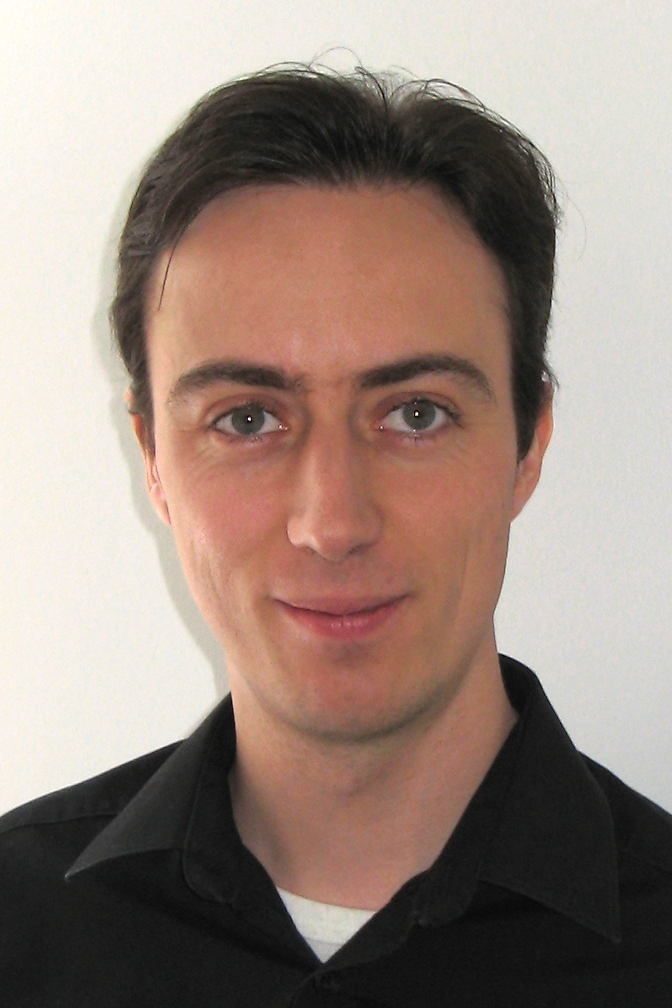
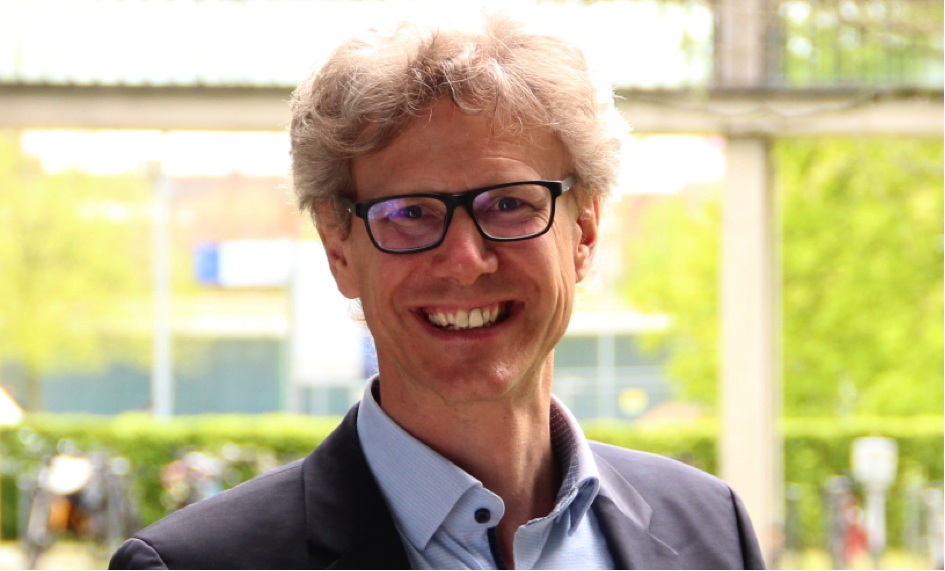
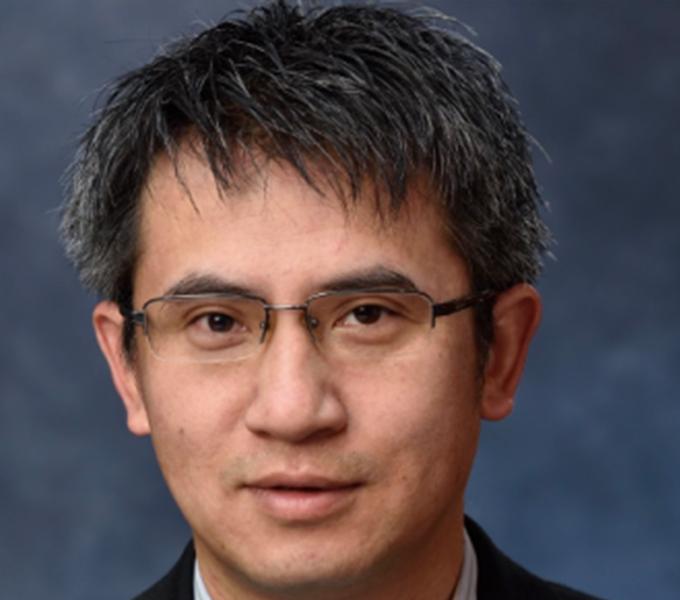
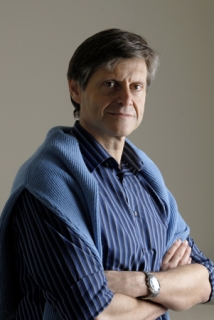
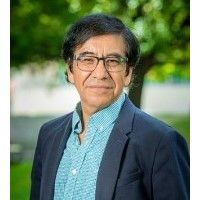
Andreas Lundell is an Associate Professor at the Åbo Akademi University within the Faculty of Science and Engineering, Department of Information Technology. His work focuses on mathematical optimization, particularly in convex MINLP, signomial programming, and sustainable AI. He leads projects like Data Analytics for Zero Emission Marine and contributes to the Wasa Zero Emission Data Centre initiative. Research spans global optimization algorithms and energy-efficient computing Active in EU-funded and national projects addressing climate action Recipient of the COIN-OR Cup 2018 His research drives sustainable industrial transitions through data analytics and optimization models, aligning with UN SDGs for climate action and sustainable cities.
Miju Ahn is an Assistant Professor in the Department of Operations Research & Engineering Management at the Lyle School of Engineering, Southern Methodist University. She holds a Ph.D. in Industrial and Systems Engineering from the University of Southern California (2018) and a B.A. in Applied Mathematics from UC Berkeley (2008). Her research focuses on mathematical optimization methods with applications in statistical learning, power systems, finance, and healthcare. Education: Ph.D., Industrial and Systems Engineering, University of Southern California (2018) B.A., Applied Mathematics, UC Berkeley (2008) Research Interests: Designing computational algorithms for large-scale optimization problems Nonconvex programming and its applications Mathematical modeling for decision-making systems Scientific Awards: NSF CRII grant recipient for research in optimization and decision-making
Julio González-Díaz is a university professor at the Department of Statistics, Mathematical Analysis, and Optimization at the Faculty of Mathematics, University of Santiago de Compostela. His research focuses on game theory, operations research, and decision models, with applications in economics and mathematics. He leads the research group MODESTYA (Optimization, Decision, Statistical Models and Applications) and is affiliated with the Galician Mathematical Research and Technology Center (CITMAga). Education: PhD from the University of Santiago de Compostela (2005), thesis titled Essays on Competition and Cooperation in Game Theoretical Models , supervised by Dr. María Estela Sánchez Rodríguez and Dr. Ignacio García Jurado. Research Interests: Game theory (cooperative and non-cooperative), operations research, optimization, and statistical models. His work includes studies on core stability, airport cost allocation, paired comparisons analysis, and algorithmic game theory. Publications: Over 30 peer-reviewed articles and books, including influential works like An Introductory Course on Mathematical Game Theory (2010) and widely cited contributions on core-center concepts and ranking methods. Recent work involves polynomial optimization algorithms (RAPOSa solver), gas transportation networks, and bilevel portfolio design. Collaborations: Extensive co-authorship network, including researchers like Fiestras-Janeiro, Sánchez-Rodríguez, and international collaborations in optimization and game theory. Contact: julio.gonzalez@usc.es
Fabian Bastin is a Full Professor in the Department of Computer Science and Operational Research (IRO) at Université de Montréal. He holds a prestigious academic position within the university's research and teaching community. His work focuses on optimization, stochastic programming, simulation, and their applications in transportation, energy systems, and finance. Teaching Responsibilities: Bastin teaches advanced courses such as IFT-2505 (Linear Optimization), IFT-3515 (Nonlinear Programming), and IFT-6512 (Stochastic Programming). He also contributes to graduate-level courses on dynamic programming and simulation techniques. His courses emphasize theoretical foundations alongside practical applications, often using tools like MATLAB and the ORATIO library he helped develop. Research Interests: Bastin's research spans stochastic optimization, simulation methodologies, and decision-making under uncertainty. Key areas include air traffic management optimization, hydroelectric reservoir scheduling, and synthetic population generation using copula-based models. He has pioneered work on scenario tree generation for multistage stochastic programming and developed algorithms for efficient mixed logit model estimation. Research Contributions: His publications highlight advancements in stochastic models for transportation systems, energy planning, and financial engineering. Notable works include contributions to the progressive hedging algorithm, recursive logit models for route choice analysis, and Monte Carlo methods for option pricing. Bastin is also actively involved in software development, notably the ORATIO simulation library used in discrete-event modeling. Professional Engagements: He has co-organized conferences on optimization and simulation, and his work has been supported by grants from NSERC and other funding bodies. Despite no explicit mention of awards in the text, his extensive publication record and methodological innovations suggest significant recognition in his field.
Prof. Moritz Diehl is a Professor at the University of Freiburg, leading the Systems Control and Optimization Laboratory within the Department of Microsystems Engineering (IMTEK) and affiliated with the Department of Mathematics. Born in Hamburg, Germany, he holds a Ph.D. from Heidelberg University (2001) and previously served as a professor at KU Leuven (2006–2013), where he directed the Optimization in Engineering Center (OPTEC). His research focuses on optimization and control, emphasizing numerical methods for engineering applications, particularly embedded systems and renewable energy. Key areas include model predictive control (MPC), nonlinear optimization, and real-time control systems. Education: He studied physics and mathematics at Heidelberg University and the University of Cambridge (1993–1999), culminating in a Ph.D. in Scientific Computing. His academic journey includes roles at KU Leuven and Freiburg, where he has developed influential tools like the AWEbox framework for airborne wind energy systems and the acados optimization library. Research Interests: His work spans numerical optimal control, MPC algorithms, and their applications in robotics, energy systems, and automotive engineering. Recent advancements include collision-free motion planning, real-time NMPC with convex-concave constraints, and stochastic control methods for mobile robots. He also explores optimization for hybrid systems, leveraging finite elements and switch detection for nonsmooth dynamics. Publications: His 2023–2025 work highlights contributions to MPC stability, energy-efficient control systems, and software tools like LCQPow for quadratic programming. His research bridges theory and practice, addressing challenges in industrial processes, renewable energy integration, and autonomous systems. Labs & Teams: He leads the Systems Control and Optimization Lab, fostering interdisciplinary projects in optimal control, robotics, and sustainable energy. His group collaborates on tools like acados, emphasizing real-time feasibility and scalability for complex systems.
Nevin Mutlu is an Assistant Professor in the Operations Planning, Accounting & Control (OPAC) Group within the School of Industrial Engineering at Eindhoven University of Technology (TU/e). She is affiliated with multiple research centers including the Data Science Center Eindhoven (DSC/e), Efficient Consumer Response (ECR) Community, Retail Operations Lab, and Freight Transport & Logistics Research Group. Her industry partnerships include Nike and the ECR Community, demonstrating strong connections between her academic research and practical retail applications. Dr. Mutlu received her PhD and MSc degrees in Industrial and Systems Engineering from Virginia Tech, USA in 2016 and 2013, respectively. She also holds a BSc degree in Industrial Engineering and a BA degree in Economics from University at Buffalo, State University of New York, USA. Prior to joining TU/e in 2016, she served as a graduate teaching assistant and instructor at Virginia Tech, teaching courses in operations research and working with the Office of Emergency Management on real-world applications. Her research bridges optimization, economics, and marketing to address industry-relevant problems in retail operations and logistics. She specializes in modeling how operational decisions impact consumer behavior, with particular focus on retail pricing, experiential retail, e-commerce adoption, and transportation systems. Her interdisciplinary approach combines theoretical optimization techniques with practical business considerations, resulting in impactful research that addresses current challenges in retail and supply chain management. Analysis of her publications reveals a strong trajectory in operations research with increasing focus on consumer behavior dynamics. Her work spans theoretical optimization methods (resource allocation, production-routing problems) and applied retail contexts (experiential retail, dual-channel strategies). Recent publications show growing interest in sustainability aspects of retail operations and transportation, reflecting contemporary industry challenges. Her research consistently addresses the complex interplay between operational decisions and consumer responses, providing valuable insights for both academia and industry. EU Horizon 2020 Marie Curie Individual Fellowship (2018-2020) Dr. Mutlu actively contributes to research funding through projects like SYNERCIZE: SYnchromodal Transport NEtworks for a Construction Industry towards Zero Emissions (2025-2027), where she serves as a project member. Her teaching portfolio includes Supply Chain Management, Revenue Management and Pricing Analytics, and Project and Process Management courses. She has also served on committees such as the AI Planner of the Future program, demonstrating engagement with emerging technologies in her field. Her research is supported by multiple affiliations including the Data Science Center Eindhoven, ECR Community, and Retail Operations Lab, providing collaborative environments for interdisciplinary work. Her industry partnerships, particularly with Nike, facilitate the translation of academic research into practical retail solutions. The SYNERCIZE project demonstrates her expanding research scope into sustainable transportation networks for construction industries.
Cédric Elloumi is a Professor at the CEDRIC Laboratory within Conservatoire National des Arts et Métiers (CNAM), specializing in combinatorial optimization and mathematical programming. With a continuous publication record since 1992, he has established himself as a leading researcher in quadratic programming, binary optimization, and facility location problems. His research interests focus on developing exact and approximate methods for discrete optimization problems, particularly through convex reformulation techniques. Elloumi has made significant contributions to the p-center and p-median problems, quadratic assignment problems, and more recently, quantum-inspired optimization methods. His work bridges theoretical advancements with practical applications in network design, energy systems, and telecommunications. Analysis of his recent publications (2022-2025) reveals a continued focus on facility location problems, with increasing attention to robust optimization under uncertainty and emerging applications in quantum computing. His research demonstrates consistent methodological innovation, particularly in reformulation techniques that transform difficult non-convex problems into tractable forms. Throughout his career, Elloumi has maintained extensive collaborations with researchers including Billionnet, Lambert, Alès, and Plateau, resulting in numerous publications in top-tier optimization journals such as Journal of Global Optimization, Computers and Operations Research, and Mathematical Programming.
Bo Zeng is an Associate Professor in the Swanson School of Engineering at the University of Pittsburgh. His research focuses on developing and utilizing optimization and analytics tools to address challenges in real systems, particularly in discrete optimization models with uncertainties, game theory models, and advanced data analysis and computing methods. His work is extensively applied in engineering, healthcare, and management systems. Dr. Zeng earned his PhD from Purdue University in 2007 and his BS from Xian Jiaotong University in 1998. His research interests span optimization, robust optimization, stochastic programming, power systems, demand response, renewable energy integration, high performance computing, game theory, mixed integer programming, and multilevel optimization. Analysis of Dr. Zeng's recent publications reveals a strong focus on power systems and energy applications, with significant contributions to microgrid planning, demand response modeling, renewable energy integration, and robust optimization techniques. His work demonstrates a consistent pattern of applying advanced mathematical optimization methods to solve complex problems in energy systems, with increasing attention to uncertainty modeling and risk management in power grid operations. Dr. Zeng has collaborated extensively with researchers across multiple institutions, particularly in China, reflecting the global nature of energy research and the international collaboration needed to address complex energy challenges. His publications span high-impact journals in power systems, optimization, and interdisciplinary energy research.
Stefano Lucidi is a Full Professor of Operations Research at Sapienza University of Rome, where he is affiliated with the Department of Computer, Automatic and Management Engineering within the Faculty of Information Engineering, Computer Science and Statistics. He has held this position since November 1, 2000, after serving as Associate Professor from November 1, 1992 to October 31, 2000. He was coordinator of the PhD program in Operations Research from 2010 to 2012 and was a shareholder of the university spin-off ACTOR SRL until July 2024. His research interests span Nonlinear Optimization, Derivative-Free Optimization, Mixed Integer Programming, and Global Optimization. His methodological work focuses on unconstrained optimization methods, constrained optimization methods, non-differentiable optimization methods, derivative-free methods, and global optimization techniques. His applied research includes mathematical modeling of biological phenomena in cell kinetics, identification of astrophysical parameters, optimal management of bookable seats in rail transport, and optimal design of electromagnetic devices and industrial electric motors. His recent publications demonstrate a strong focus on derivative-free optimization methods, complexity analysis of algorithms, multi-objective optimization, and applications in diverse fields including healthcare, transportation, and neuroscience. His work bridges theoretical advances in optimization with practical applications across multiple domains. His significant contributions to the field include developing algorithms for simulation-driven design optimization, addressing nonsmooth optimization problems, and creating methods for multi-fidelity computations. His research has been published in top journals including Optimization Methods & Software, Journal of Optimization Theory and Applications, and Optimization Letters. Full Professor of Operations Research since 2000 PhD program coordinator (2010-2012) Shareholder of ACTOR SRL spin-off (2011-2024) Active contributor to optimization theory and applications Professor Lucidi has been instrumental in advancing optimization methodologies while maintaining strong connections to practical applications across various industries. His work continues to influence both theoretical developments and real-world implementations of optimization techniques.
Sriram Sankaranarayanan is a Professor in the Department of Computer Science at the University of Colorado Boulder and also serves as Associate Dean for Digital Education in the College of Engineering and Applied Science. Since joining the faculty in 2009, he has built an internationally recognized research program that blends programming languages, formal methods, and control theory to reason about cyber-physical systems. Education: Ph.D. in Computer Science, Stanford University, 2005 (advisers Zohar Manna & Henny Sipma) B.Tech., Indian Institute of Technology Kharagpur (President’s Gold Medal, 2000) Research Interests: Prof. Sankaranarayanan’s work centers on hybrid dynamical systems —models that capture discrete software interacting with continuous physical environments—and on developing formal-methods techniques for their verification, control, and synthesis. Specific themes include control-barrier & Lyapunov function synthesis, neural-network verification, stochastic-game models for human-autonomy interaction, and physics-informed machine learning. Application domains range from autonomous robotics and surgical-task planning to safety-critical medical devices such as the artificial pancreas. Recent Publication Trends (2024-2025): His latest papers advance safe control synthesis (successive control barrier functions, piecewise-affine Lyapunov functions) and trustworthy AI (Taylor-model enhanced physics-informed neural networks), while also exploring game-theoretic anticipation for robotic systems interacting with uncertain human operators. Honors & Awards: NSF CAREER Award (2009) Siebel Scholar (2005) President’s Gold Medal, IIT Kharagpur (2000) CU Boulder Dean’s Award for Outstanding Junior Faculty (2012) CU Boulder Outstanding Teaching Award (2014) CU Boulder Provost’s Faculty Achievement Award (2014) Coursera Outstanding Innovation Award (2022) Student Advising & Grants: He has mentored numerous PhD students; recent graduates include Dr. Emily Jensen, Dr. Monal Narasimhamurthy, and Dr. Kandai Watanabe (2024). His group regularly publishes at top venues such as HSCC, POPL, PLDI, CAV, and WAFR, supported by NSF, NIH, and industry grants. Group & Teaching: Prof. Sankaranarayanan leads activities within the Programming Languages & Verification group and teaches graduate and undergraduate courses on programming languages, algorithms, optimization, and formal methods. He is active in conference organization (e.g., PC Chair VMCAI 2025) and maintains open-source courseware and research notebooks on GitHub.
Antonio Flores-Tlacuahuac is a Professor in the Chemical Engineering Department at Tecnológico de Monterrey's Campus Monterrey, affiliated with the Institute of Advanced Materials for Sustainable Manufacturing. His research spans sustainable process systems engineering with emphasis on optimization, machine learning applications, and resource nexus modeling. Chemical Engineering Degree, Universidad Autónoma de Puebla Ph.D. in Philosophy, University of London His research interests focus on developing advanced computational frameworks for sustainable engineering systems. Key areas include Bayesian optimization for chemical processes, machine learning applications in polymerization and separation systems, and integrated modeling of water-energy-carbon systems. His work bridges fundamental process engineering with sustainability challenges, particularly in renewable energy integration and CO 2 capture technologies. Analysis of his 2024-2025 publications reveals a strong trend toward hybrid AI-optimization methodologies, with 60% of recent work incorporating Bayesian approaches. The research spans from molecular-scale catalyst design to community-scale energy systems, demonstrating exceptional breadth while maintaining technical depth in process systems engineering. Mexican Researcher Certification - Level 3 Flores-Tlacuahuac mentors doctoral students through courses including Automation and Control of Chemical Processes and Doctoral Research series. His research portfolio includes significant contributions to the Centro Mexicano de captura, uso y almacenamiento de CO 2 , with funding evidenced by extensive publication output in high-impact journals. Current projects focus on quantum-classical hybrid algorithms for bioprocess optimization and machine learning frameworks for pandemic surveillance. He leads research within the Institute of Advanced Materials for Sustainable Manufacturing, with strong emphasis on UN Sustainable Development Goals including Affordable and Clean Energy, Climate Action, and Sustainable Cities. His work integrates multiple stakeholder perspectives in sustainable system design, particularly for rural energy solutions and circular economy implementations.

.jpg?h=700&iar=0&w=700&hash=E918C5B36FFC75663AA5EA53612576D2)