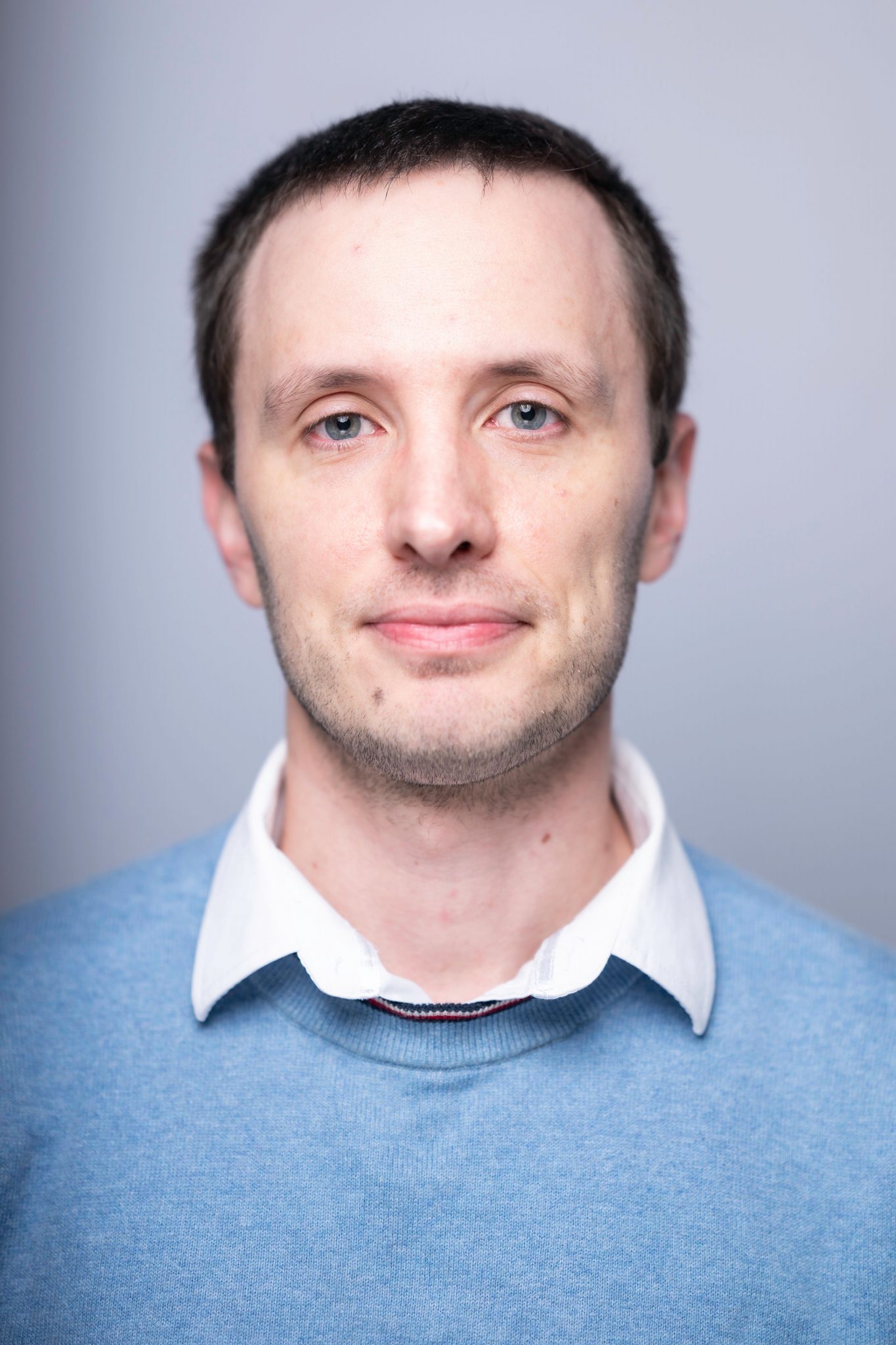
Sajjad Fattaheian Dehkordi is a Postdoctoral Researcher in the Department of Electrical Engineering and Automation at Aalto University, Espoo, Finland. His research focuses on advanced energy management systems for modern power grids, with emphasis on distributed and transactive control approaches for resilient and efficient grid operations. His core research interests include: Power system resilience under high renewable penetration Microgrid and energy community optimization Distributed energy resource integration Electric vehicle-grid interaction and V2G systems Real-time congestion and ramping management Analysis of his 2022-2024 publications reveals a dominant trend toward multi-agent transactive frameworks addressing grid stability challenges. His work consistently targets voltage regulation, asymmetrical power flows, and ramping events in distribution systems, leveraging optimization techniques like MILP while incorporating flexibility concepts for renewable integration. Key innovations include distance-driven P2P/P2G transactions and incentive-based congestion management. No scientific awards are documented in the available records. Information regarding student advising, research grants, or leadership roles is not provided in current documentation.
Dr. Kevin Austin is a Research Fellow at the School of Mechanical and Mining Engineering, Faculty of Engineering, Architecture and Information Technology at the University of Queensland. His work is affiliated with the Future Autonomous Systems and Technologies research group, where he focuses on automation and robotics applications in mining engineering. Dr. Austin received his academic qualifications from the University of Queensland, including a Bachelor (Honours) of Engineering and a Doctor of Philosophy. Dr. Austin's research centers on mining automation and autonomous systems for heavy machinery operations. His work spans several key areas including dragline operation planning, excavation sequencing, terrain mapping for autonomous bulldozers, and hyperspectral imaging for ore grade discrimination. He has made significant contributions to the development of algorithms for mining equipment automation, particularly in the areas of Monte-Carlo Tree Search for dragline operation planning and Iterative Closest Point variants for terrain scan matching. His research bridges theoretical advances in robotics and artificial intelligence with practical applications in the mining industry, focusing on improving efficiency, safety, and productivity. Dr. Austin has been involved in numerous research projects funded by industry partners including Caterpillar Inc and the Australian Coal Association Research Program (ACARP). His current research focuses on coal stockpile management for remote bulldozers, semi-autonomous bulldozers for mine site rehabilitation, and articulated truck automated systems. His work demonstrates a strong industry connection with practical applications in mining operations. As an academic supervisor, Dr. Austin has served as an Associate Advisor for multiple PhD and Master's students at the University of Queensland. His supervision portfolio includes research on real-time terrain mapping for autonomous bulldozers, mission planning for autonomous excavation, dragline excavation sequencing, and scan matching for terrain mapping in open-pit mining. His collaborative approach is evident in his work with other faculty members, particularly Professor Ross McAree. Dr. Austin's laboratory and research team work closely with industry partners through the Future Autonomous Systems and Technologies group. They maintain strong connections with mining equipment manufacturers and coal mining operations, ensuring their research addresses real-world challenges in the mining sector. Their facilities likely include simulation environments for mining equipment operation, testbeds for autonomous systems, and data analysis platforms for mining process optimization.
Jessica Olivares is an Assistant Professor of Supply Chain Management at the Shannon School of Business, Cape Breton University. Her expertise spans supply chain resilience, digital twins, and Industry 5.0, with a focus on mitigating disruptions in global networks. Dr. Olivares contributes to both academic research and practical solutions for sustainable supply chain management. Her academic credentials include: B.S. in Industrial Engineering, University of the Americas Puebla (UDLAP), Mexico M.S. in Industrial Engineering, University of the Americas Puebla (UDLAP), Mexico Ph.D. in Industrial and Manufacturing Systems Engineering, University of Windsor, Canada Dr. Olivares' research centers on supply chain management, with specific interests in disruption recovery, digital twin applications, and sustainable design. She explores how Industry 5.0 principles can humanize smart manufacturing while enhancing resilience. Her work addresses critical gaps in perishable food supply chains and resource distribution during crises, integrating risk assessment with technological innovation to build robust systems. Her recent publications (2021-2025) show a strong emphasis on digital twins for supply chain resilience, with increasing attention to sustainability and multi-objective optimization. She has pioneered frameworks for recovery from major disruptions, including pandemic impacts, and investigates energy-aware scheduling in manufacturing. Her scholarship bridges theoretical models with real-world applications in food systems and global networks. No scientific awards were documented in the available sources. Information on graduate student supervision and research funding was not provided, though her active publication record suggests engagement in scholarly mentorship and potential grant-supported projects. No details about laboratories or research teams were mentioned.
Dr. Meghdad Fazeli is a Senior Lecturer in the Department of Electronic and Electrical Engineering at Swansea University, Faculty of Science and Engineering. His research focuses on renewable energy integration, smart grids, and microgrid technologies, with a particular emphasis on virtual synchronous machines (VSM) and energy management strategies. He leads projects addressing climate change mitigation through decarbonized energy systems, aligning with UN Sustainable Development Goals 7, 11, and 13. Dr. Fazeli collaborates with National Grid ESO and colleagues across disciplines including Computer Science and Business School via the CARI initiative. He founded Innoverters-Ltd, a Swansea spin-out consultancy for future power systems innovation. His teaching uses blended learning, including MATLAB-SIMULINK integration and recorded lectures, coordinating modules like Power Systems (EG-342) and Advanced Power Systems (EGLM05). Research interests span renewable energy control, grid-forming inverters, and energy communities. Recent articles address VSM applications, peer-to-peer trading, and buffered microgrid designs. He advises PhD projects on topics like solar forecasting and grid-less power system architectures. His work emphasizes sustainable energy transitions, long-term resilience, and interdisciplinary solutions for net-zero systems.
Dr. Armin Nurkanović is an interim professor at the Technical University of Braunschweig's Department of Mathematical Optimization, where he teaches courses on dynamic optimization and numerical methods. Previously, he completed his PhD at the University of Freiburg under Prof. Moritz Diehl, focusing on optimal control of nonsmooth dynamical systems. His research emphasizes numerical methods for hybrid systems, real-time optimization, and applications in robotics and renewable energy systems. He has received the IEEE Control Systems Letters Outstanding Paper Award (2022) and was a finalist for the 2024 European Systems & Control PhD Thesis Award. Education: Bachelor's in Electrical Engineering (University of Tuzla, 2015) Master's in Electrical Engineering and Information Technology (Technical University of Munich, 2018) PhD in Control (University of Freiburg, 2023) Research Interests: Optimal control of hybrid and nonsmooth systems (e.g., Filippov systems, switched systems) Real-time optimization for model predictive control (MPC) Robust control theory and stochastic optimization Applications in robotics and renewable energy systems Teaching & Software: Developed open-source tools nosnoc and nosnoc_py for optimal control Teaching courses on numerical optimization and optimal control at TU Braunschweig Collaborations & Students: Open to academic and industry collaborations Supervises Bachelor's/Master's theses in mathematics, engineering, and computer science
Tamas Koltai is a Professor at the Budapest University of Technology and Economics, affiliated with the Department of Management and Corporate Economics within the Faculty of Economic and Social Sciences. He holds a PhD in Industrial Engineering and is actively contributing to research in operations management, production planning, and industrial engineering. His research interests include: Operations Management Industrial Engineering Production Planning Assembly Line Balancing Human-Robot Collaboration Data Envelopment Analysis (DEA) Supply Chain Management Learning Curves Flexible Manufacturing Systems Performance Evaluation His recent publications focus on applying mathematical programming models (MILP, CP), simulation, and DEA to optimize assembly lines, particularly under learning effects and human-robot collaboration. He explores workload distribution, cycle time optimization, and efficiency evaluation in both manufacturing and service sectors, including healthcare and business simulation games. His work bridges theoretical models with practical industrial applications, supporting managerial decision-making under uncertainty. While no specific scientific awards are listed, his extensive publication record (over 50 papers) and high citation count reflect significant academic impact. He frequently collaborates with researchers such as Imre Dimény, Noémi Kalló, Viola Gallina, and Rita Dénes. There is no public information on PhD students advised or grants received. His work does not mention specific labs or research teams, but his focus on applied operations research suggests strong industry collaboration potential.
Salar Fattahi is an Assistant Professor at the University of Michigan, affiliated with the College of Engineering’s Department of Industrial and Operations Engineering. He holds additional appointments with the Michigan Institute for Computational Discovery and Engineering (MICDE), Michigan Institute for Data Science (MIDAS), and the Michigan Center for Applied and Interdisciplinary Mathematics (MCAIM). PhD in Industrial Engineering and Operations Research from UC Berkeley M.Sc. in Electrical Engineering from Columbia University B.Sc. in Electrical Engineering from Sharif University of Technology Research Focus: Developing scalable computational methods for structured optimization and machine learning problems by exploiting sparsity, low-rankness, and benign landscape properties. Applications span gene regulatory networks, power systems, and brain connectivity modeling. 2025: Parametric algorithms for MIQPs over trees 2024: Triple Component Matrix Factorization for global/local/noise separation 2023: Robust subspace recovery and dictionary learning Scientific Recognition: NSF CAREER Award (2023) INFORMS Best Paper Awards (2023, 2024) Dean’s MLK Spirit Award (2024) MICDE Catalyst Grant (2021) Academic Service: Associate Editor for INFORMS Journal on Data Science; Area Chair for NeurIPS, ICML, and ICLR. Mentored students including Jianhao Ma (now Tsinghua University), Geyu Liang (Amazon), and Aaresh Bhathena. Research supported by NSF, ONR, MICDE, MIDAS, START, and DEI Faculty grants.
Giampaolo Liuzzi is an Associate Professor at the Department of Computer, Automation, and Management Engineering 'Antonio Ruberti' (DIAG) at Sapienza University of Rome since July 2023. Previously, he was a fixed-term researcher at the same department (July 2020-June 2023) and a Senior Researcher at the Institute of Systems Analysis and Computer Science 'A. Ruberti' of the CNR until July 2020. He teaches Mathematical Programming, Complements of Mathematics, and Mathematical Analysis 2 for various engineering programs at Sapienza University. Dr. Liuzzi's research focuses on Nonlinear Optimization , particularly derivative-free methods for constrained and unconstrained optimization, global optimization, mixed integer nonlinear programming, and applications in operations research and machine learning. His work spans theoretical developments in optimization algorithms as well as practical applications in engineering design, simulation-based optimization, and biomedical systems. He has made significant contributions to derivative-free optimization techniques that don't require gradient information, which is particularly valuable for black-box optimization problems where derivatives are unavailable or expensive to compute. His recent publications (2022-2025) demonstrate a strong focus on advancing derivative-free optimization methods, with particular attention to complexity analysis, convergence properties, and practical implementations for challenging problem classes including nonsmooth, constrained, multi-objective, and mixed-integer optimization problems. His work bridges theoretical computer science with practical engineering applications, with publications appearing in top optimization journals like Optimization Methods & Software, Computational Optimization and Applications, and Journal of Optimization Theory and Applications. Dr. Liuzzi has received significant professional recognition through National Scientific Habilitations for both Associate Professor (2014) and Full Professor (2018) positions in Italy. He is actively involved in the academic community as an administrator of the Derivative-Free Library (DFL), a collection of algorithms and methods for derivative-free optimization developed through collaboration among several prestigious Italian research institutions. As an educator, Dr. Liuzzi has developed comprehensive teaching materials for courses in Mathematical Programming, Complements of Mathematics, and Mathematical Analysis. He is also engaged in academic entrepreneurship as a co-founder of DEIX s.r.l., a Sapienza startup focused on algorithms and industrial software for planning and control of complex systems. Additionally, he organized the 2nd Derivative-Free Optimization Symposium (DFOS'24) in June 2024 in Padua, highlighting his leadership role in this specialized optimization community.
Sophie Huiberts is a CNRS researcher at LIMOS, Clermont Auvergne University in Clermont-Ferrand since fall 2023. Previously, she was a Simons Junior Fellow at Columbia University in New York City, hosted by Tim Roughgarden. She completed her PhD research at Centrum Wiskunde & Informatica in Amsterdam under Daniel Dadush and received her doctorate in 2022 from Utrecht University. Dr. Huiberts specializes in theoretical aspects of mathematical optimization, particularly focusing on the gap between practical performance and theoretical predictions of linear programming algorithms. Her research examines software implementations like Gurobi, CPLEX, SCIP, and HiGHS to understand why these algorithms perform better in practice than worst-case analysis would suggest. She has made significant contributions to smoothed analysis of the simplex method, establishing both upper and lower bounds on its complexity under perturbations of worst-case inputs. Analysis of her publication record shows consistent focus on bridging theoretical computer science with practical optimization methods. Her work spans linear programming theory, integer programming, combinatorial optimization, and computational geometry, with particular emphasis on understanding the geometric properties of optimization problems and the behavior of algorithms on real-world instances. Simons Junior Fellowship Dr. Huiberts maintains active engagement with the research community through social media platforms including Mastodon and Bluesky, and produces high-quality recordings of her research talks available on YouTube. She has made a conscious decision to stop air travel since 2023 due to climate concerns, demonstrating commitment to sustainable research practices while maintaining scientific connections through digital means. She is affiliated with LIMOS (Laboratoire d'Informatique, de Modélisation et d'Optimisation des Systèmes), a research laboratory at Clermont Auvergne University focused on computer science, modeling, and optimization systems, where she continues her investigations into the theoretical foundations of practical optimization algorithms.
Calvin Tsay is a Lecturer (Assistant Professor) in the Computational Optimisation Group at Imperial College London, holding the BASF/RAEng Senior Research Fellowship in Scale-Bridging Modelling. Education: PhD Chemical Engineering (UT Austin 2020), BS/BA (Rice University 2015). Research develops optimization methods bridging machine learning and process systems engineering. Specializes in mixed-integer programming for neural networks and Bayesian optimization for energy applications. Awards: President's Medal for Early Career Researcher RAEng Senior Research Fellowship CACE Best Paper (2023) COIN-OR Cup (2022) Leads research on AI-driven chemical process optimization. Supervises PhD students in ML optimization and process control. Collaborates with BASF on industrial applications.
Dr. Michael Merlin is a Senior Lecturer in the School of Engineering at the University of Edinburgh, specializing in power electronics and grid technologies. His research focuses on advanced converter topologies, energy storage integration, and smart grid solutions to enhance grid flexibility and resilience. He leads projects such as the Grid Forming Hybrid Transformer (EPSRC-funded) and Wind2DC (EPSRC and industry collaboration), addressing challenges in offshore wind energy and hybrid AC/DC systems. His work emphasizes modular multilevel converters (MMCs), DC microgrid integration, and high-voltage direct current (HVDC) grids. Recent contributions include innovative approaches to energy balancing in hybrid networks, fault-tolerant converter designs, and SiC MOSFET-enabled high-frequency inverters. Dr. Merlin’s research bridges theoretical advancements with practical applications, supported by experimental validation and industry partnerships. Key projects include: Grid Forming Hybrid Transformer (GIFhT-4-eGrids) : EPSRC-funded initiative to develop next-gen transformers for future grids (2023–2026). Wind2DC : Engineering novel HVDC power take-off systems for floating offshore wind turbines (2023–2026). ELEGANT : Innovate UK-funded project advancing gallium nitride (GaN) technologies in power electronics (2023–2024). His publications highlight trends in MMC-based converters, energy storage optimization, and fault management in low-voltage and HVDC systems. Collaborative efforts with industry and academia ensure his work addresses real-world grid challenges, from offshore wind integration to decentralized energy distribution.
Michael Hewitt is a Professor of Supply Chain Management at the Quinlan School of Business, Loyola University Chicago, where he holds the Ralph Marotta Chair in Free Enterprise. He serves as Executive Director of the Quinlan Business Leadership Hub and Director of the Supply Chain and Sustainability Center, playing key leadership roles in academic and research initiatives. His research focuses on Supply Chain Optimization , Freight Transportation , and Network Design , leveraging advanced mathematical modeling and operations research techniques. His work bridges theoretical innovation with practical applications in logistics and transportation industries. The 15 most recent publications (limited here to 5) reflect a strong trend in continuous-time network modeling , dynamic discretization methods , and large-scale optimization for freight and service network design. His research spans disciplines including Operations Research, Transportation Science, and Supply Chain Analytics, with recurring subfields such as Benders decomposition, time-expanded networks, and resource-constrained pathfinding. Scientific Awards: CSoNet Best Paper Award 2023 INFORMS TSL Freight Transportation & Logistics SIG Best Paper Award 2021 Glover-Klingman Prize 2019 INFORMS TSL Best Paper Award 2018 Loyola Faculty Researcher of the Year 2015 Dr. Hewitt has secured research funding from the National Science Foundation , Material Handling Institute , and New York State Health Foundation . He actively mentors students through research collaboration and has advised projects with real-world impact at companies like Bayer Crop Science , Exxon Mobil , and Schneider . He serves on editorial boards and holds leadership roles in INFORMS , including past presidency of the Transportation Science and Logistics Society. He leads two major centers: the Supply Chain and Sustainability Center and the Quinlan Business Leadership Hub , fostering interdisciplinary research, industry partnerships, and student development in supply chain and leadership education.
Mary Elizabeth Kurz is an Associate Professor in the Department of Industrial Engineering at Clemson University's College of Engineering, Computing and Applied Sciences. Her research focuses on scheduling optimization, metaheuristics, and assembly line balancing for complex manufacturing systems. Education: B.S., Systems Engineering, University of Arizona (1995) M.S., Systems Engineering, University of Arizona (1997) Ph.D., Systems and Industrial Engineering, University of Arizona (2001) Research interests include: Development of heuristics and metaheuristics for scheduling Assembly line balancing with ergonomic constraints Flexible flowline scheduling with sequence-dependent setups Application of genetic algorithms and particle swarm optimization Recent work trends show applications in opioid crisis modeling, photolithography scheduling, and automotive configuration management. She has presented at INFORMS and IISE conferences, with special emphasis on multi-objective optimization and real-world industrial constraints. Scientific awards: Third Place Best Paper, ASME Manufacturing Engineering Division (2014) As an INFORMS member and Institute of Industrial Engineers Senior member, she has taught courses in operations research, decision support systems, and metaheuristics. Her work spans both theoretical and applied domains, with a strong focus on manufacturing system efficiency.
Nikolaos A. Diangelakis is an Assistant Professor at the Technical University of Crete (TUC), affiliated with the School of Chemical Engineering (ChEnvEng) and the Division II: Process Development, Analysis and Design. His research focuses on system dynamics, process control, and integrated process design optimization. He holds a PhD from Imperial College London (2017), an M.Sc. from the same institution (2012), and a Diploma in Chemical Engineering from the National Technical University of Athens (2011). He has conducted a Visiting Ph.D. research at Texas A&M University (2017). Diangelakis specializes in multi-parametric optimization and control strategies, with applications in chemical, environmental, and energy systems. He has contributed to software tools like PAROC and POP, advancing explicit model predictive control (MPC) and robust optimization frameworks. His work integrates process design, scheduling, and control to enhance operational efficiency in industries such as pharmaceuticals and energy systems. He has secured research funding through projects like 'PAROC' (National Science Foundation) and 'U Psi Psi' (EPSRC), and has been recognized with awards including the 2017 Excellence Award for Outstanding PhD Thesis in Computer-Aided Process Engineering (CAPE). His academic contributions span over 30 peer-reviewed publications, emphasizing topics like microgrid optimization, rotary tablet press control, and energy-efficient industrial processes. Diangelakis teaches Linear Algebra at TUC and actively engages in academic conferences, delivering invited lectures and presenting innovative research on MPC strategies and process operability. His research group collaborates internationally, advancing the frontiers of model-based systems engineering.
Carlos Cardonha is an Assistant Professor in the Department of Operations and Information Management at the University of Connecticut School of Business since 2019. He holds a Ph.D. in Mathematics from Technische Universität Berlin (2011) and degrees in Computer Science from the University of São Paulo (B.Sc. 2004, M.Sc. 2006). Previously, he worked as a Research Staff Member at IBM Research – Brazil (2012–2019). His research focuses on discrete optimization, approximation algorithms, and applications of machine learning and mathematical programming to operations research problems. He teaches courses such as OPIM 5641 (Business Decision Modeling) and OPIM 3511 (Business Data Analytics II), supported by DataCamp. Education: Ph.D. in Mathematics, Technische Universität Berlin, Germany (2011) M.Sc. in Computer Science, University of São Paulo, Brazil (2006) Bachelor in Computer Science, University of São Paulo, Brazil (2004) Research Interests: His work spans analytics, optimization, and theoretical computer science, with a focus on mixed-integer linear programming, combinatorial optimization, and algorithm design. He applies these techniques to real-world problems in scheduling, resource allocation, and machine learning model optimization. Grants & Advising: No specific grants or advisees are listed in the provided materials. Labs/Teams: Not explicitly mentioned in the text.