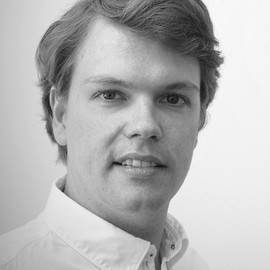
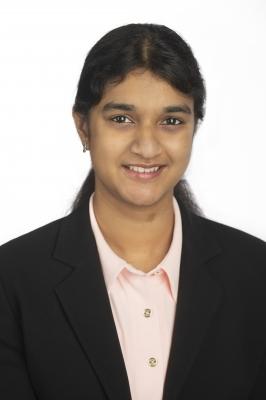
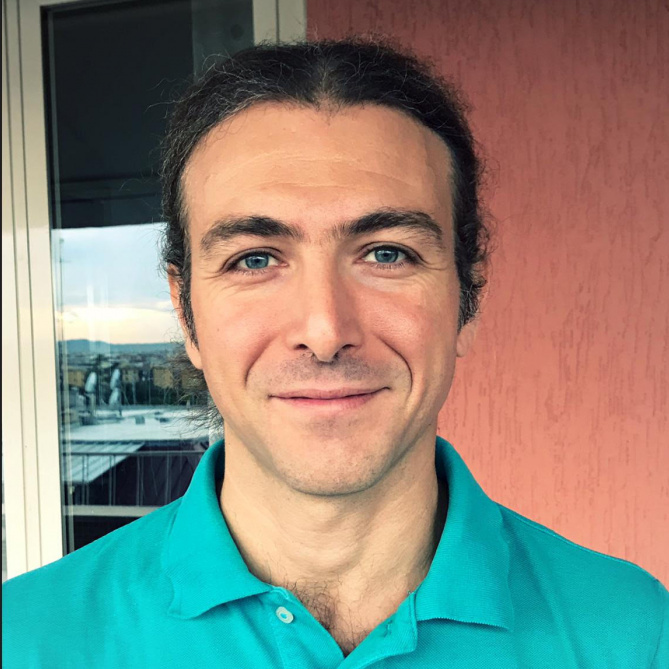
Onno Kleen is an Assistant Professor of Econometrics at Erasmus School of Economics, specializing in time series analysis applied to financial economics and macro-finance. His research focuses on distribution forecasting, volatility modeling, and high-dimensional data analysis using machine learning techniques. His publications demonstrate consistent focus on developing practical econometric tools, including open-source R packages for financial data analysis ( highfrequency ) and mixed-frequency GARCH modeling ( mfGARCH ). Article analysis shows strong emphasis on volatility forecasting techniques and distributional scoring methods. Software Development: Creator of R packages alfred (FRED/ALFRED data access) and mfGARCH (mixed-frequency models) Education: PhD in Economics (Heidelberg University, 2020)
Dr. Vidya K Muthukumar is the Harold R. and Mary Anne Nash Early Career Professor and Assistant Professor jointly appointed in the School of Electrical and Computer Engineering and H. Milton Stewart School of Industrial and Systems Engineering at Georgia Institute of Technology. She holds a B.Tech (with honors) from the Indian Institute of Technology Madras and a Ph.D. in Electrical Engineering from the University of California, Berkeley. Her research includes internships at IBM Research and Simons Institute for the Theory of Computing. Her research focuses on theoretical aspects of machine learning, including game theory, online learning, statistical learning, multi-agent decision-making, and foundations of overparameterized models. Key interests include designing learning algorithms for strategic environments and analyzing high-dimensional model behaviors. Her publications predominantly explore machine learning theory, optimization, and statistical inference. Recent works emphasize robustness, generalization in overparameterized regimes, multi-agent systems, and efficient algorithms. Trends show strong integration of game theory with statistical learning and novel analyses of modern ML phenomena. Simons-Berkeley Research Fellowship IBM Science for Social Good Fellowship UC Berkeley EECS Outstanding Course Development and Teaching Award ECE Roger Webb Outstanding Junior Faculty Award She advises multiple PhD students including Tyler LaBonte, Kuo-Wei Lai, Chiraag Kaushik, Guanghui Wang, and Andrew McRae. Student projects involve task adaptation, robustness analysis, spectral methods, and optimization theory. She leads research initiatives at the Coda S1139 lab, focusing on theoretical machine learning and collaborative projects.
Associate Professor Lu Jin is affiliated with the School of Engineering and the Department of Electrical, Electronic and Computer Engineering at The University of Western Australia. His research focuses on multiuser communication systems, reinforcement learning applications, wireless sensor networks, and acoustic communication challenges in complex environments. He has contributed to educational research in signal processing pedagogy and materials science optimization for construction applications. Research Highlights: Developed dichotomous search-based frequency estimation algorithms Conducted convergence analysis of Markov Chain Monte Carlo methods for concrete mix design Explored blind adaptive multi-user detection techniques for under-ice acoustic networks His publications span engineering education methodologies, signal processing innovations, and interdisciplinary materials research. No scientific awards were explicitly listed in the provided information.
Jeroen van Oijen is a Full Professor in the Department of Mechanical Engineering at Eindhoven University of Technology (TU/e), leading the Power & Flow group. His research focuses on theoretical and numerical modeling of combustion processes, particularly for engines and energy converters using sustainable fuels. He pioneered the Flamelet-Generated Manifold (FGM) method, enabling detailed reaction mechanisms in large-scale simulations. Research Interests: The group specializes in combustion modeling for carbon-free fuels, including hydrogen, methane, and metal fuels. Key methodologies involve Large Eddy Simulation (LES), Direct Numerical Simulation (DNS), and turbulent flame dynamics with preferential diffusion effects. Research applications span gas turbines, boilers, and Argon Power Cycle systems. Scientific Awards: NWO Vici (Argon Power Cycle, 2020) Fellow of The Combustion Institute (2021) NWO Vidi (Clean Combustion of Future Fuels, 2009) NWO Veni (New Combustion Concepts for Ultra-Clean Engines, 2003) Combura 2022 Third Place Poster Prize Advising & Collaborations: Supervised 85+ student theses and coordinated national/international projects with industry partners (Rolls-Royce, Bosch Thermotechnology). Co-authored 100+ journal papers and developed models used in engine and turbine design for emissions reduction.
Fenne Bosma is a Master of Arts Researcher at Erasmus MC in the Public Health department at Erasmus University Rotterdam. Her research primarily focuses on end-of-life care practices including euthanasia and assisted suicide within the Dutch healthcare system. Her research interests span across several critical areas in medical ethics and public health policy: Euthanasia practices in the Netherlands Assisted suicide, particularly for patients with psychiatric disorders End-of-life decision making for elderly patients Medical ethics in terminal care Public health policy related to self-directed dying Cross-sectional studies on physician practices regarding euthanasia Dr. Bosma's recent research demonstrates a strong focus on the ethical, legal, and practical aspects of euthanasia and assisted suicide across different patient populations in the Netherlands. Her work examines these practices among patients with psychiatric disorders, elderly patients with multiple health problems, and the broader frequency of self-directed dying practices. Her scientific contributions include multiple peer-reviewed publications in high-impact journals such as Frontiers in Psychiatry, International Journal of Public Health, and BMJ Open, as well as participation in the fourth evaluation of the Dutch Euthanasia Act.
Yuqi Zhu is a Postdoctoral Scholar at Stanford University's Physics Research Group under Professor Giorgio Gratta, specializing in experimental particle and atomic physics. Their research focuses on dark matter detection, quantum optics, and ultracold molecular systems. Affiliation: Stanford University, Physics Research Group Yuqi Zhu's research spans Particle Physics , Quantum Optics , and Atomic Physics , with significant contributions to dark matter axion searches and ultracold molecular trapping. Key methodologies include HAYSTAC-phase II experiments, Rydberg-state spectroscopy, and precision force sensors for micron-scale interaction studies. Recent publications highlight work on dark matter haloscope experiments , quantum-enhanced detection systems , optical dipole trapping , and ultracold molecular cooling . Their 2025 article on HAYSTAC phase II represents cutting-edge dark matter detection research, while 2024 studies explore new physics at micron scales using levitated microspheres and vector force sensors. Yuqi Zhu contributes to experimental advancements in quantum metrology and molecular trapping , including 2023 studies on squeezed-state receivers and synthetic axion injection techniques. Their 2022-2021 work optimized Rydberg-state spectroscopy and radio-frequency magneto-optical trapping of 87Rb atoms. Current research involves developing high-efficiency molecular trapping systems for SrF molecules, with 2016-2020 publications detailing laser cooling, optical dipole traps, and magnetic confinement methods. Yuqi Zhu's team affiliation includes Stanford's Giorgio Gratta Research Group, focused on fundamental physics experiments.
Hannah Guest is a Research Fellow at The University of Manchester's Division of Psychology Communication and Human Neuroscience. Her work focuses on 'hidden' hearing disorders undetectable via standard tests, with a particular emphasis on noise exposure impacts, autism-related auditory processing, and occupational hearing health in developing nations. Education: BSc (Hons) Hearing & Balance Studies (1st Class, 2014) and PhD in Audiology (2018), both from The University of Manchester. Research interests include subclinical hearing disorders, noise-induced synaptopathy, speech perception in autistic adults, and cross-cultural audiological testing. Current major projects include the £2.3m Hearing In Teens (HIT) study examining nightclub noise effects, the Airwave Police Hearing Study assessing TETRA radio risks, and the SPAACE project collaborating with autistic communities to improve hearing research. Her work has developed telehealth tools like the Manchester Online Speech-perception Suite (MOSS), and pioneered MRI imaging of auditory nerve damage in the N-Expo study. Collaborations include global partners in Palestine and interdisciplinary teams at Manchester's Centre for Audiology and Deafness (ManCAD). Key contributions include validating Arabic-language hearing tests and demonstrating links between noise exposure and tinnitus in vulnerable populations. Ongoing projects aim to inform public health policies on recreational noise and occupational hearing protection.
Caroline P. Lubert is a Professor of Applied Mathematics at the Department of Mathematics & Statistics, James Madison University (JMU), where she has served since 1999. Her research focuses on predicting high-frequency noise in turbulent jets, particularly rocket launch noise and its vibroacoustic impacts. She leads the Aeroacoustics Lab, applying advanced mathematical methods like the Parker-Sochacki Method to study shock-associated noise in rocket exhaust jets. Lubert holds a PhD and BS in Engineering and Mathematics from the University of Exeter, UK. Her educational background includes a PhD (1988) and BS (1984) from the University of Exeter. Her work bridges applied mathematics and aerospace engineering, addressing practical challenges in launch vehicle acoustics. Recent publications emphasize historical and contemporary analyses of supersonic jet noise, rocket launch vibrations, and shock wave dynamics. Key contributions include studies on NASA SP-8072 legacy data, supersonic jet noise modeling, and the Coanda effect’s role in rocket noise prediction. While no awards are explicitly listed, her research has been featured in prominent journals like the Journal of the Acoustical Society of America and AIAA papers. Lubert’s lab focuses on interdisciplinary solutions for aerospace noise mitigation.
Prof. Justin Leontini is a Professor in the Department of Mechanical and Product Design Engineering at Swinburne University of Technology, within the School of Engineering. He holds a PhD from Monash University and completed postdoctoral fellowships at the Centre National de la Recherche Scientifique (France), CSIRO, and Monash as an Australian Postdoctoral Fellow (2011). His research focuses on fluid dynamics, supercomputing simulations, and oscillatory flow applications in ocean energy, biomedical systems, and aerospace composites. Research interests include wave energy converters, high-frequency ventilation gas transport, fluid-structure interactions, and turbulence modeling. He collaborates with institutions like Murdoch Children's Research Institute, 4DMedicalR&D, and Boeing. His work addresses societal challenges such as coastal protection, renewable energy, and lung-protective ventilation protocols. Education: PhD (Monash University) Awards: Australian Postdoctoral Fellowship (2011, ARC) Grants: Over 15 grants, including ARC and industry partnerships on biofilm research, wave energy arrays, and coastal engineering. Teaching: Supervised 17 PhD students in areas like fluid dynamics, composite materials, and renewable energy systems. Prof. Leontini is a member of the Australasian Fluid Mechanics Society and actively contributes to interdisciplinary research, bridging engineering, medicine, and environmental science.
Ali Manzak is an Assistant Teaching Professor in the Department of Electrical and Computer Engineering at Florida State University (FSU). He holds a M.Sc. in Control Systems from the University of Colorado Boulder and a Ph.D. in VLSI Systems from Arizona State University. Prior to academia, he worked as a digital IC design engineer at Lattice Semiconductor in California. His research focuses on low-power VLSI design, embedded systems, mixed-signal IC design, and hardware implementation of machine learning algorithms. He actively contributes to academia through teaching and lab supervision, designing ICs for both educational and research purposes. Education: Ph.D., Electrical Engineering (VLSI Systems), Arizona State University M.Sc., Electrical Engineering (Control Systems), University of Colorado Boulder Research Interests: Dr. Manzak’s work emphasizes energy-efficient VLSI circuits, emerging nanotechnologies like carbon nanotube FETs, and applying machine learning to hardware systems. His publications span IEEE journals and conferences, addressing topics such as power-aware cache design, low-power latch optimization, and AI-driven solutions for electromagnetic problems. Teaching & Labs: He instructs courses like EEL 3705/L, EEL 3927, and EEL 4742/L, and maintains hands-on IC design experience across multiple platforms. His labs integrate industry practices with academic research, fostering practical engineering skills.
María Dolores Pérez Hernández is an Associate Professor and permanent researcher at the Institute of Marine Sciences of the Canary Islands (IOCAG), University of Las Palmas de Gran Canaria. She holds a Ph.D. in Physical Oceanography (2015) and previously worked at Woods Hole Oceanographic Institution (2015-2018) and the Marine and Freshwater Research Institute in Iceland (2017-2019). She currently serves as Secretary of IOCAG. Education: Bachelor's in Marine Science, University of Las Palmas de Gran Canaria (2009) Master's in Oceanography (2011) Ph.D. in Physical Oceanography (2015) Research Interests: Focuses on ocean circulation dynamics under climate change, boundary currents, inter-gyre exchanges, and Meridional Overturning Circulation. Integrates observational techniques (satellite data, autonomous platforms) with numerical models. Recent Work: Her publications analyze Atlantic Ocean circulation patterns, transport mechanisms, and climate system interactions using multi-decadal datasets. Key contributions include studies on North Atlantic zonal circulation and South Atlantic interbasin exchanges. Awards & Grants: Awarded the Viera y Clavijo contract for excellent researchers (2019). Her work has been supported through international collaborations and institutional grants. Labs/Teams: Leads oceanographic field campaigns and data synthesis projects at IOCAG, collaborating with institutions like the National Oceanography Centre (UK) and Scripps Institution of Oceanography.
Alessio Farcomeni is a Professor of Statistics at the University of Rome Tor Vergata, specializing in statistical methodology development. His work bridges academia and applied research across disciplines including economics, medicine, ecology, and engineering. He has authored/co-authored over 250 peer-reviewed papers and two books, with notable contributions in hidden Markov models, Bayesian analysis, and quantitative social science measurement. His research emphasizes interdisciplinary collaboration, reflected in studies on population health, economic policy evaluation, and surgical outcome optimization. Farcomeni’s research interests span statistical theory, with a focus on methodological innovations for complex data structures (e.g., longitudinal, spatial, and high-dimensional datasets). He has pioneered approaches in quantile regression, semi-Markov processes, and latent variable modeling. His applied work addresses real-world challenges such as estimating material deprivation scales, modeling cardiovascular disease risk factors, and analyzing pandemic dynamics (e.g., COVID-19 forecasting in Italy). His recent articles highlight advancements in statistical techniques for healthcare (e.g., AI-driven dermatology diagnostics, atrial fibrillation prediction models) and socio-economic analysis (e.g., macroprudential policy impacts, cross-country material deprivation comparisons). He is recognized for developing open-source statistical software packages, contributing to reproducible research practices. Farcomeni holds the distinction of being ranked among Italy’s top scientists by VIA-Academy. His work frequently integrates Bayesian methods, machine learning, and big data analytics to address pressing questions in public health, environmental science, and economic policy.
Lachlan Astfalck is a Research Fellow at the University of Western Australia's School of Physics, Mathematics and Computing, working on the TIDE ARC ITRH project. He specializes in statistical methodologies for oceanography, hydrodynamics, and paleoclimate modeling. His research focuses on spectral analysis, uncertainty quantification, and developing statistical methods for environmental applications. He holds a PhD (2019) and Bachelor of Engineering in Mechanical Engineering (2014) from the University of Western Australia. Dr. Astfalck's publications demonstrate a strong focus on developing novel statistical approaches for environmental systems. His recent work spans spectral analysis techniques, ocean turbulence modeling, ice sheet reconstruction, and Bayesian methods for climate applications. He actively develops open-source statistical tools and maintains several GitHub repositories related to spectral estimation methods. He is accepting PhD students in statistics and oceanography and has capacity for research collaborations.
Dr. Xin Ma is an Associate Professor of Operations and Supply Chain Management at Monash University's Department of Management. He previously held a Lecturer position at the University of Exeter (2017–2018). He obtained his PhD in Operations Management from The Hong Kong Polytechnic University in 2017. His research focuses on platform operations, behavioral operations, data-driven prescriptive models, and sustainable operations, with notable contributions to journals like Manufacturing & Service Operations Management and European Journal of Operational Research . He has received prestigious awards including the 2021 Dean's Award for Early Career Research and the 2018 Decision Sciences Journal's Most Significant Contribution Award. Dr. Ma leads collaborative research projects such as 'Optimising Australia’s Electricity System: The Role of Blockchain Technology' (2024–2025) and 'Building Cyber Resilience in Fiji' (2025–2026). He serves as Department Editor for IEEE Transactions on Engineering Management and editorial roles for multiple journals. His work addresses UN Sustainable Development Goals related to sustainable cities and communities, climate action, and responsible consumption. Major grants include CRC-P industry grants and leadership in Algorand Centre of Excellence projects. He advises PhD students in operations research, management science, and industrial engineering, emphasizing technical rigor and real-world impact.
Peter Petropoulos is an Associate Professor in the Department of Mathematical Sciences at New Jersey Institute of Technology (NJIT). His research focuses on fluid dynamics, electrohydrodynamics, and computational mathematics, with a particular emphasis on the effects of electric fields on fluid interfaces and instabilities. He has led or co-led multiple National Science Foundation (NSF)-funded projects, including studies on electrohydrodynamic mixing, computational mathematics conferences, and mathematical sciences computing environments. His work spans theoretical, numerical, and applied aspects of fluid dynamics and electromagnetism, with applications in materials science and engineering. Research Interests: Electric field effects on fluid flows Interfacial instabilities and stabilization Dielectric and dispersive media Numerical methods for partial differential equations Dr. Petropoulos has authored over 40 publications, including works on Rayleigh-Taylor instability suppression, Havriliak-Negami dielectrics, and high-order numerical schemes for Maxwell's equations. His research has contributed to advancements in both fundamental science and applied computational techniques. Grants/Projects: Interaction between flow and topography in interfacial electrohydrodynamics (NSF, 2007–2012) Conference on Frontiers in Applied and Computational Mathematics (NSF, 2007–2008) Mathematical Sciences Computing Research Environments (NSF, 1995–1997) His collaborations include researchers in fluid mechanics, applied mathematics, and computational physics, reflecting his interdisciplinary approach to scientific inquiry.