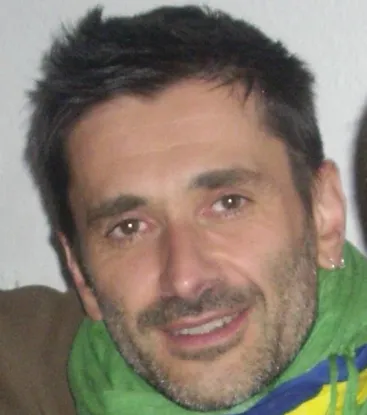
Dr Matthias Maischak is a Reader in the Department of Mathematics at Brunel University London within the College of Engineering, Design and Physical Sciences . His research focuses on elliptic boundary value problems , transmission problems , Signorini problems , and variational inequalities , with emphasis on boundary and finite element methods , fast solvers , and adaptive algorithms . He is also a key developer of the MaiProgs software package, which implements advanced numerical techniques for engineering applications. Research Areas : Boundary Element/FEM Methods, Contact Mechanics, Adaptive Algorithms, High-Performance Computing, Retarded Potential Analysis Supervision : Ph.D. and MSc students in computational mathematics, including projects on shape analysis, discontinuous Galerkin methods, and boundary integral equations. Publications span topics like dual-dual formulations , FE-BE coupling , hp-adaptive methods , and error estimation in linear elasticity and acoustic fluid-structure interaction . He has co-authored works on nonlinear interface conditions and time-domain boundary element methods , with applications to microstructure analysis , elastoplastic contact , and singular perturbations .
Hans Joakim Skadsem is an Associate Professor at the Department of Energy and Petroleum Engineering, Faculty of Science and Technology, University of Stavanger. His research is centered on experimental and computational fluid dynamics in industrial processes, particularly related to well construction, including fluid displacement, well cementing, and particle transport in complex geometries such as eccentric annuli. His research interests include: Fluid mechanics of single- and multiphase flows Measurement, modeling, and simulation of fluid dynamics Rheology of non-Newtonian and complex fluids Application of computational methods in engineering Wellbore flow processes His recent publications span topics such as density-unstable displacements, cement sheath integrity, reverse circulation, pipe viscometry, and microannulus sealing, reflecting a strong focus on both fundamental fluid dynamics and practical well integrity challenges. He frequently publishes in high-impact journals like Physics of Fluids , SPE Journal , and Journal of Petroleum Science and Engineering , often using combined experimental and numerical approaches. While no specific scientific awards are listed, his consistent publication record and leadership in key research areas indicate professional recognition. His work often involves collaboration with industry and academic partners, and he contributes to advancements in measurement techniques and modeling tools for field applications. He is actively involved in research related to well abandonment, zonal isolation, and downhole fluid behavior, with implications for long-term well integrity and environmental safety. Skadsem has held previous positions at IRIS, DNV, and Scandpower AS, bringing significant industry-relevant experience to his academic role. He is not part-time, retired, or deceased, and remains an active faculty member.
Jay Gopalakrishnan is a Professor of Mathematics and the Maseeh Distinguished Chair at Portland State University's Department of Mathematics. His research focuses on scientific computation, numerical analysis, finite elements, and multigrid methods with applications in optics and mechanics. He has contributed significantly to the development of hybridizable discontinuous Galerkin (HDG) methods and the Discontinuous Petrov-Galerkin (DPG) framework, emphasizing structure-preserving numerical techniques. His work spans diverse domains including microstructured optical fibers, spacetime tents for hyperbolic systems, and eigenvalue cluster computations. Notable research activities include developing accurate computational tools for leaky modes in fibers, stability analysis of acoustic waveguides, and bone mineralization models. He advises doctoral students at institutions such as Intel Corporation, The MathWorks, and James Madison University. His teaching includes advanced numerical analysis courses and undergraduate mathematical computing. Collaborations with researchers like L. Demkowicz and J. Schöberl highlight his interdisciplinary impact in computational mathematics and engineering.
Prof. Moritz Diehl is a Professor at the University of Freiburg, leading the Systems Control and Optimization Laboratory within the Department of Microsystems Engineering (IMTEK) and affiliated with the Department of Mathematics. Born in Hamburg, Germany, he holds a Ph.D. from Heidelberg University (2001) and previously served as a professor at KU Leuven (2006–2013), where he directed the Optimization in Engineering Center (OPTEC). His research focuses on optimization and control, emphasizing numerical methods for engineering applications, particularly embedded systems and renewable energy. Key areas include model predictive control (MPC), nonlinear optimization, and real-time control systems. Education: He studied physics and mathematics at Heidelberg University and the University of Cambridge (1993–1999), culminating in a Ph.D. in Scientific Computing. His academic journey includes roles at KU Leuven and Freiburg, where he has developed influential tools like the AWEbox framework for airborne wind energy systems and the acados optimization library. Research Interests: His work spans numerical optimal control, MPC algorithms, and their applications in robotics, energy systems, and automotive engineering. Recent advancements include collision-free motion planning, real-time NMPC with convex-concave constraints, and stochastic control methods for mobile robots. He also explores optimization for hybrid systems, leveraging finite elements and switch detection for nonsmooth dynamics. Publications: His 2023–2025 work highlights contributions to MPC stability, energy-efficient control systems, and software tools like LCQPow for quadratic programming. His research bridges theory and practice, addressing challenges in industrial processes, renewable energy integration, and autonomous systems. Labs & Teams: He leads the Systems Control and Optimization Lab, fostering interdisciplinary projects in optimal control, robotics, and sustainable energy. His group collaborates on tools like acados, emphasizing real-time feasibility and scalability for complex systems.
Philip Lukas Lederer is a researcher at TU Wien's Forschungsgruppe Computational Mathematics in Engineering, affiliated with the Faculty of Mathematics and Geoinformation. His work focuses on computational fluid dynamics, numerical analysis, and finite element methods with an emphasis on incompressible flows, non-Newtonian fluids, and pressure-robust discretizations. He has contributed to advancements in hybridized discontinuous Galerkin methods, divergence-free reconstruction techniques, and robust error estimation. His research addresses challenges in Stokes equations, Biot's consolidation model, and large eddy simulation. Notable collaborations include projects with Joachim Schöberl, Christoph Lehrenfeld, and others in computational mathematics. Lederer's publications emphasize high-order methods, mass conservation, and stress formulations. His work on embedded boundary approaches and surface flow simulations demonstrates innovation in geometric numerical integration. He has advised at least one master's student, Jan Ellmenreich, on non-Newtonian fluid simulations.
Jack HALE is a Research Scientist at the University of Luxembourg's Faculty of Science, Technology and Medicine (FSTM), Department of Engineering. He joined Prof. Stéphane Bordas' team in 2013, focusing on computational mechanics and numerical methods. His work integrates advanced techniques like meshfree methods, XFEM, and isogeometric analysis to address challenges in solid mechanics and high-performance computing. Education : PhD in Aeronautics, Imperial College London (2009-2013), supervised by Dr. Pedro M. Baiz Villafranca. MEng in Engineering, University of Bristol (2004-2008). Research exchange at Rice University (2006-2007) on cross-flow filtration processes. Research Interests : Implicit boundary methods for medical image-based simulations. Development of scalable meshfree/XFEM/isogeometric analysis frameworks. Mixed variational methods to resolve locking phenomena in solid mechanics. High-performance computing for distributed parallel systems. Publications & Software : His 50+ publications emphasize open-access research via ORBilu, with a focus on FEniCSx-based tools (e.g., DOLFINx, FEniCS-shells). Recent work addresses Bayesian model selection, melt instability identification, and SAR data assimilation in aquifer modeling. Collaborations : Open to academic/industrial partnerships in computational mechanics, material science, and biomedical engineering.
Sarah Eberle-Blick is a Senior Lecturer at the Institute of Mathematics , Goethe University Frankfurt, Department of Computer Science and Mathematics. Her work bridges numerical methods, inverse problems, and wave propagation in elasticity. Research Focus : Numerical analysis of PDEs, monotonicity methods for inclusion detection, FEM-BEM coupling, multiscale seismic data processing. Key Contributions : DFG-funded projects on elastic wave reconstruction; development of stable integral formulations for acoustic and thermoelastic wave equations; implementation of 3D wave simulations. Article Trends : Recent papers emphasize inverse problems in linear elasticity, time-harmonic wave equations, and multiscale analysis using wavelets. Collaborative work spans geophysics, computational mechanics, and mathematical modeling. Projects : Includes monotonicity-based regularization, Lipschitz stability estimation, and FEM-BEM coupling with convolution quadrature. Contact: eberle@math.uni-frankfurt.de | Room 103, Institute of Mathematics, Frankfurt am Main, Germany.
Michael Karow is a Researcher at the Institute of Mathematics , Technical University of Berlin , affiliated with the Faculty II - Mathematics and Natural Sciences . His research focuses on Numerical Linear Algebra , Control Theory , and Matrix Perturbation , with specific interests in Pseudospectra , Stability Radii , and Structured Eigenvalue Problems . Educational background includes a Ph.D. (2003) from the University of Bremen, titled " Geometry of Spectral Value Sets ," and a Habilitation (2009) at TU Berlin. His work spans collaborations with institutions like IIT Guwahati, EPFL Lausanne, and SUNY Utica. His research involves stabilizing discrete-time linear systems via matrix factorizations, structured matrix pencils with no spillover effects, and backward error analysis for palindromic polynomials. Publications highlight applications in finite element model updating , eigenvalue sensitivity , and geometric matrix theory . Teaching includes courses like Numerical Mathematics 1 for Engineering , Differential Equations and Numerics , and Calculus of Variations . He has led workshops in India, Italy, and the U.S., focusing on numerical methods and control theory.
Mohammad Sadeghi is a Research Fellow at the Institute of Mechatronics in Mechanical Engineering, Hamburg University of Technology, specializing in robotics, haptic systems, and sensor design. He holds a Dr.-Ing. degree and maintains active roles in research supervision and collaborative industry projects. His academic foundation includes: M.Sc. in Mechanical Engineering from Ferdowsi University, Mashhad, Iran B.Sc. in Mechanical Engineering from Birjand University, Birjand, Iran Dr. Sadeghi's research integrates robotics with medical applications, focusing on wearable exoskeletons for telerehabilitation, bio-inspired whisker sensors, and magnetoelectric actuator systems. His methodological approach combines finite element simulation, inverse optimization, and machine learning to solve challenges in human-robot interaction and precision sensing. Recent work demonstrates growing emphasis on mixed reality integration for industrial haptic feedback and minimally invasive surgical applications. Publication analysis reveals dual research thrusts: medical robotics (40% of recent output) featuring rehabilitation devices and surgical sensors, and magnetoelectric systems (35%) for bioimaging and precision actuation, complemented by biomaterials and manufacturing optimization studies. Recognition includes: Hamburg Innovation Call for Transfer award (2024) for surgical precision enhancement via whisker sensors He supervises six active theses on topics including magnet-based whisker sensors and mixed reality haptic feedback, with Kyrillos Adeeb's 2024 singularity-avoidance project completed. Industry collaborations with Schaeffler (robotic manufacturing), MBJ GmbH (solar robotics), and bAhead (liquid handling systems) demonstrate translational impact. His experimental work utilizes the institute's Haptics Lab and PHiLsLab for hardware-in-the-loop validation of autonomous systems.
Eric Vincens is a University Professor in Civil Engineering at École Centrale de Lyon , where he has worked since 2004. He serves as Director of the Solid Mechanics - Mechanical Engineering - Civil Engineering department and co-heads the Ecological Transition & Territories option in engineering training. His academic background includes graduation from ENS Paris-Saclay , an agrégé in civil engineering, and a PhD from École Centrale de Lyon (1999) . Research Interests focus on: Soil and geotechnical structure behavior Sustainability of large strategic structures (dams, bridges) Vernacular construction with low environmental impact (raw earth, dry stone) Adaptive modeling approaches for filtration processes Publications Analysis : His work spans granular material filtration mechanisms , concrete modification with industrial byproducts , and seismic behavior of dry stone structures . Recent studies (2024-2025) emphasize: Comparative analysis of dry/wet filtration models Micro-mechanical characterization of void spaces Seismic stability of traditional masonry constructions Digital image correlation for material property determination
Loic Theolier is an Associate Professor at University of Bordeaux specializing in microelectronics reliability within the IMS Bordeaux research laboratory (Laboratoire de l'intégration, du matériau au système). He is affiliated with the College of Science and Technology's Department of Electrical Engineering, where he leads research in the RELIABILITY group with specific team assignments to RIAD and WBG. His work focuses on the reliability of power semiconductor devices, particularly addressing failure mechanisms under various stress conditions. Dr. Theolier's research interests center on microelectronics reliability, power electronics, and semiconductor device physics. His work examines aging mechanisms in power devices, mechanical stress analysis during operation, and thermal management challenges in high-power applications. He has developed expertise in electro-thermo-mechanical modeling of SiC MOSFET transistors, Deep Trench Termination diodes, and GaN-based high-electron-mobility transistors (HEMTs), with particular attention to short-circuit events and high-temperature operation. His research combines experimental characterization with advanced numerical simulation techniques to predict device failure and improve reliability. Analysis of his publication record reveals a strong focus on reliability challenges in next-generation power semiconductors, with recent work examining SiC MOSFETs under short-circuit conditions, high-temperature reliability testing of GaN devices, and innovative approaches to high-voltage termination structures. His research spans both fundamental device physics and practical engineering applications, with increasing attention to aerospace and automotive power electronics requirements. Dr. Theolier has contributed to educational initiatives in engineering pedagogy, including peer tutoring programs for first-year students and laboratory-based research initiation projects for microelectronics students. His work demonstrates a commitment to both advancing reliability science and developing effective teaching methods in electrical engineering education. He is actively involved in the RIAD and WBG research teams at IMS Bordeaux, collaborating with multiple institutions including CNRS and Institut Polytechnique de Bordeaux. His laboratory work focuses on accelerated aging tests, mechanical stress characterization, and failure analysis of power electronic components using advanced simulation and experimental techniques.
Andrea Borio is an Associate Professor at the Department of Mathematical Sciences 'GL Lagrange' (DISMA) at Politecnico di Torino. He is affiliated with the College of Mathematical Engineering and College of Mechanical, Aerospace and Automotive Engineering . His research focuses on Numerical Analysis , Virtual Element Methods , Partial Differential Equations , and Mesh Adaptivity . Research Interests: A posteriori error estimates, mesh adaptivity for polygonal/polyhedral grids, stabilization-free numerical methods, and applications of virtual element methods in geomechanics, biomedical simulations, and coupled flow problems. Recent Publications highlight advancements in stabilization-free virtual element methods for elliptic equations, divergence-free projections, and software frameworks like POLYDIM and GEOS for large-scale simulations. His work spans applications in underground fluid storage, brain tumor modeling, and discrete fracture networks. Teaching: Courses include Sobolev Spaces on Non-Smooth Domains , Solving PDEs on Polygonal Meshes , and modules on numerical models/methods across Mathematical, Mechanical, and Aerospace Engineering programs. Students: Supervises Davide Fassino, a PhD student in Pure and Applied Mathematics (38th cycle, 2022–ongoing). Skills: ERC sectors include numerical analysis, scientific computing, and mathematical applications in industry.
Professor Hadi Khabbaz is a distinguished academic at the School of Civil and Environmental Engineering, University of Technology Sydney (UTS), where he has served since 2008. Holding a PhD in Geotechnical Engineering from UNSW (1997), MSc in Geo-environmental Engineering, and BSc (Honours) in Civil Engineering from Shiraz University, he serves as Head of Discipline for Geotechnical & Transport Engineering and Deputy Head of School (Research). Current academic appointment: Professor at UTS Key roles: Head of Discipline, Deputy Head of School (Research) Professional memberships: Chair of Australian Geomechanics Society (Sydney) His research program focuses on unsaturated soil mechanics , ground improvement techniques , and railway geomechanics , with particular emphasis on soil behavior modeling and problematic soils . Recent work explores machine learning applications in geotechnical analysis and smart infrastructure development . Article trends reveal expertise in geotechnical modeling using advanced computational methods, recycled material applications for sustainable infrastructure, and machine learning integration in geotechnical engineering. His work spans landfill mechanics , pile foundation analysis , and environmental geotechnics . Scientific recognition includes 1999 Joint Section Award for outstanding paper Three best paper awards with colleagues and students As an academic leader, he supervises research students and has developed courses like Advanced Soil Mechanics and Foundation Design and Geotechnical Aspects of Landfill Design . His funded research portfolio includes projects with ARC Discovery Grants and industry partnerships addressing infrastructure challenges.
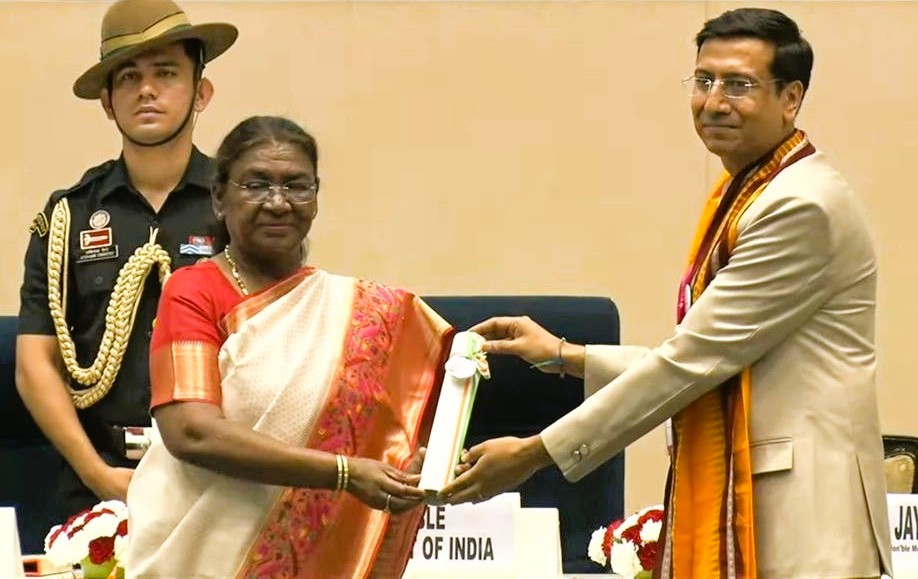
Prof. Kapil Ahuja is a Full Professor in the Department of Computer Science & Engineering at the Indian Institute of Technology Indore (IIT Indore), where he heads the Mathematics of Data Science and Simulation (MODSS) research lab. After completing dual Master's degrees and a Ph.D. from Virginia Tech (USA) followed by postdoctoral work at the Max Planck Institute in Germany, he has held visiting positions at UT Austin, IMT Atlantique, Sandia National Labs, TU Dresden, and TU Braunschweig. His administrative roles include founding Dean of International Affairs and former Head of Computer Science & Engineering at IIT Indore. Education: Ph.D. in Mathematics, Virginia Tech (2011) M.S. in Mathematics, Virginia Tech (2009) M.S. in Computer Science, Virginia Tech (2007) B.Tech. in Mechanical Engineering, IIT (BHU) Varanasi (2001) Research Focus: Prof. Ahuja's work bridges theoretical advances with real-world applications, emphasizing machine learning algorithms for plant/cancer studies, game-theoretic poverty reduction models, exascale climate modeling solvers, and drone trajectory optimization. His interdisciplinary approach integrates numerical linear algebra with network science to solve complex systems problems across healthcare, agriculture, and climate science, supported by 4.85 Crores INR in external funding. Publication Trends: Recent work demonstrates growing emphasis on AI-driven optimization for physical systems (drones, climate models) and biomedical applications (cancer classification). His publications increasingly feature cross-disciplinary collaborations between computer science, biology, and economics, with notable contributions in explainable AI for healthcare and resource allocation algorithms for social networks. Scientific Recognition: National Teacher's Award (2024) from the President of India Five-time recipient of IIT Indore's Best Teacher Award (2013-2023) Best Poster Award at International Workshop on Game Theory & Networks (2019) Steeneck Graduate Research Fellowship (Virginia Tech, 2011) Multiple SIAM travel awards for international conferences Mentorship & Service: Prof. Ahuja has graduated 5 Ph.D. and 4 M.S. (Research) students while mentoring 75 B.Tech. projects. He serves as Associate Editor for Applied Intelligence Journal (Springer Nature) and Knowledge and Information Systems, organizes international conferences, and reviews for 35+ academic sources. His administrative leadership significantly expanded IIT Indore's global partnerships through the Research Park initiative. Research Infrastructure: The MODSS lab maintains active collaborations with Oak Ridge National Lab, Sandia National Labs, and European institutions. Current projects include AI-optimized drone swarms for agricultural monitoring and game-theoretic models for poverty intervention, utilizing high-performance computing resources for large-scale simulations.
Dr. Gaurav Tiwari is an Associate Professor in the Department of Civil Engineering at the Indian Institute of Technology Kanpur . His research focuses on Rock Mechanics , with expertise in Geotechnical Engineering and Rock Engineering . Education : PhD in Geotechnical Engineering (Rock Mechanics) from IISc Bangalore, M.Tech in Geotechnical Engineering from IIT Roorkee, and B.E. in Civil Engineering from M.B.M. Govt. Engineering College, Jodhpur. His work emphasizes Experimental Rock Mechanics , Probabilistic Rock Engineering , and Reliability Analysis for rock structures with limited data. Key applications include rock slope stability , tunnel support design , and dynamic behavior of jointed rocks . He has developed hybrid reliability frameworks and sensitivity analysis methods for spatially varying rock properties and data-deficient scenarios , as evidenced by his recent articles in journals like International Journal of Rock Mechanics and Mining Sciences and Rock Mechanics and Rock Engineering . Dr. Tiwari’s students have contributed to high strain rate rock analysis , grouted flaw dynamics , and probabilistic modeling . His scientific awards include the IGS-Leonard’s Best PhD Thesis Award (2018-2019), ISSMGE scholarship (2017), and multiple IGS-Roorkee YGE Awards for Best Papers. Laboratory Facilities : Computational tools (FLAC-2D/3D, UDEC, Rocscience Academic Bundle) and experimental setups (high-rate direct shear testing, 3D-printed synthetic samples, rock durability tests).