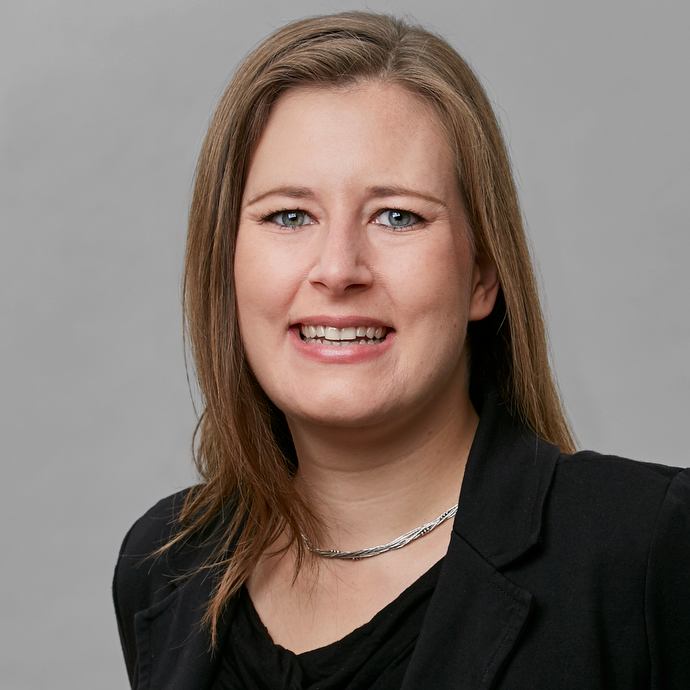
Rebecca Nugent is the Stephen E. and Joyce Fienberg Professor of Statistics & Data Science and Department Head at Carnegie Mellon University. She holds a PhD in Statistics from the University of Washington (2006), an MS in Statistics from Stanford (2006), and a BA in Mathematics, Statistics, and Spanish from Rice University (2002). Her research spans clustering methodology , record linkage , educational data mining , public health , and semantic organization , with a focus on high-dimensional data and adaptive learning environments. She leads the Integrated Statistics Learning Environment (ISLE) and Corporate Capstone programs, emphasizing low-barrier data platforms for education and industry collaboration. Academic Roles : Department Head, Carnegie Mellon; Affiliated Faculty, Block Center for Technology and Society Research Grants : NSF (2017-2019), NIH (2018), Carnegie Mellon ProSEED/Simon Initiative (2020, 2018), Berkman Fund (2014) Her 15 most recent publications focus on data science pedagogy, clustering algorithms, record linkage applications in historical and medical data, educational data mining, and semantic organization studies. Awards include the ASA Waller Education Award (2015) and the William H. and Frances S. Ryan Award (2015) . She mentors a diverse group of PhD, Master's, and undergraduate students, with alumni pursuing careers in academia, industry, and sports analytics.
Jean-François Godbout is a Professor in the Department of Political Science at the Université de Montréal and an Associate Academic Member of Mila - the Quebec AI Institute. He directs the undergraduate program in Big Data Analytics in Social Sciences and Humanities at UdeM and conducts interdisciplinary research through the Complex Data Lab. Affiliated with IVADO (AI Consortium) Member of CÉRIUM (International Research Centre) and CECD (Democratic Citizenship Centre) His research focuses on: Data Science applications in political institutions AI Safety and generative AI's impact on political attitudes Misinformation Mitigation through large language models Comparative Political Development in Canadian and Lower Canada contexts Legislative Institutions and voting records analysis Political Polarization in online societies Recent publications analyze social media disinformation, AI persuasion on harmful topics, and education-focused text simplification. His articles frequently combine graph mining , machine learning , and political science methodologies. Scientific collaborations include: Mila researchers (Andreea Musulan, Maximilian Puelma Touzel) IVADO data science initiatives McGill University interdisciplinary projects He supervises students in: Political science (Julien Robin, Matthew Taylor) Artificial Intelligence (Kellin Pelrine, Camille Thibault) Computational social science applications
Kevin Pugh is a Professor in the School of Psychological Sciences at the University of Northern Colorado, affiliated with the College of Education and Behavioral Sciences. Specializing in transformative experience theory, motivation, and cognition, his work bridges educational psychology with real-world learning applications. Ph.D. in Educational Psychology (Learning & Cognition), Michigan State University (2002) B.S. in Psychology, Brigham Young University (1994) Assistant Professor, University of Toledo (post-Ph.D.) Joining UNC in 2006 Dr. Pugh's research investigates how learning transforms students' worldviews through Deweyan aesthetics and motivational frameworks. His transformative experience theory emphasizes real-world application of knowledge, studied across science education, problem-based learning, and culturally relevant pedagogy. Recent publications analyze mineral misconceptions, instructor-student connections, and gender dynamics in geology education. He teaches learning theory, cognition, and motivation courses using transformative, authentic pedagogies. The Calvin Project, which uses comic characters to explore motivation theory, exemplifies his innovative approach. Dr. Pugh has secured National Science Foundation grants and serves on the editorial board of the Journal of Experimental Education. Principal investigator for NSF-funded projects Editorial board member, Journal of Experimental Education School of Psychological Sciences faculty Contact: kevin.pugh@unco.edu | Office: McKee Hall 63 | Phone: 970-351-2989
Carlijn Bouten is Full Professor of Cell-Matrix Interactions in Cardiovascular Regeneration at Eindhoven University of Technology. She leads the Soft Tissue Engineering & Mechanobiology group, investigating cellular interactions with extracellular environments in tissue growth, adaptation, and regeneration. Her research develops biodegradable heart valve prostheses that enable in vivo tissue regeneration, applying tissue engineering approaches to cardiovascular medicine. Professor Bouten holds an MSc from Vrije Universiteit Amsterdam and a PhD from TU/e. She completed postdoctoral research at Université Laval and University of London before joining TU/e's faculty. She directs the national Gravitation program 'Materials-Driven Regeneration' and received an ERC Advanced Grant for cardiac tissue organization research. Research Focus: Her interdisciplinary program spans: Mechanobiological cues in tissue regeneration Development of living heart valve replacements Advanced biomaterials for cardiovascular applications In vitro models for tissue development Soft robotic systems for cardiac assistance Recent publications demonstrate innovations in biohybrid devices, standardized biomaterial testing, and novel tissue patterning techniques. Her work integrates engineering, materials science, and clinical translation through collaborations with medtech spin-offs. Leadership and Recognition: Fellow of the European Alliance for Medical and Biological Engineering President-elect of the Heart Valve Society Member of AcademiaNet for Outstanding Female Scientists Recipient of NWO VICI grant and Aspasia award She leads multinational consortia in regenerative medicine and teaches courses on heart/blood physiology and regeneration. Her lab develops model systems spanning cellular to tissue levels to quantify mechanobiological processes.
Associate Professor Christine Preston at the University of Sydney's Faculty of Education and Social Work specializes in primary science education with a focus on early childhood development. She maintains active classroom experience through her kindergarten science teaching and leads research on science diagrams, toy-based learning, and teacher professional development. Her work integrates embodied learning and representational pedagogies to enhance conceptual understanding in STEM subjects. Dr. Preston's research examines innovative approaches including citizen science integration, digital technologies, and adaptive curriculum design. She currently lectures in primary science and technology education, while supervising doctoral candidates exploring computational thinking and marine biology education. Her scholarly contributions emphasize practical classroom applications and teacher support resources. Award recognition includes multiple Excellence in Teaching awards (2007, 2016) and the 2001 NSW Quality Teaching Award. She maintains active membership in international science education associations including ASTA, ESERA, and NSTA, serving on editorial boards for science education journals.
Susan C. Levine is the Rebecca Anne Boylan Distinguished Service Professor of Education and Society in the Department of Psychology at the University of Chicago. Her research explores the interplay between early spatial and numerical thinking, focusing on how adult-child interactions shape mathematical development in home and school settings. Her work examines children's understanding of natural numbers and fractions, evaluates interventions to improve math skills, and investigates how parental and teacher math attitudes influence child outcomes. Key areas include math anxiety, gesture-based learning, and socioeconomic impacts on numeracy. Recent publications highlight gesture interventions for spatial misconceptions, math anxiety in college calculus, and the role of parental interactions in shaping children's mathematical beliefs. The Distinguished Service Professor award recognizes her contributions to educational psychology.
Alipaşa Ayas is a Professor and Dean of the Faculty of Education at Bilkent University, where he also serves as Chair of the Department of Educational Sciences. His research focuses on science education, teacher training, conceptual understanding, and inclusive education. He has led numerous national and international projects, including UNICEF- and EU-supported initiatives. Ph.D., University of Southampton M.A., University of New Brunswick MSc., Karadeniz Technical University BSc., Karadeniz Technical University His research interests span teacher education, science education (particularly chemistry), concept development, curriculum design, and assessment strategies. He employs both qualitative and quantitative methods to explore these areas. His publications emphasize inquiry-based learning, conceptual change strategies, and the effectiveness of interventions such as the 5Es model, constructivist activities, and analogies in enhancing science learning. These works often address misconceptions in chemistry and methods to improve scientific process skills. He has contributed to projects supported by the World Bank, EU, and UNICEF, including initiatives on lifelong learning, education development, and inclusive teacher training. His administrative roles include a 6-year deanship at Karadeniz Technical University and leadership of Bilkent University’s Graduate School of Education since 2017.
Deborah Kelemen is Professor of Psychological & Brain Sciences at Boston University, where she directs the Child Cognition Laboratory. Her research examines conceptual development across domains including intuitive theory formation, moral cognition, and science education. She investigates how children develop frameworks to understand the natural and social world, with particular focus on teleological reasoning and biological essentialism. Kelemen's work explores how early-emerging cognitive biases influence reasoning about nature's purpose and design, and how these intuitions persist into adulthood. Her research program bridges developmental psychology with science education, creating interventions to improve evolution understanding and environmental attitudes. Current projects examine the cognitive foundations of moral judgments about environmental issues and human purpose. Through extensive experimental studies, Kelemen analyzes how children and adults conceptualize biological traits, environmental relationships, and complex scientific mechanisms. Her educational research develops storybook curricula to foster accurate scientific understanding while addressing persistent misconceptions.
Name: Alexander Katsaitis Position: Associate Professor, Docent Affiliation: Department of Political Science, Stockholm University Email: a.katsaitis@statsvet.su.se ORCID: 0000-0002-9427-6328 Education: PhD, University College London (October 2016) Research Focus: Alexander Katsaitis's research centers on the intersection of policymaker-organized interest interactions, decision-making procedures, and transnational partisan linkages. His work aims to enhance government policymaking through evidence-based recommendations in governance, transparency, and accountability. He has explored regulatory modernization in lobbying, gender representation in EU lobbying, and the evolving nature of EU business lobbying. Publications Trends: Katsaitis has published extensively on EU governance, business-government relations, and transparency mechanisms. His work includes a monograph on "Business Lobbying in the EU" (2021) and co-edited the "Handbook on Lobbying & Public Policy" (2024). Recent articles focus on political financing tracking, lobbying ethics, and institutional dynamics in the European Parliament. Previous Appointments: Before joining Stockholm University, Katsaitis held fellowships at the London School of Economics, European University Institute, and University of Oslo.
Dr. Shufang Zhu is a Lecturer (Assistant Professor equivalent) at the Department of Computer Science, University of Liverpool , and an Associate Member at the University of Oxford’s Department of Computer Science . Previously, she held roles including Senior Research Associate at Oxford (2023–2024) and Postdoctoral Researcher at Sapienza Università di Roma (2020–2022). She earned her Ph.D. in Software Engineering from East China Normal University (ECNU, 2020) under Prof. Geguang Pu, with a visiting Ph.D. at Rice University (2016–2018) under Prof. Moshe Y. Vardi. Education: B.Sc./Ph.D. in Software Engineering from ECNU (2010–2020). Scholarships include the Chinese Scholarship Council (CSC) and UT Austin EECS Rising Star (2022). Her research focuses on interdisciplinary areas of Formal Methods and Artificial Intelligence , emphasizing automated reasoning, planning, and synthesis. Key topics include temporal logics (LTL/LTLf), symbolic synthesis frameworks, and applications in reactive systems. Notable work addresses finite-trace specifications, best-effort strategies, and coordination in multi-agent systems. Teaching: Lecturer for Game-Theoretic Approach to Planning and Synthesis (European Summer School) and Foundations of Self-Programming Agents (Oxford). She also supervises funded Ph.D. positions, including a 2025 deadline for CSC-Liverpool scholarships. Awards: Future Digileader (Digital Futures, 2023), UT Austin EECS Rising Star (2022). Erdős number ≤3 via Moshe Y. Vardi. Collaborations: Co-chair of AAAI 2023 symposium on temporal logics in AI. Active in open-source tools like LydiaSyft for LTLf synthesis. Engages with academic networks through Google Scholar, DBLP, and GitHub.
Andrew D. Selbst is a Professor of Law at UCLA School of Law and currently serves as the William J. Friedman and Alicia Townsend Friedman Visiting Professor of Law at Harvard Law School. He has been on the UCLA faculty since 2020 and previously held positions as a Postdoctoral Scholar at the Data & Society Research Institute and a Visiting Fellow at Yale Law School's Information Society Project. He has also taught as an Adjunct Professor at Fordham Law School. Professor Selbst received his educational training from prestigious institutions: S.B. in Physics and Electrical Science and Engineering from MIT (2004) M.Eng. in Electrical Engineering and Computer Science from MIT (2005) J.D. from the University of Michigan Law School (2011) Before entering academia, Professor Selbst worked as a design engineer at Cirrus Logic and Analog Devices. Following law school, he served as a Privacy Research Fellow at NYU School of Law's Information Law Institute, an Alan Morrison Supreme Court Assistance Fellow at Public Citizen Litigation Group, a Senior Associate in Hogan Lovells US LLP's Communications group, and clerked for federal judges including the Honorable Dolly M. Gee and the Honorable Jane R. Roth. Professor Selbst's research examines the complex relationship between law, technology, and society. Drawing on resources from computer science, sociology, and science and technology studies, he seeks to understand how technologies interfere with existing legal regimes and how legal actors can respond to the social effects of new technology. His recent work has focused specifically on the effects of machine learning and artificial intelligence on various legal domains, including discrimination law, policing practices, credit regulation, data protection frameworks, and tort law. His interdisciplinary approach combines technical understanding of AI systems with deep legal analysis to address emerging challenges in the digital age. Professor Selbst teaches courses in torts, information privacy and data protection, a seminar on law, technology and society, and beginning in 2025, a dedicated course on Artificial Intelligence Law. His publications have appeared in leading law journals including Boston University Law Review, California Law Review, Harvard Journal of Law and Technology, and University of Pennsylvania Law Review, as well as in the ACM Conference on Fairness, Accountability and Transparency. He is also the coauthor of a forthcoming casebook on Artificial Intelligence Law. His scholarly contributions demonstrate a consistent focus on the intersection of emerging technologies and legal frameworks, with particular attention to how AI systems create novel challenges for established legal doctrines. Professor Selbst's work has been influential in shaping academic and policy discussions around AI regulation, algorithmic accountability, and the adaptation of legal systems to technological change.
Dr. Dana Ferris is a Professor in the University Writing Program at the University of California, Davis (UC Davis). She previously held leadership roles including Director of the UWP, Associate Director of English for Multilingual Students, and Associate Director of UWP 1. Her academic career spans over three decades, including 18 years at California State University, Sacramento, where she directed the TESOL MA program and ESL writing programs. She earned her B.A. from UC Davis, M.A. degrees from California State University, Sacramento and the University of Southern California (Linguistics), and a Ph.D. in Applied Linguistics from USC. Her research focuses on second language literacy, teacher preparation, and response strategies for student writing. She has authored nine books and over 60 scholarly works, including Teaching L2 Composition and Written Corrective Feedback in Second Language Acquisition and Writing . Ferris has served as co-editor of the Journal of Second Language Writing and founding editor of the Journal of Response to Writing , contributing significantly to academic discourse in her field. Ferris has received numerous awards, including the Best Article Award from the Journal of Second Language Writing and three-time finalist for the President's Award for Scholarly Achievement. She actively contributes to academic governance, serving on boards for CATESOL and TESOL. Beyond academia, she is an avid San Francisco Giants fan and writer for their fan blog under the pseudonym DrLefty. Key Roles: Professor, UWP Leadership, Journal Editorships Education: B.A. UC Davis (English/Creative Writing), M.A. Sacramento State (TESOL), M.A./Ph.D. USC (Linguistics/Applied Linguistics) Research Themes: Second Language Writing, Corrective Feedback, Multilingual Education Professional Activities: Board Member of CATESOL, TESOL Committees, and CCCC Standing Committee on Second Language Writing Her work bridges theory and practice, emphasizing evidence-based approaches to writing pedagogy while advocating for inclusive practices in multilingual education. Ferris's publications and editorial contributions have shaped curricula and teaching methodologies globally.
Brooke Coley is an Assistant Professor in Engineering at The Polytechnic School of Arizona State University . She is also affiliated with the Engineering Education Systems and Design department and serves as an Affiliate Faculty Member in the Mary Lou Fulton College for Teaching and Learning Innovation . Ph.D., Bioengineering, University of Pittsburgh B.S., Chemical Engineering, University of Maryland Research Interests include Engineering Education , Social Justice in STEM , Educational Technology , and Biomechanics . Her work focuses on virtual reality for empathy development, hidden populations in engineering, and inclusive pedagogies . She co-leads NSF-funded studies on diversity in makerspaces and identity formation for underrepresented students. Recent Publications highlight themes of anti-Blackness in STEM , equity in engineering education , and inclusive pedagogical tools . Her 2025 articles explore collaborative innovation , advisor support systems , and intersectional leadership in STEM. Scientific Awards include the Apprentice Faculty Grant from ASEE and the AAAS Science and Technology Policy Fellowship . She advocates for inclusion in research, teaching, and service and mentors the National Society of Black Engineers at ASU. Lab and Teams include NSF-funded studies on makerspaces and community college pathways . She co-facilitates international workshops on inclusive maker pedagogies and collaborates with global institutions to redefine engineering cultures .
Prof. Dr. Simone Abels holds a Professorship for Natural Science Education at the School of Education, Leuphana University of Lüneburg. She is an active faculty member specializing in the didactics of science education with a particular focus on inclusive educational approaches and inquiry-based learning methods. Her research focuses on making science education accessible to all students through inclusive pedagogical approaches. She has developed frameworks for inquiry-based learning that accommodate diverse learners and has examined student conceptions in various scientific domains including immunology and chemical reactions. Her work bridges theoretical educational research with practical classroom applications, with recent expansion into sustainability education topics such as food waste reduction and climate impact. Prof. Abels' publication record demonstrates consistent engagement with inclusive science education, showing progression from theoretical frameworks to practical classroom applications. Her work spans chemistry education, biology education, and broader science teaching methodologies, with increasing focus on environmental sustainability in more recent publications. ESERA Travel Award GDCP Prize for supporting early career researchers in chemistry and physics education Recognition for work on reflective practitioners for democratic science education Prof. Abels has been actively involved in multiple educational projects including 'Wissenschaftsraum Future Trends in Education' focused on transforming schools through democracy education and sustainable development. She has also contributed extensively to media discussions on science education topics, demonstrating her commitment to public engagement with educational issues and translating academic research into practical insights for broader educational communities.
Alannah Oleson is an Assistant Professor in the Department of Computer Science at the University of Denver's Ritchie School of Engineering and Computer Science. Her work focuses on inclusive design, computing education, and addressing equity issues in technology. She is actively involved in the KIHA Innovation Labs, exploring human-centered approaches to computing education and HCI. Her research investigates how demographic factors influence learning outcomes in computing courses, develops pedagogical methods for teaching inclusive design (e.g., the CIDER framework), and examines the ethical implications of technology in K-12 and university settings. Notable areas include algorithmic fairness, gender bias in software systems, and culturally responsive computing education for underrepresented groups. Dr. Oleson's research emphasizes practical methods for integrating critical thinking into software design processes, with recent work exploring peer feedback systems for equity analysis in large courses and curriculum reforms to promote ethical awareness. Her contributions bridge theory and practice, aiming to make computing education more equitable and socially responsible.