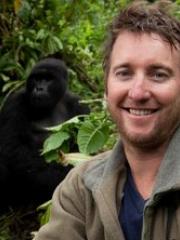
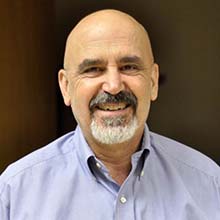
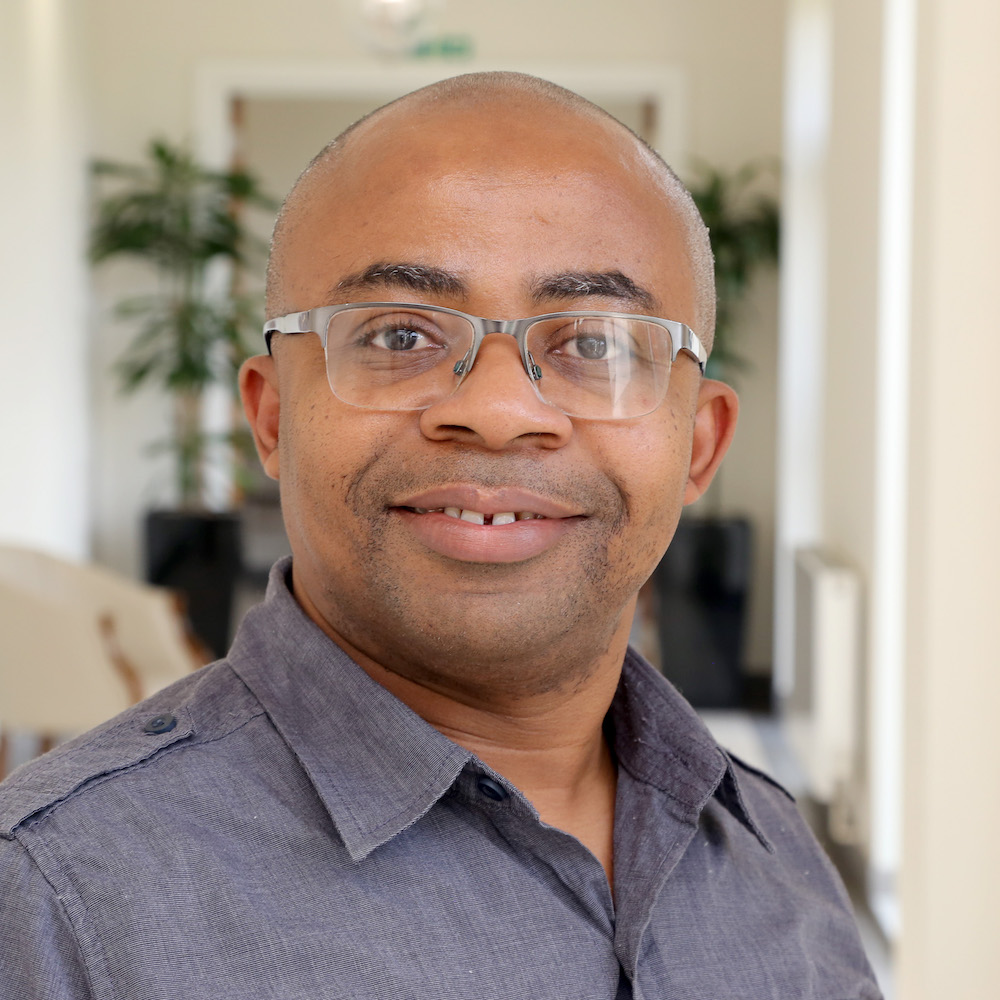
Professor James Watson is a leading conservation scientist and biogeographer at The University of Queensland , affiliated with the Centre for Marine Science and Centre for Biodiversity and Conservation Science. As a Professor of Conservation Science, he specializes in biodiversity policy, climate change impacts, and species recovery strategies. PhD from University of Oxford (Rhodes Scholar) Co-leader of Green Fire Science and RARES research groups Over 400 peer-reviewed publications His research focuses on ecosystem integrity , protected area effectiveness , and conservation economics , with recent work addressing mining impacts on biodiversity, climate change adaptation, and the global 30x30 initiative. He advocates for evidence-based strategies to save Australia’s rarest species. 2025-2024 research trends show expertise in tropical forest regeneration, climate-species interactions, and policy implementation gaps. Collaborative projects span scientific modeling , GIS analysis , and international conservation frameworks . International Panel on Biodiversity and Ecosystem Services (IPBES) Task Force member Research Fellow, United Nations Environment Program Senior Technical Expert, UNDP’s Nature for Development Program Founding Chair, IUCN Climate Change Specialist Group Supervision includes 12 current PhD candidates working on topics such as night parrot conservation , ecological corridors , and urban biodiversity . Completed students have addressed threatened species recovery and climate adaptation planning . He leads lab teams at Green Fire Science (www.greenfirescience.com) and RARES (https://raresgroup.com.au), focusing on applied conservation solutions.
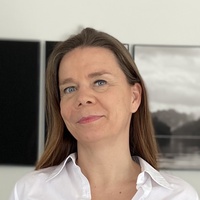
Véronique Hoste is Senior Full Professor of Computational Linguistics at Ghent University's Faculty of Arts and Philosophy, where she serves as Department Head of Translation, Interpreting and Communication and Director of the LT3 language technology research team. She also holds the position of Research Director for the Faculty of Arts and Philosophy. Her educational background includes a PhD in Computational Linguistics from the University of Antwerp (2005) focused on optimization in machine learning for coreference resolution. Key research areas encompass machine learning for natural language processing, semantic and discourse modeling, including specialized work in event detection, entity/event coreference resolution, irony detection, and emotion analysis. Hoste's publication trends reveal strong interdisciplinary focus, with recent work bridging NLP with crisis communication, digital humanities, and ethical AI. Her team develops high-quality datasets (e.g., EmoTwiCS for emotion trajectories) and collaborates extensively with commercial partners on projects like SentEMO for aspect-based sentiment analysis. Current research emphasizes multimodal emotion analysis, fuzzy rough set methods for sentiment detection, and cross-document event coreference. Elected member of the Royal Flemish Academy of Belgium for Science and the Arts (KVAB) Francqui Chair appointment by Université Libre de Bruxelles (2023-2024) Co-founded LT3 spin-off AlfaSent (2024) for customer feedback analysis Authored first Dutch-language book on NLP: "Taaltechnologie ontrafeld" She actively supervises multiple PhD students on projects including Common-sense knowledge in irony detection (Common-sense), cross-document event coreference (Encore), and empathy modeling in conversational agents (FlandersAI). Her team secures funding through interdisciplinary collaborations like NewsDNA for news recommendation and METRICS for emotion trajectory analysis. Hoste also engages in public outreach through the "AI at school" initiative and advises on language technology integration in high school curricula. The LT3 laboratory under her leadership maintains strong industry partnerships and develops practical NLP tools including EmotioNL and Automatic Term Extraction systems, while advancing core research through projects like CLARIAH-VL for data curation.
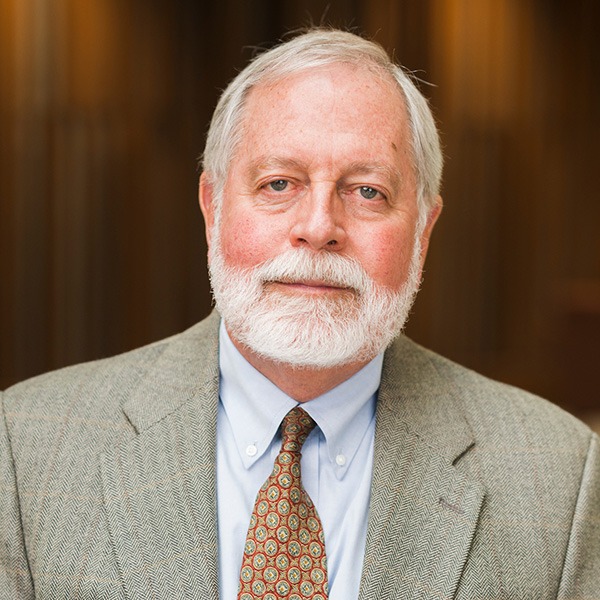
Robert Keiter is the Wallace Stegner Professor of Law and Director of the Wallace Stegner Center for Land, Resources, and the Environment at the University of Utah’s S.J. Quinney College of Law. He holds a JD from Northwestern University and a BA from Washington University, with prior teaching roles at the University of Wyoming, Boston College, and Southwestern University. His expertise spans environmental and natural resources law, ecosystem management, public lands policy, and constitutional law. Keiter has authored influential books including To Conserve Unimpaired: The Evolution of the National Park Idea (2013) and Keeping Faith With Nature (2003), focusing on national parks, public lands governance, and biodiversity conservation. His recent research emphasizes climate change impacts on public lands and ecosystem resilience. He has advised federal agencies, served on boards like the National Parks Conservation Association, and received the National Parks Achievement Award. Teaching includes Natural Resources Law, Constitutional Law, and Administrative Law. Keiter’s grants include a Turner Foundation project on federal public lands law. He directs the Stegner Center, advancing environmental legal scholarship and advocacy. Key professional activities include leadership roles with the Rocky Mountain Mineral Law Foundation (president 2013–2014) and trustee positions with the National Parks Conservation Association. His work bridges law, ecology, and policy, addressing contemporary challenges in public land management. Recent articles analyze BLM conservation rules, mining regulations, and national monument controversies. Keiter’s contributions are recognized through awards like the University of Utah’s Distinguished Professor title (2008).
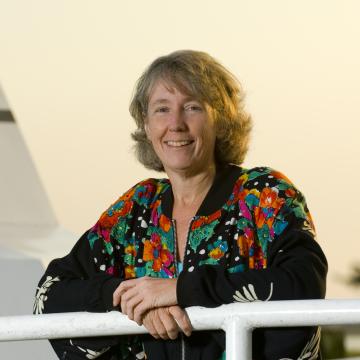
Cindy Lee Van Dover is a deep-sea biologist and the Harvey W Smith Distinguished Professor of Biological Oceanography at Duke University. She serves as Chair of Duke's Division of Marine Science and Conservation and Director of the Duke University Marine Laboratory in Beaufort, N.C. Her research focuses on chemosynthetic ecosystems, biodiversity, and deep-sea policy frameworks. Ph.D. in Biological Oceanography, MIT/Woods Hole Oceanographic Institution (1989) M.A. in Ecology, UCLA (1985) B.S. in Biological Oceanography, Rutgers University (1977) Van Dover's work spans deep-sea ecology, hydrothermal vent biodiversity, and environmental policy. She investigates gene flow in vent invertebrates, ecological impacts of deep-sea mining, and conservation strategies for chemosynthetic ecosystems. Her research integrates field programs using submersibles and telepresence technologies to study vent connectivity and microbial roles in extreme environments. Her scientific leadership includes 80+ peer-reviewed publications and roles as Chief Scientist in NSF- and NOAA-sponsored expeditions. She pioneered studies on geothermal light at vents and deep-sea symbiosis, with recent work on dual symbiotic relationships in vent snails and methane seep ecology. Virginia Outstanding Scientist (2006) Fulbright Scholar (France 2004) Fellow, American Association for the Advancement of Science Mines Medal for Leadership and Innovation NSF Career Awardee Van Dover's grants include NSF EAGER funding for deep-submergence science leadership and Pew Charitable Trusts' support for deep-sea mining impact assessments. She leads interdisciplinary initiatives like Science and Art at the Moment of Discovery , integrating artists into marine research expeditions. Her outreach includes authoring two books: Deep-Ocean Journeys for public audiences and The Ecology of Deep-Sea Hydrothermal Vents as the first textbook in the field. Her work has been featured in Science News , Discover Magazine , and National Public Radio .
Kamal A. Alsharif is an Associate Professor in the School of Geosciences at the University of South Florida. He specializes in interdisciplinary water resources policy, watershed management, and sustainable domestic water policy. His research focuses on water scarcity, hydropolitics, urban water management, and environmental benchmarks using Data Envelopment Analysis. He holds a Ph.D. (2004), M.S. (1996), and B.S. (1992) from the University of Minnesota, Minnesota State University, and St. Cloud State University, respectively. Education: Ph.D., University of Minnesota (2004) M.S., Minnesota State University (1996) B.S., St. Cloud State University (1992) His research interests span stormwater management, lawn irrigation policy, non-point source pollution, decision support systems, and climate change impacts. Notable projects include the Connor Park Project , Water Management in Arid Areas , and RET in Engineering and Computer Science Site . He has received awards such as the 2017 Editor’s Choice Paper Award and recognition in Who's Who in America (2011). Alsharif teaches courses including Introduction to Environmental Science , Environmental Science , and Water Quality Policy/Management . He has secured grants from the National Science Foundation and the Tampa Bay Environmental Restoration Fund. He advises students and serves on committees like the Graduate Committee and Water Institute Advisory Group . Awards: Multi-Cluster TeamWork Award (1996) Minnesota Project Wet Facilitator of the Year (1999) Outstanding TeamWork Award (1999) Who's Who in America (2011) Editor’s Choice Paper Award (2017) His work integrates policy, education, and community engagement, exemplified by initiatives like the Make A Splash Festival and collaborations with organizations such as the Tampa Estuary Program.
Professor Steve Simpson is a leading marine biologist and fish ecologist at the University of Exeter's Biosciences department. He serves as Professor of Marine Biology & Global Change and leads a dynamic research group focused on understanding marine ecosystems, particularly in the context of climate change and human impacts. His work has been prominently featured in Blue Planet II and he actively engages with industry, policy makers, and the public through media appearances and outreach activities. Education PhD, University of York, UK (2000-2004) MRes Marine & Coastal Ecology & Environmental Management, University of York, UK (1998-1999) BSc Marine Biology (Hons), University of Liverpool, UK (1995-1998) Professor Simpson's research centers on the behavior of coral reef fishes, bioacoustics, and the effects of climate change on marine ecosystems. His approach uniquely combines fieldwork in remote environments with laboratory experiments, data-mining, and computer modeling. He has pioneered new methods for listening to ocean soundscapes and understanding fish communication, revealing how anthropogenic noise disrupts natural behaviors and ecological processes. His work on climate change impacts examines shifting fish distributions and their implications for fisheries management and conservation. Analysis of Simpson's recent publications reveals two dominant research themes: the impacts of anthropogenic noise on marine life and climate change effects on fisheries. His work demonstrates how underwater noise from boats and industrial activities impairs fish hearing, disrupts predator-prey relationships, and affects reproductive success. Simultaneously, his climate change research tracks how warming seas are altering fish distributions, creating 'mackerel wars' and requiring fisheries adaptation. These research strands converge in his innovative work on developing solutions like bubble curtains to mitigate noise impacts. Scientific Awards FSBI Medal (2016) NERC Knowledge Exchange Fellowship (2011-2014) NERC Postdoctoral Research Fellowship (2004-2007) Royal Society International Fellow (2007-2008) EPHE Postdoctoral Fellow (2007-2008) Professor Simpson leads a thriving research group of approximately 10 postdocs, PhD, and Masters students. His grant portfolio includes major NERC funding for projects on marine noise impacts and climate change effects on fisheries. He has developed strong industry partnerships through a Knowledge Exchange Fellowship, working with Cefas, the Met Office, Sustainable Marine Energy Ltd, and HR Wallingford Ltd. His research has directly informed policy through contributions to Marine Climate Change Impacts Partnership reports and presentations to European Parliament. Simpson has also created innovative knowledge exchange initiatives including the 'Vision of Sustainable Fisheries in 2050' thinktank. Simpson has developed specialized research infrastructure including a mobile lab with Ecocean in Montpellier for assessing marine noise impacts, and has conducted large-scale acoustic experiments in dry docks. His work on underwater acoustics was prominently featured in Blue Planet II, and he maintains active engagement with media through TEDx talks, BBC appearances, and public lectures to schools and community groups. He serves on the International Quiet Ocean Experiment Science Committee, helping shape global research on ocean noise.
Abhishek Santra is a Senior Lecturer in the Department of Computer Science and Engineering at The University of Texas at Arlington. He holds a PhD in Computer Science from UT Arlington (2020), and earlier degrees from the University of Delhi (BS 2011, MS 2013). His research focuses on multilayer networks, graph mining, and data analysis, with contributions to complex data modeling and visualization tools like MLN-geeWhiz and ModViz. He is also a Post-Doctoral Research Scholar in the Information Technology Lab (ITLab), led by Dr. Sharma Chakravarthy. Teaching interests include Discrete Structures, Database Systems, and DBMS Models. He has advised numerous students on research projects and thesis work, such as substructure discovery in multilayer networks and video content analysis. Recent grants include REU-funded projects for dashboard development (2022–2025). His service roles include committee memberships in the CSE department and organizing technical workshops like QVC and MLN-DIVE. Key research areas involve analyzing multi-source data through multilayer network frameworks, with applications in healthcare monitoring, big data analytics, and visualization systems. Publications span conferences like BDA, IC3K, and IEEE BigDataService, emphasizing algorithmic innovation for network-centric data problems.
Professor Vlad Mykhnenko is Professor of Geography and Political Economy in the University of Oxford Department for Continuing Education, and a Research Fellow in Sustainable Urban Development at St. Peter's College, Oxford. He serves as Academic Director for Social Sciences at Oxford Lifelong Learning and has been with the Department since January 2017, initially taking up an Associate Professorship in Sustainable Urban Development. His academic career spans multiple institutions including the University of Birmingham, Al-Farabi Kazakh National University, the University of Nottingham, the University of Glasgow, and the Central European University. Professor Mykhnenko's educational background includes: PhD in Political Economy from Darwin College, the University of Cambridge (2005) MA in International Relations and European Studies from the Central European University (1999) MA (1998) and BA (1996) in International Relations from Taras Shevchenko National University of Kyiv As an economic geographer specializing in geographical political economy, Professor Mykhnenko challenges conventional wisdom about urban and regional development. His research initially focused on transition economies of Eastern Europe (particularly Polish Upper Silesia and the Ukrainian Donbas) before expanding to cities and regions worldwide. He has produced over 140 research outputs and secured £16 million in external research funding, with £2 million as Principal Investigator. His current research initiatives focus on green steel - rebuilding Ukraine's iron and steel sector post-war without fossil fuels - and sustainable urban development in Kazakhstan. His publication record demonstrates significant scholarly impact across diverse areas including urban shrinkage, post-war reconstruction, geopolitical analysis, and future trends in technology and governance. The breadth of his research interests spans from analyzing spatial economic patterns in African cities to examining the implications of the metaverse for future business practices. Professor Mykhnenko has substantial policy impact, with research quoted in at least 79 policy documents by 49 organizations across 21 countries. His work contributes to UN Sustainable Development Goals, with 30% directly attributed to SDG11: Sustainable Cities and Communities. He has advised governments, intergovernmental organizations, and multinational enterprises, including serving on a UN expert group to shape the New Urban Agenda and providing expert evidence to the UK House of Commons on Ukraine's recovery. In early 2025, he was appointed a commissioner for the Lancet Commission on Ukraine. Professor Mykhnenko has taught over 3,100 students across various institutions and currently contributes to Oxford's MSc in Sustainable Urban Development program. He has supervised numerous doctoral students and received recognition for his teaching excellence, including Fellow of the Higher Education Academy status and a Postgraduate Certificate in Academic Practice. His commitment to research-led teaching has resulted in innovative pedagogical approaches documented in peer-reviewed academic publications.
Prof. Ludwig D. Morenz is a Professor of Egyptology at the University of Bonn and Director of the Egyptian Museum Bonn. He holds positions as a Principal Investigator in archaeological research and leads excavations in Egypt. His academic journey includes a Habilitation from the University of Tübingen (2001), a PhD from Leipzig (1994), and extensive postdoctoral fellowships across Europe. His research focuses on Pharaonic socio-economic systems, particularly dependency relationships between state expeditions and Canaanite populations. He examines ancient Egyptian economy, religion, and cultural interactions through material and textual evidence. Key areas include the origins of alphabetic writing, solar deity symbolism, and Roman-Egyptian cultural hybridity. Morenz has secured over €1 million in third-party funding from institutions like the German Research Foundation (DFG) and Gerda Henkel Foundation. He supervises numerous doctoral and master's students, reviewing over 30 theses and international PhDs. His editorial roles include founding journals like Studia Sinaitica and Bonner Ägyptologische Beiträge . Major excavations under his leadership include the Elite Necropolis of Qubbet el Hawa and the Serabit el-Chadim Hathor temple project. He participates in consortia such as the DFG Research Training Group 'Archeology of Pre-Modern Economies' and the International Congress of Egyptologists. Awards: Heisenberg Fellowship (DFG), Feodor Lynen Fellowship (Humboldt Foundation), Herzog-Ernst Scholarship Exhibitions: Curated annual special exhibitions at the Egyptian Museum Bonn, including a landmark show on alphabetic writing origins at Cairo's National Museum Publications: 13 monographs, 4 edited volumes, and over 100 articles
Aziz Amoozegar is a Professor in the Department of Crop and Soil Sciences at NC State University's College of Agriculture and Life Sciences. His research focuses on environmental soil physics, specifically investigating water and pollutant movement through soils, phosphorus dynamics, and soil characterization for agricultural and engineering applications. Research programs include evaluating soil-water interactions in contaminated environments, assessing fertilizer-enhanced phosphorus transport, and developing soil analysis techniques. Key areas of study involve pollutant migration through saprolite, cadmium release kinetics in amended soils, and hydraulic functioning of compacted soils. His work bridges environmental science, agricultural engineering, and soil chemistry. Recent publications cover topics such as phosphate mobility under unsaturated conditions, cadmium release in contaminated soils, and bioenergy grass residue effects on evaporation. He has contributed to methodological advancements in soil testing and remediation strategies for heavy metals like lead. Dr. Amoozegar's research emphasizes practical applications for sustainable agriculture and environmental protection. No specific awards or grants are listed in the provided information, but his involvement in USDA and EPA-related programs suggests active collaborative research efforts.
Han Wang is an Assistant Professor in the Electrical Engineering and Computer Science department at the University of Kansas School of Engineering. His research develops privacy-preserving frameworks for distributed systems, machine learning, and data analytics. Core research areas include differential privacy implementations for federated learning environments, privacy-preserving outsourcing of anomaly detection, and adversarial attack mitigation. Recent work focuses on developing staircase randomized response mechanisms that enhance privacy without compromising data utility in location services and video analytics. Publications demonstrate consistent innovation in privacy engineering with applications spanning vehicle trajectory protection, energy trading systems, and video recognition security. Methodological approaches combine theoretical privacy guarantees with practical system implementations.
Dr. Andres Guadamuz is a Reader in Intellectual Property Law at the University of Sussex, affiliated with the School of Law, Politics and Sociology. He serves as Editor in Chief of the Journal of World Intellectual Property . His research focuses on intersections of law and technology, including artificial intelligence and copyright, open licensing, cryptocurrencies, smart contracts, and blockchain. He has authored over 40 articles, book chapters, and two books, alongside regular blog posts on technology regulation. Research Interests: Artificial Intelligence and Copyright Blockchain Technology and IP Cryptocurrency Regulation Open Source Licensing Internet Governance Data Mining Legal Frameworks Publication Trends: His recent work addresses AI's impact on copyright law, NFTs, and legal challenges in smart contracts. He critically explores EU AI legislation, liability frameworks for AI inputs/outputs, and NFT authenticity issues. Teaching: Teaches courses on Digital Intellectual Property Law, Internet Law, and Information Technology IP Law, including developing the specialized LLM in IT and Intellectual Property Law. Grants/Advising: Supervises PhD/postgraduate students in his research areas. His work is widely cited in legal, academic, and policy circles, with over 100 Mendeley readers for key papers.
Prof. Dr. Fatma Arslan is a Professor in the Department of Mineral Processing Engineering at Istanbul Technical University (ITU). She holds a PhD from Columbia University. Her research focuses on metallic minerals, industrial raw materials, and chemical-biological recovery techniques. She has held significant administrative roles, including Head of Department (2000–present), Dean (2012–2016), and Director of Research and Application Center (2013–2017). Her work emphasizes sustainable mineral processing, with contributions to flotation, leaching, and recycling of metals from secondary sources. She has authored over 35 publications and led projects on metal recovery from electronic waste and copper refining slags. Key research areas include hydrometallurgical processes, ion flotation, and environmental remediation. Prof. Arslan has advised numerous students and collaborates internationally on mineral processing innovations. Education: PhD in Metallurgical Engineering from Columbia University (1987–1991); License in Metallurgical and Materials Engineering from ITU (1977–1982). Research Interests: Flotation, leaching, cyanidation, metal recovery from waste, and sustainable mineral processing. Her recent work explores HPGR preprocessing for gold ore cyanidation and ion flotation for metal recovery. She has pioneered methods for recycling metals from printed circuit boards and copper slags. Prof. Arslan also contributes to UN Sustainable Development Goals related to resource efficiency and environmental protection.
Professor Onyeka K. Osuji is Dean of Essex Law School and Professor of Law at the University of Essex . A Fellow of the Academy of Social Sciences and the Higher Education Academy, he contributes to legal scholarship with a focus on corporate governance, CSR, and sustainable development. His work bridges law, finance, and public policy, particularly in developing markets. Education: PhD in Law (University of Manchester), BCL (University of Oxford), LLB (University of Nigeria) as Best Student. Appointments: Reader (2017-2020), Professor (2020-2022), and Dean (2022-present) at Essex. His research explores the intersection of corporate regulation, human rights, and technological innovation. A AHRC-funded project on 3D printing licensing in China has influenced policy discussions. His teaching includes corporate responsibility, consumer contract law, and cross-border commercial law. Publications span corporate governance in Africa, CSR in digital finance, and ethical frameworks for sustainable development. His scientific awards include: Fellow of the Academy of Social Sciences (FAcSS) Fellow of the Higher Education Academy (FHEA) Shell Centenary/FCO Chevening Scholar Best Overall Performance at Nigerian Law School Advising past and current PhD candidates in areas like systemic risk mitigation in Libya, ESG disclosure for Saudi Arabia, and corporate governance in Nigerian mining. He leads the AHRC-funded Licensing System for 3D Printing in China project, emphasizing contract law and social responsibility.
Dr. Sheila J. Roberts serves as Acting Vice Provost for Academic Affairs and Associate Professor in the Department of Geology within Bowling Green State University's School of Earth, Environment and Society. She has held academic positions at BGSU since 1994, progressing from Assistant Professor to her current rank while assuming administrative leadership in 2018. Education Ph.D., University of Arizona (1992) M.S., University of Arizona (1988) B.S., Colorado School of Mines (1986) Research Interests Her work centers on Environmental Geochemistry , Groundwater Hydrology , and Environmental Geology , with field studies examining metal contamination in water and soil systems. Current research investigates spatial and temporal chemical changes in the Ottawa River and Wood County groundwater, focusing on agricultural impacts and urban river management. Publication Trends Her 2002-2008 publications reveal consistent focus on environmental contamination assessment through GIS integration and field sampling. Key themes include dam removal impacts on urban rivers, groundwater recharge area identification, and quantitative analysis of metal accumulation in soils – demonstrating methodological innovation in environmental management. Teaching and Research Projects Dr. Roberts teaches undergraduate courses including Introduction to Geology and Environmental Geology, plus graduate courses in Hydrogeology and Aqueous Geochemistry. Her active research includes: Water sampling analysis of Ottawa River (Toledo, OH) for spatial/temporal chemical changes and metal contamination Groundwater chemistry studies in Wood County (OH) assessing metal contamination from agricultural sewage sludge application