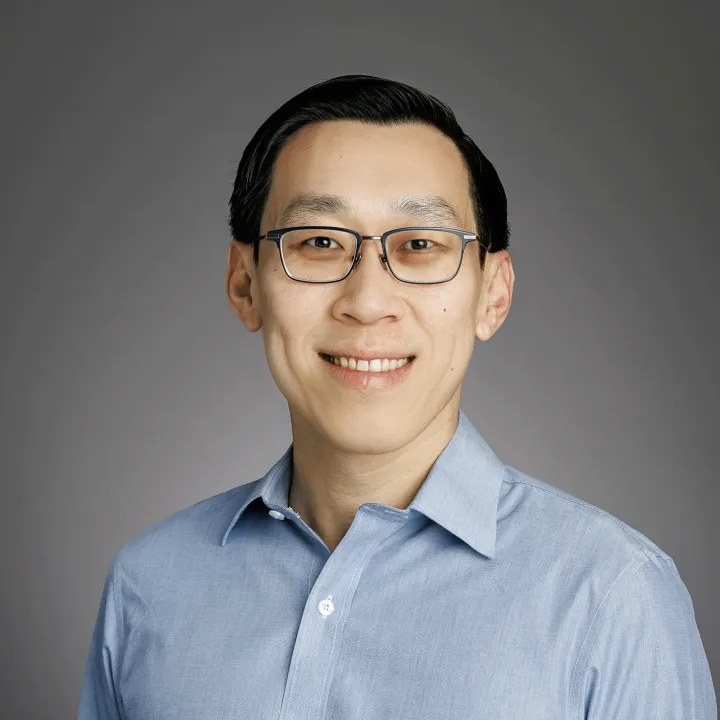
Yang P. Liu is an Assistant Professor at Carnegie Mellon University 's Department of Computer Science . He received his PhD from Stanford University under the supervision of Aaron Sidford and previously studied at MIT . Fields of Interest : Graph Algorithms, Optimization, High-Dimensional Geometry, Additive Combinatorics, Theoretical Computer Science. His research focuses on algorithmic design and analysis for graph problems, optimization, and combinatorics, with applications in machine learning and complexity theory. Recent work includes advancements in parallel repetition games , combinatorial lines , and dynamic graph algorithms . In 2024, his research spanned FOCS , STOC , and RANDOM conferences, addressing problems in k-CSPs , min-cost flow , and hypergraph sparsification . Earlier contributions (2023) included deterministic flow algorithms and spectral hypergraph techniques. Scientific Awards : NDSEG Fellowship (2018-2021), Google PhD Fellowship (2022-2023), FOCS Best Paper (2022), STOC Best Student Paper (2022), FOCS Best Student Paper (2021). He teaches CS 15-759 , a graduate course on convex optimization theory and applications, covering gradient descent, interior point methods, and algorithmic sparsification techniques.
Zaid Harchaoui is an Adjunct Professor in the Department of Statistics at the University of Washington. His research focuses on machine learning, generative AI, and algorithmic optimization, with applications spanning ecology, neuroscience, and artificial intelligence. He explores learning under distributional shifts and develops tools for scalable generative models in language and vision domains. University: University of Washington Department: Statistics Research Focus: Learning from data with computational, inferential, and mathematical rigor; distributional shift adaptation; generative model scaling Email: zaid@uw.edu His recent work emphasizes generative AI applications in ecology and neuroscience, stochastic optimization for robustness, and algorithmic efficiency in large-scale learning. Key contributions include techniques for distributionally robust optimization, interpretable authorship obfuscation, and uncertainty quantification in behavior classification. Scientific awards and honors are not explicitly mentioned in the provided text. Collaborative efforts often intersect with nonlinear control algorithms, spectral analysis, and privacy-preserving machine learning frameworks.
Eric V. Mazumdar is an Assistant Professor at the California Institute of Technology (Caltech), jointly appointed in the departments of Computing and Mathematical Sciences and Economics. He holds a B.S. from MIT (2015) and a Ph.D. from UC Berkeley (2021), co-advised by Michael Jordan and Shankar Sastry. His research bridges machine learning and economics, focusing on deploying algorithms into societal systems through theoretical and practical lenses. Key areas include strategic classification, multi-agent reinforcement learning, and distributionally robust optimization, with applications in healthcare, online markets, and intelligent infrastructure. Education: B.S., Electrical Engineering and Computer Science, Massachusetts Institute of Technology, 2015 Ph.D., Electrical Engineering and Computer Science, University of California, Berkeley, 2021 Research Interests: Mazumdar’s work emphasizes understanding learning algorithms in strategic environments, including min-max optimization, game theory, and multi-agent systems. He explores how algorithms interact with human and algorithmic agents in dynamic systems, with practical applications in healthcare delivery, e-commerce, and autonomous systems testing. Awards: NSF CAREER Award (2023) Simons Institute Research Fellowship in Learning in Games Grants & Funding: Supported by NSF, DARPA, Amazon, and other organizations. His NSF CAREER grant focuses on strategic interactions in societal-scale systems. Teaching: Courses include Networks: Structure & Economics (CMS/CS/EE/IDS 144) and Topics in Learning and Games (CMS/Ec 248). At UC Berkeley, he contributed to courses like Data, Inference, and Decisions (DS 102). Students & Postdocs: Current students: Lauren Conger, Tinashe Handina, Yizhou Zhang Postdocs: Zaiwei Chen, Laixi Shi, Kishan Panaganti (co-advised with Adam Wierman)
Ali Vakilian is a Research Assistant Professor at the Toyota Technological Institute at Chicago (TTIC), with a strong academic background in theoretical computer science and algorithms. He will join the Department of Computer Science at Virginia Tech as an Assistant Professor in Fall 2025. His research bridges algorithmic theory and machine learning, focusing on scalable, fair, and efficient algorithms for massive data. Education: Ph.D. in EECS, Massachusetts Institute of Technology (MIT), advisors: Erik Demaine and Piotr Indyk M.S. in Computer Science, University of Illinois at Urbana-Champaign (UIUC), advisor: Chandra Chekuri B.S. in Computer Engineering, Sharif University of Technology Research Interests: Ali Vakilian's work centers on the algorithmic foundations of machine learning and data science. He develops streaming, sketching, and sublinear-time algorithms for massive datasets, and pioneers learning-augmented algorithms that use machine learning predictions to improve performance while maintaining worst-case guarantees. His research in trustworthy ML includes algorithmic fairness, fair clustering, and learning with strategic agents. He also contributes to combinatorial optimization and approximation algorithms for network design, set cover, and low-rank approximation. His recent publications (2023–2025) show a consistent focus on fair clustering (individual and group fairness), streaming graph algorithms , learning-augmented methods , and frequency estimation . These works appear in top venues such as NeurIPS, ICML, SODA, and ICALP, often with recognitions like oral or spotlight presentations. Scientific Awards: Outstanding Student Paper Highlight Award, AISTATS 2024 Notable-top-25% paper, ICLR 2023 Oral presentation, AISTATS 2024 Spotlight presentation, NeurIPS 2023 Advising and Grants: Ali Vakilian mentors several students and interns, including summer interns at TTIC and Fatima Fellows. His research is supported by the National Science Foundation (TRIPODS program), as noted in the press coverage of his work on LearnedSketch. He actively contributes to the academic community through advising, organizing workshops (e.g., Algorithms with Predictions, Learning-Augmented Algorithms), and serving on program committees (e.g., NeurIPS, ICML, AISTATS). Labs and Teams: He is affiliated with the theory and algorithms group at TTIC and collaborates with researchers at MIT, UIUC, and other institutions. His work on learning-augmented algorithms has led to influential workshops and collaborations with leading figures such as Piotr Indyk and Erik Demaine.
Debmalya Panigrahi is a Professor and Associate Chair in the Department of Computer Science at Duke University. He holds a PhD in Theoretical Computer Science from MIT and has prior affiliations with Microsoft Research, Bell Labs, and the Simons Institute for Theory of Computing. His research focuses on algorithms, particularly graph algorithms, algorithms under uncertainty, and learning-augmented methods. He has received NSF CAREER and other awards, and his work spans peer-reviewed publications in top venues like STOC, FOCS, and SODA. He advises PhD students and mentors postdocs, emphasizing theoretical contributions with practical applications. His teaching includes courses on approximation algorithms, graph algorithms, and discrete mathematics. Education: PhD (MIT, advised by David Karger), MSc (Indian Institute of Science, advised by Ramesh Hariharan), BSc (Jadavpur University). Research highlights include fastest algorithms for graph connectivity, learning-augmented approximation methods, and online algorithms. Funded by NSF, ARO, Google, and others. Current projects explore network reliability, hypergraph algorithms, and algorithmic fairness. His lab collaborates across theory, AI/ML, and databases at Duke. Recent Grants: NSF CCF-2006512, CCF-1618286, CCF-1350537 Labs/Teams: Duke Algorithms Lab, Theory Group, Collaborations with CS-Econ and AI/ML groups Publications span 150+ papers, with 5+ journal articles in SIAM Journal of Computing and ACM Transactions. Recent focus on integrating machine learning into classical algorithms to improve worst-case performance bounds. Advised 10+ PhD students, many now in academia (e.g., UI Chicago, UT Dallas) and industry (Google, Microsoft).
Andre Wibisono serves as Assistant Professor in Yale University's Department of Computer Science with a secondary appointment in Statistics & Data Science, joining the faculty in 2021 after postdoctoral research at University of Wisconsin-Madison and Georgia Institute of Technology. His educational background includes: Ph.D. in Computer Science, UC Berkeley M.A. in Statistics, UC Berkeley M.Eng. in Computer Science, MIT S.B. in Mathematics and Computer Science, MIT Wibisono's research focuses on algorithm design for machine learning through optimization, sampling, and game theory , leveraging dynamical systems and information theory to develop accelerated discrete-time algorithms from continuous dynamics. His work provides theoretical foundations for efficient machine learning systems with applications in generative modeling and constrained optimization. Recent publications (2023-2025) demonstrate consistent innovation in Hamiltonian-based optimization , constrained-space sampling , and min-max game convergence , characterized by rigorous mathematical analysis connecting continuous dynamics to discrete algorithms. Key trends include randomized integration for acceleration, phi-divergence convergence guarantees, and symplectic geometry applications to mirror descent. Scientific recognition includes: NSF CAREER Award for developing algorithmic frameworks bridging continuous and discrete dynamics He actively mentors current students (Siddharth Mitra, Kaylee Yang, Jane Lee, Qiang Fu, Peter Wang) and has guided two postdocs to faculty positions. Research is funded through the NSF CAREER award and collaborative CIF grants focused on Hamiltonian dynamics for sampling and optimization. His Yale research group develops theoretical foundations for next-generation machine learning algorithms, emphasizing mathematical rigor in optimization and sampling with applications to generative modeling and constrained inference problems.
Gabriele Farina is an Assistant Professor at MIT in the Department of Electrical Engineering and Computer Science (EECS) and the Laboratory for Information and Decision Systems (LIDS), with additional affiliations at the Operations Research Center (ORC). Holding the X-Window Consortium Career Development Chair, his research focuses on theoretical and algorithmic foundations for learning and computational decision-making under imperfect information, integrating game theory, machine learning, optimization, and statistics. He previously served as a Research Scientist at Meta's Fundamental AI Research (FAIR) group, where he contributed to Cicero, a human-level AI agent combining strategic reasoning and natural language. Ph.D. in Computer Science from Carnegie Mellon University (advisor: Tuomas Sandholm) Facebook Fellowship (2019-2020) in Economics and Computation Recipient of multiple awards including ACM SIGecom dissertation award, NSF CAREER, and AI2050 Early Career Fellow His research spans four key areas: (1) No-Regret Learning Dynamics in extensive-form games; (2) Correlation and Mediated Equilibria in sequential decision-making; (3) Team Games and Team Max-Min Equilibria; and (4) Human Modeling and Equilibrium Perfection. His work addresses challenges in scalable equilibrium computation, stability of learning algorithms, and robustness to mistakes in multi-agent systems. Recent publications highlight advancements in polynomial-time equilibrium computation, cautious optimism algorithms, and connections between regret minimization and mirror descent. These contributions appear in top venues like COLT, NeurIPS, ICML, and AAAI, with keywords spanning game theory, optimization, and machine learning. NSF CAREER award AI2050 Early Career Fellow Facebook Fellowship ACM SIGecom dissertation award GameSec 2024 best paper award ICLR 2023 outstanding paper honorable mention His research group at MIT collaborates on projects involving strategic reasoning, human-level AI agents, and equilibrium refinements, with applications to games like Diplomacy and poker. Current efforts include developing faster algorithms for correlated equilibria and exploring connections between machine learning and economic theory.
Thatchaphol Saranurak is an Assistant Professor at the University of Michigan , specifically in the Computer Science and Engineering Division . Prior to this, he earned his PhD in Computer Science from KTH Royal Institute of Technology in 2018 under Danupon Nanongkai , followed by a postdoctoral research assistant professorship at Toyota Technological Institute at Chicago (2018-2020). Research Focus : His work bridges fundamental problems in graph theory, including Dynamic graph algorithms for max-flow and min-cut Expander graph decompositions and their applications Robust algorithms against adaptive adversaries Continuous optimization for combinatorial problems Scientific Contributions : He has made breakthroughs in deterministic graph algorithms, notably improving vertex connectivity bounds, developing near-linear time Gomory-Hu trees, and advancing dynamic matching algorithms. His research has been recognized by Sloan Research Fellowship NSF CAREER Award Presburger Award 2023 Teaching : He teaches courses like Expander and Graph Algorithms and Introduction to Algorithms (Winter 23, Winter 25). His lecture videos and notes are publicly available. Collaborations : He works with leading researchers including Sayan Bhattacharya , Joakim Blikstad , and Jason Li , with affiliations to institutions like TTIC , KTH , and SODA conferences.
Antonio De Rosa is an Associate Professor in the Department of Decision Sciences at Bocconi University, Italy. Previously, he held positions at the University of Maryland, College Park (2020–2024), and the Courant Institute of Mathematical Sciences, New York University (2017–2020). He earned his Ph.D. in Mathematics from the University of Zurich in 2017 under Camillo De Lellis and Guido De Philippis. Education: Ph.D. in Mathematics, University of Zurich (2017). His research spans Geometric Analysis , Partial Differential Equations , Calculus of Variations , Geometric Measure Theory , Optimal Transport , and Non-convex Optimization . Recent work focuses on anisotropic geometric variational problems, including existence, regularity, and uniqueness of anisotropic minimal surfaces and CMC (constant mean curvature) surfaces. He has also contributed to interdisciplinary applications in Explainable Risk Assessment and Data Analysis . The 15 most recent articles highlight advancements in anisotropic surfaces , min-max theory , optimal transport , and mathematical programming (e.g., K-means clustering, linear programming). Key trends include the intersection of geometric measure theory with nonlinear PDEs and applications in machine learning and transportation networks . Scientific Awards and Grants: 2023 Maryland Research Excellence Carlo Ciliberto Prize (2019) ERC Starting Grant ANGEVA (101076411, 2023–2028) Air Force Office of Scientific Research (AFOSR) grant (FA9550-23-1-0123) NSF CAREER Award (DMS-2143124) NSF DMS Awards (DMS-1906451, DMS-2112311) AMS Simons Travel Grant Antonio actively supervises research and teaches courses such as Optimization and Introduction to Partial Differential Equations . His work is supported by significant funding totaling approximately €3 million.
Ioannis Panageas is an Assistant Professor in Computer Science at UC Irvine's Donald Bren School, directing the GOALLab. His research develops theory for learning in multi-agent systems, game dynamics, and optimization. Funded by NSF and NRF, he focuses on last-iterate convergence guarantees in games, efficient equilibrium computation, and multi-agent reinforcement learning. Recent Work: Provides first exponential lower bounds for fictitious play in potential games (NeurIPS 2023), efficient Nash equilibrium computation methods (ICLR 2023), and semi-bandit learning dynamics with no-regret guarantees (ICML 2023). Teaching: Offers courses in Algorithmic Game Theory and Optimization for Machine Learning. Currently advising 3 PhD students and 2 MS students.
Daniel B. Szyld is a Professor in the Department of Mathematics at Temple University's College of Science and Technology. He is co-Director of the High-Performance Computing for Scientific Applications Professional Science Master’s program and a member of the Center for Computational Mathematics and Modeling. He holds leadership roles as President of the International Linear Algebra Society (ILAS, 2020–2026) and as a Board of Trustees member at ICERM (2024–2028), and previously served as Vice-President of SIAM (2014–2015). His research interests include Numerical Analysis , Scientific Computing , Numerical Linear Algebra , Iterative Methods , Preconditioning , Domain Decomposition , and High-Performance Computing . His work often focuses on Krylov subspace methods like GMRES, block solvers, and asynchronous algorithms, with applications in large-scale scientific simulations. The 15 most recent publications reflect a strong focus on enhancing the stability, convergence, and performance of iterative solvers, especially GMRES variants and domain decomposition methods. Topics include random sketching, deflation, weighted norms, multisketching in QR factorization, and asynchronous Schwarz methods. These works appear in top journals such as SIAM Journal on Matrix Analysis and Applications , Numerische Mathematik , and Electronic Transactions on Numerical Analysis , often in collaboration with leading researchers in the field. Scientific Awards and Recognitions: Commemorative medal, Charles University of Prague, 1997 Featured in Hall of Fame by Henk van der Vorst, SARA, 2010 Dean's Distinguished Award for Excellence in Research, Temple University, 2011 Fellow, American Mathematical Society, 2017 Fellow, Society for Industrial and Applied Mathematics, 2017 Achievement in Mathematics Award, Temple University, 2018 Faculty Senate Outstanding Service Award, Temple University, 2021 Daniel B. Szyld has served on the editorial boards of numerous prestigious journals, including Mathematics of Computation , Linear Algebra and its Applications , Numerical Linear Algebra with Applications , and was Co-Editor-in-Chief of Electronic Transactions on Numerical Analysis (2005–2013) and Editor-in-Chief of SIAM Journal on Matrix Analysis and Applications (2015–2020). His research has been supported by the National Science Foundation and the Department of Energy. He has advised students and postdocs, though specific names are not listed in the provided text. He is also involved in professional service through societies such as SIAM, AMS, ILAS, and NAM, and advocates for equity and ethical engagement in mathematics. Labs and Research Groups: He is a member of the Center for Computational Mathematics and Modeling at Temple University and co-Director of the High-Performance Computing for Scientific Applications Professional Science Master’s program, indicating active leadership in computational research and training.
Sebastian Pokutta is a Professor at Technische Universität Berlin, Vice President at the Zuse Institute Berlin (ZIB), and Chair of the Cluster of Excellence MATH+ and MODAL. His research lies at the intersection of Artificial Intelligence, Optimization, and Machine Learning, with applications in sustainability, quantum computing, and mathematical discovery. Research Interests: Development of novel optimization algorithms, particularly Frank-Wolfe and Conditional Gradient methods. Integration of machine learning with decision-making and combinatorial optimization. AI for Science (AI4Science), including applications in quantum mechanics and ecology. AI and creativity, human-AI co-creativity, and social science modeling using multi-agent LLMs. His recent publications (2025) demonstrate a strong focus on scalable optimization, interpretability, and algorithmic foundations. The work spans theoretical advances in convergence analysis, practical implementations in Julia (FrankWolfe.jl), and real-world deployments in biomass estimation and quantum certification. Scientific Awards: Gödel Prize (2023) STOC Test of Time Award (2022) Science Prize of the Association for Pediatric Orthopedics (2025) Google Research Awards (2021, 2020) NSF CAREER Award (2015) He advises a vibrant research group, with former students and postdocs securing faculty positions at institutions like Inria, Carlos III University, and James Madison University. His group has received funding from Google, DFG, and Math+, and he leads major collaborative efforts such as the Thematic Einstein Semester on Mathematical Optimization for Machine Learning. Labs and Teams: Interactive Optimization and Learning Lab at TU Berlin and ZIB. Leadership in MODAL and MATH+ research clusters, fostering interdisciplinary collaboration in mathematical optimization and AI.
Christian Igel is a Professor at the Department of Computer Science, University of Copenhagen, and serves as director of the SCIENCE AI Centre . He is also a co-lead of the Pioneer Centre for Artificial Intelligence in Denmark. His academic journey includes a Doctoral degree from Bielefeld University (2002) and a Habilitation degree from Ruhr-University Bochum (2010). Igel is a Juniorprofessor (2002–2010) and has held editorial roles at journals like KI - Künstliche Intelligenz and Artificial Intelligence Journal . Doctoral degree: Faculty of Technology, Bielefeld University, Germany (2002) Habilitation degree: Department of Electrical Engineering and Information Sciences, Ruhr-University Bochum, Germany (2010) His research spans Machine Learning , focusing on Support Vector Machines , Evolution Strategies , Reinforcement Learning , Deep Neural Networks , and PAC-Bayesian Analysis . He applies these methods to Environmental Monitoring , Medical Diagnostics , and Climate Research . Recent publications highlight work on adversarial machine learning , environmentally sustainable AI , and tree resource mapping using deep learning. His scientific awards include being a ELLIS Fellow . Igel’s software tools like Shark , woody , and Multi-Planar UNet are widely used in research and industry. Notable grants and collaborations involve projects with European Lab for Learning and Intelligent Systems (ELLIS) , SCIENCE AI Centre , and international teams in Denmark , Germany , and France . His lab leadership emphasizes open-source frameworks and reproducible research. Editorial Roles: German Journal on Artificial Intelligence , Evolutionary Computation Journal , Artificial Intelligence Journal Software Projects: Shark , woody , Multi-Planar UNet , U-Time Collaborations: SCIENCE AI Centre , Pioneer Centre for Artificial Intelligence , European Lab for Learning and Intelligent Systems
Jamie Morgenstern is an Associate Professor at the Paul G. Allen School of Computer Science & Engineering , University of Washington . She was previously an assistant professor at Georgia Tech and a Warren Center Fellow at University of Pennsylvania . Expertise: Ethics & Fairness, Human-Centered AI, Machine Learning Education: PhD in Computer Science from Carnegie Mellon University (2015) Her research examines the social impact of machine learning and ensuring ML models do not exacerbate societal inequalities. She investigates robustness to human-generated training data, fairness in clustering and active learning, and algorithmic equity in recommendation systems. Recent publications focus on interactive ML systems , fairness constraints , and privacy-preserving methods across conferences like NeurIPS, ICML, and AIES. Key subfields include multimodal learning , membership inference attacks , and data equity . Scientific Awards: NSF Career award for "Strategic and Equity Considerations in ML" Simons collaboration project Simons Award for Graduate Students in Theoretical Computer Science (2014-2016) NSF GFRP fellowship Microsoft Research Graduate Women's Scholarship Spotlight presentation at NeurIPS 2015 Mentoring: She advises current PhD students Rachel Hong , Jie (Claire) Zhang , and Yuanyuan (Chloe) Yang . Former advisees include Daniel Jiang (MS), Bhuvesh Kumar (PhD), and Angel (Alex) Cabrera (BS). Grants: Funded by NSF Career award and Simons collaboration projects. Previously supported by Simons, NSF, and Microsoft Research fellowships. Labs & Collaborations: Collaborates with researchers like Michael Kearns , Aaron Roth , and Avrim Blum . Affiliated with the Allen School's Artificial Intelligence research group.
Professor Daniel Oron is affiliated with the University of Sydney, where he joined in 2004 after completing his PhD in Operations Research at the Hebrew University of Jerusalem. His research focuses on Combinatorial Optimization, particularly Scheduling Theory, addressing challenges like batch scheduling with setups, customer delivery models, and scheduling under deteriorating conditions. He teaches courses such as Quantitative Business Analysis, Management Science, and Business Analytics Honours. His editorial role includes serving on the board of the Journal of Industrial & Management Optimization . Recent research contributions span multi-agent scheduling, energy recharging in scheduling, and coupled task optimization. He advises two current PhD students: Johnson (Two-agent scheduling problems) and Renjie Yu (Multi-agent scheduling with parallel batching). Publications highlight advancements in scheduling algorithms, resource allocation, and optimization under constraints. Notable works include minimizing late jobs with step-learning models and analyzing parameterized complexity in single-machine scheduling.