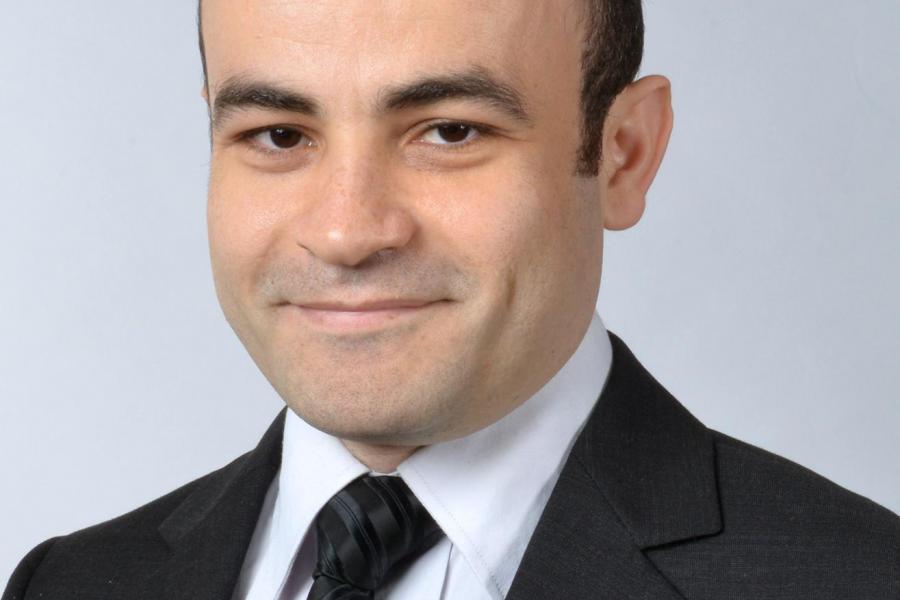
Simon Rommel is an Assistant Professor in the Department of Electrical Engineering at Eindhoven University of Technology (TU/e), specializing in Terahertz Systems and Quantum & Terahertz Systems. He holds a PhD from the Technical University of Denmark (2017) and prior degrees from the University of Stuttgart, Aston University, and Scuola Superiore Sant’Anna. His research focuses on converged mm-wave/THz radio and optical links, 5G/6G systems, quantum key distribution (QKD), and advanced optical fibers. He leads the QKD testbed development under Quantum Delta and QTe initiatives. Key projects include QCINed (National Quantum Communication Infrastructure), HiCONNECTS (Heterogeneous Integration), and ALLEGRO (Secure Networks). Rommel has received awards such as the 2023 EuCNC/6G Summit Best Student Paper and 2021 OECC Best Student Paper. His work spans 155+ publications, with recent articles addressing quantum-resistant TLS, polarization mitigation in optical fibers, and 5G/6G fronthaul architectures. He also contributes to editorial roles in journals like Frontiers in Future Transportation and scientific activities including 5G-MOBIX events.
Steven M. Bowers is an Associate Professor in the Charles L. Brown Department of Electrical and Computer Engineering at the University of Virginia. He joined the faculty in 2014 after completing his PhD at the California Institute of Technology (Caltech), where he also earned his M.S. and B.S. His research focuses on integrating high-frequency analog circuits, electromagnetic structures, and silicon photonics to advance millimeter-wave applications such as adaptive circuits, self-healing systems, and power generation. He leads the Integrated Electromagnetics, Circuits, and Systems (IECS) Lab, emphasizing energy-efficient IoT devices and ultra-low-power wake-up receivers. Education: B.S., Electrical Engineering, University of California, San Diego (2007) M.S. and Ph.D., Millimeter-Wave Circuits and Systems, California Institute of Technology (2009, 2014) Postdoctoral Researcher, California Institute of Technology (2013–2014) Research Interests: Millimeter-Wave and Terahertz Electronics Integrated Silicon Photonics Low-Power Design for IoT Self-Healing Circuits and Adaptive Systems Optical Frequency Synthesis Energy-Efficient Wake-Up Receivers Key Awards: 2015 IEEE MTT-S Microwave Prize 2013 IEEE IMS Best Student Paper Award 2012 IEEE RFIC Symposium Best Student Paper Award Grants & Projects: Principal Investigator for the DARPA N-Zero-funded VENUS Project, aiming to extend IoT battery life via ultra-low-power wake-up radios. Development of chip-scale optical resonator-enabled synthesizers (CORES) for stable microwave/mmWave generation. Labs & Teams: Leads the IECS Lab, collaborating on interdisciplinary projects at the intersection of photonics, RF circuits, and energy-efficient systems.
Tim Wauters is a postdoctoral researcher at Ghent University's Faculty of Engineering and Architecture, Department of Information Technology (EA05), with a focus on network systems and multimedia delivery. His work spans content distribution networks, fog computing, and machine learning applications in networking. Academic Affiliation: Ghent University Research Focus: Network Orchestration, Immersive Media Delivery, Containerized Cloud Systems His research explores network-aware solutions for optimizing multimedia streaming and cloud applications, including reinforcement learning for auto-scaling, fog computing for resource allocation, and QoE-centric delivery frameworks. Recent work addresses intrusion detection systems with hierarchical ML models and lifecycle-based datasets. Key article trends (2023-2025) show specialization in Kubernetes orchestration , low-latency immersive media , and ML-driven network security , published in venues like IEEE Transactions and ACM conferences. Scientific Awards FWO Fellowship (2008-2014) for multimedia streaming research Continued FWO funding for 6G networking projects As a PhD supervisor , he has guided research on topics including volumetric video delivery, fog computing resource allocation, and adaptive streaming protocols. His work often involves cross-disciplinary collaboration with IMEC and academic-industry partnerships.
Professor John A Rogers is a leading academic in materials science and biomedical engineering, currently holding the Louis Simpson and Kimberly Querrey Professor position at Northwestern University . He is also the founding Director of the Querrey-Simpson Institute of Bioelectronics , with joint appointments in Biomedical Engineering, Mechanical Engineering, Electrical Engineering, Chemistry, and Neurological Surgery. His research spans bio-integrated electronics, flexible devices, and nanofabrication technologies. Education : BA/BS in Chemistry and Physics (University of Texas, 1989); SM in Physics and Chemistry (MIT, 1992); PhD in Physical Chemistry (MIT, 1995). Rogers’ work focuses on Soft, skin-like electronics for vital signs monitoring, Bioresorbable devices for cardiac and neural applications, Injectable optoelectronics in neuroscience, and 3D microsystems for biomedical research. His team pioneers stretchable silicon , transient electronics , and bio-inspired fabrication methods. Recent research trends include millimeter-scale pacemakers , wireless skin-interfaced systems , and closed-loop bio-optoelectronics . These innovations leverage flexible substrates , nanoscale thermocapillary flows , and soft lithography for unprecedented biocompatibility and functionality. Scientific Awards : Sigma Xi William Procter Prize (2023), IEEE Biomedical Engineering Award (2023), James Prize (2022), Guggenheim Fellowship (2021), MacArthur Fellowship (2009), and multiple academy fellowships. Rogers leads a multidisciplinary team and has co-authored over 1000 peer-reviewed papers, with more than 100 patented technologies commercialized through startups. His lab’s 3D electronic pericardium and skin-integrated microfluidics exemplify his commitment to translating fundamental science into clinical solutions.
Marianne Vestergaard is a Professor at the Niels Bohr Institute, University of Copenhagen, specifically affiliated with the Dark Cosmology Centre (DARK). She has been a faculty member since returning to the University of Copenhagen in 2009 as a Freja Fellow. Her research focuses on distant, young galaxies called quasars, particularly studying the physics of supermassive black holes at their centers. Dr. Vestergaard earned her PhD in Astrophysics from the Niels Bohr Institute in 1999 with a dissertation titled "Are Radio-loud Quasars Rebellious or Are Radio-quiets Just Plain Untalented? A Study of the Ultraviolet Broad Emission Line Profiles in High-Redshift Radio-loud and Radio-quiet Quasars." Prior to her PhD, she completed her Master of Science at the University of Copenhagen in 1992. She conducted research at the Harvard-Smithsonian Center for Astrophysics during her PhD studies and subsequently worked at Ohio State University, University of Arizona, and Tufts University before returning to Copenhagen. Marianne Vestergaard's primary research interest is in the physics of distant, young galaxies called quasars. These objects emit powerful radiation due to material falling onto supermassive black holes at the centers of galaxies. She specializes in determining the mass of these black holes and investigating how the powerful energy emission from the central active nucleus affects their surroundings. Her work employs a wide array of telescopes both in space and on Earth, sensitive to X-ray, ultraviolet, visible, infrared, sub-millimeter and radio radiation. Recently, she has utilized data from the Very Large Telescope at the European Southern Observatory in Chile, Atacama Pathfinder Experiment (APEX), Atacama Large Millimeter Array (ALMA), Hubble Space Telescope, and Swift X-ray and UV-optical telescope. Analysis of Dr. Vestergaard's recent publications (2024-2025) reveals a strong focus on active galactic nuclei (AGN) physics, particularly through the AGN STORM 2 project. Her work examines accretion disk dynamics, black hole mass measurements, reverberation mapping techniques, and the relationship between central black holes and their host galaxies. She frequently collaborates on multi-wavelength observational campaigns, combining data from X-ray through radio wavelengths to build comprehensive models of AGN structure and behavior. A significant portion of her recent work involves studying specific AGN like Mrk 817 and NGC 7469 to understand accretion physics in detail. Året Harald (2016) KIF (Women in Physics) Honorary Award (2024) Jens Martin Prisen (2015) Dr. Vestergaard has been actively involved in numerous international collaborations and research projects throughout her career. Her work has generated significant interest in the scientific community, with her publications being referenced by multiple news outlets, blogged about, and shared across social media platforms. She has participated in public outreach activities, giving lectures at institutions like Folkeuniversitetet in Aarhus and Copenhagen on topics including "Giant black holes, quasars and baby galaxies." Her research has been featured in media outlets such as Videnskabernes Verden ("World of the Sciences"). As a member of the Dark Cosmology Centre at the Niels Bohr Institute, Dr. Vestergaard is part of a research environment dedicated to understanding the dark components of the universe - dark matter and dark energy. The center combines observational, theoretical, and computational approaches to cosmological research, with particular strengths in high-redshift astronomy, galaxy formation and evolution, and the physics of active galactic nuclei.
Ozlem Kilic is the Dean of the College of Emerging and Collaborative Studies at the University of Tennessee. Previously, she served as Associate Dean for Academic and Student Affairs in the Tickle College of Engineering and held roles as Professor and Associate Dean at the Catholic University of America. Her academic background includes a DSc in Electrical Engineering from George Washington University (1996), an MS (1991), and a BS from Bogazici University (1989). Kilic has over 25 years of professional experience, including roles as an Electronics Engineer at the U.S. Army Research Laboratory and Senior Engineer/Program Manager at COMSAT Laboratories specializing in satellite communications and antenna systems. Her research focuses on antennas, wave propagation, satellite communications, microwave remote sensing, computational electromagnetics, and radar-based vital sign detection. Notable contributions include developing hybrid numerical electromagnetic tools for defense applications and pioneering non-contact vital sign monitoring systems using UWB radar. She has authored over 150 publications in these areas. Education: DSc in Electrical Engineering, George Washington University (1996) MS in Electrical Engineering, George Washington University (1991) BS in Electrical Engineering, Bogazici University (1989) Kilic's work bridges theory and application, with emphasis on high-performance computing for large-scale electromagnetic problems and bio-inspired optimization techniques. She received the ACES Outstanding Service Award (2017) and became an ACES Fellow (2016). Her lab develops low-cost anechoic chambers and innovative radar systems for healthcare and infrastructure inspection applications. Current research includes: 5G antenna concepts and millimeter-wave systems Non-invasive health monitoring via Doppler radar Compressive sensing for through-wall detection GPU-accelerated electromagnetic simulations Her work has been applied to military antenna design, disaster response sensing, and clinical patient monitoring systems.
Dries Peumans serves as a Research Fellow at the Department of Electronics and Informatics within the Faculty of Engineering at Vrije Universiteit Brussel (VUB), Belgium. His research spans RF engineering, microwave systems, and nonlinear signal processing with significant contributions to measurement instrumentation and 6G technology development. Based at the Pleinlaan 2 campus in Brussels, he maintains an active research profile with an h-index of 139 according to institutional metrics. Peumans' research focuses on RF/microwave systems engineering and nonlinear distortion analysis , particularly in power amplifiers and time-varying systems. His work integrates intelligent instrumentation techniques using reinforcement learning and big data approaches to reduce measurement complexity. Key application areas include 6G communications, beamforming transmitters, and EMI shielding materials. His fingerprint analysis reveals dominant expertise in frequency response (100%), power amplifiers (58%), and nonlinear distortion (47%). Recent publications demonstrate strong trends in real-time signal processing for 5G/6G systems, with particular emphasis on digital predistortion techniques using ROVA modeling. His 2025-2024 output shows increasing diversification into materials science (EMI shielding composites) and geophysical applications (lava lake thermal sensing), while maintaining core expertise in RF measurement optimization and time-varying system modeling. Scientific contributions include: Development of scalable models for linear periodic time-varying (LPTV) systems Innovations in power sweep stitching for modulated RF experiments Compact impedance sensors for 24-31GHz beamforming transmitters Equivalent modeling of multilayered conductive composites Peumans actively supervises doctoral research, notably guiding Amedeo Varano's work on ROVA modeling applications. His current projects include OZR4181 (Reducing measurement complexity through intelligent instrumentation, 2023-2027) and SRP78 (Center for Model-Based Systems Improvement, 2022-2027), which integrate photonics, reinforcement learning, and transceiver design. He participates in the FOD168 initiative for 6G leadership development and maintains collaborations across European research institutions through the VUB's Center for Model-Based Systems Improvement. His laboratory work centers on advanced RF measurement systems, with emphasis on time-domain characterization of nonlinear systems and development of intelligent instrumentation frameworks. Current team projects focus on scaling LPTV modeling techniques to incorporate system parameter variations, enabling predictive design of rotating mechanical systems and electronic oscillators.
Roger Blandford is the Luke Blossom Professor in the School of Humanities and Sciences at Stanford University, where he also serves as Professor of Physics and Particle Physics and Astrophysics. He joined Stanford in 2003 from Caltech to become the founding Director of the Kavli Institute for Particle Astrophysics and Cosmology (KIPAC), a position that established him as a central figure in Stanford's astrophysics community. His work bridges theoretical physics and observational astronomy, with significant contributions to our understanding of high-energy astrophysical phenomena. Professor Blandford's research spans a remarkable breadth of astrophysical phenomena, with particular focus on black hole physics, neutron star systems, and cosmological structures. His investigations into relativistic jets, gravitational lensing, and cosmic ray acceleration have provided fundamental insights into extreme astrophysical environments. More recently, his work has expanded into interdisciplinary areas including the potential astrophysical origins of biological homochirality, demonstrating his ability to connect cosmic phenomena with questions of life's fundamental properties. His theoretical frameworks have become standard references in multiple subfields of astrophysics. Blandford's publication record reveals a consistent trajectory of high-impact research across decades, with recent work showing increasing interdisciplinary reach. His 2019-2022 publications demonstrate continued leadership in black hole physics and relativistic phenomena while expanding into biophysics and cosmology. Notably, his work on the chiral puzzle of life represents an innovative bridge between astrophysics and biology. His collaborations span observational, theoretical, and experimental approaches, often bringing together diverse expertise to tackle fundamental questions in astrophysics. Luke Blossom Professorship at Stanford University Chair of the National Academy of Sciences Decadal Survey of Astronomy and Astrophysics (2008-2010) Co-author of the influential textbook 'Modern Classical Physics' Founding Director of the Kavli Institute for Particle Astrophysics and Cosmology Professor Blandford maintains an active mentoring role at Stanford, serving as Doctoral Dissertation Reader for Bryen Irving, Postdoctoral Faculty Sponsor for Dylan Jow and Navin Sridhar, Orals Evaluator for Anthony Flores, and Doctoral Dissertation Co-Advisor for Andrew Sullivan. His teaching portfolio includes advanced courses in General Relativity, Cosmology and Extragalactic Astrophysics, and Special Topics in Astrophysics focusing on Extreme Astrophysics. His academic leadership extends to significant contributions to major collaborative projects including the Fermi Gamma-ray Space Telescope mission and the Large Synoptic Survey Telescope initiative. As the founding Director of KIPAC, Blandford established one of the world's leading centers for particle astrophysics and cosmology research. The institute brings together physicists, astrophysicists, and cosmologists to tackle fundamental questions about the universe's structure and evolution. His leadership helped shape KIPAC's research directions across cosmic structure, extreme astrophysics, physics of the universe, and stellar/interstellar/planetary astrophysics, creating a vibrant interdisciplinary research environment that continues to produce groundbreaking results.
Andrey I. Lyakhov is a Professor and Doctor of Computer Science at the Institute for Information Transmission Problems of the Russian Academy of Sciences. He serves as the Head of Laboratory №18 and has been active since 1959. His research focuses on wireless networks, particularly IEEE 802.11 and 802.16 protocols. Position: Laboratory Chief Affiliation: Institute for Information Transmission Problems, Russian Academy of Sciences Research Interests: Wireless Networks, MAC Protocol Analysis, Network Performance, Distributed Control, Multicast QoS, Channel Assignment His work includes analytical modeling of data transmission, beaconing in mesh networks, and studies on network unfairness and congestion. He has contributed to patents in wireless sensor networks and piconet beacon management. Notable publications span wireless LANs, WiMAX, and sensor network optimization. Lyakhov's research has involved collaborations with international conferences and journals, focusing on throughput estimation, channel contention, and quality of service in wireless systems. Recent publications include studies on bandwidth piggybacking (2010), intra-flow interference in mesh networks (2010), and multicast QoS support in WLANs (2007). Earlier works from 1983-2008 cover foundational topics in queueing theory, cache efficiency, and distributed control systems.
Austin Minnich is a Professor of Mechanical Engineering and Applied Physics at the California Institute of Technology , where he has served as Division Deputy Chair for the Division of Engineering and Applied Science since 2022. He earned his B.S. from UC Berkeley (2006), M.S. and Ph.D. from MIT (2008, 2011), and joined Caltech as Assistant Professor in 2011, advancing to Professor in 2017. His research group develops nanofabrication techniques for quantum technologies and low-noise microwave amplifiers. Education: B.S., University of California, Berkeley, 2006 M.S., Massachusetts Institute of Technology, 2008 Ph.D., Massachusetts Institute of Technology, 2011 Appointments: Assistant Professor, Caltech, 2011–17 Professor, Caltech, 2017–present Division Deputy Chair, Caltech EAS, 2022–present His research focuses on quantum-limited microwave amplifiers , atomic layer etching (ALE) , and thermal laser epitaxy (TLE) for quantum materials. ALE projects aim to achieve atomic-precision subtractive manufacturing, while TLE targets ultra-pure growth of refractory quantum materials like topological semimetals. Key applications include the Next-Generation Event Horizon Telescope and superconducting quantum processors . Recent publications highlight advances in quantum simulation (2025), isotropic ALE processes (2024–2025), and noise physics in semiconductors (2023–2024). Articles span Physical Review Letters , Physical Review B , and Journal of Vacuum Science & Technology A , with sub-fields including measurement-induced phase transitions , piezoresistivity , and two-phonon scattering . His scientific achievements include the Presidential Early Career Award (2019) and Viskanta Fellow at Purdue University (2020) . He has advised numerous graduate students, including alumni now at Duke University, MIT, and industry leaders like Intel and Nvidia. The Minnich Lab at Caltech (MC 104-44) drives innovation in quantum materials processing.
Thomas Clark is a Professor in the Department of Electrical and Computer Engineering (ECE) at Michigan State University (MSU), part of the College of Engineering. He specializes in low-noise and ultrafast lasers, photonic systems, and millimeter-wave photonics, with applications in communications, sensing, and signal processing. Dr. Clark holds a Ph.D. from the University of Maryland (1998), an M.S. from Lehigh University (1993), and a B.S. from Loyola College of Maryland (1991). His research focuses on microwave photonics, photonic integrated circuits, and emerging technologies like quantum computing and AI-driven autonomy. He has authored over 100 publications and holds 11 patents. Key professional roles include Program Area Manager for Advanced Concepts at Johns Hopkins University Applied Physics Laboratory (2012–2024), leadership in IEEE Photonics Society, and organizing major conferences like the IEEE Photonics Conference (2016). Clark’s work emphasizes agile, reconfigurable systems and has been recognized with awards such as the 2017 Outstanding Mission Accomplishment Award and multiple Outstanding Development Paper Awards. His contributions span government, industry, and academia, including roles at the Naval Research Laboratory and a telecommunications startup. Research trends in his articles highlight advancements in integrated optical beamforming, millimeter-wave systems, and photonic analog-to-digital converters. His publications frequently address challenges in signal processing, noise reduction, and high-speed data transmission. Professional memberships include Optica and IEEE senior membership, with active participation in technical committees for microwave photonics and fiber optics. Clark’s advising and grants focus on fostering innovation in photonics and microwave systems. He has led teams in developing cutting-edge technologies for defense, telecommunications, and emerging fields like quantum computing. His lab work emphasizes cross-disciplinary collaboration to address real-world technical challenges.
Christos Masouros is a Professor of Signal Processing and Wireless Communications at University College London (UCL), affiliated with the Institute for Communications and Connected Systems. He holds a Ph.D. from the University of Manchester (2009) and has held research positions at Philips Research Labs, Queen’s University Belfast, and UCL. His expertise spans wireless communications, signal processing, and integrated sensing and communications (ISAC). Key roles include coordinating the EU-funded PAINLESS (2018–2022) and ISLANDS (2024–2028) projects, which focus on energy-autonomous networks and next-generation vehicular networks, respectively. Education: Diploma in Electrical and Computer Engineering, University of Patras (2004) MSc by Research, University of Manchester (2006) PhD in Electrical and Electronic Engineering, University of Manchester (2009) Research Interests: Green Communications Large-Scale Antenna Systems ISAC (Integrated Sensing and Communications) Interference Mitigation in MIMO and Multicarrier Systems Awards: 2024 IEEE SPS Best Paper Award 2023 IEEE ComSoc Stephen O. Rice Prize Fellow of IEEE, AIIA, and AAIA Leadership Roles: Vice-Chair, IEEE Emerging Technologies Initiative on ISAC Chair, IEEE SPS ISAC Technical Working Group Editorial roles in IEEE Transactions on Wireless Communications, IEEE Open Journal of the Communications Society, and others Labs/Teams: Active in UCL’s Information and Communication Engineering Research Group, contributing to standards development via IEEE and ETSI working groups.
Jun Huang is an Assistant Professor in the McComish Department of Electrical Engineering and Computer Science at South Dakota State University (SDSU). He holds a Ph.D. in computer science from Beijing University of Posts and Telecom and a joint Ph.D. in telecommunications from Waseda University, Japan. His research focuses on machine learning in mobile networks, space-air-ground integrated networks for 6G systems, and cyber-physical systems. Key professional roles include serving on SDSU’s Graduate Program Committee and Faculty Search Committee, and membership in the IEEE as a senior member. Prior to SDSU, he held academic positions at Baylor University (2021–2023), Northwestern Polytechnical University (2020–2021), and Chongqing University of Posts and Telecom (2012–2020, 2017–2020), alongside industry experience at the National Institute of Standards and Technology (2016–2017). His research explores cutting-edge topics such as federated learning, edge computing, and energy-efficient resource management in wireless networks. Notable contributions include the Best Paper Award at Mobimedia 2019 for work on energy-efficient D2D communications. His publications span prestigious journals like IEEE Transactions on Wireless Communications and ACM Transactions on Internet Technology. Dr. Huang’s work also intersects with smart cities, vehicular networks, and IoT systems, emphasizing practical applications of theoretical advancements. He leads the Wireless Networking and Mobile Computing Laboratory at SDSU, fostering innovation in next-generation communication technologies.
Arthur Kosowsky is a Professor in the Department of Physics & Astronomy at the University of Pittsburgh, affiliated with the Dietrich School. His research focuses on cosmology, particularly the cosmic microwave background (CMB) radiation, dark matter/dark energy, inflationary universe models, and gravitational waves. He is a key member of the Simons Observatory collaboration, leading efforts to observe the CMB using advanced telescopes in Chile's Atacama Desert. His work addresses fundamental questions about cosmic structure formation, dark energy's nature, and potential deviations from general relativity. Research interests include CMB polarization analysis, detecting primordial gravitational waves, and probing cosmic topology. Notable contributions involve analyzing anomalies in CMB asymmetry and large-scale correlations, simulating gravitational wave backgrounds from early-universe turbulence, and developing methods to study galaxy cluster dynamics. He has mentored numerous graduate students whose thesis topics span CMB lensing, cosmic birefringence, and transient phenomena. Scientific awards include the 2024 Fulbright US Scholar to Chile, APS Fellow (2014), and Cottrell Scholar (2000). His collaborations with the Simons Observatory aim to measure the B-mode polarization signal, neutrino masses, and cosmic magnetic fields through upcoming observations (2024-2025). He also leads efforts to detect transient millimeter-wave sources and study cosmic topology using machine learning techniques. Key projects include analyzing Atacama Cosmology Telescope (ACT) data for cosmological parameters and exploring the moving lens effect. His research bridges theoretical models with observational data, emphasizing precision cosmology and fundamental physics tests. Active in fostering interdisciplinary methods, he advocates for leveraging advanced instrumentation and computational tools to unravel cosmic mysteries.
Dr. Amine Mezghani is an Assistant Professor in the Department of Electrical and Computer Engineering at the University of Manitoba's Price Faculty of Engineering. His research focuses on wireless communication systems, signal processing, and antenna engineering, particularly under hardware constraints like 1-bit quantization and phase-only DACs. Education: PhD (2015) in Electrical Engineering, Technical University of Munich; Dipl.-Ing. (Electrical Engineering), Technical University of Munich; Diplôme d'Ingénieur, École Centrale Paris His work explores sustainable wireless infrastructure, with emphasis on reconfigurable intelligent surfaces (RIS), millimeter-wave Massive MIMO, V2X communications, and physically consistent modeling combining Shannon and Maxwell theories. Publications include over 100 papers on hardware-constrained systems. Scientific contributions have earned him the 2021 IEEE Signal Processing Society Best Paper Award and the 2016 Rohde & Schwarz Outstanding Dissertation Award . He serves as an Associate Editor for IEEE Transactions on Wireless Communications . Current research includes electromagnetic consistency in multi-band MIMO, unlabeled compressed sensing, and VAMP-based algorithms. He advises graduate students in wireless communications and signal processing at the Intelligent Communication and Sensing Lab .