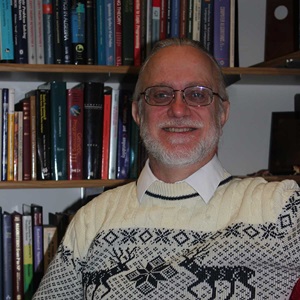
James A. Foster is a University Distinguished Professor of Biology in the Department of Biological Sciences at the University of Idaho. His research spans computational biology, evolutionary algorithms, and stochastic modeling. Key interests include neural ODE optimization, high-order SDE solvers, microbiome influences on health, and viral evolution modeling. Recent computational work focuses on improving efficiency and accuracy in stochastic simulations. Applications extend to pediatric nutrition (INSPIRE study), sepsis diagnostics, and COVID-19 variant analysis. Biological investigations cover gamete preparation and fertilization mechanisms.
Julio Giordano is a Professor of Dairy Cattle Biology and Management in the Department of Animal Science at Cornell University. He serves as Director of the Dairy Cattle Biology and Management Laboratory, Director of the Cornell Agricultural Systems Testbed (CAST) for the Farm of the Future, and Associate Director of the Cornell Institute for Digital Agriculture (CIDA). His research focuses on integrating technology, data analytics, and biological principles to enhance dairy cattle reproduction, health, and farm profitability. Key projects include developing automated reproductive management systems, precision technologies for health monitoring, and data-driven decision tools for dairy farms. Giordano holds a DVM from Universidad Católica de Córdoba (Argentina), an MS from the University of Tennessee, and a Ph.D. from the University of Wisconsin-Madison. His work emphasizes translating research into practical solutions, such as the CAST initiative advancing climate-smart agriculture through sensor networks and IoT frameworks. He teaches courses on reproductive physiology, herd management, and digital agriculture. His articles explore topics like automated estrus detection, genomic integration in reproductive strategies, and the economic impacts of precision technologies. Giordano collaborates with industry partners to bridge academic research and on-farm implementation, aiming to modernize dairy production systems through innovation.
Ali Emrouznejad is a Professor and Chair in Business Analytics at Surrey Business School, University of Surrey. He leads the Centre for Business Analytics in Practice and directs the "Sustainability Analytics, Metrics, and NetZero" program. His research focuses on performance measurement, efficiency analysis, AI, and big data. He holds a PhD in Operational Research from Warwick Business School and has served as head of the Business Analytics Group at Aston University. His work includes pioneering contributions to Data Envelopment Analysis (DEA), with over 250 journal articles and multiple authored books. Emrouznejad has led major research projects funded by organizations including the UK Department for Education, WHO-Africa, and the Royal Academy of Engineering. He serves as editor of Annals of Operations Research and holds editorial roles in over 10 journals. His awards include recognition as a top 2% global scientist and fellowship from FIMA, Institute for Sustainability, and PAI. His recent work addresses renewable energy transitions, additive manufacturing cybersecurity, and NetZero strategies for OECD countries. Key Projects: Cost efficiency analysis in higher education (DfES-funded) Hospital efficiency in African healthcare systems (WHO-Africa) Manufacturing efficiency with CO2 emissions (Royal Academy) Sugarcane grower efficiency in Africa (British Council) Milk yield optimization in dairy supply chains (KTP-funded) Awards & Recognition: World Top 100 Business Scientists 2024 Stanford's Top 2% Global Scientists Fellow of FIMA, Institute for Sustainability, and PAI Labs/Teams: Leads the Surrey Business Analytics Research Group and coordinates international conferences like DEA45. Active in editorial boards of Springer's Business Analytics in Practice series and multiple journals.
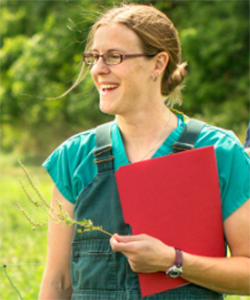
Jennifer T. Smilowitz, Ph.D., is an Assistant Professor of Cooperative Extension at the University of California, Davis, in the Department of Nutrition. Her research focuses on the role of diet in shaping the gut microbiome across the lifespan, with particular emphasis on clinical nutrition and lactation during the critical first 1000 days of life. Dr. Smilowitz also serves as the director of the ORIANE Lab, which develops evidence-based interventions to address health equity through nutrition education and community engagement. Education: B.S., Molecular, Cell and Developmental Biology, University of California, Los Angeles Ph.D., Nutritional Biology, University of California, Davis Research Interests: Dr. Smilowitz investigates how dietary patterns influence gut microbiome composition and function, particularly in infants and young children. Her work bridges clinical research and community outreach, addressing gaps in health equity through initiatives like the ORIANE Lab’s multimedia educational programs and professional development training for healthcare providers. Outreach & Impact: Her programs emphasize culturally sensitive interventions to improve infant feeding practices, reduce chronic disease risk, and empower families through nutrition literacy. Recent efforts include analyzing the 2022 U.S. infant formula shortage’s impact on parental behavior and infant health outcomes. Labs & Teams: The ORIANE Lab (Outreach & Research Implementing Advancements in Nutrition Equity) employs multi-disciplinary strategies to translate scientific findings into actionable community health solutions, including dietary intervention trials and health professional training initiatives.
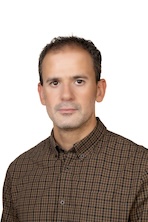
Dr. Zoltan Kevei is a Lecturer in Plant Molecular Genetics at Cranfield University, affiliated with the Centre for Soil, Agrifood and Biosciences. His research integrates molecular genetics, epigenetics, and biotechnology to improve crop traits in tomato, raspberry, and other agrifood systems. His research interests focus on plant-microbe interactions , root development genetics , adventitious rooting , rootstock vigour , cell cycle regulation , and developmental epigenetics in model and crop plants. He also contributes to food safety through innovations in honey authentication and plant-based milk analysis . His work employs CRISPR genome editing, DNA sequencing, and bioinformatics. The recent publications highlight a strong trend in crop genetics , particularly in tomato and raspberry improvement , stress resilience , and food authenticity technologies . His work bridges fundamental plant science with applied agrifood innovation. Research funded by BBSRC, Syngenta, Rijk Zwaan, Edward Vinson, FiberLean, KWS, Elsom Seeds, Syan Farms Active supervision of multiple research students Dr. Kevei leads and contributes to research projects such as Enhancing Potato Dormancy and FunShield4Med , focusing on sustainable food systems and food security. He collaborates closely with bioinformatics teams and industry partners to translate research into practical solutions.
Dr. Yong Wang serves as Senior Lecturer in the School of Chemical Engineering at the University of New South Wales Sydney, where he leads cutting-edge research in food engineering and technology. His academic journey includes a PhD from a joint program between China Agricultural University and University of California Davis (2011), followed by research positions at Monash University (2019-2020) and COFCO Nutrition and Health Research Institute in Beijing (2011-2019), including an Australian Endeavour Fellowship at The University of Queensland in 2016. Most recently, he was awarded an OECD Fellowship for the Co-operative Research Programme: Sustainable Agricultural and Food Systems, collaborating with MIT in April-June 2024. Dr. Wang's research focuses on food structure design (including mechanical properties for solid foods and rheological design for liquid/semi-solid foods), food processing technology (drying, emulsion, encapsulation), plant-based food developments, and human mimicking digestion systems. His work bridges fundamental science with practical applications in sustainable food systems, with particular emphasis on improving plant-based alternatives and novel food manufacturing processes. His current research projects span plant milk technologies, Australian hazelnut processing, alternative texturizers for plant-based meats, and fat distribution in food emulsion gels. His publication record includes 170 journal articles and 12 book chapters, with research trends showing increasing focus on sustainable food technologies, plant-based alternatives, and advanced food structure characterization. Recent work demonstrates expertise in interfacial rheology, 3D food printing, molecular dynamics of plant proteins, and AI applications in food science. OECD Fellow for the Co-operative Research Programme: Sustainable Agricultural and Food Systems (2024) Australian Endeavour Fellowship (2016) Editor of Food Chemistry X (Elsevier) Associate Editor of Measurement: Food (Elsevier) Editorial Board Member of Food Chemistry (Elsevier) Dr. Wang has secured over 1 million AUD in research funding since 2011, currently leading multiple projects including 'Advancing Plant Milk Technologies through Interfacial Rheology' (Sanitarium & Future Food Systems CRC, $232,000), 'Australian hazelnuts processing and quality enhancement' (AgriFutures Australia, $160,000), and 'Engineering network-forming behaviours of plant proteins' (Australian Research Council, $699,300). His research supervision focuses on food structure design, rheology, plant-based foods, and encapsulation technologies, with available honours projects spanning food 3D printing, vegetable chip development, and AI applications in flavor identification. He coordinates and teaches Advanced Food Engineering (FOOD4450/8450) and several other food science courses at UNSW.
Jessica McArt, DVM, PhD, DABVP (Dairy Practice) serves as Professor and Department Chair of the Department of Population Medicine and Diagnostic Sciences at Cornell University's College of Veterinary Medicine. Previously holding positions as Associate Professor (2020-present), Interim Department Chair (2022-2023), and Assistant Professor at Cornell and Colorado State University, she directs the McArt Dairy Cow Lab while maintaining active clinical roles as Section Chief of the Ambulatory and Production Medicine Clinic. Her educational background includes a PhD in Comparative Biomedical Sciences (2009-2013), Doctor of Veterinary Medicine (2003-2007), and BA in Biochemistry and Molecular Biology with Engineering minor (1995-1999), all from Cornell University and Dartmouth College respectively. She achieved Diplomate status with the American Board of Veterinary Practitioners (Dairy Practice) in 2020. Research in the McArt Dairy Cow Lab centers on periparturient diseases in dairy cows, with dual focus on epidemiological patterns and economic impacts. Her team develops 'cow side' diagnostic methods for energy-related metabolites and macrominerals while investigating hyperketonemia and hypocalcemia management. Recent work integrates deterministic and stochastic modeling to evaluate cost-benefit relationships of transition cow disease interventions, bridging clinical findings with farm profitability considerations. Analysis of her 15 most recent publications (2024-2025) reveals three dominant research trajectories: 1) Advanced monitoring systems using milk constituent analysis and wearable sensors for early disease detection, 2) Epidemiological investigations of metabolic disorders in diverse production systems including grazing operations, and 3) Development of evidence-based treatment protocols with economic modeling components. Her work increasingly incorporates machine learning approaches for health prediction while maintaining strong field applicability. American Dairy Science Association Foundation Scholar Award in Dairy Production (2023) Zoetis Award for Veterinary Research Excellence (2020) SCAVMA Teaching Excellence Award (2018) Multiple student presentation awards (2005-2012) As Editor in Chief of JDS Communications (2024-present) and former Section Editor for Journal of Dairy Science, she actively shapes scientific discourse in dairy science. Her professional affiliations include continuous membership in the American Association of Bovine Practitioners (2004-present) and other major veterinary organizations. Current USDA Category II accreditation and New York state veterinary licensure support her integrated clinical-research practice. The McArt Dairy Cow Lab maintains strong industry connections through on-farm research collaborations, particularly with New York State dairy operations. Her team's work directly informs evidence-based management practices that optimize both cow health and farm economics, with recent expansion into international collaborations including her 2023-2024 Visiting Scientist position with Agriculture Victoria and La Trobe University in Australia.
Ravi Bansal, PhD, serves as a Research Professor in the Departments of Psychiatry and Behavioral Sciences and Pediatrics at the University of Southern California (USC), with primary affiliation to the Keck School of Medicine. His research program integrates advanced neuroimaging with developmental psychiatry to investigate brain development from prenatal stages through adulthood, focusing on environmental and biological determinants of neurocognitive outcomes. Dr. Bansal's research interests center on Developmental Neuroscience and Psychiatric Disorders , utilizing Neuroimaging to examine how prenatal exposures—including maternal nutrition (zinc, iron), immune activation, air pollution, and socioeconomic factors—shape infant brain structure, metabolism, and connectivity. His work identifies early biomarkers for conditions like autism spectrum disorder and depression, employing multimodal MRI techniques to dissect tissue microstructure and functional networks. This research bridges pediatric neurology and psychiatry, emphasizing translational applications for early intervention. Analysis of his 15 most recent publications (2022-2025) reveals three dominant trends: (1) longitudinal studies tracking brain development in preterm/term infants exposed to prenatal risks; (2) neurotoxic effects of pediatric cancer treatments (e.g., methotrexate in leukemia); and (3) advanced statistical frameworks for parsing heterogeneity in psychiatric conditions. His methodology increasingly combines diffusion tensor imaging, spectroscopy, and machine learning to correlate imaging phenotypes with clinical outcomes across depression, autism, and schizophrenia spectra.
Anastasios (Tassos) Koidis is an Assistant Professor in the Department of Chemistry at the University of Ioannina, specializing in Food Chemistry and Industrial Chemistry. Previously, he served as an Assistant Professor at Queen’s University Belfast (School of Biological Sciences) from 2010 to 2024. His research focuses on food integrity, sustainability, and advanced analytical techniques such as spectroscopy, machine learning, and multi-omics. He has extensive experience in food authentication, lipid chemistry, and sensor technology applications. Education includes a BSc in Chemistry (Aristotle University of Thessaloniki), MSc in Food Science (University of Reading), and a PhD from Aristotle University. He held a postdoctoral position at TEAGASC, Ireland. Research interests span food authentication via spectroscopy, lipid analysis (e.g., olive and palm oils), multivariate data analysis, functional food bioactives, and novel processing technologies. He has over 100 peer-reviewed publications and serves on editorial boards, including Food Chemistry Advances . He contributed to EU projects like STARTEC and has leadership roles in ISO technical committees. Professional engagements include reviewing for UKRI and Hellenic grants, academic advising for Commonwealth scholarships, and keynote speaking at international conferences on food fraud detection and lipid analysis. Key achievements include developing analytical methods for food adulteration, leading ISO standards for fats and oils, and advising on food safety policies. His work bridges technology and policy to enhance food quality and safety globally.
Pascual Garcia Perez is an Investigador Ramón y Cajal at the University of Murcia, affiliated with the Faculty of Veterinary Medicine and the Department of Food Technology, Nutrition and Bromatology. He leads research in the Nutrición, Biotecnología Alimentaria y Aspectos Legales (Biofun) group, with prior involvement in the Plants Biofactory research group. His doctoral degree from the Universidad de Vigo (2021) focused on phytochemical valorization of Bryophyllum spp. using biotechnological and machine learning tools. His research emphasizes metabolomics, plant biochemistry, and the application of advanced analytical techniques to study bioactive compounds in medicinal plants, food systems, and agricultural crops. Key themes include plant stress responses, food authenticity, and the bioavailability of nutrients in microgreens and fermented foods. Collaborative projects explore sustainable agriculture practices and the industrial exploitation of underutilized plant species. Recent work highlights multi-omics approaches to elucidate metabolic pathways under abiotic stresses, the development of biocontrol strategies for crop diseases, and the optimization of extraction methods for phytochemicals. His publications reflect a strong focus on integrating computational tools with experimental data to predict metabolic outcomes and enhance food quality. Although no formal academic awards are listed, his extensive publication record and prestigious Ramón y Cajal position underscore his contributions to food and agricultural sciences. His advisory roles and research mentorship are reflected in his doctoral training under Dr. Pedro Pablo Gallego Veigas.
Carsten Jers is a Senior Researcher at the Novo Nordisk Foundation Center for Biosustainability, Technical University of Denmark (DTU), specializing in bacterial signal transduction and enzyme engineering. His work contributes to multiple UN Sustainable Development Goals through biosustainability research. As part of the DTU Microbes Initiative, he maintains an active research profile with 44 publications and involvement in 9 research projects. Dr. Jers' research focuses on enzyme biochemistry, molecular biology, and microbiology, with particular expertise in sialidase/neuraminidase studies, protein phosphorylation mechanisms, and thermostability of enzymes. His fingerprint analysis reveals strong connections to Escherichia coli research (85%), thermostability studies (55%), protein phosphorylation (49%), and human milk oligosaccharide research (47%). His recent publications demonstrate a strong trend in enzyme engineering for industrial applications, genomic analysis of bacterial pathogens (particularly Enterococcus species), and development of bacterial systems for protein production. His work bridges fundamental molecular mechanisms with practical applications in food safety, biocatalysis, and sustainable bioproduction. Dr. Jers actively supervises multiple PhD students through the Novo Nordisk Foundation Center for Biosustainability, with current projects focusing on bacterial cell engineering, pathogen proteomics, and microbiome analysis. His research has gained significant attention, with publications mentioned by news outlets, blogged about, and shared across social media platforms including X (Twitter) and Facebook. His laboratory work centers on bacterial signal transduction mechanisms, with particular focus on developing engineered bacterial systems for industrial applications, studying microbial safety profiles, and exploring thermostable enzymes from extremophiles for biocatalytic processes.
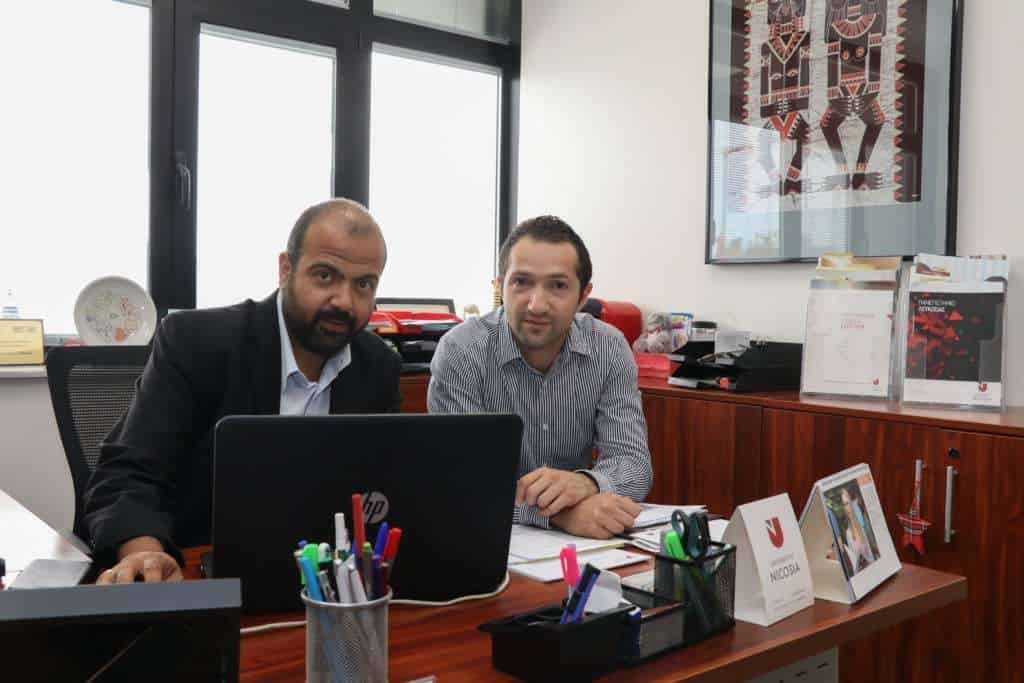
Kyriacos Felekkis is a Professor and Head of the Department of Life and Health Sciences at the School of Sciences and Engineering, University of Nicosia. He holds a BSc in Biotechnology from Worcester Polytechnic Institute (2000) and a degree in Pathology and Laboratory Medicine from Boston University School of Medicine (2004). His research focuses on the molecular basis of human diseases, particularly the role of microRNAs in disease progression and biomarker discovery for renal diseases and cancer. Felekkis leads an EU-funded Horizon2020 project (OActive), which develops computer models for osteoarthritis diagnosis/treatment, and co-leads a study on miRNA interactions with bovine meat and colorectal cancer. His work emphasizes interdisciplinary approaches combining biology, AI, and engineering to address complex health challenges. Education: BSc Biotechnology (Worcester Polytechnic Institute), Pathology & Lab Medicine (Boston University). Research Themes: MicroRNA regulation, biomarker development, disease mechanisms. Projects: OActive (EU project), bovine miRNA-cancer link investigation. Felekkis advocates for translational research that bridges basic science and clinical impact, aiming to improve human health through innovative diagnostics and therapies.
Alessandro Casa is an Associate Professor of Statistics at the Faculty of Economics and Management, Free University of Bozen-Bolzano (Italy). His research focuses on developing statistical methodologies for high-dimensional and complex data, including latent variable models, density-based clustering, and applications in spectroscopy. He holds a PhD in Statistics from the University of Padova (2016-2020), preceded by master's and bachelor's degrees in Statistical Sciences and Statistics, Economics, and Finance, both from the University of Padova. Education: PhD in Statistics, University of Padova (2016-2020) Master Degree in Statistical Sciences, University of Padova (2014-2016) Bachelor Degree in Statistics, Economics, and Finance, University of Padova (2011-2014) Research Interests: Mixture models, modal clustering, graphical models, variable selection, latent variable modeling, high-dimensional data inference, computational statistics, and chemometrics. His work often addresses challenges in spectroscopic data analysis and applications in agriculture and physics. Teaching: Statistical Methods for Business Analysis (MSc programs) Research Methods and Experimental Design (Tourism Management) Statistics for Tourism, Sport, and Event Management (BSc) Professional Experience: Associate Professor (2024–Present), Free University of Bozen-Bolzano Senior Assistant Professor (2024), University of Bergamo Postdoctoral Research Fellow (2019–2021), University College Dublin Labs/Teams: Collaborations with Vistamilk SFI Research Centre and Insight SFI Research Center during his postdoctoral tenure. Active in model-based clustering research communities, contributing to conferences and workshops globally.
Rob Deardon is a Professor jointly appointed in the Faculty of Veterinary Medicine and the Department of Mathematics and Statistics at the University of Calgary. His research spans Bayesian statistics, infectious disease epidemiology, and spatial modeling, with applications in human and animal health. PhD in Applied Statistics, University of Reading (2001) MSc in Medical Statistics, University of Southampton (1997) BSc in Pure Mathematics & Mathematical Statistics, University of Exeter (1996) Rob Deardon's work focuses on computational statistics, infectious disease modeling (including foot-and-mouth disease and influenza), and spatio-temporal analysis. His methodological interests include Monte Carlo methods, approximate Bayesian computation, and statistical learning. Recent publications emphasize spatial epidemic models, behavioral change analysis, and computational methods for disease surveillance. He leads a research group of 10 graduate students. He teaches graduate courses in infectious disease modeling and maintains collaborations across biostatistics, veterinary medicine, and public health.
Pasquale Filannino is a Researcher at the Department of Soil, Plant, and Food Sciences (Di.SSPA), University of Bari. His work focuses on microbial fermentation, bioactive peptides, and sustainable food processing. He teaches courses in bioprocess technologies and waste valorization. Agri-food bioprocesses and advanced microbiology (6 credits) Biotechnologies for waste valorization (3 CFU) Starter selection and predictive microbiology (6 CFU) Research highlights: Development of bioactive peptides from agricultural residues Investigation of Apilactobacillus kunkeei biofilm formation in honeybee crops Valorization of date seeds and apple byproducts for functional foods Design of probiotic yeast starters for cornelian cherry beverages Characterization of cattle manure vermicompost for sustainable agriculture Classification of bioactive peptides using computational models His work emphasizes circular economy principles, microbial ecology, and health-focused food innovations.