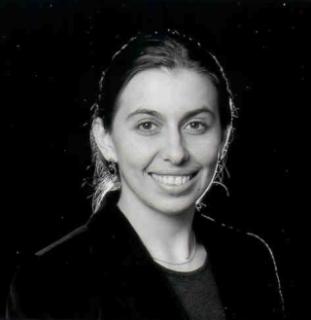
Boris ChrubasikView profile
Associate Professor
Boris Chrubasik serves as Associate Professor of Greek History and Classics and Chair of the Department of Historical Studies at the University of Toronto. His academic leadership extends to his role as co-editor of Phoenix , the Journal of the Classical Association of Canada, demonstrating his significant contribution to the field of classical studies. Dr. Chrubasik's research expertise centers on the political, cultural, and social history of the Eastern Mediterranean from the Achaemenid to the late Hellenistic periods. His work particularly examines social power dynamics, including concepts of kingship in the Seleukid empire—the largest successor state following Alexander the Great's death—and the complex relationships between local power-holders and larger imperial structures. He has pioneered research on cross-cultural exchange between Greek and non-Greek communities in southern Asia Minor and the Levant. Currently, he leads an international collaborative team working to conserve, edit, and publish a private archive of seal impressions from Hellenistic Maresha in Israel, representing cutting-edge interdisciplinary work in ancient history. His publication record reveals consistent scholarly output focused on Hellenistic political structures, with particular emphasis on the Seleukid Empire. The trend in his work shows increasing sophistication in analyzing power structures across imperial contexts, with recent publications examining the intersection of religious institutions, political authority, and cultural identity. His research demonstrates exceptional command of both textual and material evidence, bridging traditional historical analysis with archaeological approaches. At the University of Toronto, Dr. Chrubasik teaches undergraduate courses in Greek history spanning from the second millennium to the second century CE, including specialized offerings on Early Greece, Classical Greece, the Persian Empire, and the Hellenistic Period. He also engages with graduate students through the tri-campus graduate Department of Classics, offering advanced seminars on Greek epigraphy, Hellenistic Jewish history, and historical approaches to cities and imperialism. His commitment to student development is evident through his supervision of Independent Reading Courses and participation in the Research Opportunity Program, providing valuable research experience to undergraduate students.