Hochschule Niederrhein University of Applied SciencesGermany
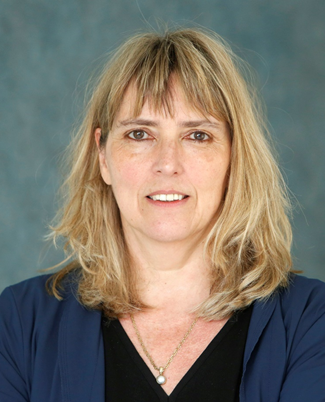
Waltraud Meints-Stender is a Professor of Politics and Education at the Niederrhein University of Applied Sciences . She is a leading scholar in political philosophy and Hannah Arendt studies, with research interests spanning power theories, political judgment, social justice, and migration. She was elected to the scientific advisory board of the Institute for Democracy Didactics (IDD) in Hannover and chairs the Hannah Arendt Society for Political Thinking in Bremen. Education : Studied Social Sciences and Philosophy at the University of Göttingen and Leibniz University Hannover. PhD at Carl von Ossietzky University Oldenburg (2011) on Hannah Arendt's political judgment. Research Interests : Foundations of the Political Power Theories Political Judgment Equality and Difference in Social Justice Hannah Arendt's Philosophy Intersections of Art and Politics Recent Publications focus on democratic crises, migration, and critical theory. Key themes include Hannah Arendt's contributions, plurality as a democratic principle, and the role of political education in addressing systemic inequalities. Scientific Awards : Democracy Center Vienna Fellowship (2025) Advising and Collaborations : Co-edited volumes on refugee integration, political judgment, and Hannah Arendt. Regularly collaborates with Dirk Lange and other scholars on social justice projects. Currently on research leave at the University of Vienna.
Hochschule Niederrhein University of Applied SciencesGermany
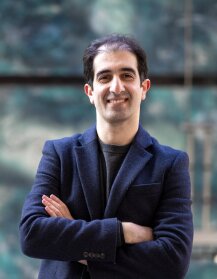
Michael Noack is a Professor for Methods of Social Work with a focus on community work and neighborhood management at the Department of Social Work , Niederrhein University of Applied Sciences , since 2017. He holds a habilitation at the Faculty II of the University of Siegen (2017–2024) and previously held teaching and research roles at the University of Duisburg-Essen and Koblenz University of Applied Sciences . His research bridges social work practice with empirical studies on social space orientation, loneliness, and migrant integration. Education : Bachelor (2008) and Master (2010) in Social Work from Cologne University of Applied Sciences . His research interests center on social space orientation as a methodological and theoretical framework in social work, with empirical foci on loneliness across age groups, integration potentials in migrant communities, and participatory approaches like adressee research and social space analysis. He has led evaluations of projects such as QPlusAlter (funded by Evangelische Stiftung Alsterdorf ) and Regionales Präventionszentrum Viersen (funded by Jobcenter Kreis Viersen ), emphasizing community-based solutions and policy-practice gaps. Notable projects include interdisziplinary collaborations like QUARTPOINT (2016–2018) on integration potentials with Humboldt University Berlin and KoKon (2020–2021) on post-pandemic social interactions. He has authored monographs such as Integrierte Methodik in der Sozialen Arbeit (2024) and Soziale Arbeit und Einsamkeitsregulation (2022), alongside co-editing the Handbuch Soziale Arbeit und Einsamkeit (2022). Lectures and training courses span topics like loneliness in youth ( Deutscher Ethikrat , 2024), social space orientation in migration contexts ( Internationale Tagung Muttenz , 2019), and participatory methods in social work ( Fachtag Fulda , 2015). His work integrates theoretical rigor with actionable insights for practitioners, often involving stakeholder feedback and comparative studies.
Hochschule Niederrhein University of Applied SciencesGermany
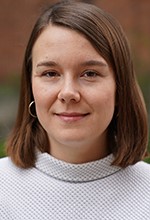
Nina Westerholt is a researcher and academic counselor at Niederrhein University of Applied Sciences, with a focus on international social work education, decolonial methodologies, and racism critique in academia. She coordinates the BASA (dual) study program and leads research projects on anti-racist teaching and curriculum reform. Her work spans collaborations with institutions in New Zealand, Fiji, Sweden, and Germany. Her educational background includes a diploma in education and additional qualifications in German as a foreign language. She has conducted seminars on counseling in migration contexts, social work practice, and academic writing, with international partnerships in New Zealand and Fiji. Current projects include decolonizing social work curricula and implementing anti-discrimination strategies. Westerholt is co-speaker of the German Association for Social Work's expert group on international social work and chairwoman of the university's Applied Social Sciences support association. She has presented at conferences on decolonial education, critical discourse analysis, and student diversity, with publications on study progress mentoring and curriculum development. Her research emphasizes discourse analysis of international social work programs, exploring how colonial and racist power structures shape knowledge production. She advocates for pluriversalism in teaching and research, challenging traditional hierarchies in academic internationalization.
Johanna Ullmann is a research associate at the Institute for Migration Research and Intercultural Studies (IMIS), University of Osnabrück, where she conducts research and teaching at the Chair of Migration and Society. She is actively involved in two major research projects: the Horizon Europe-funded Link4Skills and the DFG Collaborative Research Center 1604 Production of Migration , where she coordinates the Integrated Graduate School. Her work spans migration, gender, labor market integration, and intersectionality. Her research focuses on gender-specific labor market integration of refugees , particularly women, and the organizational, policy, and social dynamics shaping inclusion. She employs qualitative-empirical methods and comparative analysis, grounded in postcolonial feminist and intersectional theory. Her recent work examines skill mobility partnerships, dequalification of refugee women, and transnational migration corridors between Europe and countries like India, the Philippines, and Nigeria. The 15 most recent publications reflect a strong trend in gendered migration , refugee integration , and transnational labor mobility . They combine policy analysis, ethnographic insights, and institutional critique, often co-authored with international collaborators. Her work bridges academic research with practical policy contributions, including training materials and expert reports. Shortlist-Nomination for ÖZS 'Paper of the Year Award' 2024 She has supervised and co-led research with doctoral students and early-career researchers, particularly within the IGK and Link4Skills projects. She has coordinated academic advising and graduate programs, and has received research funding from Horizon Europe and the DFG. Her teaching spans qualitative methods, intersectionality, and migration studies at both BA and MA levels. She is actively engaged in academic governance as a member of the IMIS Board and the Diversity Working Group at IMIS, and serves on the Standing Committee of Immigration, Migrants and Labor Markets (IILME) within the IMISCOE network.
Prof. Dr. Margit Stein is a full Professor of General Education at the University of Vechta, where she has held a professorship since March 2010. She is affiliated with the Department of Educational Sciences within the Faculty of Educational Sciences. Her academic leadership includes serving as Director (2017–2019) and Deputy Director (2012–2017) of the Center for Teacher Education (ZfLB) at the university. She holds a doctorate and habilitation in psychology and education from the Catholic University Eichstätt-Ingolstadt, where she also completed her diplomas in both Pedagogy and Psychology. Her research centers on value-based and democratic coexistence in heterogeneous societies, with a strong focus on promoting peaceful and solidarity-based living among diverse cultural, religious, and ethnic groups. Key areas include intercultural and interreligious friendships, democratic education, the prevention of religious radicalization, and fostering sustainability competencies. She emphasizes empirical educational research, inclusive education, media research, and digitalization in education, often applying her work in practical, policy-relevant contexts across Germany and internationally, particularly in Africa. Her recent academic contributions (2023–2025) reflect a consistent focus on radicalization prevention, democratic student participation, global citizenship education, and service learning. She frequently collaborates on interdisciplinary and international projects such as MetESD (ESD curricula), Distanz, and UWIT (radicalization research), often with partners in Togo, Tanzania, and across Europe. Her work bridges research, practice, and policy, evident in her development of handbooks for youth work, anti-violence guides, and inclusion manuals. Eduimpact award for Science Communication (University of Vechta) Erasmus+ MetESD project recognized as a 'Success Story' by the European Commission EFRE Regional Youth Report recognized by the United Nations University Promotion scholarship from Studienstiftung des Deutschen Volkes Georg-Gottlob-Studienpreis for best psychology diploma Maximilian Bickhoff Prizes for best diplomas in Pedagogy and Psychology (1999) Prof. Stein actively supervises research and collaborates with numerous colleagues and students, though specific advisees are not listed. She has led and contributed to significant research grants, particularly from the BMBF, EU (Erasmus+, EFRE), BMZ, and GTZ. Her work often involves creating educational materials, policy recommendations, and training programs for teachers and social workers. She leads service learning initiatives that connect university students with societal challenges, especially in migration, inclusion, and sustainability. She is deeply involved in international research networks and projects focused on radicalization (RADIS), education for sustainable development, and inclusive education. Her leadership in developing roadmaps against child and forced marriages, handbooks in multiple African languages, and inclusive training manuals demonstrates her commitment to applied, transformative research. She plays a key role in fostering university-school-society collaborations, particularly through student councils and community-based learning.
Leibniz Institute for Research on Society and SpaceGermany
Dr. Małgorzata Popiołek-Roßkamp is a Research Associate at the Leibniz-Institut für Raumbezogene Sozialforschung (Leibniz Institute for Research on Spatial Contexts) in Erkner, Germany, where she has been a member of the Research Area 'Contemporary History and Archive' since January 2020. Her research focuses on socio-spatial transformations, particularly in Berlin-Brandenburg, with an emphasis on the conversion of military sites after the Cold War and the reconstruction of urban centers in East-Central Europe. PhD, Technische Universität Berlin / University of Wrocław (2017) MA in Heritage Conservation, Technische Universität Berlin (2012) MA in Art History, University of Warsaw / Albert Ludwig University of Freiburg (2010) Her research interests lie at the intersection of urban history, architectural heritage, memory studies, and socio-spatial transformation . She investigates how cities rebuild after conflict, how military spaces are repurposed in peacetime, and how professional communities—especially architects—navigate political upheaval. Her work often emphasizes the overlooked or forgotten dimensions of urban change, such as the social and ecological consequences of military withdrawal or the marginalization of certain groups in architectural professions. The most recent articles reflect a strong trend in post-military landscape conversion, Cold War memory, and architectural responses to displacement . Her publications analyze topics ranging from Soviet troop withdrawals and refugee camps to the reconstruction of Warsaw and the legacy of Nazi-era urban planning in occupied Poland. These works demonstrate a consistent focus on the political, cultural, and spatial dimensions of urban transformation in 20th-century Central and Eastern Europe. She has received notable recognition for her scholarly contributions: Second Prize, German Society of Urban History and Urban Research (GSU) Research Prize of the Polish Ambassador in Germany Dr. Popiołek-Roßkamp has held teaching assignments at Technische Universität Berlin, Europa-Universität Viadrina, and Brandenburgische Technische Universität Cottbus-Senftenberg. She has led and participated in third-party funded projects on topics such as the conversion of military sites and socio-spatial disparities in East and West Germany. She is co-editor of the GSU-Blog Stadtgeschichte(n) and has contributed to public scholarship through digital exhibitions, audio walks, and media appearances. Her work is deeply collaborative, involving partnerships with institutions like the Leibniz-Zentrum für Zeithistorische Forschung and the Centre for Historical Research of the Polish Academy of Sciences. She is actively involved in academic and public discourse through lectures, conferences, and participatory research, particularly in projects that combine historical research with public engagement, such as virtual exhibitions and oral history interviews.
Daniel Oro is a Research Professor at the Spanish National Research Council (CSIC) . He graduated in Biology from the University of Barcelona, earned a European Doctorate in 1996, and conducted post-doctoral research in France and the United Kingdom before joining CSIC in Mallorca. His academic profile spans decades of contributions to ecological theory and conservation science. Education: PhD (Biology) from University of Barcelona Experience: Postdoctoral work in France/UK; CSIC since 1996 Research interests include: Animal ecology (species interactions, population dynamics) Climate change impacts on marine species Conservation strategies for endangered megafauna Trophic interactions and top predator roles Habitat protection effectiveness His publication trends reveal consistent focus on marine ecology, climate threats to reptiles, demographic modeling, and conservation frameworks. Key methodologies include hierarchical population modeling and empirical studies on seabirds and sea turtles. Network includes collaborations with institutions in Spain, France, UK, and the U.S., emphasizing global ecological challenges.
Dr. Keyvan Allahyari is a Junior Professor for Anglophone Literatures in a Global Environment at Friedrich Schiller University Jena since 2024. He earned his PhD in English at the University of Melbourne (2019), and has held international research fellowships including a Marie Curie European Fellowship (University of Oslo), and Alexander von Humboldt Fellowships (University of Tübingen and University of Potsdam). He has also served as a Visiting Scholar at James Cook University (2025), a Fryer Library Fellow (University of Queensland, 2022), and an Emerging Critic Fellow at the Sydney Review of Books (2020). Research Interests : Critical Border Studies, New Materialisms, Future Studies, Oceanic Humanities, Cultural Sociology Key Themes : Intersections of borders with ecological degradation and AI; material ecologies in refugee narratives; global Anglophone literatures beyond Anglophone canons Recent Publications include monographs on Peter Carey and Abdulrazak Gurnah, alongside peer-reviewed articles in Research in African Literatures , ARIEL , and Journal of Postcolonial Writing . His teaching focuses on global Anglophone literatures from Asia-Pacific, Caribbean, and African contexts, with seminars like Shakespeare: The Bard at the Border and Pacific Literatures in Context . Collaborative Projects include co-authored works on migration, proximities, and the global refugee with scholars like Bani Gill and AbdouMaliq Simone. His longform essays and reviews appear in platforms such as the Sydney Review of Books and The Conversation , addressing topics from Middle Eastern literature to refugee authorship ethics.
Peter T. Simatei is a Professor of Comparative Literature in the Department of Literature, Theatre & Film, specializing in African literature, Diaspora studies, literary theory, and African Cinema. His scholarly work bridges postcolonial theory with cultural analysis across continental and diasporic contexts. His academic credentials include: BA (Hons) from the University of Nairobi M.Phil from Moi University PhD from the University of Bayreuth, Germany Simatei's research critically examines how diasporic identities negotiate national frameworks, challenging theoretical approaches that marginalize the nation-state's role in diasporic consciousness. His work intersects East African, African, and Indian diaspora literatures with studies of migration, gender representation, and popular culture, emphasizing how these elements shape transnational identities. Future research will explore futuristic visions emerging from African and diasporic communities. His publication trajectory reveals consistent engagement with comparative frameworks—particularly African literature's dialogues with Greek and Oriental traditions—and incisive analyses of gendered power dynamics in cultural production, including examinations of sexuality and popular media. Prestigious recognitions include: Fellow of the Alexander von Humboldt Stiftung German Research Council (DFG) Post-doctoral Fellowship in Postcolonial Studies at LMU Munich Five College African Scholars Fellowship at University of Massachusetts No details regarding student mentorship, research grants, or laboratory affiliations were documented in the source material.
Christophe Claramunt is a distinguished researcher affiliated with the Naval Academy Research Institute in Brest, France. His work spans interdisciplinary domains at the intersection of Geographic Information Systems (GIS) , spatial data science , and human mobility analysis . He has pioneered hierarchical graph-based models for maritime and urban systems, semantic trajectory frameworks, and spatiotemporal approaches for urban soundscapes and shipping networks. Research Themes: GIS modeling, maritime transportation analytics, urban conflict analysis, semantic trajectories, geospatial data infrastructures Methodologies: Graph theory, machine learning, knowledge graphs, spatiotemporal databases, remote sensing Applications: Port network resilience, demining systems, tourist behavior analysis, cadastral digitization His recent publications focus on graph neural networks for spatial analysis, knowledge-driven competitive intelligence , and maritime network cascading failures . Collaborative work includes contributions to global container shipping modeling and urban acoustic environments. While no formal academic rank is listed in the source data, his extensive publication record and leadership in interdisciplinary projects confirm his status as a full faculty researcher.
Prof. Dr. Vera King is Professor of Sociology and Psychoanalytic Social Psychology at Goethe University Frankfurt am Main and Managing Director of the Sigmund Freud Institute Frankfurt. She is affiliated with the Department of Social Sciences and Institute of Sociology, where she leads research on the intersection of sociology and psychoanalysis. Her work bridges theoretical frameworks with contemporary social challenges, particularly in the digital age. King's research focuses on the social-psychological analysis of societal developments, their institutional, intergenerational, and individual psychological consequences. She examines the interplay between psychological and social determinants of individual action, exploring theoretical and methodological connections between sociology and psychoanalysis. Her current research addresses social-psychological analyses of crisis phenomena, psychological consequences of digitalization (e.g., in the 'The Measured Life' project), optimization requirements in changing time relations (e.g., in the DFG research project 'Reproductive Timing'), and shifts in pathology and normality in contemporary society. Her recent publications reveal a clear trend examining how digital measurement and optimization transform social relations and individual psyche. King's work investigates how digital technologies create new 'normalities' and 'pathologies,' particularly in social media use, self-tracking practices, and workplace environments. She analyzes the cultural shift toward quantification and how it affects attention, relationships, and self-perception, revealing both productive possibilities and destructive mechanisms in digitally optimized societies. Prof. King supervises Bachelor and Master theses in sociology and social psychology, requiring prior attendance at her 'Sociology and Psychoanalytic Social Psychology' colloquium. She has led major research projects including 'The Measured Life' (funded by Volkswagen Foundation), 'Reproductive Timing' (DFG research project), and participates in the interdisciplinary research cluster 'ConTrust - Vertrauen im Konflikt. Politisches Zusammenleben unter Bedingungen der Ungewissheit.' She leads the research team at the Sigmund Freud Institute and collaborates with prominent scholars including Hartmut Rosa and Benigna Gerisch. Her team conducts interdisciplinary work examining the psychosocial consequences of migration and flight, adolescent trajectories, and generational dynamics. King's approach integrates sociological theory with psychoanalytic methodology to understand how social structures shape psychological processes and vice versa.
Max Planck Institute for Social AnthropologyGermany
Bani Gill is a Marie Skłodowska-Curie Research Fellow with the Department of Anthropology of Politics and Governance at the Max Planck Institute for Social Anthropology (Halle, Germany) since September 2023. She is also an Assistant Professor at the Institute for Sociology, University of Tübingen, and a Research Affiliate with the Centre on Migration, Policy and Society (COMPAS) at the University of Oxford.
Prof. Dr. Sina Rauschenbach holds the Chair of Religious Studies and Jewish Thought at the University of Potsdam since 2014. Their research focuses on Sephardic Studies, Early Modern Jewish History, and Jewish-Christian intellectual exchange. They coordinate the Spanish-German Academic Conversations since 2011 and direct the 'Sephardic Perspectives' project at the Selma Stern Center for Jewish Studies. Education: Diploma in Mathematics (1996, FU Berlin), Doctorate in Philosophy (2000, FU Berlin), Habilitation in Modern History (2010, University of Konstanz) Key Positions: Fellow at Wissenschaftskolleg zu Berlin (2008-09), Dartmouth-German Harris Visiting Professor (2018), IIAS Fellow in Jerusalem (2022-23) Research interests span the Sephardic Atlantic, postcolonial Jewish studies, and early modern interfaith dialogue. Their publications bridge historical analysis and cultural theory, with particular emphasis on Jewish-Christian intellectual networks and colonial histories. Scientific awards include prestigious fellowships at Wissenschaftskolleg zu Berlin (2008-09), Israel Institute for Advanced Studies (2022-23), and a DFG-funded Research Training Group 'minor cosmopolitanisms' (2016-23). Supervision includes numerous PhD candidates in Jewish and Religious Studies.
Professor Dr. Yvonne Kleinmann holds the chair of East European History at Martin Luther University Halle-Wittenberg since 2014. She directs the Aleksander Brückner Center for Polish Studies , a joint initiative with Friedrich Schiller University Jena, focusing on Polish statehood, society, language, and culture. Her research spans three main areas: Polish-Lithuanian State Union (urban, religious, and legal history), Russian Empire history (migration, knowledge transfer), and Jewish lifeworlds in Eastern Europe . Key projects include: "Paths of Legal Discovery in Ethnically and Religiously Mixed Societies" (Emmy Noether Group, 2008-2013) "Constitutions in Dialogue" (transnational Polish constitutional history) "Separated Together" (current research on religious heterogeneity) She contributes to the Leibniz ScienceCampus EEGA as co-responsible for "Cultures of Internationalism" research area. Her scientific awards include: Yad Hanadiv Fellowship (Hebrew University/Jewish History Center, 2006-2007) ARW Post-Doc Fellowship (2024/25) Publications and editorial work focus on: Comparative empire analysis Legal anthropology Religious conflict resolution Migration studies Historiographical methodology Her academic career demonstrates continuous engagement with interdisciplinary research through positions at: Simon Dubnow Institute for Jewish History Humanities Center for East Central Europe (GWZO) Hebrew University of Jerusalem University of Leipzig University of Mainz
Prof. Dr. Gökçen Yüksel is a Professor of Social Work with a focus on Social Disparities at the Faculty of Social Sciences and Health , Kempten University of Applied Sciences. She previously held professorial roles at IU Munich and the University of Vienna, and has extensive research experience at institutions including Ludwig-Maximilians-Universität München and Universität Osnabrück. Education: PhD in Sociology (Munich, 2017), MA in International Migration (Osnabrück, 2009), Diplom in Social Work (Ostfalia, 2004) Her research explores social disparities , intersectionality , migration society , and sociological discrimination . Key publication themes include: Spatial manifestations of gender inequality Democratic education in marginalized contexts Health equity as a social justice bridge Refugee integration challenges Intersectional frameworks in social work Critical analysis of migration policies Contact: goekcen.yueksel@hs-kempten.de