Jesper Andreasson is a Professor at the Department of Sport Science , Linnaeus University , with a PhD in Sociology. He is Director of Studies for the doctoral program in sports science and teaches advanced/postgraduate courses in ethnography, theory of science, and social theory . His research spans doping, body, identity, gender, fatherhood, and family life . Key Research Themes: Doping cultures, masculinity studies, prostate cancer's impact on gender, online communities, ethnographic methods Recent Projects: Trajectories of fitness doping, masculinity reconstruction post-prostate cancer, asylum seeker family dynamics Publication Trends: Recent work focuses on prostate cancer and masculinity , doping in digital ecosystems , racism in education , and fatherhood during global crises . His articles often employ qualitative methods and intersectional analysis . Academic Leadership: Active in university governance as Vice Dean and Chair of HLK Sports Science , with editorial roles in research collections.
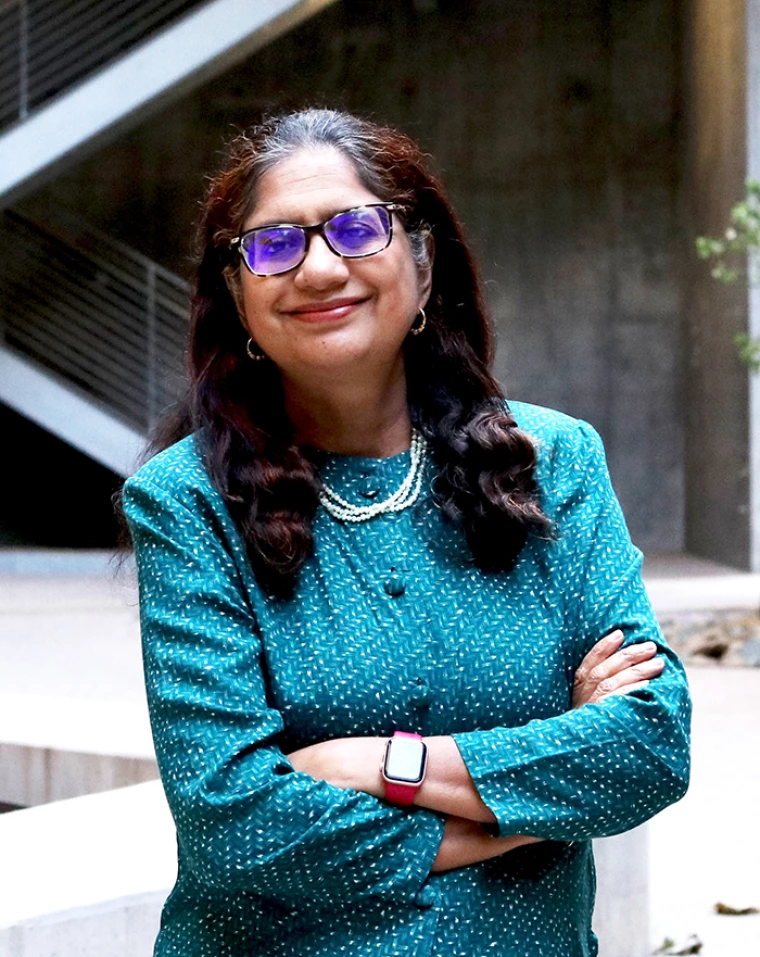
Dr. Sadhana Ravishankar is an Associate Professor at the School of Animal & Comparative Biomedical Sciences, University of Arizona. Her work focuses on food safety, plant-based antimicrobials, and pathogen control in agricultural systems. University of Arizona School of Animal & Comparative Biomedical Sciences Research Interests include: Bacterial contamination of produce Antimicrobial efficacy of plant compounds Environmental pathogen persistence Water safety in agriculture Clean label food preservation Pathogen interaction with plant surfaces Publications (2018-2025) highlight her work on plant-derived antimicrobials, metabolomic profiling of melons, and cross-contamination prevention in both plant and animal products.
Ana Ortin Peralta is an Assistant Professor in the School-Clinical Child Psychology Program at Yeshiva University's Ferkauf Graduate School of Psychology. Her work focuses on understanding developmental pathways of suicide risk, cultural competency in mental health assessment, and the psychosocial impacts of trauma on children and adolescents. She holds a primary appointment at Yeshiva University and conducts research at the intersection of clinical psychology, public health, and developmental science. Her research emphasizes culturally responsive approaches to assessing suicidal thoughts and behaviors in youth of color, the role of structural racism in suicide disparities, and the intergenerational transmission of mental health risks. Dr. Peralta has published extensively on topics such as early puberty's impact on suicide risk, caregiver-family dynamics in self-injury cases, and the psychological effects of the COVID-19 pandemic on young adults. Her studies often employ longitudinal designs and mixed-methods approaches, with a particular focus on high-risk populations such as maltreated children and immigrant families. Dr. Peralta's research is supported by grants exploring suicide prevention strategies in pediatric primary care settings and the epidemiology of suicidal behaviors in diverse adolescent populations.
Prof. Charles Agyemang serves as Professor of Global Migration, Ethnicity and Health at Amsterdam University Medical Centers, University of Amsterdam, and holds an Adjunct Professorship at Johns Hopkins University School of Medicine. His academic leadership spans European and African health research initiatives with focus on migrant populations. His educational background includes a PhD from Erasmus Medical Centre (University of Rotterdam) and a Master's degree from Edinburgh University Medical School. These qualifications established his foundation in population health research. Research interests center on ethnic health inequalities and non-communicable diseases (NCDs) among migrant communities, particularly African populations. His work examines how migration affects obesity, diabetes, and cardiovascular diseases through genetic-environmental interactions. He pioneered the landmark RODAM study across Ghana, Netherlands, Germany, and UK, later expanding it into the prospective RODAM-Pros cohort with ERC funding. His research integrates epigenetics, public health policy, and community engagement to address health disparities. His recent publications (2019-2022) reveal consistent focus on migrant health disparities with emphasis on diabetes mechanisms, obesity epidemiology, and epigenetic markers. Key themes include cardiovascular risk in African populations, uric acid metabolism, and social determinants of health during pandemics. His work predominantly employs large-scale cohort studies with international collaborations across Europe, Africa, and North America. Notable scientific recognition includes: Black Achievement Award for Science & Education in the Netherlands (2022) European Research Council Consolidation Fellowship (2018) Amsterdam Bible College Ward-medal for migrant community service (2016) Netherlands Organisation for Scientific Research VENI Fellowship (2007) Prof. Agyemang has mentored numerous students across Europe and Africa and established training programs including the Art of Scientific Writing summer school in Ghana. His major grants include European Commission FP7 funding for RODAM and an ERC Consolidation Grant for RODAM-Pros. He serves on WHO taskforces, The Lancet Racial Equality Advisory Board, and as Section Editor for the Journal of American Heart Association. He leads the RODAM research consortium and co-founded the community initiative 'Your Health Is Your Wealth' with the Pentecostal Council of Churches in the Netherlands, providing health education to migrant communities. His laboratory work focuses on epigenetic mechanisms in cardiometabolic diseases among African migrants through the RODAM-Pros cohort study.
Leen d'Haenens is a Professor of Communication Science at KU Leuven's Faculty of Social Sciences. She has held leadership roles including Vice-Dean (2011-2018), Director of Studies (2007-2011), and Jean Monnet Chair (2000-2007). She specializes in media literacy, digital youth engagement, and media policy, with a focus on post-truth politics, migration, and online resilience. Education: MA in Romance Languages (UGent), MSc in Press & Communication (UGent), MSc in Information Studies (University of Toronto), PhD in Political & Social Sciences (UGent). Research interests include: Political communication in digital age EU media policy integration Children's digital well-being Risk mitigation strategies Minority media experiences Key contributions include: Co-founded EU KIDS Online network Advised EU Commission on media literacy strategies Authored/co-authored 191 peer-reviewed articles Edited 18 books including 2023's Islamophobia as Radicalisation Awards include ERC Consolidator Grant Panel Chair (2021-present) and Jean Monnet Chair (2000-2007). She serves on editorial boards for top journals like Communications and New Media & Society.
Professor Melanie Davern is a Professor of Public Health and Urban Planning at RMIT University's School of Global, Urban and Social Studies (GUSS), and Director of the Australian Urban Observatory (AUO). Her work focuses on the intersection of public health and urban planning, particularly in areas of liveability, health equity, and applied transdisciplinary research. She holds a Vice Chancellor's Senior Research Fellowship (2022) and has led initiatives such as the AUO's digital liveability platform, which translates research into policy. Her research interests include urban policy, healthy ageing, walkability, climate adaptation, and community engagement. Melanie actively supervises Honours, Masters, and PhD students in topics related to health and place. She also serves on RMIT's Academic Board and collaborates with international partners on urban liveability frameworks. Notable contributions include the development of liveability scorecards for Australian cities and the 'Quality Green Space' literature review. Her work has been featured in media outlets like The Conversation and Croakey Health Media.
Sophia CHAE is an Associate Professor in the Department of Demography at Université de Montréal, affiliated with the Faculty of Arts and Sciences. She holds a PhD and MA from the University of Pennsylvania, an MS from Harvard University, and a BA from Northwestern University. Her research focuses on marriage, gender, family dynamics, migration, and social demography in Sub-Saharan Africa, employing quantitative methods. Key research interests include polygyny transformation, migration impacts on women's well-being, and bridewealth systems. She leads projects funded by NIH and the Social Sciences and Humanities Research Council (CRSH) of Canada. Notable grants include studies on marriage and health in Malawi (2023–2026) and sibling mortality in low-income countries (2023–2025). Dr. Chae has supervised two master's theses: on polygyny's impact on family planning in Benin (2024) and familial influences on fertility preferences in Madagascar (2024). She collaborates with institutions like McGill University’s Center on Population Dynamics and publishes in journals such as Demography and The Lancet . Her work addresses gender norms, reproductive health, and educational disparities, with recent publications analyzing long-term migration effects and global gender norm–health linkages. She contributes to interdisciplinary teams exploring child social competence and adolescent gender attitudes in Zambia.
Nathalie Arbour is a Full Professor in the Department of Neuroscience at the University of Montreal and an accredited professor in the Department of Microbiology, Infectious Diseases, and Immunology. She holds the Claude-Bertrand Chair in Neurosurgery and is affiliated with the Centre de Recherche du Centre Hospitalier de l'Université de Montréal (CRCHUM). Her research focuses on neuroimmunology, particularly the interactions between the immune system and the central nervous system (CNS), with a focus on T lymphocytes in multiple sclerosis (MS) pathogenesis. She has published over 56 articles and secured grants from agencies like the MS Society of Canada, CIHR, and NSERC. Affiliations: University of Montreal (Faculty of Medicine, Department of Neuroscience) CRCHUM (Neurosciences Axis Lead) CHUM (Centre Hospitalier de l'Université de Montréal) Research Interests: Elucidating T cell mechanisms in autoimmune CNS diseases, cytokine modulation of immune responses, and neural cell interactions. Key projects include studying IL-15 and IL-27 in MS progression, and evaluating cannabinoids for symptom relief. Grants & Awards: - Claude-Bertrand Chair in Neurosurgery (2019–2024) - Multiple grants from IRSC, NSERC, and MS Society of Canada Teaching & Mentorship: Supervised over 20 graduate students and teaches immunology and neurosciences courses. Involved in training programs like the CIHR Integrated Training Program in Neuroinflammation. Labs/Teams: Leads a lab at CRCHUM (office R09.464, lab R09.326) focusing on neuroimmunology. Collaborates on projects like the CANSEP trial evaluating cannabinoid efficacy in MS.
Ian Sue Wing is a Professor in the Department of Earth & Environment at Boston University, specializing in the economic analysis of energy and environmental policy with a focus on climate change and computational general equilibrium (CGE) modeling. He earned his Ph.D. from MIT in 2001 and has conducted extensive research on climate change impacts, energy systems, natural hazards, and policy implications. His work bridges CGE models with econometric and process-based simulations to assess economic consequences of environmental shocks and policy interventions. His research emphasizes the broader economic impacts of climate change, including agriculture, energy systems, and human health, supported by grants from agencies like the NSF, DOE, and EPA. He has contributed to the IPCC AR5 and the U.S. National Climate Assessment. Key areas of study include wildfire risk, power outage economics, and heat-related health disparities. Wing has advised federal panels and integrates interdisciplinary approaches to address complex environmental challenges.
Professor Joe Tomlinson is a leading academic in Public Law at the University of York's York Law School. He holds a Chair in Public Law and has held visiting roles at institutions like Yale Law School and the Institute for Advanced Study at Durham University. His research focuses on administrative law, digital governance, and procedural fairness, with a particular emphasis on how legal processes intersect with social science methods. Education: LLB (Hons) from the University of Manchester (2013), PhD in Law (2017) Previous Roles: Lecturer at the University of Sheffield (2016–2018), King’s College London (2018–2019) Honors: Philip Leverhulme Prize in Law (2023) His research explores the operation of law within public sector organizations and its impact on societal experiences. Key projects include the Administrative Fairness Lab (co-founded with Simon Halliday and Jed Meers) and the Transforming Justice Programme at the Institute for Fiscal Studies. These initiatives examine how legal and economic methods can improve public service performance and judicial system efficiency. Notable publications include Artificial Intelligence and Public Law (2025) and Judicial Review of AI in UK Government (2025), addressing AI's legal implications. He has also contributed to policy reviews, parliamentary debates, and court cases at all levels, including the UK Supreme Court. Professor Tomlinson chairs the Academic Panel of the Administrative Justice Council and serves on Blackstone Chambers' Academic Panel. His work is funded by bodies such as the Nuffield Foundation and the Leverhulme Trust.
Dr. Daniel Martínez is an Associate Professor in the School of Sociology at the University of Arizona, serving as co-director of the Binational Migration Institute and core faculty in the Mexican American Studies Department. His work focuses on criminology, race and ethnicity, and immigration, with a particular emphasis on the criminalization of migration and border enforcement impacts. His research examines deportation, migrant deaths along the US-Mexico border, and the social consequences of immigration policies. He leads the Ford Foundation-funded Migrant Border Crossing Study, analyzing the experiences of deported migrants. Dr. Martínez also explores Latino/a panethnicity, sanctuary policies' effects on public safety, and ecological correlates of police violence in southwestern cities. He is affiliated with the School of Government and Public Policy, the School of Geography, Development, & Environment, the Center for Latin American Studies, and the SBS Human Rights Practice Program. His edited book In the Shadow of the Wall (2018) analyzes border violence and migration. Dr. Martínez serves on editorial boards for the American Sociological Review and Journal on Migration and Human Security . His work underscores the intersection of structural violence, policy, and human rights in migration contexts.
Dr. Andreas Cebulla is an Associate Professor (Full Academic Status) at Flinders University's College of Humanities, Arts and Social Sciences, with adjunct roles across multiple colleges. His primary focus is on the future of work, AI ethics, and automation impacts. He holds research affiliations at the University of Adelaide and the University of Queensland's Life Course Centre. Research Interests: Current work explores AI's societal implications, automation trends, labour market dynamics, and aging workforce policies. He advises on PhD proposals related to digital transformation and macroeconomic AI effects. Publications: His 2024 edited volume The Future of Work and Technology in Australia synthesizes global and local insights. Notable works address WHS risks in AI adoption, migrant skill mismatches, and aging at home technologies. Grants/Projects: 2024: Migrants’ Labour Market Outcomes in South Australia (Lead) 2024: Independent Review of Paid Domestic Violence Leave (Lead) 2023: Workplace AI Ethics Scorecard Development Labs/Teams: Australian Industrial Transformation Institute (AITI), Smart Ageing Research Group Key Activities: Invited talks on AI in workplaces, submissions to South Australian AI policy committees, and media contributions on future of work issues.
Susan Detmer is an Associate Professor in the Department of Veterinary Pathology at the University of Saskatchewan. She specializes in molecular and phenotypic characterization of influenza A viruses and focuses on infectious diseases of swine, particularly porcine reproductive and respiratory syndrome (PRRS), influenza A, and porcine circovirus type 2. Dr. Detmer teaches undergraduate systemic pathology, necropsy rotations, and graduate mammalian pathology courses. Her research explores viral pathogenesis in swine, including maternal-fetal interface interactions during PRRSV infections, Brachyspira-associated colitis, and influenza A virus dynamics. She has contributed to diagnostic methods for swine respiratory pathogens and vaccine efficacy studies. Publications highlight her work on viral transmission mechanisms, placental pathology in infected gilts, and global influenza A virus migration. Her studies emphasize clinical and molecular approaches to understanding swine disease epidemiology, with a focus on improving diagnostic and preventive strategies. No scientific awards or grants are explicitly listed in the provided materials. She advises students in her courses but no formal advisee list is available.
Sabine Henry is a Professor in the Department of Geography within the Faculty of Sciences at the University of Namur, Belgium. Her research focuses on the interaction between environment and migration at household and individual levels, with extensive fieldwork across Africa, Southeast Asia, and Central America. She leads a research team within the Institute of Life-Earth-Environment (ILEE) and maintains active collaborations with institutions worldwide including the London School of Economics, University of Neuchâtel, and universities in the Philippines and Ecuador. Doctor of Geographical Sciences, Université Catholique de Louvain (2003) DESS in Demography, University of Human Sciences of Strasbourg (1998) Degree in Geographical Sciences, Université Catholique de Louvain (1997) Professor Henry's research centers on environmental migration, vulnerability assessment, and resilience building in contexts of climate change and natural disasters. Her work explores who is likely to migrate based on gender, age, socio-economic status, and education, as well as how environmental changes are perceived by potential migrants. She employs diverse methodological approaches including event-history analysis, qualitative methods, and innovative techniques like board games to capture complex decision-making processes. Her fieldwork spans Burkina Faso (drought-migration links), Philippines (typhoon impacts), Ecuador (environmental benefits of migration), and multiple African nations (vulnerability assessments). Her research output shows consistent focus on environmental migration patterns, with recent publications addressing community vulnerability in Rwanda, hydrological changes in Senegal, and seismic risk perception in Haiti. The work demonstrates interdisciplinary integration of geography, demography, and environmental science with strong methodological diversity. Best Poster Award, Population Association of America (2008) Best Poster Award, UISSP (2013) Poster Award for 'The nexus between international migrations and ecological services uses...' (2012) Professor Henry currently supervises 5 PhD students and one permanent scientific collaborator, supported by multiple international and national projects. Her team has received significant funding including FNRS PDR projects, PRD-ARES grants, and collaborations with institutions in Switzerland, Senegal, and Romania. Current projects include vulnerability assessments for earthquakes in Haiti (2018-23), landslides and floods in Rwanda (2019-23), and flash floods in Burundi (2019-23), alongside ongoing work on environmental modifications and human mobility in Sub-Saharan Africa. Her research group operates within the Hugo Observatory, a research center committed to studying interactions between environmental changes, human migration, and politics. The team employs community participatory approaches to ensure durability of project outcomes and examines migration-environment links from multiple angles including drivers, vulnerability, resilience, and disaster impacts.
Valerie Mueller is an Associate Professor at Arizona State University's School of Politics and Global Studies, and a Nonresident Fellow at the International Food Policy Research Institute (IFPRI). Her research focuses on agricultural economics, climate change impacts, migration dynamics, and rural development in Africa and Asia. Education: MS (2001) in Agricultural and Resource Economics, University of Maryland PhD (2005) in Agricultural and Resource Economics, University of Maryland Research themes include: quantifying rural vulnerability to climate variability (migration, nutrition, and health impacts); improving rural service delivery through randomized controlled trials; and analyzing youth employment prospects in Africa. Her work has been published in prestigious journals like Nature Climate Change , Proceedings of the National Academy of Sciences , and American Economic Review , with significant media coverage in outlets like Le Monde and Science . She actively collaborates with donor communities and policymakers, maintaining ties with IFPRI while engaging in field experiments across East Africa. Her recent projects include analyzing cash transfer programs in Bangladesh and Mali, and applying machine learning to study climate-related migration patterns.