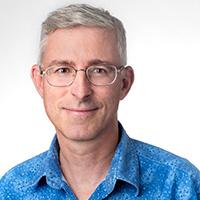
Gideon HartmanView profile
Associate Professor
Gideon Hartman is an Associate Professor in the Anthropology Department at the University of Connecticut, where he conducts interdisciplinary research at the intersection of paleoenvironmental reconstruction, plant and animal eco-physiology, anthropology, and archaeology. His work primarily employs stable isotope methods to reconstruct past environments, human mobility patterns, paleodiets, and ancient economic systems. Dr. Hartman received his Ph.D. from Harvard University in 2008. His educational foundation in anthropology and archaeological science has enabled his innovative approach to stable isotope analysis. Rather than treating isotopic values as static markers, he investigates the mechanisms causing variability in stable isotope ratios as they move along foodwebs from soil and atmosphere to plants and then to animals and humans. Hartman's research program uniquely begins in the contemporary world to establish principles that can be reliably applied to archaeological settings. His work spans diverse geographical regions including the Eastern Mediterranean, Levant, Jordan Valley, and Armenian Highlands, with temporal coverage from the Middle Pleistocene to the Early Bronze Age. He has made significant contributions to understanding how environmental factors like water availability, temperature, and soil conditions affect isotopic signatures in modern ecosystems, creating robust models for archaeological interpretation. His publication record demonstrates consistent productivity in high-impact journals, with research trends showing increasing sophistication in multi-isotope approaches applied to complex archaeological questions about pastoralism, trade networks, human migration, and human-environment interactions. His work increasingly integrates zooarchaeological, archaeobotanical, and geochemical evidence to build comprehensive pictures of past societies. As director of the Stable Isotope Preparation Lab at UConn, Hartman leads a research team that processes and analyzes samples from archaeological sites worldwide. His laboratory serves as a hub for interdisciplinary collaboration between archaeologists, anthropologists, geoscientists, and biologists seeking to apply isotopic methods to their research questions. His work has been instrumental in refining methodologies for interpreting strontium, carbon, nitrogen, and oxygen isotope data in archaeological contexts, particularly regarding animal and human mobility patterns in the Eastern Mediterranean region.