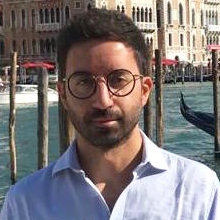
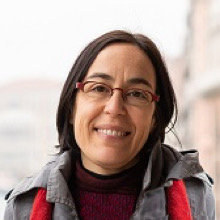
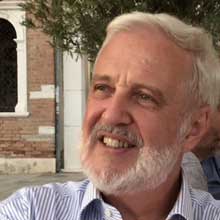
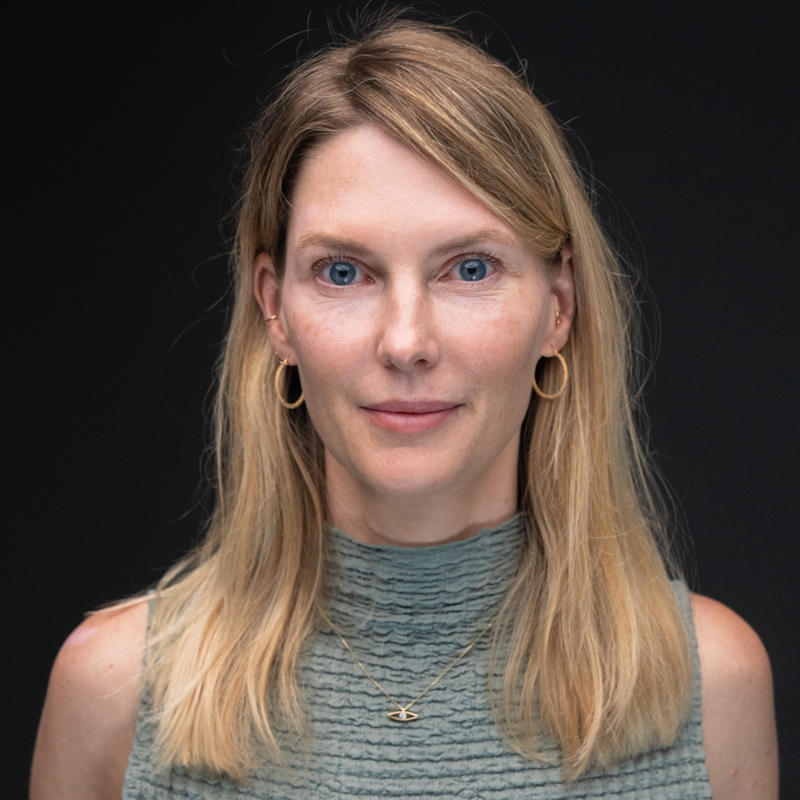
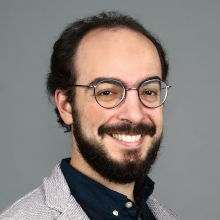
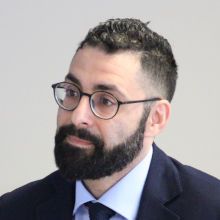
Dario MICCOLI is an Associate Professor at Ca' Foscari University of Venice, serving as Director's Delegate for Job Placement. He is affiliated with the Department of Asian and North African Studies, focusing on Jewish history, Mediterranean studies, and diaspora narratives. His research emphasizes cultural memory, colonial legacies, and transnational Jewish communities. His research interests include the history of Jewish communities in Egypt, Morocco, Rhodes, and Israel, with a particular focus on migration, literary representation, and digital preservation of cultural heritage. Key works explore Sephardic and Mizrahi identities, postcolonial Mediterranean dynamics, and the intersection of literature and nationalism. Recent publications highlight studies on Egyptian Jewish bourgeoisies, Rhodesian colonial experiences, and Mizrahi radicalism. His work frequently bridges historical analysis with contemporary cultural discourse, examining how marginalized communities narrate their histories. Miccoli has curated several volumes on ethnic museums and edited collections on Jewish cultural expression. His teaching and administrative roles reflect a commitment to interdisciplinary approaches to Middle Eastern and Mediterranean studies.
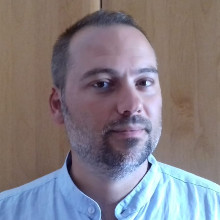
Carlo Frappi is a Contract Lecturer at the Department of Asian and North African Studies, Ca' Foscari University of Venice. He is also a member of the Steering Committee of the Observatory of Politics and International Relations (OPRI). With a Ph.D. in European History from the University of Rome 'La Sapienza' and an M.A. in Political Sciences from the University of Perugia, Frappi has built a distinguished career at the intersection of academia and policy research. His research focuses on energy security, Turkish foreign policy, the politics of the South Caucasus—especially Azerbaijan—and the geopolitics of the Caspian and Black Sea regions. He has held research and teaching roles at institutions including ISPI, Università Cattolica del Sacro Cuore, and the University of Milan. Frappi's scholarly output spans monographs, journal articles, book chapters, and policy reports. Since 2010, he has co-authored the ISPI quarterly monitoring on Energy Security for the Italian Parliament and Ministry of Foreign Affairs. His recent publications analyze Armenia's geopolitical challenges, Turkish-Azerbaijani energy alliances, and the impact of the Ukraine war on European energy security. His work consistently bridges academic rigor and policy relevance, with a strong emphasis on international relations, regional cooperation, and energy diplomacy in Eurasia. Ph.D. in European History, University of Rome 'La Sapienza' M.A. in Political Sciences (International Politics), University of Perugia Specialization in 'Democratization and Political Affairs', Austrian Study Center for Peace and Conflict Resolution Frappi's research interests include energy security, geopolitical competition in Central Asia, Turkish foreign policy, and post-bipolar regional dynamics. His articles explore themes such as pipeline politics, regional stability, and external influence in the South Caucasus. His recent publications reflect a sustained focus on energy geopolitics, conflict analysis, and regional cooperation. Key trends include the impact of global instability on the South Caucasus, evolving energy strategies in Turkey and Azerbaijan, and the transformation of European energy security in the wake of the Ukraine war. Frappi has not received any scientific awards that are publicly listed in the provided texts. He has contributed to significant research projects and policy monitoring initiatives, including long-term collaboration with ISPI and leadership roles in joint research with institutions in Azerbaijan. He has supervised or co-edited several academic volumes and policy reports, often in collaboration with Italian and international scholars. Frappi is actively involved in academic and policy networks, contributing to research groups and observatories focused on international politics and energy security.
Simone Sibilio is an Associate Professor in the Department of Asian and North African Studies at Ca' Foscari University of Venice, where he teaches Arabic Language and Literature. He also holds teaching responsibilities at IULM University in Milan-Rome, delivering courses in Arabic language and translation. His academic engagement spans editorial leadership, research coordination, and international collaboration, particularly in the fields of modern and contemporary Arabic literature, Palestinian poetry, and translation studies. Education: PhD in Comparative Literature, University of Naples "L'Orientale", 2011 Advanced Training Course in Literary Translation from Arabic, SETL, 2005–2006 Advanced Training Course in History and Civilization of Islam, Istituto Italiano per gli Studi Filosofici, 2005–2006 Research Interests: Simone Sibilio's scholarship centers on contemporary Arabic literature, with a strong emphasis on Palestinian poetry, geopoetics, and the literary representation of memory and trauma. He explores themes such as exile, identity, resistance, and intercultural dialogue, particularly through the lens of postcolonial and translation studies. His work often bridges literary analysis with political and historical contexts, especially concerning the Nakba, the Arab Spring, and refugee narratives. He also investigates the role of media and digital platforms in shaping Arab cultural discourse. Publication Trends: His recent publications reveal a deepening engagement with Palestinian poetic voices, especially in times of crisis. He frequently publishes critical introductions, translations, and essays on poets like Mahmoud Darwish, Ghassan Zaqtan, and Najwan Darwish. His scholarly output combines monographic work, editorial projects, and interdisciplinary conference contributions, often focusing on memory, landscape, and poetic resistance in the Arab world. Scientific Engagement: Member of the Editorial Board, Quaderni di Studi Arabi Member of the Editorial Board, series The Great Books of Arabic Literature , Ca' Foscari Editions Member of the Editorial Board, series Translating Wor(l)ds , Ca' Foscari Editions Member of the Scientific Committee, Maydan journal Member of the Scientific Board, EURAMAL (European Association for Modern Arabic Literature) Peer reviewer for journals including Middle Eastern Literature Reviews , Oriente Moderno , and Neohelicon Advising and Grants: While no formal PhD or Master’s students are listed, Sibilio has supervised research projects and participated in evaluation committees for academic positions and research grants. He has been awarded Erasmus ICM grants for academic collaboration in Palestine, reflecting his international engagement and commitment to scholarly exchange in the region. Labs and Research Groups: He is an active member of the Centro Studi sul Medio Oriente Contemporaneo (CEM) at Ca' Foscari and part of the Laboratorio Didattica dell'Arabo in Ricerca (DAR), contributing to national and international research networks focused on Arabic studies and pedagogy.
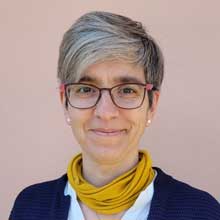
Piera Rossetto is a Researcher at the Department of Asian and North African Studies, Ca' Foscari University of Venice. Her work bridges Jewish studies, migration, memory, and creative methodologies, with a focus on postcolonial North African and Middle Eastern Jewish communities, especially from Libya. She leads major research projects and teaches Hebrew language and social research methods. PhD in Languages and Civilizations of Asia and the Mediterranean Africa, Ca' Foscari University and EHESS Toulouse (2015) MA in South and Western Asia: Languages, Cultures, and Institutions, Ca' Foscari University (2011) Her research explores memory, identity, and belonging through narrative cartography and co-creative methods. She investigates Jewish Mediterranean migrations, particularly of Libyan Jews, using oral histories, literary sources, and digital tools. Her work emphasizes marginalized voices and interdisciplinary, artistic approaches to research. The recent articles highlight a strong trend in narrative and creative cartography, Jewish postcolonial memory, and interdisciplinary research-creation. Themes include the poetics of identity, mapping invisible migrations, and digital documentation of diasporic memories. Her publications span monographs, journal articles, book chapters, and multimedia outputs. Scientific awards and fellowships include: Rita Levi Montalcini Program for Young Researchers (Principal Investigator) FWF Hertha Firnberg Postdoctoral Fellowship Fondazione Rothschild Doctoral Fellowship Fondazione CDEC Research Fellow She has secured competitive grants, including the FWF-funded "Europe's (In)Visible Jewish Migrants" and the ongoing Rita Levi Montalcini project on gender, aging, and migration. She has advised collaborative, interdisciplinary research teams and supervised creative digital projects. Her work often involves partnerships across Europe and digital humanities platforms. She leads the research project "Genere, invecchiamento e migrazioni: memorie e mascolinità ebraiche del Nord Africa e del Medio Oriente" and previously led an FWF-funded project at the University of Graz. She also contributes to digital initiatives like the World Jewish Congress’s MENA Jewish legacy project and co-developed interactive visualizations and audio-documentaries.
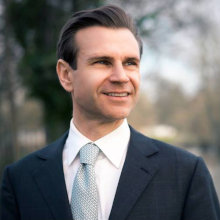
Matteo Legrenzi is a Full Professor at the Department of Economics, Ca' Foscari University of Venice, specializing in International Relations and Middle Eastern Studies. He holds a D.Phil. from St. Antony's College, Oxford, and has taught globally at institutions like Oxford, Ottawa, and Seoul. His research focuses on Gulf monarchies, regional security, and political economy, with notable works on Arab Gulf states' diplomatic strategies and China's Gulf relations. He is a former coordinator of the Philosophy, International Studies, and Economics (PISE) program and founding director of the Master in Strategic Studies and International Security (SSSI). Legrenzi leads the Research Institute for International Studies and advises on Middle East relations as Rector's Delegate. His editorial roles include the Cambridge University Press' Elements in Middle East Politics series. He has received the Capital Educators' Award 2009 and oversees multiple Marie Curie Fellowships. His research spans Gulf security dynamics, Middle East-EU relations, and North-East Asia's geopolitical shifts. Publications highlight his expertise in GCC diplomacy, regional cooperation challenges, and monarchical resilience. He collaborates internationally, including with Tsinghua University's IIAS and SOAS' Middle East Institute.
Ersilia Francesca is a Full Professor of Islamic History at the University of Naples 'L'Orientale', where she is affiliated with the Department of Asia, Africa and Mediterranean. She teaches Gender Politics in an Islamic Context and Contemporary Economic History of the Middle East and North Africa across multiple graduate programs including Relazioni e Istituzioni dell'Asia e dell'Africa, Lingue e Culture Comparate, and Lingue e Culture dell'Asia e dell'Africa. Her research focuses on three main interconnected areas: Islamic law, gender studies in Islamic contexts, and the history of Islamic economics. Professor Francesca has established herself as a leading scholar in Ibadi studies, particularly through her early work on medieval Islamic commerce and more recent publications exploring the role of Ibadi minority in Islamic history. She has published five monographs including her seminal 2002 work 'Theory and Practice of Commerce in Medieval Islam' and 'Economy, Religion and Morality in Islam' (2013), which was the first comprehensive reconstruction of Islamic economic thought in Italian. Recent publications demonstrate her evolving research trajectory toward contemporary issues, particularly the intersection of gender, climate change, and politics in the MENA region. Her 2024 publications examine labor ethics in classical Islamic texts while also addressing modern challenges facing women in North Africa and the Middle East. Professor Francesca has increasingly focused on the gendered impacts of climate change, positioning herself at the intersection of environmental policy and Islamic feminist scholarship. Editor of Studi Magrebini/North African Studies (Class A journal) Co-editor of the series Studies on Ibadism and Oman with Abdulrahman al-Salimi Member of the scientific committee of the International Association on Ibadi Studies Member of editorial boards for Donne fedi culture and Manifesta Professor Francesca has maintained an active international scholarly presence through visiting positions at SOAS (London, 2015), EPHE (Paris, 2018), and École Pratique des Hautes Études (Paris, 2024). She currently participates in the French Institute of Islamic Studies project 'Faire société: modèles normatifs et hétéronomie dans les islams minorityitaires' and has coordinated research on post-revolutionary North Africa, particularly examining gender mobility and social activism.
Maria Cristina Paciello is an Associate Professor in the Department of Asian and North African Studies at Ca' Foscari University of Venice. Her work centers on the History of Islamic Countries, with a focus on political economy, gender dynamics, youth mobilization, and EU-Mediterranean relations. She is actively engaged in research and teaching, with a strong publication record in leading journals and policy reports. Her research interests include the political economy of Arab countries, gender and labor issues, youth exclusion, and the ideological contributions of female Islamist figures such as Zaynab al-Ghazālī. She investigates how trade liberalization, neoliberal reforms, and EU policies impact social justice and human rights in the Arab world, often adopting a decentring, bottom-up analytical framework. Her recent publications span topics such as working-class women in Jordan, Morocco, and Tunisia; the life and thought of Zaynab al-Ghazālī; youth transitions in the Mediterranean; and critical assessments of EU foreign policy. These works reflect interdisciplinary engagement across history, political science, sociology, and development studies, with recurring themes of social justice, resistance, and inclusive policy-making. Scientifically, she has contributed to major research projects like MEDRESET and Power2Youth, producing policy recommendations and academic insights. Though no formal awards are listed, her influence is evident in her extensive collaborations and policy-oriented outputs. Maria Cristina Paciello advises on youth and labor issues, often in collaboration with researchers such as Daniela Huber and Daniela Pioppi. She has led or contributed to numerous research grants focused on EU-Mediterranean relations, youth exclusion, and social movements. Her work is supported by institutions like the German Marshall Fund and the Institute of International Affairs. She is affiliated with research teams focused on Mediterranean studies, political economy, and gender in the Arab world. Her projects often involve transnational collaboration and aim to produce inclusive, reflexive policy frameworks for EU engagement in the region.
Alessandro Costantini is an Associate Professor at the Department of Comparative Linguistic and Cultural Studies, Ca' Foscari University of Venice, specializing in French Literature (SSD L-LIN/03). His academic career spans over three decades since joining Ca' Foscari in 1992, progressing from tenured researcher to his current position as Associate Professor of Francophone and French literatures and cultures. Department of Comparative Linguistic and Cultural Studies Editor-in-Chief of the journal "Il Tolomeo" Deputy Editor of "InterFrancophonies" journal Member of Scientific Committees for several academic journals Costantini's research focuses on Francophone literatures with particular emphasis on Haitian and Caribbean literature, French colonial literature, Francophone linguistics, and literary diglossia. His work explores the intersections of language, colonialism, and cultural identity, with special attention to creole-speaking regions and postcolonial contexts. His scholarship examines how language functions as both a tool of colonial power and a means of resistance and cultural expression. His recent publications reveal a consistent engagement with colonial religious texts, linguistic hybridity in postcolonial contexts, representations of indigenous peoples in colonial narratives, and the literary traditions of French-speaking Caribbean and North African communities. His work demonstrates sophisticated analysis of how language shapes cultural memory and identity formation in postcolonial societies, particularly examining the complex relationships between French and its colonial derivatives. Costantini has made significant editorial contributions to the field as Editor-in-Chief of "Il Tolomeo" since 2013 and Deputy Editor of "InterFrancophonies." His leadership in these journals has helped shape contemporary scholarship in postcolonial and Francophone studies. His academic service extends to membership on the Scientific Committees of several journals including "Interculturel/Francophonies," "Lingue e linguaggi," and "Regards croisés." His academic journey began with a degree in Foreign Languages and Literatures from Ca' Foscari, followed by extensive study at the École des Hautes Études en Sciences Sociales in Paris where he earned a Diplôme and DEA in semiotics. His early work focused on 17th century French literature and semiotic theory before shifting to his current specialization in Francophone Caribbean and postcolonial literature.
Marcella SIMONI is an Associate Professor at the Department of Asian and North African Studies, Ca' Foscari University of Venice. Her research focuses on Middle Eastern history, Israeli-Palestinian conflict dynamics, and Jewish diaspora communities in Asia. She teaches courses on Israeli-Palestinian relations, Baghdadi Jewish histories, and Mediterranean studies. Her recent work includes a curated volume on Gaza’s geopolitical entanglements ( Il Labirinto di Gaza , 2024) and analyses of cinematic representations of the Oslo Accords era. SIMONI’s research bridges historical analysis with contemporary political discourse, emphasizing transnational networks and cultural memory. She actively contributes to academic debates on Middle Eastern conflicts and diasporic identities through publications in journals like Quest and Israel Studies Review . Teaching activities include graduate courses on civil society in Israel/Palestine, Baghdadi Jewish transnational histories, and undergraduate modules on Israeli-Palestinian history. Her work often intersects with sociopolitical themes such as conscientious objection, refugee narratives, and colonial legacies in Asia and the Mediterranean.
Kristin Fabbe is a Full-time Professor at the European University Institute (EUI), serving as Chair in Business and Comparative Politics at the Florence School of Transnational Governance (Florence STG). She is also Director of Florence STG Executive Education. Previously, she held positions at Harvard Business School and Claremont McKenna College. Her research focuses on comparative politics with regional expertise in the Middle East, southeastern Europe, and Turkey, emphasizing migration governance, social cohesion, and the interplay between state development strategies and identity politics. Education: PhD in Political Science from MIT, MSc in History and Theory of International Relations (LSE), BA in History (Lewis and Clark College). She consults for governments, international organizations (e.g., IOM, DG-REFORM), and the private sector on migration and conflict issues. Her book *Disciples of the State: Religion and State-Building in the Former Ottoman World* (2019, Cambridge UP) examines religious institutions' role in state-building in Greece, Turkey, and Egypt. Current research explores economic crises' societal impacts and geopolitical dimensions of human mobility. Professional roles include service on academic committees (American Political Science Association) and advisory roles, including for Greece's Ministry of Migration and Asylum. Her work bridges academia and policy, addressing contemporary challenges in transnational governance.
Emiliano Bronislaw Fiori is an Associate Professor in Ancient Christian Literature at the Department of Asian and North African Studies, Ca' Foscari University of Venice. He is actively involved in research leadership as a member of the Ca' Foscari ERC Board and the Scientific Council of the 'Ca' Foscari Research Hub for Global Challenges,' and serves as the Rector's Delegate for Research in the Linguistic Area. His academic work bridges philology, theology, and cultural history in Late Antiquity. PhD in Social Sciences and Historical Studies of Religions, University of Bologna (2007–2009) Co-tutelle PhD, École Pratique des Hautes Études, Paris (2007–2009) Laurea in Classics (History of Christianity), University of Padua (2006) His research focuses on the intercultural transmission of Greek Christian thought into Syriac and Arabic, particularly through translation and exegetical traditions. He specializes in Syriac patristics, the reception of Dionysius the Areopagite, apocryphal literature, and the intellectual history of early Christianity. His work explores how theological ideas were adapted across linguistic and cultural boundaries in the first millennium CE. The recent publications of Professor Fiori reflect a strong thematic focus on Syriac Christian literature, manuscript traditions, and the translation dynamics of Greek patristic texts. His studies frequently examine the Apocalypse of Paul, Dionysius the Areopagite, and Gregory of Nyssa, emphasizing textual criticism, hermeneutics, and the cultural contexts of translation. His research also engages with Gnostic writings from the Nag Hammadi library, showing a broad interest in early Christian diversity. ERC Starting Grant (2017) – 'FLOS. The Intercultural Dissemination of Greek Christian Thought' John Templeton Award for Theological Promise (2011) Invited Researcher, Hebrew University of Jerusalem (2016) Prof. Fiori has supervised numerous academic events and contributed to major editorial projects, including serving as Editor-in-Chief of the 'Eastern Christian Texts' series at Brill. He has been a visiting scholar at leading institutions such as Harvard, Oxford, and the Hebrew University. His teaching includes Syriac language, Christian origins, and Christianisms of Asia and Africa. He is a member of several academic societies, including the International Association of Patristic Studies and the French Society for Syriac Studies. He leads the ERC-funded FLOS project, which investigates Syriac florilegia as knowledge-organizing tools in the early Abbasid period. His research group includes scholars from multiple disciplines, and he collaborates with institutions across Europe and the Middle East. He is also involved in digital humanities initiatives related to manuscript digitization and textual databases.
Bishara Ebeid is a Researcher in the Department of Asian and North African Studies at Ca' Foscari University of Venice, where he specializes in Arabic Language and Literature with a focus on Christian Arabic theology and Syriac Christianity. He teaches courses such as Classical Wisdom in Arabic and Colloquial Arabic within the degree programs Ancient Civilizations for the Contemporary World and Languages, Cultures and Societies of Asia and Mediterranean Africa . His research is centered on: Christology and Trinitarian doctrine in Eastern Christianity Critical editions of Arabic and Syriac theological texts Muslim-Christian dialogue in medieval contexts Patristic traditions in Arab Christianity History of Christian communities in the Middle East His recent publications (2023–2025) span critical editions, journal articles, book chapters, and editorial work, reflecting a strong engagement with both historical theology and linguistic scholarship. His work frequently analyzes figures such as Elias of Nisibis, Yaḥyā b. ʿAdī, and Abū Rāʾiṭah al-Takrītī, exploring metaphysical and doctrinal developments in Christian Arabic thought. He publishes in multiple languages, including English, Italian, Spanish, and German, demonstrating broad academic reach. There are no scientific awards listed in the available information. Bishara Ebeid has not advised any students listed in the provided data, and there is no mention of external grants or funding. However, he has organized and reported on academic conferences, indicating active engagement in scholarly networks. He is involved in research projects related to Arab Christianity, biblical translation, and interfaith dialogue, often working with international academic teams and publishing through prestigious presses such as Brill and Ca' Foscari University Editions.
Patrizia Zanelli is an Adjunct Professor at the Department of Asian and North African Studies , Ca' Foscari University of Venice. Her work focuses on modern Arabic literature, translation studies, and cultural dynamics in the Middle East and North Africa. Research Interests include Palestinian and Egyptian literature, literary translation, postcolonial studies, and the analysis of political and social themes in modern Arabic narratives. Her translations and critical essays highlight underrepresented voices in Arabic literature, such as Palestinian author Isḥāq Mūsā al-Ḥusaynī and Syrian poet Golan Haji. Publications span decades, with recent works analyzing Palestinian diary-style narratives, Syrian war literature, and Egyptian satirical fiction. Her 2016 textbook on colloquial Egyptian Arabic underscores her contribution to language education. Her research trends reflect a deep engagement with cultural identity, political conflict, and the preservation of literary heritage through translation and critique.
Ruth Maria Santini is an Associate Professor of Political Science and International Relations at the Università degli Studi di Napoli 'L'Orientale', where she has served since 2012, becoming Associate Professor in 2019. She previously held research positions at the same institution (RTD A from 2012-2016, RTD B from 2016-2019) and has extensive international experience including work with the United Nations World Food Programme (2020-2023), the Italian Ministry of Foreign Affairs (2012-2013), and prestigious think tanks including ISPI, CEPS, SWP, The Brookings Institution, and the Transatlantic Academy. Her educational background includes a Doctorate in Political Science from Federico II, Naples (2008), a Master of Arts in Near and Middle Eastern Politics from SOAS, London (2001-2002), and a Bachelor's Degree in International and Diplomatic Sciences from the University of Bologna (2001). Dr. Santini's research focuses on the nature of the state, conceptions of citizenship and democracy with a particular focus on the Middle East and North Africa; state-security relations; regional security and the geopolitics of the Middle East and North Africa; European foreign and security policy; and the international dimension of food insecurity. Her work bridges theoretical frameworks with empirical analysis of contemporary political challenges in the Mediterranean region. Her extensive publication record shows a clear evolution from early work on European threat perceptions toward increasingly sophisticated analyses of statehood, governance, and security dynamics in the Middle East and North Africa, with recent publications expanding to examine food security and Italian foreign policy. Her scholarship demonstrates methodological diversity, combining qualitative analysis with theoretical innovation across political science, international relations, and security studies. Brookings Fellowship (Council for Italy-United States Relations, Rome) 2011 Two-Year European Foreign and Security Studies Policy Program Fellowship (Compagnia di San Paolo, Volkswagen Stiftung, Riksbanken Jubieleumsfond) 2006-2008 Marie Curie Pre-doctoral Fellowship at University of Birmingham (European Commission) 2004-2005 Dr. Santini has secured significant research funding including as Principal Investigator for the ITALINT project on international politics of food insecurity (€16,000, 2025-2026) and the RAP-RISK project on political risk analysis (€37,000, 2023-2026). She has coordinated multiple research projects including MIUR_SIR's Streetpol project (€347,000, 2016-2019) and the EUSPRING project (€500,000, 2013-2016). She serves on the Scientific Committees of the Cattaneo Institute, 'Politics in Italy,' and the Observer for Peace and Transition in Tunisia, and is a member of the Italian Association of Political Science (SISP) and SGRI (Standing Group International Relations).
Leila Karami Nogurani is a Research Fellow at the Department of Asian and North African Studies, Ca' Foscari University of Venice. She is actively involved in teaching and academic research with a focus on Persian language and cultural dynamics. Her research interests span Cultural Anthropology , Ethnolinguistics , and Persian Language Studies , with particular attention to narrative structures and cultural expression in Iranian and broader Middle Eastern contexts. These interests are reflected in her teaching roles across multiple degree programs. The available publication related to her, Leila Karami Sorour (2025), suggests scholarly engagement with her academic or personal trajectory, indicating recognition within her field. While only one such item is listed, it points to her relevance in contemporary discussions on cultural narratives and identity. No scientific awards listed. She advises no students listed in the public profile and has no explicitly mentioned grants. Her academic service includes leading language exercises and contributing to interdisciplinary programs on Asian and Mediterranean African civilizations. She is associated with the Department of Asian and North African Studies, which serves as a hub for interdisciplinary research on languages, cultures, and societies across Asia and North Africa, supporting collaborative projects and international academic exchange.