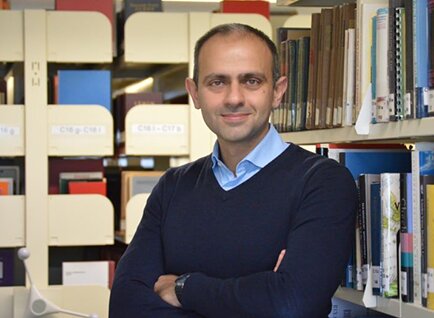
Albrecht Fuess is a Professor of Islamic Studies at Philipps University of Marburg since 2010, specializing in Middle Eastern History (13th–17th centuries), Mamluk socio-cultural dynamics, and contemporary European Islamic discourses. His research spans historical continuity in Ottoman-Mamluk-Safavid interactions, Islamic youth cultures, and Mediterranean geopolitics. Research Focus: Medieval Islamic history, Transottomanica mobility studies, Islam in Europe, and cultural integration of Muslim migrants. Awards: Le Studium Fellowship (2007–2009) at Université de Tours. His publications emphasize military-economy interplay, legitimacy through religious narratives, and resource management in empires, with a focus on Mamluk and Ottoman transformations. He has advised on doctoral projects covering topics like Islamic welfare, Arabic ʾAmālī literature, and Cypriot-Ottoman relations. Leadership: Co-coordinator of Transottomanica (DFG-SPP 1981), member of ANR and DAAD committees, and liaison professor for the German National Academic Foundation. Editorial Roles: Co-editor of 'Transottomanica' and 'Muslim Worlds' series, and advisory board member for journals in Cairo, Paris, and Leuven.
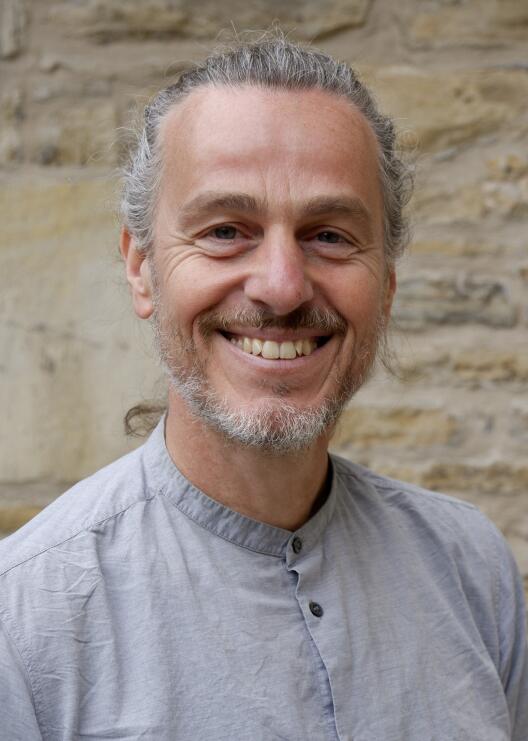
Prof. Stefan Rohdewald is a Professor of East and South-Eastern European History at the University of Leipzig since 2020. Previously, he held positions at Justus Liebig University Giessen (2013-2020), University of Passau (2003-2012), and University of Zurich (1998-2001). His research focuses on transregional histories, religious memory, and intercultural communication in Eastern Europe and the Ottoman sphere. Key roles include coordinating DFG’s Transottomanica program and leading the GiZo partnership with University of Zagreb. Education: PhD (2004, University of Zurich), Habilitation (2012, University of Passau). Research interests span memorial discourses, Ottoman-Europe relations, and sport history. Major projects include studies on Serbo-Bulgarian religious figures and transottoman mobility dynamics. He chairs conferences on minority politics and Ottoman Europe, contributing to over 70 peer-reviewed publications. Award-winning publications include Götter der Nationen (2014) and Vlad der Pfähler (2017). His work bridges Eastern European, Ottoman, and transnational histories through innovative methodological frameworks.
Prof. Dr. Kianoosh Rezania is a Professor of West Asian Religious History and Director of the Käte Hamburger Kolleg Dynamics of Religious History at Ruhr University Bochum. His research focuses on Zoroastrianism, Iranian religions, and the history of religions, with a particular emphasis on ancient Iranian languages and interreligious dynamics. He holds a Ph.D. from Georg-August University Göttingen and has conducted extensive research on topics such as Zoroastrian cosmology, Sasanian-Zoroastrian interactions, and the transmission of religious texts. His work combines philological analysis with historical and cultural studies approaches. Rezania's academic career includes roles as a research associate at Göttingen University and his habilitation project on spatial concepts in early Zoroastrianism. He has directed major research initiatives like the Graduate School of Metaphor and Religion (GSMR) and the Käte Hamburger Kolleg. His publications span monographs, edited volumes, and peer-reviewed articles exploring themes such as religious economics, Middle Persian lexicography, and cross-cultural exchanges between the Safavid and Mughal empires. His current projects include the 'Zoroastrian Middle Persian: Digital Corpus and Dictionary' initiative and studies on Pahlavi literature's interreligious context. He collaborates internationally, leading interdisciplinary teams and contributing to digital humanities efforts in religious studies.
Rhenish Friedrich Wilhelm University of BonnGermany
Stephan Conermann serves as Professor of Islamic Studies and Dean of the Faculty of Arts and Humanities at the University of Bonn, where he has held continuous academic appointments since 2003. His institutional leadership includes directorship of the Annemarie Schimmel Kolleg (2010-2022), Bonn Center for Transcultural Narratology, and significant administrative roles culminating in his current deanship since 2023. Academic Background: Doctorate in Oriental Philology/Islamic Studies (Kiel University, 1996, magna cum laude) Magisterstudium in Asian History, Oriental and Slavic Philology (Kiel University, 1992) Conermann's research examines pre-modern Islamic societies through narrative strategies in historiography, with specialized focus on Mamluk Sultanate governance (1250-1517), Delhi Sultanate/Mughal transitions, and Transottomanica mobility dynamics. His work uniquely connects asymmetrical dependencies (particularly slavery systems), power structures, and global entanglements across South Asia, Middle East, and Eastern Europe. His extensive publication portfolio shows consistent thematic evolution toward comparative frameworks analyzing slavery beyond Eurocentric models, narrative construction of power across cultures, and mobility as historical catalyst. Recent scholarship increasingly integrates transcultural methodology with digital humanities approaches. Academic Leadership: Supervised 290+ theses (59 PhD, 96 Magister, 47 Master, 88 Bachelor) Acquired ~9 million euros in third-party funding (DFG, BMBF, DAAD) Editor of 15+ publication series including Mamluk Studies and Dependency and Slavery Studies Conermann directs the Bonn Center for Transcultural Narratology and co-leads the EXC 2036 'Beyond Slavery and Freedom' cluster, fostering interdisciplinary research on pre-modern dependency systems through international collaborations across Europe, Asia, and the Americas.
Dr. Fabian Schulz is a Senior Researcher in Ancient History at the University of Tübingen, where he works in the Department of History within the Faculty of Humanities. He leads a prestigious Junior Research Group under the Emmy Noether Programme of the German Research Foundation (DFG), titled 'Power and Influence: Influencing Emperors between Antiquity and the Middle Ages.' His academic profile also includes association with the Collaborative Research Center (SFB) 923 'Threatened Order - Societies under Stress' and active participation in the 'Tübingen Theosophy' research group. Previously, he contributed to the Heidelberg Academy of Sciences and Humanities project on John Malalas' Chronicle and the University of Tübingen's DFG project 'East and West 400-600 AD.' Dr. Schulz earned his PhD in Classics from Freie Universität Berlin (2006-2010), where he also served as a teaching assistant. During his doctoral studies, he was a Pensionnaire étranger at the École Normale Supérieure Paris. Prior to that, he completed an MA equivalent degree in Classics at Freie Universität Berlin, with time spent as a visiting student at the University of Oxford (1999-2005). His early career included teaching Latin and Greek at a grammar school in Lübeck (2006). His research specializes in power structures and influence mechanisms in ancient societies, with particular focus on how advisors shaped imperial decisions in Late Antiquity. He has made significant contributions to understanding councils of elders in Archaic Greece (especially the Spartan Gerousie), Byzantine chronography (particularly John Malalas' works), and the complex dynamics between Eastern and Western Roman empires during the 5th and 6th centuries. His methodological innovation lies in applying modern sociological models of interpersonal influence to historical analysis of ancient political culture, bridging literary representation with political reality in pre-modern monarchical states. Young researchers award for 'Ratgeber, Experten, Manipulatoren: Einfluss als Machtfaktor und Diskursobjekt in der Antike' As principal investigator of his Emmy Noether project, Dr. Schulz has secured substantial research funding from the German Research Foundation. His collaborative work includes multiple edited volumes on Late Antique history and Byzantine chronography, reflecting his strong international scholarly network. He currently serves as a deputizing member (non-professorial academic staff) on the faculty board of Humanities at the University of Tübingen. His research often intersects with contemporary concerns about power dynamics, political influence, and historical memory, as evidenced by his work on video game representations of ancient history. Dr. Schulz is an active contributor to the online commentary project on John Malalas' chronicle, specifically editing sections of Book XVIII. His work frequently involves detailed textual criticism and analysis of historical sources, with particular attention to how narratives are transmitted and reinterpreted across different cultural contexts. His scholarly approach combines philological precision with broader historical and sociological perspectives.
Zaur Gasimov is a Lecturer at Johannes Gutenberg University Mainz and currently serves as DAAD Departmental Coordinator and Co-Head at the Faculty of Economics and Administrative Sciences, Turkish-German University. He holds a habilitation in Modern History and Eastern European History, with a focus on Eastern European History, political science, and sociology. Education : B.A. in International Relations from Baku State University; M.A. from Catholic University of Eichstätt-Ingolstadt; Doctorate in Eastern European history Research : Concentrates on Russian-Turkish relations, nationalism in Eastern Europe, cultural transfer processes, and historical narratives. His habilitation thesis analyzed Polish-Turkish anti-Soviet alliances. Publications : Authored monographs on Prometheism, Azerbaijani historiography, and Russification policies. Collaborated on comparative studies of cultural transfer and Ottoman-Russian entanglements.
Prof. Dr. Ulrike Freitag is a distinguished scholar in Islamic Studies and social history of the Arab world, holding a Professorship at Freie Universität Berlin and serving as Director of the Leibniz-Zentrum Moderner Orient (ZMO) . Her work bridges urban history, transregional Islamic networks, and Arabian Peninsula studies within Indian Ocean and Red Sea contexts. Education : PhD in Islamic Studies (Freiburg, 1991), Habilitation (Bonn, 2002) Research : Focus on Ottoman urban violence, Saudi state formation, Hadhrami diaspora, and historical urbanism in Jeddah Her supervision of PhD projects spans topics from Moroccan Sufi sanctußen to Yemeni Jewish communities. Recent scientific awards include fellowships at Leiden University and Käthe-Hamburger Kolleg. She contributes to public discourse through Tagesspiegel op-eds and international conferences.
Hakan Özkan is a Privatdozent and Research Associate at the Institute of Arabic and Islamic Studies, Department of Middle Eastern Studies, University of Münster, where he has been working since 2007 in various capacities. He was awarded his Venia Legendi (Habilitation) in November 2019 for Arabic and Islamic Studies with his thesis 'History of Eastern Zajal – Dialectal Arabic Verse Poetry from the East of the Arab World.' His academic background includes a Franco-German doctorate completed in 2006 from Université de Provence and University of Cologne, supervised by Claude Audebert and Monika Gronke, with external reviewers including Wolfhart P. Heinrichs from Harvard University. His educational background includes: 2019: Venia Legendi for Arabic and Islamic Studies, University of Münster 2002-2006: Franco-German Doctorate in Arabic Studies and Narratology (Université de Provence and University of Cologne) 1995-2000: Master of Arts in Islamic Studies, Oriental Languages and Literatures (University of Cologne) 2000-2001: Course program in Modern Standard Arabic and Syrian-Lebanese dialect at Institut Français d'Etudes Arabes de Damas Özkan's research focuses on premodern Arabic dialect poetry, particularly zajal and muwashshaḥ forms, narratology, prosimeter literature, socio-literary history, and diachronic dialectology. His interdisciplinary approach bridges linguistic analysis with literary criticism, examining how dialectal forms evolved within Arabic literary traditions across different historical periods and geographical regions. He has conducted extensive field research in Arab countries including Syria, Egypt, Lebanon, Tunisia, and Morocco, with particular emphasis on the historical development of poetic forms from the Mamluk through Ottoman periods. His publication history demonstrates consistent scholarly contributions to Arabic literary studies, with his 2020 monograph 'History of Eastern Zajal' representing a landmark study in the field. His recent work has expanded to include analyses of religious poetry praising the Prophet Muhammad in zajal form, wine poetry in Arabic literary traditions, and the integration of dialects into Arabic language teaching methodologies. His scholarly output spans monographs, critical editions, encyclopedia entries, journal articles, and book chapters across multiple languages including German, English, French, and Turkish. Among his academic recognitions: 2018: Second place on shortlist for W2 Professorship for Arabic Language and Translation Science, University of Leipzig 2008: Offered Junior Professorship at American University in Cairo (declined) 2007: Second place on shortlist for maître de conférence position at University of Nancy 2007: Official Qualification from National University Council (CNU) for positions as maître de conférence at French universities Özkan has served on numerous academic committees, including appointment committees for professorships in Sinology and Arabic and Islamic Studies at the University of Münster. He has been a juror for the Sheikh Hamad Award for Translation and International Understanding in Doha and has served on the steering committee for the 'Translation for Dialogue' program of the Anna Lindh Foundation. His editorial work includes reviewing for Mamluk Studies Review, Die Welt des Islams, and Middle Eastern Literatures since 2012. His scholarly activities extend to linguistic fieldwork on Pontic Greek dialects in Turkey and organizing significant academic conferences including 'The Race Course of Literature – An-Nawāǧī and His Contemporaries' in 2018 at the University of Münster. His multilingual capabilities (Arabic, Turkish, German, French, English, Persian, Ottoman Turkish, and knowledge of Modern Greek) enable his comparative work across multiple linguistic and cultural traditions in the Mediterranean region.
Dr. Theresa Jedd is an Environmental Policy Specialist and Post-Doctoral Research Associate at the Department of Environmental and Climate Policy , Technische Universität München , since 2019. Previously, she worked at the National Drought Mitigation Center (University of Nebraska-Lincoln, 2015-2019) and the Natural Resource Ecology Laboratory (Colorado State University, 2015). Her work spans drought policy analysis, transboundary conservation, and participatory governance methods across diverse regions including Montana, Nebraska, and the Middle East/North Africa. Current Affiliation: Technische Universität München (2019-present) Prior Roles: University of Nebraska-Lincoln (2015-2019), Colorado State University (2015) Research Focus: Combines qualitative methods (interviews, focus groups, workshops) with physical drought indicators to analyze policy frameworks at multiple governance levels (local, national, international). Key themes include: Climate risk governance Water allocation mechanisms Drought early warning systems Transboundary environmental policy Civil society engagement Ethics of environmental crises Publication Trends: Recent work highlights polycentric governance challenges, drought resilience limitations, and participatory monitoring approaches. Her research spans environmental policy, water resource management, and climate adaptation.
Mahmoud Abdallah is a Researcher at the Center for Islamic Theology , University of Tübingen, where he has worked since 2020. His career includes roles as Senior Scientist at the University of Innsbruck (2019–2020), Project Leader at ZITh (2016–2019), and Post-Doc researcher (2013–2018). He also held guest lectures at Marmara University (2017) and served as an Arabic Editor (2012–2013). Education : PhD in Comparative Linguistics (2012, Heinrich Heine University Düsseldorf), Master’s summa cum laude (2002, University of Minia), State Examination (1998, Al-Azhar University). Research Interests focus on Islamic Theology , Pastoral Care , Interreligious Dialogue , and Religious Institutions in Pluralistic Societies . He explores hermeneutics in Islamic counseling, Ḥisba in public order, and Umma dynamics in multicultural contexts. Recent Publications (2014–2022) analyze Qur’anic ambiguity , interfaith education , religious responses to crises (e.g., pandemic pastoral care), and Islamic social ethics . Key themes include Abrahamic unity , contextual theology , and religious hermeneutics . Scientific Awards : Master’s degree with summa cum laude distinction (University of Minia, 2002). Advising & Projects : Co-editor of Grundlagen muslimischer Seelsorge (2020) and Theologie des Zusammenlebens series (2017–2022). Led the 2016 project Scientific Education and Social Responsibility (Baden-Württemberg Ministry). Currently working on books about Prophetic Hermeneutics (2023) and Religious Transformations in Crisis (2022). Committee Memberships : Member of the German Islam Conference (since 2018), Scientific Advisory Boards at Zukunftsforum Islam e.V. (since 2017), and the DAVO (German Working Group on the Middle East, since 2009).
Özüm Asirim is a Researcher at the Technical University of Munich (TUM) under the Associate Professorship of Computational Photonics led by Prof. Christian Jirauschek. Her work focuses on computational photonics , quantum optics , and nonlinear optical phenomena , particularly in micro-resonators and semiconductor devices. Education: Ph.D. in Electrical Engineering from Middle East Technical University (Ankara, Turkey). Research spans optical parametric amplification , Fourier domain mode-locked lasers , self-phase modulation , and machine learning applications in photonics . Her studies include optimizing gain factors, enhancing harmonic generation, and modeling supercontinuum sources via carrier injection. Recent publications (2019–2023) highlight interdisciplinary approaches, merging photonics with computational finance and nonlinear dynamics . She contributes to EU Project QOMBS and teaches courses like Python for Engineering Data Analysis and Quantum Engineering and Machine Learning seminars. Collaborations include Prof. Christian Jirauschek (TUM), Prof. Mustafa Kuzuoğlu (Middle East Technical University), and teams in computational photonics and quantum optics. Her work impacts semiconductor physics , laser technology , and adaptive optical systems .
Katrin Bromber is a German Researcher at the Centre for Modern Oriental Studies in Berlin, where she has led the research group "Progress and its Discontents: Ideas, Practices, Materiality" since 2014. Her career spans senior research roles at ZMO and academic teaching positions at the University of Vienna. Nationality: German. Language skills: Native German, fluent English/Swahili, moderate Amharic, good reading knowledge in French/Russian, basic Tigrinya. Habilitation (2009–): African Studies, University of Vienna PhD (1993): African Linguistics, University of Leipzig MA (1988): Swahili Studies, University of Leipzig Katrin Bromber's research interrogates intersections of body politics , sports history , Swahili linguistics , and Ethiopian modernity . Her work traces how physical culture, media representation, and colonial/imperial narratives shape national identities across Africa and Asia. Current focus: "Progress" as contested concept in Ethiopian and Gulf urbanism. Key article trends reflect her translocal methodology: 2017 studies on Ethiopian stadiums and fitness culture ; 2014-2013 publications analyzing East African military press , sports branding in the Gulf , and Swahili poetry ; 2007-2000 works on colonial linguistic politics , Indian Ocean slavery , and German colonial Swahili promotion . Recurring sub-fields: body as political text, translocal modernity, media historiography. Scientific Awards: Research Grant of the Berlin City Council (1999-2000): Gendered Slavery study Service to the Scientific Community: Chairwoman, Academic Association for Horn of Africa Studies (2012–) Editorial Advisory Board - Stichproben. Vienna Journal of African Studies (2015–) Editorial Advisory Board - Studies of Department of African Languages and Cultures (2015–) Teaching Experience: Textlinguistics, Mediacommunication, African Linguistics, Swahili (elementary/advanced), Swahili Literature, Swahili in Arabic Script at Leipzig, Humboldt-Berlin, Free Berlin, and Vienna universities Anthropology of the Body at Mekelle University Summer School Field Research: Tanzania (1993-2003): Swahili Poetry, Intellectual History Kenya (2005): Indian Ocean WW2 UAE/Bahrain (2009): Sports and Body Cultures Ethiopia (2009-2015): Sports, Body Politics
Armin Bergmeier serves as Managing Director of the Institute of Art History at the University of Leipzig, where he holds a substitute professorship for European and Global Medieval Art History (W3). Previously, he served as substitute professor for Late Antique and Byzantine Art History at Ludwig Maximilian University of Munich. His academic career includes positions at various prestigious institutions including the Center for Anatolian Civilizations in Istanbul and the German Study Center in Venice. Education: Habilitation in Art History, University of Leipzig (2023) PhD (summa cum laude), Ludwig Maximilian University of Munich (2011-2015) Magister, Humboldt University of Berlin (2003-2010) Bergmeier specializes in the art and architecture of medieval Europe, the Mediterranean, and the Middle East, with particular focus on transcultural phenomena and cultural heritage from late antiquity to the early modern period. His research critically examines traditional categories of eras and cultures through the lens of spolia (reused architectural elements) in Byzantine Empire, Venice, and Seljuk Anatolia. He investigates how processes of repurposing artifacts connect to identity formation across cultural boundaries, challenging modern divisions of culture along nation-state lines. His publications demonstrate a consistent focus on spolia, cultural heritage, and transcultural connections in medieval art. His recent works examine the visual construction of shared historical narratives through reused materials, particularly in Venice, Byzantium, and Seljuk Anatolia. His research reveals how medieval societies engaged with their past through material culture, often creating connections across political and cultural boundaries that challenge modern nationalist interpretations of history. Scientific Awards: Hans-Janssen-Preis (2018) Heisenberg Program admission by DFG (2025) Bergmeier has supervised numerous students through seminars on spolia and medieval material culture, including the notable "Reuse and Repurpose" podcast series created with students in 2021. His research has been supported by fellowships from Fulbright, Dumbarton Oaks, and the Andrew W. Mellon Foundation. He leads the Institute of Art History at Leipzig University and coordinates international research projects including the Museum Survey of the Archaeological Museum Akşehir, Turkey, and "The Pastiche Past" project focusing on continuity in the premodern Mediterranean.
Prof. Dr. Anette Eva Fasang is a Full Professor of Microsociology at Humboldt University of Berlin, where she also serves as Director of the Department of Social Sciences and Academic Director of the Berlin Graduate School of Social Sciences (BGSS). She leads major research initiatives on life course stratification, social demography, and inequality, and has held leadership roles at the WZB Berlin Social Science Center. Her work bridges sociology, demography, and quantitative methodology, with a strong focus on comparative welfare state analysis. Ph.D. in Sociology, Jacobs University Bremen (2005–2009) B.A. and M.A. in Sociology, Ludwig-Maximilians-University Munich (1999–2004) Her research centers on life course dynamics, particularly how family formation, employment, and welfare regimes interact to shape social inequality across the lifespan. She employs advanced quantitative methods, especially sequence analysis, to study intergenerational transmission, gender disparities, and the long-term consequences of early-life trajectories. Her work spans comparative European and U.S. contexts and increasingly includes global perspectives, such as in Egypt and Senegal. The recent publications reflect a consistent focus on life course trajectories, social stratification, and methodological innovation. Key themes include the intersection of work and family, wealth and earnings accumulation, gender and racial inequality, and the impact of structural factors like welfare regimes and labor markets. Methodologically, her work advances sequence analysis and decomposition techniques for longitudinal data. Scientific Awards: Elected Fellow of the European Academy of Sociology (2024) Rosabeth Moss Kanter Award for Excellence in Work-Family Research (2023) Honorary Doctorate from the University of Turku (2022) Rosabeth Moss Kanter Award (2018) Prof. Fasang has supervised numerous doctoral students, many of whom have won top dissertation prizes. She leads significant research grants from the German Research Foundation (DFG), including the Cluster of Excellence SCRIPTS and the DYNAMICS research training group. Her advisory roles include the German Family Demographic Panel (FReDA) and scientific boards in Germany and Finland. She is actively involved in research teams and collaborative projects, such as the KOMPAKK study on household risks during the pandemic and the EQUALLIVES project on young adult life courses. Her work is deeply embedded in interdisciplinary networks across Europe and North America.
Stefan Rohdewald is a Professor of East and Southeast European History at the University of Leipzig since 2020. His research focuses on the historical entanglements between Eastern Europe and the Middle East, emphasizing transconfessionalism, urban history, and memory discourses. Education: Studied and completed his doctorate at the University of Zurich (2004), habilitation at Passau (2005–2012). Affiliations: Past professor at Giessen (2013–2020), research associate in Passau (2003–2012), and Max Planck scholarship for doctoral research. Research interests span Transottoman studies, examining mobility dynamics between Eastern Europe, the Ottoman Empire, and Persia. He leads the DFG priority program Transottomanica (2017–2023) and contributes to decolonial and transimperial frameworks in Ukrainian history. Recent publications include analyses of geopolitical imaginaries, edited handbooks on the Black Sea region, and studies on Ottoman-Europe knowledge exchange. His work critiques national historiographies and explores multiculturality in Habsburg Bosnia-Herzegovina.