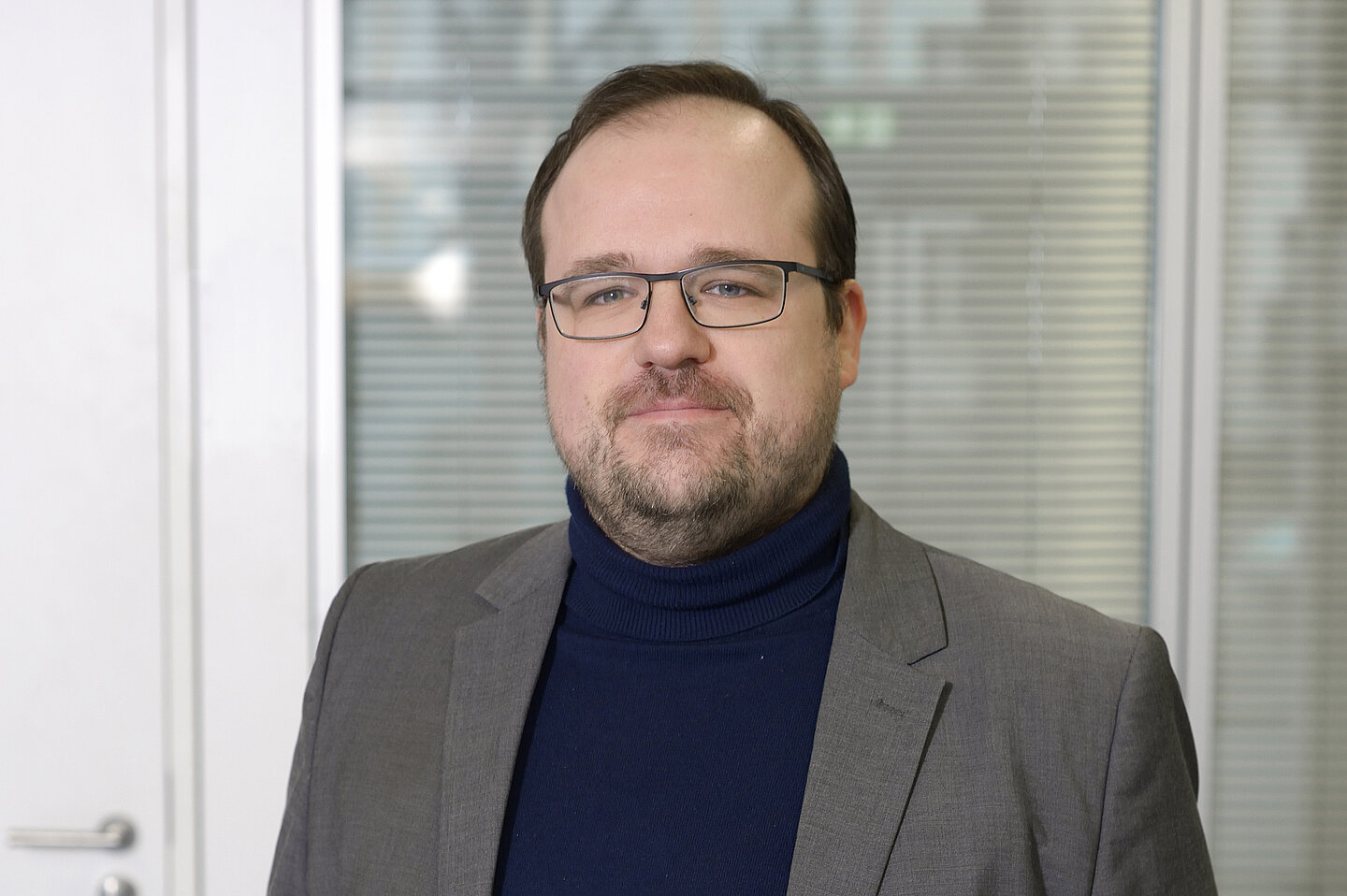
Prof. Dr. Oliver Crönertz serves as Dean and Professor of Business Administration and IT-Supported Business Processes at the Faculty of Digital Transformation , HTWK Leipzig. His work bridges digital transformation with business management, focusing on interdisciplinary project management, digital business models, and sustainability. Current roles: Dean, supervising professor for HTWK Robots/nao Team Research areas: Digital Transformation, Business Analytics, Industry 4.0, Stoffstrommanagement Research Trends : Recent publications emphasize digital solutions for environmental management, business process optimization, and smart urban logistics. His work connects Industry 4.0 with financial sustainability and societal impacts of digitalization. Projects : Leads Mittelstand-Digital Zentrum Leipzig-Halle, involved in EXIST-Potentiale, Future Parking, and FAssMII (Feedback-based E-Assessment in STEM).
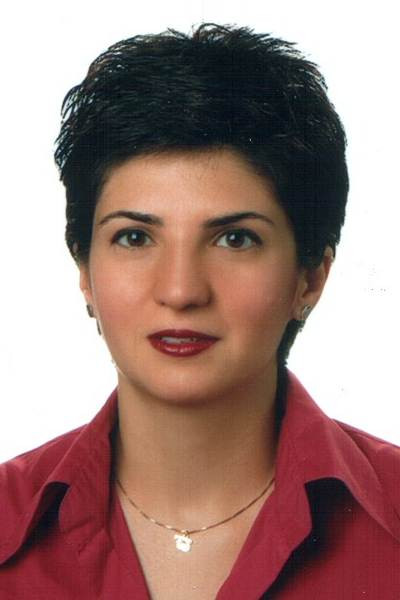
Prof. Müge AKKAR ERCAN is a Professor in the Department of City and Regional Planning at Middle East Technical University (METU), Ankara. She holds a PhD in Urban Design from the University of Newcastle, UK, alongside B.Sc. and M.Sc. degrees in City and Regional Planning from METU. Her academic roles include teaching courses on urban design studios, planning strategies, and thesis supervision. She specializes in urban design, public space analysis, urban regeneration, and sustainable community development with a focus on historic neighborhoods in Turkey and post-industrial cities. **Education:** B.Sc., City and Regional Planning (METU, 1994) M.Sc., Urban Policy Planning and Local Governments (METU, 1997) Ph.D., Urban Design (University of Newcastle, 2003) **Research Interests:** Her work investigates evolving roles of public spaces in post-industrial cities, challenges in balancing community needs with conservation policies, and sustainable urban regeneration strategies. Notable projects include studies on Ankara’s Gençlik Park, Istanbul’s historic neighborhoods, and walkability models for urban revitalization. She contributes to international journals like Journal of Urban Design and Urban Design International , and co-edits books on heritage valuation and urban planning discourses. **Recent Research Trends:** Her publications (2010–2020) emphasize spatial inclusivity in public spaces, heritage-led regeneration, and micro-scale urban interventions. Recent work explores place-making roles in China’s heritage contexts and EU-funded projects on underground cultural heritage and middle-class housing. **Grants & Projects:** Currently involved in EU-funded projects CA18110 (underground heritage valorization) and CA18137 (European middle-class housing analysis). Her work bridges academic research with policy implementation in Turkey and globally. **Labs/Teams:** Leads METU’s urban design research through her department’s studios and collaborates internationally on heritage conservation and urban dynamics initiatives.
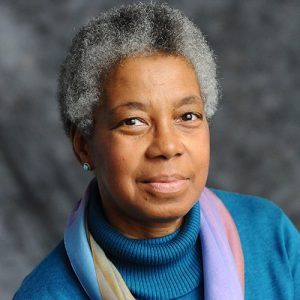
Barbara J. Fields is the William R. Shephard Professor of History, specializing in southern history and 19th-century social history. Her work focuses on the intersections of slavery, emancipation, and civil war dynamics. She holds a B.A. from Harvard University (1968) and a Ph.D. from Yale University (1978). Her research examines the complex social and institutional frameworks of slavery in regions like Maryland, as well as the broader implications of emancipation during the Civil War. Notable publications include Slavery and Freedom on the Middle Ground and collaborative works such as Free at Last , which compile primary sources on slavery and freedom. No scientific awards are listed, though her scholarly contributions are widely recognized. She has advised no named students in the provided text, and no grants or lab affiliations are mentioned.
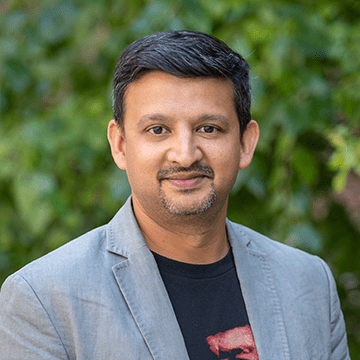
Aswin Punathambekar is a Professor of Communication at the Annenberg School for Communication, University of Pennsylvania, and Director of the Center for Advanced Research in Global Communication (CARGC). His work focuses on media and cultural change in postcolonial and diasporic contexts, particularly in South Asia and its global diasporas. He has held previous academic positions at the University of Michigan, University of Virginia, and a British Academy Global Professorship at Loughborough University (U.K.). Education includes a B.Tech from University of Allahabad (1995), M.A. from University of Georgia (2001), M.S. from MIT (2003), and Ph.D. from University of Wisconsin-Madison (2007). His research integrates media industries, cultural politics, and technological histories, with emphasis on how digital platforms reshape identity, citizenship, and cultural expression. Major publications include From Bombay to Bollywood (2013), Global Digital Cultures (2019), and Media Industry Studies (2020). Current projects explore digital media in India, South Asian diasporic media histories, and global media industries. He serves on editorial boards for journals like Media, Culture & Society and is a Peabody Awards juror. Awards include the Katherine Singer Kovacs Award (2013) and ICA's Outstanding Young Scholar Award (2015). His teaching covers global digital cultures, media theory, and methods in cultural studies, with courses like 'India on Screen' and 'Global Media Industries.' His work bridges academic rigor with public engagement, addressing intersections between media, technology, and societal transformation in transnational contexts.
Sungok Serena Shim is a Professor of Educational Psychology at Ball State University's Teachers College, where she has served since 2018. Her research focuses on understanding the core question: What motivates people? She investigates intersections between academic and social motivation in adolescents and teacher motivation linked to well-being, job satisfaction, and student outcomes. Ph.D. in Educational Psychology (2006), University of Illinois at Urbana-Champaign M.A. in Educational Psychology (1994), Seoul National University B.A. in Elementary Education (1991), Seoul National University of Education Her work extends to evaluating after-school programs funded by the Indiana Department of Education since 2012 and collaborating on STEM pedagogical interventions with the Korean Science Foundation. She has published over 30 peer-reviewed articles in journals like Journal of Educational Psychology and Motivation and Emotion , with recent studies focusing on perfectionism, emotion regulation, and socio-scientific issues in education. Dr. Shim has received multiple awards, including the 2018 BSU Teachers College Outstanding Research Award and the 2017 BSU Digital Scholarship Faculty Fellowship. She served as program faculty for a social justice-oriented teacher preparation program that won the AACTE Best Practice Award, and currently acts as Associate Editor for Educational Psychology .
Amy E. Stich is an Associate Professor of Higher Education and Director of Graduate Studies at the Louise McBee Institute of Higher Education at the University of Georgia. She also serves as an affiliate faculty member with the Interdisciplinary Qualitative Studies program and as a Research Fellow at the Georgia Policy Labs. Dr. Stich employs sociological perspectives and qualitative methodologies to investigate mechanisms that stratify and reproduce inequality in higher education. Her research interests include: Sociology of education Qualitative research methodologies Social theory applications Higher education inequality Educational stratification systems Postsecondary tracking mechanisms Class dynamics in educational settings Dr. Stich's scholarly work reveals consistent themes around how social structures and institutional practices create and maintain educational inequalities. Her publications demonstrate sophisticated applications of Bourdieusian theory to analyze educational tracking, social reproduction, and efforts to democratize access to higher education. Recent work examines democratic research practices, school counseling responses to dual enrollment policies, and the relationship between middle-class aspirations and higher education pathways. Her significant research contributions have been recognized through: 2016 National Academy of Education/Spencer Foundation Postdoctoral Fellowship Exemplary Reviewer Recognition by the Journal of Higher Education (2025) Dr. Stich serves on the editorial boards of the British Journal of the Sociology of Education, The Journal of Higher Education, and The Review of Higher Education. As Director of Graduate Studies, she plays a pivotal role in mentoring graduate students and shaping academic programs. She teaches advanced courses in qualitative research and social theory (EDHI 8990, EDHI 8930, EDHI 9060) that emphasize critical analysis of educational inequality. Current research includes a William T. Grant Foundation-funded project examining postsecondary debt repayment inequalities and an NSF-funded study on geographic influences on experiential learning opportunities.
Claire Maxwell is a Professor in the Department of Sociology at the University of Copenhagen, affiliated with the Faculty of Social Sciences. She joined the department in 2018 from University College London. Her research focuses on elites, global mobility, education systems, and social inequality, with a particular emphasis on how internationalization and mobility shape class dynamics and family practices. Education: PhD in Sociology (University of London, 2005) MSc in Applied Social Studies and Social Work (University of Oxford, 1999) MA(Hons) in Politics, Philosophy and Economics (2005) Research Interests: Maxwell’s work examines global middle-class families, elite education systems, and the interplay between mobility and nationalism. She pioneered the concept of 'cosmopolitan nationalism' to analyze how global agendas are re-purposed by elites. Current projects include SkillsINCORP (funded by the Independent Research Fund Denmark), studying high-skilled professionals' incorporation into Danish workplaces, and Onboard Denmark (Innovation Fund Denmark), developing tools for SMEs to recruit international talent. Grants & Projects: SkillsINCORP (2022-2025): Investigating professional integration in Danish firms Onboard Denmark (2021-2024): Digital tools for SMEs Israeli Science Foundation-funded study on mobile Israeli families (2020-2023) Labs/Teams: Leads cross-disciplinary teams collaborating with industry partners on global mobility challenges. Co-edits the International Studies in Sociology of Education (until 2024) and the Education in Global Perspectives book series.
Habeeb Olufowobi is an Assistant Professor in the Department of Computer Science and Engineering at the University of Texas at Arlington (UTA), where he leads the Cyber-Physical System Security Lab. He holds a PhD in Computer Science from Howard University (2019) and previously served as a Lecturer at Howard before joining UTA in 2020. His research is centered on the security and trustworthiness of embedded and distributed systems, particularly in the domains of autonomous vehicles, IoT, and healthcare AI. He investigates cybersecurity challenges at the hardware-software interface in real-time systems and develops AI/ML models that are transparent, explainable, and equitable. His interdisciplinary work integrates principles from cybersecurity, real-time systems, and machine learning. The recent publications reflect a strong trend in securing cyber-physical systems using advanced AI techniques, with emphasis on intrusion detection, secure communication (e.g., named data networking), and robustness of autonomous systems. His work frequently appears in top-tier venues such as IEEE Transactions, VehicleSec, and ICMLA. Project Management Professional (PMP), PMI (2012–Present) Member, Institute of Electrical and Electronics Engineers (IEEE) (2020–Present) Habeeb has secured significant research funding, including an NIH grant on ethical AI for Chagas disease prediction and an AIM-AHEAD grant focused on health equity. He mentors several graduate students, including Paul Agbaje and Afia Anjum, who have received awards and internships at prestigious institutions like Los Alamos National Laboratory. He teaches courses in cloud computing, embedded systems, and information security, and serves as a faculty advisor for the National Society of Black Engineers (NSBE) at UTA. His lab, the Cyber-Physical System Security Lab, focuses on developing scalable and reliable security solutions for critical infrastructure, with growing emphasis on healthcare applications and fairness in algorithmic decision-making.
A. Mechele Dickerson is a Professor at the University of Texas School of Law and holds a courtesy appointment at the LBJ School of Public Affairs. She serves as the Faculty Athletics Representative for the University of Texas, bridging sports law and academic governance. Her work focuses on financial vulnerability, consumer debt, housing affordability, and racial/economic disparities. Arthur L. Moller Chair in Bankruptcy Law and Practice Distinguished Teaching Professor Former Associate Dean for Academic Affairs (2006–2011) Dickerson’s research explores the intersection of law, economics, and social policy, particularly how systemic issues affect the U.S. middle class. She has authored a book Homeownership and America's Financial Underclass (Cambridge, 2014) and is set to release The Middle-Class New Deal (University of California Press, Jan. 2026), which addresses strategies for restoring upward mobility. Her scholarship has been featured in prominent venues like the University of Memphis Law Review , Arizona Law Review , and Texas Law Review , with recurring themes on housing policy, debt decision-making, and economic justice. She frequently comments on national issues via media outlets such as USA Today , The Guardian , and New York Times . Scientific Awards: Elected member, American Law Institute Elected member, American College of Bankruptcy Dickerson teaches core courses in Federal Civil Procedure and Remedies, and has led interdisciplinary graduate courses on the American middle class and the impacts of the COVID-19 pandemic. She has provided congressional testimony and delivered keynote speeches at institutions like Austin Community College and the U.S. Capitol Visitor Center.
Norma Claire Moruzzi is an Associate Professor in Political Science and Gender and Women’s Studies at the University of Illinois at Chicago (UIC). She also serves as Director of the International Studies Program and Co-Chair of the Middle East and Muslim Societies Cluster at UIC. Her research focuses on the intersection of gender, religion, and nationalism, with particular emphasis on Iran and the Middle East. She employs political theory, feminist theory, archival research, and ethnographic methods in her work. Education: PhD in Political Science from Johns Hopkins University (1990). She conducted extensive fieldwork in Iran from 1998-2008, collaborating with women’s groups and contributing to local journals. Her forthcoming book Tied Up in Tehran: Women, Social Change, and the Politics of Daily Life in Postrevolutionary Iran (Cambridge University Press, 2025) examines transformations in Iranian women’s lives since 1979. Research Grants and Fellowships include: UIC Great Cities Faculty Scholar Fellowship (2009-2010), UIC Humanities Institute Fellowship (2005-2006), and a NEH community grant (2013-2014) for public programming on Muslim cultures. Her work has been recognized with the 2002 Gradiva Award for her book Speaking through the Mask: Hannah Arendt and the Politics of Social Identity . Professional Roles: Associate Editor of Iranian Studies , former chair and editorial committee member of Middle East Report . Active in interdisciplinary collaborations, affiliated with UIC’s History and Art History departments. Her scholarship bridges theory and practice, addressing topics like feminist cinema, revolutionary movements, and the politicization of daily life.
Deborah Rivas-Drake is the Stephanie J. Rowley Collegiate Professor in the Marsal Family School of Education and a Professor of Psychology in the College of Literature, Science, and the Arts at the University of Michigan. Her research focuses on how educational, familial, and community contexts shape adolescents’ racial and ethnic identity, socioemotional well-being, and civic engagement. She co-directs the Contexts of Academic + Socioemotional Adjustment (CASA) Lab, emphasizing practices that disrupt racism and xenophobia. Her work is funded by NSF, Spencer Foundation, and W.T. Grant Foundation. She has authored/co-authored influential books like Below the Surface: Talking with Teens about Race, Ethnicity, and Identity , which won major awards. She holds leadership roles in SRCD and SRA committees, advocating for equity in education and youth development. Her research highlights the role of ethnic-racial socialization, discrimination, and intergroup contact in youth outcomes. She collaborates with educators and policymakers to translate research into practical tools for schools and families. Key contributions include frameworks for equity-focused social-emotional learning (SEL), strategies for undocumented families, and interventions to foster civic responsibility. Her grants include initiatives like the 'INVITE: Inclusive and Innovative Intelligent Technologies for Education' project and measures of equity-based SEL practices. Rivas-Drake’s awards reflect her impact on developmental science and policy. She bridges academia with community engagement, advising school districts and organizations like CASEL and Sesame Workshop. Her work underscores intersectionality, emphasizing how race, class, and immigration status interact to shape youth experiences. The CASA Lab’s interdisciplinary approach addresses systemic inequities through rigorous research and actionable solutions.
Fakhreddin Azimi is a Professor at the University of Connecticut specializing in Modern Middle East and Iranian history. He holds a D.Phil. from Oxford University and has taught at various institutions globally. His research focuses on religion-state relations, socio-political dynamics, and historiography in Iran. Education: B.A. in Political Science, Tehran University M.Sc. in Politics (Middle East), SOAS, University of London D.Phil. in History, St. Antony's College, Oxford University Research Interests: Azimi examines how power structures shape Iranian socio-cultural and political landscapes. His work bridges historical analysis with contemporary issues, particularly focusing on: Religion and Secularity in Modern Iran Authoritarian Governance Mechanisms Cultural Narratives of National Identity Historiographical Methodologies Publications: His seminal work The Quest for Democracy in Iran won multiple awards, while his Persian publications explore Iranian nationalism and Mosaddeq's legacy. Over 60 articles and book chapters span academic journals like Iranian Studies and International Labor and Working-Class History . Awards: 2008 Mossadegh Prize (Best Book on Iran) Three-time recipient of the Mahtab Mirzaie Memorial Prize Featured in Negah-e Nou intellectual journal (2020) Teaching & Scholarship: Azimi teaches medieval/modern Middle East history and historiography. His graduate seminars explore theory-method intersections in historical research. He actively contributes to the Encyclopaedia Iranica and maintains international academic collaborations.
Daromir Rudnyckyj is a Professor of Anthropology at the University of Victoria within the Faculty of Social Sciences. He directs the Counter Currency Laboratory and leads the Futures of Money project, focusing on the evolution of monetary systems and their societal implications. Rudnyckyj is a graduate advisor and actively accepts new students, engaging in interdisciplinary research that spans finance, religion, and globalization. University: University of Victoria School: Faculty of Social Sciences Department: Anthropology Rank: Professor Email: daromir@uvic.ca His research examines the intersections of capitalism, religion, and financial systems, particularly through ethnographic studies of Islamic finance, cryptocurrency, and alternative exchange mechanisms. He investigates how monetary innovations—such as state-issued digital currencies and local trading systems—challenge traditional notions of state governance and social relations. Current projects, like the Futures of Money and the Counter Currency Laboratory, analyze the historical and contemporary dynamics of monetary systems. His teaching includes courses on economic anthropology, Southeast Asian studies, and anthropological theory, reflecting his expertise in global financial trends and cultural economy.
Sylvain Kahn is a Tenured Lecturer at the Centre for History (CHSP) at Sciences Po , specializing in the history and geography of European integration. He holds a PhD in Geography, the agrégation (highest state teaching qualification) in History, and a degree in Geopolitics. Education : PhD in Geography, agrégation in History, Ecole Normale Supérieure (Fontenay-Saint-Cloud/Lyon), Geopolitics degree. Teaching : European integration and geopolitics at Sciences Po since 2001; leads 'History of European integration' class in the Master of European Affairs program. Research interests center on the role of nation-states in European integration, the territoriality of the European Union, and the Europeanization of higher education. His work bridges historical analysis with geopolitical frameworks, examining paradoxes in EU territorial governance. Recent publications include analyses of EU crises (e.g., Brexit, pandemic responses), geopolitical dynamics (e.g., Franco-German leadership), and cultural studies (e.g., 'La Reine Margot' as feminist critique). He has also explored the interplay between EU territorial policies and national sovereignty. Professional contributions extend to media production: he created the MOOC 'Geopolitics of Europe' (available in French and English) and hosted the radio program 'Planète Terre' on France Culture (2006-2016). He has served on examination juries (ENA) and as an expert for the European University Association.
Thomas Oatley is a Professor and Corasaniti-Zondorak Chair of International Relations at Tulane University's Department of Political Science, housed within the School of Liberal Arts. His research focuses on American hegemony and international political economy, emphasizing the interplay between global economic structures and political dynamics. He teaches courses on international relations, globalization, and political economy, reflecting his expertise in these areas. His work addresses contemporary challenges such as climate change, financialization, and global governance, with a particular emphasis on how these issues intersect with power dynamics in the international system. Recent publications explore topics like the dual economy's impact on political polarization, the role of green industrial policy in climate politics, and the persistence of American hegemony in an evolving global landscape. Oatley's academic contributions span theoretical frameworks like complex interdependence and the political economy of currency systems. While no specific awards are listed, his prolific publication record underscores his influence in the field. He advises students in advanced courses such as Research Methods I and maintains active engagement through Tulane's interdisciplinary programs in New Orleans.