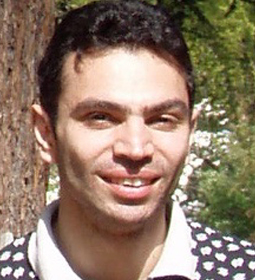
Ernesto Gribaudo is a Doctoral Assistant at the Galatea Laboratory within the Institute of Microengineering (IEM) at the École Polytechnique Fédérale de Lausanne (EPFL). He is concurrently enrolled in the Doctoral Program in Advanced Manufacturing under the Doctoral School of Engineering (EDAM). His primary affiliation is with the School of Engineering (STI) at EPFL. His research focuses on femtosecond laser processing, nanofabrication, and advanced materials science. Key areas include waveguide fabrication in fused silica, sub-wavelength nanostructuring of optical materials, and characterization of graphene oxide nanostructures. He employs cutting-edge techniques such as dual-comb spectroscopy and FTIR microscopy to study laser-modified materials. Mr. Gribaudo’s work bridges fundamental material science with applied photonics, contributing to innovations in optical devices and nanoscale engineering. His recent publications (2020–2025) emphasize laser-based fabrication methods and material property optimization, reflecting a strong emphasis on interdisciplinary research between engineering and physics.
Oliver Czoske is a Researcher affiliated with the Department of Astrophysics within the Faculty of Earth Sciences, Geography and Astronomy . His work focuses on instrumentation development for large telescopes , particularly the Extremely Large Telescope (ELT), and observational astrophysics involving galaxy clusters and dark matter. He leads projects like the METIS integral field spectrograph and the MICADO first light imager , contributing to data reduction pipelines and simulation frameworks such as ScopeSim and SimCADO . His research integrates adaptive optics , mid-infrared astronomy , and telescope instrumentation , with a strong emphasis on preparing for the scientific capabilities of next-generation telescopes. Collaborations include the CLASH and SLACS surveys, analyzing gravitational lensing phenomena and galaxy mass profiles. Recent activities (2024) include talks at public outreach events like Führung Sternwarte . Publications span instrumentation design, data analysis techniques, and observational cosmology, with over 30 peer-reviewed articles since 2010. He is actively involved in XMM-Newton and Hubble Space Telescope projects, addressing topics like dark matter distribution and galaxy cluster dynamics.
Imad Agha is an Associate Professor with a joint appointment in the College of Arts and Sciences (Physics) and the School of Engineering (Department of Electro-Optics and Photonics) at the University of Dayton. He is a full-time faculty member actively engaged in cutting-edge research in photonics, quantum optics, and nanomaterials. His research interests include: Photonics and integrated photonic circuits Phase change materials (e.g., GST, Sb2Se3) for optical switching and memory Orbital angular momentum and optical vortex beams Metasurfaces and spatially variant photonic crystals Infrared detection using hyperdoped silicon Ultrafast and real-time spectroscopy GeSn-based optoelectronic devices His recent publications (2023–2025) demonstrate a strong focus on reconfigurable optical devices, tunable mid-infrared filters, quantum photonic transceivers, and advanced spectroscopy techniques. The work leverages machine learning, nanofabrication, and novel materials to enable next-generation photonic systems for communication, imaging, and sensing. Key themes include energy efficiency, ultrafast response, and chip-scale integration. Scientific awards are not listed in the provided text. Dr. Agha advises graduate students and likely leads a research group involved in experimental and theoretical photonics. His work is supported by grants related to materials development, optical device engineering, and quantum technologies, though specific grants are not listed. He collaborates across engineering and physics disciplines, particularly in the development of hybrid photonic systems. His research is conducted within advanced photonics and nanofabrication laboratories at the University of Dayton, focusing on optical characterization, device testing, and materials synthesis.
Valentin Petrov is a Researcher at the Max Born Institute for Nonlinear Optics and Short Pulse Spectroscopy, specifically in the department of A3: Ultrafast Lasers and Nonlinear Optics. His work focuses on advanced laser technologies, nonlinear optical materials, and ultrafast phenomena. He has contributed significantly to the development of high-power optical parametric oscillators, mode-locked lasers, and novel crystal materials for mid-infrared applications. His research interests include phase-matching studies in chalcopyrites like AgGaSe₂, ultrafast pulse generation via Kerr-lens and SESAM mode-locking, and material characterization of nonlinear optical crystals such as CdSe and ZnSiAs₂. Petrov’s recent publications highlight advancements in parametric oscillators, femtosecond laser systems, and crystal growth techniques for Tm/Ho-doped materials. His work emphasizes practical applications of nonlinear optics, including power-scaling of laser systems and durability assessments of optical components under high-intensity conditions.
Stefan Gruber is a researcher at the Institute of Livestock Sciences, University of Natural Resources and Life Sciences, Vienna (BOKU). His work focuses on applying mid-infrared spectroscopy for health and metabolic trait prediction in dairy cattle, with active participation in international symposia. Affiliation: Institute of Livestock Sciences, BOKU Role: Researcher in dairy science and spectroscopy applications Research Interests: Gruber specializes in: Precision livestock farming using mid-infrared spectral data Genetic and metabolic trait analysis in dairy cows Non-invasive disease detection (mastitis, ketosis) Feed efficiency and energy balance modeling Recent publications emphasize spectral region optimization for disease prediction and cross-breed energy balance analysis. Project Participation: He contributes to the project 'Direct and indirect traits for feed efficiency and greenhouse gas emissions for breeding and herd management' (2023-2026), funded by private institutions.
Rudolf Krska is a full Professor at the University of Natural Resources and Life Sciences, Vienna (BOKU), where he leads the Institute for Bioanalytics and Agro-Metabolomics in Tulln. His joint appointments include Professorships at Queen's University Belfast and Kansas State University. With a career spanning over three decades, he specializes in analytical chemistry, food/feed safety, and mycotoxin research. Research Focus: Krska's work centers on developing cutting-edge analytical methods (LC-MS/MS, infrared spectroscopy) for detecting contaminants in food chains. Key areas include: Mycotoxin control strategies and metabolomics of plant-fungi interactions Immunoassays, reference materials, and proficiency testing Climate change impacts on food contaminants and rapid on-site detection technologies Scientific Output: His recent publications (2024-2025) demonstrate a strong emphasis on spectroscopic mycotoxin detection, climate-related contaminant patterns, and global food safety challenges, particularly in vulnerable regions like Sub-Saharan Africa. Awards & Honors: Nils Foss Excellence Prize (2024), Chemistry Leader Award (2023) 5x Web of Science Highly Cited Researcher (2015-2019) Honorary Professor (China), Royal Irish Academy Membership Golden Ring of Tulln, Fritz-Pregl-Medal, and 20+ other distinctions Leadership & Projects: Krska directs major initiatives including FFoQSI's strategic research and EU projects like MyControl-ET. He founded two spin-offs (Biopure, Quantas Analytics) and oversees BOKU's analytical core facilities. Education & Training: Trained at TU Wien (Dipl.-Ing. 1990, Dr.techn. 1993), he mentors emerging scientists through international collaborations and laboratory management.
Amy Barger is a Professor and Department Chair at the Department of Astronomy, University of Wisconsin-Madison. She is a leading figure in observational cosmology with a focus on distant galaxies and supermassive black holes. Henrietta Leavitt Professor of Astronomy Vilas Distinguished Achievement Professor Research interests span multiwavelength observations (X-ray to radio) of galaxy evolution, star formation history, and accretion processes across cosmic time. She specializes in studying high-redshift galaxies and protoclusters. Scientific awards include: AAS Fellow (2021) AAAS Fellow (2017) Guggenheim Fellow (2015) Kavli Fellow (2003) Alfred P. Sloan Research Fellow (2002) Newton Lacy Pierce Prize (2002) American Physical Society Fellow (2007) Advising and grants : Mentored numerous students including Anthony Taylor (2023), Logan Jones (2021), and Isak Wold (2014). Recipient of Vilas Associates Award (2011), Kellett Mid-Career Award (2017), and H. I. Romnes Faculty Research Fellow (2006). Recent publications (2023-2025) reveal trends in: Protocluster confirmation at z≈3.1 Resolution of 450μm background light Ly-alpha emitter spectral atlas JWST-based metallicity measurements Comparative ALMA/SCUBA-2 galaxy selection
Christy Tremonti is an Associate Professor in the Department of Astronomy at the University of Wisconsin-Madison . Her research focuses on galaxy evolution, particularly the mechanisms that trigger and quench star formation, and the role of black holes in shaping galactic structures. Tremonti is an observational astronomer with expertise in spectroscopy across UV to IR wavelengths and is actively involved in data mining through the Sloan Digital Sky Survey III (SDSS-III) collaboration. Education B.A. in Physics, Colgate University (1990) Ph.D. in Astronomy, Johns Hopkins University (2003) Her research on galactic winds explores the connection between massive stars, black hole activity, and gas outflows. Tremonti's recent work with SDSS-III data highlights extreme starburst and post-starburst galaxies, analyzing their wind kinematics, chemical evolution, and the broader implications for galaxy formation models. Her scientific contributions include Humboldt Fellowship at Max Planck Institute for Astronomy Hubble Postdoctoral Fellowship at University of Arizona She collaborates with graduate students Paul Sell , Anna Williams , and Drake Miller , as well as postdoc Yanmei Chen , and has co-authored articles with Britt Lundgren . Tremonti's work integrates data from Chandra , Hubble Space Telescope , and EVLA to understand galactic feedback mechanisms.
Professor Geoff Nash serves as Head of Natural Sciences and Professor of Natural Sciences at the University of Exeter. With a career bridging industry and academia, he is an internationally recognized expert in advanced materials, including metamaterials and 2D materials, mid-infrared optoelectronics, and infrared spectroscopy. His leadership extends to designing the university's flagship Natural Sciences degrees, guiding both staff and students. Research Interests Condensed matter physics and quantum physics Nanotechnology and materials engineering Electronics, sensors, and mid-infrared optoelectronics Infrared spectroscopy and 2D materials Professional Contributions Integrates industry and academic expertise to advance material science applications Supports sustainable development goals in health (SDG 3) and innovation (SDG 9)
Chao Wang is an Associate Professor in the School of Electrical, Computer and Energy Engineering at Arizona State University (ASU), with additional affiliation as Associate Faculty in the Biodesign Center for Molecular Design and Biomimetics. He joined ASU in 2015 as a Research Assistant Professor, became Assistant Professor in 2016, and was promoted to Associate Professor in 2022. His research bridges nanoscience and biotechnology, focusing on scalable nanomanufacturing, quantum optics, and liquid biopsy for biomedical, communication, and energy applications. Ph.D. Electrical Engineering, Princeton University (2012) M.S. Institute of Microelectronics, Tsinghua University (2006) B.E. Electronic Engineering, Tsinghua University (2003) His research emphasizes multidisciplinary integration of nanofabrication, photonics, fluidics, and biochemistry to develop compact sensing systems. Key areas include plasmonics, nanofluidics, and biosensor design for early disease detection. Recent publications highlight advancements in metasurface optics, nanopore DNA sensing, and structural color printing. He holds 32 U.S. patents for innovations in nanobiotechnology and nanofabrication. Notable awards include the NIH Director’s New Innovator Award (2022) and NSF CAREER award (2019). He serves on ASU committees such as the Nanofab Governance Board and reviews for 34 scientific journals. His lab at ASU (https://nanobio.engineering.asu.edu/) trains graduate students and researchers in nanotechnology applications.
Simon Gross is an Associate Professor at the Faculty of Science and Engineering, Macquarie University, and a key member of the MQ Photonics Research Centre and Astrophysics and Space Technologies Research Centre. His research focuses on ultrafast laser inscription for photonic devices, with applications in telecommunications, astrophotonics, sensing, and information processing. He has led projects such as the Asgard/NOTT beam combiner and Shaping light - new frontiers in big fast data . Education: BSc/MSc in Electrical Engineering/Microelectronics from Vienna University of Technology Email: simon.gross@mq.edu.au Projects: 16 active/finished projects (2014–2025), including 3D Elastomeric Printer and Brillouin Spectrometer His 230+ research outputs span ultrafast lasers, waveguide fabrication, and astrophotonic applications. Recent work includes 3D waveguide optical interconnects (2025) and Asgard/NOTT nulling interferometry systems (2024). He has received the ARC DECRA fellowship for his contributions to photonics and laser technology.
Dr. Vytautas Jukna is a Professor and Senior Researcher at the Laser Research Center (LRC) , Vilnius University. His work focuses on nonlinear optics , laser-matter interaction , and ultrashort pulse propagation . Active in supercontinuum generation , filamentation , and conical wave physics Led 6 projects funded by the Research Council of Lithuania (2010–2022) and the European Regional Development Fund Supervised 12+ students (BSc/MSc/PhD) at Vilnius University and Ecole Polytechnique Research Interests: His work bridges fundamental nonlinear optical phenomena and applied laser processing. Key areas include terahertz structured light , high-precision micromachining , and numerical modeling of filamentation . Publication Trends: Recent articles emphasize nonparaxial beam shaping , supercontinuum in solid-state media , and surface roughness control via femtosecond lasers. Collaborations span materials science, quantum optics, and biomedical applications. Awards: Best PhD Thesis in Physics, Lithuania (2012) Teaching & Leadership: Teaches Laser-matter interaction and Optical information processing . Chairs the Laser Physics and Optical Technology Master's Program Committee and serves on thesis defense panels.
Dr. Sandra Pralgauskaitė is an Associate Professor and Senior Scientific Researcher at the Institute of Applied Electrodynamics and Telecommunications (Vilnius University, Faculty of Physics). Her work focuses on semiconductor device reliability and low-frequency noise characterization in optoelectronic systems.
Dr. Maxime Deckers serves as a Research Software Engineer at the Faculty of Technology , University of Portsmouth , affiliated with the Institute of Cosmology & Gravitation . His research focuses on supernovae, particularly Type Ia Supernovae , with expertise in White Dwarf systems and nebular spectroscopy . He utilizes advanced instruments like the James Webb Space Telescope (JWST) and ground-based observatories to investigate circumstellar interactions , ejecta compositions , and explosion mechanisms . Key Research Themes: Supernova physics, multi-wavelength observations, computational astrophysics. Methodologies: Photometric analysis, nebular spectroscopy, JWST data modeling. Dr. Deckers collaborates extensively with international teams on transient astrophysics projects. His work addresses fundamental questions about supernova progenitors and their role in cosmic evolution.
Arti Agrawal is an Adjunct Associate Professor in the School of Electrical and Data Engineering at the University of Technology Sydney (UTS). She has been associated with UTS since 2018, initially joining with time split between her academic role and as Director of the Women in Engineering and IT programme. She is also the CEO of Vividhata Pty Ltd, a startup focused on diversity and inclusion. Dr. Agrawal earned her PhD in Physics from the Indian Institute of Technology Delhi in 2005, following an MSc (1999) and BSc Physics (Hons) (1997) from the same institution. Prior to UTS, she worked at City, University of London from 2005-2017, progressing from Research Fellow to Senior Lecturer in the Department of Electrical Engineering. Her primary research focuses on optics and photonics, specifically modeling photonic components such as solar cells, optical fibers, sensors, and lasers using numerical methods like the Finite Element Method (FEM). She is an expert in computational photonics, having authored a book on FEM and edited a book on trends in computational photonics. She serves as an Associate Editor for the IEEE Photonics Journal. Dr. Agrawal's recent publications demonstrate a strong focus on nanophotonics, particularly involving graphene and silicon carbide materials for mid-infrared applications, as well as research on diversity and inclusion in engineering education. Her work spans both fundamental photonics research and practical applications in sensor technology and optical devices. Chartered Engineer (Institution of Engineering and Technology, 2013-present) Chartered Physicist (Institute of Physics) Senior Member IEEE Senior Member Optical Society of America Board of Directors, Optical Society of America (2018) Dr. Agrawal has received research funding including a scholarship from the Defence Science and Technology Group of the Department of Defence for 'Graphene based Nanophotonics for Polarization and Photodetection Filter Design' (2019-2022). She is passionate about mentoring students and has supervised PhD and Master's students in photonics research. Her teaching interests include electromagnetics, optics, and numerical methods, and she has taught first-year undergraduate Physics, Signal Processing, and Biomedical Optics. She leads significant initiatives in diversity and inclusion in STEM, using virtual reality for training and developing evidence-based approaches for managing diverse teams. She has organized workshops including the first Pride in Photonics workshop at CLEO for LGBTQI+ scientists and allies.