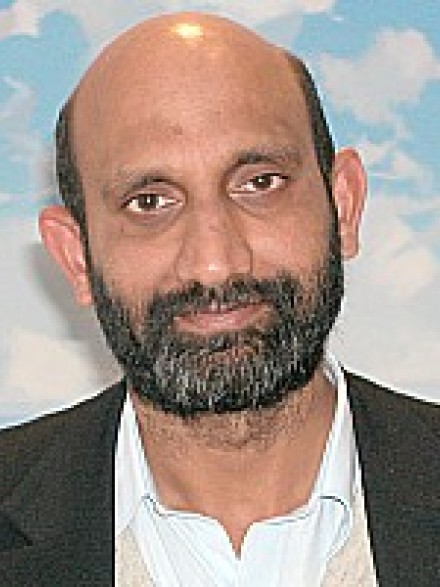
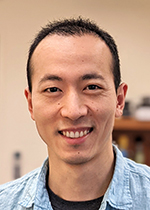
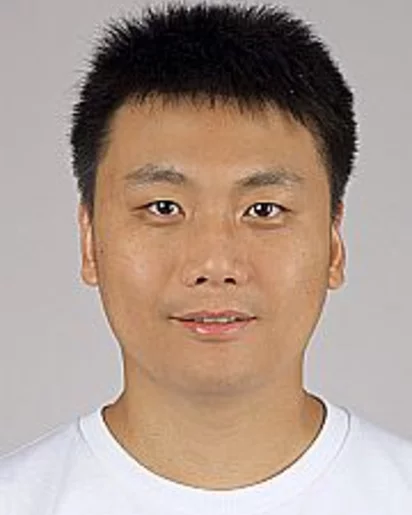
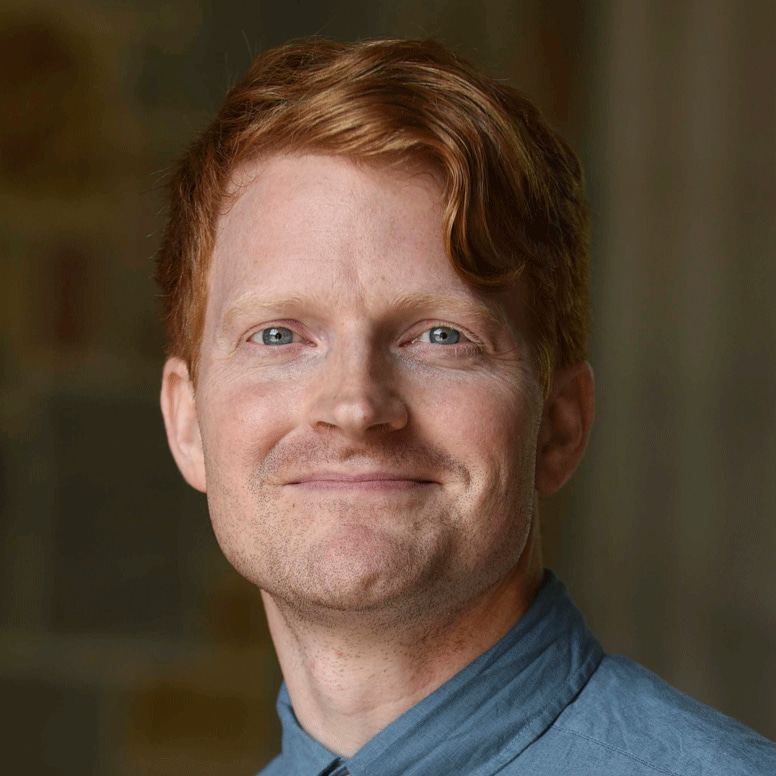
Di Wang is a Postdoctoral Fellow and Researcher at The John Curtin School of Medical Research (JCSMR), Australian National University (ANU). He holds a B.Eng from Tsinghua University and an M. Biochemistry & Molecular Biology from Second Military Medical University. His research focuses on computational biology, functional genomics, and RNA-related studies within The Wen Group. He is affiliated with the Centre for Computational Biomedical Sciences and the Division of Genome Sciences and Cancer. His work spans advanced materials research, including graphene-based photodetectors and superconductivity studies, reflecting interdisciplinary expertise in both biomedical and physical sciences. Education: Bachelor of Engineering, Tsinghua University Master of Biochemistry & Molecular Biology, Second Military Medical University Research interests emphasize RNA functional genomics and computational approaches to biomedical challenges. His publications explore graphene applications in mid-infrared photonics and structural transitions in superconductors, showcasing contributions to both nanotechnology and materials science. Active participation in ANU's research infrastructure underscores his role in advancing translational medical research.
Mark Humphrey is a Professor in the Research School of Chemistry at the Australian National University (ANU) within the College of Science. He holds a PhD and DSc from the University of Adelaide and an honorary DUniv from Université Rennes 1 (France). His academic career includes positions at Universität Würzburg (Germany), the University of Illinois (USA), and the University of New England (Australia) before joining ANU in 1994. He has been promoted to Professor in 2003 and holds visiting professorships at institutions such as Katholieke Universiteit Leuven (Belgium) and Université Rennes 1 (France). Research Interests: Dr. Humphrey specializes in nonlinear optics, organometallic chemistry, and functional molecular materials. His work focuses on designing novel materials with enhanced optical properties, including nonlinear optical materials for applications in photonics and energy. Key areas include the development of MXene-based hybrids, porphyrin-functionalized nanomaterials, and nonlinear optical crystals with tailored bandgaps and birefringence. Awards & Honors: Recipient of prestigious awards such as the RACI Organometallic Award (1998), RACI Inorganic Award (2008), and ARC Fellowships (1994–2009). He is an elected member of the European Academy of Sciences (2020) and Academia Europaea (2021). Grants & Leadership: Director of the Australia-China Joint Research Centre for Functional Molecular Materials and Chair of the Inorganic Division of the Royal Australian Chemical Institute. He has led multiple ARC-funded projects and international collaborations, including CNRS and Chinese Academy of Sciences initiatives. Labs & Teams: His research group focuses on molecular engineering, nonlinear optics, and energy materials. Collaborations include Jiangsu University (China), Université Rennes 1, and the Katholieke Universiteit Leuven.
Chennupati Jagadish is a Distinguished Professor and Head of the Semiconductor Optoelectronics and Nanotechnology Group at the Department of Electronic Materials Engineering, Research School of Physics & Engineering, The Australian National University (ANU). He holds a Laureate Fellowship and has been recognized with prestigious awards, including the Companion of the Order of Australia (AC). His research focuses on compound semiconductor optoelectronics, nanotechnology, photovoltaics, and materials science. Jagadish has over 1,000 publications and is a Fellow of multiple scientific societies. Education: B.Sc. (Nagarjuna University, 1977), M.Sc.(Tech) (Andhra University, 1980), M.Phil. and Ph.D. (University of Delhi, 1982 and 1986). Research Interests: Compound semiconductor nanowires, quantum dots, optoelectronic devices, photovoltaic technologies, and neurotechnology. His work bridges nanoscale materials engineering with applications in energy and photonics. Key Contributions: Pioneered nanowire-based photonic and optoelectronic devices, including high-efficiency solar cells and terahertz detectors. Developed novel methods for nanowire growth and integration into functional systems. Awards: IEEE Nanotechnology Pioneer Award, OSA Nick Holonyak Jr. Award, and Companion of the Order of Australia for contributions to physics and engineering. Grants & Leadership: Led projects on advanced photovoltaics, nanowire lasers, and energy solutions. Served as President of the IEEE Nanotechnology Council and Vice-President of IEEE Lasers and Electro-Optics Society. Labs/Initiatives: Director of ANFF (ACT node), Convenor of Australian Nanotechnology Network, and leader in ANU's Institute for Climate, Energy & Disaster Solutions.
Eric Y. Ma is an Assistant Professor in the Department of Physics and by courtesy in Electrical Engineering and Computer Science (EECS) at UC Berkeley, where he holds the Georgia Lee Chair in Physics. He leads the Ma Lab, focusing on wave-matter interactions in quantum regimes, sub-wavelength scales, and unconventional frequencies (THz to UV). His research combines simulation, optimization, and experimental techniques across microwave to ultraviolet domains. Education 2016: Ph.D. in Applied Physics, Stanford University 2010: B.S. in Physics, Peking University Research Focus Dr. Ma's research explores electromagnetic interactions with condensed matter systems, developing novel tools for nanoscale characterization. His work spans quantum materials, inverse design methodologies, microwave microscopy innovations, and applications in computing, sensing, and mixed reality. The lab maintains a balance between fundamental physics and practical implementation. Publication Trends Recent publications demonstrate strong focus on advancing microwave impedance microscopy techniques for quantum materials characterization, developing physics-agnostic inverse design frameworks, and exploring spin wave dynamics. Significant contributions appear in nanophotonics, quantum measurement, and interdisciplinary applications bridging physics with machine learning. Awards & Honors Hellman Fellow (2024) Google Research Scholar (2024) Amazon Physical Science Fellowship (2022) Georgia Lee Chair in Physics Research Support Moore Foundation: Quantum-Limited Atomic Force Microscope development (2024) NSF: Advanced Inverse Design of Microwave Devices (2024) Google: Parsing Physics Literature with LLMs (2024) Laboratory The Ma Lab specializes in developing experimental platforms spanning microwave to ultraviolet frequencies, emphasizing DIY instrumentation and collaborative research. The team includes postdoctoral researchers, graduate students, and undergraduates working on quantum materials characterization, inverse design algorithms, and novel microscopy techniques.
Biaolong Liu is a researcher at the Laboratory for Non-linear Optics within the Photon Science Division of the Paul Scherrer Institute . His work focuses on developing advanced laser sources for terahertz (THz) and mid-infrared applications, with a specific emphasis on coherent phase control in complex materials. Bachelor Degree in Condensed Matter Physics (2011) from University of Science and Technology of China (USTC) PhD under Prof. Andrea Cavalleri at the Max Planck Institute for the Structure and Dynamics of Matter (Hamburg) His research spans nonlinear Mid-IR to THz light-wave generation and non-equilibrium spectroscopy on complex oxides, particularly high-Tc cuprates. He pioneered techniques for generating tunable narrowband THz pulses to explore transient superconducting correlations and optical strain engineering in antiferromagnetic materials. Research Trends: His publications highlight expertise in terahertz photonics, ultrafast material dynamics, and nonlinear optical crystal applications. Key themes include frequency-tunable THz sources, non-equilibrium superconductivity, and phonon-driven magnetic polarization. Scientific Awards: Recognized as a 'highly-qualified young researcher' for leading high-power laser projects Biaolong Liu contributes to SwissFEL beamline development and user support, operating commercial Ti:sapphire laser systems while conducting independent research on non-equilibrium phenomena in solids. His work bridges experimental photonics and condensed matter physics, enabling novel investigations into quantum materials.
Brittany E. Miles is an Assistant Professor at Steward Observatory, University of Arizona, where she conducts research in exoplanet and brown dwarf atmospheres using mid-infrared spectroscopy. She joined the university in Fall 2022 after serving as a UC Presidential Postdoc at UC Irvine. Her educational background includes: Bachelor's in Physics, minor in Geophysics and Planetary Physics, UCLA Master's and Ph.D. in Astronomy & Astrophysics, University of California, Santa Cruz (2022) Dr. Miles specializes in mid-infrared observations of brown dwarfs, which serve as analogs for exoplanets, to understand atmospheric structures and chemistry. Her work bridges the gap between brown dwarf and gas giant planet atmospheres, and she is actively developing ground-based mid-infrared instrumentation to improve exoplanet characterization and detection, particularly for Earth-like planets. She has been recognized with prestigious fellowships: 51 Pegasi b Fellow Presidential Fellow at the University of Arizona UC Presidential Postdoc at UC Irvine As a dedicated mentor, Dr. Miles is currently recruiting graduate students and postdocs. Current undergraduate researchers include: Ruben Huerta (2025 - ) Ella Butler (Summer 2025) Animesh Garg (2023 - 2025) Her research is supported by grants including JWST Cycle 2 program #4084 (PI) and funding for detector development at Steward Observatory. Dr. Miles leads a research group focused on atmospheric characterization and instrumentation, with projects including JWST observations of VHS 1256b and testing next-generation infrared detectors for ground-based telescopes.
Ivan Bachvarov is an Associate Professor at the Faculty of Physics, Sofia University "St. Kliment Ohridski" in Bulgaria, a position he has held since 2003. Previously, he served as Chief Assistant (1997-2003) and Senior Assistant (1995-1997) at the same institution. His academic career includes significant research experience at prestigious institutions including Boston College (2004-2008 as Senior Research Fellow in Ultrafast Photonics), Technical University of Munich (as DFG Research Fellow in 2001 and 1996), Institute of Fine Mechanics and Optics in St. Petersburg (1995), and Friedrich Schiller University in Jena (1993). Dr. Bachvarov earned his PhD in Physics (1988-1992) and Master of Science in Engineering Physics (1978-1984) from the Faculty of Physics at Sofia University. His educational excellence was recognized with multiple awards including the State Scholarship for Significant Academic Achievements (1981-1983), the Prize for winner of the spring national mathematics competition (1977), and annual Awards in the National Physics Olympiad (1975-1978). His research focuses on several key areas of modern optics and laser physics. Dr. Bachvarov is particularly known for his work in Nonlinear Optics , where he has made significant contributions to understanding white-light generation in cubic media and polarization properties across spectral ranges. His work in Ultrafast phenomena in molecular systems has explored electronic energy delocalization and dissipation in DNA structures. He has also pioneered research in the Generation and characterization of ultrafast laser pulses , developing innovative techniques for femtosecond pulse generation. Additionally, his expertise in Solid-state lasers has led to advancements in diode-pumped systems and frequency doubling technologies. Dr. Bachvarov has demonstrated exceptional leadership in research management, having headed 12 scientific and industrial projects between 1997 and 2006. His projects span both fundamental research and practical applications, including collaborations with institutions like Northwestern University, Boston College, and various European organizations through the COST Action framework. Notable projects include the development of innovative laser instruments for medical applications, compact powerful laser sources for remote detection systems, and advanced laser systems for industrial applications. His scientific achievements have been recognized with prestigious awards: Young Scientist Scholarship from the German Research Foundation (DFG) in 1996 Young Scientist Scholarship - ICTP Trieste in 1995 As an academic advisor, Dr. Bachvarov has mentored numerous students who have gone on to successful careers in academia and industry worldwide. His former students include Associate Professors at Technical University of Munich, Principal Assistants at UCSD, Postdoctoral Fellows at ELETTRA Synchrotron Laboratory, and Research Engineers at companies like IPG Laser GmbH and Coherent Kaiserslautern GmbH. His research group at Sofia University continues to be active in ultrafast photonics and laser development. Dr. Bachvarov leads a vibrant research laboratory at Sofia University focused on ultrafast photonics and laser development. His team works on cutting-edge projects involving optical parametric generators, ultrafast phenomena characterization, and solid-state laser engineering. The laboratory is equipped with advanced instrumentation for laser pulse generation, characterization, and application development, supporting both fundamental research and practical industrial collaborations.
Didier Dréau is a Full Professor in the Department of Biological Sciences at the University of North Carolina at Charlotte within the College of Liberal Arts and Sciences. His research laboratory focuses on understanding the molecular, cellular, and physiological bases of metastases associated with cancers of epithelial origin, particularly melanoma and breast cancer. Dr. Dréau's research centers on the mechanisms of cancer metastasis, and the vascular and immune interactions associated with cancer growth. His laboratory investigates several key aspects of cancer metastasis including: signaling ligand-receptor (cytokine and chemokine) interactions, anchoring and growth of metastatic tumors, vascularization of metastatic tumors, and immune system interactions with metastases. A significant focus of his recent work has been on the role of inflammasomes in local inflammation within the tumor microenvironment. His publication record shows a strong trend toward understanding chemokine signaling in cancer metastasis, particularly CXCL chemokine heterodimers and their impact on breast cancer cell migration. His lab has also made significant contributions to nanotechnology applications in cancer detection and treatment, particularly with MUC1-targeted approaches for breast and pancreatic cancer. The research demonstrates a sophisticated integration of molecular biology, immunology, and nanotechnology to address fundamental questions in cancer biology. Scientific Awards: 2014 Outstanding Faculty Award Multicultural Academic Service Award 2020 CLAS Excellence in Teaching: Integration of Undergraduate Teaching and Research Award 2020 Outstanding Master's Thesis Award Dr. Dréau actively mentors graduate and undergraduate students, with numerous PhD, MS, and honors students completing research projects in his laboratory. His lab has produced over 55 peer-reviewed publications with an h-index of 29. He teaches several courses including Cell Physiology, Animal Physiology, and Advanced topics in Cancer Biology. His laboratory maintains active collaborations with researchers working on tissue engineering, nanotechnology, and immunotherapy approaches to cancer treatment.
Zachary Lindsey is an Assistant Professor in the Department of Physics and Technology at Berry College, where he teaches introductory physics, electronics, experimental methods, and engineering courses using active learning strategies. He is deeply committed to student mentorship and integrating students into hands-on research. Ph.D. in Physics, University of Alabama at Birmingham M.S. in Physics, University of Alabama at Birmingham M.A.E. in Physics Education, University of Alabama at Birmingham B.S. in Physics, Samford University His research centers on the development of crystalline semiconductor materials for optoelectronic and energy applications, with a focus on low-cost fabrication techniques such as pulsed laser deposition and electrodeposition. He investigates bandgap engineering through alloying and characterizes materials using X-ray crystallography, Raman spectroscopy, and electrochemical impedance spectroscopy. His lab emphasizes student participation in building instrumentation and performing advanced material characterization. His recent publications explore the growth of ZnSxSe1-x thin films for mid-infrared wave-guiding applications, demonstrating expertise in semiconductor thin film engineering for photonic devices. These works reflect a strong interdisciplinary approach combining physics, materials science, and engineering. Dr. Lindsey is a member of the American Association of Physics Teachers (AAPT), reflecting his dedication to effective physics pedagogy and education research. He actively mentors students in research and career development, fostering a student-led learning environment. His laboratory provides students with hands-on experience in experimental physics, electrochemistry, and engineering, preparing them for advanced studies and technical careers. The lab is structured to involve students in all stages of research, from design to characterization.
Nikolai Kalugin is a Professor in the Department of Materials and Metallurgical Engineering at New Mexico Tech. His research focuses on quantum materials, functionalized interfaces for biomedical applications, and the intersection of light-matter interactions in two-dimensional materials. He leads efforts to create quantum phases via Floquet engineering and designs bio-compatible carbon-based electrodes for neuroscience applications. Education: Ph.D. in Solid State Physics/Micro- and NanoElectronics (1997), Institute of Applied Physics of the Russian Academy of Sciences M.S. in Engineering Electrophysics (1989, Summa Cum Laude), Nizhny Novgorod Technical University B.S. in Applied Physics (1987), Nizhny Novgorod Technical University Research Interests: Dr. Kalugin explores quantum materials' dynamic properties under light-driven conditions, aiming to engineer topological states 'on demand.' He also develops biofunctionalized carbon interfaces to address limitations in neuroelectrode technologies. His work bridges quantum physics, materials science, and biomedical engineering. Key Projects: Current initiatives include a new quantum materials education program at New Mexico Tech and collaborations on mid-infrared irradiation of graphene to induce stable Floquet states. His lab also investigates covalent peptide decoration of carbon surfaces for selective neuron targeting. Grants & Labs: Active in multi-disciplinary research groups focusing on quantum technologies and bioelectronic interfaces. Coordinates cross-institutional student involvement in quantum materials research.
Michelle Creech-Eakman is a Professor in the Department of Physics at New Mexico Institute of Mining and Technology , where she has taught courses like Physics 121, 112, 333, 334, 501/2, 545, 562, and 589. She serves as a Project Scientist for the Magdalena Ridge Observatory Interferometer (MROI), a cutting-edge facility for optical/infrared interferometry. Research Areas: Optical and IR Interferometry (MROI, Keck Interferometer, PTI) Exoplanet Spectroscopy with NESSI AGB Stars L/T-type Brown Dwarfs and Exoplanets Young Stellar Objects Infrared Satellite Data Analysis Student Advising : She has mentored multiple M.S. and Ph.D. students, including Dana Baylis-Aguirre , Megan Hein , and Johnathan Dooley (ongoing), with former advisees now in academic, industrial, and research roles. Collaborations : She works with institutions like Cambridge University , NASA's Jet Propulsion Laboratory , and Caltech on projects involving optical interferometry, infrared instrumentation, and astrophysical phenomena.
Florian Mörz is a researcher specializing in advanced photonics and ultrafast laser technologies. His work focuses on developing innovative optical systems for spectroscopy, imaging, and material characterization. Key areas of expertise include mid-infrared plasmonics, tunable laser sources, and nanoscale sensing techniques. He leads a team dedicated to creating robust photonic devices with applications in biomedical imaging, materials science, and quantum optics. Research interests encompass optical parametric amplifiers, metasurface design, and surface-enhanced spectroscopy. His group has pioneered alignment-free mid-IR sources and developed ultrafast laser systems capable of attomolar detection of biomolecules. Recent efforts emphasize low-noise light sources for coherent Raman scattering microscopy and high-repetition-rate lasers for advanced spectroscopic imaging. Publications highlight contributions to plasmonic materials, GeSn heterostructures, and nanoantenna-based sensors. Despite prolific output, no formal awards or grants are explicitly mentioned in the provided texts. The team's work is characterized by interdisciplinary collaboration between photonics, materials science, and biomedical engineering.
Philippe St-Jean is an Associate Professor at the Department of Physics , Faculty of Arts and Sciences , University of Montreal. He holds a Research Chair in Quantum Photonics from the Quebec Ministry of Economy and Innovation. His work focuses on experimental studies of light-matter interaction in quantum and topological photonic systems, aiming to develop robust quantum devices and explore novel material phases via photonic emulators. Education: BSc Physics, University of Montreal (2009) PhD in Engineering Physics, Polytechnique Montréal (2016) Postdoc at CNRS/Université Paris-Saclay (2016–2020) Research Interests: Topological quantum photonics, quantum optics, synthetic dimensions, nonlinear photonics, and photonics-based emulation of condensed matter systems. Grants & Projects: Lead or co-lead on major grants including Canada Excellence Research Chair in Light-Matter Interactions , Regroupement québécois sur les matériaux de pointe , and Mid-Infrared Quantum Sensing and Spectroscopy (MIR-QUEST) . Active in developing quantum photonic devices and topological interferometry. Awards: Quebec Ministry research chair in quantum photonics. Collaborates extensively with international teams on quantum technologies.
Colin Bradley is a Professor in the Department of Mechanical Engineering at the University of Victoria (UVic). His expertise spans manufacturing automation, design engineering, and advanced sensor systems. He holds a PhD and is a Professional Engineer (P.Eng). His research focuses on adaptive optics for astronomy, exoplanet imaging, and fiber-optic sensor technologies. Bradley has contributed to major projects like the Gemini Planet Imager (GPI) and the Maunakea Spectroscopic Explorer, advancing instrumentation for large telescopes. His work integrates mechanical engineering principles with cutting-edge optical systems. Recent research includes developing high-contrast imaging techniques, photon-counting wavefront sensors, and novel gas sensing methods using photonic crystal fibers. He has collaborated on international initiatives such as the NSERC CREATE program for observatory technologies and the TIKI project for Earth-like planet detection. His publications span adaptive optics, sensor design, and mechanical control systems for robotics and underwater vehicles.
Aseema Mohanty is an Assistant Professor in the Department of Electrical and Computer Engineering at Tufts University, holding the Clare Boothe Luce Professorship. She earned her B.Sc. from MIT and Ph.D. from Cornell University, followed by postdoctoral research at Columbia University under Michal Lipson. Her research focuses on nanophotonics, optical beam shaping, and neuroengineering, with applications in quantum information systems, biomedical sensors, and chip-scale imaging. She leads the Mohanty Nanophotonics Lab, developing miniaturized optical circuits for neural interfaces, LiDAR, and quantum computing. Education: Bachelor of Science, Electrical Science & Engineering, MIT (2011) Ph.D., Electrical and Computer Engineering, Cornell University (2017) Research Interests: Chip-scale optical systems for neuroscience and quantum applications 3D optical beam shaping and sensing Biomedical optical interfaces and implantable devices Her work bridges nanophotonics and biomedicine, with recent breakthroughs including reconfigurable neural stimulation probes and chip-scale lasers spanning ultraviolet to near-infrared wavelengths. Over 30 peer-reviewed articles highlight her contributions to optical phased arrays, quantum photonics, and miniaturized imaging systems. Awards: Clare Boothe Luce Professorship (2020-present) Lab Activities: Mentoring 10+ students across ECE and Physics, advancing projects in quantum communication, biomedical optics, and LiDAR systems.