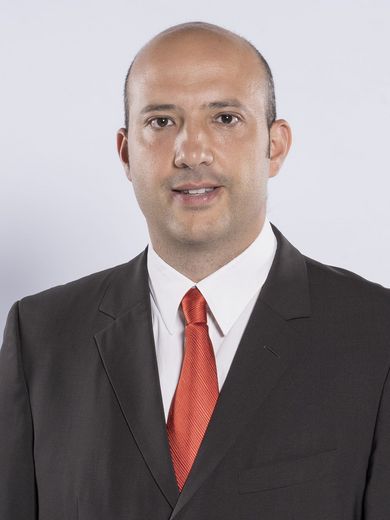
Antonio Papangelo is an Associate Professor at the Department of Mechanics, Mathematics & Management of the Politecnico di Bari , Italy. His research focuses on mechanical design and machine construction, particularly in contact mechanics, adhesion phenomena, and viscoelastic material behavior. Email: antonio.papangelo@poliba.it Research Areas: Tribology, Adhesion Mechanics, Viscoelasticity, Fracture Mechanics, Nonlinear Dynamics Current research explores adhesion enhancement through microvibrations, viscoelastic friction in sliding/rolling contacts, and dynamic JKR adhesion problems. Studies often combine multi-scale modeling and experimental validation to address challenges in soft robotics and automotive engineering (e.g., porpoising suppression in race cars). Scientific contributions span tribology , contact mechanics , and nonlinear vibration analysis , with publications covering topics like surface topography characterization, mechanochromic suction cups, and fatigue crack propagation laws. His work bridges theoretical modeling and practical applications in mechanical systems.
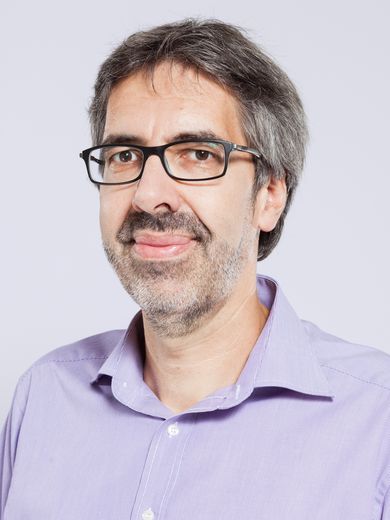
Andrea Sbarbati is a Full Professor at the University of Verona's Department of Neurological, Biomedical and Movement Sciences, specializing in Human Anatomy. He holds leadership roles in department governance, including Department Director and membership in multiple academic committees such as Research and Internationalization. His teaching spans over 165 modules across Medicine, Surgery, Physiotherapy, and specialized postgraduate programs, focusing on Human Anatomy I and II, Bioimaging in Translational Research, and related clinical disciplines. Research interests include regenerative medicine, nanomedicine, neuroanatomy, and advanced imaging techniques. Ongoing projects involve biomaterials for tissue repair, CFTR modulation in viral infections, and novel therapies for skin aging and scars. His work bridges basic science with clinical applications, particularly in stem cell therapy and anatomical imaging. Key research tools include ultrastructural analysis, spectroscopy, and preclinical MRI. He collaborates with centers like the Brain Bank and the WHO Collaborating Centre for Mental Health. His lab focuses on morphology and cell/tissue biology, applying microscopy and multimodal imaging. No scientific awards are explicitly mentioned, but his extensive publications reflect impactful contributions to regenerative medicine and biomedical research. Advising and grants include roles in student mentorship and projects like the Verona Nanomedicine Initiative. His labs, including the Tissue Engineering and Neuroimaging groups, drive interdisciplinary innovation. Clinical interests span aesthetic medicine, burn scar treatment, and anatomical education.
Antonio Francisco García Marín serves as a Professor at the Institute of Aerospace Technology, Bremen University of Applied Sciences in Bremen, Germany, where his research drives innovation in European space initiatives and sustainable energy solutions. His work is conducted from room 405 in the CINNAMON building at Flughafenallee 10. His research portfolio spans critical aerospace and energy domains: Advanced spacecraft structural and thermal modeling Microvibration management systems for satellites Green energy storage infrastructure CubeSat wireless transmission technologies Large-area electrolysis cell development Current grant-funded projects demonstrate his leadership in space technology advancement, including: Visionary Ingenuity Boosting European Spacecraft – Proto-Flight Model (04/2025-03/2026) BreSpaceTech2025+ Institute Equipment Modernization (02/2025-12/2028) Digitization of HSB Satellite Ground Station (09/2024-08/2025) Construction of Electrolysis Test Environments (07/2021-06/2022) His laboratory operations integrate spacecraft testing facilities with energy storage research infrastructure, supporting both European space missions and next-generation green technology development through active industry partnerships.
Prof. Dr. Sören Peik serves as a Professor in the Faculty of Engineering and Computer Science at Hochschule Bremen City University of Applied Sciences, specializing in Microwave Technology and Satellite Communications. His research drives innovation in European space systems and next-generation wireless networks. His active projects include: Visionary Ingenuity Boosting European Spacecraft – Proto-Flight Model (2025-2026) Intelligent Reflecting Surface for High-Performance Connectivity in 6G Wireless Networks (2024-2025) Digitization of the HSB satellite ground station (2024-2025) Visionary Ingenuity Boosting European Spacecraft – Structural Thermal Models (2024-2025) His expertise spans Satellite Communications, Microwave Engineering, and Electromagnetic Interference characterization, with significant contributions to CubeSat platforms, Antarctic radio beacon operations, and spacecraft microvibration management. Recent work integrates data science infrastructure for satellite systems and develops 6G wireless solutions using intelligent reflecting surfaces. Prof. Peik leads multiple European Space Agency-funded initiatives focusing on spacecraft prototyping, structural thermal modeling, and ground station digitization, demonstrating sustained impact in space technology development.
Dr. Sebastian Moritz Oberst is a researcher at the School of Engineering and Information Technology, The University of New South Wales (UNSW), Australian Defence Force Academy. His work bridges numerical and experimental approaches in vibration & acoustics, mechanical characterization, and bio-inspired dynamics, with a focus on microvibrations in insects and nonlinear time-series analysis. Research Interests: Stability of nano-satellite structures, friction-induced vibrations (e.g., automotive brake squeal), vibrational communication in insects (termites, ants), bio-inspired vibration reduction for robotics, acoustic radiation force control via metamaterials. Teaching: Statics, Dynamics, Thermofluids, Vibration and Acoustics, Instrumentation, and Statistics. Grants: Lead or co-investigator on multiple Australian Research Council and international grants (DAAD, USDA, Defence Science and Technology Group) from 2017–2023, covering bio-acoustics, metamaterials, LiDAR signal processing, and medical device modeling.
Dr. Sebastian Oberst is an Adjunct Associate Professor at the School of Engineering and Information Technology at the University of New South Wales (UNSW) Canberra. His research focuses on vibration and acoustics, mechanical characterization, and vibration/noise control, with particular expertise in microvibrations related to insect communication. He has made significant contributions to the understanding of nonlinear time series analysis, chaotic dynamics, and statistical uncertainty analysis in mechanical systems. Dr. Oberst's primary research interests include: Stability behavior of deployable, flexible structures of nano-satellites Friction-induced vibrations & sound (e.g., automotive disc brake squeal) Vibrational communication in insects (e.g., ants, termites) Mechanical characterization and vibration/noise control Nonlinear time series analysis and chaotic dynamics Statistical and uncertainty analysis in vibration systems His recent publications demonstrate a strong focus on applying advanced signal processing techniques to vibration analysis, particularly in biological systems and engineered structures. Dr. Oberst has pioneered methods for analyzing microvibrations in insect communication and has made significant contributions to understanding brake squeal phenomena through nonlinear dynamics approaches. His work bridges the gap between theoretical vibration analysis and practical engineering applications. Dr. Oberst has secured significant research funding through multiple Australian Research Council grants and industry partnerships: Lead Chief Investigator for "Discovering how termites use vibrations to thrive in a predators' world" (ARC Discovery Project DP200100358, 2020-2022) Chief Investigator for "Metamaterials for control of acoustic radiation forces" (ARC Discovery Project DP200101708, 2020-2022) Chief Investigator for "National Laser-Based Non-Destructive Evaluation System" (ARC LIEF LE180100041, 2018) Lead Chief Investigator for "Bio-inspired vibration-reduction for sensing and detection" (NSW Department of Industry, 2020) Chief Investigator for "Enhanced detection, localisation and identification of sand-covered naval mines" (NSW Department of Industry, 2021) Dr. Oberst teaches across several engineering disciplines including Statics, Dynamics, Thermofluids, Introduction to vibration, Acoustics, Instrumentation, and Statistics. His research lab focuses on experimental and numerical vibration analysis, with particular emphasis on biological vibration systems and engineered mechanical structures. Current projects include developing micro-exciter devices to mimic insect vibration signals, analyzing termite nest morphology, and investigating acoustic radiation forces for contactless manipulation of objects.
Professor Guglielmo Aglietti is a leading academic at the University of Surrey , holding the position of Professor and Royal Academy of Engineering / SSTL Research Chair in Space Engineering . He serves as the Director of the Surrey Space Centre and Programme Leader for the MSc in Space Engineering . His affiliations include the Spacecraft Structures and Mechanisms Group within the Surrey Space Centre. University: University of Surrey School: Faculty of Engineering and Physical Sciences Department: Surrey Space Centre Research Group: Spacecraft Structures and Mechanisms Group Email: g.aglietti@surrey.ac.uk His research spans spacecraft structures and mechanisms , microvibrations , deployable systems , and active space debris removal . He has led major international projects such as the RemoveDebris and AlSat-1N missions, contributing significantly to space sustainability and technology transfer. His work integrates theoretical modeling, experimental validation, and industrial application, particularly in vibration control and finite element analysis. The recent publications reflect a strong focus on microvibration mitigation , space debris removal technologies , deployable structures for nanosatellites , and advanced stochastic finite element methods for spacecraft modeling. These works demonstrate a consistent trend toward improving spacecraft reliability, precision, and mission success through innovative mechanical design and rigorous testing methodologies. His scientific honors include: Fellow of the Royal Academy of Engineering (FREng) Chartered Engineer (CEng) Fellow of the Royal Aeronautical Society (FRAeS) Royal Academy of Engineering Research Chair Prof. Aglietti has secured research funding from ESA , UK Space Agency , EPSRC , TSB , and Royal Academy of Engineering . He has led experimental space missions including RemoveDebris (demonstrating net and harpoon capture of debris) and InflateSail (drag sail de-orbiting). He also conducts extensive consultancy for major aerospace firms such as SSTL , Airbus Defence and Space , and Lockheed Martin . He leads a multidisciplinary research group of approximately 90 members at the Surrey Space Centre and oversees educational initiatives in space engineering. His leadership in mission development and technology demonstration underscores his role in bridging academic research with real-world space applications.
Andrei Lukashkin is a Reader in the School of Pharmacy and Biomolecular Sciences at the University of Brighton, United Kingdom. His research is centered in the Sensory Neuroscience Research Group, where he investigates the biophysical and physiological mechanisms of hearing, particularly within the mammalian cochlea. His research interests include cochlear micromechanics, otoacoustic emissions, sensory and supporting cell interactions in the organ of Corti, and the development of novel hearing aids and drug delivery methods to the inner ear. His work bridges fundamental science and clinical applications, aiming to improve diagnosis and treatment of hearing disorders. The recent articles highlight a strong trend in understanding cochlear amplification, mechanical gradients in the basilar membrane, and innovative drug delivery techniques leveraging microvibrations and non-invasive methods. His research integrates molecular, cellular, and systems-level approaches within auditory neuroscience. Scientific Awards: No specific awards mentioned in the provided text. Andrei Lukashkin has been Principal Investigator on multiple research projects funded by the MRC, Royal Society, and EU programs. These include investigations into bioengineering devices for hearing loss, amphiphilic polymer-based drug delivery, and the role of sensory-supporting cell interactions in cochlear function. He supervises research staff and students, contributing to training the next generation of auditory scientists. He is actively involved in the Sensory Neuroscience Research Group at the University of Brighton, collaborating with key researchers such as Ian Russell, Vitalia Lukashkina, and others. His work is highly collaborative and spans disciplines including neuroscience, bioengineering, pharmacology, and otolaryngology.