Prof. Cem Alhan is a Professor at Acibadem Mehmet Ali Aydinlar University's School of Medicine, Department of Surgical Sciences. Specializing in Cardiovascular Surgery , he has pioneered robotic-assisted cardiac procedures since 2010, focusing on mitral valve repairs, coronary revascularization, and minimally invasive techniques.
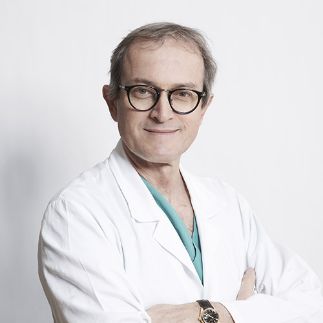
Mario Bussi is a Full Professor of Otorhinolaryngology at Vita-Salute S. Raffaele University of Milan and Director of the School of Specialization in Otolaryngology there since 2004. He previously held academic positions at the University of Turin, including Associate Professor from 1992–2002, and has served as Director of the Otolaryngology Operating Unit at IRCCS Raffaele in Milan since 2002. Education: Degree in Medicine and Surgery (1977) and Specialization in Otorhinolaryngology (1980) from University of Turin; University Diploma in Maxillo-Facial Surgery from Université Paris VI (1986) His research spans head and neck tumors , reconstructive surgery , ENT immunology (focusing on Waldeyer's ring and upper airway cancer), and psycho-oncology . Recent publications highlight advancements in sentinel lymph node biopsy , autofluorescence imaging , and functional outcomes after head and neck surgery. Key technical expertise includes nasal physiopathology , parathyroid surgery , and vestibular disorders research. He has authored over 300 publications and participated in numerous CNR-funded projects.
Prof. Rossen Kolarov is a full-time Professor at the Medical University of Varna's Faculty of Dental Medicine, where he leads the Department of Oral and Maxillofacial Surgery. He holds additional academic appointments at the National Sports Academy and contributes to the Speech Therapy program at New Bulgarian University. Education & Qualifications: Medical Doctorate in Surgical Dentistry (2005) Specializations: General Dentistry (2008), Social Medicine & Health Management (2007), Maxillofacial Surgery (1991) Advanced training in hospital management, microvascular surgery, and craniofacial reconstruction Research Focus: His work spans oral microbiology, maxillofacial oncology, autoimmune disorders (particularly Sjögren's Syndrome), and innovations in surgical documentation through dental photography. His publications demonstrate strong interdisciplinary collaboration with microbiologists and oncologists. Publication Trends: Recent work (2015-2017) shows concentrated focus on osteonecrosis management, antibiotic resistance in oral pathogens, HPV-related oral cancers, and ethical/technical aspects of clinical photography. His research consistently bridges clinical practice with pathological mechanisms. Professional Service: Chairman: SOS Children's Villages Bulgaria & Bulgarian Society of Medical Photography Editorial Board Member: Scripta Scientifica Medicinae Dentalis, Medinform, Medical Review Accreditation expert for healthcare institutions (2001-2017) Clinical Leadership: Served as Head of Department at IAMO (2015-2017) and Director of SBALLCH EAD (2001-2015) where he established surgical protocols and quality standards.
Dr. Robert C. Rennert is an Assistant Professor of Neurosurgery and Adjunct Assistant Professor of Radiology & Imaging Sciences at the University of Utah School of Medicine. He serves as the Associate Program Director of the Neurosurgical Residency and Director of the Skull Base and Vascular Anatomy Laboratory. Education: MD from The Ohio State University College of Medicine; Residency at University of California–San Diego; Fellowships at University of Arkansas, UCSD, University of Utah, and University of Southern California. Research Interests: Dr. Rennert specializes in innovations and outcomes in skull base surgery, cerebrovascular neurosurgery, neuro-anatomy, and translational stem cell therapies. His work integrates advanced surgical techniques with multidisciplinary approaches to complex neurological conditions. Recent Publications: His research focuses on technical advancements in aneurysm management, bypass surgery, and pituitary tumor treatments. Key trends include hybrid open/endovascular strategies, pediatric cerebrovascular interventions, and age-related surgical outcomes for endocrine disorders. Awards: None explicitly mentioned in the text. Labs & Teams: Leads the Skull Base and Vascular Anatomy Laboratory at University of Utah. Collaborates with international multicenter registries including RAPID (Registry of Adenomas of the Pituitary and Related Disorders) and teams focused on cerebrovascular and pituitary surgery optimization.
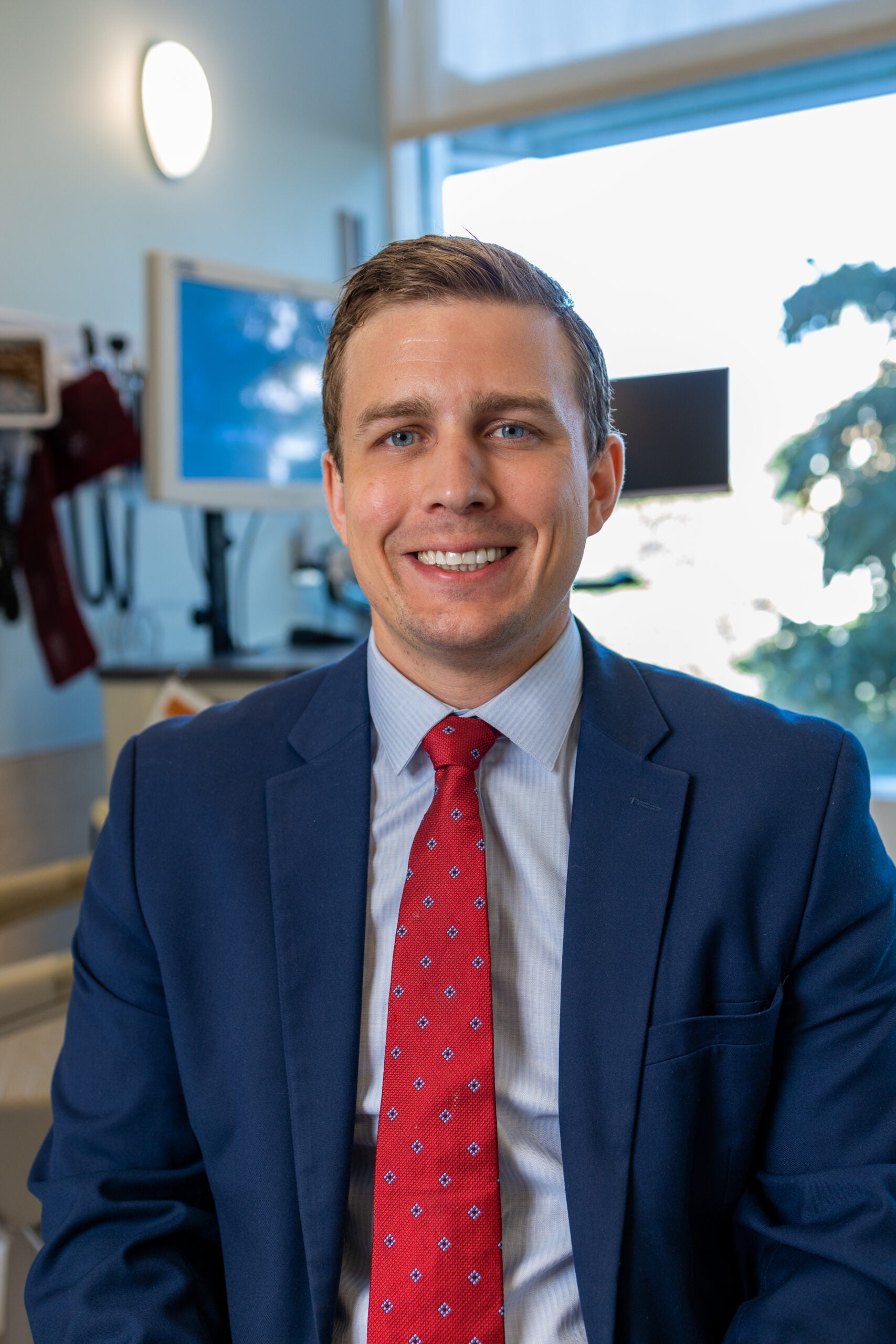
Eric Dowling, MD, is an Assistant Professor in the Department of Otolaryngology at the University of Virginia (UVA), specializing in Head and Neck Surgical Oncology and Microvascular Reconstruction. His clinical work focuses on treating benign and malignant diseases of the head and neck, including oropharyngeal cancer, thyroid cancer, and reconstructive surgery. Dr. Dowling emphasizes multidisciplinary patient-centered care and provides services at UVA Health’s Emily Couric Clinical Cancer Center, University Medical Center, and Fontaine Research Park. Education: University of Minnesota Duluth (Biology), University of North Dakota (MD) Training: Mayo Clinic (Residency), Mount Sinai Beth Israel (Fellowship) Dr. Dowling’s research interests include de-escalation of adjuvant treatment in HPV-associated oropharyngeal cancer and functional outcomes after head and neck surgery . His publications span topics such as rare oral cancers, novel reconstructive techniques, and airway complications. Patient reviews highlight his compassion, communication skills, and commitment to comprehensive care. He is certified by the American Board of Otolaryngology with a subspecialty in Plastic Surgery within the Head and Neck. Outside medicine, Dr. Dowling enjoys automotive repair, disc golf, and family camping trips.
Jonathan Garneau, MD, serves as an Assistant Professor in the Department of Otolaryngology at the University of Virginia . He specializes in Head and Neck Oncologic and Microvascular Surgery , treating cancerous and non-cancerous conditions of the head and neck region. Education: MD from University of Chicago Pritzker School of Medicine Residency: Icahn School of Medicine at Mount Sinai Hospital Fellowship: University Hospitals of Cleveland/Case Western Reserve University His research focuses on imaging analysis and radiographic biomarkers for head and neck cancer diagnosis and treatment. He emphasizes multidisciplinary research partnerships and comprehensive patient care. Scientific Awards: Chief Resident Teacher of the Year Award (peer-selected) Chairman’s Award (top residency graduate) Garneau volunteers in underserved communities, notably participating in a medical mission in Ecuador for cleft palate/lip repairs, and plans future initiatives in global health outreach.
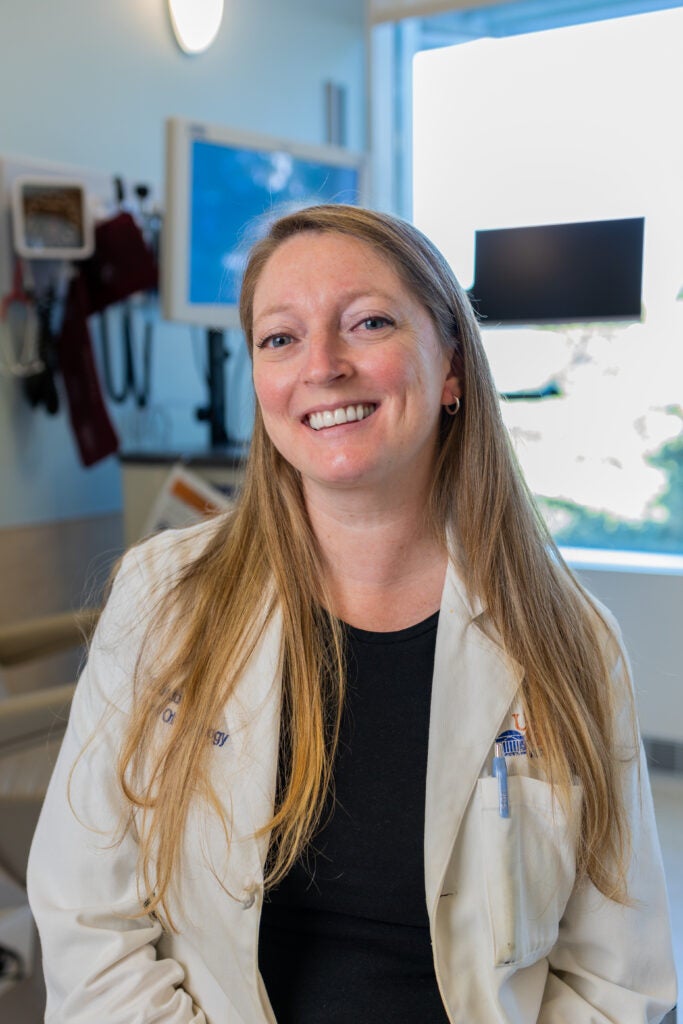
Katherine Fedder, MD is an Associate Professor in the Department of Otolaryngology-Head and Neck Surgery at the University of Virginia School of Medicine. She specializes in head and neck oncologic and microvascular surgery, with clinical expertise in treating benign and malignant diseases of the head and neck including tumors of the skin, upper aerodigestive tract, and salivary glands. Her educational background includes: Undergraduate: Duke University Medical School: University of Texas Health Science Center at San Antonio Residency: Emory University School of Medicine in Otolaryngology (completed 2014) Fellowship: University of Miami in Head and Neck Oncology and Microvascular Surgery (2014-2015) Dr. Fedder's research interests span both clinical and educational domains. She has particular expertise in complex microvascular reconstruction of the head and neck, trans-oral robotic surgery using the da Vinci system, and sialoendoscopy for minimally invasive salivary gland procedures. Her clinical work focuses on minimizing functional and aesthetic deficits after tumor removal. As part of her commitment to education, she is pursuing a Master of Education through the University of Michigan while serving as Clerkship Director for 3rd and 4th year medical students. Professional affiliations include: Association of Surgical Education American Head and Neck Society Society of University Otolaryngologists American Academy of Otolaryngology-Head and Neck Surgery American College of Surgeons She serves on the Women in Otolaryngology Leadership and Mentorship Committee through the AAO-HNS. Dr. Fedder collaborates with a multidisciplinary team including neuroradiologists, radiation oncologists, medical oncologists, palliative care physicians, nutritionists, and speech language pathologists to provide comprehensive patient care.
Frédéric Lesage is a Full Professor in the Department of Electrical Engineering at Polytechnique Montréal and holds a Tier 1 Canada Research Chair in Vascular Optical Imaging. His multidisciplinary research bridges biomedical engineering, neuroscience, and AI, with affiliations spanning the Functional Imaging Laboratory (INSERM), Montreal Heart Institute, and Centre for Mathematical Research. Research interests center on neuroimaging innovations for studying cerebral physiology. Key areas include: Neurovascular Coupling: Investigating blood flow dynamics in aging and Alzheimer's using optical coherence tomography and NIRS. Epilepsy Diagnostics: Developing AI models for seizure prediction via EEG/fNIRS fusion. Microvascular Pathologies: Mapping microstroke impacts using two-photon microscopy and adversarial learning. His 15 most recent publications (2020-2025) emphasize AI-driven neurology applications, showing trends in: Machine learning for epileptic EEG analysis Cerebral pulsatility in neurodegenerative diseases Translational vascular imaging (OCT/TPM) Awards include the Canada Research Chair (Tier 1) , renewed in 2022 for pioneering vascular imaging techniques. He has advised 57+ graduate students (27 PhD, 30 Master's) and secured grants from NSERC, CIHR, and CRC. Current projects focus on hypoxia effects, statin therapy in Alzheimer's, and catheter-based surgical simulators.
Lillian R. Aronson serves as Professor of Surgery at the University of Pennsylvania School of Veterinary Medicine, holding roles as Diversity Search Advisor and Founder/Coordinator of the Renal Transplant Program within the Clinical Sciences & Advanced Medicine department. Education: VMD, University of Pennsylvania School of Veterinary Medicine (1992) BS, Lehigh University, Bethlehem, PA (1988) Boston University (1985) Her clinical expertise centers on soft tissue and microvascular surgery, with specialized focus on renal transplantation and complex urinary tract reconstruction including urolithiasis management. Research investigates immunosuppressive therapy mechanisms, cytokine gene expression in renal transplants, renal hypertrophy processes, and urinary inflammatory biomarkers for diagnosing feline/canine urinary diseases. Honors: Diplomate, American College of Veterinary Surgeons Dr. Aronson established Penn's renal transplant program after coordinating UC Davis's service (1994-1996). She authored the textbook "Small Animal Surgical Emergencies" (2nd edition) and lectures internationally. No graduate students or research grants were documented in the source material, though she founded Penn's Renal Transplant Program and maintains active clinical leadership.
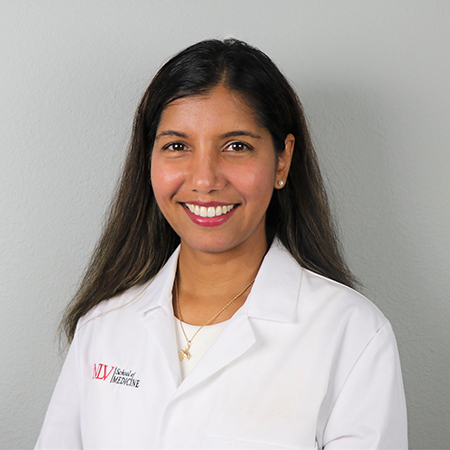
Meenakshi Rajan, MD, is an Assistant Professor in the Department of Plastic Surgery at the Kirk Kerkorian School of Medicine at the University of Nevada, Las Vegas. She specializes in complex microvascular breast reconstruction and lymphatic super microsurgery for lymphedema treatment, while also performing pediatric and adult craniofacial surgeries including cleft lip repair and rhinoplasty. Education: Medical degree from Rush University Medical College; undergraduate in Biochemistry and Genetics, Cell Biology & Development at University of Minnesota; Master’s in Biochemistry and Chemistry at University of California San Diego Residencies: General Surgery at Cleveland Clinic Florida, Plastic Surgery at University of Texas Health Sciences Center Fellowships: Microvascular & Lymphedema Surgery at Cleveland Clinic, Craniofacial Surgery at University of Texas Southwestern Medical School Her research focuses on advancing reconstructive surgical techniques and lymphatic interventions, with publications in Plastic and Reconstructive Surgery and Journal of Laparoendoscopic & Advanced Surgical Techniques . She provides patient services through the UNLV Health Plastic Surgery Clinic.
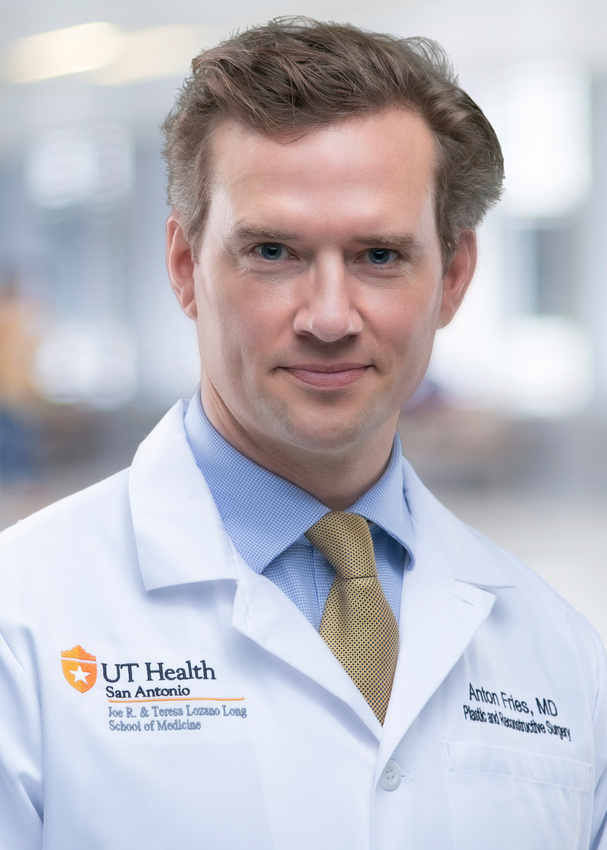
Dr. Anton Fries serves as Division Chief of Plastic and Reconstructive Surgery and Assistant Professor in the Department of Surgery at UT Health San Antonio. A distinguished military veteran, he retired from the Royal Navy after 20 years of service as a medical officer, achieving the rank of Surgeon Commander with two combat tours in Afghanistan. His educational background includes: Medical Degree from University of Cambridge International Master's Degree in Reconstructive Microsurgery from Chang Gung University, Taipei World-renowned Microsurgical Fellowship at Chang Gung Memorial Hospital Dr. Fries' research focuses on reconstructive transplantation and microvascular reconstruction, with special expertise in lymphatic super-microsurgery. His clinical work spans general reconstructive and aesthetic surgery, supported by over 60 peer-reviewed publications that established him as a leader in reconstructive transplantation research.
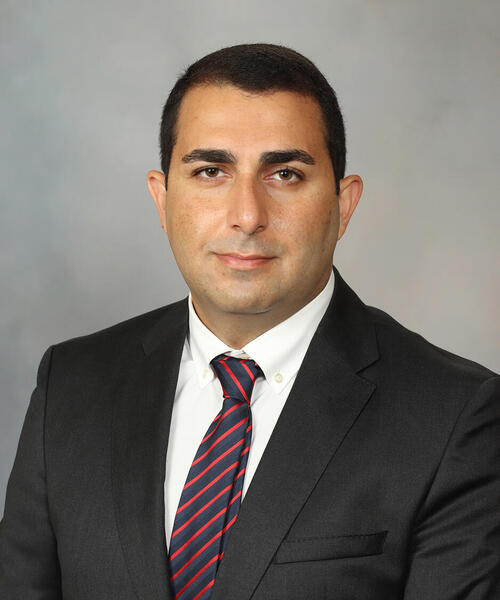
Dr. Vahe Fahradyan is an Assistant Professor of Plastic Surgery at the Mayo Clinic College of Medicine and Science and serves as a Consultant in the Division of Plastic Surgery at Mayo Clinic. He specializes in surgical treatment of lymphedema, breast reconstruction, and gender affirmation surgery, with advanced fellowship training from Cleveland Clinic and Mount Sinai Hospital. Dr. Fahradyan's research focuses on early diagnosis of lymphedema and innovative imaging techniques for lymphatic mapping. His clinical expertise includes supermicrosurgical lymphovenous bypass, vascularized lymph node transfer, and vascularized lymph vessel transfer. He has published extensively on lymphedema management, gender affirmation procedures, and reconstructive techniques, with recent publications appearing in high-impact journals. His notable awards include the 2018 Outstanding Paper Presentation Award from the American Society of Plastic Surgeons, 2nd Place Basic Science Paper at the Ohio Valley Society of Plastic Surgeons Annual Meeting, and multiple research awards from Cleveland Clinic. Dr. Fahradyan is actively involved in professional organizations including the Plastic Surgery Research Council, World Professional Association for Transgender Health, and American Society for Reconstructive Microsurgery. Fluent in English, Armenian, and Russian, Dr. Fahradyan is dedicated to advancing patient-centered surgical care and pioneering new frontiers in reconstructive and microsurgery. His comprehensive approach integrates the latest research with clinical expertise to provide personalized treatment plans for patients seeking lymphedema management, breast reconstruction, or gender affirmation procedures.
Dr. Eric J. Moore is a Professor of Otolaryngology and serves as the Chair of the Department of Otolaryngology-Head and Neck Surgery at Mayo Clinic. He holds multiple consultative appointments across the institution, including in the Division of Oral Diagnosis and Oral and Maxillofacial Surgery (Department of Surgery), Department of Neurosurgery, and Department of Pediatric and Adolescent Medicine. As a leading head and neck cancer surgeon and facial plastic and reconstructive surgeon, Dr. Moore specializes in complex tumor removal and reconstructive surgery. Dr. Moore's research focuses on improving patient outcomes through innovative surgical techniques and treatment strategies. His primary research areas include parotid gland surgery, transoral robotic surgery (where he assisted in the original FDA approval process), deintensification strategies for HPV-related oropharyngeal cancer, and microvascular reconstruction using computer modeling and 3D printing technology. His research aims to minimize incisions, maintain normal tissue, and improve reconstructions to restore patients' appearance and function after cancer surgery. His publication record demonstrates consistent scholarly output with 218 publications spanning from 1999 to 2025, with recent focus on HPV-related oropharyngeal cancer, liquid biopsy techniques, and surgical innovations. Analysis of his recent publications shows a strong emphasis on translational research that bridges laboratory findings with clinical applications, particularly in the areas of precision oncology and surgical innovation. Castle Connolly Top Doctors (2011-2021) Distinguished Clinician Award (2012) Gunnar Holmgren Award (2021) Joseph H. Ogura Memorial Lecturer Award (2017) Academy of Educational Excellence Fellow (2020) Multiple Teacher of the Year awards Distinguished Humanitarian Award (2007) As an educator, Dr. Moore provides mentorship to residents and fellows, with numerous teaching awards recognizing his excellence in medical education. His humanitarian work includes leading and participating in surgical missions worldwide. His clinical practice focuses on head and neck cancer treatment with particular expertise in robotic surgery, microvascular reconstruction, and treatment of HPV-related cancers with minimal morbidity. Dr. Moore's laboratory and clinical research activities are centered at the Mayo Clinic Comprehensive Cancer Center and the Head and Neck Cancer Center, where he leads research efforts to improve surgical outcomes and develop innovative treatment approaches for head and neck cancer patients.
Alexander Y. Shin, M.D. is a distinguished Professor of Neurosurgery, Orthopedics, and Regenerative Medicine at Mayo Clinic College of Medicine and Science, where he serves as Chair of the Division of Hand Surgery in the Department of Orthopedic Surgery. He holds joint appointments as Consultant in the Department of Orthopedic Surgery and the Department of Pediatric and Adolescent Medicine at Mayo Clinic in Rochester, Minnesota. Dr. Shin directs the Neural Regenerative Research Laboratory, previously known as the Microvascular Research Laboratory, which he has led since 2017. Dr. Shin's research spans both clinical and basic science domains, with a primary focus on enhancing peripheral nerve regeneration. His work investigates stem cells, exosomes, surgical angiogenesis, and modulation of the local immune response to improve outcomes in nerve reconstruction. Clinically, he specializes in complex upper extremity reconstruction, particularly traumatic brachial plexus injuries across all age groups, peripheral nerve injuries, and complex wrist fractures and reconstructions. Analysis of Dr. Shin's extensive publication record (over 559 research outputs) reveals a strong focus on translational research that bridges clinical needs with laboratory investigations. His work shows consistent emphasis on improving surgical techniques for nerve reconstruction, optimizing outcomes in brachial plexus injuries, and advancing understanding of nerve regeneration mechanisms. Recent publications demonstrate continued innovation in areas including diagnostic neuromuscular ultrasonography, surgical restoration of hand function in neuromuscular disorders, and biomechanical modeling of muscle function. Scientific Awards and Recognition: Multiple awards from the American Society for Surgery of the Hand including the Andrew J. Weiland Medal for Outstanding Research (2013) Richard A. Berger Excellence in Teaching Award (2020) Julian Brunner Award for Best Poster (2023) Best Papers Session award for brachial plexus research (2024) Recipient of NIH R01 funding for nerve regeneration research Dr. Shin has received consistent recognition for both his research contributions and teaching excellence, with numerous awards spanning clinical innovation, basic science research, and educational leadership. His laboratory maintains an active collaboration with Radboud University Medical Center in the Netherlands, reflecting his international impact in the field of nerve regeneration and reconstructive surgery.
Dr. John A. LoGiudice is a Professor in the Department of Plastic Surgery at Medical College of Wisconsin with joint appointments as Associate Professor in the Departments of Orthopaedic Surgery and Surgery - General. He serves as Plastic Surgery Medical Director and Access Champion, and as Director of the Microsurgery Fellowship program. Dr. LoGiudice completed his undergraduate studies in Anthropology at the University of Notre Dame (1992-1996), followed by a PhD at Loyola University of Chicago, Stritch School of Medicine (1996-2000). He then completed an Integrated Plastic Surgery Residency (2000-2006) and a Hand and Microsurgery Fellowship (2006-2007), both at Medical College of Wisconsin. He is board certified in Plastic Surgery and the subspecialty of Surgery of the Hand. Dr. LoGiudice's research focuses on reconstructive microsurgery with particular emphasis on breast reconstruction, hand surgery, and complex wound management. His work examines outcomes of DIEP flap procedures, management of complications in microsurgical reconstruction, and innovative approaches to tissue expansion. He has published extensively on venous congestion in breast reconstruction, outcomes in obese patients undergoing microsurgical reconstruction, and management of rare complications like pyoderma gangrenosum following reconstruction. Analysis of Dr. LoGiudice's recent publications (2018-2023) reveals a strong focus on improving outcomes in breast reconstruction, particularly DIEP flap procedures, with attention to vascular complications, patient selection factors, and innovative solutions to challenging surgical scenarios. His work spans both clinical outcomes research and technical innovations in microsurgical techniques. Best Microsurgical Save of the Year, American Society of Reconstructive Microsurgery (2008) Faculty Award for Excellence in Teaching, Department of Plastic Surgery (2010, 2019) Top Physician Report for Patient Satisfaction, Froedtert Hospital (2010-2017) J.K. Hardesty MD Award - Best Poster Presentation, Plastic Surgery Research Council (2003) Dr. LoGiudice has mentored over 20 students, residents, and fellows throughout his career. As Microsurgery Fellowship Director, he oversees comprehensive training in microsurgical techniques and reconstructive principles. His leadership extends to committee service on the Admissions Committee, Credentialing Committee, Faculty Council, and Wound Care Committee at Medical College of Wisconsin. Dr. LoGiudice maintains an active clinical practice with privileges at multiple hospitals including Froedtert Memorial Lutheran Hospital, Children's Hospital of Wisconsin, and Clement J. Zablocki VA Medical Center. Dr. LoGiudice leads a productive research program focused on improving outcomes in reconstructive microsurgery. His work spans breast reconstruction, hand surgery, and complex wound management, with emphasis on technical innovations and complication management. He has established collaborations within the Sarcoma Collaborative Group and Head and Neck Cancer Collaborative Group at Medical College of Wisconsin.