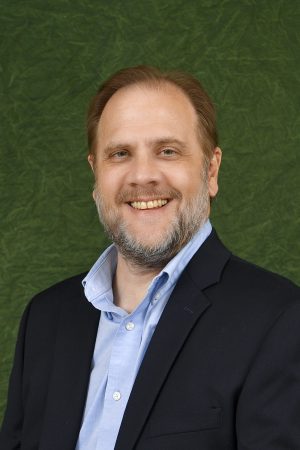
Thomas Suleski is a Professor of Physics and Optical Science at the University of North Carolina at Charlotte, serving as Undergraduate Dual Degree Coordinator & Advisor. He joined the faculty in 2003 and holds leadership roles, including Site Director of the NSF I/UCRC Center for Freeform Optics (CeFO). His research focuses on micro- and nanoscale optics, freeform/conformal optics, optical manufacturing, and near-field diffraction. Education: Ph.D. in Physics, Georgia Institute of Technology (1996) M.S. in Physics, Georgia Institute of Technology (1993) B.S. in Physics, University of Toledo (1991) His expertise includes optical microsystems and collaborations with military/commercial partners on micro-optical systems. He co-authored Diffractive Optics: Design, Fabrication, and Test and held senior editorial roles at Journal of Optical Microsystems and Journal of Micro/Nanolithography, MEMS, and MOEMS . He chairs international conferences and is a recipient of the 2017 John J. Turin Award.
William Kisaalita is the University Professor and UGA Athletic Association Distinguished Professor in Engineering at the University of Georgia's College of Engineering. His work bridges engineering innovation with global development challenges, particularly in Sub-Saharan Africa. He leads research in sustainable agricultural technologies, including the EvaKuula biogas-powered milk cooler (ASABE AE50 Award recipient) and Yaikuula wind-driven evaporative cooling systems for poultry farming. His interdisciplinary projects emphasize human-centered design, low-literacy accessibility, and community-driven diffusion of technologies. Research interests span agricultural engineering, biomedical microsystems (e.g., brain-on-a-chip devices), and high-throughput screening platforms for drug discovery. His pedagogical innovations include global service-learning courses that combine design projects with fieldwork in developing regions. Over 20 years, his teams have commercialized nearly a dozen technologies empowering smallholder farmers. Key Projects: EvaKuula milk preservation system, Guinea fowl production optimization, solar energy applications Global Engagement: Over 200 student field projects across Africa, South America, and Asia Education: PhD in Bioengineering from University of Alabama at Birmingham (implied via career progression) Scientific achievements include AAAS Fellow recognition and over 100 peer-reviewed publications spanning biomaterials, neuroengineering, and agricultural innovation. His work frequently addresses gender equity in technology adoption, such as labor-saving tools for female farmers in Uganda.
Dominique Maes is a Professor in the Department of Structural Biology within the Department of Bio-engineering Sciences at Vrije Universiteit Brussel. With an academic career spanning from 1987 to present, Maes has established significant expertise in protein crystallization, structural biology, and microfluidics. Their research focuses on fundamental mechanisms of protein crystallization, nucleation phenomena, and more recently, phase separation processes related to neurodegenerative diseases. Maes' research interests center on the physical principles governing protein behavior, particularly in crystallization and phase separation processes. Their work bridges fundamental biophysics with practical applications in biomanufacturing and disease mechanisms. The research utilizes advanced microfluidic platforms for precise control of protein solutions, enabling detailed studies of crystallization pathways, aggregation behavior, and phase separation dynamics under controlled conditions. Analysis of Maes' publication record reveals a clear evolution from fundamental crystallization studies toward applications in neurodegenerative disease research. Recent publications (2023-2025) show a strong focus on ALS-related protein phase separation, protein aggregation in microfluidic environments, and advanced particle tracking methods for microfluidic systems. The research demonstrates increasing interdisciplinary integration between structural biology, microfluidics, and neuroscience. IMT Microfluidics on Glass Poster Award (2019) Poster Prize (2018) European Space Agency Team Achievement Award (2007) Maes actively supervises doctoral research and serves on multiple PhD committees, particularly in the Department of Bio-engineering Sciences. They lead several major research projects including PROCRYSTAL (Crystallisation towards efficient and sustainable biomanufacturing), SRP97 (Microfluidic cell handling for subcellular dynamics), and FWOTM1122 (Characterizing mutations in hnRNPA2 for degenerative disorders). Their laboratory appears to focus on structural biology with strong connections to microfluidics research groups. Maes has established significant collaborations with researchers across Europe, particularly in microfluidics and protein science. The research group maintains active partnerships with multiple institutions for joint PhD programs and collaborative projects in structural biology and biomanufacturing applications.
Professor Kaushik Sengupta holds a faculty position at Princeton University's Department of Electrical and Computer Engineering, affiliated with the Princeton Materials Institute. His research focuses on integrated microsystems, spanning electromagnetic systems, AI-driven chip design, and bioelectronic technologies. He leads the Integrated Microsystems Research Lab (IMRL), emphasizing interdisciplinary innovation across scales from macro to nano. Education: PhD (Caltech, 2012), MS (Caltech, 2008), B.Tech/Integrated M.Tech (IIT Kharagpur, 2007). Research interests include reconfigurable millimeter-wave systems, nano-optical systems, microfluidics, and AI-enabled chip design for next-gen communication, sensing, and healthcare applications. His work bridges electronics, photonics, biochemistry, and control systems. Notable awards include the IEEE Solid-State Circuits Society New Frontier Award (2022) and multiple young investigator awards. He has mentored 13 advisees and pioneered projects in THz systems, secure wireless links, and point-of-care diagnostics. Labs/Teams: Integrated Microsystems Research Lab (IMRL), collaborating across disciplines to create adaptive, integrated systems for healthcare and infrastructure applications.
Richard Norte is an Associate Professor at Delft University of Technology, affiliated with the Dynamics of Micro and Nano Systems (DMN) section within the Precision and Microsystems Engineering (PME) department. He holds a Bachelors in Physics and Mathematics from Stanford University and a PhD in Physics from Caltech. His research focuses on nanoscale optical and mechanical technologies, including microchip sensors, optomechanical circuits, and metamaterials for acoustics and photonics. Supported by prestigious grants like the 2021 ERC Starting Grant, his work emphasizes scalable nanotechnologies and quantum hardware requirements. Key achievements include developing ultra-thin lightsail materials for interstellar travel and pioneering mechanical frequency combs. Notable recognitions include an Honorable Mention from the Gravity Research Foundation. The Norte Lab collaborates internationally, with projects published in top journals like Nature Communications and Physical Review Letters. Recent publications explore neural topology optimization for lightsails, high-strength silicon carbide nanomechanics, and black hole thermodynamics. His work bridges fundamental physics with applied nanotechnology, addressing both theoretical challenges and practical applications in quantum engineering and materials science.
Giuseppe Maruccio is a Full Professor in the Department of Mathematics and Physics "Ennio De Giorgi" at the University of Salento, where he is also the head of the Omnics Research Group. His research bridges physics, nanotechnology, and life sciences, focusing on spintronics, nanomagnetism, biosensors, and lab-on-a-chip systems. He is a key figure in European research infrastructure, serving as the Italian node coordinator for the ISABEL project (H2020-INFRADEV-871106). His research interests include: Nanoscience and Nanotechnology Spintronics and Nanomagnetism Nanoelectronics and Hybrid Devices Biosensors and Lab-on-a-Chip Scanning Probe Microscopy/Spectroscopy Cross-disciplinary Physics and Life Sciences The recent publications reflect a strong trend in interdisciplinary nanotechnology, particularly in merging physical sciences with biological applications. His work spans fundamental physics (e.g., wavefunction mapping) to applied technologies (e.g., biosensors), with consistent involvement in EU-funded collaborative projects. The keywords across articles emphasize magnetism, nanofabrication, sensing, and quantum phenomena, with subfields showing depth in device physics, molecular electronics, and biomedical integration. Scientific awards and recognitions include: Excellence Award, City of Lecce (2016) Maruccio has played significant advisory and leadership roles, including serving as Research Delegate for the Rector of the University of Salento (2014–2019), focusing on fundraising, research evaluation (VQR, SUA-RD), and industrial liaison. He has coordinated numerous EU proposals and contributed to large-scale instrumentation acquisition. He is actively involved in scientific dissemination, having co-founded the journal Ithaca , and serves on editorial boards of MDPI Sensors , Micromachines , and Frontiers in Molecular Biosciences . He is also a referee for top journals and funding agencies including Science , Nature Nanotechnology , and the ERC. He leads the Omnics Research Group, a multidisciplinary team fostering exploratory research in cross-cutting areas from spintronics to genomics. The group is embedded within CNR-NANOTEC and collaborates extensively with international institutions. Future work is expected to expand in magnetism infrastructure, hybrid bio-nano devices, and EU research policy engagement.
Jonas Brunskog is an Associate Professor at the Department of Electrical and Photonics Engineering, Technical University of Denmark (DTU), specializing in Acoustic Technology. His research spans structural and building acoustics, with a focus on periodic and wood-based structures, room acoustics, and sound insulation. He is actively involved in multiple PhD projects and contributes to sustainable building practices through acoustics. MSc in Civil Engineering, Lund University (1996) PhD in Acoustics, Lund University (2002) Docent in Engineering Acoustics (2006) His research interests include structural acoustics, building acoustics, room acoustics, and sound insulation in timber constructions. He investigates absorptive materials, classroom acoustics, and noise control in urban and clinical environments. His work supports UN Sustainable Development Goals related to sustainable cities and responsible consumption. The recent publications highlight a strong trend in computational acoustics, sound insulation in sustainable materials (e.g., cross-laminated timber), underwater noise modeling, and transfer path analysis. His work bridges theoretical modeling with practical applications in transportation, construction, and healthcare acoustics. Scientific Awards: No scientific awards explicitly mentioned in the provided text. Jonas Brunskog has supervised 7 PhD projects (3 completed, 3 ongoing) and serves as main or co-supervisor on several active PhD projects. These include research on Bayesian transfer path analysis, sustainable architectural acoustics using stone wool, micro acoustic device dynamics, and active noise control for outdoor events. He has also been involved in grant-funded research projects related to acoustic measurement methods and reliability in microsystems. While no specific grants are listed, the volume and diversity of projects indicate sustained research funding. He is affiliated with the Acoustic Technology group at DTU and collaborates across disciplines in structural dynamics, microsystems, and environmental acoustics. His professional service includes board membership in 'Listening Lund – The Sound Environment Centre' (2005–present) and the Swedish Acoustical Society (2008–2013). He frequently presents at international conferences, contributing to the advancement of acoustical engineering knowledge.
John Davis, PhD, MD serves as the Vice Chancellor for Education & Student Affairs at the University of California, San Francisco (UCSF) School of Medicine, where he holds a professorship in the Department of Medicine. His dual expertise bridges clinical infectious disease medicine and medical education leadership, with particular focus on serving immunocompromised patient populations and advancing LGBTQ+ health equity. Dr. Davis earned his AB in Chemistry from Harvard University, PhD in Bioinorganic Chemistry from Boston College, and MD from Yale University. He completed his Internal Medicine Residency and Infectious Disease Fellowship at Massachusetts General Hospital and Brigham & Women's Hospital, followed by Diversity, Equity, and Inclusion Champion Training at the University of California. His educational background reflects a unique integration of chemistry, medicine, and healthcare leadership. His research program spans two interconnected domains: clinically, he specializes in infectious diseases of immunocompromised hosts including transplant recipients and persons living with HIV; educationally, he focuses on health professions education with particular emphasis on LGBTQ+ and LHS+ (Latino/a/e/x, Hispanic, Spanish origin) issues in academic medicine. His work examines both educational approaches to identity-related content across learner levels and the experiences of learners with intersectional identities navigating academic medicine. His keyword areas include Medical Education, Curriculum Development, LGBTQ+ Issues in Academic Medicine, HIV Care and Prevention, and Infections of the Immunocompromised Host. Analysis of his 15 most recent publications reveals a strong trajectory in medical education innovation, particularly regarding LGBTQ+ health integration into curricula, HIV prevention strategies, and pandemic-responsive educational transformation. His work demonstrates consistent focus on healthcare disparities, with increasing emphasis on structural approaches to inclusive medical education and culturally responsive clinical care. The publications span medical education journals, LGBTQ+ health publications, and infectious disease venues, reflecting his interdisciplinary impact. As Vice Chancellor for Education & Student Affairs, Dr. Davis leads UCSF's educational strategy across all learner levels, with particular focus on curriculum transformation, health systems integration, and addressing healthcare disparities through educational innovation. His leadership has been instrumental in developing programs like PrEP Echo (a national telementoring program for HIV prevention) and the Clinical Microsystems Clerkship that integrates clinical skills with health systems improvement for early medical students. His professional activities include significant contributions to UCSF's response to the COVID-19 pandemic's educational challenges, development of gender-affirming clinical communication frameworks, and national leadership in advancing sexual and gender minority content in medical education. He maintains active engagement with both clinical practice and educational scholarship, bridging these domains to advance health equity through systemic educational change.
Salvatore Baglio is a Full Professor in the Department of Electric, Electronic and Computer Engineering at the University of Catania, where he also earned his Laurea and Ph.D. in Electronic and Electrical Engineering. He currently serves as Rector’s Delegate for Scientific and Applied Research and is a member of the Board of the Ph.D. program in Electronic and Automation Engineering. His research focuses on instrumentation and measurement systems , particularly leveraging nonlinear dynamics for enhanced sensing and micro/nano sensors for integrated applications. He also investigates smart materials for transducers and nonlinear energy harvesting for self-powered devices. His work bridges theoretical innovation with practical implementation in sensor systems. The 15 most recent representative articles reflect a strong trend in nonlinear methodologies applied to sensing and energy, with a focus on MEMS/NEMS , energy-efficient IoT nodes , and smart transducer design . These span disciplines including instrumentation, nanotechnology, and sustainable electronics, emphasizing innovation in signal detection, material integration, and power autonomy. Scientific Awards: Fellow of the IEEE Editorial and Professional Leadership: Prof. Baglio has served as Editor-in-Chief of the I&M Video Tutorials and is currently Associate Editor-in-Chief of the IEEE Transactions on Instrumentation and Measurements. He is an active member of the IEEE I&M Society AdCom, having served as VP Education (2016–2017) and currently as Executive VP (2018–2019). He is Principal Investigator on multiple national and international research projects funded by private and public institutions, focusing on innovative sensor development. Labs and Research Teams: While not explicitly named, his research is conducted within the instrumentation and sensors group at the University of Catania, likely involving interdisciplinary teams working on microsystems, nonlinear dynamics, and energy harvesting technologies.
Niels Bent Larsen is a Professor at the Department of Health Technology, Technical University of Denmark, where he leads research in engineered fluidics and tissues. His work bridges polymer science with biomedical applications, focusing on micro/nanotechnology solutions for cell behavior control and advanced medical treatments. Key Research Areas: Surface engineering, Nanotechnology, Medicotechnology, Polymer processing Current Projects: Micro-perfused bioartificial ovaries, Embedded bioprinting of vasculatures, 3D printing of compliant biocompatible materials His recent publications highlight breakthroughs in 4D-printed actuators, super-resolution ultrasound imaging, and organ-on-chip systems. Larsen actively supervises PhD students including Krebs, Martínez, and Kristiansen, driving innovation in tissue engineering and biomedical devices. The research contributes to UN Sustainable Development Goals through medical technology advancements. Collaborations: International partnerships in Denmark, France, and Belgium Key Techniques: Microfabrication, Bioprinting, Ultrasound imaging, Surface engineering
Ada-Ioana Bunea is an Associate Professor at the Technical University of Denmark, affiliated with the National Centre for Nano Fabrication and Characterization. Her research focuses on advanced manufacturing techniques and smart material systems for biomedical and environmental applications. Active in 4D printing, microrobotics, and biosensor development Supervises multiple PhD projects on adaptive microrobots and vaccine delivery systems Recipient of the AEG Elektronfonden Årets Juniorpris (2021) Her recent publications highlight trends in light-controlled multimaterial microrobots, hydrogel-based smart systems, and polymer graphitization studies. The research emphasizes precise microfabrication techniques and responsive material design. Scientific Awards: AEG Elektronfonden – Forsknings- og Uddannelseslegat, Årets Juniorpris (2021) As a supervisor, she contributes to projects such as Smart Polymer Microrobots for Cargo Transport and Additive Manufacturing of Microsystems for Vaccine Delivery, funded by the Independent Research Fund Denmark. Collaborations involve key institutions and researchers in nanofabrication and biomedical engineering.
Lil Mohan is an Adjunct Professor of Marketing at London Business School , University of Chicago Booth School of Business , and IIM Ahmedabad . His teaching focuses on Product Management & New Product Development, AI & Machine Learning, FinTech, and Digital Marketing. He combines academic rigor with extensive industry experience from leadership roles at Amazon, Intel, Motorola, and Sun Microsystems, and as co-founder of two high-tech startups. Education : PhD in Electrical Engineering (Purdue University), Postgraduate Diploma in Management (Indian Institute of Management Ahmedabad), BS in Electrical Engineering (Indian Institute of Science Bangalore) His research interests span the intersection of marketing, technology, and innovation in high-tech domains, particularly emphasizing: AI and Machine Learning applications in product design FinTech disruption and market strategy Digital/Social Media Marketing evolution Entrepreneurial frameworks for tech startups Mohan's career bridges academia and industry, with executive roles including General Manager of Amazon's mobile platform BU, Managing Director at Intel, and VP at Motorola. His work has directly impacted technological advancements like Amazon Anywhere, the world’s first retail m-commerce app.
Franco Maloberti serves as a Lecturer at the Swiss Federal Institute of Technology Lausanne (EPFL) within the Doctoral School in Microengineering (EDMI), focusing on advanced teaching in energy-autonomous systems. His academic role falls under EPFL's Vice Presidency for Academic Affairs (VPA) structure. His research specialization centers on microsystem design with emphasis on: Energy generation from ambient sources Ultra-low-power circuit architectures Wireless transmission protocols for sensor networks Integrated power management solutions Energy-efficient data processing Dr. Maloberti has successfully supervised three doctoral candidates to completion, reflecting his commitment to advanced technical education. His flagship course MICRO-617 examines the complete design cycle of autonomous wireless microsystems, bridging theoretical principles with practical implementation challenges in sustainable embedded systems.
Adrian M. Ionescu is a Professor at the Nanoelectronic Devices Laboratory (Nanolab) within the School of Engineering at École Polytechnique Fédérale de Lausanne (EPFL) , Switzerland. His work spans nanoelectronics , quantum computing , and energy-efficient technologies , with a focus on steep-slope transistors , ferroelectric materials , and digital twins for healthcare . He leads major European projects like DIGIPREDICT and Milli-Tech , pioneering low-power devices for IoT and quantum systems . Education: B.S./M.S. in Electronics and Telecommunications (1989, Politehnica University Bucharest); PhD in Microelectronics (1994, Bucharest) and Physics of Semiconductor Devices (1997, Grenoble INP). Research Interests: Beyond CMOS devices, quantum qubits , edge AI sensors , ferroelectric negative capacitance , and lab-on-skin technology for biofluid analysis . Scientific Awards: IEEE Cledo Brunetti Award (2024) IEEE George Smith Award (2017) IBM Faculty Award (2013) André Blondel Medal (2009) Swiss Academy of Sciences (SATW) Member (2015) Leadership: Founder of Nanolab; former Director of EPFL's Doctoral Program in Microsystems and Microelectronics; Editor of IEEE Transactions on Electron Devices; Technical Chair of IEEE conferences. Grants & Projects: Advanced ERC Grant for Milli-Tech (energy-efficient DIGIPREDICT (digital twins for disease prediction), and SINERGIA NEMO (neuromimetic memristors). Students: Supervised over 40 PhD students, including Ehsan Ansari, Fabio Bersano, and Vanessa Conti, working on quantum dots , sweat biomarkers , and van der Waals heterostructures . Lab Focus: Nanolab develops low-power nanoelectronics , quantum computing architectures , and sustainable fabrication processes using non-toxic materials .
Wim de Malsche is a Lecturer affiliated with the École Polytechnique Fédérale de Lausanne (EPFL) in the EDMI-ENS department under the AVP-DLE-EDOC division of the Vice Presidency for Academic (VPA) office. Role: Lecturer specializing in teaching Key teaching area: Microfluidics for lab-on-a-chip systems