Vesa Vuorinen is a Senior Lecturer at the Department of Electrical Engineering and Automation, Aalto University. His research focuses on low-temperature bonding technologies, microsystem packaging, and reliability of electronic components. He leads investigations into solid-liquid interdiffusion (SLID) bonding for 3D MEMS integration, electromigration in microbumps, and interfacial reliability in advanced packaging. Key contributions include developing novel interconnect solutions for 2.5/3D integration, analyzing thermal cycling effects on IGBT modules, and advancing ceramic-metal bonding for biomedical applications. His work bridges material science with practical microelectronic manufacturing challenges. Selected publications (2023–2025) highlight advancements in SLID-TSV interconnects, Cu-Sn-In alloy performance, and fatigue crack network analysis. Collaborations span academic-industrial partnerships in Finland and internationally. Research is published in top journals like IEEE Transactions on Components, Packaging and Manufacturing Technology, and Materials Characterization.
Jayathi Y. Murthy is a Professor in the Department of Mechanical and Aerospace Engineering at the UCLA Henry Samueli School of Engineering and Applied Science. She served as the Ronald and Valerie Sugar Dean of the school from January 1, 2016, to July 31, 2022, becoming the first woman to hold this position. Her leadership emphasized transformative growth in areas such as engineering in medicine, artificial intelligence, sustainable urban systems, and advanced materials. Research Interests: Murthy's research spans nanoscale heat transfer , computational fluid dynamics (CFD) , and multiscale multi-physics simulations of micro- and nano-electromechanical systems (MEMS/NEMS). She also investigates uncertainty quantification in simulations, particularly in sub-micron thermal transport. Her work bridges fundamental thermal sciences with industrial applications, including energy systems and microelectronics. The 15 most recent articles reflect a strong focus on thermal modeling at micro- and nanoscales , advanced numerical methods in CFD , and uncertainty-aware simulations . Keywords include nanotechnology, heat transfer, computational engineering, and materials science. Subfields span phonon transport, adaptive mesh refinement, hybrid numerical schemes, and inverse methods, showing a consistent trajectory toward high-fidelity, predictive modeling in thermal systems. Scientific Awards and Honors: National Academy of Engineering (NAE) Member Foreign Fellow, Indian National Academy of Engineering (INAE) Fellow, American Society of Mechanical Engineers (ASME) ASME Heat Transfer Memorial Award (2016) ASME Electronics and Photonics Packaging Division Clock Award Advising and Grants: While no specific students are listed, Murthy has led major research centers, including the $21 million NNSA-supported PRISM Center at UT Austin. She has authored over 330 publications and edited the second edition of the Handbook of Numerical Heat Transfer . Her editorial roles include service on Numerical Heat Transfer and the International Journal of Thermal Sciences . Labs and Research Teams: Murthy led the Center for Prediction of Reliability, Integrity and Survivability of Microsystems (PRISM), a multidisciplinary research hub. Her work involves collaborations across mechanical engineering, materials science, and computational modeling, often integrating industrial and academic partners.
Chris Zorman is an Interim Dean and F. Alex Nason Professor at the Case School of Engineering , Case Western Reserve University . His research focuses on novel materials and processing techniques for micro- and nanoelectromechanical systems (MEMS/NEMS) , with applications in harsh environments , medical microsystems , and flexible/stretchable electronics . He has contributed to advancements in silicon carbide diaphragms , plasma-activated inks , and biomedical sensors . PhD in Physics, Case Western Reserve University (1994) MS in Physics, Case Western Reserve University (1991) Bachelor of Arts in Economics and BS in Physics, The Ohio State University (1988) His teaching interests include solid-state device physics , linear circuits , nanotechnology , and wearable electronics . He has authored over 150 publications and holds multiple patents in silicon carbide films , surface stimulation devices , and flexible sensor packaging . Notable awards include the CSE Esprit de Corps Award (2018) , CSE Fellow (2017) , and AVS Faculty Research Award (2013) . Prof. Zorman leads a multidisciplinary lab at Nord Hall 500A, integrating plasma processing , nanofabrication , and biomedical applications . His team has developed inkjet-printed electrochemical sensors , nanocrystalline diamond diaphragms , and microporous membranes for endotoxin removal .
Radheshyam Tewari is a Teaching Professor in the Mechanical and Aerospace Engineering (MAE) department at Michigan Technological University . He earned his PhD and MS in Mechanical Engineering from Michigan Tech and holds a BS in Mechanical Engineering from Maulana Azad National Institute of Technology, India. PhD, Michigan Technological University MS, Michigan Technological University BS, Maulana Azad National Institute of Technology, India Tewari's research spans interdisciplinary domains including implantable medical devices , micro- and nano-biosensors , micromachining , and semiconductor fabrication . His recent publications focus on education research , biomedical device manufacturing , and microfluidics . Notably, he coordinates the MAE Graduate Seminar Series , emphasizing cross-disciplinary knowledge sharing. Scientific contributions include work on graphene-based biosensors , PLA packaging for implants , and microfabrication processes . His teaching expertise encompasses quality engineering , six-sigma , design of experiments , and sustainable manufacturing .
David Borton is an Associate Professor at Brown University in the School of Engineering , with additional appointments in Neurosurgery and Brain Science . He leads the Institute for Biology, Engineering and Medicine (I-BEAM) as Interim Director, focusing on neuroengineering and brain-machine interfaces for treating spinal cord injury and neuropsychiatric disorders . His research laboratory develops implantable neural interfaces , kinematic sensors , and biochemical sensors to study neuromotor diseases and create high-resolution motion capture systems. He has received the Marie Curie International Fellow award and is supported by DARPA , NINDS , NIMH , and Brown University Seed funds . Key research themes include contextual dependence of cortical circuits , wireless neural telemetry , and adaptive neuromodulation . His work bridges engineering , neuroscience , and clinical applications , particularly for spinal cord injury and Parkinson's disease .
Dr. Glenn Ross is a Research Fellow at the Department of Electrical Engineering and Automation within Aalto University 's School of Electrical Engineering. His work focuses on advanced electronic materials, microelectronics packaging reliability, and MEMS technology. Research areas include thermal management, heterogeneous integration, and material characterization Member of the Electronics Integration and Reliability research group His recent publications highlight expertise in: Aluminum Nitride deposition for semiconductor applications Reliability analysis of Cu-Sn microconnects Low-temperature bonding techniques Electromigration in 3D packaging Scientific contributions include: Vuoden sytyttäjä - Motivator of the year (2017-2018) for student advising Top 3 Student Session Winner (2017) for research on Cu-Sn interconnect reliability
Davide Bucci is a Senior Lecturer at Grenoble INP - Phelma, where he serves as Head of the final year of the Biomedical Engineering program and Head of the Master 2 Nanomedicine and Structural Biology program. He is affiliated with the Institute of Microelectronics, Electromagnetism and Photonics (IMEP-LAHC) at Minatec and the Center for Radiofrequencies, Optics and Micro-nanoelectronics of the Alps (CROMA) at Univ. Grenoble Alpes. Dr. Bucci obtained his "diploma di laurea" in electronic engineering from the Politecnico di Torino in Italy in 2003, alongside an engineering degree from the Ecole Nationale Supérieure d'Electricité et Radioélectricité de Grenoble (ENSERG) through a double degree program. He completed his PhD in 2006 at IMEP, focusing on integrated optics on glass. His research focuses on integrated photonics on glass, ion-exchange techniques, and optofluidic sensors for biological applications and harsh environments. He leads the PHOTO team, which specializes in integrated optics on glass, integrated optical sensors, modeling of optical devices, and biophotonics. His recent publications demonstrate consistent contributions to photonic integrated circuits, optofluidic sensors for nuclear environments, and nanowire-based solar cell technologies. Dr. Bucci has published a book titled "Analog Electronics for Measuring Systems" (ISTE/Wiley, 2017) and has been leading the open-source FidoCadJ project since 2007. His research shows a clear progression from fundamental integrated optics to applied optofluidic sensors for biomedical and nuclear applications. He teaches numerous courses including Analog Electronics, Electronics of Measurement Systems, Microelectronics, Technology for Integrated Devices, and Guided Optics. He regularly mentors 3-5 student projects and final projects annually and participates in lifelong training activities organized by Grenoble INP. Dr. Bucci is also the correspondent for Grenoble INP of the AMI CMA program PFDS (Digital Health) and has established himself as a key researcher in glass-based photonic technologies with applications spanning biomedical engineering to nuclear safety monitoring.
Dr. Stewart Smith is a Lecturer in Electronics and Bioengineering at the University of Edinburgh's School of Engineering, based at the Scottish Microelectronics Centre. He serves as Deputy Director of Learning & Teaching - Student Experience and coordinates fourth-year Electronics and Electrical Engineering programs. His academic qualifications include a PhD from the University of Edinburgh focused on semiconductor test structures and a B.Eng. in Electronics and Electrical Engineering (Microelectronics). Dr. Smith's research explores microelectronics and microsystems technology for bioelectronic interactions with biological systems, including dielectrophoresis, biosensors, and bioimpedance measurements. He develops 'Smart Microsystems' integrating novel technologies with integrated circuits and designs test structures for characterizing new materials and processes. Current projects include biologically driven carbon dioxide removal and implantable microsystems for personalized anticancer therapy. His publications demonstrate consistent innovation in microfabrication techniques, electrochemical sensors, and energy harvesting systems. Recent trends emphasize implantable medical devices, advanced lithography methods, and cellular monitoring technologies, reflecting strong interdisciplinary collaboration between engineering and biomedicine. Publications frequently incorporate both experimental and numerical approaches. Dr. Smith leads the IMPACT (Implantable Microsystems for Personalised Anti-Cancer Therapy) research program and supervises four PhD students working on bioelectronic interfaces, microfluidic devices, smart sensors for extreme environments, and rapid pathogen detection. He teaches courses in biosensor technology, microelectronics, and digital systems design.
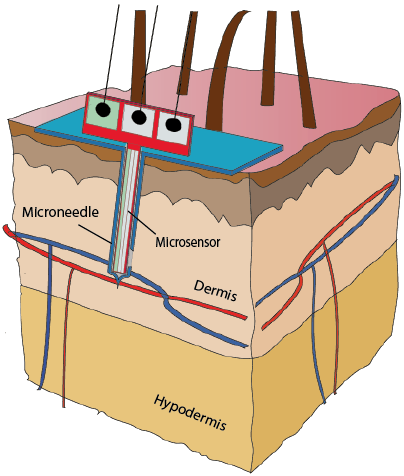
Federico Ribet is a Researcher at KTH Royal Institute of Technology's Department of Micro and Nanosystems. He holds an M.Sc. in Nanotechnologies for ICTs from EPFL (Switzerland), INPG (France), and Politecnico di Torino (Italy). Currently a post-doctoral researcher, his work focuses on biomedical microsystems, specifically developing minimally invasive biosensors and microneedle-based technologies for continuous glucose monitoring and interstitial fluid sampling. Ribet is an inventor on multiple patents and co-founder of medtech startups Samplimy Medical AB and Sensible Healthcare Systems BV. His research spans microfabrication of bio-compatible materials, electrowetting-on-dielectric (EWOD) actuation, and magnetic microchip assembly. Key projects include the Gluco-Touch system for painless CGM and microneedle drug delivery patches. Ribet's work emphasizes improving diabetes management through non-invasive monitoring and enhancing point-of-care diagnostics via wearable biosensors. Ribet's lab collaborations include Prof. Niclas Roxhed and Prof. Göran Stemme. His innovations bridge clinical needs with engineering solutions, addressing challenges in sensor miniaturization, biocompatibility, and real-time diagnostic accuracy.
Prof. Viacheslav Krylov is a faculty member at the School of Mechanical Engineering , Tel Aviv University, where he has served as Professor and Head of the School since 2002. His career spans academic research, industrial R&D, and leadership roles in computational mechanics societies. PhD in Applied Mechanics (1993), State Marine Technical University of St. Petersburg, Russia Postdoctoral Fellow, Université Pierre et Marie Curie (Paris VI) and Tel Aviv University His research focuses on design and modeling of micro/nanoelectromechanical systems (MEMS/NEMS) , emphasizing dynamic stability, electrostatic actuation, and sensor development. Key contributions include bistable microstructures, parametric resonance stabilization, and polymeric MEMS characterization tools. Recent publications highlight applications in self-calibrating accelerometers , thermoplastic nanoimprint lithography , and fluid-structure interaction in microsystems . Collaborations with institutions like Cornell University and NIST underscore his international academic network. Recipient of the Mary Shepard B. Upson Visiting Professorship (2015) Secretary-Treasurer, Israel Association for Computational Methods in Mechanics (IACMM) Prof. Krylov leads the Microsystems Design and Characterization Laboratory at TAU, integrating theoretical and applied mechanics to advance MEMS/NEMS technologies.
Isabelle Favre is a researcher at IMS Bordeaux - Integration: from Material to Systems laboratory , affiliated with Université de Bordeaux . Her work focuses on Microelectronics , Semiconductor Devices , and Reliability Engineering , particularly in automotive power electronics and thermal management. Key Research Themes : Microelectronics, Semiconductor Reliability, Thermal Analysis, Power Packaging Collaborative Projects : Involvement in hybrid circuits and sensor fabrication initiatives Her recent publications highlight advancements in printed electronics , silver sintering , and thermo-mechanical modeling for automotive applications. She has co-authored multiple conference proceedings and journal articles since 2007. No scientific awards or student advisement details were explicitly mentioned in the available data.
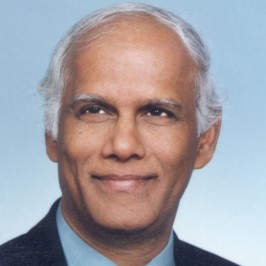
Rao R. Tummala is a Professor with research interests in Microsystems, Systems Packaging, Electronic Materials, Display Technologies, and Magnetic Storage. He earned his Ph.D. from the Indian Institute of Science (IISc) in Bengaluru. Research Interests Microsystems Systems Packaging Electronic Materials Display Technologies Magnetic Storage Education Ph.D., Indian Institute of Science (IISc), Bengaluru
Niclas Solin is an Associate Professor and Docent at Linköping University, affiliated with the Department of Physics, Chemistry and Biology (IFM) within the Faculty of Science and Engineering. He serves as Head of the Electronic and Photonic Materials division and Head of the Biomolecular and Organic Electronics unit. His research bridges materials science, organic chemistry, and applied physics, focusing on sustainable functional materials derived from biopolymers. Research Interests: Solin's work centers on biopolymers, especially protein nanofibrils formed through self-assembly. He explores their use in organic electronics, photonics, energy generation (ionovoltaics), and water purification. By functionalizing proteins—either by leveraging intrinsic redox groups or adding light-emitting molecules—he develops advanced yet low-cost and biodegradable materials. A key focus is valorizing waste-derived proteins into high-value materials, promoting sustainability. Publication Trends: His recent publications (2022–2024) emphasize hybrid protein-based materials for energy applications (ionovoltaics, zinc-ion storage), photonic amyloids, and water-processable bioplastics. These works reflect a strong trend toward sustainable, scalable, and functional biomaterials with applications in green technology and environmental remediation. Scientific Awards: Recipient of a research grant from Formas (2019) for sustainable development projects. Teaching and Grants: Solin is examiner for courses in Condensed Soft Matter Physics and Organic Chemistry, and teaches in Microsystems, Nanobiology, and Materials & Nanotechnology. He has secured competitive funding for research into sustainable materials, including projects on biopolymer-based energy storage and photonics. While specific grant amounts are not detailed beyond the Formas award, his involvement in funded research is evident. Labs and Teams: He leads the Biomolecular and Organic Electronics (EFMBIO) unit within the Electronic and Photonic Materials (EFM) division at IFM. This team focuses on developing organic and biomolecular materials for energy conversion and storage, emphasizing sustainable and scalable fabrication methods. The lab combines chemistry, physics, and engineering to create next-generation eco-friendly electronic and photonic materials.
Tomás Palacios is the Clarence J. LeBel Professor of Electrical Engineering and Computer Science at MIT, directing the Microsystems Technology Laboratories (MTL). His research focuses on advanced semiconductor materials (e.g., GaN, 2D materials) and devices for high-frequency, high-voltage, and energy-efficient electronics. He leads projects in quantum computing, Venus rover microelectronics, and large-area neural networks. Palacios has pioneered innovations like vertical GaN FinFETs and graphene-based biosensors, earning the IEEE George Smith Award twice. Education: BS (Telecommunications Engineering, Technical University of Madrid, 2001), MS/PhD (Electrical Engineering, UC Santa Barbara, 2004/2006). Affiliations: Director of MIT-GaN Energy Initiative, Founding Director of MIT Graphene Center, Associate Director of SUPREME Center. Research emphasizes interdisciplinary approaches combining electrical engineering, materials science, and device physics. Notable contributions include record-breaking GaN transistor performance and first MoS2 circuits. His group also explores bio-inspired sensors and wearable electronics, such as smart gloves for tactile interaction. Palacios advises startups like Vertical Horizons (GaN power devices) and FabuBlox (nanofabrication tools). Awards: PECASE (2012), Intel Researcher Award (2020), IEEE Fellow. Grants & Partnerships: Supported by NSF, DoE, industry collaborations (e.g., IBM, NEMC Hub). Labs include the Palacios Group at MIT, with ongoing projects in quantum devices, Venus electronics, and 6G networks. His work bridges academia and industry, aiming to address energy challenges and next-gen computing needs.
Prof. Hans Zappe is a Full Professor in the Institute of Microsystem Technology at Albert-Ludwigs-Universität Freiburg, Germany. He holds the Gisela-und-Erwin-Sick-Professur für Mikrooptik (Microoptics). His primary affiliation is with the Faculty of Engineering, focusing on advanced optical systems, MEMS, and medical optoelectronics. Areas of Expertise include Optics, Micro-Optics, Optical MEMS, Photonics, and Medical Optics. He leads Research Area B and oversees the IDEASfactory@FIT innovation hub. Current projects include the 'Autonomous Eyeball' initiative exploring light-driven optical systems and V4DA actuators for programmable materials. His research emphasizes liquid crystal-based actuators, adaptive optical systems, and optofluidic devices. Over 150 peer-reviewed articles demonstrate expertise in tunable microlenses, endoscopic imaging probes, and bio-inspired optical systems. Notable collaborations include DFG-funded livMatS projects and high-throughput glass fabrication innovations. Dr. Zappe advises current PhD candidates Sruthy Dinesh and Shalini Soman, with former student Dr. Jasleen Kaur Lall contributing to liquid crystal actuator research. His work bridges fundamental optics research with practical applications in biomedical devices and smart manufacturing systems. Labs/Teams: IDEASfactory@FIT (innovation lab), livMatS core team, and Advanced Optical Microsystems Group. Active in academic outreach through workshops like Core Lectures and Master Lab programs.