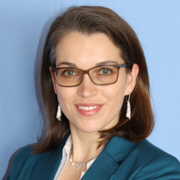
Dr. Dorothea Helmer is a Researcher and Group Leader at the Department of Microsystems Engineering (IMTEK) at the University of Freiburg. She leads the MatrixPrint project, focusing on high-resolution 3D printing of metals, polymers, and glass. Her affiliations include the NeptunLab and the Freiburg Materials Research Center (FMF). She completed her PhD in organic chemistry and biochemistry at TU Darmstadt (2014) and holds a chemistry degree from Karlsruhe Institute of Technology (2009). Her research expertise spans 3D printing technologies, surface engineering, and novel materials development. Key areas include additive manufacturing of microfluidic devices, superhydrophobic coatings, and transparent glass fabrication. Notable achievements include pioneering work on fused silica glass printing and developing photonic-based manufacturing techniques. Her publications (15+ recent papers) focus on advanced materials for 3D printing, surface functionalization, and microfluidic applications. Awards include the Lothar Späth Award (2021) and multiple startup accolades for Glassomer GmbH. She advises PhD students in topics like lignin-based composites and volumetric printing. Grants include BMBF funding for MatrixPrint and DFG support. Her lab, HelmerLab, innovates in embedded printing, volumetric additive manufacturing, and material synthesis for sustainable applications.
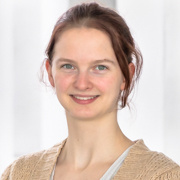
Ravi Kumar Divakar is affiliated with the Department of Microsystems Engineering at the University of Freiburg's Faculty of Engineering. His research focuses on Triboelectric Nanogenerators (TENG) for energy harvesting from high-frequency vibrations, exploring the physics of triboelectricity and its applications in sensors and energy systems. He is involved in projects such as the 'frequency-tunable tribogenerator' and collaborates on initiatives like the IDEASfactory@FIT. His work contributes to understanding charge-transfer processes and non-adiabatic dynamics in energy-harvesting systems. While no specific academic rank is explicitly stated, his active role in research projects suggests a position in applied research or early-career academic engagement. He is supervised by Prof. Dr. Peter Woias in his current research endeavors. Ravi participates in interdisciplinary events such as the livMatS Colloquium series, reflecting his engagement with broader scientific communities. Despite no listed awards or publications here, his contributions align with cutting-edge materials and energy research within the university's framework.
Anna Hoppe is an Agnes Pockels Research Fellow in the Department of Microsystems Engineering at the University of Freiburg. Her project investigates abscission and self-repair mechanisms in biological and artificial materials, focusing on mechanical modeling of branch junctions in Opuntia ficus-indica cacti. Collaborating with botanical gardens, she conducts simulations to identify key parameters influencing plant abscission. Her research aims to inform bio-inspired material design through fracture property analysis of plant geometries.
Dr. John Seymour is an Associate Professor of Neurosurgery at the McGovern School of Medicine, University of Texas Health Science Center (UTHealth), and an Adjunct Associate Professor of Electrical & Computer Engineering at Rice University. His research focuses on developing novel bioelectronic devices for neurological disease treatment, including neural interface systems, stretchable bioelectronics, and optogenetic tools. He holds a Ph.D. in Biomedical Engineering from the University of Michigan and a B.S. in Engineering Physics from The Ohio State University. Education: 2009: Ph.D., Biomedical Engineering, University of Michigan 2004: M.S.E., Biomedical Engineering, University of Michigan 1996: B.S., Engineering Physics, The Ohio State University Research Interests: Neuroengineering, micro-device fabrication, signal processing, and translational neurotechnology. His lab, the Translational Biomimetic Bioelectronics Lab, develops materials and methods to improve neural interfaces for conditions like epilepsy and ALS. Projects include electrode optimization, compliant neural device modeling, and seizure localization. Labs/Teams: Leads the Translational Biomimetic Bioelectronics Lab, collaborating with the Texas Institute for Restorative Neurotechnologies (TIRN) and Rice University’s nanofabrication facilities. The lab integrates engineering, neuroscience, and clinical research for translational outcomes.
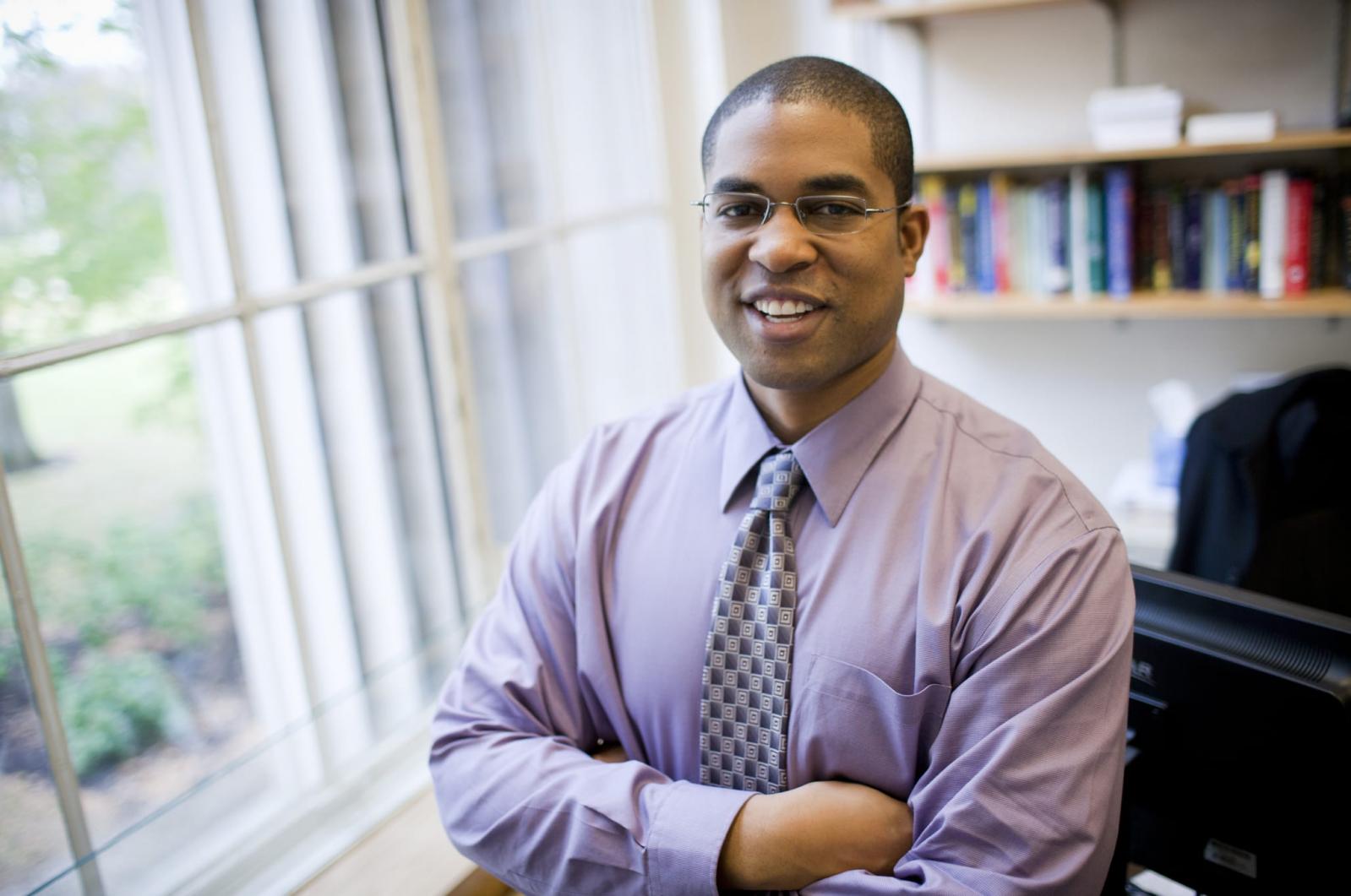
Cullen Buie is an Associate Professor of Mechanical Engineering at the Massachusetts Institute of Technology (MIT) with tenure, working within the School of Engineering. He directs the Laboratory for Energy and Microsystems Innovation (LEMI), which focuses on microscale electric field driven transport phenomena for applications in biotechnology, fluid mechanics, and energy systems. His research bridges mechanical engineering, chemistry, and biology to address challenges ranging from healthcare to biofuels and energy storage. Dr. Buie earned his B.S. in Mechanical Engineering from The Ohio State University (2003), followed by an M.S. (2005) and Ph.D. (2009) from Stanford University. Prior to joining MIT, he was a University of California President's Postdoctoral Fellow at UC Berkeley working with Professor Liwei Lin at the Berkeley Sensors and Actuators Center. His research interests center on exploiting microscale electric field phenomena, particularly in three interconnected areas: electrochemistry, electrokinetics, and microfluidics. His work has significant applications in microbial biotechnology, where electric fields are used to manipulate and assess cell phenotypes, and in energy storage systems, including the development of a membrane-less hydrogen bromine flow battery (HBLFB) that rivals membrane-based systems in performance while potentially reducing costs. Analysis of his recent publications reveals a consistent focus on microfluidic systems for biological applications, particularly bacterial manipulation and transformation. His work spans fundamental fluid dynamics, electrokinetic phenomena, and practical applications in energy storage and microbial engineering, with numerous publications in high-impact journals including Nature Communications, Lab on a Chip, and Physical Review E. NSF CAREER Award (2012) DuPont Young Professor Award (2013) DARPA Young Faculty Award (2013) Stanford Distinguished Alumni Scholar (2013) Presidential Early Career Award for Scientists and Engineers (2016) NIH Director's Transformative Research Award (2017) Dr. Buie has successfully mentored several graduate students to completion of their degrees, including Ph.D. graduates Qianru Wang and Andrew Jones, and M.S. graduate Rameech McCormack. His research has received substantial funding, including an NIH Director's Transformative Research Award. He has also co-founded Kytopen Corp., a company commercializing technology from LEMI, which received startup funding from The Engine. His teaching portfolio includes core mechanical engineering courses such as Thermodynamics, Advanced Fluid Mechanics, and Thermal-Fluids Engineering. At LEMI, Dr. Buie leads a research group investigating the intersections of electrochemistry, electrokinetics, and microfluidics engineering for 21st Century energy systems. The lab has developed innovative technologies including microfluidic devices for bacterial transformation, membraneless flow batteries, and methods for aerosol generation and analysis. The lab's work has led to both academic publications and commercial applications through the spinout company Kytopen.
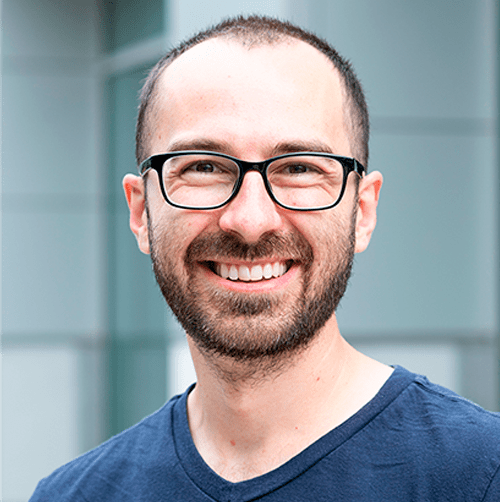
Nate Cira is an Assistant Professor at the Meinig School of Biomedical Engineering within the College of Engineering at Cornell University. His research focuses on developing microfluidic technologies to study complex biological systems, including microbial communities, genetic interactions, and cellular processes. He leads the Cira Lab, which emphasizes high-throughput experimentation to address emergent properties in biological systems. Education B.S. in Biomedical Engineering, Microbiology, Biochemistry, Biology, and Molecular Biology from the University of Wisconsin - Madison (2011) M.S. and Ph.D. in Bioengineering from Stanford University (2013 and 2017) Research Interests His work spans Microfluidics and Microsystems , Systems and Synthetic Biology , and Biomedical Imaging . He designs tools to study microbial interactions, drug resistance, and cellular behavior at unprecedented scales. Recent projects include engineering droplet-based systems for studying bacterial evolution and developing automated platforms for high-throughput screening. Awards and Honors Rowland Fellow (2017-2022) Siebel Scholar (2015-2016) NSF Graduate Research Fellowship (2011-2014) APS DFD Gallery of Fluid Motion Winner (2013) Advising and Grants Dr. Cira advises students in Biomedical Engineering and Microbiology graduate programs. His lab has secured funding from sources like the NSF and private foundations to advance microfluidic technologies for biomedical applications. Labs and Teams The Cira Lab collaborates with interdisciplinary teams to bridge engineering and biology, with a focus on translational research for healthcare and environmental challenges.
Professor Yuze Alice Sun serves in the Department of Electrical Engineering at the University of Texas at Arlington's College of Engineering since September 2024, having progressed from Assistant Professor (2013-2019) to Associate Professor (2019-2024). She concurrently holds the position of Associate Chair since July 2024. Her educational background includes a PhD in Biomedical Engineering from the University of Michigan (2011), MS in Electrical Engineering from Nanjing University (2007), and dual BS degrees in Electrical Engineering (Huazhong University) and Biological Sciences (Wuhan University) (2004). Dr. Sun's research centers on optofluidic biosensing platforms , with primary interests spanning optofluidics, nanophotonics, and soft matter photonics. Her work develops Micro-gas chromatography systems with integrated photonic sensors Optofluidic droplet lasers for single-cell analysis Chemical vapor sensors using photonic crystal slabs Non-invasive lung cancer screening via breath analysis Her publication trend shows increasing focus on portable, integrated sensing platforms since 2020. Scientific honors include: NSF CAREER Award (2016) CPRIT High-Impact Research Award (2017) UTA Outstanding Research Achievement Award (2024) Ralph E. Powe Junior Faculty Enhancement Award (2015) She directs multiple federally funded projects including an NSF CAREER grant ($500,000) developing optofluidic lasers for biosensing, and leads a $1.8M Department of Energy consortium. Her laboratory develops integrated photonic micro-gas chromatography systems and optofluidic biolasers for medical diagnostics, with recent work focusing on wearable health monitoring devices.
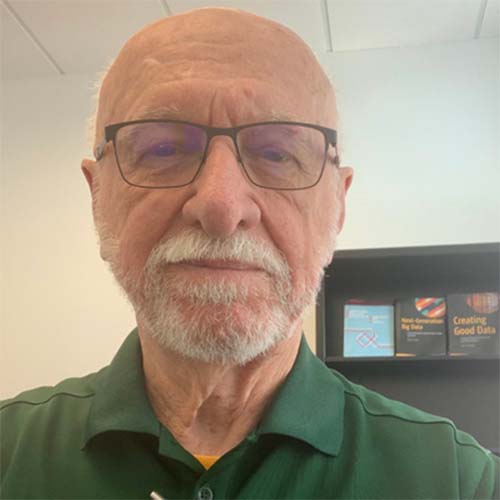
Harry Foxwell is an Associate Professor in Information Sciences and Technology at George Mason University (Research Hall, Fairfax campus). He teaches cloud computing, data analytics, and AI courses, drawing from prior industry experience at Oracle and Sun Microsystems. Military service includes Vietnam deployment (1968-1969) with 1st Infantry Division, earning Air Medal and Bronze Star. Education includes a PhD in Information Technology (GMU, 2003), MS in Applied Statistics (Villanova), and BA in Mathematics (Franklin and Marshall College). Research interests span: Cloud computing infrastructure Data science pedagogy AI/ML applications Cybersecurity frameworks Recent publications focus on metacognition in STEM education, data quality management, and IoT security. Authored technical books including Creating Good Data (2020) and Oracle Solaris Administration Handbook . No funded research projects, student advising, or labs are detailed in sources.
Dr. Ishfaq Ahmad is a Full Professor of Computer Science and Engineering at The University of Texas at Arlington (UTA) since 2002, with prior roles as Associate Professor and Director of the Multimedia Technology Research Center at the Hong Kong University of Science and Technology. He leads the Institute of Research in Security (IRIS) at UTA and has extensive industry collaboration, overseeing over $15M in research funding. His research focuses on sustainable computing, AI-driven assistive technologies, IoT, and high-performance computing. Dr. Ahmad has authored over 290 publications and holds prestigious awards including IEEE Fellow and IDES Distinguished Life Fellow. Education: PhD in Computer Science (Syracuse University, 1992), M.S. in Computer Engineering (Syracuse University, 1987), B.S. in Electrical Engineering (University of Engineering and Technology, Lahore, 1985). Research Interests: Green Computing, Exascale Systems, Assistive Technologies, Smart Grids, and STEM Education. His work emphasizes sustainability and interdisciplinary innovation, with contributions to video compression, parallel algorithms, and technology transfer. Awards & Grants: Over 40 international awards, including Google Scholar top rankings in multiple fields. Key grants include NSF-funded projects on assistive technologies and sustainable computing, along with industry partnerships like those with Adobe and Sun Microsystems. Labs & Leadership: Founded Journal of Sustainable Computing and the International Green and Sustainable Computing (IGSC) conference. Serves as Editor-in-Chief of Springer’s Discover Internet-of-Things and on editorial boards of IEEE journals.
Jesper Henri Hattel is a Professor and Head of Section in the Department of Civil and Mechanical Engineering at the Technical University of Denmark (DTU). His research focuses on numerical modelling of manufacturing processes such as casting, 3D printing, moulding, and welding, involving metallic and polymer materials. He specializes in multi-physics modelling, encompassing Computational Fluid Dynamics (CFD), heat transfer, materials science, and solid mechanics. His work contributes to UN Sustainable Development Goals, particularly in advancing sustainable manufacturing technologies. Research interests include process optimization for additive manufacturing, residual stress analysis, and material behavior under extreme conditions. He has pioneered hybrid AI and physics-guided approaches to enhance process predictability in polymer-based additive manufacturing. Recent work emphasizes accelerated parameter selection for laser-based processes and thermal-mechanical analysis of microsystems. Awards: IIW Kenneth Easterling Best Paper Award (2018) Education: MSc, PhD, Dr. Techn. Supervises PhD projects on topics like topology optimization for heat pipes, laser welding for battery packs, and multi-scale simulation of metal additive manufacturing. Active in collaborative research networks, with projects funded through DTU and industry partnerships.
Ljubomir M. Vracar is an Assistant Professor at the Faculty of Electronic Engineering, University of Niš, specializing in Microelectronics and Microsystems. He received his PhD (2014), MSc (2009), and BSc (1999) in Microelectronics from the same institution. His research focuses on sensor technology, energy harvesting, and advanced electronic systems. Education: PhD in Microelectronics, Faculty of Electronic Engineering, University of Niš (2014) MSc in Microelectronics, Faculty of Electronic Engineering, University of Niš (2009) BSc in Electronic Components, Faculty of Electronic Engineering, University of Niš (1999) Research interests include developing capacitive sensors, thermoelectric energy systems, and photovoltaic solutions. He holds four patents, including innovations in pressure sensing keyboards and thermoelectric self-powered devices. His publications span topics like vibration analysis in industrial equipment and NBTI measurement techniques for power transistors. Current projects: Engaged in 1 national research project. Active in the Microelectronics research group at the Faculty. Contact: ljubomir.vracar@elfak.ni.ac.rs | Faculty Profile
Nisha Iyer is an Assistant Professor in the Department of Biomedical Engineering at Tufts University . She also serves as a Graduate Biomedical Sciences Member in the Neuroscience Program and previously held a Visiting Assistant Professor appointment at Tufts. B.S. in Biomedical Engineering from Johns Hopkins University (2011) M.S. and Ph.D. in Biomedical Engineering from Washington University in St. Louis (2013, 2016) Her research focuses on stem cells , neural tissue engineering , and organoid-based disease modeling , particularly for spinal cord injury and neurodegenerative disorders . She develops region-specific human CNS models and biomanufacturing techniques to advance regenerative medicine. Recent publications demonstrate technical innovation in 3D microelectrode arrays , neural rosette engineering , and transcriptomic analysis of regional neuronal diversity . Her work has received attention through 28 patents and media coverage in outlets like WBUR Radio and Tufts Now. Burroughs Young Investigator Award (2022) Best Poster Award - Gordon Research Conference (2022) Best Poster Award - Wisconsin Stem Cell Symposium (2021) She has secured significant grants including an NIH-NINDS R21 for hybrid neural differentiation methods and a NIH HEAL Initiative DP2 Award for novel pain research tools . Her lab actively trains undergraduate , graduate , and MD/PhD students in stem cell engineering and regenerative approaches.
Dr. Yi Wang is Professor of Mechanical Engineering at University of South Carolina's College of Engineering and Computing. He directs the Integrated Multiphysics & Systems Engineering Laboratory (iMSEL) researching computational and data-enabled science for multiphysics systems including microfluidics, additive manufacturing, and autonomous systems. Research develops physics-based adaptive modeling, reduced order techniques, and data-driven surrogate models for complex engineering systems. Applications include microfluidic device optimization, aeroelastic reduced order models, robotic path planning, and structural health monitoring. Honors include Breakthrough Stars Award, Research Progress Award, and multiple Dean's Excellence Awards. He serves as Associate Editor for Discover Applied Sciences and editorial board member for multiple journals. Current NSF and DoD-funded projects focus on aeroservoelastic reduced order modeling and autonomous systems perception. Research group includes 5 postdoctoral fellows and 12 graduate students working on multidisciplinary computational projects. Teaching includes Flight Dynamics and Control, Engineering Analysis, and senior design courses.
Dr. Ryan Toomey is a Professor in the Department of Chemical, Biological and Materials Engineering at the University of South Florida. His research focuses on polymers, gels, and soft materials that respond to external stimuli such as electric, magnetic, and thermal cues. Postdoctoral: Institute of Microsystems Technology (IMTEK), Albert Ludwig University of Freiburg PhD: Chemical Engineering, University of Minnesota BS: Chemical Engineering, UC Berkeley Research interests emphasize the physics of responsive materials, including hydrogel textures for cell printing, ultra-thin ( The 15 most recent publications span topics like dynamic surface engineering for tissue modules, ellipsometry analysis of nanoscale coatings, and plant-derived dispersants for oil spills. Key themes include stimuli-responsive biomaterials, advanced thin film characterization, and biodegradable polymers with environmental and medical applications. 2010 USF Excellence in Teaching Award 2008 USF Outstanding Achievement in Research Award 2007 NSF CAREER Award 2005 Dreyfus New Faculty Award As a member of the Advanced Materials research cluster, Toomey's lab develops adaptive materials for real-world challenges, from cancer drug delivery systems to eco-friendly water cleanup solutions using cactus mucilage.
Eiichiro Yamaguchi is a Research Assistant Professor at the Department of Biomedical Engineering, Tulane University, affiliated with the School of Science & Engineering. His research focuses on developing optical diagnostics methods such as PIV and LIF for microscale flow systems and advancing micro-fabrication techniques. He holds a Ph.D. from the University of Illinois at Urbana-Champaign (2005). Office Locations: Uptown (538 Lindy Boggs Center) and Downtown (414 J. Bennett Johnston Building) His work integrates engineering principles with biomedical applications, emphasizing innovation in diagnostic tools and microsystem technologies. Despite no listed articles or awards in the provided text, his expertise aligns with cutting-edge methodologies in fluid dynamics and microscale engineering.