Thomas Winkler is an Associate Professor at the Division of Micro and Nanosystems, KTH Royal Institute of Technology, Sweden, and collaborates with TU Braunschweig, Germany. His research focuses on solving life science challenges using microsystems tools, particularly in neuropsychiatric disorders like schizophrenia. He develops organ-on-chip models, engineered microfluidic platforms, and biosensors for point-of-care diagnostics. Winkler leads an interdisciplinary ERC-funded team addressing metabolic coupling in neurovascular units and oxidative stress biomarkers. Key achievements include the ERC Starting Grant (2023) and work on electrochemical sensors for clozapine monitoring. He teaches courses such as Microsystem Technology (EK2350) and supervises PhD and postdoctoral researchers. Current projects include machine learning-guided robotic organoid maturation and electrochemical technology development for the CHIPzophrenia initiative. His lab actively seeks talent through open positions in Stockholm and Braunschweig. Scientific awards include the ERC Starting Grant and Marie Skłodowska-Curie Actions Fellowship. Research spans sensor development, microfabrication, and biomaterials, with a focus on translating lab technologies to clinical applications. Collaborations bridge engineering and life sciences, emphasizing personalized mental healthcare solutions.
Klas Hjort is a Professor of Materials Science at Uppsala University's Ångström Laboratory , specializing in Microsystems Technology . He leads the microsystems technology program and has pioneered research in heterogeneous microsystems on stainless steel, flexible foils, and elastic substrates for biomedical applications and wireless sensor/actuator systems . Key projects: SSF robotic textiles , PERSIMMON smart patches Research themes: Microfluidic actuation , Liquid metal patterning , Stretchable electronics His recent publications focus on soft robotics , smart patches , and high-pressure microfluidic systems , with keywords spanning Microfluidics , Biomedical Engineering , and Stretchable Electronics . He collaborates extensively in robotic textiles , microvalve design , and liquid metal composites . Contact: klas.hjort@angstrom.uu.se
Joachim Oberhammer is a Professor in Microwave and THz Microsystems at KTH Royal Institute of Technology in Stockholm, Sweden. He leads research in radio-frequency/microwave/terahertz micro-electromechanical systems (MEMS) and has held academic roles since 2005. His work includes pioneering advancements in THz communication, sub-THz radar concepts, and MEMS-based components. Oberhammer has been awarded the 2023 Young Engineer Award by the European Microwave Association and holds multiple grants, including an ERC Consolidator Grant (2013) and SSF framework grants (2014–2025). He has authored over 200 peer-reviewed publications and holds four patents in MEMS and THz technology. Education: M.Sc. in Electrical Engineering (Graz University of Technology, 2000), Ph.D. in Microwave Engineering (KTH, 2004). Postdoctoral research at Nanyang Technological University (2004) and Kyoto University (2008). Guest professorships at Universidad Carlos III de Madrid (2019–2020) and NASA-JPL (2014). Research focuses on MEMS fabrication, THz systems integration, and radar technologies. Key projects include the EU-funded M3TERA and Car2TERA projects, and leadership in SSF framework grants for electronics research. He coordinates the EU RIA projects TeraMeasure and TESLA, advancing terahertz applications. Teaching responsibilities include MSc and PhD courses in MEMS engineering, radar systems, and integrated circuits. His lab develops high-performance THz components, including waveguide switches, antennas, and filters, with applications in communication, sensing, and aerospace.
Johan Liu is a Full Professor in Electronics Production at Chalmers University of Technology, Sweden, and leads the Electronics Materials and Systems Laboratory within the Department of Microtechnology and Nanoscience. He is a member of the Royal Swedish Academy of Engineering Sciences and an IEEE Fellow, with over 500 publications and 75 patents in nanoelectronics and thermal management. Education: Master's and Ph.D. in Materials Science from the Royal Institute of Technology (KTH), Sweden His research focuses on graphene-based thermal interface materials, carbon nanotubes for 3D integration, and advanced packaging solutions. Recent work includes laser-induced graphene films, nano-soldering techniques, and biomedical nanoscaffolds. His publications span high-impact journals like Nature Communications , Advanced Materials , and IEEE Transactions , with recent trends emphasizing thermal conductivity enhancement, composite materials, and nanofluids. Johan has received prestigious awards including the IEEE Exceptional Technical Achievement Award and IEEE CPMT Best Paper Award. He has secured funding from the National Science Foundation (NSF), Swedish Board for Strategic Research (SSF), Vinnova, and EU Horizon 2020 programs. His lab specializes in scalable graphene synthesis, CNT array engineering, and reliability testing of nanomaterials in electronics.
Per Augustsson is an Associate Professor and Senior Lecturer at Lund University's Division for Biomedical Engineering (Faculty of Engineering, LTH). He leads the Acoustofluidics group and serves as Principal Investigator at NanoLund: Centre for Nanoscience. He is affiliated with LTH Profile Areas in Engineering Health, Nanoscience, Photon Science, and LU's Light and Materials initiative. His research focuses on acoustofluidic technologies for biomedical applications, including ultrasound-driven cell/nanoparticle separation, with contributions to UN Sustainable Development Goals. He has secured grants from the Swedish Research Council and Horizon Europe. Research Interests: Acoustofluidics : Designing devices that use ultrasonic waves to manipulate microscopic objects (e.g., blood cells, nanoparticles) in fluids. Microfluidics : Developing lab-on-a-chip systems for biomedical diagnostics. Thermoacoustic Phenomena : Investigating heat-induced fluid motion for precision control in microsystems. Recent Work Trends: Recent publications (2024–2025) highlight advancements in high-energy acoustofluidic devices, label-free cell separation techniques, and real-time acoustic streaming analysis. His work bridges physics and engineering to address challenges in precision medicine and nanotechnology. Awards: Ingvar Carlsson Award (2017) The Phabian Award (2013) Lund University Faculty of Engineering PhD Thesis of the Year (2011) Grants & Projects: - Microscale Thermoacoustic Streaming (Swedish Research Council, 2025–2030) - BLOODFLOW: Acoustic Whole Blood Imaging (Horizon Europe, 2024–2026) - Single-Cell Mechanical Fingerprint (2024–2025 grant) Infrastructure: Manages Micro Particle Imaging Velocimetry (µPIV) and Confocal Microscopy facilities for fluid dynamics analysis.
Niclas Roxhed is a Professor at KTH Royal Institute of Technology, leading the Biomedical Microsystems team in the Division of Micro and Nanosystems. He holds affiliations with MIT's Koch Institute and directs MedTechLabs, a KTH-Karolinska Institutet-Region Stockholm collaboration. His research focuses on medical diagnostics sensors, MEMS-based drug delivery, and sampling systems. Roxhed has founded seven companies, authored over 150 papers, and holds 40+ patents. Education: M.Sc. (2003) and Ph.D. (2007) in Microsystem Technology from KTH. He teaches courses in Microsystem Technology and supervises degree projects in Electrical Engineering and Engineering Physics. Research Interests: Develops wearable and minimally invasive medical devices, including microneedle patches, aerosol drug delivery systems, and lab-on-a-chip technologies. His work spans environmental monitoring (plant sap analysis) to endovascular and neural implant technologies. Key Contributions: Pioneered dust-sized MEMS spray chips for lung drug delivery, self-sealing inhaler nozzles, and home-sampled dried blood spot diagnostics. His labs emphasize translational research, bridging microengineering with clinical applications. Grants & Teams: Leads MedTechLabs, a multidisciplinary center advancing medical technology. His teams collaborate internationally, contributing to IEEE MEMS conferences and editorial roles in journals like the IEEE Journal of MicroElectroMechanical Systems.
Shayan Mehraeen serves as an Assistant Professor within the Department of Physics, Chemistry and Biology (IFM) at Linköping University, actively contributing to the Sensor and Actuator Systems (SAS) research group and Bionics and Transduction Science unit. His work addresses the critical need for wearable assistive technologies in aging populations through innovative exoskeleton development. His research focuses on electroactive polymer-based textile actuators that combine flexibility, lightweight construction, and silent operation. By integrating novel textile designs with polymer science, he develops wearable systems capable of active body movement assistance, with applications spanning medical rehabilitation and human-machine haptic interfaces. This interdisciplinary approach bridges material science, biomechanics, and assistive technology engineering. Analysis of his 2025 publications reveals concentrated advancements in conducting polymer actuators, particularly PEDOT-based systems. Key innovations include optimizing double-coiled yarn architectures, evaluating anisotropic fabric impacts on 3D-printed components, and pioneering wet-spinning techniques for core-sheath artificial muscles—collectively enhancing performance metrics for real-world wearable robotics. Scientific Awards: No awards documented in source materials Advising and Grants: Student mentorship details and grant funding information not specified in available documentation Labs and Teams: Integral member of the multidisciplinary Sensor and Actuator Systems (SAS) group conducting research from transduction materials to soft robotics, and the Bionics and Transduction Science unit exploring intersections of biology, material science, and microsystem technology.
Maria Tenje is a Professor of Microsystems Engineering at the Department of Materials Science , Uppsala University. Since July 2021, she has served as Director of the Department of Medical Technology. She leads the EMBLA research group , focusing on miniaturized systems for life science applications through advanced micro- and nanofabrication methods integrated into microfluidic platforms. Research Interests : Her work centers on biomedical engineering , microfluidics , organ-on-chip technology , and acoustophoresis . Key areas include droplet-based microfluidics, biomaterial evaluation, and developing cell culture systems with enhanced physiological relevance. Recent publications highlight innovations in 3D acoustic mixing , antibiotic resistance detection , and microfluidic platforms for single-cell respiration . Publications Trends : Her 15 most recent articles (2021-2025) span droplet microfluidics, organ-on-chip systems, and acoustic particle manipulation. These studies explore biomaterial biocompatibility , cellular response modeling , and microscale diagnostic tools , often in collaboration with interdisciplinary teams.
Eva Pålsgård is an Associate Professor in Engineering Physics with a focus on Microsystems Engineering at Uppsala University. She currently serves as a Research Advisor at the University Administration, specifically within the Office for Technology and Natural Sciences, Unit for Research Support. Her work focuses on Horizon Europe initiatives including EIC & EIT RawMaterials, Energy, Biotechnology KIC, with expertise spanning biomaterials, energy systems, and sustainable development. Dr. Pålsgård earned her Doctor of Philosophy in Ion dynamics in insulin-producing cells. Her academic journey includes: Marie Curie Fellow (1998) Postdoctoral fellow and researcher at the University of Oxford (1994-1999) Eva's research spans multiple interdisciplinary fields with a strong focus on materials science and biomedical applications . Her work in biomaterials has led to significant contributions in bone implant technology, particularly with nano-porous alumina coatings that improve osseointegration. She has also conducted important research in energy systems , nuclear engineering , and sustainable development , with specific expertise in electrochemical energy storage and nuclear fission/fusion technologies. Her methodology often involves advanced nuclear microscopy and X-ray microanalysis techniques to study elemental distributions in biological systems. Analysis of Dr. Pålsgård's publication record reveals a clear evolution in her research focus. Early in her career, she concentrated on cellular biology, particularly studying ion dynamics in insulin-producing cells using nuclear microscopy techniques. Over time, her research shifted toward biomaterials and bone implant technology, with numerous publications on nano-porous alumina coatings for medical applications. More recently, her work has expanded into energy systems and sustainable development, reflecting her current role advising on Horizon Europe initiatives in these areas. This progression demonstrates her ability to apply fundamental materials science principles across diverse application domains. Among her notable recognitions: Marie Curie Fellow (1998) As a Research Advisor for Horizon Europe programs, Dr. Pålsgård provides strategic guidance on research funding applications, particularly in the areas of EIC & EIT RawMaterials, Energy, and Biotechnology KIC. Her extensive background in both academic research and industry (including previous positions at VINNOVA, Pharmacia Diagnostics, Q-Med, and Karolinska Institutet) gives her unique insights into translating research into practical applications. She has been involved in numerous collaborative projects bridging academia and industry in the fields of biomaterials, energy systems, and sustainable technologies. Dr. Pålsgård's research has been conducted through collaborations with multiple institutions including the University of Oxford, Karolinska Institutet, and Chalmers University of Technology. Her work on bone implant interfaces involved interdisciplinary teams combining expertise in materials science, orthopedics, and cellular biology. Currently, through her advisory role, she connects researchers across Europe working on sustainable energy solutions, raw materials innovation, and biotechnology applications.
Kristinn B. Gylfason is a Professor in the Division of Micro and Nanosystems at KTH Royal Institute of Technology. His work focuses on nanophotonics, environmental monitoring, and optical communication systems. He leads research on photonic micro- and nanosystems, including gas sensors and energy-efficient photonic circuits. Education: PhD in Electrical Engineering (KTH, 2010), Docent in Micro- and Nanosystems (KTH, 2015), MSc and BSc from the University of Iceland (2003, 2001). Visiting scholar at Ghent University (2013). Research interests include miniaturized optical sensors for greenhouse gas detection and low-energy photonic circuits. Awards: Göran Gustafsson Young Researcher Prize (2011) and a major Young Researcher Grant from the Swedish Research Council. Teaching roles include examiner and course responsible for advanced degree projects in Electrical Engineering and Engineering Physics, as well as courses in Measurement Technology and Microsystem Technology.
Koen Buisman is an affiliated Associate Professor at the Microwave Electronics Laboratory, Department of Microtechnology and Nanoscience at Chalmers University of Technology. He concurrently holds the position of Reader in microwave and mm-wave electronics at the Advanced Technology Institute (ATI), University of Surrey since 2020. He directs the Nonlinear Microwave Measurement and Modeling Laboratories (n3m labs). Prior to Chalmers, he worked at the Delft University of Technology's Delft Institute of Microsystems and Nanoelectronics from 2004 to 2014. His research focuses on microwave and mm-wave systems, power amplifiers, nonlinear distortion analysis, and antenna systems. Key projects include the Chalmers mm-wave MIMO testbed (MATE) and thermal modeling of integrated transmitters. He has contributed to over 48 publications and collaborates on grants funded by VINNOVA and EURAMET, among others. Research interests span RF circuit design, MIMO systems, and millimeter-wave communication. Notable contributions include work on Doherty power amplifiers, over-the-air testbed calibration, and thermal analysis of power amplifiers. His work bridges theoretical models with practical implementations in 5G and mm-wave technologies. Key Projects : MET5G: Metrology for 5G Communications (2015–2018) Millimeter-Wave Backhaul for 5G (2016–2018) MATE MIMO Testbed Development (2016–2018) Labs/Teams : Nonlinear Microwave Measurement and Modeling Laboratories (n3m labs)
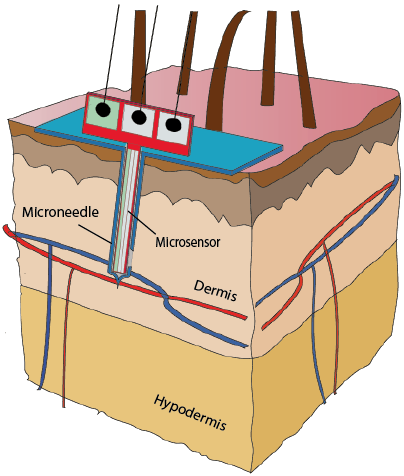
Federico Ribet is a Researcher at KTH Royal Institute of Technology's Department of Micro and Nanosystems. He holds an M.Sc. in Nanotechnologies for ICTs from EPFL (Switzerland), INPG (France), and Politecnico di Torino (Italy). Currently a post-doctoral researcher, his work focuses on biomedical microsystems, specifically developing minimally invasive biosensors and microneedle-based technologies for continuous glucose monitoring and interstitial fluid sampling. Ribet is an inventor on multiple patents and co-founder of medtech startups Samplimy Medical AB and Sensible Healthcare Systems BV. His research spans microfabrication of bio-compatible materials, electrowetting-on-dielectric (EWOD) actuation, and magnetic microchip assembly. Key projects include the Gluco-Touch system for painless CGM and microneedle drug delivery patches. Ribet's work emphasizes improving diabetes management through non-invasive monitoring and enhancing point-of-care diagnostics via wearable biosensors. Ribet's lab collaborations include Prof. Niclas Roxhed and Prof. Göran Stemme. His innovations bridge clinical needs with engineering solutions, addressing challenges in sensor miniaturization, biocompatibility, and real-time diagnostic accuracy.
Syed Umer Abbas Shah is a Researcher at the Department of Micro and Nanosystems, KTH Royal Institute of Technology since May 2016. He holds a PhD in Microsystem Technology from KTH (2014), an MSc in Wireless Engineering from DTU (2007), and a BS in Engineering from GIK Institute (2003). His research focuses on millimeter-wave and terahertz micromachined components, including filters, phase shifters, waveguides, and antennas, emphasizing MEMS reconfigurability for tunability. He has received the IEEE MTT Graduate Fellowship Award (2014) and a best paper award at the 2010 Asia-Pacific Microwave Conference. His teaching includes courses such as 'Build your own Radar System' and 'Hands-On Microelectromechanical Systems Engineering.' Key research areas span MEMS-based high-frequency systems, with publications on sub-THz radar, waveguide components, and antenna design. His work addresses challenges in reconfigurable systems, beam steering, and high-frequency integration.
Per Lundgren is a Professor at the Electronics Material and Systems department of Chalmers University of Technology. His research focuses on energy storage technologies, carbon-based composites, and nanoelectromechanical systems (NEMS), with applications in microtechnology, millimeter-wave engineering, and sustainable materials. His recent work includes advancements in supercapacitor design using lignin-cellulose composites, plasma-treated carbon fibers, and hybrid electrode materials. He has contributed to high-frequency gap waveguide fabrication and waste heat energy harvesting systems. Notable Projects : Artificial Intelligence for Nanoparticle Emission Analysis (2018) Smart-MEMPHIS: Piezoelectric Energy Harvesting with Supercapacitors (2014-2018) CarPolCap: Hybrid CNT/CNF Electroactive Polymers (2012-2015) Lundgren also emphasizes educational innovation, particularly in adaptive teaching methods and interactive learning tools for semiconductor physics courses.
Greger Thornell is a Professor at the Department of Materials Science; Microsystems Technology - MST at Uppsala University, where he conducts cutting-edge research in microsystems engineering. His work spans high-temperature ceramic microcomponents, microthrusters for space propulsion, lab-on-a-chip systems, and biomedical microdevices. He is affiliated with The Ångström Laboratory, a leading center for materials and microtechnology research. University: Uppsala University School: The Ångström Laboratory Department: Department of Materials Science; Microsystems Technology - MST Academic Rank: Professor Email: greger.thornell@angstrom.uu.se Thornell holds a TeknD degree and was recognized as an Excellent Teacher. His academic journey reflects a deep integration of education and research, with a focus on hands-on engineering pedagogy and innovation in microsystem design. His research interests center on Microsystems Engineering , particularly in the development of ceramic microcomponents capable of operating in extreme environments such as high temperatures and space. Key areas include microthrusters for small satellites, high-temperature sensors , microfluidic systems , and lab-on-a-chip platforms. He has pioneered work in optogalvanic spectroscopy using microplasma sources and developed paraffin-based actuators for valve and pump applications. His group also explores wireless pressure sensing in harsh environments and submersible microsystems for environmental monitoring. The 15 most recent publications highlight a consistent trend in advancing robust, high-performance microsystems for aerospace, environmental, and biomedical applications. His work frequently involves the use of ceramic materials like alumina and zirconia, enabling operation under extreme thermal and mechanical stress. There is a strong emphasis on integration , reliability , and miniaturization , with applications ranging from satellite propulsion to underwater exploration and gas sensing. Scientific recognition includes the Excellent Teacher award, reflecting his commitment to engineering education. Excellent Teacher Award Greger Thornell has advised numerous students and researchers, including Erika Åkerfeldt, Zahra Khaji, Peter Sturesson, and Kristoffer Palmer, many of whom have co-authored key publications. His collaborative network spans multiple disciplines, including space systems, materials science, and biomedical engineering. While specific grant details are not listed, his extensive publication record and long-term research themes suggest sustained funding in microsystem technologies. He is a core contributor to projects involving nanosatellites , space propulsion , and miniaturized submersibles , often in collaboration with teams focused on exploration systems like the HOPTER hopping robot. His work is centered at The Ångström Laboratory, where he leads research in ceramic MEMS , microthrusters , and high-temperature microsystems . His team focuses on fabricating and testing integrated devices for space and environmental applications, emphasizing reliability and performance under extreme conditions.