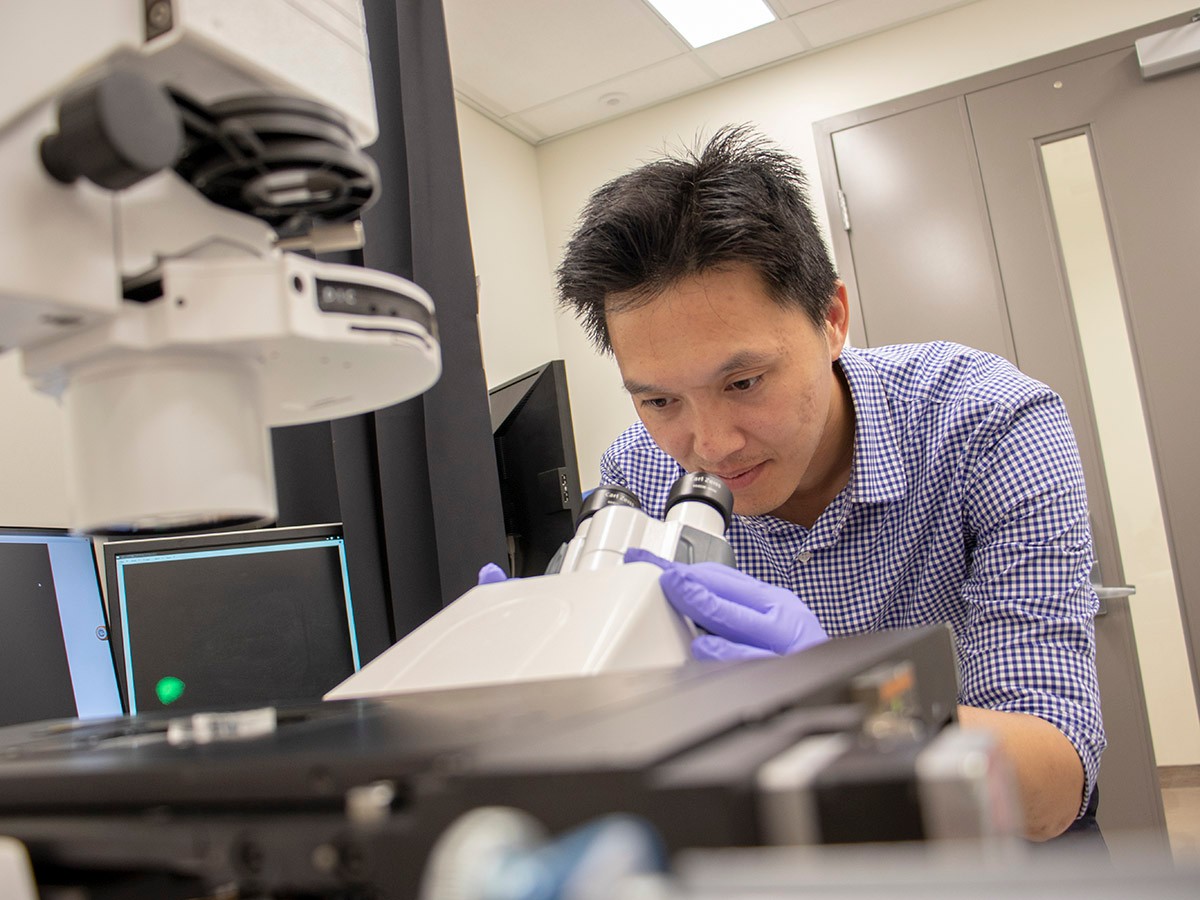
Scott TsaiView profile
Professor
Dr. Scott Tsai is a Professor in the Department of Mechanical, Industrial, and Mechatronics Engineering at Toronto Metropolitan University, where he conducts cutting-edge research in microfluidics and biomedical engineering. He is affiliated with the Laboratory of Fields, Flows, and Interfaces (LoFFI) and the Institute for Biomedical Engineering Science and Technology (iBEST), a joint initiative with St. Michael’s Hospital. PhD, Harvard University (2012) SM, Harvard University (2009) BASc, University of Toronto (2007) Dr. Tsai's research focuses on microfluidics , lab-on-a-chip systems , and biomedical applications such as drug delivery and diagnostics. His work explores the physics of microbubbles and droplet formation, aiming to enhance ultrasound imaging and targeted therapies. He develops novel microfluidic platforms for cell encapsulation, non-spherical particle generation, and label-free analysis. His recent publications highlight advancements in microbubble shrinking, water-in-water emulsions, and electrospray techniques. These works span disciplines including biomedical engineering, soft matter physics, and microsystem design, emphasizing precision control at micro- and nanoscales. Dr. Tsai has received several prestigious awards: United States Fulbright Visiting Research Chair Award (2018) Ryerson University Early Research Career Excellence Award (2017) Government of Ontario Early Researcher Award (2016) Canadian Society for Mechanical Engineering I.W. Smith Award (2015) He is actively involved in mentoring students and securing research grants. His lab, LoFFI, fosters interdisciplinary collaboration between engineers, physicists, and medical researchers. Dr. Tsai is also a member of several professional societies including BMES, PEO, CSME, APS, and ASME, reflecting his broad impact across engineering and physical sciences. The Laboratory of Fields, Flows, and Interfaces (LoFFI) serves as the hub for his research, where innovative microfluidic systems are designed and tested for real-world biomedical applications. The lab emphasizes fundamental fluid dynamics and interfacial phenomena to create next-generation diagnostic and therapeutic tools.