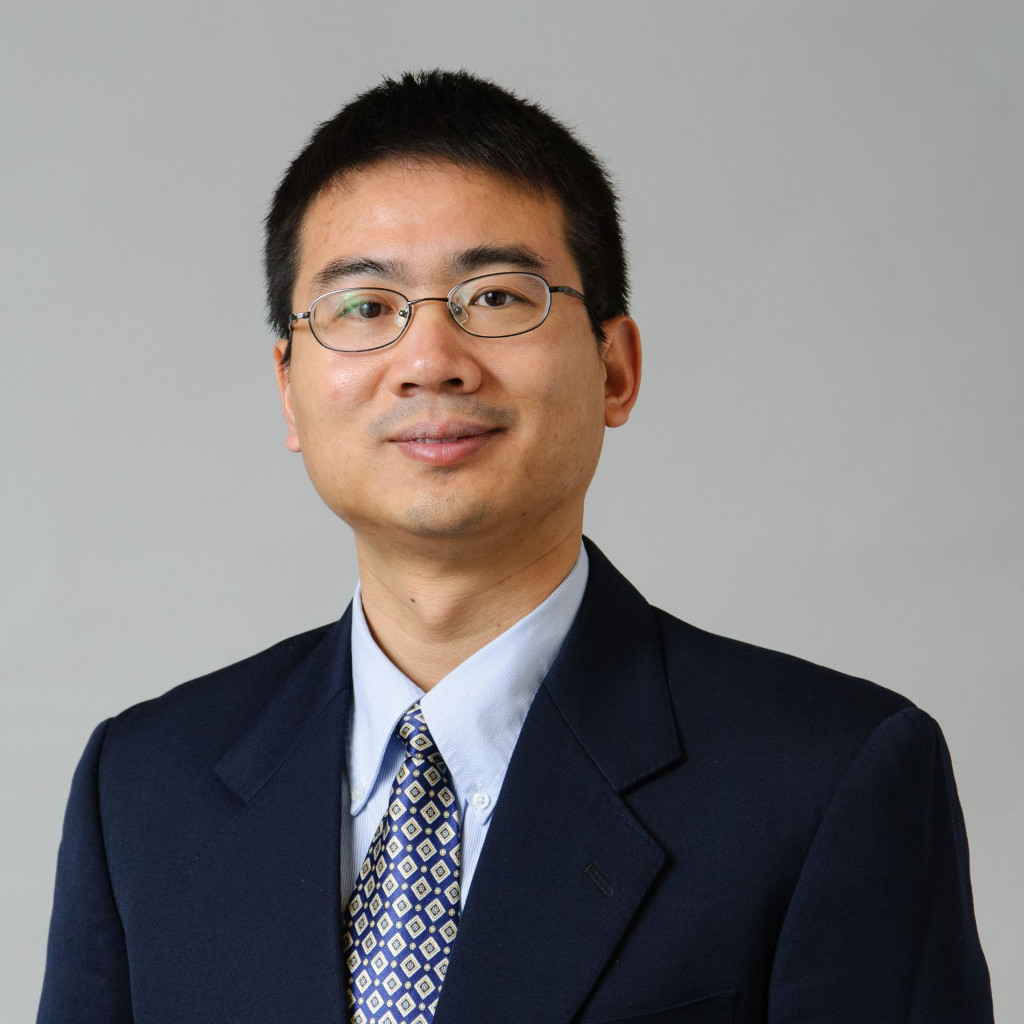
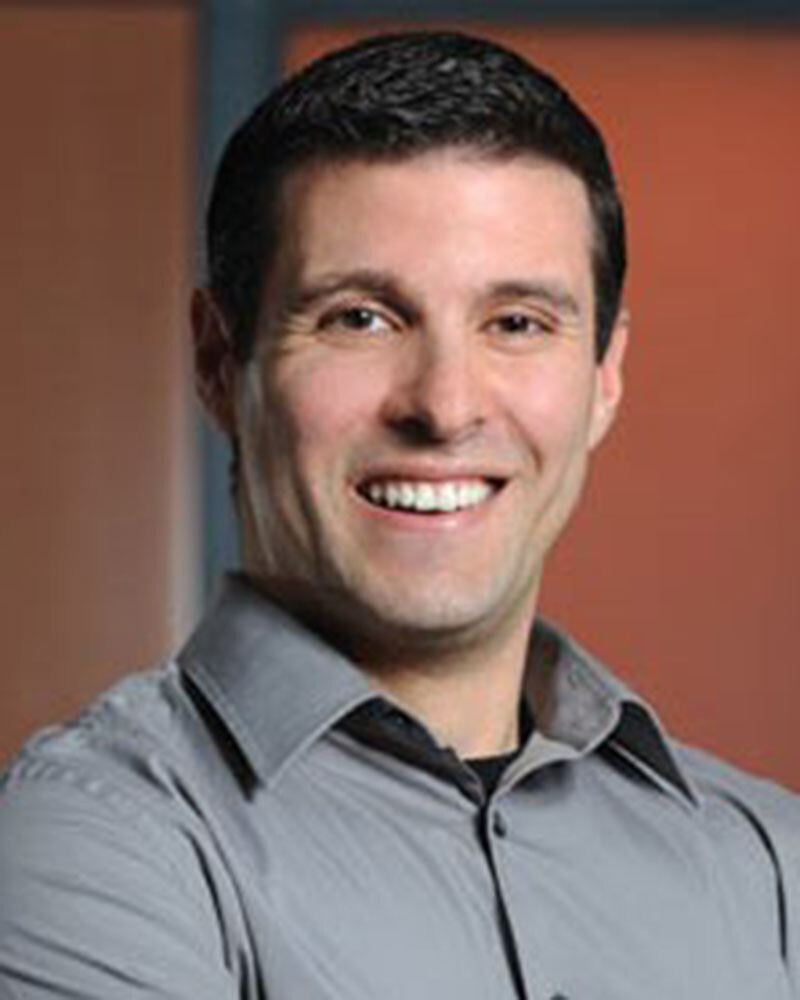
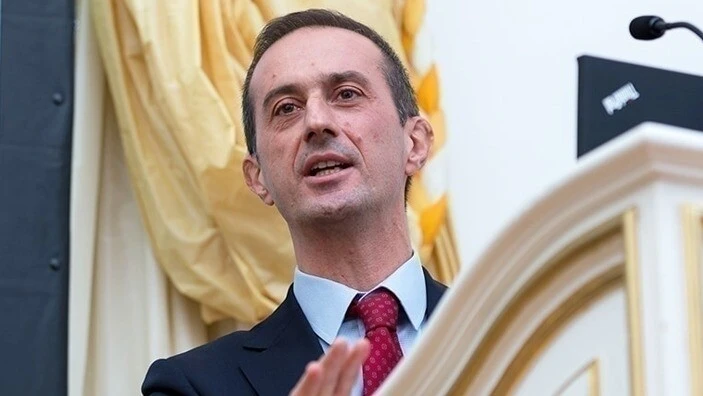
Jixing Li is an Assistant Professor at the Martin Tuchman School of Management, New Jersey Institute of Technology. His teaching includes courses on Financial Markets, Blockchain Technology, and Corporate Finance. Research interests focus on financial systems, market behaviors, and emerging technologies in finance. Key areas include blockchain applications in business, market microstructure, and the economic impact of financial innovations. Awards and grants information is not detailed in available materials. Current teaching responsibilities and institutional service roles are not specified in the source text.
Professor Luyi Sun is a faculty member at the University of Connecticut in the Department of Chemical and Biomolecular Engineering. He earned his Ph.D. from The University of Alabama in 2004 and has held academic positions at Texas State University and Texas A&M University before joining UConn. Current research focuses on multi-functional nanostructured materials for structural, environmental, and energy applications. Specializes in polymer nanocomposites, wearable electronics, soft robotics, and stimuli-responsive materials. Develops green science solutions using biomass-derived materials and novel polymer processing techniques. Recent publications highlight advancements in 4D printing of polymers, MXene-based flexible electronics, and defect engineering in photocatalysts. His work spans nanoscale design for energy storage, flame-retardant coatings, and self-assembled nanosheets for dielectric performance. Awards include Fellow of the National Academy of Inventors, Morand Lambla Award, and Composites Educator of the Year. Professional memberships span American Chemical Society (ACS), American Institute of Chemical Engineers (AIChE), and Society of Plastics Engineers (SPE). 2021 Fellow of the National Academy of Inventors 2020 Morand Lambla Award (Polymer Processing Society) 2018 Composites Educator of the Year (SPE) 2016 Fellow of the Royal Society of Chemistry and SPE His lab develops scalable methods like rotational coating and doctor-blade-assisted casting for thin nanocomposite films. Research includes bio-inspired mechanochromisms, superhydrophilic silica coatings, and enzyme-linked microneedle patches for diabetic wound healing. Current projects explore 4D-printed nerve guidance conduits, dual photo-mechano-responsive materials, and sustainable phase change materials for thermal energy storage.
Dr. Xi Chen is an Assistant Professor in the Department of Integrative Neuroscience at Stony Brook University. He holds a Ph.D. from the University of Texas at Dallas (2019). His research focuses on cognitive aging, Alzheimer’s disease (AD) biomarkers, and the interplay between brain structure/function and cognitive decline. Dr. Chen employs multi-modal neuroimaging techniques (e.g., MRI, PET) to investigate neural mechanisms underlying age-related cognitive changes and AD progression. His work emphasizes early detection of AD pathology and resilience factors in aging populations. Education: Ph.D., University of Texas at Dallas, 2019 Research Interests: Dr. Chen explores individual differences in cognitive aging, AD biomarkers, and successful aging through multi-modal approaches. Key topics include amyloid and tau pathology’s impact on memory and brain function, socioeconomic disparities in cognitive health, and the role of prior knowledge in memory retention. His lab uses advanced imaging techniques to identify early biomarkers for interventions targeting neurodegenerative diseases. Publications Trends: Recent studies highlight the lab’s focus on tau pathology’s role in cognitive decline, functional MRI correlates of memory in aging populations, and the predictive value of biomarkers like plasma p-tau217 for AD progression. These works underscore the lab’s commitment to bridging basic neuroscience and clinical applications for early AD detection. Lab & Collaborations: Dr. Chen leads the Cognitive Health and Neurodegeneration Lab, which integrates quantitative modeling, neuroimaging, and clinical data to advance understanding of aging and AD. Collaborative efforts include studies on metacognition, cortical thickness, and tauopathy’s effects on cognition.
Burhaneddin İzgi serves as an Associate Professor in the Department of Mathematics Engineering at Istanbul Technical University, where he maintains an active research profile with projects extending through 2025. His work bridges theoretical mathematics with computational applications, particularly in game-theoretic problem solving. Research interests center on Game Theory and Stochastic Differential Equations, with specialized focus on matrix norm-based solution methods for zero-sum, fuzzy, and stochastic matrix games. Recent work integrates Artificial Intelligence techniques to address large-scale game complexity, reflecting interdisciplinary innovation across Numerical Analysis and Fuzzy Mathematics. Article trends (2022-2025) reveal consistent advancement of matrix norm methodologies across diverse game types, increasingly incorporating machine learning for computational efficiency. Publications demonstrate strong theoretical grounding in Mathematics while addressing practical applications in finance (e.g., IPO modeling) and decision systems. Scientific recognition includes: 2210 - Yurt İçi Yüksek Lisans Burs Programı (2008) 2211 - Yurt İçi Doktora Burs Programı (2010) Matematik Bölüm Birinciliği (2008) Üniversite İkinciliği ödülü (2008) Research funding includes TUBITAK-supported projects such as 'Stokastik Oyunlar İçin Matris Norm Tabanli Yeni Çözüm Yöntemleri Ve Yapay Zeka Uygulamalari' (2021-2023) and current grants developing chaos theory approaches for stochastic matrix games (2024-2025), demonstrating sustained external validation of his research program.
Luca Susmel is a Professor of Structural Integrity and Transforming Lives Fellow at Sheffield Hallam University. His expertise spans static, dynamic, and fatigue assessment of engineering materials and structures, with a focus on notched, welded, and 3D-printed components. He has authored over 350 publications, including 165+ peer-reviewed articles and a seminal book on multiaxial fatigue. His research has earned a high h-index and top 2% global scientist recognition. He serves as Editor-in-Chief of Theoretical and Applied Fracture Mechanics and has developed multiaxial fatigue-assessment software. Education and Career: Susmel has held academic roles at institutions including the University of Padova, Trinity College Dublin, and the University of Sheffield. His work bridges theoretical and experimental investigations, validated through systematic experiments. Notable projects include fatigue assessment of cast iron water pipes and hydrogen effects on metallic materials. Research Interests : Multiaxial fatigue, additive manufacturing materials, fracture mechanics, welded joints, notch fatigue, and fatigue life prediction. His methodologies include critical distance theory and advanced stress analysis approaches. Grants and Projects : Led numerous projects funded by EC, trusts, and private companies. Key areas include HyDeploy (hydrogen pipeline safety) and FRAMED (fatigue assessment of welded joints). Awards : Top 2% global scientist (Clarivate Analytics), Transforming Lives Fellow, high h-index recognition.
Tarun Ramadorai is a Professor of Financial Economics at Imperial College London’s Business School. His research focuses on household finance, behavioral economics, real estate, and international finance, with publications in top journals like the American Economic Review and Journal of Finance. He received the Brattle Prize for best corporate finance paper in the Journal of Finance. Education: BA in Mathematics and Economics (Williams College), MPhil in Economics (University of Cambridge), PhD in Business Economics (Harvard University). Prior to Imperial, he spent over a decade at the University of Oxford. Research Interests: Household financial decision-making and market structures Behavioral biases in financial markets Policy implications of real estate taxation and climate regulation FinTech’s impact on financial advice and inclusion Policy Roles: Chairman of India’s Inter-Regulatory Committee on Household Finance Economic Adviser to the European Securities and Markets Authority Co-Chair of the India-UK Financial Partnership’s Fintech workstream Editorial Roles: Executive Editor of the Review of Financial Studies, former Editor/Associate Editor of leading finance journals. He is a Research Fellow at CEPR and Senior Fellow at ABFER/NCAER. Key Contributions: Pioneered the field of International Comparative Household Finance through the Sloan Foundation-funded initiative. Authored influential papers on mortgage markets, tax policy, and algorithmic credit systems.
Paolo Santucci de Magistris is a Professor of Econometrics at the Department of Economics and Finance of Luiss University (Rome) since February 2018 and previously served as Head of the Department from 2021 to 2024. He held roles as Associate Professor and Assistant Professor at Aarhus University (Denmark) from 2013 to 2018, with prior postdoctoral research at the University of Padova and CREATES. His education includes a PhD from the University of Pavia and visiting research at Northwestern University’s Kellogg School of Management. His research focuses on time series econometrics, financial econometrics, and energy economics, with emphasis on volatility modeling, liquidity risk, and climate impacts. Notable contributions include work on liquidity coverage in financial markets, cointegration models, and the interplay between wind energy and CO2 emissions. His publications span top journals like the Journal of Financial Economics and Journal of Econometrics , exploring topics ranging from stochastic volatility to climate policy analysis. Ongoing projects include research on option price dynamics, energy market connectedness, and risk-neutral density fitting via the RNDfittool MATLAB application. Prof. Santucci de Magistris collaborates internationally with institutions like CREATES and has contributed to policy-relevant studies on energy transition and financial stability. His methodological innovations include Bayesian econometric techniques and tools for analyzing financial risks embedded in derivatives markets.
Caglar Oskay is the Cornelius Vanderbilt Professor of Engineering and Chair of the Department of Civil and Environmental Engineering at Vanderbilt University. He is also a Professor of Mechanical Engineering. His research focuses on multiscale computational modeling of material and structural systems under extreme conditions, with expertise in composite materials, failure mechanisms, and computational mechanics. Dr. Oskay earned his Ph.D. in Civil Engineering from Rensselaer Polytechnic Institute (2003) and has held academic roles there before joining Vanderbilt in 2006. He was honored as an ASME Fellow in 2017 and as a Chancellor Faculty Fellow in 2016. Key research areas include multiscale failure modeling, life prediction of heterogeneous materials, and computational methods for composites and multiphysics systems. His work integrates advanced simulation techniques with experimental validation, addressing challenges in infrastructure resilience, additive manufacturing defects, and quantum computing applications in engineering. Education: Ph.D., Civil Engineering, Rensselaer Polytechnic Institute (2003) M.S., Civil Engineering, Rensselaer Polytechnic Institute M.S., Applied Mathematics, Rensselaer Polytechnic Institute B.S., Civil Engineering, Middle East Technical University Recent research highlights include stochastic modeling of geotechnical infrastructure failures, quantum-enhanced finite element methods, and predictive analytics for additive manufacturing defects. He leads interdisciplinary efforts on backward erosion piping in flood protection systems and has secured grants for multiscale modeling of titanium alloys and composites. Awards: ASME Fellow (2017) Chancellor Faculty Fellow (2016) Advising and grants: Dr. Oskay’s grants include NSF-funded studies on backward erosion piping and quantum computing applications. His research group collaborates with industry partners on materials for aerospace and energy sectors, emphasizing computational tools for failure prediction and material design. His work bridges computational mechanics with practical engineering challenges, advancing methods for infrastructure resilience, advanced materials, and sustainable design through multiscale modeling innovations.
Anirban Mondal is an Associate Professor and Director of Graduate Studies at Case Western Reserve University's Department of Mathematics, Applied Mathematics and Statistics, specializing in Bayesian Inference, Markov Chain Monte Carlo Methods, and Uncertainty Quantification. Holding a Ph.D. in Statistics from Texas A&M University, his research spans spatial statistics, inverse problems, and data mining applications across biomedical, materials science, and public health domains. Education: Ph.D. in Statistics, Texas A&M University His recent publications (2022-2024) demonstrate interdisciplinary applications including heart disease prediction via optimized machine learning, additive manufacturing defect analysis, and pandemic transmission modeling. While primarily focused on Bayesian frameworks and computational statistics, his work extends to geomechanics, remote sensing, and environmental risk assessment. Current research explores advanced sampling algorithms, functional data emulation, and multiscale hierarchical modeling for complex systems. Key trends include uncertainty quantification in machine learning systems (2024), Bayesian calibration methods (2023), and pandemic modeling (2022). His work balances methodological innovation with real-world applications in medical diagnostics, materials science, and climate science. Contact: anirban.mondal@case.edu
David L. Goldsby is a Professor and Department Chair in the Department of Earth and Environmental Science at the University of Pennsylvania. His research focuses on mineral and rock physics, particularly the rheological behavior of Earth and planetary materials. He employs experimental geophysics and materials science techniques to study deformation processes at high pressures and temperatures, with an emphasis on grain size-sensitive flow mechanisms in ice and mantle materials. Education: Ph.D. (1997) Geophysics, University of Minnesota; M.S. (1990) Geophysics, Indiana University; B.S. (1987) Geology, Eastern Illinois University. Research Interests: Goldsby investigates grain boundary sliding, cryomaterials (ice and icy satellites), olivine deformation, and phase transformations. His work bridges microscale mechanics (e.g., nanoindentation) and large-scale geophysical phenomena like glacial flow and mantle dynamics. Recent studies explore the role of water, temperature, and grain size on material strength and viscoelasticity, with applications to planetary science and seismic processes. His research trends emphasize interdisciplinary methods, including synchrotron imaging, MCMC modeling, and advanced deformation experiments. Collaborations focus on planetary ice rheology, fault mechanics, and lithospheric strength. He teaches courses in structural geology, glaciology, and geophysics. Labs/Teams: Goldsby Lab at Penn, focused on experimental mineral physics and planetary materials. Affiliations: American Geophysical Union. Grants/Advising: While specific advisees are not listed, Goldsby’s laboratory supports graduate students and postdocs in high-pressure geophysics and cryomaterials research. Ongoing projects include NSF-funded studies on ice deformation mechanisms and mantle rheology.
S. Sarah Zhang is an Assistant Professor at the Alliance Manchester Business School, University of Manchester, where she conducts research at the intersection of finance, technology, and market microstructure. Her academic work spans traditional financial markets analysis and emerging fintech applications, with a particular focus on high-frequency trading systems and data-driven financial services. Dr. Zhang's research interests center on market liquidity, price discovery mechanisms, high-frequency trading dynamics, and the evolving landscape of open banking and data privacy regulations. Her work examines how information flows through modern financial markets and how technological innovations reshape traditional banking services and market structures. Recent research has increasingly focused on the societal implications of financial technology, including racial disparities in mortgage markets and the impact of privacy regulations on banking operations. Her scholarly output shows a clear evolution from traditional market microstructure research toward the intersection of finance and information technology. Early work examined high-frequency trading and price discovery mechanisms, while more recent publications address open banking, API adoption, and data privacy legislation. This trajectory reflects the broader transformation occurring within financial markets as digital technologies reshape traditional banking and trading practices. Dr. Zhang has collaborated with researchers across multiple institutions globally, demonstrating the interdisciplinary nature of her work that bridges finance, economics, and information systems. Her publications in top finance journals like the Journal of Finance and Journal of Banking and Finance indicate the significance and impact of her research within the academic community.
Greta Lindwall is a Lecturer at the Royal Institute of Technology (KTH), specializing in materials science and additive manufacturing. She teaches courses such as Metallic Materials, Powder Metallurgy, and Materials in Design and Product Development. Her roles include examiner, course coordinator, and teacher for several advanced programs. Her research focuses on solidification processes in additive manufacturing, particularly using high-energy X-ray techniques and synchrotron imaging to study material behavior during electron beam and laser powder bed fusion. She has contributed to understanding microstructural evolution in steels, grain refinement mechanisms, and process optimization for materials like tool steels and stainless steel. Her work integrates experimental methods with computational modeling, including CALPHAD-based approaches for phase equilibria and microstructural prediction. Key research areas include real-time tracking of solidification, smoke mechanisms in electron beam processes, and the development of novel alloys for AM applications. Lindwall collaborates with initiatives like the LIGHTer Academy and has published extensively on topics such as phase transformations, material properties under AM conditions, and process monitoring technologies. Her contributions bridge fundamental materials science with advanced manufacturing techniques, aiming to improve material performance and process reliability.
Chanel Fallon is a Lecturer in the Department of Mechanical Engineering at the University of Bath, affiliated with the Centre for Integrated Materials, Processes & Structures (IMPS). Her research focuses on dynamic material behavior and infrastructure protection under extreme conditions. She holds a PhD and MEng from the University of Cambridge. Research interests include dynamic experimental techniques (e.g., gas guns, Split-Hopkinson pressure bars), numerical modeling of extreme loading, blast/impact mitigation for civilian infrastructure, and strain-rate/temperature-dependent material characterization. Recent projects include cryogenic composite testing (EPSRC-funded), GKN Prosperity Partnership in aerospace materials, and blast protection strategies for concrete structures. She collaborates widely on material testing and structural resilience. Advising and Grants: Principal Investigator/Co-Investigator on 4 research projects, including EPSRC grants and industry partnerships. Supervises doctoral students in protective materials and structural dynamics. Labs/Teams: Active in the IMPS Centre, specializing in advanced material testing and computational modeling.
James Roscow is a Senior Lecturer in the Department of Mechanical Engineering at the University of Bath, affiliated with the Centre for Integrated Materials, Processes & Structures (IMPS), IAAPS, and the Institute of Sustainability and Climate Change. His research focuses on developing ferroelectric composites for energy harvesting, sensing, and energy storage, with expertise in material fabrication, property tuning, and numerical modeling. He holds a PhD in Mechanical Engineering from the University of Bath and a BSc in Materials Science from the University of Manchester. Research interests include porous ferroelectric ceramics, piezoelectric and pyroelectric materials, and their applications in renewable energy and sensors. He has led or contributed to 12 projects funded by organizations like EPSRC and Innovate UK, exploring topics such as low-cost transducers, nanofluid cooling for solar panels, and phase transformations in ceramics. Key publications (2021–2025) address piezoelectric energy harvesting, porous material design, and advanced manufacturing techniques. His work aligns with UN SDGs, particularly sustainable energy and innovation. Roscow supervises PhD students in functional ceramics, energy storage, and sensor technologies. Notable collaborations include projects on hydraulic energy harvesters, SONAR transducers, and self-healing materials. He has contributed datasets on piezoelectric composites and energy storage systems, emphasizing reproducibility and applied research.
Lucio Sarno is a Professor of Finance and JM Keynes Fellow in Financial Economics at the University of Cambridge. He holds a MSc and PhD from the University of Liverpool. His primary affiliation is with the Finance subject group at Cambridge Judge Business School, focusing on financial decision-making at institutional and corporate levels. Prof. Sarno's research interests span international finance, currency markets, empirical asset pricing, and the interplay between macroeconomics and financial markets. He has held senior roles in the private sector, including Director of Currency Research at AXA Investment Managers, and has extensive consulting experience with global asset managers, hedge funds, and central banks like the IMF, ECB, Federal Reserve Banks, and Bank of England. He serves on the Senior Advisory Board of Italy's Department of the Treasury and is a Research Fellow at the Centre for Economic Policy Research. His professional experience includes policy advice for institutions such as the World Bank and European Commission.