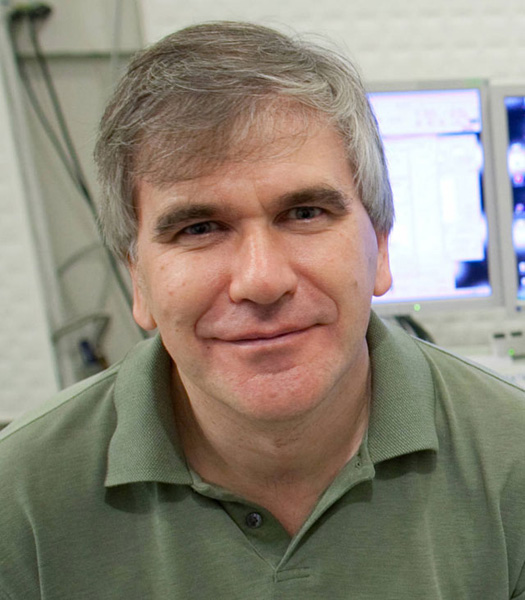
Ramón Jerez Mesa is a Professor at the Polytechnic University of Catalonia (UPC), affiliated with the Department of Mechanical Engineering at the Barcelona School of Engineering (EEBE). His research focuses on surface integrity, additive manufacturing, and vibration-assisted machining processes. He leads the TECNOFAB research group, specializing in advanced manufacturing technologies, and collaborates with the DigiFACT network for digital factory advancements. He holds a Doctorate in Mechanical Engineering, Aeronautics, and Fluids from UPC's École Doctorale Mécanique, Energétique, Génie Civil & Procedés. Education: Doctorate in Mechanical Engineering, Aeronautics, and Fluids Superior Industrial Engineering Degree Research Interests: Surface finishing techniques (e.g., ball burnishing) Materials characterization for 3D printing Tribology and fatigue behavior analysis Industrial applications of additive manufacturing Dr. Jerez has published over 128 works, including studies on ultrasonic vibration-assisted machining and 3D printing materials. He has secured competitive grants like the EU's 'Unite! Learning Network' project and led initiatives like the EEBE 3DDay event to promote STEM education. His awards include UPC's environmental ideas contest recognition. He mentors students in advanced manufacturing and collaborates with industry on projects like medical 3D printing prototyping and sustainable materials development. Key Labs/Teams: TECNOFAB, DigiFACT, PROCOMAME (metal forming processes).
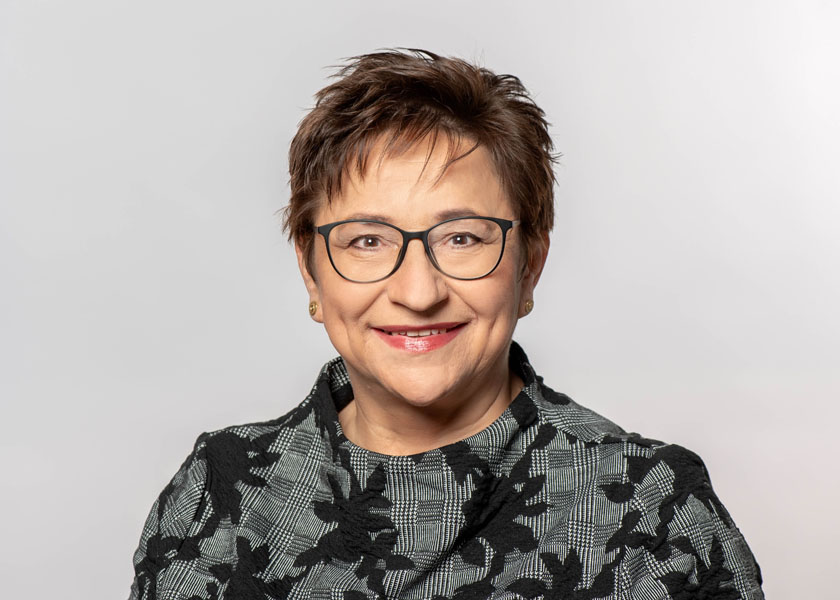
Professor Ingrid Kögel-Knabner is a leading soil scientist at the Technical University of Munich (TUM) within the TUM School of Life Sciences. She holds the Chair of Soil Science and has been a Carl-von-Linde Senior Fellow at the TUM Institute of Advanced Study since 2011. Her career includes professorships at Ruhr University Bochum and the University of Bayreuth. Education: 1978–1983: Studies in Geoecology at the University of Bayreuth 1983: Diploma in Geoecology 1987: PhD in Soil Science under Prof. Dr. W. Zech 1992: Habilitation in Soil Science (Topic: Forest Soil Organic Matter) Research Interests: Her work focuses on soil organic matter dynamics, global carbon cycles, and sustainable land use. She employs advanced techniques like 13C NMR spectroscopy and nanoSIMS to study soil-mineral interactions. Key areas include soil carbon sequestration, rhizosphere functions, and biogeochemical processes in paddy soils. Grants & Projects: Coordinator of EU projects on pollutant transport and biodegradation (1994–2002) DFG Priority Programmes on soil carbon (SPP 1090) and biogeochemical interfaces (SPP 1315) BonaRes Centre for Soil Research (2016–2024) Awards: German Environment Award (2019) Bavarian Maximilian Order (2018) Highly Cited Researcher (Clarivate, 2015–2019) Labs/Teams: Leads interdisciplinary teams in soil science, collaborating with institutions like UFZ Halle, ZALF Müncheberg, and the European Geosciences Union.
Dr. Hua Qian Vivian Ang is a Senior Lecturer in the School of Engineering at RMIT University, with a focus on light alloys, additive manufacturing, and engineering education. She is the founder of EPIC Engineering Comic, an initiative blending visual arts with engineering knowledge to enhance accessibility and engagement. Her research emphasizes magnesium alloys' mechanical properties and deformation behaviors, alongside laser processing and additive manufacturing innovations. Education: PhD in Mechanical and Manufacturing Engineering (RMIT University, 2017), Bachelor of Engineering (RMIT, 2013), Diploma in Digital and Precision Engineering (Nanyang Polytechnic, 2011). Professional memberships include Engineers Australia (Chartered Professional Engineer) and Australasian Association for Engineering Education. Research interests span light alloys, magnesium alloy applications, additive manufacturing processes, and educational initiatives. Awards include the 2024 Australian Awards for University Teaching (Outstanding Contributions), 2024 Emerging Professional Engineer of the Year (Victoria), and 2014 RMIT 3MT Competition (Winner and People's Choice). Teaching roles include coordinating mechanical and materials engineering courses across RMIT's global partners (Singapore, Hong Kong, China) and leading the EPIC educational framework. She initiated the RMIT-Macau University Joint PhD program and holds leadership roles in accreditation and program development. Engagement includes editorial board memberships (e.g., Smart Materials in Manufacturing), industry collaborations, and volunteer efforts for community-driven engineering initiatives. Recognized for contributions to STEM equity and innovative outreach through her comic series.
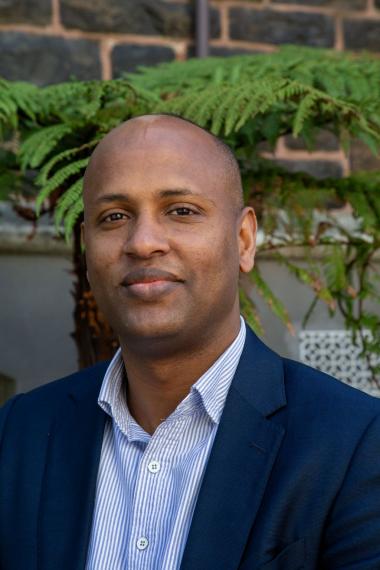
Dr. Biniam Kebede is an Assistant Professor in the Department of Food Science at the University of Guelph. His research focuses on integrating bioprocessing, food analytics, and data science to enhance food functionality and sustainability. He leads the Food Bioprocessing and Data Science Research Group, which explores fermentation, enzymatic treatments, and machine learning for food innovation. Academic History: B.Sc. in Food and Biochemical Technology, Bahir Dar University (Ethiopia) M.Sc. in Food Technology, Ghent University (Belgium) Ph.D. in Bioscience Engineering, KU Leuven (Belgium) Research Interests: Dr. Kebede's work addresses sustainable food systems through: Optimizing fermentation to unlock bioactive compounds from plant-based sources Mitigating off-flavors in pulses via value-chain analysis Engineering food structures to improve nutrient bioaccessibility Developing portable machine learning tools for food authenticity Valuing indigenous food ingredients and traditional processing methods His approach combines multi-omics, imaging, and AI to create predictive models for food innovation. Awards & Affiliations: 2022 IUFoST Young Scientist Award 2014 EFFoST PhD Student of the Year Award Member of IFT, CIFST, and IUFoST Honorary affiliation with University of Otago (New Zealand) Training Philosophy: Dr. Kebede emphasizes personalized mentoring through Individual Development Plans (IDPs), biweekly lab meetings, and interdisciplinary collaboration. Students engage in all research phases, including conference presentations and industry partnerships to build technical and professional skills.
Pasi Peura is a Professor of Metals Technology at Tampere University’s Hervanta Campus, specializing in metallurgy and materials science. His research spans alloy development, additive manufacturing, welding, and heat treatment, with a focus on high-entropy alloys and advanced steels for automotive applications. Education: Doctor of Science (Technology), UMIST and The Victoria University of Manchester (1998); Licentiate of Science (Technology), Mechanical Engineering (1994) Peura’s work emphasizes understanding microstructure-property relationships through novel manufacturing techniques like wire arc additive manufacturing (WAAM) and high-speed laser cladding. His group collaborates extensively with industry, leveraging over 20 years of industrial experience. Recent publications highlight advancements in: Wear-resistant composite coatings Quench and partitioning (Q&P) steel treatments Dynamic softening mechanisms in high-entropy alloys Residual stress analysis in flame-cut steel Scientific Awards: DQ Cold Roll Award for research group (2014) He serves on international committees including the International Deep Drawing Research Group (IDDRG) and contributes to standardization efforts in steel testing.
Christopher J. Kiely is the Harold B. Chambers Senior Professor of Materials Science and Chemical Engineering at Lehigh University (USA) and, since 2017, Professor of Electron Microscopy and Catalysis in the School of Chemistry at Cardiff University (UK). He also serves as Co-Director of the Cardiff Catalysis Institute and Director of the Materials Characterisation Facility at Lehigh. Education Ph.D., Microstructural Physics, Bristol University, 1986 B.Sc. (1st Class Honours), Chemical Physics, Bristol University, 1983 Research Focus Professor Kiely is internationally recognised for applying aberration-corrected analytical electron microscopy (AC-AEM), scanning transmission electron microscopy (STEM) XEDS/EELS spectrum imaging, and electron diffraction to the study of nanoscale features in particulate materials and interfaces. His work spans catalyst design, nanoparticle self-assembly, quantum dots, carbonaceous materials, and heteroepitaxial interfaces, with a strong emphasis on elucidating structure–activity relationships in supported gold, gold-palladium, and other bimetallic nanocatalysts. Scientific Awards & Distinctions Member of Academia Europaea (2019) Fellow of the Microscopy Society of America (2017) Fellow of the Learned Society of Wales (2015) Harold B. Chambers Senior Professorship (2010) Honorary Visiting Professor, Cardiff University (2009–2016) Innovator Award, NanoTECH Briefs (2005) Personal Chair in Materials Chemistry, University of Liverpool (1999) Leadership & Outreach Dr Kiely has directed the Lehigh Microscopy Summer Schools for two decades (2004–2024), sits on the Council of the Microscopy Society of America, and is a founding member and grant-holder of the UK’s SuperSTEM facility at Daresbury. He has published >350 journal papers and delivered numerous invited lectures across Europe and the United States.
Pietro Cornetti is an Associate Professor in the Department of Structural, Building and Geotechnical Engineering (DISEG) at the Politecnico di Torino, where he also serves as Coordinator of the Doctoral School in Civil and Environmental Engineering. He is a member of the SISCON Interdepartmental Center for the Safety of Infrastructures and Constructions and the Doctoral School Council. His academic career has been deeply rooted at Politecnico di Torino, where he completed his education and has held continuous academic positions since 1999. His research interests span a broad spectrum of solid and fracture mechanics, with a focus on finite fracture mechanics , fractional calculus , fractal geometry , non-local elasticity , size effects in concrete and granular materials, and structural retrofitting using FRP/FRCM systems . His work bridges theoretical mechanics with practical applications in civil engineering and structural integrity. The 15 most recent publications highlight a strong trend toward integrating advanced mathematical frameworks—particularly fractional calculus and phase-field modeling—with classical and finite fracture mechanics. These works address brittle fracture, dynamic crack propagation, fatigue in composites, and debonding phenomena, demonstrating a consistent focus on improving predictive models for structural failure across scales. He actively mentors PhD students and leads major research initiatives, including the H2020-funded NEWFRAC project and the nationally funded REHARZE project on retrofitting historic architecture for zero emissions. His teaching portfolio includes Solid Mechanics, Structural Mechanics, Fracture and Plasticity, and advanced topics in computational mechanics across undergraduate, master's, and doctoral levels. He is affiliated with several professional organizations: Italian Group of Fracture (IGF) Italian Association of Applied and Theoretical Mechanics (AIMETA) European Structural Integrity Society (ESIS), Technical Committee TC16 He has served on the program committee of the International Conference on Fracture (ICF14) and participated in the organizing committee of AIMETA XXI. His research is supported by competitive grants from national (PRIN) and EU (H2020) funding programs. He supervises a research group focused on fracture mechanics and leads the Laboratorio di Meccanica della Frattura (DISEG) , which supports experimental and computational research in structural integrity. His team works on both theoretical developments and practical applications in civil and environmental engineering.
Dr. Steve Joël Gaudez is a Researcher at the Paul Scherrer Institute (PSI) in Villigen, Switzerland, affiliated with the Center for Photon Science and Laboratory for Condensed Matter. His work focuses on experimental and numerical analysis of microstructural evolution in metallic alloys under thermal and additive manufacturing processes. His academic background includes: PhD from Université de Lorraine (Microstructures et contraintes group, Institut Jean Lamour) investigating microstructural evolution during tempering of martensite/nanobainite via synchrotron/TEM and numerical modeling Postdoctoral research at École polytechnique's Laboratoire de mécanique des solides studying phase transformations in alloys during additive manufacturing Dr. Gaudez specializes in advanced materials characterization techniques, particularly in situ high-energy synchrotron diffraction and transmission electron microscopy. His research bridges fundamental metallurgy with industrial applications in steel processing and metal additive manufacturing, examining dislocation dynamics, precipitation kinetics, and phase transformation mechanisms at microstructural scales. Current projects emphasize real-time observation of microstructure evolution during 3D printing processes. His recent publications demonstrate a cohesive research trajectory centered on additive manufacturing metallurgy and phase transformation kinetics in steels. The 2023 Additive Manufacturing paper reveals dislocation evolution during 3D printing using reciprocal space mapping, while the 2022 Materials Characterization study details martensite/nanobainite transformations via synchrotron diffraction. Both works exemplify his integrated approach combining experimental synchrotron methods with computational modeling. No scientific awards were documented in the source material. Information regarding student advising or research grants was not provided in the available text. As part of PSI's Laboratory for Condensed Matter, Dr. Gaudez collaborates within an international team utilizing the institute's synchrotron facilities for advanced materials research, contributing to Switzerland's national research infrastructure in photon science.
MP Gururajan is a Professor in the Department of Metallurgical Engineering and Materials Science at the Indian Institute of Technology Bombay (IIT Bombay), where he has been serving since May 2021. He previously held the positions of Associate Professor (2016–2021) and Assistant Professor (2009–2016), indicating a long-standing and active academic career at IIT Bombay. B.Sc (Physics), Madras University, 1994 M.Sc (Materials Science), Anna University, Madras, 1996 M.Sc. (by research), Indian Institute of Science, Bangalore, 1999 Ph.D., Indian Institute of Science, Bangalore, 2006 His research focuses on computational modeling of microstructural evolution, employing both atomistic (Monte Carlo, molecular dynamics) and continuum (phase field modeling) approaches. Key areas include phase transformations, deformation mechanisms, materials mechanics, and thermodynamics. His work bridges theoretical modeling with experimental validation in metallic systems. The selected publications reflect a consistent focus on phase field modeling, interfacial phenomena, and microstructure evolution under various thermomechanical conditions. Topics such as precipitate growth, grain boundary grooving, strain effects, and anisotropy are recurrent, demonstrating deep expertise in multiscale materials simulation. No scientific awards or fellowships are mentioned in the provided text. Prof. Gururajan leads an active research group (CMEGAT IITB) and has secured funding from national agencies including the Department of Science and Technology (DST), Defence Research and Development Organisation (DRDO-SASE), and industrial partners like Tata Steel and GE. Collaborative IMPRINT projects with TCS and GE Global Research highlight his engagement in indigenous software development and life prediction methodologies for advanced alloys. He maintains a research group website and is involved in both teaching and research supervision at IIT Bombay. His lab focuses on computational materials engineering, with emphasis on predictive modeling of microstructure and mechanical behavior.
Dr. Johannes Martin Landesfeind is an Associate Professor at the Department of Engineering Sciences , University of Agder. With extensive experience in lithium-ion battery research from academia (Technical University of Munich, Tokyo University of Science) and industry (Hilti Deutschland AG), he specializes in electrochemical modeling, battery materials, and data-driven optimization. His work bridges academic expertise with industrial applications to advance battery technology. Education: PhD in Technical Electrochemistry (TUM), MSc in Applied and Engineering Physics (TUM), BSc in Physics (TUM) Research Focus: His research spans fundamental electrochemical processes, electrode-level battery analysis, and industrial-scale optimization of high-power battery systems. Key areas include: Electrochemical impedance spectroscopy Lithium-ion battery electrolytes and materials Tortuosity and microstructural characterization Data-driven battery modeling Academic Contributions: His publications focus on improving battery performance through novel reference electrodes, advanced impedance analysis protocols, and transport property characterization. He leads courses like ENE246 - Batteries and ENE422 - Battery Electrochemistry Research , fostering practical and theoretical skills in battery science.
Alessandro Tarantino is Professor of Experimental Geomechanics at the University of Strathclyde's Civil and Environmental Engineering department since 2010. His research focuses on multiphase geomaterials, particularly unsaturated soils and their interactions with climate change. MEng in Civil Engineering, Università di Napoli Federico II (1993) PhD in Geotechnical Engineering, Politecnico di Torino (1998) His research investigates physical processes in porous media with coupled liquid-gas dynamics, emphasizing: Rainwater infiltration and groundwater recharge Pollutant transport and soil deformation Surface cracking and subsurface water flow Climate-sensitive infrastructure stability IoT-enabled environmental monitoring Clay microstructure under thermal stress Recent projects involve multiphase flow in geo-infrastructures (roads, dams) and climate-resilient engineering solutions, with funding from RSE, EPSRC, and National Highways. Key collaborations span Italy, France, and the UK. He serves on editorial boards of Geotechnique and Geotechnical and Geological Engineering , and has contributed to 124 research outputs and 28 projects. His lab utilizes advanced equipment like the Digital Shearbox for micro-mechanical analysis.
Dr. Marina B. Ruggles-Wrenn is a Professor in the Department of Aeronautics and Astronautics at the Air Force Institute of Technology (AFIT), where she teaches graduate courses and directs research in mechanics of materials and structures. She is a leading expert in experimental mechanics of advanced materials under extreme environments, particularly high-temperature ceramic matrix composites. University: Air Force Institute of Technology School: Department of Aeronautics and Astronautics Academic Rank: Professor Education: PhD in Mechanical Engineering, Rensselaer Polytechnic Institute, 1987 MS in Mechanics, Rensselaer Polytechnic Institute, 1983 BS in Mechanical Engineering, Polytechnic Institute of New York, 1981 Dr. Ruggles-Wrenn's research focuses on the mechanical behavior of composite materials at elevated temperatures, especially under creep, fatigue, and oxidative environments. Her work has major implications for aerospace propulsion systems, thermal protection, and hypersonic vehicle design. She investigates material degradation in steam and air environments, interlaminar shear, environmental barrier coatings, and self-healing matrices in SiC and oxide-oxide composites. Her research integrates experimental mechanics with modeling of viscoplastic and time-dependent deformation. The 15 most recent publications reveal a sustained focus on high-temperature materials, particularly ceramic matrix composites (CMCs), with recurring themes in environmental degradation (especially steam), creep, fatigue, oxidation, and microstructural evolution. The subfields span subcritical crack growth, environmental barrier coatings, self-healing matrices, and the effects of fiber architecture and matrix composition on performance under extreme conditions. Scientific Awards and Honors: Distinguished Professor Award, 2023 Fellow, International Association for Advanced Materials, 2022 Dean’s Distinguished Teaching Professor Award, 2019 Plenary Lecture, HT-CMC10, 2019 ASME Dedicated Service Award, 2016 ASME Board of Governors Award, 2016 Stinson Trophy, National Aeronautic Association, 2014 Best Paper Award – ASME Turbo Expo, 2012 Col. Gage H. Crocker Outstanding Professor Award, 2007 Multiple Oak Ridge National Laboratory Technical Achievement Awards (1990, 1993, 2003) Dr. Ruggles-Wrenn has advised numerous graduate students in aerospace engineering and materials science, directing research in experimental mechanics and high-temperature materials. Her work has been supported by extensive research grants from the U.S. Air Force, Department of Defense, and national laboratories. She has published over 200 peer-reviewed articles and book chapters. Her leadership in the field is further reflected in her status as a Fellow of ASME and the International Association for Advanced Materials. She is actively involved in collaborative research with institutions such as Oak Ridge National Laboratory and contributes to national efforts in advancing durable materials for aerospace applications. Her laboratory focuses on high-temperature mechanical testing, environmental exposure studies, and microstructural characterization of advanced ceramics and composites.
Jack Skinner is a Professor and Department Head of Mechanical Engineering at Montana Technological University's Lance College of Mines & Engineering. He is also Interim Dean of the college and a licensed professional engineer (WY/14963). Education: B.S. in General Engineering (Montana Tech, 2000), M.S. in Mechanical Engineering (Washington State University, 2002), Ph.D. in Mechanical Engineering (UC Davis, 2007) Professional Roles: Interim Dean, Department Head, Principal Member of Technical Staff at Sandia National Labs (2003-2012) His research focuses on nanotechnology and MEMS , with expertise in nanoscale devices, materials, and fabrication techniques. Key areas include: Nanofabrication and microfabrication Electrospinning methods for biomedical and energy applications Plasmonics in polymer composites Advanced materials for energy systems and environmental remediation Device characterization and integration He has taught courses such as: Introduction to Micro/Nanoelectromechanical Systems Heating, Ventilating, and Air Conditioning Engineering Mechanics - Dynamics
Luke N. Brewer is a Professor in the Department of Metallurgical and Materials Engineering at The University of Alabama, with an adjunct appointment in Mechanical Engineering. He serves as Associate Department Head for Graduate Studies and Director of the Center for Advanced Manufacturing and Materials Design Integration within the College of Engineering. His research focuses on advanced manufacturing technologies, particularly cold spray additive manufacturing and repair of metallic structures. His educational background includes a Ph.D. in Materials Science and Engineering from Northwestern University (2001), and dual B.S.E. degrees in Materials Science and Engineering and Applied Mathematics, also from Northwestern University (1996). Dr. Brewer's research interests center on processing-microstructure-mechanical property relationships in metallic alloys and ceramics. He actively investigates cold spray deposition, atomization of metallic powders, rapid solidification, friction stir welding, resistance welding, and materials characterization technique development. His work has significant applications in aerospace, automotive, and defense sectors. He has been involved in high-impact research initiatives, including a $3.8 million Department of Energy grant focused on jet biofuel solutions and research on 3D printing technologies for military applications. His leadership is recognized through roles in major research centers and contributions to the Capstone engineering program. Scientific Awards and Recognition: Featured in Alabama Innovation Fund award (2015) supporting advanced research at The University of Alabama Advising and Grants: Dr. Brewer advises graduate students in materials science and engineering, including Ph.D. graduate Dr. Pallavi Pant. He leads research funded by federal agencies such as the U.S. Department of Energy and collaborates on projects with military applications. His team receives support through institutional and state-level innovation funding. Labs and Research Teams: He leads research activities at the Center for Advanced Manufacturing and Materials Design Integration. His group conducts experimental work on cold spray deposition, welding technologies, and materials characterization. The team hosts regular group events, including an annual potluck, and provides student research opportunities in advanced manufacturing.
Anna Herring is an Assistant Professor in the Department of Civil and Environmental Engineering at the University of Tennessee, Knoxville, part of the College of Engineering. She joined the faculty in August 2022 after conducting postdoctoral research and holding an Australian Research Council Discovery Early Career Researcher Award (DECRA) at the Australian National University. Education: PhD in Environmental Engineering, Oregon State University, 2015 MS in Environmental Engineering, Oregon State University, 2012 BS in Environmental Engineering, University of Colorado, 2010 Her research centers on experimental investigation of fluid flow in porous media, particularly in the context of climate change mitigation. She specializes in carbon capture, utilization, and storage (CCUS), including geologic carbon storage and mineral carbonation. Using advanced 3D X-ray microtomography, she visualizes and analyzes multiphase fluid flows and reactive transport processes at the microscale, linking topology and structure to macro-scale engineering behavior. Her work integrates physics, chemistry, and engineering to optimize subsurface fluid management. The analysis of her recent publications reveals a consistent focus on pore-scale dynamics, fluid topology, wettability, and trapping mechanisms in porous media. Her studies employ micro-CT imaging, topological data analysis, and digital rock physics to understand multiphase flow, with direct applications to CO2 sequestration and reservoir engineering. The interdisciplinary nature of her work spans environmental engineering, materials science, fluid mechanics, and applied mathematics. Scientific Awards and Recognitions: Australian Research Council (ARC) Discovery Early Career Research Award (DECRA), 2018–2021 Editor’s Citation for Excellence in Refereeing, Water Resources Research , 2021 Anna Herring actively contributes to professional service, including serving on the Diversity, Equity, and Inclusion Committee of the International Society for Porous Media (InterPore) since 2022, and as a member of the American Geophysical Union. While specific grant details are not provided, her DECRA fellowship indicates competitive research funding. She has advised or collaborated with numerous researchers, though formal advisees are not listed. Her research is conducted in experimental and computational labs focused on digital rock physics and reactive transport.