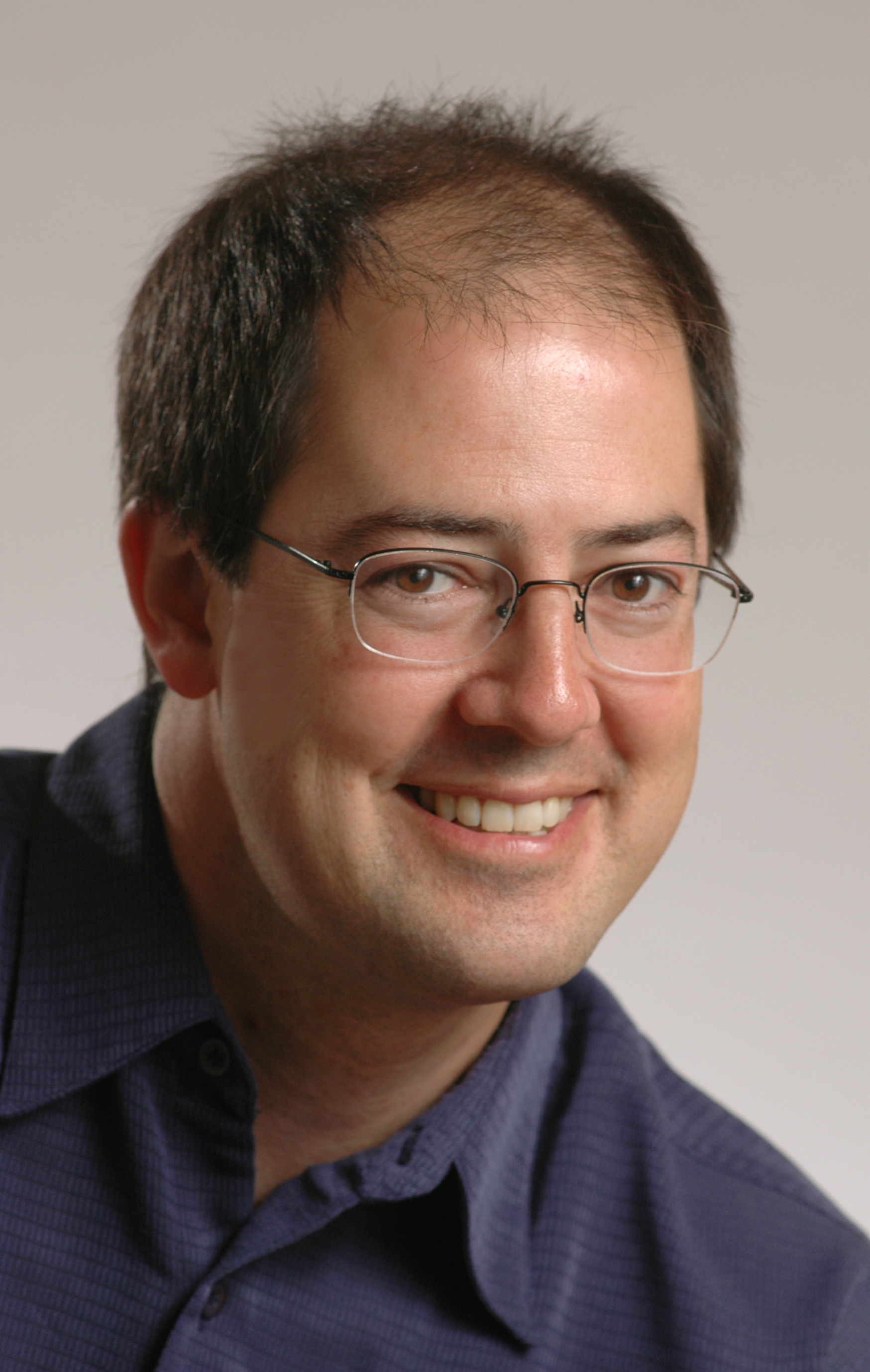
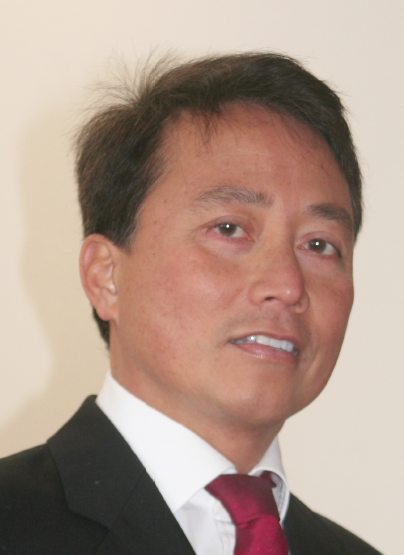
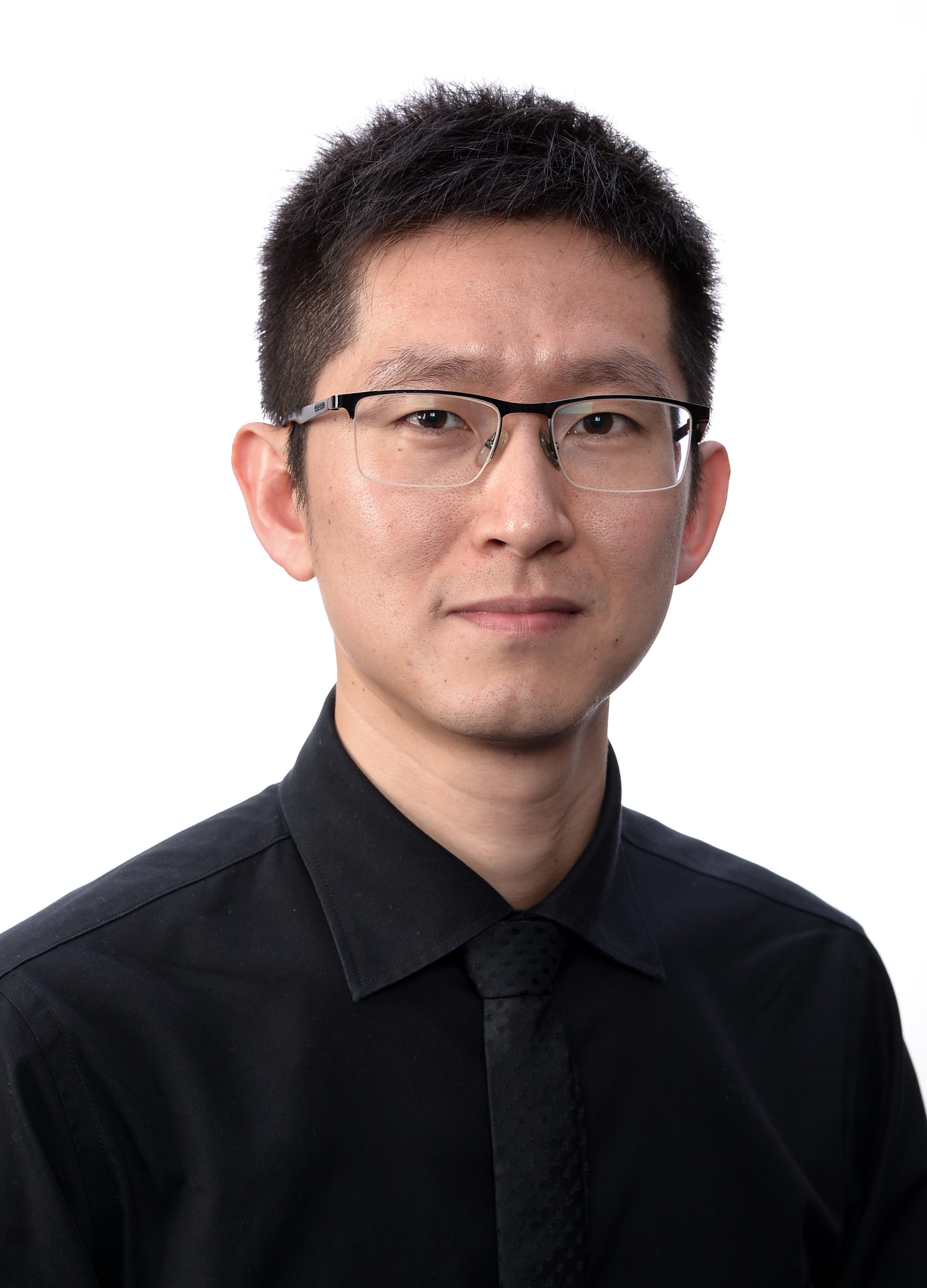
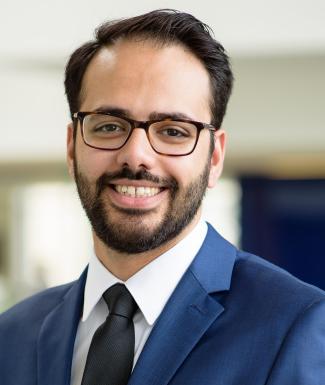
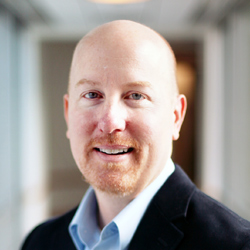
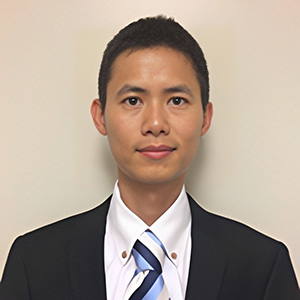
Kristofer Pister is a Professor in the Department of Electrical Engineering and Computer Sciences at the University of California, Berkeley. He co-directs the Berkeley Sensor and Actuator Center (BSAC) and the Ubiquitous Swarm Lab. His career spans groundbreaking innovations in Micro/Nano Electro Mechanical Systems (MEMS), Control Systems, and Low-Power Circuits, with a focus on Smart Dust and synthetic insects. Education: Ph.D. and M.S. in EECS from UC Berkeley (1992, 1989); B.A. in Applied Physics from UC San Diego (1986). His research areas include MEMS , Control Systems , Robotics , and Integrated Circuits , with recent work on self-powered micro-sensors, crystal-free radios, and interplanetary swarm networks. Key awards include the ISA Albert F. Sperry Founder Award (2009) , Alexander Schwarzkopf Prize (2006) , and the NSF CAREER Award (1996) . He has authored numerous influential publications in wireless sensor networks and microrobotics. His lab, Ubiquitous Swarm Lab , explores distributed robotics and swarm intelligence. Pister emphasizes open collaboration in research, ethical conduct in academia, and efficient resource utilization for graduate students.
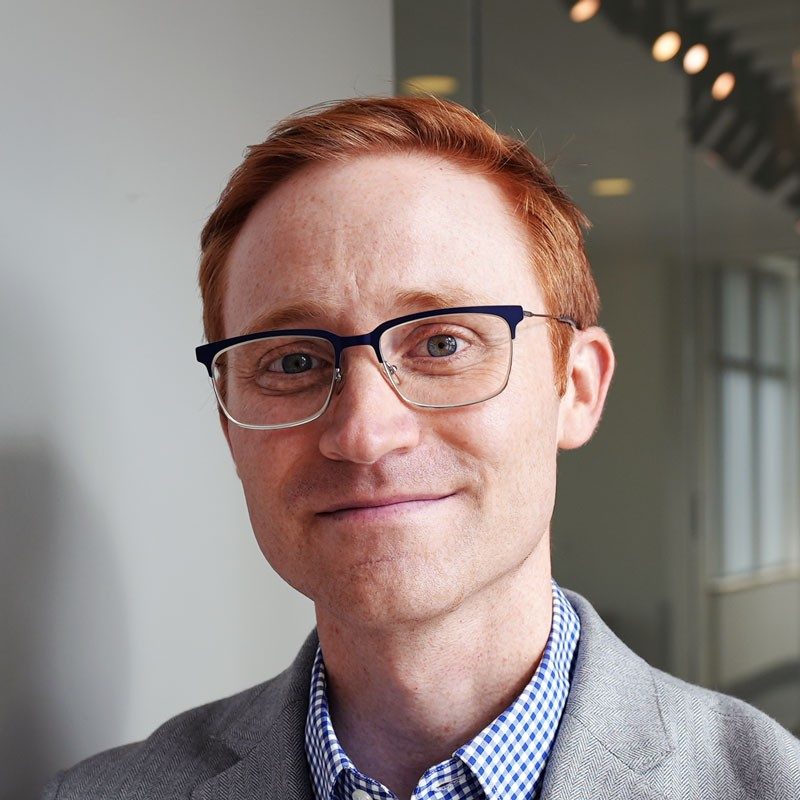
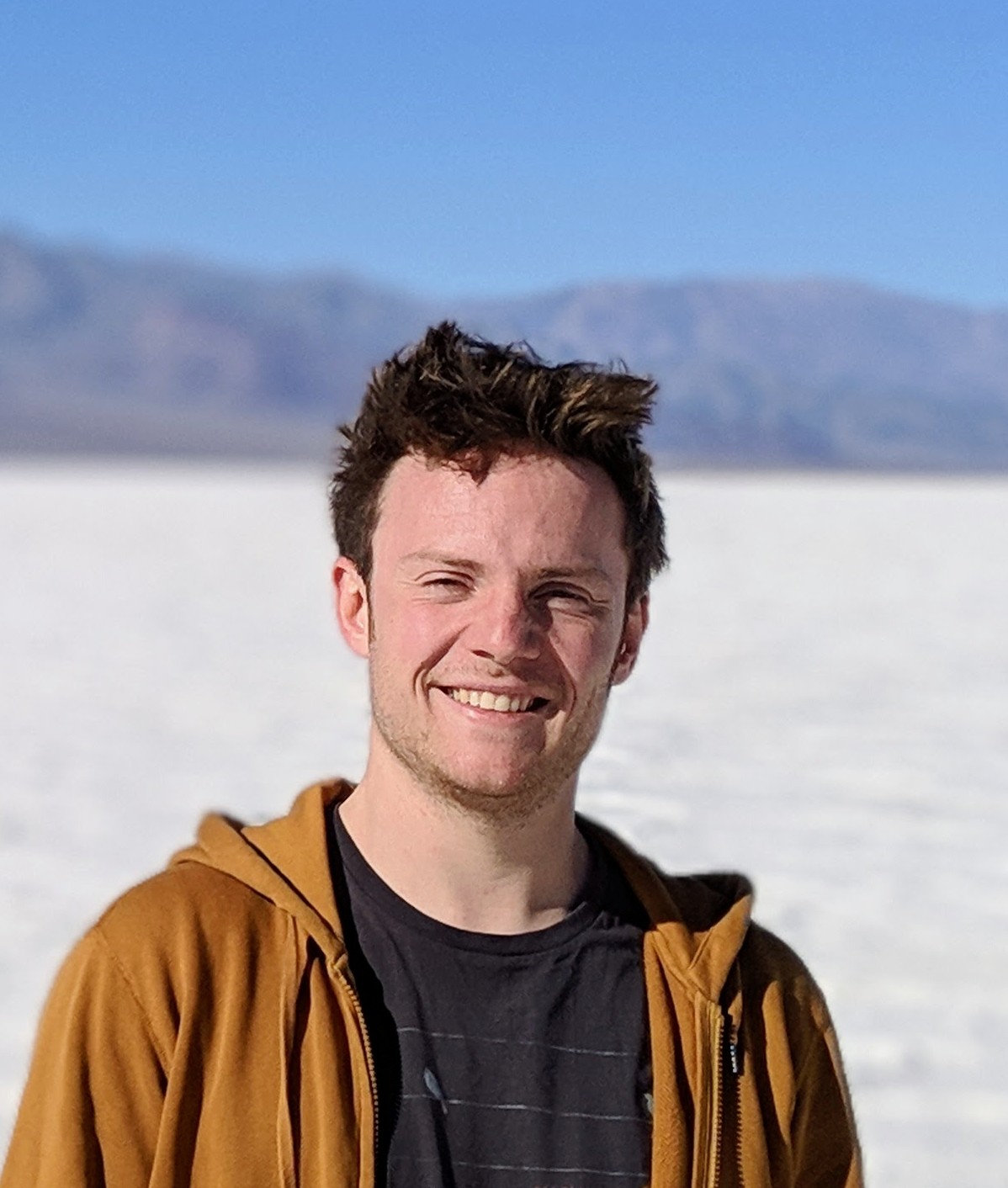
Michael Bartlett is an Associate Professor in the Department of Mechanical Engineering at Virginia Tech , leading the Soft Materials and Structures Lab within the College of Engineering. His research focuses on bio-inspired materials , soft robotics , and multifunctional composites with applications in adaptive adhesives , stretchable electronics , and self-healing systems . Education: Ph.D., Polymer Science & Engineering, University of Massachusetts Amherst (2013) B.S.E., Materials Science & Engineering, University of Michigan (2008) His work explores the intersection of soft materials , morphing structures , and functional composites , leveraging techniques like kirigami and liquid metal integration to create innovations such as octopus-inspired underwater gloves and shape-shifting drones . His recent articles highlight advancements in programmable adhesion , liquid metal conductors , and multiscale material design . Scientific Awards: National Academy of Inventors Senior Member (2024) NSF CAREER Award (2023) Office of Naval Research Young Investigator Award (2021) Soft Matter Emerging Investigator (2021) DARPA Director’s Fellowship (2020) Adhesion Society Early Career Scientist (2020) DARPA Young Faculty Award (2018) 3M Non-Tenured Faculty Award (2017) Bartlett has mentored over 40 undergraduate students and numerous graduate researchers, resulting in 12 peer-reviewed articles with student co-authors. His lab receives funding from federal agencies like NSF , ONR , and DARPA , as well as industry partnerships. The group also engages in K-12 outreach programs and collaborates with institutions such as University of Nebraska-Lincoln and Iowa State University .
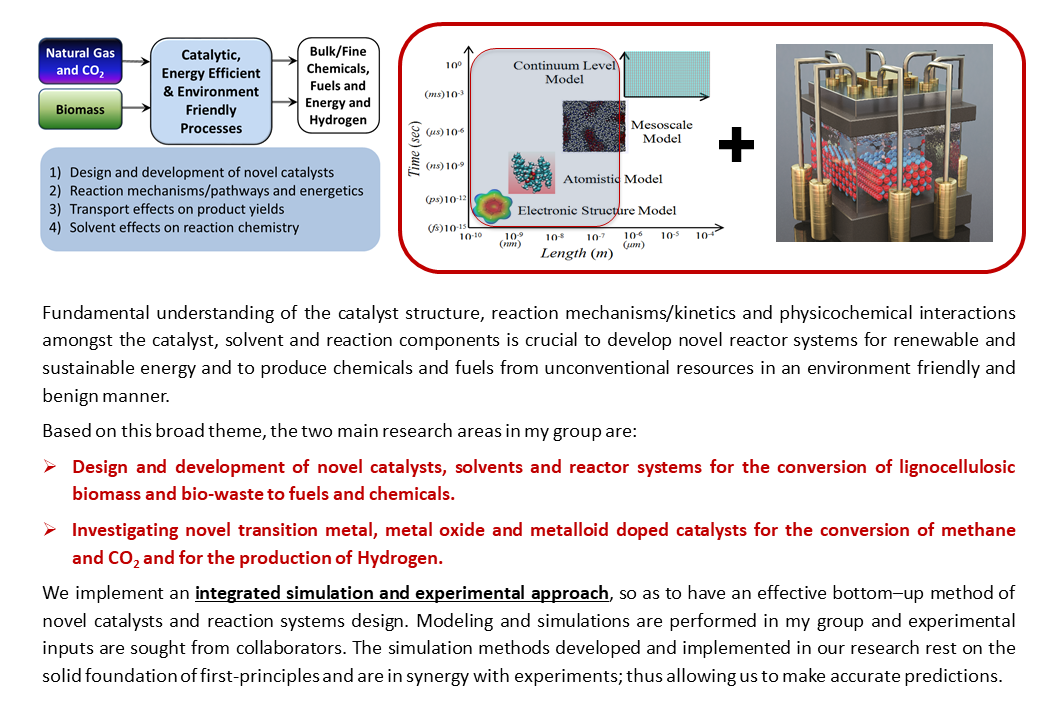
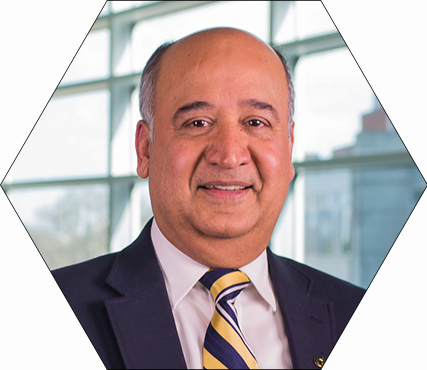
Dr. Samir H. Mushrif is a Professor in the Department of Chemical and Materials Engineering at the University of Alberta . Prior to this role, he served as faculty at the School of Chemical and Biomedical Engineering at Nanyang Technological University (NTU), Singapore . He holds a PhD in Chemical Engineering from McGill University and completed postdoctoral research at the University of Delaware, USA . Education : PhD (Chemical Engineering, McGill University), Postdoc (University of Delaware) His research focuses on computational catalysis , molecular modeling , and reaction engineering for biomass conversion and CO2 reduction . He develops novel catalysts, solvents, and reactor systems using integrated quantum mechanical and classical molecular simulations , synergized with experimental data to enable sustainable energy and chemical production . Recent publications highlight trends in condensed phase chemistry for biomass reactions, machine learning applications in solvent configuration prediction, and mechanistic studies of lignin-carbohydrate complex deconstruction. His work bridges methane activation on metal oxides, hydrodeoxygenation of bio-oil compounds, and polymerization pathways in lignin structures. Scientific Awards include: NSERC Doctoral and Post-doctoral Fellowships Discovery International Award 2017 (Australian Research Council) NANYANG EDUCATION AWARD 2016 (Singapore) SCBE Teaching Excellence Awards (Silver 2015, Gold 2016) Bharat Gaurav (Pride of India) Award 2014 Dr. Mushrif's NSERC Discovery Grant (2018), CFI John R. Evans Leaders Fund Grant (2022), and AcRF Tier-2 Grant (Singapore, 2015) have advanced his work. Current PhD and Master's students include José Carlos Velasco Calderón , Arul Mozhi Devan Padmanathan , and Sagar Bathla , among others. The CARES Lab (Catalysis Research for Sustainability) under his leadership combines ab initio molecular dynamics , machine learning potentials , and Density Functional Theory to design materials for renewable energy . Collaborations span institutions in France , Canada , India , and the UK .
Professor David C. Dunand is a faculty member in the Department of Materials Science and Engineering at Northwestern University , where he leads the Dunand Research Group . His work focuses on mechanical metallurgy of advanced metallic materials, including alloys, composites, and foams, with applications in energy-efficient transportation and biomaterials. He also investigates additive manufacturing techniques like laser powder-bed fusion and 3D ink extrusion. Research Interests: Physical and mechanical metallurgy of multiphase metals Additive manufacturing (ink extrusion, selective laser melting) Green/sustainable metal production In situ X-ray tomography for microstructure analysis Metallic foams and scaffolds Thermoelectric materials Recent Publications show expertise in redox cycling stability, precipitation strengthening, and hierarchical microstructures, with applications in batteries, shape-memory alloys, and high-entropy systems. Awards: TMS Fellow (2012) Structural Materials Division Distinguished Scientist/Engineering Award (2008) Fellow, ASM International (2007) Department Teacher of the Year (1998) He has held leadership roles including Co-Director of the Initiative for Sustainability and Energy at Northwestern (2008-2015) and Visiting Professor at École Polytechnique Fédérale de Lausanne (2000). The group operates a SISMA MYSINT 100 laser powder bed fusion machine and collaborates extensively.
Arash Arami is an Associate Professor in the Department of Mechanical and Mechatronics Engineering at the University of Waterloo, cross-appointed in Systems Design Engineering. He directs the Neuromechanics and Assistive Robotics Laboratory and maintains affiliations with Waterloo Robohub, the Centre for Bioengineering and Biotechnology, Waterloo AI institute, and KITE institute at Toronto Rehab Institute. He earned his Doctorate in Electrical Engineering from EPFL (2014), Master of Science from University of Tehran (2009), and Bachelor of Science from University of Tabriz (2006), all in Control Engineering. His research in Assistive Robotics and Rehabilitation Engineering integrates Machine Learning with Neuromechanics to develop intelligent systems for human movement analysis. Key focus areas include exoskeleton control algorithms, wearable sensor systems, and neural control modeling for rehabilitation applications. Recent publications demonstrate interdisciplinary work spanning robotics, biomedical engineering, and materials science, with emphasis on real-time human locomotion prediction, exoskeleton-human interaction, and data-driven health monitoring solutions. Dr. Arami serves as Chair of the NSERC Scholarship Committee (2021-2023) and mentors graduate students through the Mechatronics Exchange Study program. His teaching includes core courses in control systems, robot manipulators, and biomechanical engineering. The Neuromechanics and Assistive Robotics Laboratory fosters collaborations with clinical partners at Toronto Rehab Institute, focusing on translating robotic innovations into practical rehabilitation tools through interdisciplinary teamwork.
Ronaldo I. Borja is a Professor in the Department of Civil and Environmental Engineering at Stanford University's School of Engineering. His academic career spans decades of research and teaching in theoretical and computational solid mechanics, geomechanics, and geosciences. He teaches undergraduate, graduate, and doctoral level courses including Geotechnical Engineering (CEE 101C), Mechanics and Finite Elements (CEE 281), Computational Poromechanics (CEE 314), and Plasticity Modeling and Computation (CEE 315). Professor Borja's research focuses on theoretical and computational solid mechanics, with particular emphasis on geomechanics and geosciences. His work includes the development of multi-scale discontinuity frameworks for crack and fracture propagation utilizing strong discontinuity and extended finite element methods; solution techniques for multi-physical processes such as coupled solid deformation-fluid diffusion in saturated and unsaturated porous media; stabilized finite element methods for solid/fluid interaction and nonlinear contact mechanics; and nanometer-scale characterization of the inelastic deformation and fracture properties of shales. His research spans multiple projects including shale characterization, poromechanics, and large deformation inelasticity. His recent publications demonstrate expertise across computational mechanics, geomechanics, and materials science, with a focus on finite element methods, constitutive modeling, and multi-scale analysis. His work bridges theoretical developments with practical applications in geotechnical engineering and earth sciences. 2016 ASCE Maurice A. Biot Medal for work in computational poromechanics Professor Borja serves as editor of two leading journals in his field: the International Journal for Numerical and Analytical Methods in Geomechanics and Acta Geotechnica. He has also authored the textbook 'Plasticity Modeling and Computation' published by Springer. His research is supported by multiple projects examining shale mechanics, poromechanics in unsaturated porous media, and large deformation inelasticity in crystalline materials.
Dr. Geng Guoqing is an Assistant Professor in the Department of Civil and Environmental Engineering at the National University of Singapore (NUS). He holds concurrent roles as East Asian Regional Convener for RILEM and board member of ACI-Singapore Chapter. His research focuses on sustainable construction materials, particularly durability, microstructural characterization, and waste material utilization. Geng earned his PhD from UC Berkeley (2017), followed by postdoctoral research at the Paul Scherrer Institute (Switzerland). He has authored over 50 papers and leads multiple projects funded by Singapore’s Ministry of Education, Energy Center, and National Research Foundation. Education: Bachelor of Engineering, Southeast University, China (2010) Master of Science, UC Berkeley, USA (2013) PhD, UC Berkeley, USA (2017) Research interests center on sustainable construction materials, multi-scale characterization, and material durability . Key themes include recycling low-grade materials, mitigating degradation in concrete, and developing high-performance binders like LC3. His work employs advanced techniques like molecular modeling, X-ray diffraction, and NMR. Recent articles explore hydration kinetics, CSH matrix mechanics, and waste clay applications. Awards include the 2023 RILEM Medal and multiple teaching excellence recognitions. Current projects address CO 2 absorption, sustainable cement blends, and resilient façade materials. Professional service includes editorial roles at Cleaner Materials and Frontiers in Materials , plus organizing the 2022 EASEC Conference. His lab focuses on bridging microstructural insights with macro-scale material performance.
Florian Schäfer is an Assistant Professor at the School of Computational Science and Engineering at Georgia Tech. His research spans numerical computation, statistical inference, and competitive games, with applications in materials science, turbulence modeling, computer graphics, and computational geometry. He will join the Courant Institute at NYU in September 2025. PhD in Applied and Computational Mathematics, Caltech Bachelor’s and Master’s in Mathematics, University of Bonn His work focuses on information geometric mechanics to design structure-preserving numerical methods for continuum mechanics. This includes: State-of-the-art solvers for elliptic PDEs via Gaussian elimination and conditional independence Efficient multi-agent optimization algorithms Information geometric regularization for compressible fluid dynamics Enabling the first compressible fluid simulation exceeding 100 trillion grid cells His recent research trends integrate: Machine learning for materials science (e.g., active learning, Bayesian approaches) Stochastic modeling of microstructures and phase-field problems Neural operators for super-resolution fluid dynamics Generative models for polycrystalline material datasets Optimal transport and diffusion models for conditional density transformations High-performance computing at extreme scales Florian collaborates with researchers including Houman Owhadi, Jessie Liu, Spencer Bryngelson, Tamer Zaki, and Ali Mani. He actively presents at conferences like SIAM and UCLA seminars, and is recruiting PhD students for work at the Courant Institute starting 2025.
Yali Tang is an Assistant Professor in the Department of Mechanical Engineering at Eindhoven University of Technology (TU/e), specializing in fluid dynamics and transport phenomena within multiphase flows and physicochemical conversions . Her work targets Iron Power technology , green steel production , and alkaline water electrolysis for hydrogen generation, combining advanced computational models with experimental validation . Education: Master's in Chemical Engineering from Sichuan University (2011) PhD in Mechanical Engineering at TU/e (2015) with Prof. Hans Kuipers Research Interests: She focuses on interphase interactions , interfacial transport mechanisms , and high-resolution simulations (down to 40 nm mesh) to predict bubble coalescence and film dynamics. Her studies on hydrogen bubble growth , dendritic iron formation , and gas distribution in electrolyzers aim to refine reactor design and industrial processes. Collaborations with industrial partners ensure practical applicability of her computational models. Recent Publications: Her 2025 work includes dimensional analysis of liquid film formation, solutal Marangoni effects in electrolysis, and X-ray validation of gas distribution models. Earlier studies (2020–2023) cover defluidization behavior of iron fines, CFD-DEM modeling of raceways, and acoustic field applications in particle dynamics. Labs & Collaborations: She leads computational efforts within the Power & Flow group under Prof. Niels Deen, contributing to the EIRES Research cluster. Her work bridges academic research with industrial innovation in fluid dynamics and energy transition technologies.
Naresh N. Thadhani is a Professor and Chair of Materials Science and Engineering at Georgia Tech, with an adjunct role in the Woodruff School of Mechanical Engineering. His research focuses on shock-induced material changes, high-strain-rate mechanics, and dynamic compaction of powders. He leads a lab equipped with advanced facilities like gas guns and laser-accelerated systems for studying impacts up to 1200 m/s. Education: Ph.D., New Mexico Institute of Mining and Technology (1984); M.S., South Dakota School of Mines and Technology (1981); B.E., University of Rajasthan, India (1980). Research interests include shock compression of metals/ceramics, phase transformations in metallic glasses, and structural energetic materials. His work combines experimental diagnostics (e.g., VISAR, photonic Doppler velocimetry) with computational modeling (CTH/ALE3D codes). Key awards: APS Fellow (2007), ASM International Fellow (2000). Editorial roles include Associate Editor of Shock Waves and Key Reader for Metallurgical and Materials Transactions . Lab & Group: A team of 1 postdoctoral fellow, 11 PhD students, and 3 undergraduates. Over 30 graduates to date. Active in advisory roles for national/international conferences and industrial consultancies. Future work emphasizes nanocomposite magnets and meso-scale modeling of heterogeneous materials under shock.
R. Edwin García is a Professor at the School of Materials Engineering at Purdue University, where he has been faculty since 2005. He holds appointments in the Materials Engineering department within Purdue's College of Engineering, specifically in the School of Materials Engineering located in the Neil Armstrong Hall of Engineering at Purdue's West Lafayette campus. His educational background includes: B.S. in Physics from the National University of Mexico (1996) M.S. in Materials Science and Engineering from Massachusetts Institute of Technology (2000) Ph.D. in Materials Science and Engineering with a minor in Applied Mathematics from Massachusetts Institute of Technology (2003) Professor García's research focuses on the design of materials and devices through the development of a fundamental understanding of the solid state physics of individual phases, their short and long range interactions, and associated microstructural properties and time evolution. His current research emphasizes establishing relationships between material properties and resultant performance and degradation in electrochemical systems. He integrates computational approaches ranging from kinetic Monte Carlo, phase field and level set methods, to finite elements, finite volumes, and symbolic computing. His work particularly addresses microstructure design, crystallographic texture, and grain boundary science and engineering to control the topology of underlying phases and establish practical relations between processing, microstructure, and material properties. His recent publications demonstrate a strong focus on lithium-ion battery technology, ferroelectric materials, and computational modeling of material behaviors. The research trends show increasing integration of machine learning with traditional computational methods, exploration of novel sintering techniques like flash sintering, and deeper investigation into the fundamental mechanisms of material degradation in energy storage systems. His work spans multiple length scales from atomistic to continuum modeling, reflecting a comprehensive approach to materials design and analysis. Professor García teaches several courses including MSE 230 (Structure and Properties of Materials), MSE 350 (Thermodynamics of Materials), MSE 597G (Modeling and Simulation of Materials), MSE 597I (Introduction to Computational Materials), and MSE 597N (Physical Properties of Crystals). He mentors graduate students in areas related to computational materials science, battery technology, and microstructural evolution. His research group, the Laboratory of Computational Microstructures, focuses on developing home-grown analytical theories and algorithms to resolve relevant time and length scales in materials systems. The group's work has significant implications for portable power sources, including rechargeable batteries and fuel cells, as well as for ferroelectric ceramic applications.
Farhad Pourkamali Anaraki is an Assistant Professor in the Department of Mathematical and Statistical Sciences at the University of Colorado Denver, part of the College of Liberal Arts and Sciences. His research focuses on Machine Learning, Data Science, and Computational Mathematics, with interdisciplinary applications in engineering, materials science, and uncertainty quantification. He specializes in developing data-driven methodologies for complex systems, including composite materials, seismic response prediction, and additive manufacturing. Key research themes include probabilistic neural networks, adaptive machine learning for sparse data, and computational techniques for engineering challenges. His work integrates advanced algorithms with domain-specific problems, such as optimizing material properties and enhancing predictive models in civil and mechanical engineering contexts. Despite his prolific publication record, no specific scientific awards or grants are explicitly listed in the provided information. He maintains an active profile in teaching and mentoring, though formal advisee details are not documented here.
Yayue Pan is a Professor at the Department of Mechanical and Industrial Engineering, University of Illinois Chicago (UIC) , and serves as the Director of NASA MIRO Center for In-Space Manufacturing: Recycling and Regolith Processing (CISM-R2) . Her research focuses on advancing Additive Manufacturing (AM) technologies for applications in biomedical engineering , energy storage , and smart structures . Ph.D., Industrial and Systems Engineering, University of Southern California (2014) M.S., Mechanical Manufacturing and Automation, Zhejiang University, China (2010) B.S., Industrial Engineering, Zhejiang University of Technology, China (2007) Her work addresses technical challenges in AM such as multi-material printing , multi-scale fabrication , and field-assisted processes . Notable projects include: Development of electrostatically-assisted direct ink writing (eDIW) for high-speed, high-resolution printing Continuous projection stereolithography for rapid solid object manufacturing Acoustic field-assisted particle patterning for smart composites Light-curable hydrogels for corneal repair applications Her 15 most recent publications (2022–2025) span topics in: Multi-material AM (conductive polymers, hierarchical composites) Biomedical applications (soft robotics, corneal repair) Energy components (battery electrolytes, supercapacitors) Field-assisted processes (acoustic, electrostatic, magnetic) Scientific Awards : 2024 ASME Chao and Trigger Young Manufacturing Engineer Award 2022 UIC Researcher of the Year Rising Star Award 2020 ASME CIE TC Leadership Award 2019 UIC Outstanding Teaching Award 2017 SME Outstanding Young Manufacturing Engineer Award NSF REU Supplements (2023–2024) Advising : Mentored 24+ graduate/undergraduate researchers, including 17 NASA/GPIP interns. Former advisees hold academic positions at University at Buffalo and University of North Carolina at Charlotte , and industry roles at Apple , GE Healthcare , and ANSYS . Grants : Recipient of a $4.65M NASA grant and multiple NSF awards. Collaborations include Northwestern University, University of Michigan, and NASA centers.
Dr. Christopher M. Wolverton is a Professor of Materials Science and Engineering at Northwestern University , where he leads the Wolverton Research Group . His work focuses on computational materials science with applications in energy sustainability , particularly in batteries , hydrogen storage , and thermoelectrics . PhD in Physics from University of California, Berkeley BS in Physics (summa cum laude) from University of Texas, Austin His research leverages first-principles quantum mechanical simulations and machine learning to enable virtual materials synthesis before laboratory testing. The group specializes in hybrid computational methods integrating Density Functional Theory (DFT) , Monte Carlo simulations , and phase-field microstructural models . The article portfolio shows leadership in energy storage materials , with recent work on data-driven nanoparticle facet control , mixed-anion semiconductors , and machine learning-accelerated discovery . Publications span top journals including Nature Energy , Nature Materials , and Science . 2006 Ford Motor Company Technical Achievement Award 2005 Ford Patent & Publication Awards 2003 Ford Environmental/Physical Sciences Recognition As advisor to PhD candidates Zhenpeng Yao , Shiqiang Hao , and Shane Patel , he fosters interdisciplinary research connecting materials informatics with experimental validation . The group maintains active collaborations with Argonne National Lab and MIT/Harvard teams.
Dr. Wenwu Xu is an Associate Professor in the Department of Mechanical Engineering at San Diego State University (SDSU), affiliated with the College of Engineering. His research focuses on advanced materials science, nanotechnology, and computational modeling of material behavior. He specializes in investigating dislocation dynamics, electric field effects on materials, and the development of novel processing techniques for metallic and ceramic composites. His work spans topics such as hydrogen embrittlement, nanocrystalline material properties, and 3D printing of bioinspired structures. He employs molecular dynamics simulations, atomistic modeling, and experimental validation to study material deformation, sintering mechanisms, and phase stability. Xu’s contributions include pioneering quasi-instantaneous materials processing via high-intensity electrical nano-pulsing and designing recyclable piezoelectric composites for wearable sensors. His research has been published in over 40 peer-reviewed articles since 2007, reflecting a sustained focus on nanoscale material behavior, thermodynamic stability, and industrial applications. While no awards are explicitly listed, his extensive publication record underscores his expertise in materials engineering and computational methods. Dr. Xu’s lab (via mmm.sdsu.edu ) likely explores cutting-edge materials processing and characterization techniques, though specific grants or advising roles are not detailed in the provided text.