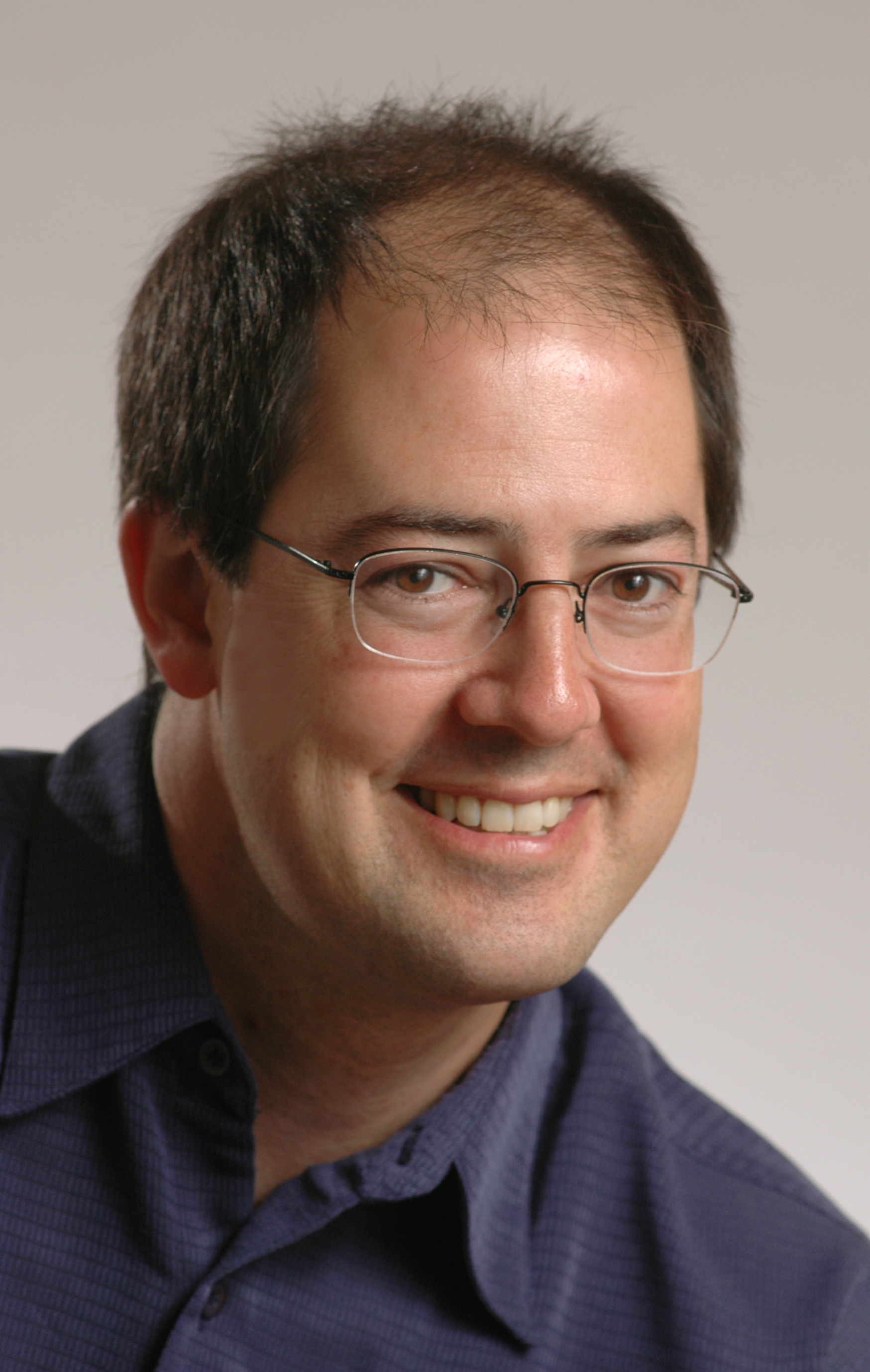
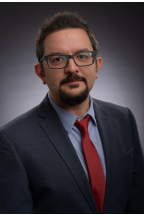
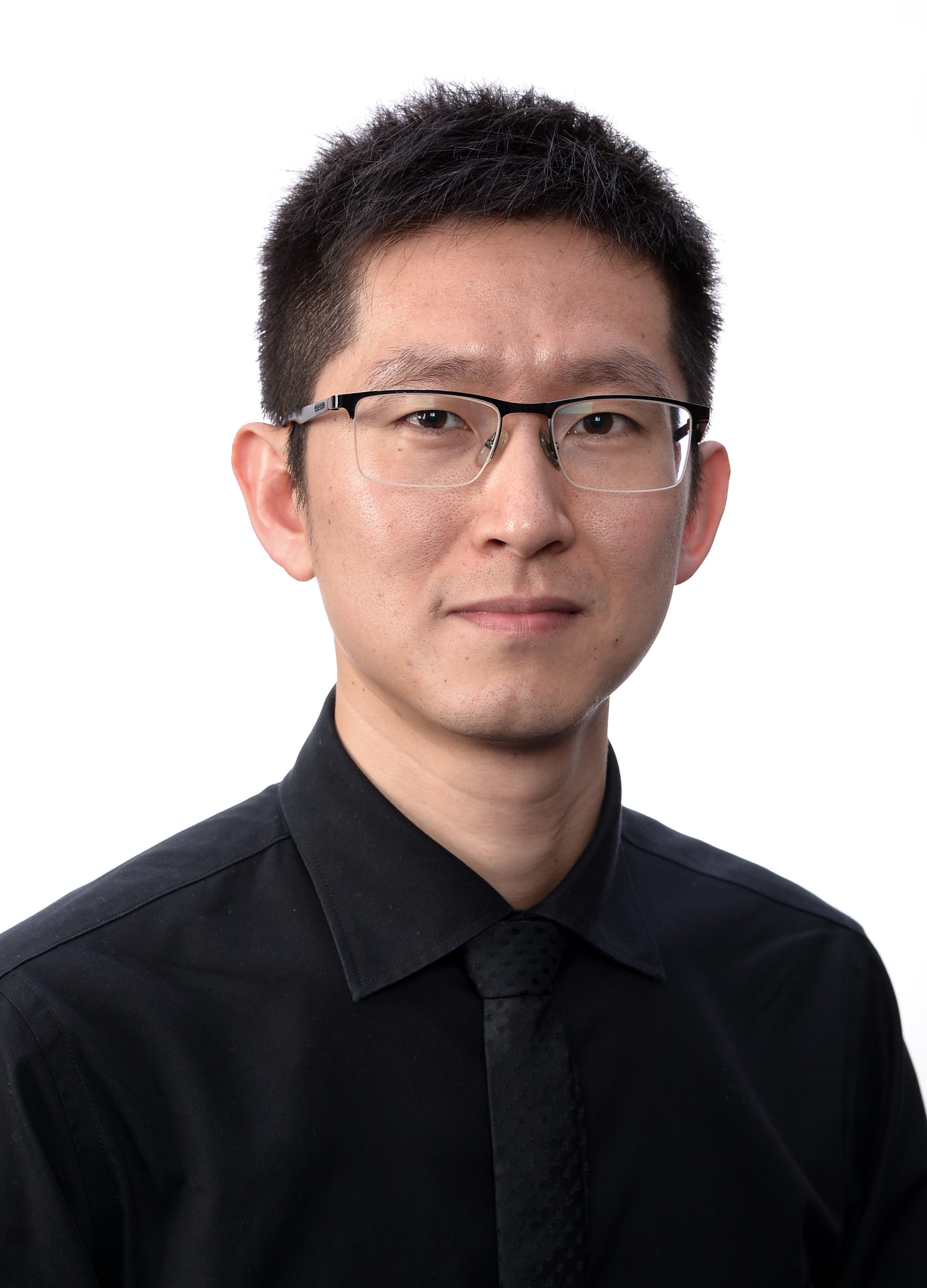
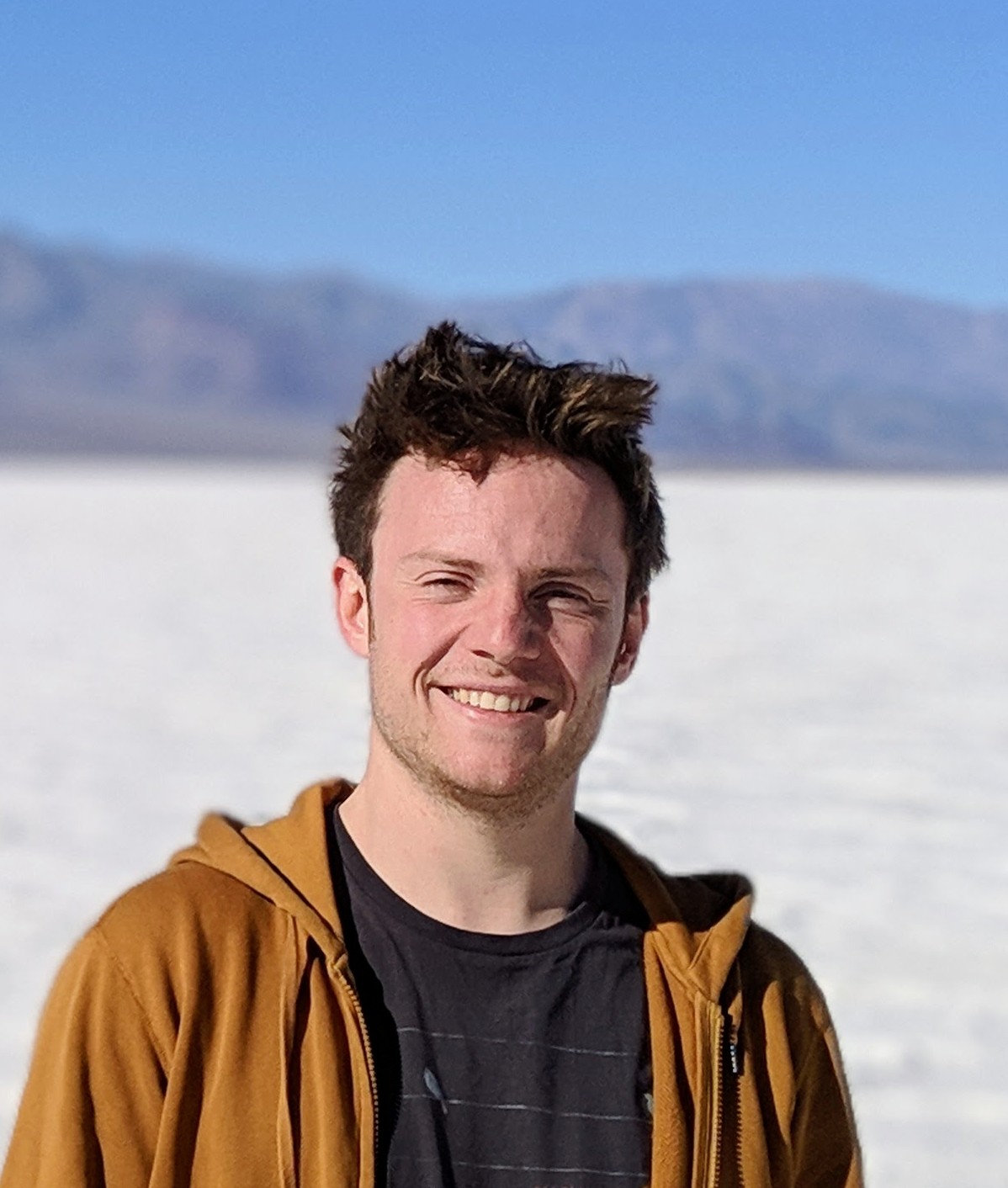
Jeroen Tromp serves as the Blair Professor of Geology and Professor of Geosciences and Applied and Computational Mathematics at Princeton University, where he also directs the Princeton Institute for Computational Science and Engineering (PICSciE). His work centers on theoretical and computational seismology with applications across Earth and planetary sciences. His research interests focus on imaging Earth's interior through advanced computational techniques. Key areas include surface waves, free oscillations, body waves, seismic tomography, numerical simulations of 3-D wave propagation, and seismic hazard assessment. His group develops open-source software for acoustic, elastic and poroelastic wave propagation, addressing problems in exploration geophysics, regional and global seismology, and helioseismology. Current research trends show strong emphasis on Mars seismology (InSight mission), iron spin crossover in the lower mantle, tilted transverse isotropy in Earth's inner core, and crosstalk-free waveform inversion techniques across multiple scales. Tromp actively mentors graduate students and leads collaborative projects involving seismic wavefield imaging across planetary bodies. His group maintains strong connections with NASA's InSight mission and develops computational frameworks for global centroid moment tensor inversions. The research team operates within the Department of Geosciences, leveraging high-performance computing resources through PICSciE to tackle large-scale inverse problems in seismology.
Assoc Prof Chia Wai Mun is an Associate Professor of Economics and Associate Chair (Academic) at the School of Social Sciences, Nanyang Technological University (NTU). She holds a PhD from NTU, MSc from the London School of Economics, and BSc from the University of London, all in economics. Her research focuses on international macroeconomics, cost-benefit analysis, transboundary pollution, and environmental policy. Prof Chia has served as a consultant to Singaporean government agencies including the National Environment Agency (NEA), Central Narcotics Bureau (CNB), and ASEAN Secretariat. She currently co-directs NTU's Economic Growth Centre and serves as Treasurer of the Economic Society of Singapore. Awards include the Nanyang Education Award (2021) and Singapore National Day Commendation (2011). Her work bridges macroeconomic theory with policy applications, particularly in environmental valuation and international financial dynamics. Recent research explores behavioral heterogeneity in financial markets, optimal monetary policy frameworks for emerging economies, and the economic impacts of transboundary environmental issues.
Kristofer Pister is a Professor in the Department of Electrical Engineering and Computer Sciences at the University of California, Berkeley. He co-directs the Berkeley Sensor and Actuator Center (BSAC) and the Ubiquitous Swarm Lab. His career spans groundbreaking innovations in Micro/Nano Electro Mechanical Systems (MEMS), Control Systems, and Low-Power Circuits, with a focus on Smart Dust and synthetic insects. Education: Ph.D. and M.S. in EECS from UC Berkeley (1992, 1989); B.A. in Applied Physics from UC San Diego (1986). His research areas include MEMS , Control Systems , Robotics , and Integrated Circuits , with recent work on self-powered micro-sensors, crystal-free radios, and interplanetary swarm networks. Key awards include the ISA Albert F. Sperry Founder Award (2009) , Alexander Schwarzkopf Prize (2006) , and the NSF CAREER Award (1996) . He has authored numerous influential publications in wireless sensor networks and microrobotics. His lab, Ubiquitous Swarm Lab , explores distributed robotics and swarm intelligence. Pister emphasizes open collaboration in research, ethical conduct in academia, and efficient resource utilization for graduate students.
Professor David C. Dunand is a faculty member in the Department of Materials Science and Engineering at Northwestern University , where he leads the Dunand Research Group . His work focuses on mechanical metallurgy of advanced metallic materials, including alloys, composites, and foams, with applications in energy-efficient transportation and biomaterials. He also investigates additive manufacturing techniques like laser powder-bed fusion and 3D ink extrusion. Research Interests: Physical and mechanical metallurgy of multiphase metals Additive manufacturing (ink extrusion, selective laser melting) Green/sustainable metal production In situ X-ray tomography for microstructure analysis Metallic foams and scaffolds Thermoelectric materials Recent Publications show expertise in redox cycling stability, precipitation strengthening, and hierarchical microstructures, with applications in batteries, shape-memory alloys, and high-entropy systems. Awards: TMS Fellow (2012) Structural Materials Division Distinguished Scientist/Engineering Award (2008) Fellow, ASM International (2007) Department Teacher of the Year (1998) He has held leadership roles including Co-Director of the Initiative for Sustainability and Energy at Northwestern (2008-2015) and Visiting Professor at École Polytechnique Fédérale de Lausanne (2000). The group operates a SISMA MYSINT 100 laser powder bed fusion machine and collaborates extensively.
Yali Tang is an Assistant Professor in the Department of Mechanical Engineering at Eindhoven University of Technology (TU/e), specializing in fluid dynamics and transport phenomena within multiphase flows and physicochemical conversions . Her work targets Iron Power technology , green steel production , and alkaline water electrolysis for hydrogen generation, combining advanced computational models with experimental validation . Education: Master's in Chemical Engineering from Sichuan University (2011) PhD in Mechanical Engineering at TU/e (2015) with Prof. Hans Kuipers Research Interests: She focuses on interphase interactions , interfacial transport mechanisms , and high-resolution simulations (down to 40 nm mesh) to predict bubble coalescence and film dynamics. Her studies on hydrogen bubble growth , dendritic iron formation , and gas distribution in electrolyzers aim to refine reactor design and industrial processes. Collaborations with industrial partners ensure practical applicability of her computational models. Recent Publications: Her 2025 work includes dimensional analysis of liquid film formation, solutal Marangoni effects in electrolysis, and X-ray validation of gas distribution models. Earlier studies (2020–2023) cover defluidization behavior of iron fines, CFD-DEM modeling of raceways, and acoustic field applications in particle dynamics. Labs & Collaborations: She leads computational efforts within the Power & Flow group under Prof. Niels Deen, contributing to the EIRES Research cluster. Her work bridges academic research with industrial innovation in fluid dynamics and energy transition technologies.
Arash Arami is an Associate Professor in the Department of Mechanical and Mechatronics Engineering at the University of Waterloo, cross-appointed in Systems Design Engineering. He directs the Neuromechanics and Assistive Robotics Laboratory and maintains affiliations with Waterloo Robohub, the Centre for Bioengineering and Biotechnology, Waterloo AI institute, and KITE institute at Toronto Rehab Institute. He earned his Doctorate in Electrical Engineering from EPFL (2014), Master of Science from University of Tehran (2009), and Bachelor of Science from University of Tabriz (2006), all in Control Engineering. His research in Assistive Robotics and Rehabilitation Engineering integrates Machine Learning with Neuromechanics to develop intelligent systems for human movement analysis. Key focus areas include exoskeleton control algorithms, wearable sensor systems, and neural control modeling for rehabilitation applications. Recent publications demonstrate interdisciplinary work spanning robotics, biomedical engineering, and materials science, with emphasis on real-time human locomotion prediction, exoskeleton-human interaction, and data-driven health monitoring solutions. Dr. Arami serves as Chair of the NSERC Scholarship Committee (2021-2023) and mentors graduate students through the Mechatronics Exchange Study program. His teaching includes core courses in control systems, robot manipulators, and biomechanical engineering. The Neuromechanics and Assistive Robotics Laboratory fosters collaborations with clinical partners at Toronto Rehab Institute, focusing on translating robotic innovations into practical rehabilitation tools through interdisciplinary teamwork.
Dr. Geng Guoqing is an Assistant Professor in the Department of Civil and Environmental Engineering at the National University of Singapore (NUS). He holds concurrent roles as East Asian Regional Convener for RILEM and board member of ACI-Singapore Chapter. His research focuses on sustainable construction materials, particularly durability, microstructural characterization, and waste material utilization. Geng earned his PhD from UC Berkeley (2017), followed by postdoctoral research at the Paul Scherrer Institute (Switzerland). He has authored over 50 papers and leads multiple projects funded by Singapore’s Ministry of Education, Energy Center, and National Research Foundation. Education: Bachelor of Engineering, Southeast University, China (2010) Master of Science, UC Berkeley, USA (2013) PhD, UC Berkeley, USA (2017) Research interests center on sustainable construction materials, multi-scale characterization, and material durability . Key themes include recycling low-grade materials, mitigating degradation in concrete, and developing high-performance binders like LC3. His work employs advanced techniques like molecular modeling, X-ray diffraction, and NMR. Recent articles explore hydration kinetics, CSH matrix mechanics, and waste clay applications. Awards include the 2023 RILEM Medal and multiple teaching excellence recognitions. Current projects address CO 2 absorption, sustainable cement blends, and resilient façade materials. Professional service includes editorial roles at Cleaner Materials and Frontiers in Materials , plus organizing the 2022 EASEC Conference. His lab focuses on bridging microstructural insights with macro-scale material performance.
Florian Schäfer is an Assistant Professor at the School of Computational Science and Engineering at Georgia Tech. His research spans numerical computation, statistical inference, and competitive games, with applications in materials science, turbulence modeling, computer graphics, and computational geometry. He will join the Courant Institute at NYU in September 2025. PhD in Applied and Computational Mathematics, Caltech Bachelor’s and Master’s in Mathematics, University of Bonn His work focuses on information geometric mechanics to design structure-preserving numerical methods for continuum mechanics. This includes: State-of-the-art solvers for elliptic PDEs via Gaussian elimination and conditional independence Efficient multi-agent optimization algorithms Information geometric regularization for compressible fluid dynamics Enabling the first compressible fluid simulation exceeding 100 trillion grid cells His recent research trends integrate: Machine learning for materials science (e.g., active learning, Bayesian approaches) Stochastic modeling of microstructures and phase-field problems Neural operators for super-resolution fluid dynamics Generative models for polycrystalline material datasets Optimal transport and diffusion models for conditional density transformations High-performance computing at extreme scales Florian collaborates with researchers including Houman Owhadi, Jessie Liu, Spencer Bryngelson, Tamer Zaki, and Ali Mani. He actively presents at conferences like SIAM and UCLA seminars, and is recruiting PhD students for work at the Courant Institute starting 2025.
Michael P. Wellman is a Professor of Computer Science and Engineering at the University of Michigan, specializing in computational game theory and its applications to economics and finance. He has advised 28 PhD graduates and currently mentors 6 students, emphasizing independent research and tailored advising approaches. His work focuses on multi-agent systems, strategic interactions, and agent-based modeling of financial markets. He holds the endowed Lynn A. Conway Professorship and created the Morris Wellman Faculty Development Professorship. His research group meets weekly for progress reports, paper discussions, and practice presentations. Wellman encourages internships, teaching experience, and conference participation (e.g., ICAIF, AAMAS, EC) to foster career readiness. His scientific contributions span empirical game-theoretic analysis (EGTA), market manipulation detection, and cybersecurity strategies. He prioritizes student independence, collaborative problem-solving, and ethical considerations in AI-driven financial systems.
Farhad Pourkamali Anaraki is an Assistant Professor in the Department of Mathematical and Statistical Sciences at the University of Colorado Denver, part of the College of Liberal Arts and Sciences. His research focuses on Machine Learning, Data Science, and Computational Mathematics, with interdisciplinary applications in engineering, materials science, and uncertainty quantification. He specializes in developing data-driven methodologies for complex systems, including composite materials, seismic response prediction, and additive manufacturing. Key research themes include probabilistic neural networks, adaptive machine learning for sparse data, and computational techniques for engineering challenges. His work integrates advanced algorithms with domain-specific problems, such as optimizing material properties and enhancing predictive models in civil and mechanical engineering contexts. Despite his prolific publication record, no specific scientific awards or grants are explicitly listed in the provided information. He maintains an active profile in teaching and mentoring, though formal advisee details are not documented here.
Peter Van Puyvelde is a Full Professor at KU Leuven's Faculty of Engineering Sciences, where he leads research at the Soft Matter, Rheology and Technology (SMaRT) unit within the Department of Chemical Engineering. He is an active member of the Applied Rheology and Plastics Processing Division and the Leuven.AM Institute for Additive Manufacturing. His academic responsibilities include membership in the Faculty Council of Engineering Sciences and departmental committees. His core research focuses on: Polymer processing and complex fluid dynamics In-situ characterization of flow-microstructure relationships Flow-induced crystallization phenomena Development of sustainable polymer materials Additive manufacturing technologies Professor Van Puyvelde's recent publications (2023-2025) demonstrate strong emphasis on sustainable polymer systems including lignin-based materials, humins valorization, bioplastics, and green additives. His work frequently employs advanced characterization techniques like fast-scanning calorimetry and synchrotron X-ray scattering to study crystallization kinetics and microstructure development in complex polymer systems. He currently supervises PhD students working on nanofiltration membranes and reinforced polymer parts. His extensive research portfolio includes leadership roles in multiple ongoing projects: Polylactic acid bioplastics development (Co-promoter) Lignin-based flame retardants (Co-promoter) Humins valorization for functional polymers (Co-promoter) Ionic liquids for enhanced oil recovery (Promoter) Competition between crystallization and crosslinking (Promoter) Additive manufacturing of polymer composites (Co-promoter)
Vladimir Spokoiny is a Professor at the Departments of Mathematics and Economics of the Humboldt University of Berlin and Head of the Research Group "Stochastic Algorithms and Nonparametric Statistics" at the Weierstrass Institute for Applied Analysis and Stochastics (WIAS) in Berlin, Germany. His research spans multiple areas of statistics, machine learning, and financial mathematics, with significant contributions to nonparametric statistics, high-dimensional data analysis, and statistical methods in finance. Spokoiny received his M.Sc. in applied mathematics from the Moscow Institute of Railway Engineering in 1981 and his Ph.D. in mathematics from Lomonosov Moscow State University in 1988. He completed his Habilitation at Humboldt University in 1996. His academic career includes positions at the All-Union Institute of Railway Transport in Moscow, the Institute for Information Transmission Problems in Moscow, and the Institute for Applied Analysis and Statistics in Berlin before joining the Weierstrass Institute and Humboldt University where he has been a professor since 2002. Spokoiny's research focuses on adaptive nonparametric smoothing and hypothesis testing, high dimensional data analysis, statistical methods in finance, image analysis with applications to medicine, classification, and nonlinear time series. His work often addresses the challenges of nonstationarity in time series data and develops innovative methods for volatility estimation and risk management. He has made significant contributions to the development of adaptive weights smoothing procedures, which have applications in image processing, community detection, and manifold learning. His recent work has expanded into high-dimensional statistics, Bayesian inference, and optimization methods for machine learning, with publications demonstrating novel approaches to Gaussian approximation, Laplace methods, and statistical inference in non-Euclidean spaces. Spokoiny has supervised numerous PhD students including Oliver Reiss, Danilo Mercurio, Ying Chen, Elmar Diederichs, and Mstislav Elagin, whose research has focused on mathematical finance, time series analysis, and statistical methods. He serves as an Associate Editor for The Annals of Statistics (since 2004) and Statistics and Decisions (since 2002), and has previously served on the editorial board of the Journal of Statistical Planning and Inference. His professional activities include reviewing for major statistical journals including Annals of Statistics, Bernoulli, Econometrica, and Journal of American Statistical Association, as well as reviewing grant proposals for the National Science Foundation (USA), German Research Foundation, and Netherlands Organisation for Scientific Research. Spokoiny is a member of several professional societies including the International Statistical Institute, American Statistical Association, Institute of Mathematical Statistics, and Bernoulli Society. He is fluent in Russian (mother tongue), English, and German, and has good knowledge of French. His research group at WIAS focuses on developing novel statistical methodologies with applications across various scientific domains, particularly emphasizing adaptivity and robustness in complex data environments. The group's work has significant implications for financial risk management, medical imaging, and machine learning applications, with recent publications addressing fundamental questions in high-dimensional statistics and nonparametric inference.
Yayue Pan is a Professor at the Department of Mechanical and Industrial Engineering, University of Illinois Chicago (UIC) , and serves as the Director of NASA MIRO Center for In-Space Manufacturing: Recycling and Regolith Processing (CISM-R2) . Her research focuses on advancing Additive Manufacturing (AM) technologies for applications in biomedical engineering , energy storage , and smart structures . Ph.D., Industrial and Systems Engineering, University of Southern California (2014) M.S., Mechanical Manufacturing and Automation, Zhejiang University, China (2010) B.S., Industrial Engineering, Zhejiang University of Technology, China (2007) Her work addresses technical challenges in AM such as multi-material printing , multi-scale fabrication , and field-assisted processes . Notable projects include: Development of electrostatically-assisted direct ink writing (eDIW) for high-speed, high-resolution printing Continuous projection stereolithography for rapid solid object manufacturing Acoustic field-assisted particle patterning for smart composites Light-curable hydrogels for corneal repair applications Her 15 most recent publications (2022–2025) span topics in: Multi-material AM (conductive polymers, hierarchical composites) Biomedical applications (soft robotics, corneal repair) Energy components (battery electrolytes, supercapacitors) Field-assisted processes (acoustic, electrostatic, magnetic) Scientific Awards : 2024 ASME Chao and Trigger Young Manufacturing Engineer Award 2022 UIC Researcher of the Year Rising Star Award 2020 ASME CIE TC Leadership Award 2019 UIC Outstanding Teaching Award 2017 SME Outstanding Young Manufacturing Engineer Award NSF REU Supplements (2023–2024) Advising : Mentored 24+ graduate/undergraduate researchers, including 17 NASA/GPIP interns. Former advisees hold academic positions at University at Buffalo and University of North Carolina at Charlotte , and industry roles at Apple , GE Healthcare , and ANSYS . Grants : Recipient of a $4.65M NASA grant and multiple NSF awards. Collaborations include Northwestern University, University of Michigan, and NASA centers.
Dr. Christopher M. Wolverton is a Professor of Materials Science and Engineering at Northwestern University , where he leads the Wolverton Research Group . His work focuses on computational materials science with applications in energy sustainability , particularly in batteries , hydrogen storage , and thermoelectrics . PhD in Physics from University of California, Berkeley BS in Physics (summa cum laude) from University of Texas, Austin His research leverages first-principles quantum mechanical simulations and machine learning to enable virtual materials synthesis before laboratory testing. The group specializes in hybrid computational methods integrating Density Functional Theory (DFT) , Monte Carlo simulations , and phase-field microstructural models . The article portfolio shows leadership in energy storage materials , with recent work on data-driven nanoparticle facet control , mixed-anion semiconductors , and machine learning-accelerated discovery . Publications span top journals including Nature Energy , Nature Materials , and Science . 2006 Ford Motor Company Technical Achievement Award 2005 Ford Patent & Publication Awards 2003 Ford Environmental/Physical Sciences Recognition As advisor to PhD candidates Zhenpeng Yao , Shiqiang Hao , and Shane Patel , he fosters interdisciplinary research connecting materials informatics with experimental validation . The group maintains active collaborations with Argonne National Lab and MIT/Harvard teams.
Professor Chunsheng Lu is a faculty member at Curtin University's School of Civil and Mechanical Engineering within the Faculty of Science and Engineering. He currently holds the position of Professor and serves as Editor-in-Chief of Mechanical Engineering Advances . His research focuses on fracture mechanics, multi-scale modeling, energy materials, nonlinear dynamics, and natural disaster risk analysis. Lu is actively involved in HDR (Masters/PhD) supervision, offering projects on advanced materials modeling and simulations. His research interests include mechanics of energy materials, multi-scale modeling, and fracture statistics. He has contributed to over 200 publications, with recent work emphasizing piezoelectric semiconductors, nanomaterials, and energy storage systems. Lu's teaching spans materials engineering, solid mechanics, and numerical methods.