Stephan Schönecker is a Researcher and Associate Professor (Docent) at KTH Royal Institute of Technology, specializing in computational materials science and electronic structure theory. He holds key administrative roles including Studierektor (since January 2025) and Lokalt skyddsombud (2021–2024). His research focuses on multicomponent alloys, superconductivity, magnetism, and energy materials, with applications in nanotechnology and materials design. His academic background includes a strong foundation in theoretical physics and materials science. Research interests span bulk/interfacial properties of alloys, strain engineering in thin films, and ab initio treatments of magnetism and lattice vibrations. Notable contributions involve predicting novel materials through computational methods and exploring high-entropy alloys for magnetic refrigeration and structural applications. Recent publications highlight advancements in data-driven alloy design, magnetocaloric materials, and the mechanical behavior of refractory alloys. Collaborations with institutions like the Technical University of Denmark and Chinese universities reflect his international research network. His work bridges theoretical predictions with experimental validation, emphasizing both fundamental physics and practical engineering applications. Professional service includes roles in academic governance and union representation (Saco-S styrelseledamot, 2022–2025). His lab focuses on computational modeling and materials informatics, though specific lab names are not explicitly mentioned in the text.
Pär Olsson is a Professor in the Department of Nuclear Science & Engineering at KTH Royal Institute of Technology. His research focuses on computational and experimental studies of radiation damage in nuclear materials, with particular emphasis on understanding defect dynamics, microstructural evolution under irradiation, and the behavior of advanced nuclear fuels. He leads courses such as Multiscale Modeling of Nuclear Materials and Radiation Damage Physics, emphasizing both theoretical and practical aspects of materials science in nuclear contexts. His research interests include the development of advanced accident-tolerant fuels (e.g., UN-UO2 composites), the computational modeling of radiation effects in metals like Fe and W, and the interplay between solute atoms and defects in irradiated materials. His work combines first-principles calculations, kinetic Monte Carlo simulations, and experimental validation to address challenges in nuclear energy systems. Notable contributions include studies on fission product solubility in nuclear fuels, oxygen’s role in tungsten defect evolution, and the thermal performance of UN-based composites. His team’s projects, such as the M4F initiative (Multiscale Modelling for Fusion and Fission Materials), aim to bridge atomistic and continuum-scale models for material design. Pär Olsson collaborates extensively with international institutions and contributes to nuclear materials education through course coordination and supervision of graduate studies in physics and materials science.
Valentina Galvani is a Professor and Chair of the Economics Department at the University of Alberta's Faculty of Arts. She holds a Ph.D. in Economics from Purdue University (2005), an MSc in Economics (2003), a Doctoral Degree in Mathematical Finance (2002) from the University of Brescia (Italy), and a Laurea (BS+MS) in Mathematics. Her research focuses on financial markets microstructure, energy economics, and corporate bond markets, with a strong emphasis on momentum investing and data-driven industry collaborations. Dr. Galvani has led MITACS-accelerated research projects with Alberta's banking sector since 2013, applying machine learning and model development to commercial finance challenges. Her early work included foundational contributions to general equilibrium theory in infinite-dimensional asset markets (Lp spaces). She joined the University of Alberta in 2005 and assumed the Chair position in 2022. Her research interests span financial economics, including market-state effects, corporate bond predictability, and energy market dynamics. Recent work addresses geopolitical conflicts' impact on oil markets, U.S. strategic petroleum reserves, and Saudi Arabia's competitive positioning under sanctions. She teaches graduate-level directed research and undergraduate courses in labor economics and personnel economics. Dr. Galvani's MITACS collaborations span 12 consecutive years (2013–2024), reflecting her industry engagement. While no specific awards are listed, her extensive publication record and leadership roles highlight her academic impact. She advises on energy diversification, market liquidity, and policy interventions in financial systems.
Johan Jansson is an Associate Professor in Scientific Computing at KTH Royal Institute of Technology and BCAM (Basque Center for Applied Mathematics). He leads research in predictive Direct FEM Simulation (DFS) for aerodynamics and multiphase flows, and co-founded Icarus Digital Math as CEO. His work includes the FEniCS open-source finite element software project and MOOC-HPFEM educational initiatives. He holds roles as Director of the Center for Digital Math and collaborates internationally in computational science. Research focuses on high-performance computing (HPC), fluid-structure interaction (FSI), biomedical modeling, and renewable energy systems. Notable contributions include adaptive FEM frameworks for turbulent flow, vocal fold simulations, and wave energy converter modeling. His work bridges academic research with industrial applications, leveraging FEniCS-HPC and Unicorn solvers. Key achievements include election to the IVA Royal Swedish Academy of Sciences 100-list and securing the Severo Ochoa Center of Excellence Award. He has pioneered open-source tools like SimTek and contributed to major projects like the Salter Sink and vocal production modeling. Teaching responsibilities include courses on database technology, computational fluid mechanics, and research methodology. He actively engages in large-scale simulation projects involving marine energy, cardiac ablation protocols, and aerodynamic optimization.
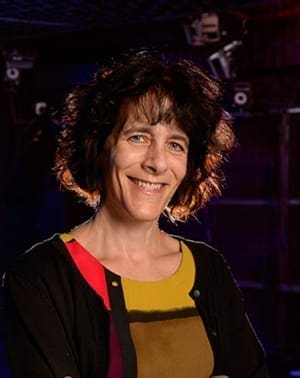
Cynthia F. Moss is a Professor in the Department of Psychological and Brain Sciences at Johns Hopkins University (JHU), with joint appointments in Neuroscience and Mechanical Engineering. She directs the Comparative Neural Systems and Behavior Laboratory (Bat Lab), investigating neural mechanisms of sensory perception and spatial navigation in echolocating bats. Her work combines neurophysiology, behavioral ecology, and engineering to study how bats process auditory information for navigation, communication, and obstacle avoidance. Dr. Moss earned a B.S. (summa cum laude) from the University of Massachusetts, Amherst, and a Ph.D. from Brown University. She held prior faculty positions at Harvard University and the University of Maryland, where she directed the Neuroscience and Cognitive Science graduate program. Her research has received prestigious awards including the Hartmann Award (2017), James McKeen Cattell Award (2018), and Alexander von Humboldt Research Prize (2019). Her research focuses on sensory coding of natural stimuli, spatial perception, attention, and adaptive motor control. Key findings include discoveries about 3D auditory space representation in the midbrain, age-resistant hearing in bats, and the role of wing hairs in flight control. Her lab employs innovative techniques like wireless neural recording, two-photon imaging, and DREADDs-mediated inactivation to study neural circuits. Dr. Moss collaborates across disciplines, bridging neurobiology, robotics, and sensory systems engineering. Her work informs biomimetic technologies for sonar navigation and adaptive control systems. She actively mentors students and postdocs in the Krieger School of Arts and Sciences, Whiting School of Engineering, and School of Medicine at JHU.
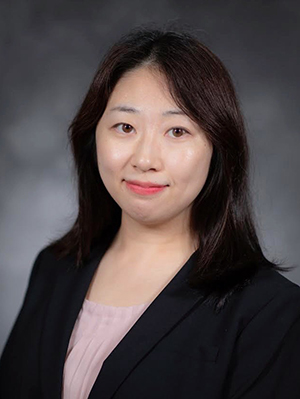
Dr. Yuxiao Zhou is an Assistant Professor in the J. Mike Walker '66 Department of Mechanical Engineering at Texas A&M University, with an affiliation to the School of Engineering Medicine. His research focuses on multi-scale musculoskeletal biomechanics, addressing challenges in aging, bone disease, and injury through implantable device design, computational modeling, and medical imaging. He holds a Ph.D. in Mechanical Engineering from Pennsylvania State University (2020), an M.S. from Rutgers University (2015), and a B.S. from Harbin Institute of Technology (2012). Research interests include biomechanical analysis of bone-implant interactions, bone regeneration mechanisms, and mechanobiology. Dr. Zhou's lab develops patient-specific biomedical devices and computational tools for surgery planning and disease diagnosis. His work integrates advanced imaging techniques like micro-CT and atomic force microscopy (AFM) to study bone mechanics across scales. Key awards include the Maryland Stem Cell Research Fund Postdoctoral Fellowship (2021) and the C. Norwood Wherry Memorial Graduate Fellowship (2020). His research has led to innovations in bone implant design, osteoporosis treatment strategies, and tissue engineering scaffolds. Recent publications explore topics like mineralization processes in tooth development and wireless microfluidic systems for dental implants. Dr. Zhou collaborates on grants related to biomechanical modeling and medical device development. His lab emphasizes translational research, aiming to bridge engineering and clinical applications. Ongoing projects include 3D-printed oxygen-releasing scaffolds for bone regeneration and aerogel-based solutions for bone cement interfaces.
Emily Chin is an Associate Professor in the Geosciences Research Division at Scripps Institution of Oceanography, UC San Diego. Her research focuses on petrology, high-temperature geochemistry, and tectonic processes to investigate Earth's lithosphere. She studies mantle dynamics, continental crust evolution, and subduction zone geology. Her work integrates experimental, field, and analytical techniques to address questions about crustal formation, mantle interactions, and tectonic evolution. Education: PhD in Earth Science from Rice University (2013), BS from Tulane University (2008) Postdoctoral training at Brown University (2014-2016) Key research areas include: (1) mantle petrology and cratonic lithosphere evolution; (2) non-plume intraplate volcanism in Baja California and the Mariana Trench; (3) water storage in cratonic mantle; (4) microstructural analysis of mantle and crustal xenoliths. She leads the SEM lab and co-manages the optical microscopy facility at SIO. Her fieldwork includes NSF-funded expeditions to the Mariana Trench (2024) and Guadalupe Island (2024), studying mantle exposure and seamount origins. Teaching responsibilities include courses on petrology, geological history, and field methods.
Mostafa Barigou is a Professor of Chemical Engineering and Head of Postgraduate Studies (Research) at the School of Chemical Engineering, University of Birmingham. He holds a BEng (1st Class Honours) in Mechanical Engineering (1982), PhD in Chemical Engineering (1987), and DSc in Experimental and theoretical studies of complex flows and complex fluids (2011). His research focuses on fluid dynamics, rheology, and transport processes in complex fluids, leveraging advanced techniques like Positron Emission Particle Tracking (PEPT), CFD, and PIV. Professor Barigou has supervised over 20 PhD students and 10 postdoctoral researchers, contributing to industries such as food processing, pharmaceuticals, and metallurgy. His work has been funded by UK Research Councils and industry partners like Procter & Gamble, Nestlé, and Johnson Matthey. He is a Fellow of the Institution of Mechanical Engineers (FIMechE) and a Chartered Engineer (CEng). Research interests include: complex fluid dynamics, multiphase systems, foam and emulsion stability, and CFD modeling. His lab uses PEPT to study opaque systems, developing novel insights into mixing and flow dynamics. Collaborations span biomedical engineering (e.g., blood flow studies) and food engineering (e.g., mycoprotein pastes). Awards include the Elijah-Hepworth Memorial Prize (1982) and leadership roles in EPSRC grants. He edits journals like the International Journal of Food Properties and serves on national/international committees for chemical engineering and food engineering.
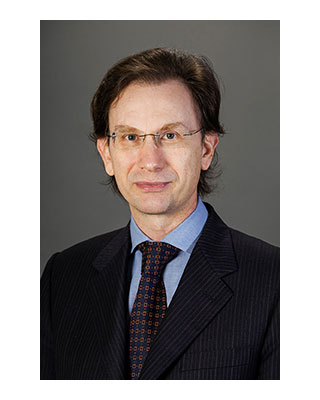
Antonio Mele is a Full Professor of Finance at the Università della Svizzera italiana (USI) and the Swiss Finance Institute (SFI), where he has held a Senior Chair since 2011. He is affiliated with the Faculty of Economic Sciences and the Institute of Finance (IFin) at USI. Additionally, he is a Research Fellow in the Financial Economics program at the Centre for Economic Policy Research (CEPR) in London. Education: PhD in Economics, University of Paris BSc in Economics, LUISS University, Rome Antonio Mele's research spans a wide range of topics in financial economics. His primary areas of expertise include capital market volatility, the interplay between financial markets and the macroeconomy, uncertainty and volatility in financial markets, interest rates and credit markets, and information in securities markets. He also works on econometrics and numerical methods in finance. His recent research interests extend to public debt sustainability, fiscal reforms and financial market behavior, and economic history since World War I. His work is characterized by a strong integration of theoretical modeling, empirical analysis, and practical applications in financial markets. His publications, featured in top journals like the Journal of Financial Economics, Review of Economic Studies, Review of Financial Studies, and Journal of Monetary Economics, reflect a consistent focus on volatility measurement and pricing. Key themes across his 15 most recent works include the development of model-free volatility indices for fixed income markets (such as SRVIX, TYVIX, VXTLT, and Credit VIX), variance swaps, the role of uncertainty in macroeconomic fluctuations, and the design of financial instruments for hedging interest rate and credit risk. His research bridges academic theory and real-world financial innovation. Scientific Awards and Recognition: Research Fellow, Centre for Economic Policy Research (CEPR), London Senior Chair, Swiss Finance Institute (SFI) Member, Group of Economic Advisers, European Securities Markets Authority (ESMA), 2014–2015 Member, Securities and Markets Stakeholder Group, ESMA, 2015–2017 Antonio Mele has had a significant impact beyond academia through his advisory roles and financial innovations. He consulted with central banks and regulatory bodies on capital market volatility, securitization, and credit regulation. He served on ESMA’s advisory bodies between 2014 and 2017. His most notable industry contributions include the co-invention of exchange-traded volatility indices for interest rate swaps, government bonds, and credit markets, adopted by the Chicago Board Options Exchange (Cboe) and S&P Dow Jones Indices. These tools provide real-time measures of uncertainty in fixed income markets and have become standard benchmarks for risk management and trading. He has also authored a major graduate-level textbook on Financial Economics (MIT Press, 2022) and several other books on volatility. Laboratories and Research Teams: Antonio Mele leads research initiatives in financial economics, particularly in the areas of volatility and fixed income markets. He has collaborated extensively with Yoshiki Obayashi on the development of volatility indices and pricing models. His work is associated with the Institute of Finance (IFin) at USI and the Swiss Finance Institute, which serve as hubs for research in finance and macro-finance.
Marcel A. J. Somers is a Professor in the Department of Civil and Mechanical Engineering at the Technical University of Denmark (DTU), specializing in Materials and Surface Engineering. He holds a Dr. degree from Delft University of Technology and has been a full professor at DTU since 1997. He established and led an internationally recognized research section in Materials Science and Engineering from 2000 to 2020. His research focuses on physical metallurgy , surface engineering , heat treatment , and materials characterization , with a strong emphasis on gas-metal interactions and microstructure analysis. His work bridges fundamental science and industrial application, particularly in stainless steels, titanium alloys, and advanced thermochemical processing. The most recent publications highlight trends in expanded austenite modeling , stacking fault energy in high-entropy alloys , and ultrafine-grained martensitic steels , reflecting his sustained leadership in computational and experimental metallurgy. Scientific Awards: Brandsma Prize (1989) ASM European Lecturer (1999/2000) Reinholdt W. Jorck Prize (2001) DTU Innovation Prize (2007) Alexander Foss Gold Medal (2014) Fellow of ASM International (2016) IFHTSE Medal (2019) Knight of the Order of the Dannebrog (2022) Advising and Grants: He has supervised multiple PhD students, including Felix Grüner and B. Ali. He is Principal Investigator (PI) or co-PI on several major projects, such as Green Steel UG (2024–2029) and Surface engineering of titanium alloys for biomedical applications . He previously chaired the Danish Research Council for Technology and Production Sciences (2007–2009). Labs and Teams: He was instrumental in establishing DTU’s Centre for Electron Nanoscopy and led the scientific framework for the Danish Hydrocarbon Research and Technology Centre. His research group at DTU is a leading center in thermochemical surface engineering and microstructure analysis.
Somnath Ghosh is the Michael G. Callas Chair Professor at Johns Hopkins University, holding joint appointments in the Departments of Civil & Systems Engineering, Mechanical Engineering, and Materials Science & Engineering. He directs the Computational Mechanics Research Laboratory (CMRL) and founded the Center for Integrated Structure-Materials Modeling and Simulations (CISMMS). His research focuses on multiscale computational mechanics, materials science, and integrated computational materials engineering (ICME). Key areas include additive manufacturing, fatigue and fracture mechanics, machine learning, and uncertainty quantification. Education includes a B.Tech. from IIT Kharagpur, M.S. from Cornell University, and Ph.D. from the University of Michigan. Ghosh has led major initiatives like NASA’s Space Technology Research Institute for Additive Manufacturing (IMQCAM) and the Air Force-funded Center of Excellence in Integrated Materials Modeling (CEIMM). He has authored over 300 peer-reviewed publications, three books, and is a Fellow of multiple societies, including the AAAS, ASME, and TMS. Award highlights include the Theodore von Karman Medal (2025), J.N. Reddy Medal (2024), and Nathan M. Newmark Medal (2013). His work bridges theory and industry applications in aerospace, automotive, and defense sectors. Labs under his leadership (CMRL and CISMMS) develop digital twins and advanced modeling tools for materials qualification and design.
Professor Zuheir Barsoum is a faculty member at KTH Royal Institute of Technology, serving as Vice Head (Research) in the Department of Engineering Mechanics. His research focuses on computational weld mechanics, fatigue assessment of materials, and structural integrity of welded joints. Key areas include high-frequency mechanical impact (HFMI) treatments for fatigue improvement, finite element analysis, and lightweight metal joining. Funded by VINNOVA, SSAB, Volvo, and others, his work addresses industrial challenges in structural durability. Current PhD students include Martin Edgren (bridge structural health monitoring), Mehdi Ghanadi (fatigue of high-strength steels), Yu Zhu (laser cladding simulations), and Kaushik Iyer (LCC modeling of welded structures). He teaches courses like Advanced Design of Welded Structures (SD2420) and oversees degree projects in Lightweight and Solid Mechanics. Notable achievements include the 2010 Henry Granjon Prize for fatigue design research. His startup Winteria AB commercializes digital quality assurance solutions for welding production, aligning with Industry 4.0 trends. Recent research emphasizes probabilistic fatigue modeling, machine learning for weld geometry analysis, and material defect characterization. Collaborations include Chalmers University and Swerim. His work bridges advanced manufacturing, computational mechanics, and industrial applications to enhance structural reliability and lifecycle cost optimization.
Dr Orestis L. Katsamenis is a Lecturer in Biomedical Imaging at the University of Southampton , affiliated with the Faculty of Engineering and Physical Sciences (FEPS) and the Faculty of Medicine (FoM) . He leads the 3D X-ray Histology and Biomedical Imaging Theme at the μ-VIS X-ray Imaging Centre and holds a visiting position at the University Hospital Southampton NHS Foundation Trust in the Biomedical Imaging Unit of Cellular Pathology and Child Health. Education: BSc in Materials Science (University of Patras, 2007), MSc in Materials Science (University of Patras, 2009), PhD in Bioengineering (University of Southampton, 2012). His research focuses on 3D X-ray Histology (XRH) and Microfocus Computed Tomography (μCT) applied to biological and clinical imaging , pharmaceutical technology , and bone nanostructure . He has pioneered μCT protocols for clinical histology and developed advanced 3D imaging tools for applications in drug delivery , tissue engineering , and evolutionary biology . His work spans multidisciplinary collaborations with engineers, medical professionals, and paleontologists. Recent publications highlight his contributions to 3D imaging of bone , microneedle design , 4D-printed polypills , and paleontological studies . He has received awards including the EPSRC Doctoral Prize Award (2012) and multiple scientific presentation honors (2018) . Dr Katsamenis supervises PhD student Ayesha Mohiud Din and collaborates with research groups like the Engineering Materials and Surface Engineering Group and the Institute for Life Sciences . His Google Scholar profile lists over 20 recent articles, showing his prolific and diverse research output.
Ammar Hoori, PhD, is a Research Assistant Professor in the Department of Biomedical Engineering at Case Western Reserve University, affiliated with both the Case School of Engineering and School of Medicine. His research focuses on cardiac image analysis, leveraging advanced techniques like image registration, deep learning, and survival analysis. He leads NIH-funded projects involving CT calcium scoring, IVOCT, and chest CT imaging, collaborating with cardiologists from University Hospitals Cleveland and engineers from CWRU. His work emphasizes developing calcium-omics and fat-omics features to improve cardiovascular disease prediction. His research team employs cutting-edge methods such as deep learning segmentation for epicardial adipose tissue analysis, aiming to optimize patient care through AI-driven risk stratification. Hoori’s contributions include the development of the DeepFat algorithm for automated fat quantification and collaborations on stent under-expansion prediction using OCT imaging. He is also involved in the Biomedical Imaging Laboratory (BMIL), contributing to advancements in cryo-imaging and 3D visualization techniques. Key areas of innovation include AI-enabled risk prediction for heart failure, MACE (Major Adverse Cardiovascular Events), and coronary artery disease using opportunistic data from routine CT scans. His work bridges clinical and engineering expertise to advance non-invasive diagnostic tools and personalized medicine strategies.
Ryan Hurley is an Associate Professor in the Department of Mechanical Engineering at Johns Hopkins University's Whiting School of Engineering, with a secondary appointment in the Department of Civil and Systems Engineering. He is a Fellow of the Hopkins Extreme Materials Institute (HEMI) and leads a research group focused on the mechanics of granular and geologic materials, multiscale modeling, and 3D materials characterization. PhD, California Institute of Technology (Caltech), 2015 Postdoctoral Research, Lawrence Livermore National Laboratory (LLNL), 2015–2017 Joined JHU Faculty, 2018 His research interests center on understanding the mechanical behavior and failure mechanisms of granular materials, rocks, concrete, and ceramics through novel experiments and numerical models. He specializes in in-situ X-ray imaging and diffraction to observe deformation at micro and mesoscales. Key areas include impact physics, wave propagation, and rapid compaction, with applications in asteroid deflection and structural safety. His group develops digital twin models to simulate material behavior across scales. The research publications reveal a strong trend in multiscale experimental mechanics of geomaterials, combining high-resolution imaging with computational modeling. His work frequently appears in top journals such as Journal of the Mechanics and Physics of Solids , Proceedings of the National Academy of Sciences , and International Journal of Solids and Structures , focusing on granular dynamics, fracture, compaction, and constitutive modeling. Scientific awards include: NSF CAREER Award (2020) AFOSR Young Investigator Program (YIP) Award (2022) AEOP Mentor of the Year (2021) Department of Energy Secretary’s Appreciation Award (2017) Hurley has secured significant research funding from NSF, AFOSR, ARL, DOE, and DTRA . He actively mentors PhD, postdoctoral, and undergraduate students, and his group has produced numerous publications. He serves as co-editor of Open Geomechanics and has reviewed for major journals and funding agencies. Since 2021, he has chaired the annual Mach Conference. His research group operates within the Hopkins Extreme Materials Institute (HEMI) and utilizes advanced facilities including synchrotron X-ray sources and high-speed imaging systems for impact experiments.