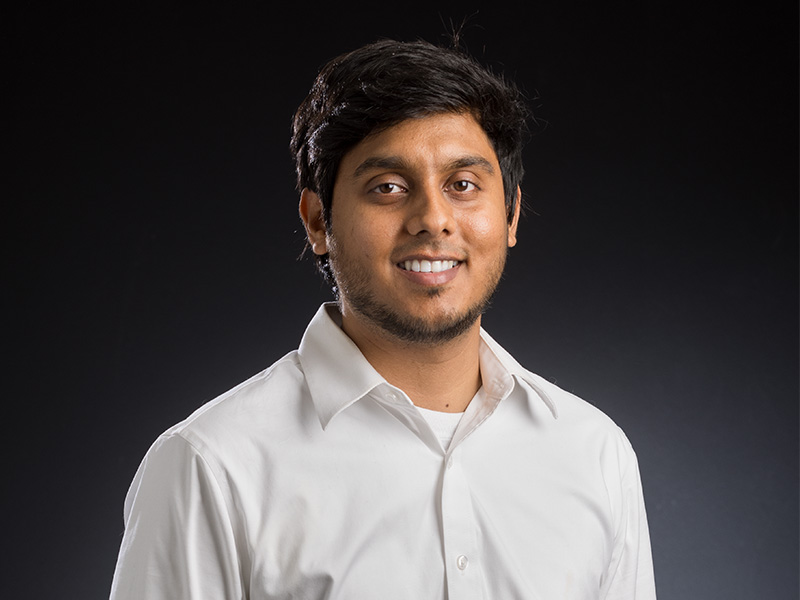
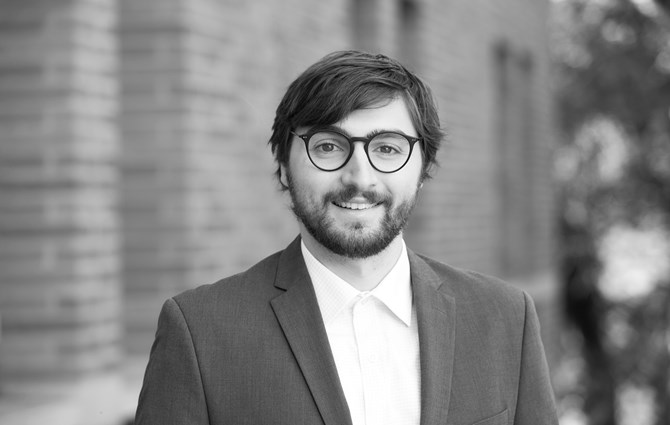
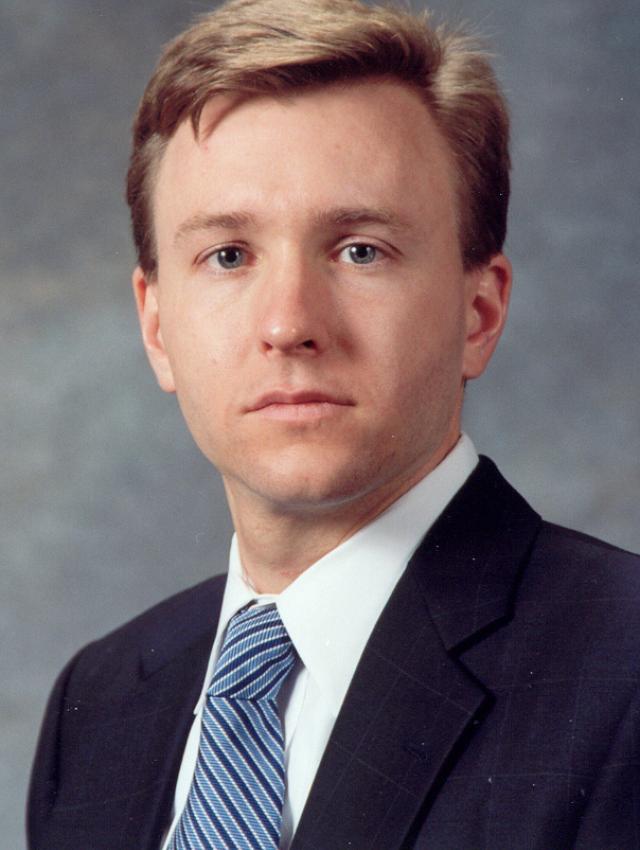
Jeffery S. Volz holds the title of Associate Dean for Partnerships and is a Lloyd G. and Joyce Austin Presidential Professor at the University of Oklahoma 's Gallogly College of Engineering. He is affiliated with the School of Civil Engineering and Environmental Science (CEES), where he previously served as associate director for undergraduate studies and director of the Donald G. Fears Structural Engineering Laboratory. His academic journey includes roles in industry for 16 years at firms like Skidmore, Owings & Merrill, and the Portland Cement Association. Education : PhD, Civil Engineering, Pennsylvania State University MS, Architectural Engineering, Pennsylvania State University BAE, Architectural Engineering, Pennsylvania State University Research Focus : Volz's work centers on structural engineering and material science , emphasizing resilient and sustainable infrastructure solutions. Key areas include UHPC applications, bridge column reinforcement, and recycled material utilization in concrete. His research has been funded by NSF, DoD, FHWA, and industry partners like Ameren Corporation and Dolese. Grants & Projects : Over 20 grants since 2013, including studies on UHPC link slabs, FRP bridge decks, and high-volume recycled materials in pavements. He has led projects addressing bridge-pavement interaction, in-stream structure erosion effects, and corrosion-resistant concrete formulations. Labs & Teams : Director of the Donald G. Fears Structural Engineering Laboratory . Advises ASCE student chapters and competition teams (Concrete Canoe, Steel Bridge).
Harald E. Möller is a Professor and Head of the Nuclear Magnetic Resonance Research and Development Unit at the Max Planck Institute for Human Cognitive and Brain Sciences in Leipzig. With a career spanning over four decades, he has held academic positions including Honorary Professor at the University of Leipzig and leadership roles in institutions like Duke University Medical Center and the University of Münster. His research focuses on advancing MRI methodologies, biophysical imaging principles, and their applications in neurology and neuroscience. Education: 1979-1985: Chemistry & Physics studies at Universities of Dortmund and Münster 1985: M.Sc. (Diploma) in Chemistry 1988: PhD in Physical Chemistry (summa cum laude) 2000: Habilitation in Physical Chemistry 2002: Habilitation in Biophysical Chemistry Research Interests: Development of novel MRI methods Quantitative tissue characterization Myelin sheath imaging Cerebral blood flow dynamics High-field MRI hardware
Prof. Markus Rudolf is a full Professor of Finance at WHU – Otto Beisheim School of Management since 1998, holding the Chair of Finance. He leads the WHU Center of Asset and Wealth Management and previously served as dean from 2015 to 2023. With a PhD and habilitation from the University of St. Gallen, his expertise spans banking, risk management, derivatives pricing, and Eurozone sovereign risk. He co-edits *Financial Markets and Portfolio Management* and advises major financial institutions such as Boeker & Paul AG. Research focuses include cryptocurrency dynamics, sustainable finance, and systemic risk. Notable contributions analyze market interdependencies, investor behavior, and regulatory frameworks like Basel II/Solvency II. His leadership roles include academic director of the Campus for Finance conference and supervisory board positions at financial firms.
Alper Taşdemirci is a Professor in the Department of Mechanical Engineering at Izmir Institute of Technology (IYTE). His primary research focuses on high strain rate mechanics, material deformation, energy absorption in structural materials, and computational modeling. He has conducted extensive studies on composite materials, metallic foams, and bio-inspired designs, with a strong emphasis on dynamic loading conditions and finite element analysis. Education: B.S. in Mechanical Engineering, Erciyes Üniversitesi M.S. in Mechanical Engineering, Erciyes Üniversitesi PhD in Mechanical Engineering, University of Delaware Research Interests: High strain rate behavior of materials Energy absorption mechanisms in structural components Dynamic material testing (e.g., Split Hopkinson Pressure Bar) Composite and metallic material design for impact applications Numerical modeling with LS-DYNA Publications: His recent works explore bio-inspired metallic structures, additive manufacturing of composites, and the dynamic compression of syntactic foams. Key themes include strain rate effects, material characterization under impact, and the development of constitutive models for advanced materials. Awards and Honors: No specific awards mentioned in the text. Grants and Advising: No explicit details on grants or advisees provided in the text.
Dr. Srikanthan Ramesh serves as an Assistant Professor in the School of Industrial Engineering and Management within Oklahoma State University's College of Engineering, Architecture and Technology. Since establishing the Advanced Materials and Additive Manufacturing Laboratory in August 2022, he has led interdisciplinary research at the intersection of materials science, physical phenomena, and advanced manufacturing technologies, with applications spanning healthcare, aerospace, and electronics sectors. His educational foundation includes a Ph.D. in Mechanical and Industrial Engineering from Rochester Institute of Technology (2022) and an M.S. in Industrial and Manufacturing Systems Engineering from Iowa State University (2017). This academic background enables his innovative approach to manufacturing science. Dr. Ramesh's research program focuses on biological and micro-scale additive manufacturing (bio-AM), specializing in biomaterial development for tissue engineering and regenerative medicine. His work integrates computational fluid dynamics, machine learning, and real-time process monitoring to achieve precise control over mechanical, biological, and electrical properties of manufactured structures. He develops experimental tools and process frameworks for droplet-based and extrusion-based AM systems, with particular emphasis on wound healing applications and space-compatible microelectronics. Analysis of his 14 publications from 2020-2025 reveals a strong trajectory toward AI-driven manufacturing solutions, with increasing emphasis on multi-objective Bayesian optimization for bioink design, aerosol jet printing process refinement, and bioprinted tissue construct development. His recent work demonstrates sophisticated integration of machine learning with physical manufacturing processes to solve complex biomedical challenges. His scientific recognition includes: Doctoral Dissertation Pitch Competition (Runner-up), IISE, 2021 Best Oral Presentation, Graduate Showcase, Rochester Institute of Technology, 2019 Gilbreth Memorial Fellowship, IISE, 2018-2019 Wakonse College Teaching Fellowship, Iowa State University, 2018-2019 Graduate Research Excellence Award, Iowa State University, 2017 Best Overall Oral Presentation, Nano@IAstate, Iowa State University, 2017 Dr. Ramesh currently leads significant research initiatives including as Principal Investigator for an NSF REU Site on Additive Manufacturing and Cybersecurity ($464,606, 2025-2028) and a NASA EPSCoR Travel Grant for aerosol jet printing in space missions (2024-2025). As Co-PI on an NSF grant for Privacy-aware Collaborative Design in additive biofabrication ($599,981, 2025-2028), he develops frameworks for mass personalization in medical applications while addressing data security challenges. These projects support his lab's mission to advance manufacturing science through rigorous experimentation and computational innovation. The Advanced Materials and Additive Manufacturing Laboratory operates as a collaborative hub where Dr. Ramesh directs research teams in developing novel biomaterials, optimizing printing processes, and creating functional prototypes for wound dressings, liver tissue models, and space-rated microelectronics. The lab's interdisciplinary approach combines expertise in materials characterization, computational modeling, and machine learning to push the boundaries of what's possible in additive manufacturing for critical applications.
Paul Huebner is an Assistant Professor at the Department of Finance, Stockholm School of Economics, and a resident researcher at the Swedish House of Finance. His research focuses on asset pricing, macro-finance, and the interplay between institutional asset demand and market dynamics. He holds a Ph.D. in Finance from the University of California, Los Angeles (UCLA). Research interests include portfolio decisions and asset prices, with emphasis on deriving economic insights from quantitative data and developing methods to analyze their joint behavior. His work addresses questions such as the competitiveness of stock markets, implications of passive investing, and the role of institutional investors. Recent publications include studies on causal inference in asset pricing and the competitive dynamics of stock markets, with implications for passive investment strategies. His research has been presented at the Swedish House of Finance and related academic platforms. Affiliations include the Swedish House of Finance where he contributes to national and international research initiatives. His work bridges theoretical models with empirical evidence, emphasizing policy-relevant insights for financial markets and institutions.
Milton Boyd is a Professor in the Department of Agribusiness and Agricultural Economics at the University of Manitoba, Faculty of Agricultural and Food Sciences. He also serves as an Adjunct Professor in Risk Management and Actuarial Science at the Asper School of Business. His research and teaching focus on quantitative finance, risk management, derivatives, and international business. PhD, Purdue University, United States MA, Washington State University, United States BA, Seattle Pacific University, United States His research interests center on quantitative finance and agricultural risk management , with a strong emphasis on derivatives, portfolio strategies, and market behavior. He applies statistical and financial modeling to real-world agricultural and commodity markets, often integrating international and policy perspectives. His work bridges academic rigor with practical application in agribusiness and government sectors. His recent publications reflect a consistent focus on financial risk modeling, commodity pricing, and market efficiency. Themes include hedging strategies, volatility analysis, and the role of futures markets in price discovery and income stability. His work spans both developed and emerging markets, with increasing attention to Asia and global trade dynamics. Two University of Manitoba Awards for Research and Outreach Fellow of Seattle Pacific University Best Conference Presentation Award Outstanding Journal Paper Award Dr. Boyd has advised numerous graduate students and contributed to academic service through editorial roles, conference committees, and keynote presentations. He has secured research funding through university and external grants, though specific grants are not listed. His outreach includes media commentary, industry training, and policy advising, particularly in commodity market development. He has been actively involved in professional development and public service, including teaching short courses at the Winnipeg Commodity Exchange (ICE), Canadian International Grains Institute, and Canadian Securities Course. He has served as a Policy Advisor for the Frontier Center for Public Policy and as a columnist for Grainews , contributing to public understanding of financial and commodity markets.
Jonathan W. Lewellen is the Carl E. and Catherine M. Heidt Professor of Finance at the Tuck School of Business at Dartmouth College, where he also serves as Area Chair in Finance. He previously taught at MIT's Sloan School of Management before joining Tuck in 2005. His academic roles include teaching Capital Markets in the MBA program and Corporate Finance in the Business Bridge program. Lewellen holds a PhD (2000), MS (1997), and BS (1994) in Finance from the University of Rochester and Indiana University, respectively. His research focuses on stock price behavior, investor decision-making, and corporate finance, with a particular emphasis on factor models of returns, ownership structures, and autocorrelation in asset returns. He is a Research Associate at the National Bureau of Economic Research (NBER) and has published extensively in top-tier journals like the Journal of Finance , Journal of Financial Economics , and Review of Financial Studies . Lewellen’s recent work explores institutional investor governance, the predictive power of accruals, and the dynamics of corporate investment. His articles consistently address core questions in asset pricing and market efficiency, often challenging conventional models through empirical rigor. He has no listed scientific awards but maintains an active speaking schedule at finance conferences and institutions, including the NBER Summer Institute and the American Finance Association Annual Meeting. No formal advisees or grants are explicitly listed, though his involvement in PhD-level teaching (e.g., Advanced Financial Economics III at MIT) implies potential mentorship roles. He is affiliated with the Tuck School’s finance department and NBER’s Asset Pricing Group.
Lars BEEX is a Senior Research Scientist at the University of Luxembourg's Faculty of Science, Technology and Medicine, Department of Engineering. He holds the right to supervise PhD students and has directed five to completion. His research focuses on computational mechanics of solids, including Bayesian inference, multiscale methods, and quasicontinuum approaches, with applications to materials like textiles, foams, and medical devices. His academic journey includes a PhD from Eindhoven University of Technology (2008-2012), supervised by Marc Geers and Ron Peerlings, as well as MSc and BSc degrees from the same institution. **Research Interests:** - Computational mechanics of solids - Bayesian inference and uncertainty quantification - Multiscale modeling (quasicontinuum method) - Mechanical modeling of fibrous and discrete materials - Phase-field damage models - Contact mechanics and elastoplasticity **Awards:** - Biezeno Solid Mechanics Award 2013 (Best PhD thesis in solid mechanics, Netherlands) - Cum laude distinction for both MSc and BSc degrees **Industrial Collaborations:** - SISTO Armaturen - IEE - Kiswire International **Teaching:** - Numerical methods for continuous optimization - Courses for Computer Science, Mathematical Modelling, and Engineering students **Lab/Affiliations:** - Legato Team (part of the University of Luxembourg's engineering research cluster)
Professor Simon Ringer is the Pro-Vice-Chancellor (Research Infrastructure) at The University of Sydney and a Professor of Materials Science and Engineering in the School of Aerospace, Mechanical & Mechatronic Engineering. He is also an academic member of the Australian Centre for Microscopy & Microanalysis and a member of The Net Zero Institute. With an international career spanning Sweden, Japan, the USA, and Australia, Professor Ringer has established himself as a leading researcher in atomic-scale materials design. His research focuses on how atomic clusters create materials with remarkable properties for applications in semiconductors, photovoltaics, catalysis, and lightweight metal alloys. Professor Ringer's work particularly addresses 'property conflicts' in materials engineering, such as balancing strength and ductility or superconductivity and magnetism. His research group has achieved significant breakthroughs in atomic-level characterization, advanced steels development, computer memory technologies, and nanoelectronics, with publications in high-impact journals including Nature Materials, Physical Review Letters, and Advanced Materials. Professor Ringer leads the University's Core Research Facilities program, overseeing strategic planning and implementation of high-end research infrastructure initiatives. His leadership extends to national research infrastructure strategy engagement, positioning the University of Sydney as a leader in Australia's research facilities landscape. Current research projects in his group focus on atomic-scale materials design, functionalized photovoltaic surfaces, additive manufacturing, and new frontiers in microscopy techniques. Professor Ringer has published over 100 papers, authored two significant books ( Atomic-Scale Analytical Tomography in 2022 and Atom Probe Microscopy in 2012), and holds patents in steel and nanomaterial design. His research has practical implications for reducing CO2 emissions through lightweighting technologies and advancing computer memory capacity. He currently supervises several research students including Kirk CHEN, Jeffrey LU, and Samia RAZZAQ, and actively recruits for Honours, Master's, PhD, and postdoctoral positions. Former team members have gone on to work at prestigious institutions worldwide including Texas A&M University, University of Oxford, Max Planck Institute, and various multinational corporations. Professor Ringer's research team utilizes advanced tools including atom probe microscopy, transmission electron microscopy, density functional theory, and computational modeling techniques to gain insights into materials behavior at the atomic scale. His qualifications include BAppSc from Uni SA, PhD from UNSW, and numerous professional designations including CMatP, FIEAust CPEng APEC Engineer IntPE(Aus), FRSN, and FTSE.
Ragnvald Mathiesen serves as Professor in the Department of Physics at the Norwegian University of Science and Technology (NTNU), Trondheim. His research leverages advanced synchrotron-based X-ray and neutron imaging techniques to investigate dynamic solidification processes in metallic alloys and geomaterials, with significant contributions to understanding microstructure evolution under varied conditions including microgravity. His primary research interests focus on solidification physics , in-situ X-ray radiography/tomography , and microstructure characterization of metallic systems. Key specialties include dendrite growth kinetics, phase transformation dynamics, grain refinement mechanisms in aluminum alloys, and the application of 4D imaging to capture transient phenomena in materials processing. His work bridges fundamental physics with industrial metallurgy applications, particularly in aluminum and magnesium alloy systems. Analysis of his 15 most recent publications (2019-2025) reveals a consistent emphasis on time-resolved imaging methodologies applied to solidification phenomena. His research demonstrates increasing sophistication in multi-modal imaging (X-ray/neutron), with growing applications in geomaterials and electro-active systems. The publications show strong international collaboration patterns, particularly with European synchrotron facilities like ESRF, and address both fundamental questions in solidification physics and practical challenges in materials processing. Professor Mathiesen actively contributes to the development of advanced X-ray microscopy techniques, as evidenced by his 2017 doctoral dissertation on high-energy X-ray transmission microscopy and recent publications on dark-field imaging and diamond lens optimization. His laboratory work utilizes NTNU's materials characterization infrastructure alongside major international facilities including the European Synchrotron Radiation Facility.
Ingve Simonsen is a Professor in the Department of Physics at the Norwegian University of Science and Technology (NTNU), specializing in surface physics and light scattering phenomena. His research focuses on the theoretical and experimental characterization of randomly rough surfaces, electromagnetic wave interactions, and nanoscale optical phenomena. Affiliated with NTNU's Faculty of Natural Sciences, he maintains an active research program with extensive collaborations across international institutions. His research interests center on surface physics and light scattering , particularly the inversion of scattering data for surface characterization, plasmonics in nanostructures, and statistical properties of rough surfaces. His work bridges theoretical modeling with experimental validation, applying techniques like Mueller matrix ellipsometry and reduced Rayleigh equations to solve complex problems in optical metrology and nanomaterial characterization. Analysis of his recent publications reveals strong emphasis on multi-scale surface topography , polarized light interactions with disordered systems, and nanophotonic applications . His research demonstrates consistent innovation in developing computational frameworks for surface characterization and exploring novel optical phenomena in two-dimensional materials. Professor Simonsen actively mentors students and researchers, evidenced by frequent co-authorship with junior researchers on complex projects. His collaborative approach spans disciplines including condensed matter physics, materials science, and biomedical optics, as seen in his work on graphene-based virus detection sensors.
Jaafar El-Awady is a Professor in the Department of Mechanical Engineering at the Whiting School of Engineering, Johns Hopkins University (JHU). He serves as Chair of JHU’s Engineering for Professionals’ Mechanical Engineering Graduate Program, founder/director of the Computational and Experimental Materials Engineering Laboratory (CEMEL), and associate director of the Center on Artificial Intelligence for Materials in Extreme Environments (CAIMEE) and the Center for Integrated Structure-Materials Modeling and Simulations (CISMMS). His secondary appointment in the Department of Materials Science and Engineering underscores his interdisciplinary focus.
Carlo Rigoni is a Visiting Professor in the Department of Applied Physics, focusing on non-equilibrium systems and colloidal assembly. His research spans nanoparticle science, ferrofluid dynamics, and aqueous two-phase systems. Education: Doctoral degree in Natural Sciences from University of Padua Active projects: DissNano (2021–2024) on dissipative nanomaterials Research interests include: Coarse-grained modeling of colloidal systems Electrically/magnetically controlled fluid interfaces Self-assembly of nanoparticles in liquid crystals Non-equilibrium pattern formation in soft matter Thermodynamic control of multiphase separation Bio-inspired nanoparticle superlattices His recent publications address computational modeling of aqueous two-phase systems, magnetic colloids, and electroferrofluids. Collaborative activities include conference presentations on interfacial tension, magnetic rollers, and colloidal gradients. He contributes to open scientific datasets and disseminates findings through platforms like ORCID (0000-0001-6960-779X).
Alex Weissensteiner is a Full Professor of Quantitative Finance and Rector at the Free University of Bozen-Bolzano (unibz). He previously held academic positions at Leopold Franzens University in Innsbruck, the University of Liechtenstein, and served as Professor of Financial Engineering at the Technical University of Denmark from 2013–2015. At unibz, he held leadership roles including Director of the Bachelor's Degree in Economics and Management (2015–2020) and Pro-Rector for Studies (2020–2024) before becoming Rector in 2024. His research focuses on Life-cycle asset allocation Parameter uncertainty in financial models Scenario generation for investment decisions Asset-liability management Market microstructure dynamics Information economics in financial markets Recent publications emphasize portfolio optimization under uncertainty, option-implied risk analysis, and agricultural risk management. His work combines theoretical finance with empirical validation, often applying quantitative methods to banking, insurance, and pension systems. Scientific recognition includes EU grants for "Understanding Pensions in Europe" (2016) and "Understanding Saving in Europe" (2019) Regular contributions to leading journals like Journal of Banking & Finance and Quantitative Finance Invited presentations at major finance conferences (Jackson Hole, AFA, DGF) As Rector, he maintains active research collaborations with scholars including Mogens Steffensen (University of Copenhagen), N. Branger, T. Dangl, and L. Garlappi. He serves on the editorial board of Risks journal and has consulted for provincial education policy bodies.